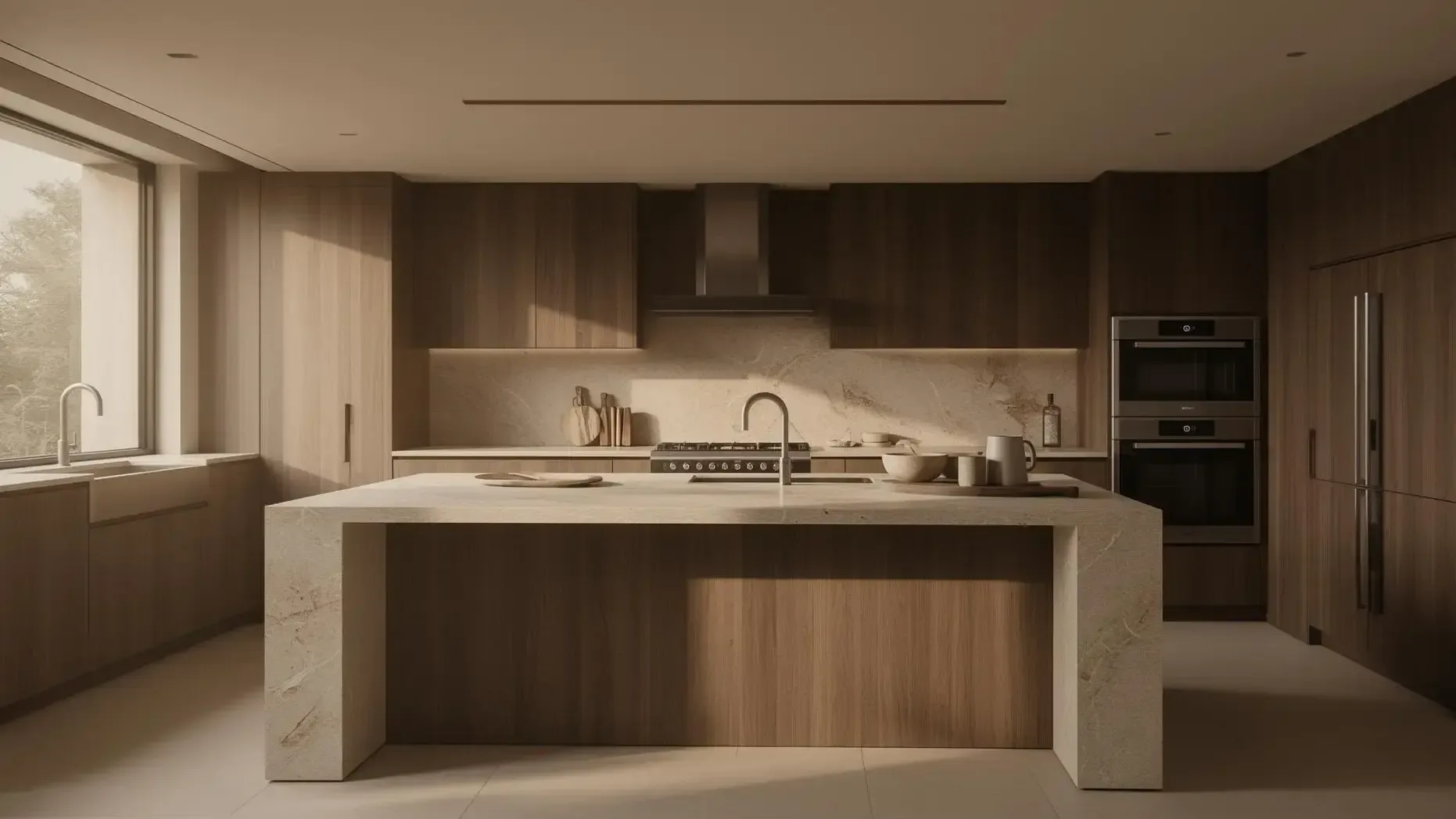
A couple relocating from San Francisco to Buckhead last month told us their non-negotiable list included four bedrooms, a pool, and "a home that actually works." When we pressed on what that meant, the answer was not granite counters or hardwood floors. It was a security system that knows the difference between a delivery driver and a stranger. A climate system that learns their schedule. Shades that adjust themselves based on the sun. A single app that controls everything.
They are not unusual. In 2026, smart home technology has crossed the line from luxury perk to baseline expectation for buyers spending $1 million or more in Atlanta. But not all smart technology is created equal. For every feature that genuinely improves daily life and adds resale value, there is another that is a $30,000 gimmick the next buyer will rip out.
We help buyers and sellers weigh smart home decisions in luxury transactions across metro Atlanta. This guide covers what Atlanta's luxury buyers actually want in 2026 — the systems, the brands, the costs, and the features that separate a genuinely intelligent home from one that just has expensive gadgets. If you are buying, building, or upgrading before selling, this is the technology that matters.
Quick Takeaways
- Whole-home automation (Control4, Savant, Crestron) is now expected in homes above $1.5M. Buyers want one app that controls everything, not 12 separate apps.
- AI-powered security with facial recognition and behavioral analysis has replaced basic camera systems as the new standard in luxury homes.
- Smart climate with room-by-room zoning can reduce energy costs 20-35% in Atlanta's brutal summers while keeping every room at the perfect temperature.
- Motorized shading is the single most visually impactful smart feature during showings and is a top-3 request from buyers in Buckhead and Sandy Springs.
- EV charging has shifted from a nice-to-have to an expectation. Dual-charger setups are increasingly requested in the $2M+ market as two-EV households become the norm.
- Retrofit vs. built-in: wireless technology has improved enough that retrofitting a smart home is now viable without tearing open walls, though new construction still offers the cleanest installation.
Whole-Home Automation: The Platform That Ties Everything Together
The biggest shift in luxury smart homes over the past two years is the move from individual smart devices to unified platforms. In 2023, a "smart home" might have meant a Nest thermostat, Ring doorbell, Sonos speakers, and Lutron shades — each with its own app, its own login, and its own quirks. In 2026, Atlanta luxury buyers expect a single system that controls everything from one interface.
That expectation has made whole-home automation platforms the foundation of the modern luxury home. Control4, Savant, and Crestron dominate the Atlanta market, each serving a slightly different buyer profile. Understanding the differences matters because the system you choose (or inherit) will define the smart home experience for years to come.
Control4 is the most common platform we see in Atlanta homes priced between $1M and $3M. It offers an excellent balance of capability and usability, with a strong network of local dealers and integrators. Savant has gained significant market share in Buckhead and Sandy Springs thanks to its Apple-like design philosophy — the interface is beautiful, the hardware is elegant, and the experience feels premium. Crestron remains the choice for large estates and buyers who want commercial-grade reliability with fully custom programming, but it comes at a significant price premium and requires specialized programmers for any changes.
The emerging platform worth watching is Josh.ai, which takes a privacy-first approach to voice control. Unlike Alexa or Google Home, Josh.ai processes voice commands locally without sending data to cloud servers — a feature that resonates strongly with the privacy-conscious luxury buyer demographic that continues to grow in Atlanta.
Whole-Home Automation Platforms: Atlanta Market Overview
| Platform | Price Range | Tier | Best For |
|---|---|---|---|
| Control4 | $25,000 - $80,000 | Mid-High | Most popular in Atlanta luxury market. Strong dealer network, intuitive interface, good balance of power and usability. |
| Savant | $40,000 - $150,000+ | High | Apple-like design philosophy. Preferred by buyers who want a premium aesthetic. Strong in Buckhead and Sandy Springs. |
| Crestron | $50,000 - $200,000+ | Ultra-High | Commercial-grade reliability. Fully custom programming. Best for 8,000+ sq ft estates with complex needs. |
| Josh.ai | $15,000 - $50,000 | Mid-High | Privacy-first voice control. No data harvesting. Rapidly gaining ground with privacy-conscious luxury buyers. |
| Lutron RadioRA 3 / Homeworks | $10,000 - $60,000 | Mid-High | Gold standard for lighting and shading. Often the backbone even in homes using other platforms. |
Price ranges reflect typical installations in Atlanta luxury homes (4,000-6,000 sq ft) including equipment, programming, and installation. Costs vary significantly based on scope, home size, and complexity.
AI-Powered Security: Beyond Cameras and Motion Sensors
Security has always been the number one smart home priority for luxury buyers. What has changed in 2026 is the intelligence behind the cameras. Traditional motion-detection systems that send an alert every time a squirrel crosses the driveway are being replaced by AI-powered systems that understand what they are seeing.
Modern AI security cameras from Verkada, Rhombus, and Avigilon use on-device machine learning to classify objects in real time. The camera knows the difference between a person, a vehicle, an animal, and a package. It can identify familiar faces — your housekeeper, your contractor, your children — and only alert you when an unknown person is detected. Some systems now offer behavioral analysis that flags unusual activity patterns, like someone lingering near the garage at 2 AM or an unfamiliar vehicle circling the neighborhood.
For buyers in gated communities across Atlanta, the integration between the home security system and the community gate system is increasingly important. Systems like Control4 and Savant can display the gate camera feed on any TV or touchscreen in the home, allow remote gate access, and log every entry and exit. This level of integrated security and privacy is something we see on virtually every luxury buyer's wish list.
The cost for a professional AI security installation in a typical Atlanta luxury home runs $8,000-$20,000, which includes 8-12 exterior cameras, smart locks, a video doorbell, and 24/7 monitoring with AI analytics. That is a meaningful investment, but it is also one of the few smart features that directly affects both daily peace of mind and insurance premiums — several Georgia carriers now offer 5-10% discounts for professionally monitored smart security systems.
Smart Climate Control: Room-by-Room Comfort in Atlanta's Heat
Atlanta's summers are not negotiable. When it is 96 degrees with 80% humidity in July, your HVAC system is the hardest-working piece of equipment in the house. For luxury homes over 4,000 square feet, monthly cooling bills of $400-$800+ are common during peak season. Smart climate systems do not just make the home more comfortable. They make it dramatically less expensive to operate.
The technology that matters most in 2026 is room-by-room zoning. Traditional HVAC systems treat the entire home (or at best, two zones) as a single unit. Smart zoning systems divide the home into 8-16 independent zones, each with its own temperature sensor and damper control. The result is that occupied rooms are conditioned precisely while unoccupied rooms are allowed to drift, reducing energy consumption by 20-35% without any sacrifice in comfort.
Learning thermostats have also matured significantly. Systems integrated with Control4 or Savant track occupancy patterns through motion sensors throughout the home and learn your schedule within two weeks. They pre-cool the home before you arrive and reduce output when you leave. Humidity control has become a standalone feature in the best systems — Atlanta's humidity means a home can feel uncomfortable at 73 degrees if humidity is not managed independently from temperature.
For buyers building new in Alpharetta or Sandy Springs, VRF (variable refrigerant flow) systems from Mitsubishi, Daikin, or LG are increasingly popular. These ductless or hybrid systems offer true room-by-room control with whisper-quiet operation and are more energy-efficient than traditional ducted systems. The upfront cost is higher ($40,000-$70,000 for a 5,000 sq ft home versus $20,000-$35,000 for conventional HVAC), but the operating cost savings and comfort improvement are substantial. We are seeing VRF systems specified in the majority of new luxury construction across north Atlanta.
Motorized Shading: The Silent Show-Stopper
If there is one smart feature that consistently makes luxury buyers stop in their tracks during a showing, it is motorized shading. There is something almost theatrical about walking into a living room and watching the shades silently glide open to reveal a wall of windows. It is the feature that photographs do not capture and that every buyer remembers.
Lutron remains the gold standard for motorized shading in Atlanta's luxury market. Their Palladiom and Triathlon lines offer whisper-quiet operation, precise alignment across multiple windows, and seamless integration with virtually every automation platform. Hunter Douglas PowerView is the strongest competitor, particularly for specialty shapes and unique window configurations that are common in Atlanta's older Buckhead estates.
The practical benefits extend well beyond aesthetics. In south-facing rooms — and Atlanta gets aggressive afternoon sun — automated shading can reduce solar heat gain by 60-80%, meaningfully reducing cooling costs. Shading scenes can be programmed to respond to time of day, sun position, or room temperature. A "movie mode" that dims the lights and drops the shades. A "good morning" scene that raises the primary suite shades gradually. A "showing mode" that positions every shade in the home for maximum natural light and curb appeal.
Cost is the main consideration. Motorized shading runs $500-$2,000 per window depending on size, fabric, and shade type. For a luxury home with 25-40 windows, a full motorized shading package ranges from $15,000-$50,000. Most homeowners start with the primary suite, great room, and any media room, then expand from there. Even a partial installation of 10-15 key windows ($8,000-$20,000) delivers a dramatic impact during showings and daily life.
Looking for an Atlanta Home That Already Runs on These Systems?
Automation packages are almost impossible to judge from listing photos. We can screen properties for the platforms and integrations you care about, and flag the ones that would typically need a full replacement.
Find Homes With the Tech I Wantor call (770) 727-4052
Smart Lighting Scenes: Setting the Mood and Selling the Home
Lighting is the most underappreciated smart home feature in terms of impact per dollar. A well-programmed lighting system transforms how a home feels at every hour of the day. It is also one of the most powerful tools for selling a luxury home — a "showing mode" that sets every light in the house to the perfect level makes the home feel warm, inviting, and expensive.
Lutron's RadioRA 3 and HomeWorks QSX are the most common lighting control systems in Atlanta luxury homes. They offer precise dimming, tunable white (adjusting color temperature from warm to cool throughout the day), and integration with every major automation platform. Lutron keypads replace standard light switches with elegant, customizable controls that can trigger multi-room scenes with a single press.
The scenes that luxury buyers care about are practical ones. An "entertaining" scene that sets dining and kitchen lights to 60% warm white while illuminating the outdoor patio. A "night" scene that turns off all main lights and activates pathway lighting at 10%. A "morning" scene that gradually brightens the primary suite and kitchen. These are not gimmicks — they are daily conveniences that buyers genuinely use and value.
For sellers, the investment in smart lighting is relatively modest compared to other smart home categories. A Lutron RadioRA 3 system for a typical luxury home runs $8,000-$25,000 depending on the number of circuits and keypads. The ROI is strong because it improves every showing and photographs well when the home is listed. A well-lit home sells faster, period.
Home Theater and Media Rooms: What Buyers Actually Use
The dedicated home theater with tiered seating and a 150-inch screen is still a feature in Atlanta's highest-end homes, but the trend has shifted dramatically toward flexible media rooms that serve multiple purposes. Buyers in 2026 want a space that can be a movie theater on Friday night, a gaming room on Saturday, and a Zoom conference room on Monday morning.
The technology that makes this work is a high-quality short-throw laser projector (Sony, Samsung, LG, or Hisense models ranging from $3,000-$15,000) paired with an acoustically transparent screen that hides speakers behind it. When the projector is off, the room looks like a normal living space with a white or gray wall. When it is on, you have a 100-120 inch cinema-quality image. Whole-home audio from Sonos, Bowers & Wilkins, or Paradigm installed in-ceiling throughout the home means music follows you from room to room without visible speakers.
The key insight for buyers and sellers: a $15,000 media room with a great projector, good speakers, and smart integration adds genuine lifestyle value and appeals to a broad audience. A $75,000 dedicated theater with custom seating and a 4K laser projector is an incredible experience, but it is also deeply personal — the next buyer may want to convert that space to a gym or home office. For renovation planning, flexibility is more valuable than specialization.
Water Leak Detection and Smart Infrastructure
Water damage is the number one insurance claim for luxury homes, and it is almost always preventable. Smart water monitoring systems like Flo by Moen, Phyn Plus, and Buoy install on the main water line and use machine learning to detect anomalies — a slow leak under a sink, a burst pipe, or a running toilet that is wasting hundreds of gallons per day. When something abnormal is detected, the system can automatically shut off the main water supply before damage occurs.
At $500-$1,500 installed, these systems are one of the best values in smart home technology. They protect against potentially catastrophic damage (a burst pipe in a $2M home can easily cause $100,000+ in damage), and several Georgia insurance carriers now offer premium discounts for homes with automatic water shutoff systems. For a home with an $8,000-$15,000 annual premium, that is $400-$750 per year in savings — the system pays for itself in 1-2 years through insurance savings alone.
Beyond water, smart infrastructure includes whole-home Wi-Fi (enterprise-grade mesh or hardwired access points from Ubiquiti, Ruckus, or Cisco Meraki), smart electrical panels (Span or Lumin that give per-circuit monitoring and control), and backup power systems. After the ice storms that knocked out power across north Georgia in recent winters, interest in Tesla Powerwall, Enphase batteries, and whole-home generators has surged. A Generac or Kohler whole-home generator ($10,000-$18,000 installed) is increasingly viewed as essential rather than optional in the $1.5M+ market. These wellness and infrastructure features collectively signal a home that was built or maintained with genuine quality.
EV Charging Integration: No Longer Optional
Georgia's EV registrations have grown over 50% year-over-year, and in Atlanta's luxury market, the conversation has moved past "should we install an EV charger?" to "how many do we need?" Two-EV households are now common among luxury buyers, and the expectation is shifting accordingly.
The baseline expectation is a Level 2 (240V, 48-amp) hardwired charger in the garage. A ChargePoint Home Flex, Tesla Wall Connector, or Emporia Smart Charger costs $500-$800 for the unit plus $800-$2,000 for electrical installation including panel work. The total investment of $1,500-$3,000 is one of the best ROI plays in the smart home space — per Zillow research, homes with EV charging capability sell for approximately 3% more than comparable homes without it.
In the $2M+ market, we are seeing builders in Alpharetta and Sandy Springs pre-wire garages with 100-amp sub-panels dedicated to EV charging. This future-proofs the home for dual chargers and eventually faster Level 2 or home-based Level 3 charging as the technology becomes available. Smart chargers that integrate with the home automation system can schedule charging during off-peak electricity hours, monitor energy usage, and even participate in utility demand-response programs that provide credits on the electric bill.
The Voice vs. App Control Debate
One of the most common questions we hear from buyers evaluating smart homes is: "Do I have to talk to my house?" The answer is no, and the best systems offer multiple control methods for different situations.
In 2026, the preferred control hierarchy for most Atlanta luxury buyers is: (1) a single, well-designed app for complete control, (2) elegant wall keypads for everyday actions like lighting scenes, (3) voice control for hands-free convenience, and (4) automation rules that handle routine tasks without any input at all. The best systems make the home feel intelligent without requiring constant interaction. Lights turn on when you walk into a room. Shades adjust based on the sun. The thermostat adapts to your schedule. You only pull out your phone or speak a command when you want to override the default behavior.
The voice control landscape has improved significantly with Josh.ai's privacy-focused approach and Apple's enhanced Siri home controls. For buyers concerned about always-listening microphones in their home, Josh.ai processes everything locally and does not store or sell voice data. It integrates with Control4, Savant, Lutron, and most major platforms. Amazon Alexa and Google Home remain popular for more casual smart home setups, but privacy-conscious luxury buyers are increasingly moving away from them.
An important demographic note: buyers under 45 strongly prefer app control and are comfortable managing their home from their phone. Buyers over 55 often prefer physical keypads and wall panels — they want to press a button, not find an app. The best smart home installations accommodate both preferences, and this is one reason Lutron keypads remain so popular even in app-centric homes.
Retrofit vs. Built-In: Making an Existing Home Smart
Not every luxury buyer is purchasing new construction. Many of the most desirable homes in Atlanta — the Buckhead estates, the Morningside Tudors, the Druid Hills Colonials — were built decades before smart home technology existed. The question these buyers face is whether a 1990s or 2000s home can be brought up to 2026 smart home standards without a gut renovation.
The good news is that wireless technology has improved dramatically. Lutron's RadioRA 3 system uses wireless communication between switches, dimmers, and shades, so it can be installed in an existing home without running new wires through walls. Security cameras from Verkada and Rhombus operate on Wi-Fi with local processing. Smart locks, thermostats, and water sensors are all wireless by design. A smart retrofit of a 4,000-5,000 sq ft existing home — covering lighting, shading in key rooms, security, climate, and a basic automation platform — typically runs $25,000-$60,000 depending on scope and brand.
The areas where retrofitting is more challenging are whole-home audio (in-ceiling speakers require running speaker wire through finished ceilings) and hardwired networking (Cat6 ethernet to every room). For audio, Sonos and similar wireless systems have reached a quality level that satisfies most buyers without in-ceiling installation. For networking, a professional enterprise-grade mesh system (Ubiquiti or similar) can deliver hardwired-equivalent performance over Wi-Fi throughout the home.
For buyers weighing new construction versus renovation, the smart home gap has narrowed significantly. A retrofitted existing home can achieve 85-90% of the smart capability of a purpose-built new home at a lower total cost, while offering the character, mature landscaping, and established neighborhoods that new construction cannot replicate.
Costs and ROI: What Smart Home Technology Actually Returns
The return on smart home investment depends entirely on what you install and how well it works. Based on our experience across hundreds of luxury transactions in Atlanta, here is the honest breakdown.
Smart Home Investment Tiers for Atlanta Luxury Homes
Tier 1: Essential Smart ($8,000 - $15,000)
Smart thermostat, security system with AI cameras, smart locks, Level 2 EV charger, water leak detection, whole-home Wi-Fi upgrade.
ROI: High. These features are expected in the $800K+ market and their absence is noticed. Recoups 80-100% of cost at resale.
Tier 2: Premium Smart ($25,000 - $60,000)
Everything in Tier 1 plus Control4/Savant platform, Lutron lighting control, motorized shading in primary rooms, whole-home audio, integrated media room.
ROI: Moderate to High. Strongly differentiates the home in the $1.5M+ market. Recoups 60-80% of cost but significantly reduces days on market.
Tier 3: Full Luxury Smart ($60,000 - $150,000+)
Everything in Tier 2 plus Crestron/Savant Pro-level automation, full-home motorized shading, dedicated theater, VRF climate system, smart electrical panel, whole-home generator, dual EV charging.
ROI: Moderate. Expected in the $3M+ market where buyers will notice if it is missing. Recoups 40-60% of cost directly but is table stakes at this price point.
ROI estimates are based on Atlanta metro market data from 2024-2026 luxury transactions. Individual results vary based on neighborhood, buyer pool, and overall home condition.
The single most important factor in smart home ROI is not the technology itself — it is whether the system works flawlessly when a buyer walks through the door. A $50,000 Savant system that glitches during a showing is worse than having no smart home at all. Before listing, invest in a professional system check from your integrator. Make sure every scene works, every camera is online, and the Wi-Fi is rock-solid in every room. A smooth, impressive smart home experience during a showing can be the difference between an offer and a pass.
The Bottom Line
Smart home technology in 2026 is no longer about impressing buyers with gadgets. It is about delivering a home that works intelligently, securely, and efficiently. The features that Atlanta's luxury buyers prioritize are the ones that solve real problems: AI security that actually keeps the family safe, climate control that manages Atlanta's heat without $800 electric bills, motorized shading that transforms the daily living experience, and a unified platform that puts everything in one app. Focus on those fundamentals, choose quality brands with strong local support, and make sure the system works perfectly. That is what sells homes in this market.
Frequently Asked Questions
What is the best whole-home automation system for Atlanta luxury homes in 2026?
Control4 remains the most popular choice in the Atlanta luxury market due to its strong local dealer network, intuitive interface, and reasonable price-to-performance ratio. For buyers who prioritize design aesthetics and Apple-like simplicity, Savant has gained significant share in Buckhead and Sandy Springs. Crestron is the choice for large estates (8,000+ sq ft) that need commercial-grade reliability and fully custom programming. The emerging contender is Josh.ai, which appeals to privacy-conscious buyers because it processes voice commands locally without sending data to cloud servers.
How much does a whole-home automation system cost in Atlanta?
For a 4,000-6,000 sq ft luxury home in Atlanta, expect to spend $30,000-$80,000 for a full Control4 or Savant system covering lighting, shading, climate, security, and audio/video. A Crestron system for the same home typically runs $60,000-$150,000+. Basic smart home packages (smart thermostat, security cameras, smart locks, motorized shades in key rooms) can be done for $8,000-$15,000. The biggest variable is motorized shading, which can easily add $15,000-$40,000 depending on window count and shade type.
Is AI-powered security worth the investment for an Atlanta luxury home?
Yes, and it is increasingly becoming a baseline expectation in the $1.5M+ market. Modern AI security systems from companies like Verkada, Rhombus, and Avigilon can distinguish between a person, an animal, and a vehicle, reducing false alarms by 90%+ compared to traditional motion-detection systems. Facial recognition allows the system to identify known family members, housekeepers, and contractors versus unknown visitors. For a typical luxury home, a professional AI security installation runs $8,000-$20,000 and includes 8-12 cameras, smart locks, and 24/7 monitoring with AI analytics.
Should I retrofit smart home technology or wait for new construction?
It depends on your timeline and budget. Retrofitting a 4,000 sq ft existing home with a whole-home smart system typically costs more than building it into new construction because of the labor involved in running wires through finished walls. However, wireless technology has improved dramatically. Systems like Lutron RadioRA 3, Sonos, and most modern security cameras work wirelessly with near-hardwired reliability. If you are buying an existing home in Buckhead or Brookhaven, a hybrid approach (hardwire what you can access, wireless for the rest) is the most cost-effective path.
What smart home features have the highest ROI when selling in Atlanta?
Based on our experience listing luxury homes across Atlanta, the features that most consistently help sell homes faster and at higher prices are: (1) a professionally installed security system with cameras, (2) motorized shading in primary suite and main living areas, (3) smart climate control with room-by-room zoning, (4) a Level 2 EV charger, and (5) smart lighting scenes that showcase the home during showings. Whole-home audio and dedicated media rooms are nice-to-have but rarely drive a purchasing decision. The key is that the system must work flawlessly during showings. A glitchy smart home is worse than no smart home at all.
Do luxury buyers prefer voice control or app control?
Both, but the preference is shifting toward app-first with voice as a supplement. Most Atlanta luxury buyers want a single, clean app (Control4, Savant, or similar) that controls everything from their phone. Voice control through Josh.ai or Amazon Alexa is appreciated for hands-free convenience but is not the primary interface. The key insight is that buyers under 45 strongly prefer app control, while buyers over 55 often prefer physical keypads and wall panels. The best systems offer all three: app, voice, and physical controls.
How does smart home technology affect home insurance in Georgia?
Several Georgia insurance carriers now offer discounts of 5-15% for homes with qualifying smart security and water leak detection systems. A monitored security system with professional installation typically qualifies for a 5-10% discount. Adding a smart water shutoff valve (Flo by Moen, Phyn) can earn an additional 3-5% discount. For a luxury home with an annual premium of $8,000-$15,000, these discounts can save $800-$2,000 per year. The system must be professionally monitored and the insurer must approve the specific equipment, so check with your carrier before purchasing.
What is the Matter smart home standard and why should luxury buyers care?
Matter is a universal connectivity standard backed by Apple, Google, Amazon, and Samsung that allows smart devices from different manufacturers to communicate seamlessly. For luxury buyers, this means you are no longer locked into a single ecosystem. A Matter-compatible smart lock works with Apple HomeKit, Google Home, and Amazon Alexa simultaneously. In 2026, most major smart home devices support Matter, and we strongly recommend that buyers prioritize Matter-compatible products. It protects your investment by ensuring devices will work with future platforms and reduces the risk of a manufacturer discontinuing support.
How do smart climate systems reduce energy costs in Atlanta?
Atlanta's hot, humid summers make HVAC the largest energy expense for luxury homes, often $400-$800+ per month in peak season for homes over 4,000 sq ft. Smart climate systems with room-by-room zoning (like Mitsubishi's Kumo Cloud, Daikin One+, or a Control4-integrated HVAC system) can reduce cooling costs by 20-35% by only conditioning occupied rooms. Learning thermostats adapt to your schedule and pre-cool the home before you arrive. Humidity sensors prevent over-cooling by managing moisture independently. For a home spending $6,000-$10,000 annually on cooling, a smart climate system can save $1,500-$3,500 per year.
What EV charging setup do Atlanta luxury buyers expect in 2026?
At minimum, luxury buyers expect a Level 2 (240V, 48-amp) hardwired charger in the garage, typically a ChargePoint Home Flex, Tesla Wall Connector, or Emporia unit. The installation cost is $1,500-$3,000 including electrical panel work. Increasingly, buyers in the $2M+ market are requesting dual charger setups for two-EV households. Some new construction in Alpharetta and Sandy Springs is pre-wiring garages with 100-amp sub-panels dedicated to EV charging, which future-proofs for faster Level 2 or eventual Level 3 home charging. An EV charger is no longer a differentiator in the luxury market. It is an expectation.
Looking for an Atlanta luxury home with the smart technology that actually matters? Or need guidance on which upgrades will maximize your home's value before listing? We can help.
Ready to find a luxury home with the smart technology you actually want?
Sources
- Coldwell Banker - Smart Home Survey: buyer preferences for smart home features, adoption rates, and willingness to pay premiums for installed smart technology. coldwellbanker.com
- National Association of Realtors - Home Buyer and Seller Generational Trends: smart home feature priorities by age group, buyer type, and market segment. nar.realtor
- Zillow - EV Charging and Home Value Analysis: sale price premiums for homes with EV charging capability in metro markets. zillow.com/research
- CEDIA (Custom Electronic Design & Installation Association) - 2025 Integrated Home Market Analysis: smart home platform market share, installation costs, and consumer satisfaction data. cedia.org
- Georgia Department of Revenue - EV registration growth data and trends for the state of Georgia. dor.georgia.gov
- EPA / Energy Star - Smart thermostat and HVAC efficiency data, energy savings estimates for zoned climate control systems. energystar.gov
- Lutron Electronics - Motorized shading energy savings data, solar heat gain reduction studies for residential applications. lutron.com
All cost estimates are based on 2025-2026 data for the Atlanta metro area. Actual costs vary by contractor, home size, brand selection, and scope of work. ROI estimates assume the home is properly marketed and priced. Consult with a local real estate professional and certified home technology integrator before making smart home investment decisions.
Disclaimer: This article is for informational purposes only and does not constitute financial, legal, or technical advice. Smart home technology costs, ROI estimates, and buyer preferences vary by location, home type, and market conditions. Brand mentions are for informational purposes and do not represent endorsements. Always obtain multiple contractor quotes and consult with a licensed real estate professional before making technology investment decisions. The Luxury Realtor Group provides real estate advisory services and is not a smart home installer or technology consultant.