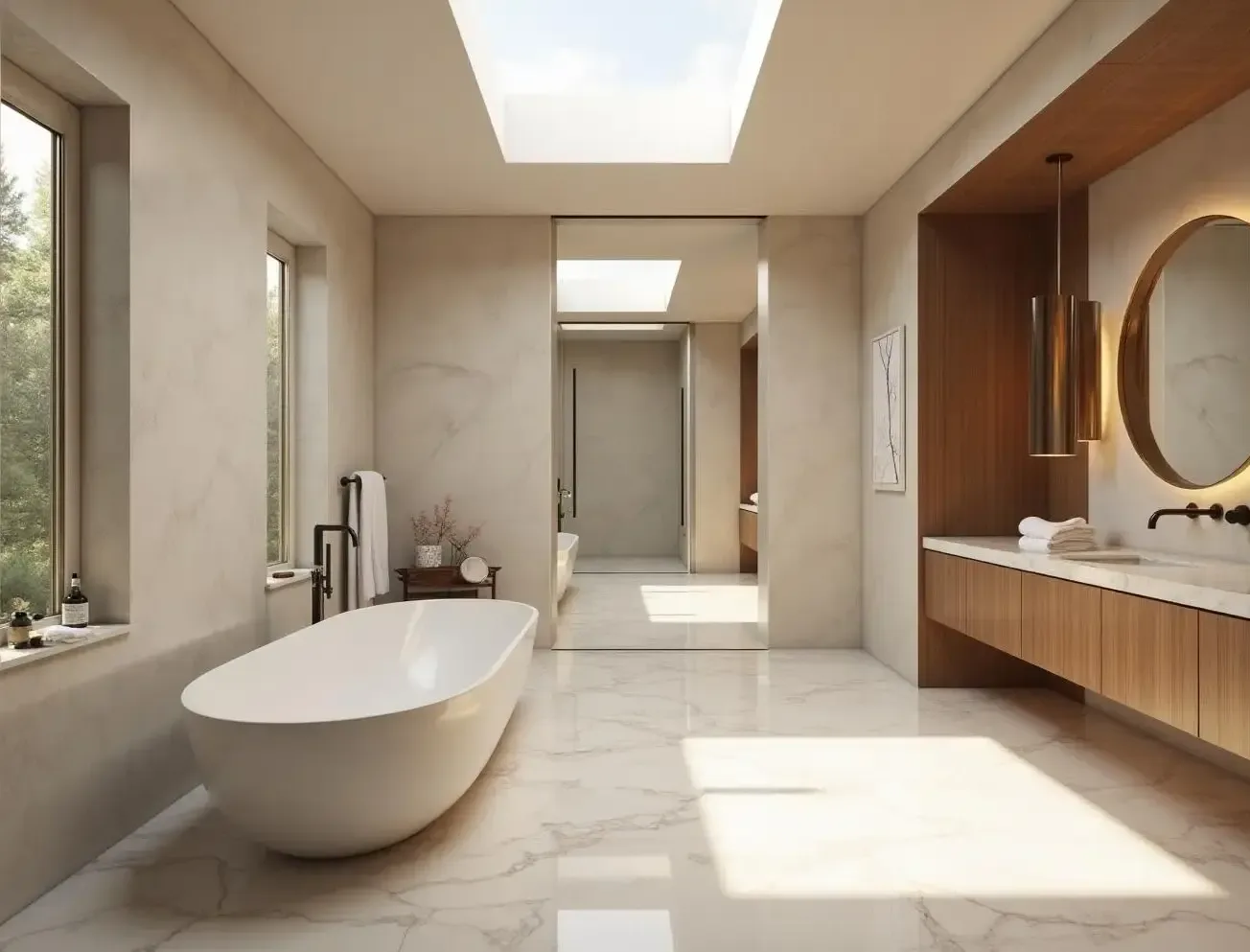
Wellness is no longer a trend in luxury real estate. It is a permanent shift in what buyers expect. Across metro Atlanta, from Buckhead estates to new construction in Sandy Springs, buyers are asking about air quality systems, cold plunges, steam showers, and dedicated fitness spaces before they ask about the kitchen.
But here is the question that matters if you are building, renovating, or buying: which wellness features actually add value at resale, and which ones are just expensive personal preferences?
According to the National Association of Realtors 2025 Remodeling Impact Report, wellness-oriented home features are among the fastest-growing categories in buyer demand. And a 2024 survey from the National Association of Home Builders found that 70% of buyers rated indoor air quality as essential or desirable, while dedicated exercise rooms ranked in the top five most requested features in custom homes.
The catch is that not all wellness features carry the same weight with buyers. A $40,000 flotation tank might be exactly what you want, but it will not return $40,000 at the closing table. A $5,000 steam shower upgrade in the primary bath, on the other hand, may be one of the best dollar-for-dollar improvements you can make.
This guide breaks down the wellness features that are adding real, measurable value to Atlanta luxury homes right now, the ones that are nice but neutral, and the ones you should skip if resale value is part of your calculus.
The Wellness Premium Is Real
Before getting into specific features, it is worth understanding the broader market context. Wellness is not just a marketing buzzword being slapped onto listing descriptions. The data shows a measurable price premium for homes with intentional wellness design.
Research from Terrapin Bright Green, a firm specializing in biophilic design economics, found that residential properties with strong biophilic and wellness design elements can command 5% to 15% higher sale prices compared to similar properties without them. In a $2 million Atlanta home, that is $100,000 to $300,000 in potential additional value.
The Global Wellness Institute reports that the wellness real estate sector grew to over $438 billion worldwide by 2025, up from $275 billion in 2020. That growth is driven by buyer demand, not developer speculation.
In metro Atlanta specifically, luxury homes with three or more wellness-oriented features (such as a home gym, steam shower, and air purification) tend to spend fewer days on market than similar homes without those features. Fewer days on market typically means stronger offers and less price negotiation.
High-ROI Wellness Features
These are the features that consistently show positive returns in the Atlanta luxury market. They appeal to a broad range of buyers, integrate well into existing home designs, and signal quality without being overly niche.
Steam Showers in the Primary Bath
Cost: $2,500 to $6,000 (retrofit) | $15,000 to $40,000 (full build with enclosure)
Typical ROI: 60% to 80%
Steam showers are the single most cost-effective wellness upgrade for luxury homes. They fit into an existing bathroom renovation, appeal to a wide audience, and are expected by buyers in the $2 million and above range in Atlanta. A ThermaSol or Mr. Steam generator, digital controls, and a properly sealed glass enclosure with bench seating can transform a standard primary bath into a spa-grade experience. Most Atlanta listing agents report that a steam shower in the primary suite is no longer a bonus feature in the luxury segment. It is baseline.
Whole-House Air Purification
Cost: $3,000 to $10,000 installed
Typical ROI: 60% to 80%
Atlanta consistently ranks among the worst cities in the country for pollen, per the Atlanta Allergy and Asthma pollen count station. Whole-house HEPA filtration, UV germicidal systems, or integrated solutions from IQAir, Aprilaire, or Carrier are a tangible quality-of-life improvement that buyers in this market understand immediately. Post-2020 awareness around indoor air quality has made this one of the most universally appealing wellness upgrades. The NAHB survey data confirms it: 70% of buyers consider indoor air quality essential or desirable.
Dedicated Home Gym
Cost: $10,000 to $50,000 (space build-out, not equipment)
Typical ROI: 50% to 65%
The American Institute of Architects 2025 Home Design Trends Survey ranks dedicated fitness spaces in the top five most requested features in custom homes. The key word is "dedicated." A Peloton in the guest bedroom is not a home gym. A purpose-built space with rubber or cork flooring, mirrored walls, proper ventilation, adequate electrical capacity, and a layout designed for functional fitness equipment adds real value. The best home gyms in Atlanta luxury properties occupy 400 to 800 square feet and include features like wall-mounted TV screens for virtual training, built-in sound systems, and direct access to a bathroom or outdoor space. Important: do not convert a bedroom to a gym unless the home has five or more bedrooms. Losing a bedroom count on the MLS listing hurts resale more than the gym helps.
Whole-House Water Filtration
Cost: $2,000 to $8,000 installed
Typical ROI: 65% to 85%
A whole-house water filtration system (reverse osmosis, carbon block, or multi-stage) is one of those upgrades that costs relatively little, appeals to almost every buyer, and has the added benefit of protecting plumbing fixtures and appliances. Atlanta municipal water is safe, but buyers in the luxury segment increasingly want filtration as a standard feature. Systems from brands like Kinetico, Pentair, or Culligan integrate cleanly with existing plumbing and can be maintained with annual filter changes. This is one of the highest-ROI wellness features because the cost is low and the appeal is broad.
Moderate-ROI Wellness Features
These features add value, but the return depends more on execution, the home's price point, and the specific buyer pool. They are worth doing if you genuinely want them, but they should not be your first investment if pure ROI is the goal.
Cold Plunge Pool
Cost: $5,000 to $15,000 (standalone) | $15,000 to $40,000 (built-in with chiller)
Typical ROI: 40% to 60%
Cold plunges have exploded in popularity thanks to wellness influencers and research on cold exposure benefits. In the Atlanta luxury market, a professionally installed cold plunge that integrates with the pool area or outdoor living space can be a genuine differentiator. The issue is execution. A built-in cold plunge with proper chiller, filtration, and drainage adds to the home. A $3,000 portable tub on the patio does not. If you are going to do it, do it right: gunite or fiberglass construction, a dedicated chiller unit (not just ice), integrated drainage, and a location that makes architectural sense. The buyer who wants a cold plunge will pay for quality. The buyer who does not want one will at least appreciate that it looks like it belongs.
Infrared Sauna
Cost: $3,000 to $8,000 (prefab) | $10,000 to $25,000 (custom built-in)
Typical ROI: 40% to 55%
Infrared saunas are more accessible than traditional Finnish saunas because they require only a standard 20-amp circuit, no special ventilation beyond a nearby window or vent, and minimal floor space. Brands like Clearlight, Sunlighten, and Jacuzzi offer both prefabricated units and custom-built options. In a luxury home, a built-in infrared sauna within the primary bath suite or a dedicated wellness room feels intentional and high-end. A prefab unit in a corner of the basement feels like an afterthought. The ROI is moderate because not every buyer uses saunas, but those who do will see it as a strong positive. In homes above $2 million in Buckhead and Sandy Springs, sauna features are becoming increasingly common.
Circadian Lighting Systems
Cost: $5,000 to $20,000 (whole home)
Typical ROI: 35% to 50%
Circadian lighting systems adjust color temperature throughout the day to support natural sleep-wake cycles. Brands like Ketra (owned by Lutron) and USAI Lighting offer residential systems that shift from warm, low-intensity light in the morning and evening to cool, bright light during productive hours. This is a sophisticated upgrade that appeals to tech-forward buyers and health-conscious homeowners. The ROI is moderate because many buyers do not yet know what circadian lighting is, but those who do consider it a significant differentiator. As awareness grows, expect this to move into the high-ROI category within a few years.
Biophilic Design: The Biggest Wellness Value Driver
If there is one wellness concept that consistently adds the most value per dollar spent, it is biophilic design. This is the practice of incorporating natural elements, natural light, and connections to the outdoors into residential architecture.
You do not need to gut your home to incorporate biophilic design. In fact, many of the most effective biophilic elements are relatively affordable:
High-Impact Biophilic Design Elements
- Maximized natural light: Enlarging windows, adding skylights, or installing glass walls that blur the line between indoor and outdoor spaces. This is the single most impactful biophilic change you can make, and it consistently increases home value across every price point.
- Living walls: Vertical gardens in the foyer, primary suite, or home office add a dramatic visual element and improve air quality. Professional installations with integrated irrigation cost $100 to $300 per square foot and create a strong first impression.
- Natural materials: Stone, wood, clay, and other organic materials throughout the home signal quality and warmth. Replacing laminate or composite surfaces with real stone or hardwood has a measurable impact on buyer perception and value.
- Indoor-outdoor flow: Pocket doors, folding glass walls (like NanaWall systems), covered outdoor living areas with fireplaces, and seamless transitions between kitchen and patio. In Atlanta's climate, outdoor living is usable eight to nine months of the year, making this especially valuable.
- Water features: Interior fountains, courtyard water walls, or natural swimming pool designs. Water features create ambient sound, visual calm, and a sense of luxury that photographs well and makes a strong impression during showings.
The Terrapin Bright Green research is clear: biophilic design elements can increase property values by 5% to 15%. On a $3 million home in Buckhead, that represents $150,000 to $450,000 in potential additional value. And unlike a cold plunge or sauna, biophilic design elements appeal to virtually every buyer because they improve how the home looks and feels at a fundamental level.
Wellness Features That Do Not Add Proportional Value
Not every wellness upgrade pencils out at resale. Some features are fantastic for your personal quality of life but will not return their cost when you sell. If you are doing them for yourself, go for it. If you are doing them for resale value, think twice.
Low-ROI Wellness Investments
- Flotation tanks ($15,000 to $30,000 installed): Highly niche. Most buyers have never used one and will not pay a premium for it. The plumbing and space requirements can also complicate future use of the room for other purposes.
- Cryotherapy chambers ($30,000 to $50,000+): Commercial-grade equipment that most luxury buyers do not want in their home. High maintenance, specialized electrical requirements, and limited appeal.
- Hyperbaric oxygen chambers ($5,000 to $20,000): Medical-adjacent equipment that raises questions and does not photograph well for listings. Most buyers see these as a negative, not a positive.
- Elaborate meditation caves or sensory deprivation rooms ($20,000 to $50,000): Unless the room can easily convert back to a standard bedroom or office, this is a personal preference that narrows your buyer pool.
- Converting bedrooms to single-purpose wellness spaces: Losing a bedroom on the MLS listing (going from 5BR to 4BR, for example) can cost you more in resale value than the wellness space adds. Only do this if the home has six or more bedrooms.
The rule of thumb: if you have to explain what a feature is to the average luxury buyer, it is probably not going to add proportional value. Stick to features that are immediately understood and broadly appealing.
Pool and Spa Integration
If your Atlanta luxury home already has a pool, upgrading it with wellness features is one of the smartest investments you can make. In a warm-climate market like Atlanta, a well-built pool typically adds meaningful value to a luxury home, and spa-grade wellness features can push that value higher.
The most effective pool wellness upgrades for the Atlanta market include:
- Heated spa/hot tub integration: Built into the pool design, not a standalone portable unit. Costs $8,000 to $25,000 on top of base pool construction.
- Swim current systems: Endless Pool-style jets that allow lap swimming in a smaller pool footprint. Ideal for properties where lot size limits pool length. $5,000 to $15,000 added to construction.
- Salt water conversion: Costs $1,000 to $3,000 and is preferred by buyers who want a lower-chemical swimming experience.
- Cold plunge zone: A separate section of the pool with an independent chiller, allowing hot/cold contrast therapy. $10,000 to $25,000 for the add-on.
- UV or ozone sanitization: Reduces chlorine needs and appeals to health-conscious buyers. $1,500 to $4,000 installed.
In neighborhoods like Tuxedo Park, Chastain Park, and Paces, a well-designed pool with spa features is almost expected in homes above $2 million. The absence of a pool, or the presence of a dated one, can actually hurt the listing.
How to Prioritize Wellness Investments by Price Point
Not every home needs every wellness feature. The right approach depends on your price point, the existing features of the home, and what competing homes in your area offer.
$1M to $1.5M Homes
Focus on the fundamentals: whole-house water filtration, air purification, and a steam shower upgrade in the primary bath. These three upgrades cost $8,000 to $20,000 combined and provide the best return at this price point. A dedicated gym space is a nice plus if you have an extra room, but do not sacrifice bedroom count.
$1.5M to $3M Homes
All of the above, plus a dedicated home gym build-out, biophilic design elements (especially natural light maximization and indoor-outdoor flow), and either a sauna or cold plunge if the home layout supports it. Pool spa integration is also worth considering at this level. Total wellness investment: $25,000 to $75,000.
$3M+ Homes
At this level, buyers expect a wellness suite or at least a curated collection of wellness amenities. A dedicated spa room with steam, sauna, and cold plunge. A purpose-built gym with high-end finishes. Circadian lighting. Living walls. A pool with integrated hot/cold zones. The key at this price point is cohesion. Every wellness element should feel like part of a unified design, not a collection of afterthoughts.
What Atlanta Luxury Buyers Actually Ask About
From our experience working with luxury buyers across metro Atlanta, here are the wellness-related questions we hear most often during showings and consultations:
- "Does this home have a dedicated gym or fitness area?" This comes up in nearly every showing for homes above $1.5 million. Buyers want to see a space that is ready for equipment, not a room they would need to convert.
- "What kind of air filtration does the home have?" Especially from buyers relocating to Atlanta who have heard about the pollen counts. A whole-house system is a strong selling point.
- "Is the pool heated? Does it have a spa?" Standard pool versus spa-grade pool is an important distinction for buyers in this market.
- "Is there a steam shower or sauna?" In the $2 million and above range, this question comes up regularly. Having the answer be "yes" creates an immediate positive impression.
- "How is the natural light?" This is technically a biophilic design question, even if buyers do not use that term. Homes with abundant natural light consistently sell faster and at stronger prices.
If your home can answer "yes" to most of these questions, you are well-positioned in the current market. If it cannot, those are the upgrades to prioritize.
The Bottom Line
Wellness features are no longer a niche selling point in Atlanta luxury real estate. They are becoming standard expectations, especially in the $2 million and above segment. The buyers walking through homes in Buckhead, Sandy Springs, and Brookhaven today grew up with gym memberships, yoga studios, and a focus on health that previous generations did not have. They expect their home to support that lifestyle.
The smart approach is to focus on features with broad appeal and proven returns: steam showers, air purification, water filtration, dedicated fitness spaces, and biophilic design. Avoid over-investing in niche equipment that only a small percentage of buyers would use. And always keep room count and flexibility in mind, because the best wellness features are the ones that make the home better without limiting future options.
If you are considering wellness upgrades to your Atlanta luxury home, whether for your own enjoyment or to maximize resale value, the right strategy depends on your specific property, neighborhood, and price point. Reach out to our team for a personalized recommendation based on what is selling in your area right now.
Thinking About Buying or Selling a Luxury Home?
We help clients across Atlanta find homes with the features that matter most to their lifestyle, and we help sellers position their properties to attract top offers.
Frequently Asked Questions
Does a cold plunge pool add value to a luxury home?
A professionally installed cold plunge can add perceived value to a luxury home, though the ROI depends heavily on execution. Built-in cold plunges that integrate with the pool area or spa suite tend to appeal to high-end buyers who already prioritize wellness. Portable tubs or DIY setups do not add value and may actually raise questions about plumbing and drainage. According to the National Association of Realtors 2025 Remodeling Impact Report, wellness-oriented upgrades are increasingly cited by buyers as desirable features. Expect to recoup 50% to 70% of the installation cost on a well-integrated cold plunge in a home priced above $1.5 million.
What wellness features do luxury home buyers want most in 2026?
Based on buyer demand patterns across metro Atlanta, the most requested wellness features in 2026 include dedicated home gyms with proper flooring and ventilation, steam showers in the primary bath, air purification systems (whole-house HEPA or similar), water filtration systems, infrared saunas, and outdoor living spaces designed for yoga or meditation. Buyers are also increasingly asking about circadian lighting systems and low-VOC construction materials. The specific features that matter most depend on the price point and neighborhood.
How much does a home gym add to property value?
A well-designed home gym in a dedicated space with proper flooring, mirrors, ventilation, and electrical for equipment can add meaningful value to a luxury home. The key is that the space feels intentional and finished, not like a converted garage. Per the American Institute of Architects 2025 Home Design Trends Survey, dedicated fitness spaces rank among the top five most requested features in custom homes. In metro Atlanta, homes with purpose-built gyms in the $1.5 million and above range typically see a 50% to 65% return on the build-out cost at resale.
Is an infrared sauna worth installing in a luxury home?
Infrared saunas are one of the more cost-effective wellness additions. A high-quality two-person infrared sauna costs between $3,000 and $8,000 installed, while a built-in four-person unit with premium wood and custom lighting runs $10,000 to $25,000. They require only a standard 20-amp electrical circuit, minimal plumbing, and good ventilation. The resale impact varies, but buyers in the $2 million and above segment increasingly expect some form of sauna or steam feature. A built-in infrared sauna in a spa bathroom or dedicated wellness room adds both function and perceived luxury.
Do air purification systems increase home value?
Whole-house air purification systems have become a genuine value-add since 2020. Systems like IQAir, Aprilaire, or Carrier Infinity units that integrate with the HVAC cost between $3,000 and $10,000 installed. According to a 2024 National Association of Home Builders survey, 70% of home buyers rated indoor air quality as an essential or desirable feature. In Atlanta, where pollen counts regularly rank among the highest in the country (per the Atlanta Allergy and Asthma clinic), whole-house air purification is especially appealing. These systems typically recoup 60% to 80% of their cost at resale.
What is biophilic design and does it add home value?
Biophilic design incorporates natural elements into the built environment: living walls, natural light optimization, organic materials like stone and wood, water features, and indoor plant systems. Research from Terrapin Bright Green shows that biophilic design elements can increase property values by 5% to 15% in residential settings. In Atlanta luxury homes, the most impactful biophilic features include floor-to-ceiling windows with garden views, interior courtyards, living walls in the primary suite or home office, and natural stone throughout. These features signal quality and thoughtful design to buyers.
How much does a steam shower cost to install in Atlanta?
A steam shower retrofit in an existing luxury bathroom typically costs between $2,500 and $6,000 for the steam generator, controls, and installation. If you are building a new steam shower enclosure with bench seating, body jets, and premium tile, the total project cost ranges from $15,000 to $40,000 depending on materials and scope. Steam showers are one of the highest-ROI wellness features because they integrate into an existing space (the primary bath) and appeal to a broad range of luxury buyers. Most Atlanta agents report that a steam shower in the primary bath is expected in homes above $2 million.
Are wellness rooms a good investment for resale?
A dedicated wellness room that can serve multiple purposes (yoga, meditation, massage, stretching) is a strong investment when done correctly. The room should have good natural light, appropriate flooring (cork or hardwood), a calming color palette, and adequate ventilation. Avoid over-customizing with permanent fixtures that limit flexibility. The ideal wellness room can double as a home office, reading room, or guest space. In metro Atlanta, homes with flexible wellness spaces in the $1.5 million and above range are spending fewer days on market compared to similar homes without them, according to FMLS listing data.
Does a pool with spa features add more value than a standard pool?
Yes. A pool with integrated wellness features (heated spa, cold plunge zone, swim current system, or salt water system) typically adds more value than a basic pool. In warm-climate markets, a well-built pool typically adds meaningful value to a luxury home, and spa-grade features can push that value higher. In Atlanta neighborhoods like Buckhead, Brookhaven, and Sandy Springs, a well-designed pool with spa features is almost expected in homes above $2 million. The key is quality construction, proper landscaping, and a design that complements the home architecture.
What wellness features should I avoid when trying to add value?
Avoid highly personalized or niche installations that appeal to a narrow audience. Flotation tanks, cryotherapy chambers, hyperbaric chambers, and elaborate meditation caves may be perfect for your lifestyle but will not add proportional value at resale. These features often cost $20,000 to $50,000 or more and recoup less than 30% at sale. Also avoid converting bedrooms into gyms or wellness spaces unless the home has five or more bedrooms, as losing a bedroom count hurts resale value. Stick to features that are broadly appealing, well-integrated, and do not reduce the functional room count of the home.
"Buying a home remotely seemed impossible, but the team handled everything. Video tours, detailed neighborhood breakdowns, even coordinating inspections when we couldn't be there. Seamless."
Andrew and Rachel P.
Relocated to Atlanta, bought from out of state
Want to know which wellness features will pay off in your home?

Sources
- National Association of Realtors (NAR) - 2025 Remodeling Impact Report and buyer preference surveys for luxury homes.
- National Association of Home Builders (NAHB) - 2024 What Home Buyers Really Want survey, indoor air quality preferences, and custom home feature demand rankings.
- American Institute of Architects (AIA) - 2025 Home Design Trends Survey, dedicated fitness space demand data, and wellness room design trends.
- Terrapin Bright Green - The Economics of Biophilia research report, biophilic design property value premium data (5% to 15% range), and residential wellness design case studies.
- Global Wellness Institute - Wellness real estate market sizing ($438 billion by 2025), sector growth data, and wellness building standards research.
- Atlanta Allergy and Asthma - Pollen count data confirming Atlanta among the highest pollen count cities in the U.S., seasonal allergy prevalence statistics.
- FMLS (First Multiple Listing Service) - Days on market data for Atlanta luxury homes with wellness features versus comparable homes without wellness features.
ROI estimates referenced in this article are based on general market data, industry reports, and our team's experience in the Atlanta luxury market as of early 2026. Actual returns vary by property, neighborhood, quality of installation, and market conditions at the time of sale. These figures should not be interpreted as guarantees of financial return.
Disclaimer: This article is for informational purposes only and does not constitute financial, investment, or real estate advice. ROI estimates and value projections are based on general market data and are not guarantees of financial return. Individual results will vary based on property specifics, market conditions, quality of installation, and buyer preferences at the time of sale. Consult with a licensed real estate professional for advice specific to your property.