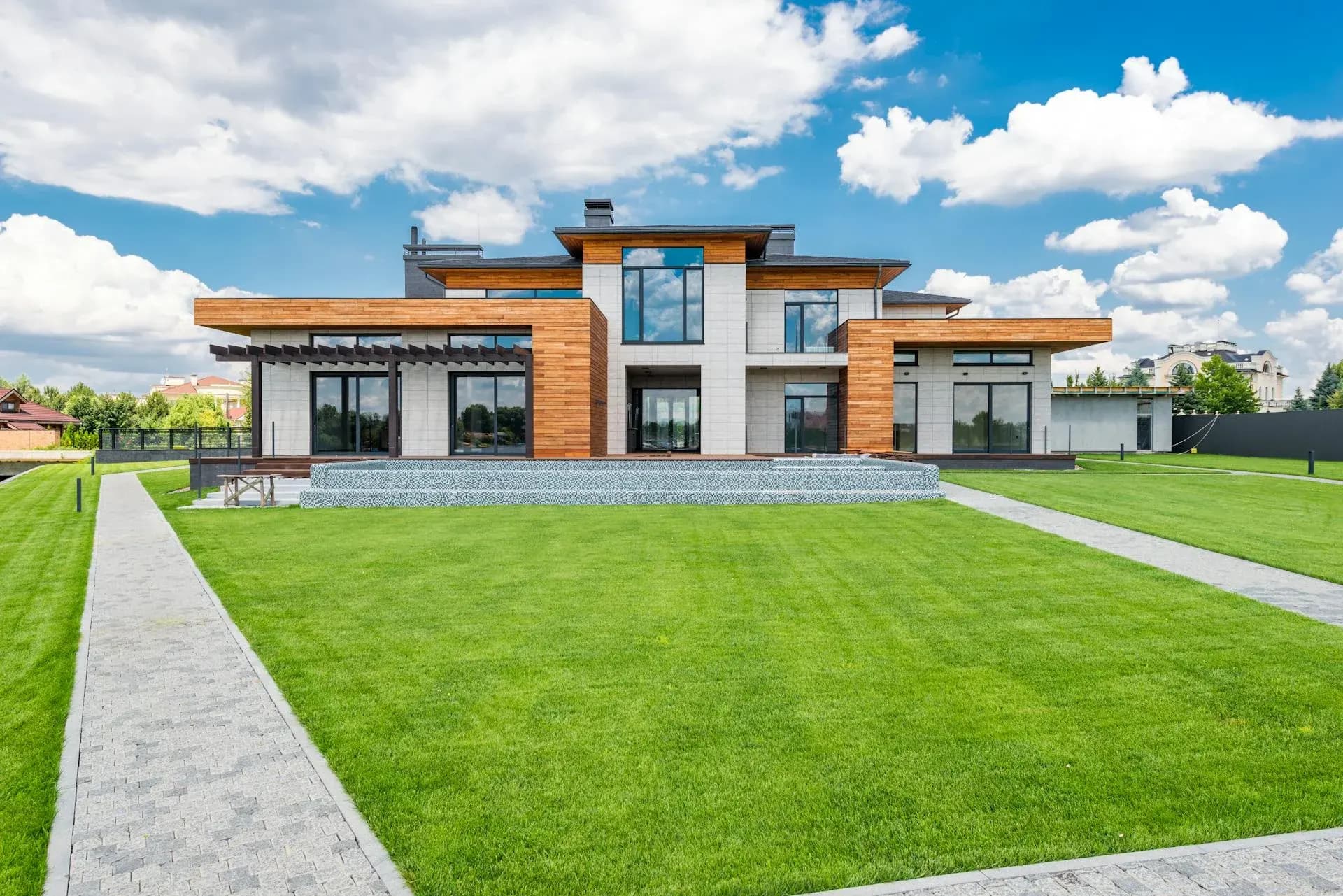
Every luxury buyer in Atlanta eventually faces the same fork in the road: do you build a custom home from the ground up, buy an existing property and make it yours, or find a well-located home with good bones and renovate? Each path has real advantages and real trade-offs, and the right answer depends on your budget, timeline, lifestyle priorities, and tolerance for complexity.
We work with buyers across all three paths every week. Some clients come to us certain they want to build custom, only to realize the 24-month timeline does not fit their life. Others start looking at existing homes and discover that nothing on the market checks every box, which leads them to consider building. And a meaningful number of our best outcomes have come from clients who found an undervalued property in a premier location and transformed it through strategic renovation.
This guide breaks down the real numbers, timelines, and trade-offs for each approach in the Atlanta luxury market as of 2026. If you have been wrestling with the build vs. buy decision, this is the detailed comparison you need.
Build vs. Buy vs. Renovate at a Glance
- New construction in Atlanta runs $350-$600/sqft, with total all-in costs (including land) typically $2.5M-$4.5M+ for a luxury custom build.
- Major luxury renovation costs $150-$350/sqft, but budget overruns of 20-30% are common once walls are opened.
- New construction timeline: 14-24 months from breaking ground, 24-36 months including design. Renovation: 6-14 months for a full gut renovation.
- Buying existing offers the fastest timeline (30-60 day close) and the most predictable cost, but the least customization.
- In 2026, construction costs in Atlanta have stabilized after years of increases, making this a more predictable time to build than 2022-2024.
1. Building Custom: The Full Picture
Building a custom luxury home is the ultimate expression of personal taste and lifestyle. You control every detail, from the floor plan and ceiling heights to the kitchen layout and lighting placement. In Atlanta, the custom build market has matured significantly, with a deep bench of architects, builders, and designers who specialize in high-end residential construction.
The cost equation starts with land. In Buckhead, buildable lots range from $600K to $1.5M+ depending on size and location. Many Buckhead builds involve purchasing an older home, demolishing it, and building new on the lot. In Milton and north Fulton, you can find 1-3 acre lots in the $300K-$800K range that support true estate properties. Sandy Springs falls in between, with lots along the Chattahoochee and in established neighborhoods running $400K-$900K.
Construction costs in 2026 have stabilized after the dramatic increases of 2021-2023, when lumber prices tripled and supply chain disruptions added 15-25% to project costs. Current luxury construction costs in metro Atlanta break down roughly as follows:
Atlanta Luxury New Construction Costs (2026)
Construction costs only. Does not include land, architecture, engineering, landscaping, or furnishings. Actual costs vary by site conditions, design complexity, and finish selections.
The distinction between these tiers is largely about finishes and systems. At the $350-$450 range, you get a beautifully built home with high-quality materials, solid hardwoods, quartz or granite countertops, quality cabinetry, and standard smart home wiring. At $450-$550, you move into imported stone, custom millwork, professional-grade appliances, advanced smart home automation systems, and higher-end architectural details. Above $550, you are in the realm of bespoke everything, hand-selected materials, commercial-grade HVAC with air purification, whole-home automation, and finishes that rival the finest residences anywhere in the Southeast.
One of the biggest advantages of building new in 2026 is energy efficiency. New construction built to current codes is dramatically more efficient than even homes built 10 years ago. Spray foam insulation, high-performance windows, variable-speed HVAC systems, and solar-ready electrical panels are standard in luxury new builds. Many clients are incorporating outdoor living spaces that extend the home’s usable square footage, a feature that is much easier and more cost-effective to incorporate during initial construction than as a later addition.
The timeline is the most common pain point. From the moment you engage an architect to the day you move in, expect 24-36 months. The design phase alone takes 3-6 months for a custom home. Permitting in Fulton County runs 4-8 weeks, and construction itself takes 14-24 months depending on complexity. Weather delays, material lead times, and the inevitable change orders add time. Clients who are relocating or have a hard deadline often underestimate how much patience building custom requires.
2. Buying an Existing Luxury Home: Speed and Certainty
For many luxury buyers, the appeal of an existing home is straightforward: you can see exactly what you are getting, you can close in 30-60 days, and you can move in immediately. There are no construction delays, no budget overruns, and no decisions about 47 different tile options.
The Atlanta luxury resale market in 2026 offers more inventory than buyers have seen in years. As we have covered in our guide to upgrades that boost home value, many sellers have invested in updates that make their homes move-in ready. In the $1M-$2M range, you will find a mix of homes built in the 2000s and 2010s with varying levels of updates, along with newer spec builds from the 2020-2024 era.
The trade-off is customization. Unless you happen to find a home that matches your exact preferences, you are compromising somewhere, whether that is the floor plan, the finishes, the lot, or the location within a neighborhood. In the luxury segment, these compromises matter more because buyers have specific visions for how they want to live.
Price-wise, buying existing is typically the most cost-effective path to luxury homeownership in Atlanta. A 5,000 square foot home in Buckhead that would cost $3M+ to build custom might be available as a 10-year-old resale for $1.8-$2.4M, depending on condition and specific location. The gap is even wider in Alpharetta and Sandy Springs, where luxury resale inventory is deep.
The appraisal process is also more straightforward with existing homes. Lenders have comparable sales to reference, which makes financing smoother and more predictable. With new construction, appraisals can sometimes come in below contract price, requiring buyers to bring additional cash to closing.
Buying Existing: Pros and Cons
Advantages
- Fastest path to move-in (30-60 day close)
- Most predictable total cost
- Established landscaping and mature trees
- Known neighborhood dynamics
- Simpler financing and appraisal process
Disadvantages
- Limited customization options
- Older systems may need replacement soon
- Floor plans may not match modern preferences
- Lower energy efficiency in older homes
- Competition for the best listings
Put Real Numbers on Each Path
Build cost, renovation budget, and the price of a finished home on the same street rarely line up the way buyers expect. We can price all three against a specific lot or listing you have in mind.
Compare Building vs Renovatingor call (770) 727-4052
3. The Renovation Path: Location Premium, Custom Finish
Renovation is the middle path, and in many ways it is the most strategic option for Atlanta luxury buyers in 2026. The logic is compelling: buy a home in a premium location at a price that reflects its current condition, then invest in transforming it into exactly what you want. You get the address, the established landscaping, the mature neighborhood, and in Atlanta’s best historic neighborhoods, you get the character and architectural heritage that cannot be replicated in new construction.
Renovation costs in Atlanta’s luxury market currently run $150-$350 per square foot for whole-home work. A targeted renovation, updating kitchens, bathrooms, and finishes while keeping the structure intact, comes in at the lower end. A full gut renovation that includes structural changes, new HVAC, electrical and plumbing upgrades, floor plan reconfiguration, and complete interior redesign pushes toward the higher end.
Here is what that looks like in practice: A 4,500 square foot Buckhead home purchased for $1.2M with a $500K-$800K renovation budget results in a total investment of $1.7M-$2M. The finished product, if executed well, could be worth $2.2M-$2.8M based on comparable sales of updated homes in the same area. That is meaningful equity creation, though it comes with significant risk and complexity.
The risks are real. Renovation budgets in the luxury space almost always exceed initial estimates. Once you open walls in a 1980s or 1990s Buckhead home, you frequently discover outdated wiring, insufficient insulation, plumbing that needs replacement, or structural issues that were not visible during the initial assessment. A 20-30% contingency above your planned budget is not conservative, it is realistic.
Timeline is another consideration. A full luxury renovation takes 6-14 months from demo to completion, not including the design and permitting phase. If you are living in the home during renovation, expect disruption, noise, dust, and the general chaos of a construction site. Most luxury renovation clients either have a second residence or negotiate an extended close and rent-back arrangement to minimize disruption.
One increasingly popular option is adding an ADU or guest house as part of a renovation project. Atlanta’s evolving ADU regulations have made this more feasible, and a well-designed guest house can add both functionality and value to the property.
Renovation Cost Ranges by Project Type (Atlanta Luxury, 2026)
4. Head-to-Head: Comparing All Three Paths
Let us run the numbers on a specific scenario that represents what many of our clients face. Assume the goal is a 5,000 square foot luxury home in a premier Atlanta location with high-end finishes and modern amenities.
5,000 Sqft Luxury Home in Premier Atlanta Location: Three Paths Compared
Custom New Construction
Buy Existing (Move-In Ready)
Buy and Renovate
The numbers tell a clear story: buying existing is the most cost-effective path, building custom is the most expensive, and renovation falls in between with the widest cost range due to its inherent unpredictability. But cost is only one factor. The right choice depends on how you weigh time, control, risk, and the intangible satisfaction of living in exactly the home you envisioned.
Not Sure Which Path Is Right for You?
We help Atlanta luxury buyers evaluate all three options, build, buy, or renovate, based on their specific budget, timeline, and lifestyle priorities. Tell us what you are looking for and we will help you map the best path forward.
5. Atlanta-Specific Considerations: Builders, Permits, and Neighborhoods
Atlanta’s luxury construction market has a well-established ecosystem of builders, architects, and designers. The city’s strong economy and steady influx of high-net-worth residents has attracted top-tier talent. For new construction, there are roughly a dozen builders in metro Atlanta who consistently deliver luxury custom homes in the $2M+ range, and choosing the right one for your project is critical.
Permitting timelines vary significantly by jurisdiction. Building in the City of Atlanta (which includes parts of Buckhead) means working with the City’s permitting department, which can be slower and more bureaucratic than suburban municipalities. Sandy Springs, Brookhaven, Milton, and Alpharetta have generally more efficient permitting processes. If you are building in an area with a homeowners association or architectural review committee, add additional review time to your schedule. Some of Buckhead’s most prestigious neighborhoods require architectural review that can take 2-3 months.
Atlanta’s tree ordinance is another factor that catches many builders and buyers off guard. The city has strict regulations around tree removal, particularly for mature hardwoods. Removing a large tree without a permit can result in fines of $500-$5,000 per tree, and replacement requirements can be extensive. Your architect and builder need to factor the existing tree canopy into the site plan from day one.
For renovation projects, the neighborhood context matters enormously. Renovating in a historic district like Druid Hills or Ansley Park comes with additional layers of review and restriction. Exterior changes, window replacements, and additions may need approval from the local historic preservation commission. While these regulations protect the neighborhood’s character, they add time and cost to renovation projects.
The neighborhoods that offer the best value for each approach vary. For new construction, Milton and north Alpharetta offer the best lot value and the most straightforward building process. For buying existing, Sandy Springs and Buckhead have the deepest luxury resale inventory. For renovation, in-town Atlanta neighborhoods offer the most upside because the location premium is highest and the price discount for dated homes is steepest.
6. ROI and Long-Term Value: Which Path Builds the Most Wealth?
From a pure investment perspective, the answer depends on execution and market timing. Historically in Atlanta, all three paths have built wealth for buyers who made smart decisions. But the return profiles differ.
New construction tends to appreciate steadily because it starts at the top of the comparable market. A newly built custom home in a strong neighborhood will typically track or slightly exceed the neighborhood’s overall appreciation rate. The downside is that you pay a premium upfront, so your percentage return is often lower even if the dollar appreciation is strong.
Buying existing offers the most straightforward return profile. You buy at market value, the home appreciates at the neighborhood rate, and your return is largely a function of the broader market. The data from the neighborhoods where smart money is buying in 2026 shows that well-located existing homes in premier areas have appreciated 35-50% over the past five years.
Renovation offers the highest potential return but also the highest risk. When you buy a dated home below market value and renovate it well, you can create significant equity on day one. A well-executed renovation in Buckhead or Sandy Springs can create hundreds of thousands of dollars in equity. But renovation projects that go over budget, take too long, or involve the wrong upgrades can erode or eliminate that upside.
The key to renovation ROI is understanding which upgrades actually add value in the Atlanta luxury market and which are over-improvements. Our analysis of the best upgrades to boost home value in Atlanta breaks this down in detail.
7. Making Your Decision: A Framework
After walking dozens of luxury buyers through this decision, we have found that the right choice usually becomes clear when you honestly assess four factors:
Timeline. If you need to be in a home within 3 months, new construction is off the table and major renovation is risky. Buying existing is the only realistic path. If you have 12-18 months, renovation becomes viable. If you have 24+ months and the patience to manage a build, new construction is an option.
Budget certainty. If you have a firm budget ceiling and cannot tolerate overruns, buying existing gives you the most control. New construction and renovation both involve meaningful financial uncertainty. If your budget has a 25-30% cushion above your target spend, you can manage the variability of building or renovating.
Customization priority. If you have a specific vision that no existing home will satisfy, building custom is the answer. If you want to customize but are flexible on some elements, renovation gives you 70-80% of the customization at 50-70% of the cost. If you are generally happy with high-quality finishes and a good floor plan, buying existing and making minor updates is the most efficient path.
Risk tolerance. Building and renovating both involve meaningful risk: cost overruns, timeline delays, decision fatigue, and the stress of managing a major construction project. Some clients thrive on the creative process. Others find it overwhelming. Be honest with yourself about how much complexity you want to manage while also handling the rest of your life.
Bottom Line: There is no universally right answer. The Atlanta luxury market in 2026 offers excellent options across all three paths. The best outcome comes from honest self-assessment, realistic budgeting, and working with professionals who understand the full landscape of options available to you.
What This Means for You
Whether you build, buy, or renovate, the Atlanta luxury market in 2026 provides a favorable environment for all three approaches. Construction costs have stabilized. Resale inventory is healthy. And renovation contractors are more available than they were during the frantic 2021-2023 period when everyone was updating their homes simultaneously.
The key is making the decision that aligns with your specific situation, not the one that sounds best in theory. We help our clients think through this decision with real data, local market knowledge, and connections to the builders, architects, and designers who do the best work in Atlanta. If you are weighing your options, we are happy to walk you through the numbers for your specific target neighborhoods and price range.
Frequently Asked Questions
How much does it cost to build a custom luxury home in Atlanta in 2026?
Custom luxury construction in metro Atlanta currently runs $350-$600 per square foot depending on the level of finish, lot location, and complexity of the design. For a 5,000 square foot home, that translates to roughly $1.75M-$3M for construction alone, not including land. High-end finishes like imported stone, custom millwork, and smart home integration push costs toward the upper end. Buckhead and Sandy Springs lots suitable for luxury builds typically range from $400K-$1.5M depending on size and location, so total all-in costs for a custom build often land in the $2.5M-$4.5M range.
Is it cheaper to renovate an existing luxury home or build new in Atlanta?
It depends on the scope. A full-scale luxury renovation in Atlanta currently costs $150-$350 per square foot, which is significantly less than new construction at $350-$600 per square foot. However, renovations frequently exceed initial budgets by 20-30% once walls are opened and unexpected issues are discovered, particularly in older homes. If you are doing a gut renovation that involves structural changes, new HVAC, electrical upgrades, and full interior redesign, the cost gap between renovation and new construction narrows considerably. As a general rule, if renovation costs exceed 60-70% of what a comparable new build would cost, building new usually makes more financial sense.
How long does it take to build a custom luxury home in Atlanta?
From breaking ground to move-in, expect 14-24 months for a custom luxury home in metro Atlanta. The timeline breaks down roughly as follows: permitting takes 4-8 weeks depending on the jurisdiction (Fulton County tends to be slower, while cities like Milton and Alpharetta have streamlined their processes). Site work and foundation run 4-8 weeks. Framing through dry-in is another 8-12 weeks. Interior finish work, which is where most luxury customization happens, takes 4-8 months. Add another 2-4 months for landscaping, punch list items, and final inspections. The full process from initial design through completion often spans 24-36 months when you include the architectural design phase.
What are the best areas in Atlanta for new luxury construction?
The most active areas for luxury new construction are Buckhead (particularly infill lots where older homes are being torn down and replaced), Milton and Alpharetta (where larger lots are available for estate-style homes), and Sandy Springs (especially along the Chattahoochee corridor). Buckhead offers the prestige and walkability but lots are smaller and more expensive. Milton provides the space for true estate properties with 1-3 acre lots at more reasonable land costs. Alpharetta has several new luxury communities being developed with lots and semi-custom options. Sandy Springs offers a middle ground with good lot sizes and proximity to Buckhead amenities.
What permits do I need to build or renovate a luxury home in Atlanta?
For new construction, you will need a building permit, land disturbance permit, tree removal permit (Atlanta has strict tree ordinances), septic or sewer connection permits, and potentially a variance if you are building in a historic district or the design exceeds zoning setback requirements. For major renovations, a building permit is required for any structural work, electrical updates, plumbing changes, or additions. If the home is in a historic district like Druid Hills or Ansley Park, you will also need approval from the local historic preservation commission, which can add 2-4 months to your timeline. Working with a builder who has established relationships with local permitting offices can significantly reduce delays.
Does new construction or renovation provide better ROI in Atlanta?
New construction generally provides better long-term appreciation because buyers pay a premium for modern floor plans, energy efficiency, and updated systems. In Atlanta, newly built luxury homes typically sell for more per square foot than comparable renovated homes of the same size. However, renovation can provide better short-term ROI if you purchase a well-located home below market value and upgrade it strategically. The best renovation ROI in Atlanta comes from kitchens, primary suites, outdoor living spaces, and energy efficiency upgrades. The worst renovation ROI comes from over-improving for the neighborhood or highly personalized finishes that do not appeal to the broader luxury market.
Ready to explore your options for luxury living in Atlanta?
Sources
- National Association of Home Builders (NAHB) Construction Cost Survey, 2026 - National and regional data on per-square-foot construction costs for custom residential homes. nahb.org
- Remodeling Magazine Cost vs. Value Report, 2026 - ROI data for major home renovation projects by region, including the South Atlantic market. remodeling.hw.net
- FMLS (First Multiple Listing Service) Market Reports, March 2026 - Active listings, sale prices, and market statistics for metro Atlanta luxury homes. fmls.com
- City of Atlanta Department of City Planning, Building Permits Division - Permit requirements, fees, and timelines for residential construction and renovation. atlantaga.gov
Construction cost estimates and renovation budgets are based on our direct experience working with luxury builders and contractors across metro Atlanta. Individual project costs vary significantly based on site conditions, design complexity, material selections, and contractor availability.
Disclaimer: This article is for informational purposes only and does not constitute financial, legal, or construction advice. Construction costs, renovation budgets, and timelines are estimates based on current market conditions and may vary significantly based on individual project specifications. Consult qualified builders, architects, and financial professionals before making decisions about home construction or renovation.