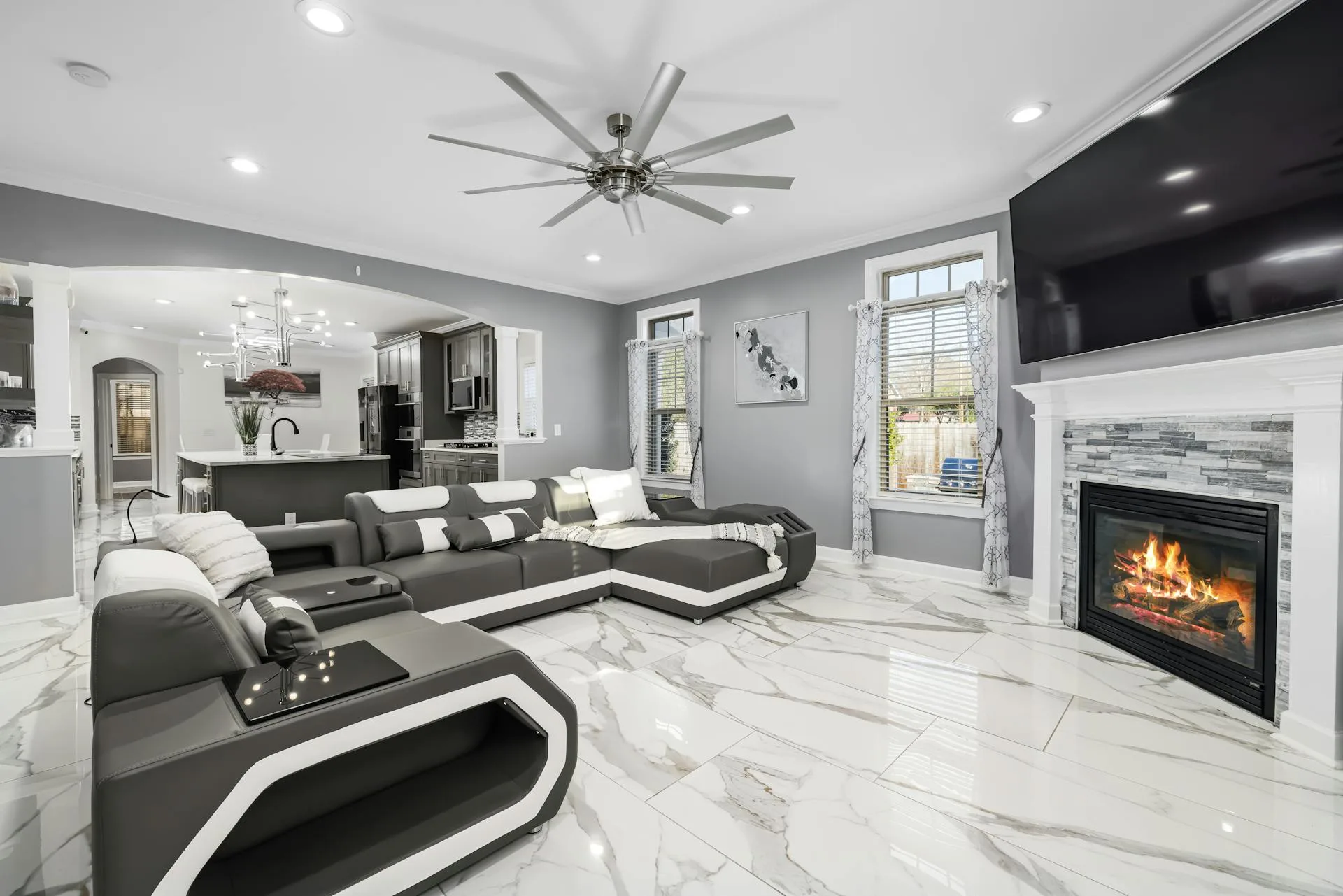
Consider a hypothetical contrast. A seller in Buckhead spends $45,000 on a Crestron whole-home automation system before listing. Touchscreens in every room. Automated blinds. Speakers in the ceilings. The system works beautifully. The house sits on the market for months, and the eventual buyer asks for a credit to rip it out and start fresh.
Meanwhile, a seller in Brookhaven spends $4,500 on a smart thermostat, a Ring doorbell, six exterior cameras, and a Level 2 EV charger. Nothing flashy. That home sells quickly, and the buyers call out the EV charger and security cameras in their offer letter.
Smart home technology is one of the most misunderstood categories in real estate. Some features genuinely add value and help homes sell faster. Others are expensive personal preferences that the next buyer does not want. The difference is not about how much you spend. It is about what you spend it on.
This guide breaks down every major smart home category with real costs, real ROI estimates, and what Atlanta luxury buyers actually want in 2026. We will cover what to install before listing, what to skip, and the interoperability issues that can turn a selling point into a deal killer.
Quick Takeaways
- Smart thermostats are the single best investment: $200-$500, universally understood by buyers, and they signal an updated home.
- Security systems with cameras are among the most-requested smart features for luxury buyers.
- EV charging is rapidly shifting from nice-to-have to expected in Atlanta homes above $800K, with Georgia EV registrations up 40%+ year over year.
- Whole-home automation systems ($30K-$100K+) rarely return their cost. The next buyer may not want your system.
- The rule of thumb: if a feature solves a permanent problem (security, energy, charging), it adds value. If it solves a personal preference (custom audio zones, smart mirrors), it probably does not.
The ROI Reality: What Pays Back and What Does Not
According to a Coldwell Banker survey, 81% of buyers say smart home technology would influence their purchase decision. But "smart features" is a broad category. A $250 Nest thermostat and a $75,000 Crestron system are both "smart," but only one of them consistently helps sell homes.
Per CNET research and our own experience as Atlanta luxury listing agents, the features that add measurable value share three traits: they solve a universal problem, they are easy for the next owner to use, and they do not require proprietary software that could be discontinued.
Smart Home Feature ROI Guide
| Feature | Typical Cost | ROI | Value Notes |
|---|---|---|---|
| Smart thermostat (Nest/Ecobee) | $200-$500 | High | Recoups cost + adds perceived value |
| Smart security system + cameras | $1,500-$5,000 | High | Top 3 most-wanted feature by buyers |
| EV charging (Level 2, hardwired) | $1,200-$2,500 | High | Increasingly expected in $800K+ homes |
| Motorized window shades | $500-$1,500/window | Moderate | Strong appeal in south-facing rooms |
| Whole-home Wi-Fi (mesh or hardwired) | $1,000-$3,000 | Moderate | Baseline expectation, not a differentiator |
| Smart lighting scenes | $2,000-$8,000 | Moderate | Improves showing experience significantly |
| Whole-home audio (Sonos/similar) | $3,000-$10,000 | Low-Moderate | Nice-to-have, rarely drives a purchase |
| Automated irrigation | $2,000-$4,000 | Moderate | Practical in Atlanta heat, saves water bills |
| Dedicated media room AV | $15,000-$50,000+ | Low | Highly personal, next buyer may gut it |
| Smart mirrors/toilets/appliances | $2,000-$10,000+ | Very Low | Cool factor only, no measurable return |
ROI ratings based on 2024-2025 NAR buyer survey data, Zillow listing feature analysis, and our experience listing luxury homes in metro Atlanta. Actual returns depend on home price, buyer pool, and installation quality.
Security: The Feature Buyers Care About Most
Across buyer surveys, security consistently ranks among the top reasons people want smart home technology. It is not about convenience or showing off. It is about peace of mind.
For Atlanta luxury homes, this matters even more. Homes in Buckhead, Sandy Springs, and Brookhaven sit on large lots with multiple entry points. Buyers want to know the property is covered before they move in.
What to Install
- Exterior cameras (6-10): Cover all entry points, driveway, and backyard. Hardwired cameras (PoE) are preferred in luxury homes because they do not lose connection or need battery changes. Budget $2,000-$4,000 for cameras plus a network video recorder (NVR).
- Video doorbell: This is table stakes now. Every buyer expects it. $150-$350 for a quality unit from Ring, Nest, or Ubiquiti.
- Smart locks (2-3 doors): Keypad entry on the front door, garage entry, and back door. Yale, Schlage, and August all make reliable models in the $200-$400 range per lock. Avoid anything that requires a proprietary hub.
- Alarm system with monitoring: Professional monitoring ($15-$45/month) adds legitimacy. Many buyers will negotiate credits for homes without it. Systems from ADT, Vivint, or a local integrator are seen as more serious than DIY setups in the luxury market.
Cost Breakdown
A professionally installed security package for a 4,000-6,000 sq ft Atlanta home typically runs $3,000-$8,000 for hardware and installation, plus $15-$45/month for monitoring. DIY systems (Ring, SimpliSafe) cost $500-$1,500 but carry less prestige. For homes above $1M, we recommend professional installation. It is one of the few places where spending more directly translates to buyer confidence.
Climate Control: Where Atlanta's Heat Makes Smart Tech a No-Brainer
Atlanta summers are brutal. Average highs above 90 degrees from June through August, humidity that makes 85 feel like 100, and cooling bills that can hit $400-$600/month in a large home. Smart climate technology is not a luxury here. It is a practical necessity, and buyers know it.
Smart Thermostats: The Best $300 You Will Spend
Per the EPA, an Energy Star-certified smart thermostat saves approximately 8% on heating and cooling bills annually. For an Atlanta home with $3,600/year in HVAC costs, that is roughly $288 per year in savings. The device pays for itself in the first year and keeps saving the next owner money every year after that. Per Zillow listing data, homes with smart thermostats sell up to 1-2 days faster than comparable homes without them. It is a small number, but it costs you $250 to capture it.
Zoned HVAC: The Upgrade Atlanta Buyers Ask About
In a 4,000+ sq ft home, zoned HVAC (separate temperature control for different areas) is increasingly expected. A retrofit typically costs $2,000-$4,000 per zone, and most luxury homes benefit from 3-4 zones. It is not cheap, but in a market where buyers are paying $1M+ and asking detailed questions about utility costs, it is a meaningful differentiator. If your home already has multiple HVAC units, adding smart thermostats to each zone is a fraction of the cost and achieves a similar result.
Motorized Shades: Practical and Impressive
Motorized window treatments cost $500-$1,500 per window, and they are one of the few "wow factor" features that also have genuine practical value. South-facing rooms in Atlanta get punished by afternoon sun. Automated shades that close on a schedule or respond to a sensor reduce cooling costs, protect furniture from UV damage, and look stunning during showings. We typically recommend motorizing the primary bedroom, great room, and any media room at minimum. The total cost for 8-12 windows runs $6,000-$15,000.
Lighting: The Feature That Sells Homes at 6 PM
Here is something most sellers do not think about: a significant percentage of showings happen in the late afternoon and evening, especially for working professionals viewing homes after their day is done. Smart lighting is not just about convenience. It is about how your home looks when buyers walk through the door.
A home with warm, dimmed lighting in the living room, accent lights in the kitchen, and landscape lighting casting a glow on the exterior feels fundamentally different from a home where the buyer is flipping switches and squinting under fluorescent overheads. Smart lighting creates atmosphere, and atmosphere creates emotional connection, and emotional connection is what makes someone write an offer over asking.
For resale, stick with white-light smart switches rather than color-changing bulbs. Buyers want a home that feels sophisticated, not a college dorm with LED strips. Lutron is the industry standard for luxury. It is reliable, works without internet, and integrates with virtually every platform.
Not Sure Which Smart Features Are Worth It for Your Home?
Every home is different. The smart upgrades that make sense for a $750K Brookhaven ranch are not the same as a $2M Buckhead estate. We can walk through your home, assess what you already have, and tell you exactly where to spend and where to save. No charge, no obligation.
Entertainment: The Biggest Money Pit in Smart Homes
This is where sellers lose the most money. A dedicated media room with a $15,000 projector, $8,000 in speakers, acoustic panels, and custom seating can cost $30,000-$50,000+. And the next buyer may want a home gym in that room instead.
Entertainment technology is deeply personal. Your ideal speaker placement is not the next person's. Your preferred streaming setup is not universal. Unlike security or climate control, which solve problems everyone has, entertainment systems solve problems only you have.
What Works for Resale
- Pre-wired speaker locations: Running speaker wire (or Cat6 for powered speakers) during construction or renovation costs almost nothing and gives the buyer options. This is infrastructure, not a system.
- Sonos-compatible in-ceiling speakers: $200-$400 per pair installed. Sonos is ubiquitous and the next buyer can connect them to their own account in minutes. This is the sweet spot for whole-home audio.
- A media room (not theater): A room with a large-screen TV mount, good speaker wiring, and blackout shades is more valuable to most buyers than a full theater with fixed seating and a projector. Keep it flexible.
What Does Not Help Resale
- Custom home theaters ($30K-$80K): These are built around one family's preferences. Fixed riser seating, specialized acoustic treatments, and dedicated equipment racks are hard to repurpose. Most buyers in this price range would rather have a flexible bonus room.
- Proprietary multi-room audio (Control4/Crestron): Costs $10K-$30K and requires the next buyer to keep paying for dealer support. Many buyers see this as a liability, not an asset.
Convenience Features: EV Charging, Irrigation, and the Garage
This is the category where smart technology is evolving fastest. Five years ago, EV charging was a novelty. Today, per Georgia Department of Revenue data, EV registrations in the state have grown over 40% year over year, and that trend is accelerating in affluent metro Atlanta zip codes. Buyers at the $800K+ level are increasingly asking about EV capability during the first showing.
EV Charging: The Fastest-Growing Must-Have
A Level 2 hardwired EV charger (240V, 40-50 amp circuit) costs $1,200-$2,500 installed, including the charger unit and electrical work. Per a 2024 Zillow analysis, homes with EV charging in metro areas sold for roughly 3% more than comparable homes without. On a $1M Atlanta home, that is a $30,000 premium for a $2,000 installation. Even if the buyer does not currently own an EV, they are thinking about it, and they would rather buy a home that is already wired. Install a ChargePoint, Tesla Wall Connector (which works with all EVs via adapter), or Grizzl-E unit in the garage. It is one of the clearest ROI plays in the smart home category.
Smart Irrigation: Practical in Atlanta's Climate
Atlanta's combination of hot summers and periodic watering restrictions makes smart irrigation genuinely useful. A Rachio or Hunter Hydrawise controller costs $200-$400, and a full smart irrigation retrofit (new controller, updated zones, drip lines for beds) runs $2,000-$4,000. These systems adjust watering based on weather forecasts, soil moisture, and local restrictions. They save 30-50% on water usage per EPA WaterSense data, which matters to buyers who see a $200/month summer water bill and want to know it is managed.
Smart Garage Doors and Access
A smart garage door opener ($300-$600 installed) or a retrofit kit like myQ ($30-$50) lets the homeowner monitor and control the garage door remotely. It is a small upgrade that signals attention to detail. More importantly, it pairs well with the security system and smart lock story. When a buyer sees that the entire home, from the front door to the garage to the backyard cameras, is connected and monitored, it creates a sense of completeness that isolated smart gadgets do not achieve.
The Interoperability Problem: Why Your Smart Home Might Scare Buyers
This is the issue nobody talks about in real estate, and it is one of the biggest reasons smart home investments fail to return their cost. If your home has a Lutron lighting system, a Honeywell thermostat, Ring cameras, a Yale lock, and a Sonos audio system, those five systems may not talk to each other. The buyer inherits five separate apps, five separate accounts, and a learning curve that feels more like a burden than a benefit.
The industry is moving toward a unified standard called Matter, developed by Apple, Google, Amazon, and Samsung. Matter-compatible devices work across platforms, so a buyer with an iPhone can control the same devices that the previous owner controlled with an Android. When choosing smart home products, favor Matter-compatible devices wherever possible. It future-proofs the installation and eliminates the "will this work for me?" concern that kills deals.
Pro tip for sellers: Create a "Smart Home Guide" document for your listing. Include every smart device in the home, what app it uses, what it does, and how to transfer the account. Leave a printed copy in the kitchen and email a digital version to your agent. Buyers who understand the technology appreciate it. Buyers who are confused by it request credits to remove it. The guide makes the difference.
Hardwired vs. Wireless: What Luxury Buyers Expect
In the luxury market, there is a clear hierarchy. Hardwired is seen as permanent, reliable, and "real." Wireless is seen as temporary, consumer-grade, and something the buyer might need to replace. This perception matters during the sale process even when the wireless solution works perfectly well.
- Hardwired wins for: Security cameras (PoE), ethernet backbone (Cat6 to every room), landscape lighting, in-ceiling speakers, and EV charging. These are infrastructure investments that buyers view as permanent additions to the home.
- Wireless is fine for: Smart thermostats, smart locks, video doorbells, garage door controllers, and irrigation controllers. These devices are mature, reliable on Wi-Fi, and buyers are comfortable with them.
- Wireless hurts for: Battery-powered cameras (perceived as cheap), smart plugs controlling permanent fixtures (looks like a hack), and any device that requires frequent charging or battery replacement. In the luxury market, nothing should look like a workaround.
If you are building new or doing a major renovation, the best investment is running Cat6 ethernet and low-voltage wiring to every room during construction. The cost is minimal compared to retrofitting, and it gives the buyer (and you) limitless options for cameras, speakers, displays, and networking. According to our home upgrades guide, infrastructure-level investments consistently outperform cosmetic ones in long-term value.
Smart Features That Do NOT Add Value
Some smart features sound impressive in a listing description but do not move the needle with buyers. Others actively create objections. Here is what to avoid spending money on before listing your Atlanta luxury home.
- Smart refrigerators with screens ($3,000-$5,000 premium). The touchscreen on the fridge is a novelty. No buyer has ever chosen a home because of it. Buy a great fridge for the ice maker and storage, not the screen.
- Smart toilets ($2,000-$8,000). Heated seats, automatic lids, and built-in bidets are popular in new construction but rarely recoup their cost as a pre-sale upgrade. The next buyer may find it off-putting or unnecessary.
- Smart mirrors ($1,000-$3,000). Mirrors that display weather, news, and fitness data are fun in a tech demo. In a bathroom, buyers just want a mirror. These often look dated within two years as the underlying software stops getting updates.
- Full Crestron or Control4 systems installed pre-sale ($30K-$100K+). If you do not already have one, do not install one to sell. The ROI is negative. The next buyer may not use the same ecosystem, and dealer support costs $500-$2,000/year. These systems are for people who plan to live with them, not for sellers trying to impress.
- Robot vacuums and smart appliances you take with you. Portable devices are not home improvements. They leave with you. Including them in the listing just confuses the buyer about what conveys.
The Ideal Smart Home Package Before Listing
If you are selling an Atlanta luxury home and want to maximize the impact of smart technology without overspending, here is the package we recommend. These numbers are based on what we consistently see buyers respond to in the $750K-$2M+ range.
Recommended Pre-Sale Smart Home Budget: $5,000-$12,000
Smart thermostat(s): $200-$500. One per HVAC unit. Nest or Ecobee. Install this even if you do nothing else.
Security cameras + video doorbell: $1,500-$4,000. 6-8 exterior cameras (PoE preferred), one video doorbell, NVR or cloud storage.
Smart locks: $400-$800. Front door and one secondary entry. Keypad style.
Level 2 EV charger: $1,200-$2,500. Hardwired in the garage. This is becoming a dealbreaker for a growing segment of luxury buyers.
Smart landscape lighting: $1,500-$4,000. Low-voltage LED with smart timer. Transforms the home's curb appeal for evening showings.
Smart irrigation controller: $200-$400. Rachio or similar. Practical, saves water, and shows the home is well-maintained.
Total: $5,000-$12,200. This package checks every box that luxury buyers care about: security, energy efficiency, EV-readiness, and curb appeal. It is dramatically more effective than spending the same money on a whole-home audio system or custom automation.
Future-Proofing: What Buyers Will Expect in 2-3 Years
Smart home expectations are shifting fast. Features that were luxury in 2023 are baseline in 2026, and what is emerging now will likely be expected by 2028. If you plan to sell within the next few years, these are the trends worth watching. For a full walkthrough of the systems themselves, see our guide to smart home technology Atlanta luxury buyers want in 2026.
Battery backup and solar readiness: After multiple ice storms and power outages across north Georgia in recent years, interest in Tesla Powerwall, Enphase batteries, and whole-home generators has surged. Per EnergySage data, solar installations in Georgia grew 35% in 2024. A home that is "solar ready" (with a pre-wired panel and conduit to the roof) has a meaningful advantage even without panels installed. A Generac or Kohler whole-home generator ($8,000-$15,000 installed) is increasingly viewed as essential in the $1.5M+ market.
The Matter standard: As mentioned above, the new Matter protocol is unifying smart home devices across Apple, Google, Amazon, and Samsung ecosystems. Within 2-3 years, buyers will likely penalize homes with proprietary, non-Matter systems the same way they currently penalize homes with outdated wiring. When purchasing any new smart device, choose Matter-compatible options.
Water leak detection: Smart water sensors (Flo by Moen, Phyn) that can detect leaks and shut off the main water line automatically are gaining traction. Insurance companies in Georgia are starting to offer discounts for homes with these systems. At $500-$1,500, they may become standard in luxury homes within a few years.
Frequently Asked Questions
Do smart home features actually increase home value in Atlanta?
Yes, but selectively. According to a Coldwell Banker survey, 81% of buyers say smart home technology would influence their purchase decision. The features that consistently add value are security systems, smart thermostats, and EV charging stations. The key distinction is between infrastructure-level upgrades (which transfer real utility to the next owner) and personal gadgets (which are tied to your preferences and may feel dated in two years). In Atlanta specifically, smart irrigation and climate control features carry extra weight because of the hot summers and high cooling costs.
What is the best smart home investment before selling?
A smart thermostat is the single best bang for your buck. At $200-$500 installed, it signals that the home is updated, saves the new owner money immediately, and is universally understood by buyers. After that, a modern security system with video cameras ($1,500-$5,000) and a Level 2 EV charger ($1,200-$2,500) are the two highest-impact investments. These three together cost under $8,000 and are consistently cited by Atlanta luxury buyers as features they expect in a $750K+ home.
Should I install a whole-home automation system before selling?
Generally, no. Full-home automation systems from Control4, Crestron, or Savant cost $30,000-$100,000+ and are highly customized to one family's habits. The next buyer may not want to learn a proprietary system, and the technology can feel outdated quickly. If you already have one installed, make sure it works flawlessly and include documentation. But installing a full system specifically to sell is not a good ROI play. Buyers would rather have reliable Wi-Fi, a smart thermostat, and good security than a $60,000 automation package they did not ask for.
How much does EV charging add to home value?
Per a 2024 Zillow analysis, homes with EV charging sold for roughly 3% more than comparable homes without it in metro areas with high EV adoption. In Atlanta, where EV registrations have grown over 40% year-over-year per Georgia DOR data, a Level 2 hardwired charger (240V, 40-50 amp) costs $1,200-$2,500 to install and is increasingly expected in homes above $800K. It is one of the few smart features where the math clearly works in the seller's favor. A 3% premium on a $1M home is $30,000 for a $2,000 installation.
Are hardwired smart home systems better than wireless?
For resale value, hardwired systems are generally preferred in luxury homes. Hardwired security cameras, ethernet backbones, and structured wiring are seen as permanent infrastructure upgrades. Wireless systems (Ring cameras, Wi-Fi smart plugs) are portable and often leave with the seller. The exception is smart thermostats and smart locks, where wireless is the standard and works perfectly well. If you are building new or doing a major renovation, run Cat6 ethernet and low-voltage wiring to every room. It costs a fraction during construction versus retrofitting later.
What smart features do Atlanta luxury buyers specifically want?
Among buyers in Buckhead, Brookhaven, and North Atlanta, the most requested features are: (1) security cameras and video doorbells, (2) smart thermostats with zoned HVAC, (3) EV charging capability, (4) motorized shades in primary bedrooms and media rooms, (5) landscape lighting on timers or smart controls, and (6) whole-home Wi-Fi that actually works in every room. Buyers in the $1M+ range also ask about backup power (generators or battery systems like Tesla Powerwall) at increasing rates, especially after the 2025 ice storms that knocked out power across north Georgia for days.
How much does a smart security system cost for a luxury home?
For an Atlanta luxury home (3,000-6,000 sq ft), a professional-grade smart security system typically runs $3,000-$8,000 installed. This includes 6-10 exterior cameras, a video doorbell, smart locks on 2-3 doors, motion sensors, glass break detectors, and professional monitoring. DIY systems like Ring or SimpliSafe cost less ($500-$1,500) but are generally viewed as less premium by luxury buyers. A professionally installed system from a company like ADT, Vivint, or a local integrator signals that security was taken seriously, which matters to buyers spending $1M+ on a home.
Will smart home technology become outdated quickly?
Some will, some will not. Infrastructure-level upgrades (structured wiring, EV charging, hardwired cameras, smart thermostats) have long useful lives because they solve permanent problems. Gadget-level tech (smart mirrors, automated window tinting, app-controlled faucets) dates quickly and often requires proprietary apps that may not be supported in 3-5 years. The safest approach is to invest in features that work on open standards like Matter, Thread, or standard Wi-Fi, and avoid anything that requires a subscription or proprietary hub that the manufacturer could discontinue.
Should I include smart home devices in the sale of my home?
Yes, for anything hardwired or permanently installed. Smart thermostats, built-in speakers, hardwired cameras, smart switches, motorized shades, and EV chargers should stay with the home. Portable devices like smart speakers (Alexa, Google Home), plug-in cameras, and smart plugs are personal property and typically leave with you. Be explicit in the listing about what conveys. Ambiguity creates friction during negotiations. If you have a whole-home system, include a printed setup guide and offer a walkthrough with the buyer. A confused buyer is not an impressed buyer.
Is smart landscape lighting worth the investment?
For luxury homes, absolutely. Professional smart landscape lighting costs $3,000-$8,000 for a typical Atlanta property and has one of the strongest impacts on curb appeal and perceived value. Low-voltage LED systems controlled by a smart timer or app are energy-efficient, last 15-20 years, and make the home look dramatically better for evening showings. Exterior improvements including lighting are consistently among the strongest-returning projects. Smart control adds maybe $500 to the install cost but lets the homeowner set seasonal schedules and adjust from their phone, which buyers appreciate.
Thinking about listing your Atlanta home? Let us help you decide which smart upgrades are worth the investment for your specific property and price point.
"Buying a home remotely seemed impossible, but the team handled everything. Video tours, detailed neighborhood breakdowns, even coordinating inspections when we couldn't be there. Seamless."
Andrew and Rachel P.
Relocated to Atlanta, bought from out of state
Ready to find out which upgrades will pay off for your home?
Sources
- Coldwell Banker - 2024 Smart Home Survey: buyer preferences for smart home features, adoption rates, and willingness to pay premiums. coldwellbanker.com
- National Association of Realtors - 2024 Home Buyer and Seller Generational Trends: smart home feature priorities by age group and buyer type. nar.realtor
- Zillow - 2024 EV Charging and Home Value Analysis: sale price premiums for homes with EV charging in metro markets. zillow.com/research
- EPA / Energy Star - Smart thermostat energy savings estimates and certification standards. energystar.gov
- Georgia Department of Revenue - EV registration growth data for the state of Georgia. dor.georgia.gov
- EPA WaterSense - Smart irrigation controller water savings data and certification. epa.gov/watersense
All cost estimates are based on 2024-2025 data for the Atlanta metro area. Actual costs vary by contractor, home size, and scope of work. ROI estimates assume the home is properly marketed and priced. Consult with a local real estate professional before making smart home investment decisions.
Disclaimer: This article is for informational purposes only and does not constitute financial, legal, or technical advice. Smart home technology costs, ROI estimates, and buyer preferences vary by location, home type, and market conditions. Always obtain multiple contractor quotes and consult with a licensed real estate professional before making pre-sale investment decisions. The Luxury Realtor Group provides real estate advisory services and is not a smart home installer or technology consultant.