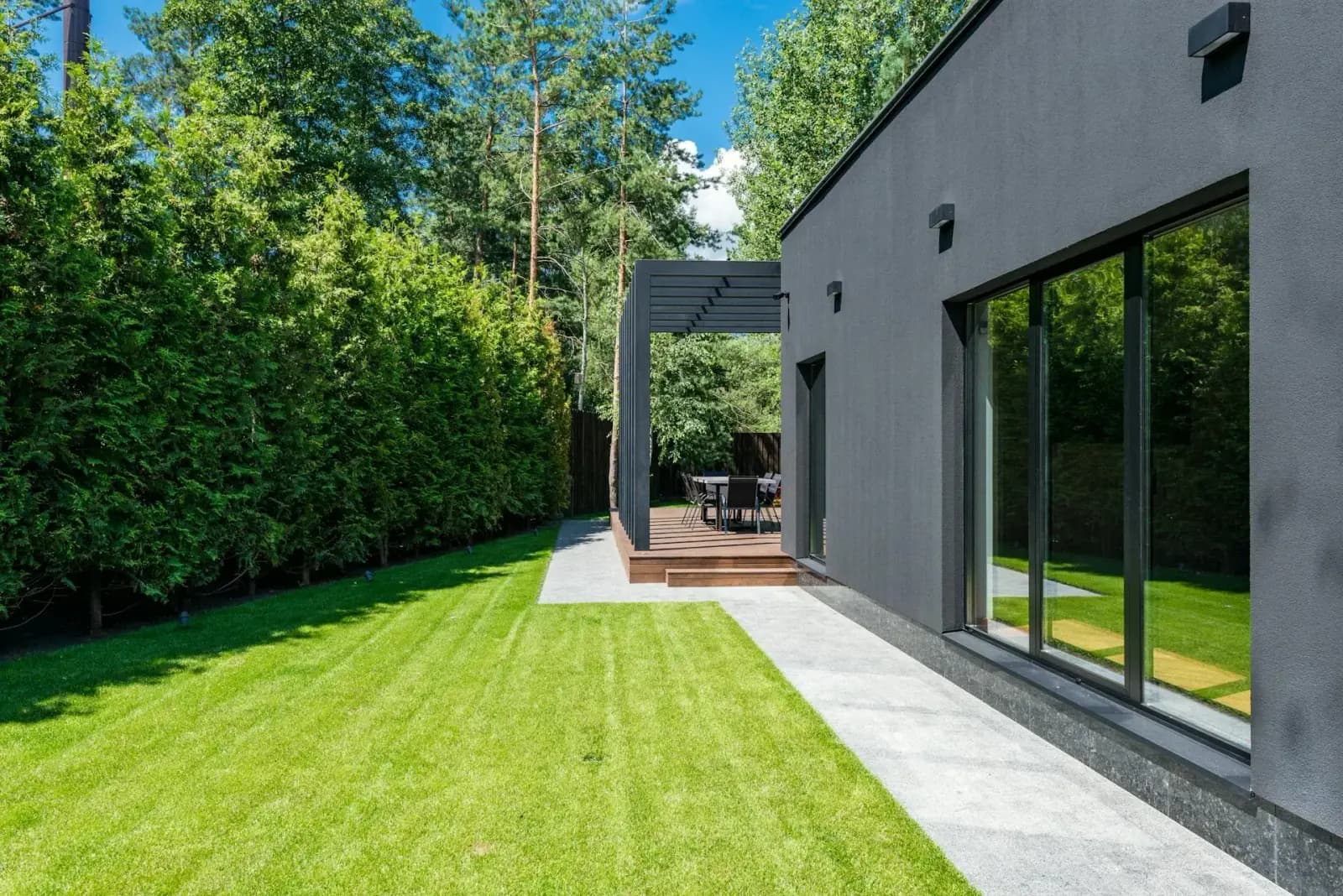
A homeowner in Buckhead was paying $1,400 a month in summer electricity bills on a 6,200 square foot home. Two HVAC units running nonstop. Single-pane windows on the south-facing wall. An attic that hit 150 degrees in July. After a $78,000 energy retrofit, including solar panels, spray foam insulation, a smart HVAC zoning system, and new windows on the south side, their summer bills dropped to $340. The system will pay for itself in six years. The home appraised $95,000 higher.
Energy efficiency used to be an afterthought in luxury real estate. A nice-to-have bullet point in a listing description. That has changed. In 2026, with Georgia Power rates climbing 8-12% year over year and luxury buyers increasingly asking about utility costs before making offers, energy efficiency is not just an environmental statement. It is a financial strategy that directly affects your monthly costs, your home's resale value, and how quickly it sells.
This guide breaks down every major energy efficiency upgrade available for Atlanta luxury homes, with real costs, real savings, real payback timelines, and which investments make the most sense for your specific situation. We cover solar, geothermal, insulation, windows, HVAC, EV charging, and more. Every number is based on Atlanta-area pricing and Georgia's climate, not national averages that do not apply here.
Quick Takeaways
- Solar panels offer the strongest ROI in Atlanta: 5-7 year payback after the 30% federal tax credit, with 25-30 year system life and a 4.1% home value premium.
- Spray foam insulation is the most underrated upgrade: $8,000-$18,000 investment that cuts heating and cooling costs by 25-40% and pays for itself in 5-8 years.
- Smart HVAC zoning stops you from paying to heat or cool rooms nobody is using, saving 20-35% on the largest line item in your energy bill.
- The 30% federal tax credit applies to solar, geothermal, battery storage, and EV chargers through 2032, cutting effective costs by nearly a third.
- Energy efficient homes sell for 2-6% more than comparable standard homes in Atlanta, per NAR data, and spend fewer days on market.
The ROI Landscape: Energy Upgrades That Actually Pay Back
Not every energy upgrade makes financial sense for every home. A $55,000 geothermal system on a 2,500 square foot home is overkill. Replacing perfectly good double-pane windows with triple-pane for energy savings alone rarely pencils out. The key is matching the right upgrades to your home's specific weaknesses, your budget, and your timeline.
Here is a breakdown of every major energy efficiency upgrade, ranked by payback period and overall value for Atlanta luxury homes. These costs reflect 2025-2026 Atlanta-area pricing, and savings estimates are based on Georgia Power rates and Atlanta's climate zone. Understanding the real cost of owning a luxury home in Atlanta starts with knowing where your money goes each month.
Energy Upgrade ROI Comparison for Atlanta Luxury Homes
| Upgrade | Net Cost | Annual Savings | Payback | ROI |
|---|---|---|---|---|
| Solar panel system (10-15 kW) | $12,000-$22,000 (after 30% tax credit) | $2,400-$4,800 | 5-7 years | High |
| Geothermal heat pump | $21,000-$38,500 (after 30% tax credit) | $2,500-$5,000 | 7-10 years | High |
| Spray foam insulation (whole home) | $8,000-$18,000 | $1,200-$2,400 | 5-8 years | High |
| High-performance windows | $25,000-$60,000 | $1,000-$2,500 | 12-20 years | Moderate |
| Smart HVAC zoning system | $5,000-$15,000 | $800-$2,000 | 4-8 years | High |
| EV charging station (Level 2) | $840-$1,750 (after 30% tax credit) | $600-$1,200 vs gas | 1-2 years | Very High |
| Tankless water heater system | $4,000-$8,000 | $300-$600 | 8-14 years | Moderate |
| Whole-home LED retrofit | $2,000-$5,000 | $400-$900 | 3-6 years | High |
| Battery storage (Tesla Powerwall) | $8,400-$12,600 (after 30% tax credit) | $500-$1,200 | 8-15 years | Moderate |
| Smart irrigation + rain sensors | $2,000-$4,000 | $400-$800 | 3-5 years | High |
Costs reflect 2025-2026 Atlanta metro area pricing. Savings based on Georgia Power residential rates. Tax credits based on current IRA provisions through 2032.
Solar Panels: The Flagship Investment
Georgia ranks in the top 10 states for solar energy potential, and Atlanta averages 217 sunny days per year with 5.3 peak sun hours daily. That makes solar one of the strongest energy investments available for luxury homeowners.
A typical luxury home in Atlanta (4,000-6,000 square feet) needs a 10-15 kW solar system to offset 70-90% of electricity usage. At current Atlanta pricing of $2.50-$2.80 per watt installed, that means $25,000-$42,000 before incentives. The 30% federal Investment Tax Credit immediately reduces that to $17,500-$29,400. Georgia exempts solar equipment from state sales tax, saving another 4-8% on equipment costs.
Georgia Power's net metering program allows you to sell excess electricity back to the grid at the retail rate, which means your meter effectively runs backward on sunny days. A well-sized system in Atlanta produces more than the home uses from March through October, banking credits that offset winter usage.
Solar ROI Example: 5,000 sq ft Buckhead Home
System size: 12 kW, 30 panels, south-facing roof with minimal shade
Gross cost: $33,600 ($2.80/watt installed, premium panels and microinverters)
After 30% federal tax credit: $23,520 net cost
Annual electricity savings: $3,600 (offsetting ~85% of usage at current rates)
Payback period: 6.5 years, with 18+ years of free electricity remaining on warranty
Home value increase: ~4.1% per Zillow data = $61,500 on a $1.5M home
Net position after 10 years: The system has paid for itself and generated $12,480 in additional savings. The home is worth $61,500 more. Total value created: $73,980 from a $23,520 investment.
Important for luxury homes: Aesthetics matter. Modern solar panels come in all-black designs that blend with dark roofing materials. Tesla Solar Roof tiles integrate directly into the roofline, eliminating the "panels bolted on top" look that some homeowners find objectionable. For homes in historic neighborhoods like Buckhead and Druid Hills, aesthetic solar options are worth the premium to maintain curb appeal.
Geothermal Heat Pumps: The Long Game That Wins
Geothermal is the most efficient heating and cooling technology available, period. It uses the stable temperature of the earth (55-60 degrees year-round in Georgia) to heat and cool your home at 300-500% efficiency, compared to 95% for a high-efficiency gas furnace or 200-300% for a standard air-source heat pump.
For Atlanta luxury homes, geothermal makes particular sense because cooling costs dominate the energy bill from May through October. A conventional HVAC system fights against 95-degree outdoor air to cool your home. A geothermal system rejects heat into 58-degree ground loops. The physics are dramatically in your favor.
The installation involves burying a loop field of polyethylene pipes in your yard, either horizontally (requiring more land) or vertically (requiring less space but more drilling). Most luxury properties in Sandy Springs and Alpharetta have enough yard space for a vertical bore system, which minimizes disruption to existing landscaping.
The 30% federal tax credit applies to the full geothermal system cost, including the ground loop, heat pump units, and installation labor. On a $45,000 system, that is $13,500 back in tax credits, bringing the net cost to $31,500. With annual savings of $3,000-$5,000, the payback period is 7-10 years, and the ground loops last 50+ years. When considering hiring a contractor for geothermal, look for IGSHPA-certified installers with experience in Georgia's red clay soils.
Spray Foam Insulation: The Invisible Upgrade That Changes Everything
Most luxury homes in Atlanta, even relatively new ones, are under-insulated. Builders typically use fiberglass batt insulation because it is cheap and fast to install. The problem is that fiberglass has gaps, sags over time, and does nothing to stop air infiltration. In Atlanta's humid climate, those gaps allow moisture-laden air into wall cavities, which drives up cooling costs, feeds mold growth, and makes rooms feel uncomfortable even when the HVAC is running.
Closed-cell spray foam insulation solves all of these problems. It expands to fill every gap and crack, creates an air barrier and vapor barrier in one application, and delivers R-6.5 to R-7 per inch compared to fiberglass's R-3.5. For a luxury home, the most impactful areas to spray foam are the attic (where heat gain is greatest), exterior walls (during a renovation), and the crawl space or basement rim joists.
A full attic and crawl space spray foam retrofit on a 4,000-6,000 square foot home costs $8,000-$18,000. The energy savings are immediate and dramatic: most homeowners report 25-40% reductions in heating and cooling costs, translating to $1,200-$2,400 per year. But the comfort improvement is what homeowners mention most. Rooms that were always too hot or too cold become consistent. The HVAC runs less and lasts longer. Outside noise drops noticeably.
Pro tip: Before installing solar panels, insulate first. Reducing your home's energy demand means you need a smaller (cheaper) solar system to offset your usage. A $12,000 insulation upgrade might let you downsize from a $35,000 solar system to a $25,000 one. Always seal the building envelope before adding energy generation.
Smart HVAC Zoning: Stop Heating and Cooling Empty Rooms
A 5,000 square foot luxury home has no business running a single thermostat for the entire house. The primary bedroom suite, the kitchen and living area, the home office, the guest wing, and the bonus room all have different usage patterns and different thermal loads. A south-facing great room with 20-foot ceilings needs dramatically more cooling in summer than a north-facing guest bedroom. Yet in most homes, one thermostat controls it all.
Smart HVAC zoning solves this by installing motorized dampers in the ductwork and independent thermostats in each zone. The system directs conditioned air only where it is needed. The guest bedrooms do not get cooled to 72 degrees when nobody is sleeping there. The home office gets extra cooling during work hours and none at night. The result is lower heating and cooling costs and dramatically improved comfort throughout the home.
Modern zoning systems from companies like Honeywell, Trane, and Carrier integrate with smart home platforms, allowing you to control zones from your phone, set schedules based on occupancy, and monitor energy usage in real time. The best systems use occupancy sensors and learning algorithms to adjust automatically, so you never have to touch them after the initial setup.
Installation costs $5,000-$15,000 depending on the number of zones, the complexity of your existing ductwork, and whether you need new thermostats. For homes with two or more HVAC units, zoning each unit independently adds cost but also adds proportionally more savings. Annual savings of $800-$2,000 on a luxury home yield a payback period of 4-8 years.
High-Performance Windows: Where Comfort Meets Efficiency
Windows are the weakest thermal link in any home. Even good double-pane windows allow 10-25 times more heat transfer per square foot than an insulated wall. In Atlanta, where south and west-facing windows absorb intense solar heat from April through October, window quality has an outsized impact on both energy costs and comfort.
High-performance windows for luxury homes typically mean triple-pane glass with low-E coatings, argon or krypton gas fill, warm-edge spacers, and thermally broken frames. The best options from manufacturers like Marvin, Pella Impervia, and Andersen 400 series deliver U-factors of 0.17-0.22, compared to 0.30-0.35 for standard double-pane. That 40-50% improvement in thermal performance translates directly to lower energy bills and rooms that stay comfortable without the HVAC running constantly.
The honest math: full window replacement on a luxury home costs $25,000-$60,000, and energy savings alone ($1,000-$2,500 per year) take 12-20 years to recoup the investment. The payback from energy savings alone is long. But windows do more than save energy. They reduce UV damage to hardwood floors and furnishings, improve acoustics significantly (critical if your home is near a road or flight path), and eliminate drafts that make rooms uncomfortable. For many homeowners, the quality-of-life improvement justifies the investment independent of the energy math.
If full replacement is not in the budget, consider replacing only south and west-facing windows first. These receive the most solar heat gain and will deliver the highest return. Adding exterior solar shades or motorized blinds to these windows is another cost-effective alternative that pairs well with outdoor living design trends for a cohesive aesthetic.
EV Charging Infrastructure: The Fastest Payback in the List
A Level 2 EV charger is the single fastest-paying energy upgrade you can make. At $1,200-$2,500 installed, with a 30% federal tax credit bringing the net cost to $840-$1,750, it pays for itself in fuel savings within 1-2 years if you own an EV. Even if you do not, it increases your home's value by approximately 3% per Zillow data, which on a $1.2M Atlanta luxury home is a $36,000 premium.
EV registrations in Georgia have grown over 40% year over year, and the trend is accelerating. In luxury neighborhoods like Buckhead, Sandy Springs, and Alpharetta, EV adoption is even higher. A hardwired Level 2 charger (240V, 40-50 amp) in the garage is rapidly moving from a differentiator to a baseline expectation in homes above $800K.
For luxury homes with multiple vehicle spaces, consider installing two charging circuits or a single charger with a load-sharing feature. If you are also installing solar panels, you can charge your EV with free electricity during the day, turning your "fuel" cost to effectively zero. The combination of solar plus EV charging is one of the most compelling financial arguments in home energy today.
Tankless Water Heaters: Efficiency Meets Luxury Living
Traditional tank water heaters keep 50-80 gallons of water hot 24 hours a day, whether you need it or not. That standby energy loss accounts for 20-30% of a tank heater's total energy consumption. Tankless (on-demand) water heaters eliminate standby loss entirely by heating water only when a faucet or fixture calls for it.
For luxury homes, tankless systems solve a practical problem that matters more than the energy savings: they never run out of hot water. Fill a freestanding soaking tub, run three showers simultaneously, and do laundry at the same time. A properly sized tankless system handles it all without the 20-minute wait for a tank to recover that frustrates every large-home owner.
A whole-home tankless system (typically two units for a luxury home) costs $4,000-$8,000 installed. Annual energy savings are modest at $300-$600, putting the payback period at 8-14 years on energy savings alone. But tankless units last 20+ years versus 10-12 for tank heaters, and luxury buyers in the $1M+ market expect them. Think of tankless as partially an energy upgrade and partially a wellness and comfort feature that elevates daily living.
Whole-Home LED Lighting: The Easiest Win
If you have not already converted your entire home to LED lighting, this is the simplest and fastest-payback upgrade on this list. LED bulbs use 75% less energy than incandescent and 25% less than CFL, last 25,000-50,000 hours (15-25 years of normal use), and produce less heat, which means your HVAC system works less hard in summer.
A luxury home with 80-150 light fixtures can spend $2,000-$5,000 on a complete LED retrofit, including replacing recessed can lights with LED-integrated fixtures, swapping decorative bulbs in chandeliers, and upgrading landscape lighting to LED. Annual savings of $400-$900 yield a payback period of 3-6 years.
Modern LEDs have solved the color quality issues that plagued earlier generations. Look for bulbs rated 2700K-3000K for warm, residential light that flatters interiors and skin tones. CRI (Color Rendering Index) of 90+ ensures colors look accurate. Dimmable LEDs on smart switches let you create lighting scenes that enhance both everyday living and evening showings if you decide to sell.
Battery Storage and Backup Power: Peace of Mind That Adds Value
After multiple ice storms and severe weather events knocked out power across north Georgia in recent years, interest in home battery systems has surged. Tesla Powerwall, Enphase IQ, and Generac PWRcell are the leading options for luxury homes. Combined with solar panels, they allow you to store excess daytime energy and use it at night or during outages.
A single Tesla Powerwall (13.5 kWh) costs $12,000-$14,000 installed and qualifies for the 30% federal tax credit when paired with solar. Two Powerwalls ($24,000-$28,000 before credit) can power a luxury home through a 24-48 hour outage, running the HVAC, refrigerator, lights, and essential circuits. For homes that require full backup, a Generac or Kohler whole-home generator ($8,000-$15,000) remains the most complete solution, though it runs on natural gas rather than stored solar energy.
The financial payback on battery storage alone is moderate (8-15 years), but the resale value impact is growing. Per our experience listing luxury homes in Atlanta, buyers in the $1.5M+ market increasingly ask about backup power before making an offer. Proper luxury home insurance may also reflect the reduced risk of damage from power outages when backup systems are in place.
Smart Irrigation: Water Efficiency for Atlanta Landscapes
Atlanta's combination of hot summers, clay soils, and periodic drought restrictions makes water management a real concern for luxury properties with extensive landscaping. A smart irrigation controller (Rachio, Hunter Hydrawise, or Rain Bird ESP-TM2) replaces your existing timer and connects to local weather data to water only when needed.
The controller itself costs $200-$400, but a full smart irrigation upgrade including soil moisture sensors, rain sensors, and zone optimization typically runs $2,000-$4,000 installed. Per EPA WaterSense data, smart irrigation reduces outdoor water usage by 30-50%, saving $400-$800 annually for a luxury property with 15,000+ square feet of irrigated landscaping. The payback period is 3-5 years, and you avoid the dead-lawn frustration that comes from over- or under-watering.
For properties in Buckhead, Sandy Springs, and Alpharetta where extensive landscaping is a significant investment, smart irrigation protects that investment while reducing your water bill. It also demonstrates responsible water management to environmentally conscious buyers.
The Optimal Investment Strategy: Where to Start
You do not need to do everything at once. The most effective approach is to address upgrades in the right order, starting with the building envelope and working outward. Here is the sequence that delivers the best results for Atlanta luxury homes.
Recommended Upgrade Sequence
Energy Audit ($300-$500)
A professional energy audit with blower door test and thermal imaging identifies exactly where your home is losing energy. This prevents you from spending money on upgrades that do not address your specific problems. Many Georgia Power customers qualify for subsidized audits.
Seal and Insulate ($8,000-$18,000)
Fix air leaks and upgrade insulation before anything else. This reduces your total energy demand, which means every subsequent upgrade is more effective and potentially smaller (cheaper). Spray foam the attic, seal ductwork, and address the crawl space or basement.
Smart HVAC Zoning ($5,000-$15,000)
Once the building envelope is tight, optimize how you condition the space. Zoning ensures you only heat and cool rooms you are using. Combined with smart thermostats, this is the most cost-effective way to reduce your largest energy expense.
LED Lighting Retrofit ($2,000-$5,000)
Quick, easy, and delivers immediate savings. Less heat from lighting also means less cooling load in summer. Do this alongside the HVAC work for maximum impact.
Solar Panels ($17,500-$29,000 net)
Now that you have reduced your energy demand through insulation, zoning, and LEDs, size your solar system to offset the new, lower usage. This means fewer panels, lower cost, and faster payback. Add battery storage if backup power is important to you.
EV Charging + Smart Irrigation ($3,000-$6,500)
These are quick additions with strong ROI. If you have solar, the EV charger essentially gives you free fuel. Smart irrigation protects your landscaping investment while cutting water costs. Both signal a forward-thinking, well-maintained home.
Total investment for the full sequence: $36,000-$74,000. Expected annual savings: $5,000-$12,000. Payback: 5-8 years on the combined package. Home value increase: 3-6% per NAR data. This is one of the few home improvement strategies that pays for itself and keeps paying for decades. Understanding these costs is essential when planning your first year in a luxury home.
The Resale Impact: What Buyers Are Willing to Pay For
Energy efficiency has moved from a listing footnote to a decision factor for Atlanta luxury buyers. Per NAR's 2025 Home Buyer Survey, 63% of buyers said energy efficiency was "very important" in their purchase decision, up from 46% in 2020. In the luxury segment, where buyers are educated and financially sophisticated, they run the numbers on utility costs and factor them into their offers.
A home with documented energy improvements and lower-than-average utility bills has a concrete competitive advantage. Sellers who can present 12 months of utility data showing $300/month costs versus the neighborhood average of $600+/month give buyers a quantifiable reason to pay more. That $300/month savings is $3,600/year, which at a 5% cap rate supports a $72,000 higher price.
When listing a luxury home with energy upgrades, document everything: system specs, installation dates, warranty information, utility bills before and after, and maintenance records. A buyer who understands the value of a geothermal system or a solar installation will pay a premium for it. A buyer who does not understand it will ignore it. Good documentation turns invisible upgrades into visible selling points. This documentation approach applies to all upgrades discussed in our guide to the best home upgrades for value.
Frequently Asked Questions
What is the best energy efficiency upgrade for an Atlanta luxury home?
Solar panels paired with a smart HVAC zoning system offer the strongest combination of savings, tax incentives, and resale value. Georgia receives an average of 5.3 peak sun hours per day, making solar particularly effective. A 12 kW system on a luxury home can offset 70-90% of electricity costs, and the 30% federal Investment Tax Credit (ITC) dramatically shortens the payback period to 5-7 years. Pair that with a smart HVAC system that stops heating or cooling empty rooms, and you can cut total energy costs by 40-60% compared to a standard setup.
Does Georgia offer tax credits or incentives for energy efficient home upgrades?
Yes. The federal Inflation Reduction Act provides a 30% Investment Tax Credit for solar panels, geothermal heat pumps, battery storage systems, and EV chargers through 2032. There is no cap on the solar ITC for residential systems. Georgia Power also offers net metering, allowing homeowners to sell excess solar energy back to the grid at a retail rate. Additionally, Georgia exempts solar equipment from state sales tax. Some local utilities offer rebates for Energy Star appliances, smart thermostats, and insulation upgrades. Combined, these incentives can reduce the effective cost of a major energy retrofit by 25-40%.
Are solar panels worth it for luxury homes in Atlanta?
Absolutely. Atlanta averages 217 sunny days per year, which ranks it well above the national average for solar viability. A 10-15 kW system on a luxury home typically costs $25,000-$40,000 before the 30% federal tax credit, bringing the net cost to $17,500-$28,000. With average annual savings of $2,400-$4,800 on electricity, the system pays for itself in 5-7 years and has a 25-30 year lifespan. Per Zillow research, homes with solar panels sell for approximately 4.1% more than comparable homes without them. On a $1.5M home, that is a $61,500 premium for an investment that may have cost $20,000 net.
How much does geothermal heating and cooling cost in Atlanta?
A geothermal heat pump system for a 4,000-6,000 square foot luxury home in Atlanta typically costs $30,000-$55,000 installed, including the ground loop, heat pump units, and ductwork modifications. After the 30% federal tax credit, the net cost drops to $21,000-$38,500. Geothermal systems reduce heating and cooling costs by 40-60% compared to conventional HVAC, saving $2,500-$5,000 annually on a large home. The ground loops last 50+ years, and the heat pump units last 20-25 years with minimal maintenance. In Atlanta, where cooling costs drive the bulk of energy bills from May through October, geothermal is particularly effective.
Do energy efficient upgrades increase home resale value in Atlanta?
Yes, significantly. According to the National Association of Realtors, energy efficient homes sell for 2-6% more than comparable standard homes, with the premium increasing as energy costs rise. Solar panels add an average of 4.1% to home value per Zillow. Geothermal systems, while harder to quantify, are viewed as premium infrastructure by luxury buyers and appraisers. High-performance windows, spray foam insulation, and smart HVAC systems all contribute to lower utility costs that buyers factor into their purchase decisions. In the Atlanta luxury market specifically, energy efficiency has moved from a nice-to-have to an expected feature in homes above $1M.
What is spray foam insulation and is it worth the cost for a luxury home?
Spray foam insulation is a high-performance insulation material that expands to fill gaps, cracks, and cavities in walls, attics, and crawl spaces. Closed-cell spray foam has an R-value of 6.5-7 per inch, compared to R-3.5 for fiberglass batts. For a 4,000+ square foot luxury home in Atlanta, a full spray foam retrofit costs $8,000-$18,000 depending on accessibility and coverage area. It reduces heating and cooling costs by 25-40%, improves indoor air quality by sealing out allergens and humidity, and dramatically reduces noise transfer between rooms. The payback period is 5-8 years, and the material lasts the lifetime of the home.
How much can smart HVAC zoning save on a luxury home in Atlanta?
Smart HVAC zoning divides your home into independent climate zones, each with its own thermostat and motorized dampers. Instead of heating or cooling the entire house to one temperature, you only condition the rooms you are using. For a luxury home with 3-5 zones, the system costs $5,000-$15,000 installed. Energy savings typically range from 20-35% on heating and cooling costs, which translates to $800-$2,000 annually for a large Atlanta home. Combined with a smart thermostat that learns your schedule and adjusts automatically, zoning can pay for itself in 4-8 years while dramatically improving comfort in every room.
Should I install an EV charger before selling my luxury home?
Yes. EV adoption in Georgia has grown over 40% year-over-year, and a Level 2 hardwired charger (240V, 40-50 amp) is increasingly expected in homes above $800K. The installation costs $1,200-$2,500 and qualifies for a 30% federal tax credit, bringing the net cost to $840-$1,750. Per Zillow data, homes with EV charging sell for roughly 3% more in markets with high EV adoption. On a $1.2M home, that is a $36,000 premium for a $1,500 investment. Even if the buyer does not currently own an EV, the charger signals that the home is modern, forward-thinking, and ready for the future.
Are tankless water heaters worth it in a luxury home?
For a luxury home, tankless water heaters offer both energy savings and a practical advantage: unlimited hot water. A whole-home tankless system costs $4,000-$8,000 installed, uses less energy than a standard tank heater (per DOE estimates), and lasts 20+ years versus 10-12 for a tank. The annual savings are modest ($300-$600), so the payback period is longer (8-14 years). However, the real value in a luxury home is eliminating the frustration of running out of hot water when filling a soaking tub, running multiple showers, and doing laundry simultaneously. For resale, buyers in the $1M+ market expect tankless systems.
How do high-performance windows affect energy costs in Atlanta?
High-performance windows (triple-pane, low-E coated, argon-filled) reduce energy loss through glass by 40-60% compared to standard double-pane windows. In Atlanta, where summer cooling drives the majority of energy costs, low-E coatings that block infrared heat are particularly valuable. For a luxury home with 30-50 windows, expect to pay $25,000-$60,000 for a full replacement. Annual energy savings run $1,000-$2,500, making the payback period 12-20 years based on energy savings alone. However, windows also reduce UV damage to furnishings, improve acoustics, and eliminate drafts, all of which luxury buyers value. The comfort and quality-of-life improvement often matters more than the energy math.
What is a HERS score and why does it matter?
The HERS (Home Energy Rating System) Index is the national standard for measuring a home's energy efficiency. A standard new home built to code has a HERS score of approximately 100. A net-zero energy home has a score of 0. Lower scores indicate greater efficiency. Each 1-point reduction in the HERS score corresponds to roughly a 1% reduction in energy consumption. Luxury homes built to high performance standards often achieve HERS scores of 50 to 70, meaning they use 30% to 50% less energy than a code-built home. A HERS rating requires an assessment by a certified RESNET rater and provides buyers with an objective measure of a home's energy performance.
Considering energy efficiency upgrades for your Atlanta luxury home? We can connect you with vetted contractors and help you prioritize investments that maximize both savings and resale value.
Ready to lower your energy costs and increase your home's value?
Sources
- U.S. Department of Energy - Energy Saver guide: residential energy efficiency upgrade costs, savings estimates, and payback periods. energy.gov
- EnergySage - Georgia solar panel cost data, installer ratings, and financing options for residential solar installations. energysage.com
- Zillow Research - Home value premium analysis for solar panels and EV charging stations in residential real estate. zillow.com/research
- National Association of Realtors - 2025 Home Buyer Survey: energy efficiency preferences and willingness to pay premiums. nar.realtor
- International Ground Source Heat Pump Association (IGSHPA) - Geothermal system costs, efficiency ratings, and installation guidelines. igshpa.org
- EPA WaterSense - Smart irrigation controller water savings data and certification standards. epa.gov/watersense
- Georgia Power - Net metering policies, residential rate schedules, and energy efficiency rebate programs. georgiapower.com
All cost estimates are based on 2025-2026 data for the Atlanta metro area. Actual costs vary by contractor, home size, and scope of work. Tax credit information reflects current IRA provisions and may change. Consult with a licensed energy auditor and tax professional before making energy efficiency investment decisions.
Disclaimer: This article is for informational purposes only and does not constitute financial, legal, or technical advice. Energy efficiency upgrade costs, ROI estimates, and tax credit information vary by location, home type, and individual circumstances. Tax credits described are based on current federal law and may be modified or eliminated by future legislation. Always obtain multiple contractor quotes, consult with a licensed energy auditor, and speak with a tax professional before making energy efficiency investment decisions. The Luxury Realtor Group provides real estate advisory services and is not an energy consultant, contractor, or tax advisor.