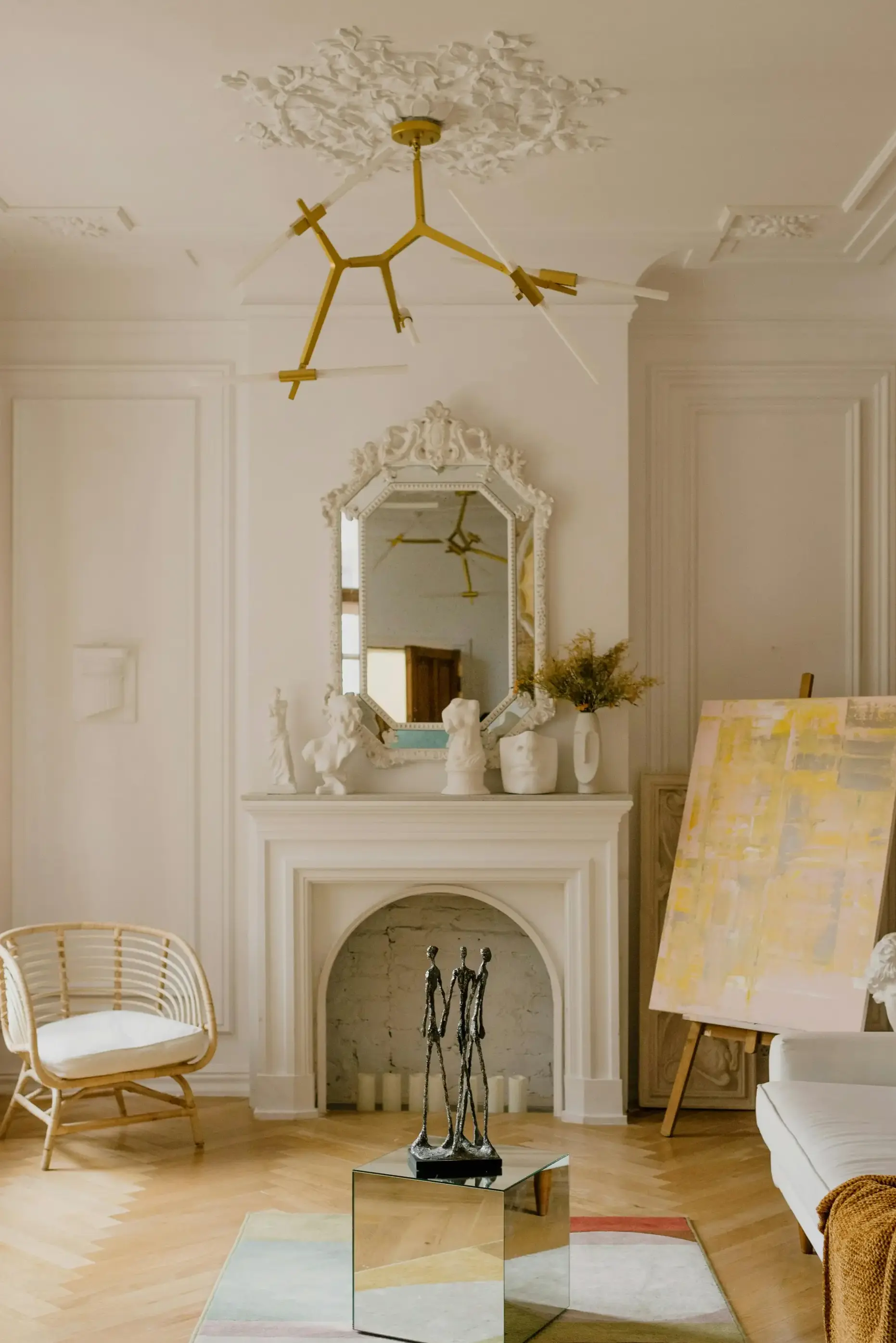
Lighting is the single most underestimated element in luxury home design. You can spend $200,000 on a kitchen renovation, but if the lighting is flat and generic, the space will never feel like it should. In the best luxury homes we see across Buckhead, Sandy Springs, and north Atlanta, the lighting does more than illuminate rooms. It creates atmosphere, highlights architecture, protects artwork, and adapts to the time of day and the activities happening in each space.
Smart lighting technology has advanced dramatically in the past five years. Systems from Lutron, Ketra, and Savant can now adjust not just brightness but color temperature, mimicking the progression of natural daylight from cool morning light to warm evening glow. This is not a gimmick. Research from institutions including Harvard Medical School has documented the real effects of light exposure on sleep quality, mood, and cognitive performance.
This guide covers the major smart lighting systems available for luxury homes, the specific applications where smart lighting makes the biggest difference, what the systems cost, and how to approach the design process to get results that justify the investment.
The Major Smart Lighting Systems
Lutron: The Industry Standard
Lutron has been the dominant force in residential lighting control for decades, and for good reason. Their product line ranges from the consumer-friendly Caseta system to the professional-grade HomeWorks QSX, which is the backbone of most luxury home lighting installations in the Atlanta market.
HomeWorks QSX is Lutron's flagship system. It supports virtually unlimited lighting zones, integrates with every major home automation platform (Control4, Crestron, Savant), and offers rock-solid reliability. The system uses a centralized processor with wired keypads and can control dimmable LEDs, motorized shades, and even HVAC interfaces. Programming is done by a certified Lutron dealer, and the system is backed by Lutron's 24/7 technical support. For a 5,000+ square-foot luxury home, a HomeWorks QSX system typically costs $40,000 to $100,000 installed.
RadioRA 3 is Lutron's mid-tier system, using wireless communication between devices. It is significantly less expensive than HomeWorks (typically $15,000 to $40,000 for a luxury home) and easier to retrofit into existing homes. RadioRA 3 supports up to 200 devices and integrates with most smart home platforms. For homes under 5,000 square feet or for homeowners who want professional-grade control without the full HomeWorks investment, RadioRA 3 is an excellent option.
Ketra: The Light Quality Leader
Ketra, acquired by Lutron in 2018, produces the most advanced tunable lighting fixtures available for residential use. Where a standard dimmable LED can adjust brightness, Ketra fixtures can adjust color temperature from a warm 1400K (candlelight) to a cool 10000K (overcast sky), as well as intensity, saturation, and vibrancy, all while maintaining perfect color accuracy.
Ketra's Natural Light feature is the standout technology. It automatically adjusts color temperature throughout the day to follow the sun's natural pattern: cool and bright in the morning, neutral at midday, warm and dim in the evening. This is circadian lighting at its most sophisticated. Early adopters in the Atlanta luxury market consistently report that Ketra's light quality is immediately noticeable, even to guests who are not told about the system.
The trade-off is cost. Ketra fixtures cost roughly 2x to 4x more than comparable standard LED fixtures, and the system requires a Lutron HomeWorks QSX processor. A full Ketra installation for a luxury home can run $80,000 to $200,000 or more depending on the number of fixtures.
Savant: The Unified Platform
Savant takes a different approach, positioning lighting as one element of a broader smart home ecosystem that also includes audio, climate, security, and entertainment. Savant's lighting products use their proprietary Metropolitan dimming modules and integrating keypads, offering clean aesthetics and strong performance.
The primary advantage of Savant is the unified user experience. Every system in your home (lights, shades, music, climate, security cameras) lives in a single app with a consistent interface. For homeowners who want one platform to control everything, Savant is compelling. Their lighting control quality is professional-grade, though Ketra still holds the edge in pure light spectrum control.
Circadian Lighting: The Science Behind the Trend
Circadian lighting is not just a marketing term. The science behind it is well-established. Your body's internal clock (the circadian rhythm) is primarily regulated by light exposure, specifically the color temperature and intensity of light hitting your eyes throughout the day.
According to research published in the Journal of Clinical Sleep Medicine and by the Lighting Research Center at Rensselaer Polytechnic Institute, exposure to cool, blue-enriched light (5000K+) in the morning suppresses melatonin and promotes alertness. Exposure to warm, dim light (2700K or lower) in the evening supports melatonin production and prepares your body for sleep. Standard indoor lighting, which typically sits at a static 3000K to 4000K, sends mixed signals to your circadian system.
A well-designed circadian lighting system addresses this by automatically shifting the color temperature and intensity of your home's lighting throughout the day. In the morning, bathroom and kitchen lighting is cool and bright. By evening, living areas and bedrooms shift to warm, dim tones. The transition is gradual and barely noticeable in real time, but the cumulative effect on sleep quality and daytime energy can be significant.
In the Atlanta luxury market, circadian lighting has moved from a niche technology to a genuine selling point. Homes with Ketra or similar tunable lighting systems stand out during showings, and buyers who have experienced circadian lighting in a previous home often insist on it in their next purchase.
Key Application Areas in a Luxury Home
- Art lighting: Use fixtures with CRI 95+ and precise beam control. Ketra's tunable spectrum allows you to enhance specific colors in each piece. Keep illumination below 15 foot-candles to protect valuable works per American Institute for Conservation guidelines.
- Kitchen: Layer task lighting (under-cabinet), ambient lighting (recessed or pendant), and accent lighting (display shelving). Use tunable white fixtures so morning light is energizing and evening light is warm for entertaining.
- Primary suite: Circadian programming is most impactful in bedrooms. Wake-up scenes that gradually increase brightness and cool the color temperature can replace jarring alarms. Evening scenes that dim to candlelight warmth support better sleep.
- Home theater: Lighting must dim to absolute zero with no light leak. Fiber optic starfield ceilings, color-changing LED cove lighting, and pathway lights integrate with the AV system for automated scene control.
- Landscape: Uplighting on specimen trees, architectural facade washing, path and driveway lighting, and moonlighting from high in mature trees. Use low-voltage LED fixtures (12V) with smart control integration for scheduling and dimming.
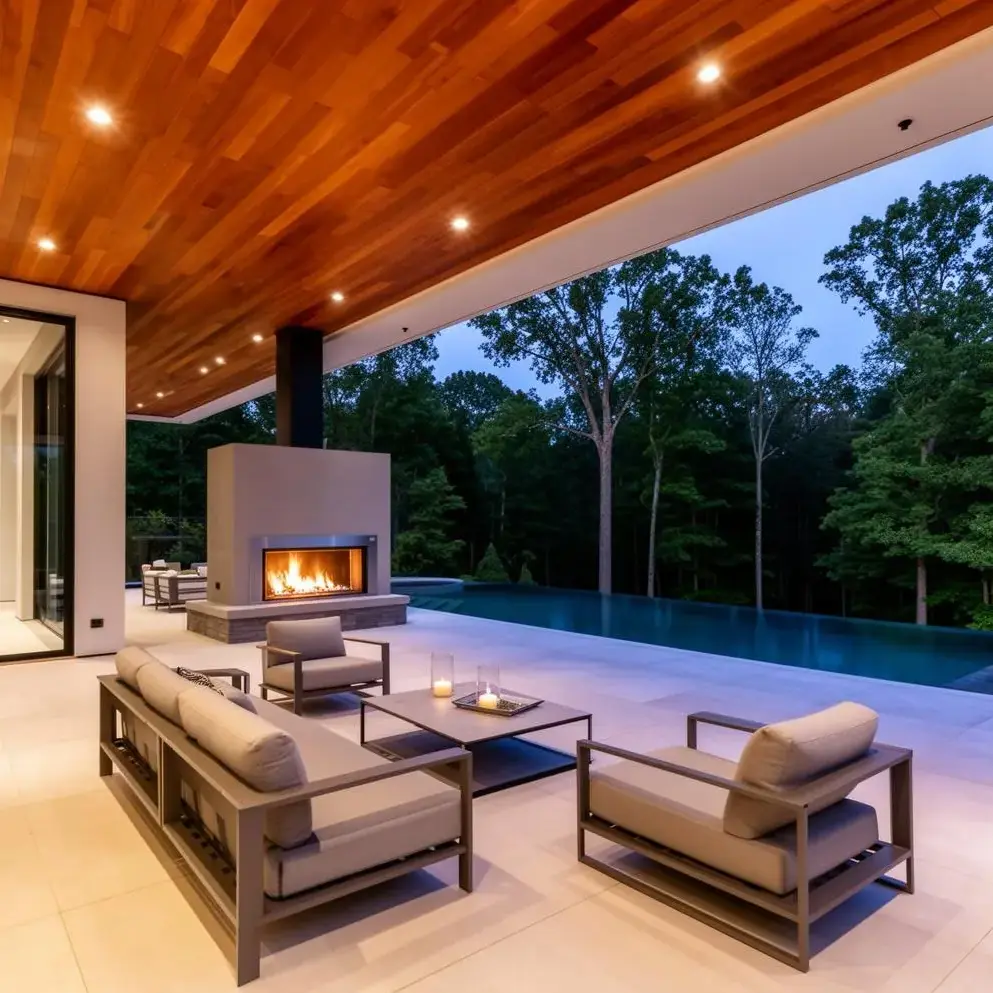
- Outdoor living areas: Pool surrounds, covered porches, and outdoor kitchens need layered lighting that adjusts from bright task light for cooking to ambient glow for evening entertaining.
Landscape Lighting Design for Atlanta Properties
Atlanta's mature tree canopy and lush landscaping are among the region's most attractive features, and professional landscape lighting can transform a luxury property after dark. The key is subtlety: the best landscape lighting reveals the beauty of the property without calling attention to the fixtures themselves.
Uplighting specimen trees is one of the most impactful techniques. Atlanta's mature live oaks, magnolias, and dogwoods respond beautifully to warm-white uplighting (2700K to 3000K) that illuminates the trunk and canopy from below. The effect creates dramatic shadows and draws the eye upward, making the tree the focal point of the nighttime property.
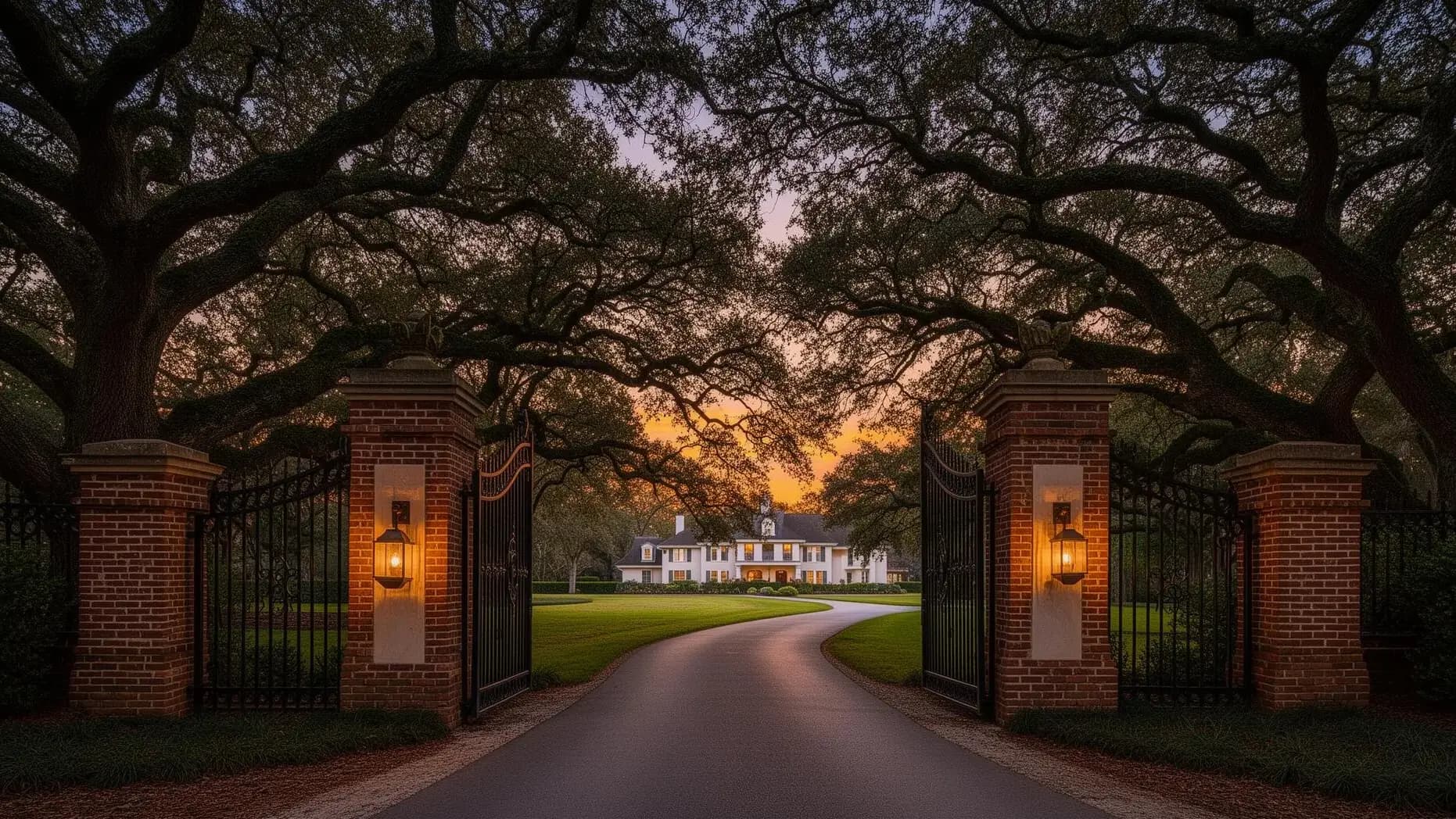
Architectural facade lighting uses wall wash fixtures or uplights to highlight the home's exterior. For the brick Georgian and stone Colonial homes common in Paces and Peachtree Battle, warm-white facade lighting emphasizes the texture and detail of masonry while creating a welcoming glow visible from the street.
Moonlighting involves mounting fixtures high in trees (20 to 30 feet up) and angling them downward to simulate the effect of natural moonlight filtering through the canopy. This creates soft, dappled light patterns on the ground that feel organic rather than artificial. It works exceptionally well on Atlanta properties with large, established tree canopies.
A professional landscape lighting design for a luxury Atlanta property typically costs $15,000 to $50,000 for fixtures, transformers, wiring, and installation. Use low-voltage (12V) LED fixtures for energy efficiency, longevity, and safety. Integrate the landscape system with your interior smart lighting so that all outdoor lights can be controlled from the same app or keypad.
Speccing a Lighting System in a Home You May Sell
Some lighting investments still show beautifully years later. Others age quickly. We can talk through what tends to hold up with Atlanta luxury buyers before you finalize the scope.
Pressure-Test My Lighting Budgetor call (770) 727-4052
Integration with Home Automation
Smart lighting reaches its full potential when it is integrated with the rest of your home's automation systems. A well-programmed system creates scenes that coordinate lighting, shading, climate, and audio to match different activities and times of day.
A "Good Morning" scene might gradually raise bedroom lights to a cool 5000K, open motorized shades to let in natural light, adjust the thermostat, and start a morning playlist in the kitchen. An "Entertaining" scene dims interior lights to warm 2700K, raises landscape lighting, adjusts music volume, and sets outdoor kitchen lights to task level. A "Goodnight" scene dims all lights to warm tones, closes shades, locks doors, arms the security system, and sets the thermostat to sleep mode.
The leading integration platforms for luxury homes include Control4, Crestron, and Savant. All three can coordinate Lutron/Ketra lighting with hundreds of compatible devices. Voice control through Amazon Alexa, Google Home, or Apple HomeKit adds convenience, but the best smart lighting experiences come from pre-programmed scenes activated by keypads, schedules, or occupancy sensors rather than voice commands.
Cost Ranges and Energy Savings
- Lutron Caseta (entry-level smart): $3,000 to $8,000 for a luxury home. Good for basic dimming and scheduling. Limited in scale and features.
- Lutron RadioRA 3 (mid-tier): $15,000 to $40,000. Wireless, professional-grade control. Supports up to 200 devices. Strong retrofit option.
- Lutron HomeWorks QSX (professional): $40,000 to $100,000+. Virtually unlimited zones. Wired reliability. The standard for luxury new construction.
- Full Ketra with HomeWorks: $80,000 to $200,000+. The ultimate light quality. Tunable spectrum, circadian automation, art-grade color accuracy.
- Landscape lighting: $15,000 to $50,000. Low-voltage LED with smart integration. Professional design and installation by a landscape lighting specialist.
- Energy savings: 30% to 60% reduction in lighting energy use per the U.S. Department of Energy, through automated dimming, occupancy sensing, and scheduling.
The Smart Lighting Design Process
A professional smart lighting project for a luxury home typically follows these steps. First, a lighting designer (not your general contractor or electrician) develops a lighting plan that specifies fixture types, placement, and beam angles for every room and exterior area. This plan should account for your daily routines, entertaining style, artwork, and architectural features.
Next, a certified integrator for your chosen control system (Lutron, Savant, etc.) designs the control infrastructure: where keypads go, how zones are defined, what scenes are programmed, and how the system integrates with other home technology. For new construction, this coordination should happen early in the design process so that wiring can be roughed in during framing.
After installation, the most critical step is programming. A well-programmed system anticipates your needs. When you walk into the kitchen at 6 AM, the lights should come on at a comfortable level with cool, energizing color temperature, not blast you with full brightness. When you settle into the living room at 8 PM, the lights should be warm and relaxed. This level of detail in programming is what separates a $50,000 lighting system that impresses from a $50,000 lighting system that frustrates.
Budget for a post-installation programming session (typically included in professional installations) where the integrator walks through every scene and adjusts levels based on your feedback with actual furniture and finishes in place. Plan for a follow-up session 2 to 4 weeks later after you have lived with the system and identified what needs tweaking.
Frequently Asked Questions
How much does a smart lighting system cost for a luxury home?
A complete smart lighting system for a luxury home in Atlanta typically costs $30,000 to $150,000 or more, depending on the size of the home, the number of zones, the brand and fixtures selected, and the level of integration with other home automation systems. A basic Lutron RadioRA 3 system for a 4,000 square-foot home might start around $15,000 to $25,000 for switches, dimmers, and a central processor. A full Ketra or Lutron HomeWorks system with tunable white fixtures, landscape lighting, and whole-home automation integration in a 8,000+ square-foot estate can exceed $200,000. These figures include equipment, programming, and installation by a certified integrator.
What is the best smart lighting brand for a luxury home?
Lutron is the industry standard for luxury residential lighting control, with products ranging from the entry-level Caseta to the professional-grade HomeWorks QSX system. Ketra (now owned by Lutron) offers the most advanced tunable lighting technology available, with fixtures that can reproduce the full spectrum of natural light. Savant is a strong alternative that integrates lighting with a broader smart home ecosystem including audio, climate, and security. The right choice depends on your priorities: Ketra for the ultimate light quality, Lutron HomeWorks for reliability and integration breadth, and Savant for a unified smart home platform.
What is circadian lighting and is it worth the investment?
Circadian lighting refers to lighting systems that automatically adjust color temperature and intensity throughout the day to align with your body's natural circadian rhythm. In the morning, the light is cooler and bluer (similar to morning sunlight), which promotes alertness. In the evening, the light shifts warmer and dimmer, which supports melatonin production and sleep readiness. Research published in the Journal of Clinical Sleep Medicine has shown that light exposure patterns significantly influence sleep quality and alertness. Ketra's Natural Light technology is the most advanced circadian lighting system currently available for residential applications. It adds cost (roughly 2x to 3x over standard dimmable LED fixtures), but homeowners who invest in it frequently cite improved sleep quality and a more comfortable living environment.
Can I retrofit a smart lighting system into an existing home?
Yes, most smart lighting systems can be retrofitted into existing homes, though the cost and complexity depend on the existing wiring infrastructure. Lutron RadioRA 3 and Caseta are designed specifically for retrofit applications and use wireless communication between devices, minimizing new wiring. A full Lutron HomeWorks or Ketra system may require dedicated low-voltage wiring for certain fixtures and keypads, which can add cost in a retrofit scenario. For a luxury home renovation in Atlanta, plan for an additional 10% to 20% in lighting costs for retrofit work compared to new construction where wiring can be integrated during the build.
How does smart lighting affect home resale value?
A well-designed smart lighting system is increasingly viewed as a premium feature in the Atlanta luxury market. While it is difficult to assign a specific dollar value, real estate agents consistently report that homes with professional lighting control systems show better, photograph better, and often sell faster than comparable homes without them. According to the Consumer Technology Association, smart home features (including lighting) are among the top five amenities that luxury buyers seek. The key is that the system must be intuitive and well-programmed. A complex system that confuses buyers can be a negative.
What is the best approach for landscape lighting on a luxury property?
Professional landscape lighting for an Atlanta luxury property should be designed by a landscape lighting specialist, not a general electrician. The best approach uses low-voltage LED fixtures (12V) with a centralized transformer and smart control integration. Key techniques include uplighting specimen trees (Atlanta's mature oaks and magnolias respond beautifully to uplighting), path lighting along walkways and drives, architectural washing on the home's facade, and moonlighting (fixtures mounted high in trees to simulate natural moonlight). A professional landscape lighting design for a luxury Atlanta property typically costs $15,000 to $50,000 depending on property size and complexity.
How do I light artwork in a luxury home?
Art lighting requires careful attention to color rendering, beam angle, and heat output. For valuable artwork, the American Institute for Conservation recommends using LED fixtures with a Color Rendering Index (CRI) of 95 or higher and keeping light levels below 15 foot-candles to minimize UV damage. Picture lights, recessed adjustable fixtures, and track lighting are the three main approaches. Ketra fixtures are particularly well-suited for art lighting because their tunable spectrum can be adjusted to enhance specific colors in a piece. For a collection of significant value, consult an art lighting specialist who understands both the aesthetic and conservation requirements.
What smart lighting features work best for home theaters?
Home theater lighting should be fully dimmable to absolute zero (no residual glow), use fixtures with no visible light leak, and integrate with your AV system so that lighting scenes activate automatically when you start a movie. Fiber optic starfield ceilings, LED cove lighting with color-changing capability, and pathway lights along aisles and steps are popular features. The lighting should be controlled through the same interface as your audio and video system (typically a Savant, Control4, or Crestron controller) so that a single button press dims the lights, lowers the screen, and starts playback. Budget $5,000 to $20,000 for theater-specific lighting in a dedicated room.
How much energy does a smart lighting system save?
Smart lighting systems can reduce lighting energy consumption by 30% to 60% compared to conventional switches, according to the U.S. Department of Energy. The savings come from three main sources: automated dimming (lights rarely need to run at full brightness), occupancy and vacancy sensing (lights turn off in unoccupied rooms), and scheduling (exterior lights operate only during needed hours). For a luxury home spending $3,000 to $6,000 per year on electricity, lighting typically represents 15% to 25% of that total. A well-designed smart system could reduce the lighting portion by $300 to $900 annually. The financial payback is secondary to the aesthetic and convenience benefits for most luxury homeowners, but the energy reduction is a meaningful bonus.
Do I need a lighting designer or can my electrician handle it?
For a luxury home, hiring a professional lighting designer is strongly recommended. An electrician can install fixtures and wire switches, but a lighting designer creates the overall vision: where light falls, how it interacts with architecture and finishes, what color temperatures to use in each space, and how scenes are programmed for different activities and times of day. The American Lighting Association and the International Association of Lighting Designers both maintain directories of qualified professionals. A lighting designer's fee for a luxury home typically runs $5,000 to $15,000 depending on the home's size and complexity, and the result is a dramatically better outcome than electrician-selected fixtures.
Looking for a luxury home in Atlanta with exceptional design and technology?
Sources
- Lutron Electronics - HomeWorks QSX, RadioRA 3, and Caseta product specifications, system capacities, and certified dealer network information.
- Ketra (Lutron) - Natural Light technology documentation, tunable spectrum specifications, and residential application guides.
- Savant Systems - Lighting control product specifications, Metropolitan dimming module data, and smart home integration documentation.
- Journal of Clinical Sleep Medicine - Research on light exposure, circadian rhythm regulation, and sleep quality impacts.
- Lighting Research Center, Rensselaer Polytechnic Institute - Circadian stimulus research, color temperature effects on alertness and melatonin production.
- American Institute for Conservation - Guidelines for art lighting, recommended illumination levels, and UV exposure limits for valuable artworks.
- U.S. Department of Energy - Smart lighting energy savings data, LED efficiency comparisons, and residential lighting energy consumption statistics.
- Consumer Technology Association - Smart home feature demand research, luxury buyer technology preferences, and market adoption data.
Product specifications, pricing, and technology capabilities referenced in this article reflect conditions as of early 2026 and are subject to change. This article does not constitute an endorsement of any specific brand or product. Consult with a certified lighting designer and integrator for recommendations specific to your home.
Disclaimer: This article is for informational purposes only and does not constitute design, medical, or financial advice. Lighting system costs, capabilities, and energy savings vary by installation, home size, and configuration. The Luxury Realtor Group is a real estate brokerage and does not provide lighting design or installation services. Consult with qualified lighting professionals for recommendations specific to your property.