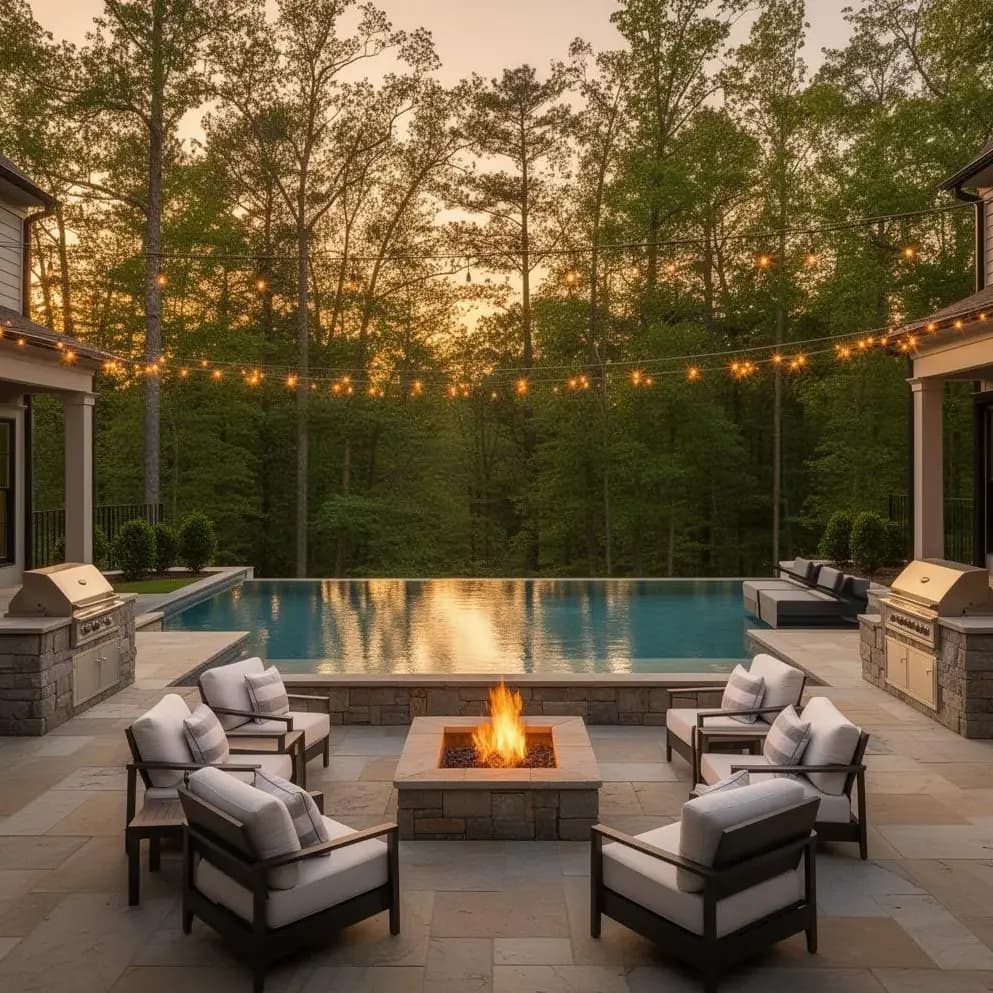
Atlanta homeowners have always understood something that buyers in colder climates are just starting to figure out: the outdoor space is not an afterthought. It is an extension of the home. With eight to nine months of usable outdoor weather, a well-designed exterior living area in Atlanta gets more use than most formal dining rooms.
According to the American Institute of Architects (AIA), outdoor living spaces have ranked among the top three most-requested residential design features for five consecutive years. In the luxury segment, that demand is even more pronounced. Buyers shopping for homes priced above $1.5 million in Buckhead, Sandy Springs, and Brookhaven consistently rank outdoor living quality as a top-five purchase factor, right alongside kitchen quality, primary suite design, and neighborhood walkability.
The outdoor living trends shaping Atlanta luxury homes in 2026 reflect a shift from decorative patios toward fully functional, year-round outdoor rooms. Homeowners are investing in professional-grade kitchens, resort-caliber pools, climate-controlled lounge areas, and smart technology that ties the outdoor space into the home's automation system. Here is what is driving those decisions and where the market is heading.
Outdoor Kitchens: From Grill Island to Full Chef's Kitchen
The standalone gas grill on the patio is still alive and well, but it is no longer the centerpiece of a luxury outdoor space. In 2026, the benchmark for a high-end outdoor kitchen in Atlanta is a full cooking station with multiple heat sources, refrigeration, prep space, storage, and a dedicated dining area within arm's reach.
The most popular outdoor kitchen layouts we are seeing in the Atlanta market include L-shaped and U-shaped configurations that create a natural work triangle between the grill, prep area, and sink. According to data from the National Kitchen and Bath Association (NKBA), outdoor kitchen investments in the luxury segment have increased roughly 35% since 2022, driven by post-pandemic lifestyle shifts that made entertaining at home a permanent habit rather than a temporary adjustment.
What Atlanta Luxury Outdoor Kitchens Include in 2026
- Multiple cooking surfaces: A high-BTU gas grill (brands like Lynx, Hestan, and Kalamazoo dominate the luxury tier), a dedicated smoker or pellet grill, and a wood-fired pizza oven. Pizza ovens from Mugnaini and Forno Bravo are the most requested single addition to existing outdoor kitchens in the Atlanta market right now.
- Full refrigeration: Under-counter refrigerator drawers, a beverage center with glass doors, and an ice maker. Outdoor-rated units from True Residential and Perlick are built to handle Atlanta's summer heat and humidity without compromising performance.
- Premium countertop materials: Quartzite and granite remain the top choices for outdoor countertops because they resist heat, moisture, and UV exposure. Leathered finishes (a honed texture with slight texture) are trending because they hide water spots and fingerprints better than polished surfaces.
- Warming drawers and plate storage: These details separate a true outdoor kitchen from a glorified grill station. A warming drawer keeps food at serving temperature while you finish other dishes, and dedicated plate and utensil storage means fewer trips inside.
- Ventilation and coverage: Covered structures with proper ventilation (either a vented pergola, a full roof with an exhaust hood, or a louvered roof system) protect the cooking area from Atlanta's frequent afternoon thunderstorms and allow cooking in light rain.
A trend gaining serious momentum in 2026 is the "pass-through" kitchen design, where the outdoor kitchen shares a wall with the indoor kitchen and a large window or counter opening connects the two. This layout, popularized in Southern California homes, works perfectly in Atlanta's climate and allows the indoor and outdoor cooking areas to function as one connected workspace during large gatherings.
Pool Design: Resort-Level Features Are the New Standard
The Atlanta luxury pool market has shifted significantly over the past three years. Standard rectangular pools with basic coping and a spa are no longer enough to impress buyers at the $2 million-plus price point. The 2026 standard is a custom-designed pool that functions as the visual and social anchor of the entire backyard.
Per data from the Pool and Hot Tub Alliance (PHTA), new luxury pool construction in the Southeast is averaging $150,000 to $350,000 for custom designs, up roughly 20% from 2023 levels. That increase reflects both rising material costs and the growing expectation for resort-quality features in residential settings.
Pool Features Driving the Atlanta Luxury Market
- Dark-bottom finishes: Pebble Tec in dark blue, charcoal, or black is the dominant finish choice for luxury pools in 2026. Dark finishes make the water appear deeper and more reflective, creating a lagoon-like aesthetic. They also absorb more heat from sunlight, which can raise water temperature by 5 to 8 degrees compared to light plaster finishes.
- Tanning ledges (Baja shelves): A shallow shelf (6 to 8 inches of water) along one edge of the pool where lounge chairs sit partially submerged. This feature has gone from a novelty to an expected element in luxury pool design. It is one of the most-used areas of any pool that has one.
- Infinity and perimeter-overflow edges: Infinity edges remain popular on sloped lots in neighborhoods like North Buckhead and Tuxedo Park where the terrain naturally accommodates a vanishing edge. Perimeter-overflow pools, where water flows over all four sides into a hidden catch basin, are the ultra-premium option for flat lots.
- Integrated spa with spillover: A raised spa that spills into the main pool creates visual movement and the sound of falling water. The spa doubles as a year-round feature since it heats quickly and can be used even when pool temperatures are too cold for swimming.
- Automated chemical and filtration systems: Salt chlorine generators and automated pH management systems (from brands like Pentair and Hayward) are standard for luxury pools. These systems reduce chemical handling, maintain consistent water quality, and can be monitored and adjusted through a smartphone app.
One design shift worth noting: natural swimming pools and plunge pools are starting to appear in the Atlanta luxury market. Natural pools use biological filtration (plants and gravel filters) instead of chemicals, creating a chemical-free swimming experience. They are more common in European luxury homes but are gaining interest here, particularly among buyers who prioritize sustainability. Plunge pools (small, deep pools designed for cooling off rather than lap swimming) work well on smaller lots in neighborhoods like Peachtree Hills and Garden Hills where lot sizes may not accommodate a full-size pool.
Fire Features: The Element That Extends the Season
Fire features do more than create ambiance. In Atlanta's climate, they extend the usable outdoor season by two to three months. A well-placed gas fireplace or fire pit makes an outdoor seating area comfortable on 45-degree November evenings and mild January afternoons, turning a three-season space into something close to year-round.
The trend in 2026 is toward integrated fire rather than standalone fire pits. Designers are building linear gas fire features into retaining walls, water feature walls, dining table centers, and pool copings. These integrated designs create a cleaner look than a freestanding fire pit and add architectural drama without taking up floor space in the outdoor living area.
Fire-and-water combinations are also popular. A raised wall with fire bowls on top and water sheeting down the face below creates a striking visual and auditory contrast. These features serve as focal points for outdoor seating areas and photograph extremely well for listings, which matters if you ever plan to sell your home.
Gas vs. Wood-Burning Fire Features
Gas fire features dominate the luxury market for good reason. They light instantly, produce no ash or smoke, offer adjustable flame height, and require minimal maintenance. Natural gas connections eliminate the need to refill propane tanks. Wood-burning fireplaces and fire pits have their own appeal (the crackle, the smell, the ritual), but they produce smoke that can affect neighbors and require regular ash removal. Most luxury outdoor spaces in Atlanta include at least one gas fire feature as the primary element, with a secondary wood-burning option for those who want the traditional experience.
Popular Fire Feature Brands for Luxury Installations
Fire by Design, HPC (Hearth Products Controls), and The Outdoor GreatRoom Company produce commercial-grade gas fire features that are commonly specified for luxury residential projects. Isokern manufactures modular outdoor fireplace systems that can be clad in any stone or brick finish. For custom fire-and-water walls, most Atlanta landscape architects work with local fabricators using stainless steel burner pans and natural stone surrounds.
Covered Outdoor Rooms: Shade, Shelter, and Year-Round Comfort
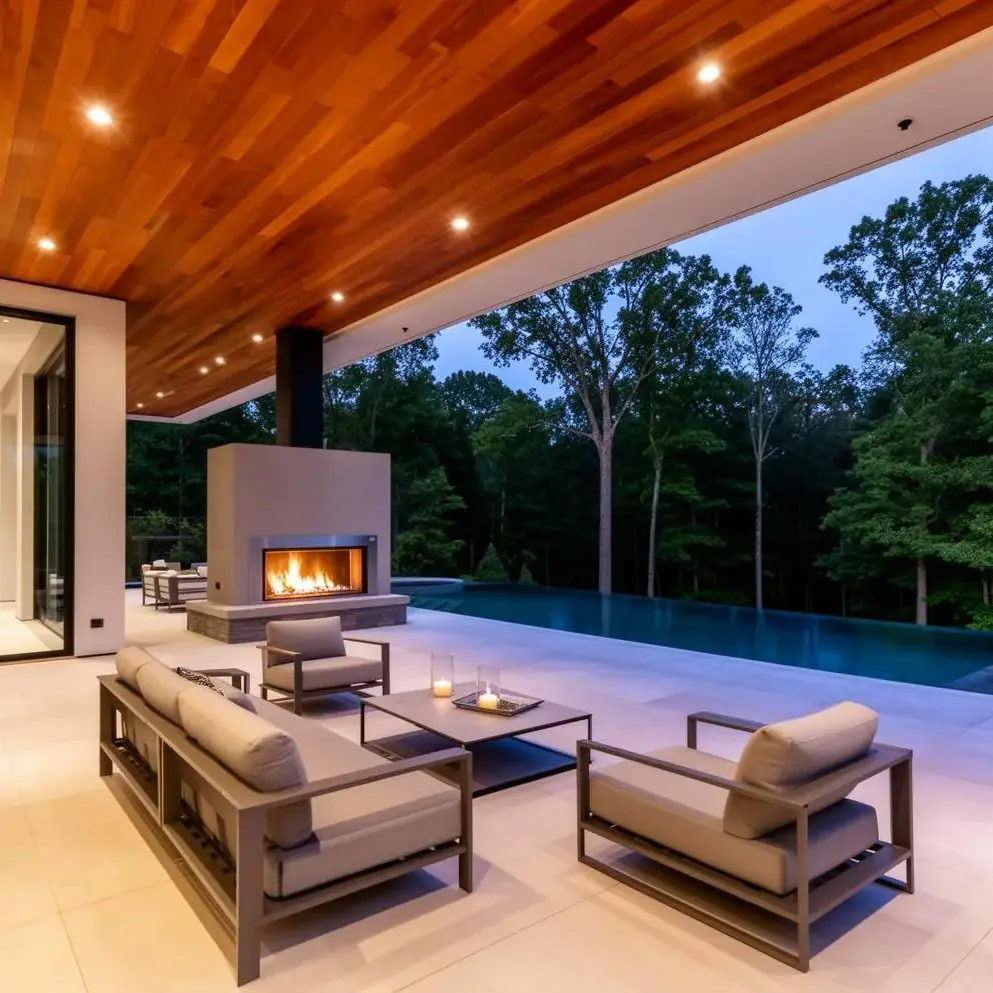
Open-air patios are fine for mild spring evenings, but they fail during Atlanta's midday summer heat, afternoon thunderstorms, and cool winter months. That is why the most significant shift in luxury outdoor design over the past few years has been toward covered, partially enclosed, or climate-controlled outdoor rooms.
The 2026 version of this trend goes beyond a basic patio cover. Homeowners are investing in structures that blur the line between indoor and outdoor space, with features that would have been unheard of in an outdoor setting a decade ago.
Which Outdoor Projects Hold Value at Resale
A covered room, a pool, and an outdoor kitchen typically do not carry equal weight with Atlanta luxury buyers, and the answer shifts by neighborhood and price point. We can tell you what buyers in your area have responded to before you commit a budget.
Review My Outdoor Plansor call (770) 727-4052
Covered Outdoor Room Features Trending in Atlanta
- Motorized louvered roof systems: Brands like StruXure and Equinox offer aluminum louvered roofs that open to let in sunlight and close to provide rain protection. The louvers rotate with a motor, and some models include built-in LED lighting, heating elements, and integrated gutters. These systems cost $50 to $80 per square foot installed but eliminate the choose-one tradeoff between sun and shade.
- Retractable screen walls: Motorized screen systems from Phantom Screens and Screenmobile drop down from the roofline to enclose a covered patio instantly. They block bugs, reduce wind, and filter sunlight while maintaining the open-air feel. Screened outdoor rooms are one of the fastest-growing categories in Atlanta outdoor design.
- Outdoor heating and cooling: Infrared patio heaters (Infratech and Bromic are the premium brands) extend cool-season use. For summer, outdoor-rated ceiling fans and misting systems keep temperatures manageable. Some homeowners are installing ductless mini-split systems in enclosed covered patios for true climate control.
- Outdoor televisions and audio: Weatherproof TVs from Samsung Terrace and SunBrite are now standard in luxury outdoor rooms. Paired with in-ceiling or rock-mounted speakers from Sonance or Origin Acoustics, these setups create a true outdoor entertainment room. The average luxury outdoor TV installation in Atlanta runs $5,000 to $15,000 depending on screen size and audio integration.
Landscaping and Hardscaping: The Foundation of the Outdoor Room
The hardscape and landscape design sets the tone for everything else. In 2026, Atlanta luxury homeowners are moving toward more naturalistic planting designs paired with clean, contemporary hardscaping. The goal is a space that feels curated but not overly formal, with layers of texture, color, and seasonal interest.
Large-format pavers (24x24 or 24x36 inch porcelain or natural stone) have overtaken smaller pavers and stamped concrete as the preferred patio surface for luxury homes. They create a sleek, modern look with fewer grout lines and easier maintenance. Bluestone, travertine, and porcelain pavers rated for freeze-thaw cycles all perform well in Atlanta conditions.
On the planting side, Atlanta's climate (USDA Zone 7b/8a) supports an enormous range of plant material. Landscape architects are favoring native and adapted species that require less irrigation and maintenance. Ornamental grasses like Muhly grass and Switchgrass add movement and texture. Crepe myrtles, Japanese maples, and evergreen hollies provide structure and year-round interest. Pollinator gardens and rain gardens are increasingly common in luxury properties, reflecting a growing interest in sustainable landscaping that supports local ecosystems.
Per the National Association of Landscape Professionals (NALP), professional landscaping can increase a home's value by 10% to 12%. For a $2 million Atlanta luxury home, that is $200,000 to $240,000 in potential added value from a well-executed landscape design. The key is hiring a licensed landscape architect who understands Atlanta's soil, drainage, sun exposure patterns, and plant hardiness zones.
Outdoor Furniture: Indoor Comfort, Outdoor Durability
The gap between indoor and outdoor furniture quality has closed significantly. High-end outdoor furniture in 2026 looks and feels like indoor furniture but is engineered to withstand UV exposure, rain, humidity, and temperature swings. Atlanta homeowners are investing in outdoor furnishings that match the style and comfort level of their interior spaces, because the outdoor room gets used just as often.
Brands like RH Outdoor, Restoration Hardware, Brown Jordan, Harbour Outdoor, and Sutherland dominate the luxury outdoor furniture market. Expect to spend $20,000 to $60,000 or more furnishing a complete luxury outdoor living room, dining area, and lounge zone. The most popular frame materials are powder-coated aluminum (lightweight, rust-proof, and available in dozens of finishes) and teak (naturally weather-resistant and ages to a silver-gray patina).
Performance fabrics from Sunbrella, Perennials, and Kravet have transformed outdoor upholstery. These fabrics resist fading, mildew, and staining while offering textures and patterns that rival indoor textiles. The standard for luxury outdoor cushions in 2026 is quick-dry foam cores wrapped in performance fabric, available in everything from solid neutrals to bold prints. Most high-end outdoor cushions should be brought in or stored during extended periods of heavy rain, but they will handle typical Atlanta afternoon showers without damage.
Smart Outdoor Technology: Control Everything from Your Phone
The smart home has officially moved outside. In 2026, luxury outdoor spaces are fully integrated into the home's automation ecosystem, with lighting, audio, pool controls, irrigation, security cameras, and even misting systems manageable from a single app or voice command.
Control4, Savant, and Crestron are the dominant whole-home automation platforms in the Atlanta luxury market, and all three offer deep outdoor integration. A typical smart outdoor setup includes:
- Lighting zones that automatically adjust at sunset or on a custom schedule. You can set a "dinner party" scene that dims the pathway lights, brightens the kitchen area, and turns on accent lighting around the pool.
- Audio zones with outdoor speakers that can play different music in the pool area, dining area, and lounge without interference. Sonos, Coastal Source, and Origin Acoustics all integrate with major automation platforms.
- Pool and spa automation through Pentair ScreenLogic or Hayward OmniLogic. Adjust water temperature, turn on jets, activate lighting, and run cleaning cycles from your phone without walking to the equipment pad.
- Irrigation management through smart controllers like Rachio or Hunter Hydrawise that adjust watering schedules based on local weather data, soil moisture, and plant type. These systems typically reduce water usage by 30% to 50% compared to fixed timers.
- Security integration with outdoor cameras, motion sensors, and landscape lighting that coordinate to illuminate and record when motion is detected. Ring, Verkada, and Rhombus all offer outdoor camera systems that integrate with home automation platforms.
Budget $15,000 to $50,000 for a full smart outdoor integration on a luxury property, depending on the number of zones, devices, and the complexity of the automation programming. This is typically handled as part of the home's overall automation buildout by a certified integrator.
Sustainability and Eco-Conscious Design
Sustainability is no longer a niche consideration in luxury outdoor design. Atlanta buyers, particularly younger buyers entering the luxury market for the first time, expect outdoor spaces that are both beautiful and responsible. That means drought-tolerant plants, permeable hardscaping, energy-efficient lighting, and water conservation features are becoming standard rather than optional.
Permeable pavers are one of the fastest-growing hardscaping choices for luxury homes in 2026. These pavers allow rainwater to filter through the surface into the ground below, reducing stormwater runoff and helping recharge groundwater. In Atlanta, where the city requires stormwater management plans for significant construction projects, permeable hardscaping can simplify the permitting process and reduce the need for separate drainage infrastructure.
Rainwater harvesting systems are another emerging trend. Underground cisterns collect roof runoff for landscape irrigation, reducing municipal water usage. A properly sized system can provide 50% to 80% of a property's irrigation needs during the growing season. These systems pair well with smart irrigation controllers that prioritize cistern water before drawing from the municipal supply.
Solar-powered landscape lighting, native pollinator gardens, and organic lawn care programs round out the sustainability picture. These features do not just reduce environmental impact. They also reduce ongoing maintenance costs, which matters for homeowners who want a beautiful outdoor space without a high-maintenance upkeep burden.
What These Upgrades Mean for Resale Value
If you are investing $100,000 or more in outdoor living improvements, you want to know how that investment affects your home's value at resale. The short answer: outdoor living upgrades in warm-climate luxury markets like Atlanta tend to perform well, but the ROI varies by feature type.
Outdoor living improvements are typically among the stronger-returning projects at resale, and they tend to perform even better in the South where outdoor spaces see more year-round use. Swimming pools in warm-climate luxury markets tend to hold their value well, and in some Atlanta neighborhoods where every comparable has a pool, not having one can actually hurt your resale value.
Outdoor kitchens, covered patios, and fire features generally recoup 50% to 75% of their cost, with higher returns on properties priced above $1.5 million where buyers expect these amenities. The features with the best ROI tend to be those that extend usability (covers, heating, screens) rather than purely aesthetic additions.
The most important factor is proportionality. Your outdoor living investment should be proportional to your home's total value and consistent with the expectations of your neighborhood. Spending $200,000 on outdoor improvements for a $3 million home in Chastain Park is proportional and expected. Spending $200,000 on outdoor improvements for a $700,000 home is overcapitalization. If you are unsure what is appropriate for your property and market, talk to a luxury real estate advisor before you start the project.
The Bottom Line
Outdoor living in Atlanta's luxury market has moved well beyond the patio with a grill. In 2026, the expectation is a fully designed, well-built, and technologically integrated outdoor environment that functions as a genuine extension of the home. Professional-grade kitchens, resort-quality pools, climate-controlled covered rooms, smart automation, and sustainable design are not wish-list items for Atlanta luxury buyers. They are baseline expectations.
Whether you are building a new home, renovating your current outdoor space, or shopping for a luxury home with the outdoor living already done, understanding these trends helps you make decisions that maximize both your enjoyment and your investment.
The best outdoor projects start with a clear plan that accounts for how you actually use the space, what your property can support, and what the local market values. Work with experienced landscape architects, pool builders, and contractors who specialize in luxury residential projects. And if you are buying, bring an agent who knows what a well-executed outdoor space looks like and can help you evaluate whether a home's outdoor features are done right or done cheap.
Frequently Asked Questions
How much does an outdoor kitchen cost in Atlanta?
Outdoor kitchen costs in Atlanta range widely based on scope and materials. A basic built-in grill station with countertops and storage typically runs $15,000 to $30,000. A mid-range setup with a grill, side burner, refrigerator, sink, and stone countertops falls between $30,000 and $75,000. A full luxury outdoor kitchen with pizza ovens, smokers, warming drawers, ice makers, beverage centers, and premium natural stone can run $75,000 to $200,000 or more. Labor costs in metro Atlanta are generally 10% to 15% lower than comparable projects in the Northeast or West Coast, according to HomeAdvisor regional data.
What is the best pool style for Atlanta luxury homes?
Geometric and freeform pools both perform well in the Atlanta market, but the current trend leans toward clean-lined geometric designs with natural stone coping and dark-bottom finishes. Infinity edges work particularly well on sloped lots common in Buckhead and Sandy Springs. Perimeter-overflow pools (where water flows evenly over all four edges) are gaining traction for modern builds. For traditional homes, classic rectangular pools with raised spa features and stone surround remain popular. The best style depends on your home architecture, lot grading, and how you plan to use the space.
Do outdoor living upgrades increase home value in Atlanta?
Outdoor living improvements are typically among the stronger-returning home upgrades at resale. Pool additions in warm-climate markets like Atlanta tend to perform toward the higher end for outdoor projects. Outdoor kitchens, fire features, and covered living areas all add perceived value that often exceeds their direct cost-per-square-foot contribution. The key is proportionality. An outdoor space that costs $150,000 on a $2 million home is proportional and adds value. The same $150,000 project on a $600,000 home may not recoup as well.
What materials hold up best for outdoor kitchens in Atlanta weather?
Atlanta experiences hot, humid summers, heavy rainfall, and occasional freezing temperatures in winter. Materials need to handle all three. Natural stone (granite, quartzite, bluestone) and porcelain pavers perform well for countertops and flooring because they resist moisture absorption and temperature swings. Stainless steel (304 or 316 marine grade) is the standard for outdoor appliances. Avoid mild steel or lower-grade stainless that corrodes in humidity. For cabinetry, marine-grade polymer or powder-coated aluminum outlasts wood in Atlanta conditions. Ipe and other tropical hardwoods work for pergolas and structural elements but require annual sealing.
How long is pool season in Atlanta?
Without heating, pool season in metro Atlanta typically runs from late May through mid-September, roughly four months. With a gas or heat pump pool heater, you can extend that to mid-April through late October, pushing the season to six or seven months. Some homeowners with heated pools and spa features use their pools year-round. Water temperatures in unheated pools typically reach the low 80s by mid-June and stay swimmable through early September. A quality heat pump can maintain 82 to 85 degrees even when overnight air temperatures drop into the 50s.
What permits do I need for outdoor living projects in Atlanta?
Permit requirements vary by jurisdiction. In the City of Atlanta, you typically need a building permit for any structure with a roof (covered patios, pavilions, pool houses), electrical work, plumbing, and gas line installation. Pool construction requires a separate pool permit plus fencing that meets code (typically four-foot minimum with self-closing, self-latching gates). Unincorporated Fulton County, DeKalb County, and cities like Sandy Springs and Brookhaven each have their own requirements. HOA approval is a separate step that should happen before you pull permits. Your contractor should handle permit applications, but verify this upfront.
Are outdoor fireplaces or fire pits better for Atlanta homes?
Both work well, and the choice depends on your space, budget, and style preferences. Outdoor fireplaces create a strong architectural focal point and direct smoke upward and away from seating areas. They typically cost $8,000 to $25,000 for a custom-built stone fireplace. Fire pits are more versatile, more affordable ($3,000 to $15,000 for a quality gas fire pit), and create a 360-degree gathering spot. Gas fire pits are the most popular choice for luxury homes because they offer instant ignition, no ash cleanup, and adjustable flame height. Many designers are now incorporating linear gas fire features into walls, water features, and dining tables for a more integrated look.
What outdoor lighting works best for luxury homes in Atlanta?
Layered lighting is the standard for high-end outdoor spaces. That means combining ambient lighting (overhead string lights, lanterns, recessed soffit lights), task lighting (over cooking and dining areas), accent lighting (uplighting on trees, architectural features, and water features), and pathway lighting. LED fixtures with warm color temperatures (2700K to 3000K) create the most inviting atmosphere. Smart lighting systems from brands like Lutron, Coastal Source, and FX Luminaire allow you to control zones and scenes from your phone. Underwater LED pool lights with color-changing capability are standard for luxury pools. Budget $15,000 to $40,000 for a full professional lighting design and installation on a large property.
How do Atlanta luxury homeowners handle mosquitoes in outdoor living spaces?
Mosquito control is a real consideration for any outdoor space in Atlanta. The most effective approach is a misting system that automatically disperses a fine pyrethrin or permethrin mist around the perimeter of your outdoor living area at scheduled intervals (typically dawn and dusk when mosquitoes are most active). Systems from brands like MistAway and Mosquito Nix cost $2,500 to $5,000 installed and roughly $50 to $100 per month for refills. Fans are another highly effective, chemical-free option. Large outdoor ceiling fans create enough airflow to keep mosquitoes away from seating and dining areas. Many luxury outdoor spaces combine misting systems with fans for maximum comfort.
What is the trend with pool houses in Atlanta for 2026?
Pool houses are trending toward multi-functional spaces that serve as guest suites, home offices, or fitness rooms in addition to their traditional role as changing rooms and bar areas. The 2026 trend in Atlanta is a detached structure with a full bathroom, kitchenette, covered patio, and climate-controlled interior space that can flex between uses. Sizes typically range from 400 to 800 square feet. Popular finishes include floor-to-ceiling glass doors that open to the pool deck, exposed beam ceilings, and exterior materials that match the main house. Budget $150 to $300 per square foot for a high-quality pool house in metro Atlanta.
"Buying a home remotely seemed impossible, but the team handled everything. Video tours, detailed neighborhood breakdowns, even coordinating inspections when we couldn't be there. Seamless."
Andrew and Rachel P.
Relocated to Atlanta, bought from out of state
Planning an outdoor living project or looking for a home with one already done?
Sources
- American Institute of Architects (AIA) - Home Design Trends Survey, annual ranking of most-requested residential features including outdoor living spaces.
- National Kitchen and Bath Association (NKBA) - Design trends research and market sizing data for outdoor kitchen investments in the luxury residential segment.
- Pool and Hot Tub Alliance (PHTA) - New pool construction cost data, regional market trends, and industry statistics for custom residential pool installations.
- National Association of Realtors (NAR) - 2025 Remodeling Impact Report, ROI data for outdoor living improvements and landscaping investments at resale.
- National Association of Landscape Professionals (NALP) - Economic impact research on professional landscaping and its effect on residential property values.
- HomeAdvisor - Regional cost data for outdoor kitchen construction, pool installation, and landscape architecture in the metro Atlanta market.
Cost estimates and ROI figures referenced in this article are based on general market data and industry benchmarks as of early 2026 and may vary based on project scope, materials, labor availability, and local market conditions. Consult with licensed contractors and design professionals for quotes specific to your property.
Disclaimer: This article is for informational purposes only and does not constitute financial, investment, or construction advice. Cost estimates, ROI figures, and market trends are based on publicly available data and may not reflect your specific situation. Outdoor construction projects may require permits, inspections, and compliance with local building codes and HOA regulations. The Luxury Realtor Group does not endorse any specific contractor, manufacturer, or product mentioned in this article. Consult with licensed professionals before starting any construction or renovation project.