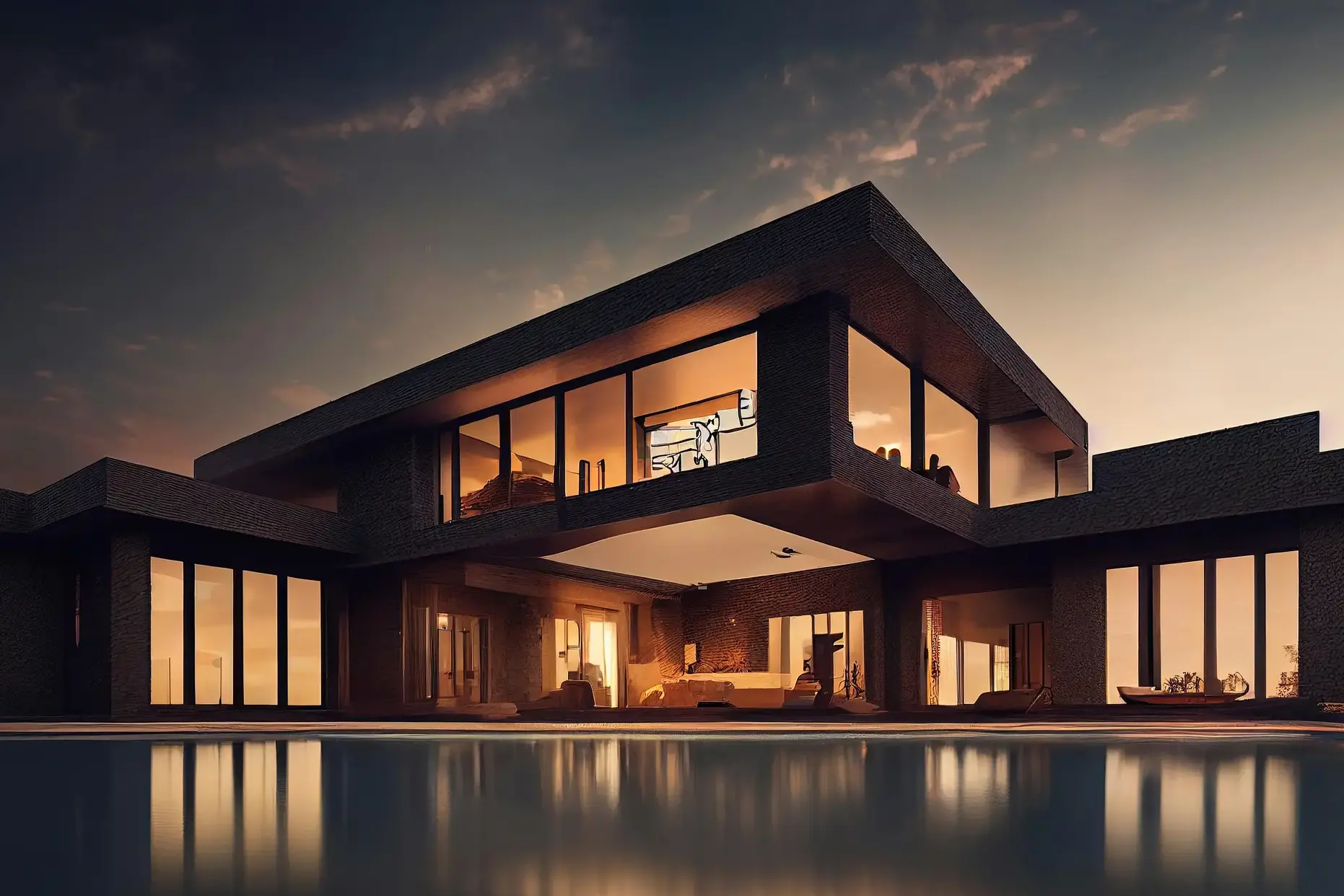
At the very top of the Atlanta market, where trophy estates trade in the eight-figure range, the central question is rarely which neighborhood or how many bedrooms. It is whether to commission a one-of-a-kind home from the ground up or to buy an existing estate whose design, architect, or builder is itself part of the home's identity. Both paths can lead to a remarkable result. They get there very differently, and the trade-offs in cost, timeline, control, and value are substantial.
Building gives you total control over design, scale, and systems, and the chance to create something that did not exist before. Buying an architect-pedigree home gives you immediate ownership of established grounds, a finished address, and a design with a documented reputation. Neither is automatically the smarter move. The right answer depends on your timeline, your appetite for managing a long project, the lots and homes actually available, and what you value most in a trophy property.
This guide compares the two paths at the ultra-prime level: the realities of building from lot acquisition through move-in, the appeal and limits of provenance homes, what the recent data at the top of Buckhead suggests about demand, and the value and appraisal questions that apply to any home that is genuinely one of a kind. Treat the figures here as reported observations rather than promises, and weigh them against your own goals.
What the Top of the Market Is Telling Us
Start with what is actually closing at the peak of Buckhead. According to a Buckhead.com brokerage analysis of the 10 priciest 2025 Buckhead sales, roughly 7 of the 10 were newly built or extensively renovated. In other words, at the very top of the market, finished and current homes dominated the highest closings. That pattern points to strong demand for turnkey ultra-prime product among buyers who want contemporary systems, modern layouts, and the certainty of a completed home.
Read that figure carefully. It reflects what sold at the very top in a single year, not a fixed rule, and it can shift. But it is consistent with what many UHNW buyers tell us directly: at this level, time and certainty are valuable, and a finished estate delivers both without a multi-year commitment. A buyer who wants to be settled now, with current systems and a layout that already works, is drawn to product that is move-in ready.
That demand for turnkey homes is exactly why the build-or-buy question matters. If most of the top buyers want finished product, the owner who builds a singular estate is creating something scarce, while the owner who buys an architect-pedigree home is acquiring something the market has already validated. Both can be sound. The data simply tells you where competition and liquidity tend to concentrate at the very top.
The Case for Building: Total Control, Real Commitment
Commissioning a custom estate is the only way to get exactly the home you envision. Every decision is yours: the architecture, the scale, the floor plan, the systems, the materials, the way the house sits on the land. For a buyer with a specific vision, or one who simply cannot find it in existing inventory, building is the path to a home that did not exist before and reflects their own intent rather than a previous owner's.
The reality of getting there is a multi-year project. Commissioning a one-of-a-kind estate commonly runs roughly two to four years from lot acquisition through move-in, and that range can stretch further depending on the lot, the complexity of the design, and how many decisions get revisited. The first and often hardest step is the land. Atlanta's most established luxury enclaves are largely built out, so a true trophy lot rarely comes to market on its own. When one does, it commands a premium and often draws competition. In many cases the realistic route to a prime homesite is acquiring an existing home for the land and its address, then planning a teardown or substantial rebuild, which adds cost, time, and approvals.
Then there is the budget. Building means assembling separate costs for the lot, design, construction, site work, engineering, permits, utilities, landscaping, and a long list of high-end allowances. Cost and scope overruns are common on bespoke projects, so the headline construction number is rarely the final figure. The discipline is to price the entire scope honestly up front, hold a meaningful contingency, and accept that custom work invites changes along the way. Building rewards buyers who genuinely want the process and the result, and who have the patience and budget flexibility to see a long project through.
Choosing Your Architect and Builder Is the Decision
- Match the scale and price point: Choose professionals with a documented track record at the ultra-prime level, not just luxury generally. A trophy estate is a different undertaking than a high-end build.
- See completed work and speak with references: Visit recent finished projects in person and talk with owners who lived through the process, not just a polished portfolio.
- Confirm licensing, insurance, and capacity: Verify that the team is properly licensed and insured and has the bandwidth to give your project real attention.
- Align on budget discipline: Talent matters, but so does a shared commitment to managing cost and scope. Overruns usually trace back to expectations that were never set.
- Fit the working relationship: You will work closely with this team for years. Communication style and project management approach matter as much as design pedigree.
The Case for Buying: Provenance, Address, and Certainty
Buying an architect-pedigree home solves the two things building cannot: time and certainty. You own established grounds and a finished address the day you close, with mature landscaping, a settled setting, and a home you can occupy now rather than in several years. For a buyer whose move is tied to a school year, a relocation, or any fixed date, that alone can be decisive.
Then there is the design itself. A provenance home is associated with a recognized architect, builder, or design lineage, where the design is part of the home's identity and story. A documented, well-regarded pedigree can support resale appeal and broaden the pool of discerning buyers, because the design carries a reputation that a generic luxury home does not. The most coveted estates in enclaves like Tuxedo Park often trade on exactly this combination of address, grounds, and architectural standing.
The trade-off is that you inherit someone else's choices. The floor plan, the finishes, the systems, and the style reflect a previous owner and a previous era, and you may want to renovate. That is normal at this level, and many buyers of provenance homes update kitchens, baths, and systems to current standards. The key is to renovate in a way that respects what makes the home special. Thoughtful updates that preserve the design integrity and documented pedigree tend to protect value, while changes that erase the home's defining character can undercut the very provenance you paid for. Buying lets you combine an established home and address with current finishes, which is a large part of why turnkey and recently renovated homes dominate the top of the market.
Value, Rarity, and the Appraisal Challenge
Whichever path you choose, a truly distinctive home raises a value question that does not apply to ordinary properties. Appraisals lean on comparable sales, and a one-of-a-kind estate has few or no direct comparables. When a home's design, scale, or finishes are singular, an appraiser may struggle to support the full price with recent sales of similar properties, which can create a gap between an agreed price and an appraised value. That gap can affect financing if a lender will only lend against the appraised figure.
This applies whether you build something unique or buy a distinctive architect-pedigree home, and it is one reason many ultra-prime transactions involve substantial cash, specialized lenders familiar with luxury collateral, or appraisal approaches that look beyond a narrow comp set. It is worth planning for rather than assuming a remarkable home will appraise on a simple comparison.
The other side of uniqueness is the rarity premium, the additional value buyers may assign to a home that is genuinely scarce, whether because of its lot, its provenance, its design, or a combination that cannot be easily reproduced. Scarcity can support pricing and resale appeal, since a buyer who wants that specific home has few or no substitutes. The flip side is that rarity narrows the buyer pool to those who specifically want what makes the home unusual, which can affect time on market. A rarity premium tends to help most when the distinctive qualities have broad appeal, and less when they reflect a single owner's very specific taste.
For value retention, neither building nor buying wins universally. A well-built custom estate on a prime lot can hold value strongly, but only if the design has broad appeal and the build quality is genuine. An architect-pedigree home can hold value through its documented provenance and established setting, but only if it is maintained and updated sensibly. Rather than betting on a category, focus on the fundamentals that protect value in any luxury home: a strong lot and address, sound construction, broad-appeal design, and condition. Past performance does not guarantee future results.
How to Decide Between Building and Buying
The choice usually comes down to a few honest questions about your situation rather than a single right answer. Start with timeline. If your move is tied to a fixed date, an existing architect-pedigree home that is ready now removes the timing risk that a two-to-four-year build introduces. If you have the patience for a long project, building stays on the table.
Next, consider control versus certainty. If you have a specific vision you cannot find in existing inventory and you want to manage the process to realize it, building delivers that control. If you would rather acquire a proven home, an established address, and a documented design, and update it to taste, buying delivers that certainty. Be honest about your appetite for managing a multi-year build, because the experience itself is part of the decision, not just the result.
Then look at what is actually available. The lot question often settles the matter. If a prime homesite in your target enclave is not available, or only available as a teardown with significant cost and approvals, an existing pedigree home may simply be the more realistic route to the address you want. Finally, run the true all-in numbers on both paths, including land, design, construction, allowances, contingency, and carrying costs for a build, against the known, finished price of a home you can buy today. When you compare a realistic total cost rather than a headline construction budget, the right choice usually becomes clearer.
Whichever direction you lean, specialized representation helps at this level. The ultra-prime segment involves limited inventory, off-market activity, lot acquisition for teardowns, provenance evaluation, appraisal complexity, and negotiation dynamics that differ from the broader market. If you are weighing your options, our team can help you compare paths and identify the right lots and homes through our home buying services, and you can connect with an agent to talk through your specific goals. For a closer look at the general construction trade-offs, see our related coverage on custom versus spec luxury home building in Atlanta.
Trade-offs to Weigh Before You Commit
- Timeline. Building commonly runs roughly two to four years from lot to move-in and can stretch further. Buying delivers an established home you can occupy now.
- Budget certainty. A purchase has a known, all-in price at signing. A custom build carries real risk of cost and scope overruns, so the headline number rarely is the final number.
- Lot availability. Prime lots in established enclaves are scarce and often require a teardown. The land question frequently decides whether building is even practical.
- Control versus provenance. Building gives total design control. Buying gives a documented pedigree, an established address, and a design the market has validated.
- Appraisal and resale. One-of-a-kind homes can be harder to appraise and may appeal to a narrower buyer pool, whether you build them or buy them. Plan financing accordingly.
Frequently Asked Questions
Is it cheaper to build a custom Atlanta estate or buy an architect-pedigree home?
Neither is reliably cheaper, because you are rarely comparing equivalent products. Buying an existing architect-pedigree home gives you a known, all-in price the day you sign, with the land, structure, landscaping, and finishes already accounted for. Building means assembling separate costs for the lot, design, construction, site work, and a long list of allowances that are easy to underestimate at the top of the market. Building can pencil out competitively when you already control a strong lot, but cost and scope overruns are common on bespoke projects, so the headline construction budget is often not the final number. The more useful question is which path delivers the home you actually want for a total cost you can commit to.
How long does it take to build a custom luxury estate in Atlanta?
At the ultra-prime level, plan for a multi-year process rather than a single building season. Commissioning a one-of-a-kind estate commonly runs roughly two to four years from lot acquisition through move-in, and that range can stretch further when you account for assembling the right team, design and revisions, permitting, and the realities of custom construction. Schedules depend on the lot, the complexity of the design, the systems involved, weather, labor and material availability, and how many decisions get revisited along the way. Timelines are estimates, not promises. If your move is tied to a school year, a relocation, or another fixed date, an existing architect-pedigree home that is ready now removes the timing risk entirely.
What is an architect-pedigree home and does the name really add value?
An architect-pedigree or provenance home is one associated with a recognized architect, builder, or design lineage, where the design itself is part of the home's identity and story. A documented, well-regarded pedigree can support resale appeal and broaden the pool of discerning buyers, because the design carries a reputation that a generic luxury home does not. That said, a name alone does not guarantee value. The home still has to deliver on condition, layout, location, and how well it fits current buyer expectations. Provenance tends to add the most when it is genuine, well documented, and paired with a home that lives well, rather than when it is leaned on to excuse dated systems or an awkward floor plan.
Why do so many top Buckhead buyers prefer turnkey or recently built estates?
The pattern in the data points to demand for finished, move-in-ready product at the top of the market. According to a Buckhead.com brokerage analysis of the 10 priciest 2025 Buckhead sales, roughly 7 of the 10 were newly built or extensively renovated. That signals strong demand for turnkey ultra-prime homes among buyers who want current systems, contemporary layouts, and the certainty of a finished product without managing a multi-year build. Treat that figure as a reported observation rather than a precise rule. It reflects what closed at the very top in a single year and can shift, but it is consistent with what many UHNW buyers tell us: they value time and certainty, and a completed estate delivers both.
How hard is it to find a buildable lot in Buckhead's established luxury enclaves?
It is one of the hardest parts of the build path. The most established Buckhead luxury enclaves are largely built out, so a true trophy lot rarely comes available on its own, and when one does it commands a premium and often draws competition. In many cases the realistic route to a prime homesite is acquiring an existing home for the land and its address, then planning a teardown or substantial rebuild, which adds cost, time, and approvals. Covenants, lot dimensions, tree ordinances, and grading constraints can also limit what you build. Securing the right lot is frequently the gating step, and it is worth resolving before you commit to a design the land may not support.
Why are one-of-a-kind luxury homes harder to appraise and finance?
Appraisals lean on comparable sales, and a truly unique estate has few or no direct comparables. When a home's design, scale, or finishes are one of a kind, an appraiser may struggle to support the full price with recent sales of similar properties, which can create a gap between an agreed price and an appraised value. That gap can affect financing if a lender will only lend against the appraised figure. The same dynamic applies whether you build something singular or buy a distinctive architect-pedigree home. It is one reason many ultra-prime transactions involve substantial cash, specialized lenders familiar with luxury collateral, or appraisal approaches that look beyond a narrow comp set. Plan for this rather than assuming a unique home will appraise on a simple comparison.
What is the rarity premium and does it help me at resale?
A rarity premium is the additional value buyers may assign to a home that is genuinely scarce, whether because of its lot, its provenance, its design, or a combination that cannot be easily reproduced. Scarcity can support pricing and resale appeal, since a buyer who wants that specific home has few or no substitutes. The flip side is that rarity narrows the buyer pool to those who specifically want what makes the home unusual, which can affect time on market. A rarity premium tends to help most when the distinctive qualities have broad appeal among luxury buyers, and less when they reflect a single owner's very specific taste. It is a real factor at the top of the market, but it cuts both ways.
How do I choose the right architect and builder for a custom estate?
Team selection is arguably the single most important decision in a custom build, because the architect and builder shape both the result and the experience of getting there. Look for professionals with a documented track record at your scale and price point, references you can actually speak with, and recent completed projects you can see in person. Confirm they are properly licensed and insured, that their portfolio matches the style and complexity you want, and that their communication and project-management approach fits how you like to work. Alignment on budget discipline matters as much as design talent, since cost and scope overruns are common when expectations are not set and managed from the start. A strong, aligned team reduces risk more than any single design choice.
Can I renovate an architect-pedigree home, and will that hurt its value?
You can, and many buyers of provenance homes do update systems, kitchens, and baths to current standards. The key is to renovate in a way that respects what makes the home special. Thoughtful updates that preserve the design integrity and documented pedigree tend to protect or enhance value, while changes that erase the home's defining character can undercut the very provenance you paid for. For a recognized home, it is often worth involving design professionals who understand the original intent, and keeping documentation of what was original and what was changed. Renovating lets you combine an established home and address with current finishes, which is a large part of the appeal of buying rather than building.
Should I work with an agent who specializes in ultra-prime Atlanta estates?
For trophy estates, specialized representation is worth it. The ultra-prime segment involves limited inventory, off-market activity, lot acquisition for teardowns, provenance evaluation, appraisal complexity, and negotiation dynamics that differ from the broader market. An agent who works at this level can help you compare the true all-in cost of building against buying, identify lots and pedigree homes that fit your goals, connect you with vetted architects and builders, and work through the financing and appraisal challenges unique to one-of-a-kind homes. The decision carries enough cost and timeline at stake that experienced guidance tends to pay for itself in avoided missteps.
Deciding Whether to Build or Buy at the Top of the Market?
Commissioning a custom estate and buying an architect-pedigree home each carry real trade-offs in cost, timeline, and value. Our team can help you run the all-in numbers, evaluate lots and provenance homes, and decide what fits your goals.
Talk to a Local Agent
Sources
- Buckhead.com brokerage analysis of 2025 Buckhead luxury sales, Buckhead.com. Reporting that among the 10 priciest 2025 Buckhead sales, roughly 7 of the 10 were newly built or extensively renovated, indicating demand for turnkey ultra-prime homes at the top of the market.
- General custom luxury home construction timelines and budgeting, Industry guidance on bespoke estate construction, including typical multi-year timelines, lot acquisition and teardown considerations, and the frequency of cost and scope overruns on custom projects.
- Luxury home appraisal and unique-property valuation, General appraisal guidance on the challenge of valuing one-of-a-kind homes with few or no direct comparable sales, and the resulting financing considerations at the top of the market.
Sales figures and demand observations reflect reported market data for a single period and are not guarantees of future results. Construction timelines and costs are estimates that vary by project. This article is for informational purposes only.
Disclaimer: This article is for informational purposes only and does not constitute legal, financial, tax, appraisal, or construction advice. Construction costs and timelines, lot availability, covenants, appraisal outcomes, financing terms, and market conditions may change and depend on individual circumstances. Always verify current requirements and conduct your own due diligence, and consult licensed architects, builders, appraisers, lenders, and a Georgia real estate attorney before building or buying a luxury estate. The Luxury Realtor Group is a real estate brokerage and does not provide legal, tax, appraisal, or construction advisory services. Past performance does not guarantee future results.