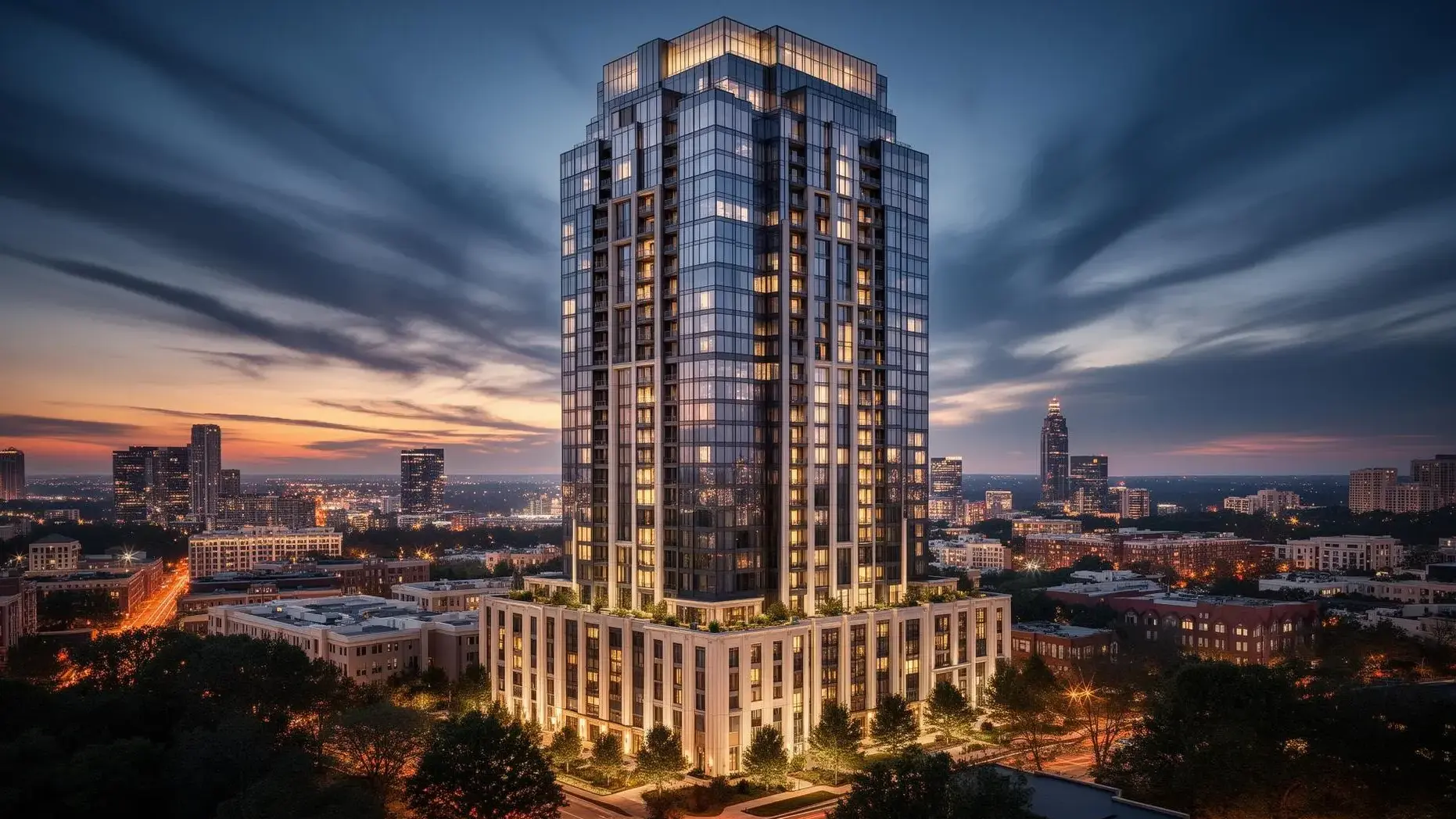
Choosing between a luxury condo and a single-family home is one of the most consequential decisions Atlanta buyers face in 2026. Both options offer distinct advantages at the high end of the market. The right answer depends on how you live, how you invest, and what matters most to you day to day.
Atlanta's luxury real estate market offers something unusual: world-class high-rise living in Buckhead and Midtown, alongside sprawling estate properties just minutes away in neighborhoods like Sandy Springs, Brookhaven, and the Buckhead estate districts. Unlike markets like Manhattan or San Francisco where condos dominate the luxury tier, Atlanta gives you a genuine choice between vertical and horizontal living at every price point from $500,000 to well above $5 million.
This guide breaks down the financial, lifestyle, and investment differences between luxury condos and single-family homes in Atlanta. We will cover pricing, appreciation, taxes, HOA costs, maintenance, resale, and the best neighborhoods for each property type. The goal is to give you clear, data-backed information so you can buy with confidence.
Price Comparison at Every Luxury Tier
At the entry point of Atlanta's luxury market, your dollar buys very different things depending on whether you choose a condo or a house. According to FMLS data from late 2025, the pricing dynamics shift at each tier.
$500K to $750K
At this level, a condo gets you a well-appointed two-bedroom unit in a desirable Midtown or Buckhead building with solid amenities. Think 1,200 to 1,800 square feet with updated finishes, a balcony, and building perks like a fitness center and rooftop pool. A single-family home at this price point puts you in a renovated three- or four-bedroom in Brookhaven, Smyrna, or parts of Decatur with 2,000 to 2,800 square feet, a yard, and a garage. The square footage advantage goes to the house. The location and convenience advantage typically goes to the condo.
$750K to $1.2M
This is the sweet spot for luxury condos in Atlanta. You can access premier buildings in Buckhead like The Ritz-Carlton Residences, Park Avenue Condominiums, or newer Midtown towers with two- to three-bedroom units featuring high-end finishes, floor-to-ceiling windows, and concierge service. Square footage ranges from 1,500 to 2,500. For a single-family home, this budget opens up larger properties in Sandy Springs, Brookhaven, and Virginia-Highland with 3,000 to 4,500 square feet, mature landscaping, and updated interiors.
$1.2M to $2M
At this tier, condo buyers access the top floors and largest units in Atlanta's most prestigious buildings. Expect three-bedroom penthouses and corner units with panoramic skyline views, private elevator access, and premium finishes. Single-family home buyers at this level are looking at established Buckhead neighborhoods like Peachtree Battle, Chastain Park, and Garden Hills with 4,000 to 6,000 square feet on generous lots.
$2M and Above
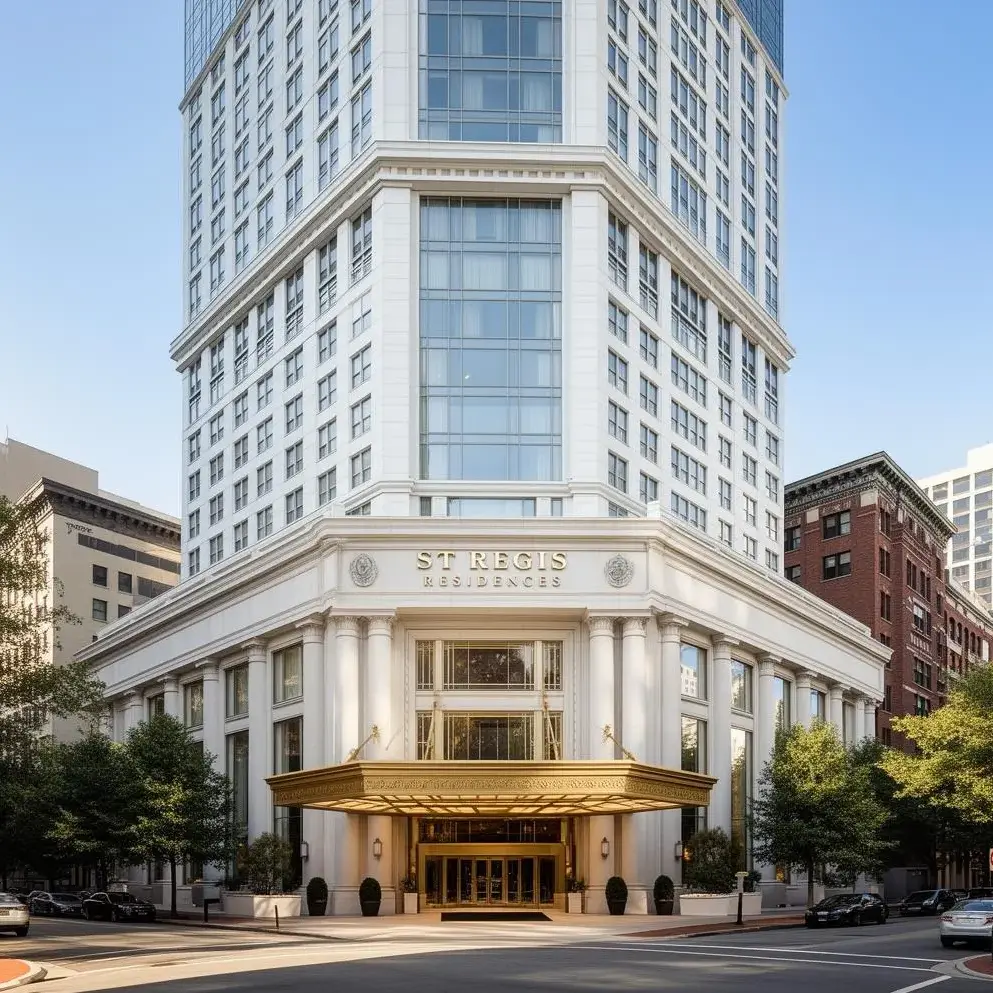
Above $2 million, the condo market thins out considerably. Only a handful of Atlanta buildings offer units at this level, including The Residences at The St. Regis, select penthouses in Buckhead, and a few ultra-premium Midtown properties. The single-family market above $2M is much deeper, with inventory across Tuxedo Park, Paces, Mount Paran, and Whitewater Creek offering estate properties on one to five acres.
Still weighing condo against house?
The answer usually turns on how long you plan to hold and how much maintenance you want to own. We will work through it with you.
HOA Fees: The Hidden Cost (and Hidden Value) of Condo Living
The most obvious financial difference between condos and houses is the monthly HOA fee. In Atlanta's luxury condo market, these fees are substantial. But they also cover services and expenses that homeowners pay separately, and often unpredictably.
According to data from Atlanta condo association filings, monthly HOA fees at premier buildings typically fall in these ranges:
Monthly HOA Fees at Atlanta's Luxury Buildings
- Mid-rise buildings (4 to 8 stories): $400 to $900 per month. Typical amenities include a fitness center, pool, and basic lobby security.
- High-rise buildings (10+ stories): $800 to $1,500 per month. These buildings add concierge service, valet parking, enhanced security, and more extensive common areas.
- Ultra-luxury branded residences: $1,500 to $3,000+ per month. Buildings like The St. Regis Residences and The Ritz-Carlton Residences include white-glove services, dedicated staff, wine storage, private dining, spa access, and premium building maintenance.
Note: Some buildings also levy special assessments for major repairs or improvements. Always review the HOA's reserve study and assessment history before purchasing.
Single-family homes in many Atlanta neighborhoods also have HOA fees, but they are typically much lower: $50 to $300 per month for neighborhood maintenance, common area landscaping, and community amenities. Some luxury neighborhoods, particularly gated communities, run higher. For a deeper look at gated community options, see our guide to Atlanta's gated communities.
The key comparison is total monthly cost of ownership, not just the HOA fee in isolation. A $1,200 monthly condo HOA fee that covers water, insurance, exterior maintenance, and amenities may cost less in total than the equivalent expenses on a $1.5 million house where you pay for landscaping ($300/month), pool maintenance ($200/month), pest control ($50/month), homeowners insurance ($500/month), and home warranty ($50/month) separately.
Maintenance and Lifestyle: Two Very Different Ways to Live
Beyond the financial comparison, the daily experience of living in a luxury condo versus a single-family home is fundamentally different. This is often the deciding factor for buyers who can afford either option.
Luxury Condo Lifestyle
- Lock and leave. Travel frequently? A condo lets you lock the door and go. Building security, package handling, and maintenance happen whether you are home or not. This is a major draw for executives, frequent travelers, and retirees who split time between cities.
- Built-in amenities. Gym, pool, lounge, rooftop terrace, wine room, guest suites. You get access to spaces and services that would cost hundreds of thousands of dollars to build into a private home.
- Zero exterior maintenance. No lawn mowing, no gutter cleaning, no roof repairs, no driveway resealing. The HOA handles everything outside your unit walls.
- Walkability. Luxury condos in Midtown and Buckhead Village put restaurants, shopping, and entertainment within walking distance. For buyers who value an urban, walkable lifestyle, condos in these locations are hard to beat.
Luxury Single-Family Lifestyle
- Privacy and space. No shared walls, no neighbors above or below you, and no building rules about noise, pets, or renovations. A single-family home on a half-acre lot in Peachtree Heights offers a level of privacy that no condo can match.
- Outdoor living. Pools, outdoor kitchens, gardens, sport courts, and play areas. Atlanta's climate allows outdoor entertaining roughly nine months of the year, and a private yard makes the most of it. See our guide on whether a pool adds value in Atlanta.
- Complete control. Want to renovate the kitchen? Add a screened porch? Install a home theater? With a house, you make those decisions on your own timeline without board approval. Condo renovations often require HOA review and must comply with building standards for noise, plumbing, and structural modifications.
- Room to spread out. Four or five bedrooms, a dedicated home office, a playroom, a mudroom, and a three-car garage. Buyers who need dedicated space for work, hobbies, and pets generally find single-family homes more practical for everyday life.
Still Weighing a Condo Against a House?
The call usually comes down to how long you plan to stay and how much of your time you want to spend on upkeep. We can run both scenarios with real numbers.
Compare Both Options for Meor call (770) 727-4052
Investment and Appreciation: Where Your Money Grows
For many luxury buyers, the purchase is both a lifestyle decision and an investment decision. Here is how the two property types have performed historically in metro Atlanta, and what the data suggests for 2026.
Per FMLS records from 2019 through 2025, luxury single-family homes in Atlanta's top neighborhoods appreciated at an average annual rate of roughly 6% to 8%. Luxury condos over the same period averaged closer to 4% to 6% annually. The gap narrowed during the pandemic-era housing surge (2020 to 2022) when all property types saw outsized gains, but it has reasserted itself as the market normalized.
Several factors explain the appreciation difference. Single-family homes sit on land, and land in established Atlanta neighborhoods like Buckhead and Sandy Springs is a finite, appreciating asset. Condos share land value across dozens or hundreds of units. Additionally, per National Association of Realtors (NAR) data, single-family homes consistently attract a wider pool of potential buyers than condos, which supports stronger resale values.
That said, condo appreciation varies dramatically by building. Units in well-managed buildings with strong financials, desirable locations, and limited new construction competition can appreciate at rates that match or exceed single-family homes. The worst-performing condos tend to be in older buildings with high HOA fees, deferred maintenance, and large inventories of units for sale at the same time.
Key Investment Considerations
- Land value: Single-family homes include land, which is the primary driver of long-term appreciation. Condos share land value across all units in the building.
- New construction competition: When a new luxury condo building opens nearby, existing units in older buildings may lose value. Single-family homes face less direct competition because each property is unique.
- Renovation upside: A dated single-family home can be renovated to add significant value. Condo renovations are limited to the interior and must comply with building rules, capping your upside potential.
- Building management risk: A condo's value is tied to the association's financial health. Poor management, underfunded reserves, or special assessments can reduce property values for all unit owners, regardless of how well you maintain your own unit.
Tax Implications: Property Taxes and Deductions
Property taxes in metro Atlanta are calculated uniformly regardless of property type. Fulton County, where most of Buckhead and Midtown are located, assesses property at 40% of fair market value and applies the local millage rate. The effective tax rate typically falls between 1.0% and 1.3% of market value, per the Fulton County Board of Assessors.
That means a $1 million condo and a $1 million house in Fulton County will pay roughly the same property tax: approximately $10,000 to $13,000 per year. The property type does not affect the calculation.
Where differences emerge is in tax appeals. Condo assessments can be easier to challenge because comparable sales data is abundant within the same building. If three similar units in your building sold for $850,000 and the county assessed yours at $950,000, you have a clear argument. Single-family homes require finding comparable properties that may differ in lot size, condition, and features, making appeals more subjective. For a neighborhood-by-neighborhood breakdown of Atlanta property taxes, see our property tax guide.
One important note on federal deductions: the $10,000 SALT cap (state and local tax deduction limit) applies to both property types. With Georgia state income tax and Atlanta property taxes combined, many luxury buyers hit the SALT cap quickly. Mortgage interest remains deductible on the first $750,000 of mortgage debt for both condos and houses, per the Tax Cuts and Jobs Act. Consult a tax professional for advice specific to your situation.
Not Sure Which Option Fits Your Lifestyle?
Our team works with luxury condo buyers and single-family home buyers every day across Atlanta. We can walk you through the pros and cons based on your specific priorities, show you properties on both sides, and help you make the decision with full information.
Best Atlanta Neighborhoods for Condos vs. Houses
Location is the single biggest factor in both property value and day-to-day satisfaction. Atlanta's luxury market is geographically diverse, and each area favors a different property type.
Best for Luxury Condos
- Buckhead: Atlanta's premier luxury condo market. Home to The Ritz-Carlton Residences, The St. Regis Residences, Park Avenue Condominiums, and W Residences. Price range: $500K to $5M+. Buckhead Village offers walkable dining and shopping, while the Peachtree Road corridor provides easy access to Lenox Square and Phipps Plaza.
- Midtown: The most walkable luxury condo market in Atlanta. Proximity to Piedmont Park, the High Museum, the Fox Theatre, and the Atlanta BeltLine makes Midtown a top choice for buyers who prioritize urban convenience. Newer buildings offer modern floor plans and smart-home technology. Price range: $400K to $2M.
- Downtown Atlanta: A growing market driven by Centennial Yards development, the World Cup 2026 infrastructure investment, and proximity to Mercedes-Benz Stadium. Luxury inventory is still developing compared to Buckhead and Midtown, but early buyers may benefit from appreciation as the area matures. For more on development impact, see our $10 billion development guide.
Best for Luxury Single-Family Homes
- Buckhead Estates: The estate neighborhoods of Buckhead are some of the most valuable residential streets in the Southeast. Tuxedo Park, Paces, and Mount Paran offer homes on one to five acres with prices from $1.5M to $10M+. These neighborhoods have the trees, the privacy, and the prestige that define Atlanta luxury living.
- Sandy Springs: Slightly north of Buckhead, Sandy Springs offers newer construction, larger lots, and excellent schools in the Fulton County system. The River District and Mount Vernon area are particularly strong for luxury buyers. Price range: $800K to $3M+.
- Brookhaven: A luxury market with strong schools, parks, proximity to I-85, and a village-style town center. Brookhaven offers a mix of renovated older homes and new construction in the $700K to $2.5M range. Capital City Club Brookhaven and the surrounding streets are among the most sought-after addresses.
- Druid Hills: Historic homes designed by Frederick Law Olmsted's firm sit on tree-lined streets near Emory University. Druid Hills appeals to buyers who value architecture, character, and established neighborhoods. Price range: $600K to $2M.
Resale and Liquidity: When It Is Time to Sell
Eventually, most buyers sell. Whether that is in 5 years or 25 years, the resale profile of your property matters. And here, condos and houses differ meaningfully.
Single-family homes in Atlanta typically sell faster and to a wider audience. Per FMLS data from 2025, luxury single-family homes in Buckhead averaged 45 to 60 days on market, while luxury condos averaged 70 to 90 days. The buyer pool for houses is broader, with buyers of all kinds competing for single-family homes. The condo buyer pool is more specialized, skewing toward those seeking low-maintenance, lock-and-leave living and pied-a-terre buyers.
Condos also face a unique resale risk: the building itself. If the HOA raises fees significantly, defers major maintenance, or faces litigation, every unit in the building can lose value simultaneously. A single bad decision by the condo board can affect your property's marketability. Single-family homeowners have more control over their property's condition and presentation at resale.
The flip side is that a well-run building with strong financials and high demand (The Ritz-Carlton Residences, for example) can command premium prices and sell quickly. Building reputation matters enormously in the condo market. Buyers pay a premium for names they trust.
Privacy, Security, and Space
Luxury buyers often have specific needs around privacy and security. Both property types can deliver, but in different ways.
Condo Security Advantages
High-end condo buildings offer built-in security that would cost tens of thousands of dollars to replicate in a private home. 24/7 front desk staff, controlled access elevators, security cameras, and gated parking garages create multiple layers of protection. For high-profile individuals, executives, or anyone who travels frequently, the passive security of a well-run luxury building is a significant advantage. You do not need to arm and disarm a system or worry about package theft.
Single-Family Privacy Advantages
A house on a large, wooded lot in Tuxedo Park or Mount Paran offers a kind of privacy that no condo can provide: physical separation from neighbors. No shared walls, no elevator encounters, no lobby conversations. Your property is your own. For buyers who value solitude, outdoor space, and the freedom to live without any shared-space dynamics, a single-family home is the clear choice. Many luxury homes in gated Buckhead communities add private security, camera systems, and gated driveways for additional protection.
Sound and Noise
Even in the best-built condo buildings, shared walls and floors mean some degree of ambient noise. New construction buildings with concrete-and-steel construction perform much better acoustically than older buildings with wood-frame construction. If sound isolation matters to you, ask about the building's construction type and STC (Sound Transmission Class) ratings. In a single-family home, your nearest noise source is typically a neighbor's lawnmower, not a shared wall.
Which Is Right for You?
After working with hundreds of luxury buyers in Atlanta, we have found that the decision usually comes down to a handful of lifestyle priorities. Here is a practical framework.
A Luxury Condo May Be the Better Fit If You...
- Travel frequently and want a low-maintenance, lock-and-leave property
- Value walkability, urban convenience, and being close to restaurants and entertainment
- Are downsizing from a large home and want to simplify your life
- Want built-in security without managing your own system
- Are buying a pied-a-terre or secondary residence in Atlanta
- Prefer predictable monthly costs with maintenance included
A Single-Family Home May Be the Better Fit If You...
- Have a family or plan to start one and need bedrooms, yard space, and school district access
- Prioritize long-term appreciation and want the land value component
- Value privacy, space, and the freedom to customize your property
- Want outdoor living space: a pool, garden, sport court, or entertaining patio
- Do not want to deal with HOA boards, building rules, or special assessments
- Plan to hold the property for 10+ years and want maximum resale flexibility
Financing: How Lenders View Condos vs. Houses
If you are financing your purchase, the property type affects your mortgage options. Lenders treat condos and single-family homes differently, and understanding these differences upfront can prevent surprises during underwriting.
For single-family homes, the mortgage process is straightforward. The lender evaluates the borrower (credit, income, assets) and the property (appraisal, title). For condos, there is a third layer: the condo association itself. According to Fannie Mae guidelines, a condo must meet "warrantable" standards to qualify for a conventional mortgage. These standards include requirements around owner-occupancy ratios, HOA reserves, litigation status, and commercial space within the building.
If a building is "non-warrantable" (meaning it does not meet Fannie Mae or Freddie Mac standards), you may still get a mortgage, but it will likely be a portfolio loan with higher rates and a larger down payment requirement. Per Mortgage Bankers Association data, non-warrantable condo loans typically carry rates 0.25% to 0.75% above warrantable condo rates. For a full overview of jumbo loan options for Atlanta luxury properties, see our jumbo loan guide.
The Bottom Line
There is no universally "better" choice between a luxury condo and a single-family home in Atlanta. The right answer depends entirely on your priorities.
If you want maximum long-term appreciation, privacy, space, and renovation flexibility, a single-family home in Buckhead, Sandy Springs, or Brookhaven is likely the stronger play. The land value, broader buyer pool, and historical appreciation data all favor houses for wealth building.
If you want urban convenience, built-in amenities, low maintenance, and a lock-and-leave lifestyle, a luxury condo in Buckhead or Midtown can deliver a daily experience that no suburban house can match. The key is buying in the right building with strong financials and a desirable location.
Some of our clients end up viewing both types before deciding. That is often the best approach. Seeing a $1.2 million condo with skyline views next to a $1.2 million home with a half-acre yard makes the trade-offs tangible in a way that no article can fully replicate.
Whatever direction you are leaning, do your homework on the specific property. For condos, review the HOA budget, reserve study, meeting minutes, and any pending litigation. For houses, get a thorough inspection and understand the true annual maintenance costs. The details at the individual property level matter more than any broad generalization about condos versus houses. For help building your full due diligence checklist, see our due diligence guide.
Frequently Asked Questions
Do luxury condos in Atlanta appreciate as well as single-family homes?
Historically, single-family homes in Atlanta have appreciated at a slightly higher rate than condos, per FMLS data. Between 2019 and 2025, luxury single-family homes in metro Atlanta saw roughly 6% to 8% annual appreciation, while luxury condos averaged closer to 4% to 6%. However, specific buildings and locations vary significantly. A well-maintained condo in a premier Buckhead high-rise may outperform a single-family home in a less desirable neighborhood. Location, building quality, and market conditions all matter more than property type alone.
What do HOA fees typically cover in Atlanta luxury condos?
Luxury condo HOA fees in Atlanta typically cover building insurance, exterior maintenance, roof and structural repairs, common area upkeep, amenities (pool, gym, concierge, valet), water, sewer, trash removal, and reserve fund contributions. In high-end buildings, fees may also include front desk security, package handling, and landscaping. Monthly fees at premier buildings typically range from $800 to $2,500 or more depending on the unit size and amenity package. Always review the HOA budget and reserve study before purchasing.
Are property taxes different for condos versus houses in Atlanta?
Property taxes in Fulton County are calculated the same way for both condos and single-family homes: 40% of the assessed value multiplied by the local millage rate. The effective tax rate in most of metro Atlanta falls between 1.0% and 1.3% of the property's market value. The difference comes down to assessed value. A $1 million condo and a $1 million house in the same county will pay roughly the same property tax. However, condos may receive different assessments during appeals due to comparable sales data within the same building.
Which Atlanta neighborhoods are best for luxury condos?
Buckhead and Midtown are the two strongest markets for luxury condos in Atlanta. Buckhead offers buildings like The Residences at The St. Regis and The Ritz-Carlton Residences with units regularly exceeding $1 million. Midtown features newer construction with walkable access to the arts district, Piedmont Park, and the BeltLine. Downtown Atlanta is growing as well, particularly around Centennial Yards and the Mercedes-Benz Stadium area, though the luxury condo inventory there is still developing compared to Buckhead and Midtown.
Can I rent out my luxury condo in Atlanta?
It depends on the building. Many luxury condo buildings in Atlanta have rental restrictions written into their HOA covenants. Some buildings cap the percentage of units that can be rented at any given time (often 20% to 30%). Others require minimum lease terms of 12 months, which effectively prohibits short-term rentals. A few buildings ban rentals entirely. Always review the condo association's declaration of covenants before purchasing if rental income is part of your plan. Per the City of Atlanta's short-term rental ordinance, additional permits and regulations apply for stays under 30 days.
Is it harder to get a mortgage for a luxury condo than a house?
Condo mortgages can involve an additional layer of scrutiny. Lenders typically review the condo association's financial health, insurance coverage, reserve fund status, and litigation history. If the building does not meet Fannie Mae or Freddie Mac warrantable condo standards, you may need a non-warrantable condo loan, which can carry higher rates and larger down payment requirements. Single-family homes generally have more straightforward underwriting. For luxury purchases above the conforming loan limit, both property types will require jumbo loan qualification regardless.
How do maintenance costs compare between condos and houses?
Condo maintenance costs are bundled into the monthly HOA fee, making them predictable and hands-off. For a luxury condo, expect $800 to $2,500 per month in HOA fees. For a luxury single-family home, annual maintenance costs typically run 1% to 2% of the home's value, per the National Association of Home Builders. On a $1.5 million house, that means $15,000 to $30,000 per year, or $1,250 to $2,500 per month. The difference is that house maintenance is variable and your responsibility to manage, while condo maintenance is fixed and handled by the association.
Do luxury condos or houses sell faster in Atlanta?
In the current Atlanta market, luxury single-family homes generally sell faster than luxury condos. Per FMLS data from late 2025, luxury single-family homes in Buckhead averaged roughly 45 to 60 days on market, while luxury condos averaged 70 to 90 days. Condos in the $1M to $2M range tend to have a smaller buyer pool because some buyers specifically want a yard and garage. However, well-priced condos in desirable buildings with strong amenity packages can still move quickly, especially in Midtown where walkability is a primary draw.
What are the insurance differences between condos and houses?
For a condo, the HOA's master insurance policy covers the building exterior, common areas, and shared systems. You need an HO-6 policy (condo insurance) that covers your interior finishes, personal property, and personal liability. HO-6 policies for luxury condos typically cost $500 to $1,500 per year. For a single-family home, you need a full HO-3 homeowners policy covering the structure, personal property, and liability. Luxury home insurance in Atlanta typically runs $3,000 to $8,000 per year depending on the home's value, construction, and location. Homes in flood zones or with high-value features may cost more.
Should I buy a condo or a house as an investment property in Atlanta?
For pure rental yield, condos in walkable urban locations like Midtown and Buckhead often generate higher rent-per-square-foot than suburban single-family homes. However, the HOA fee cuts into your net operating income. Single-family homes typically offer stronger long-term appreciation and more flexibility with renovations and rental terms. If your goal is cash flow with minimal management, a condo may be the simpler option. If your goal is long-term wealth building through appreciation, a single-family home historically performs better. Many investors hold both for portfolio diversification.
"Buying a home remotely seemed impossible, but the team handled everything. Video tours, detailed neighborhood breakdowns, even coordinating inspections when we couldn't be there. Seamless."
Andrew and Rachel P.
Relocated to Atlanta, bought from out of state
Ready to find out which upgrades will pay off for your home?
Sources
- FMLS (First Multiple Listing Service) - Atlanta luxury home and condo sales data, days on market, and appreciation trends from 2019 through 2025.
- National Association of Realtors (NAR) - National housing market reports, buyer demographics, and property type comparison data.
- Fulton County Board of Assessors - Property tax assessment methodology, millage rates, and assessment appeal procedures for Fulton County properties.
- Fannie Mae - Warrantable condo guidelines, owner-occupancy ratio requirements, and condo project eligibility standards.
- Mortgage Bankers Association (MBA) - Condo vs. single-family mortgage rate data, non-warrantable condo lending trends, and loan origination statistics.
- National Association of Home Builders (NAHB) - Annual home maintenance cost estimates and homeownership cost benchmarks.
- City of Atlanta - Short-term rental ordinance, condo rental regulations, and local housing market data.
Market data referenced in this article reflects conditions through late 2025 and early 2026 and is subject to change. Individual property values, HOA fees, and tax assessments vary. Consult with a licensed real estate professional and financial advisor for guidance specific to your situation.
Disclaimer: This article is for informational purposes only and does not constitute financial, legal, or real estate advice. Property values, HOA fees, tax rates, and market conditions change over time and vary by specific property and location. Appreciation rates cited are historical and do not guarantee future performance. Nothing in this article should be interpreted as a promise or guarantee of investment returns. Consult with qualified real estate, financial, and tax professionals for advice specific to your situation.