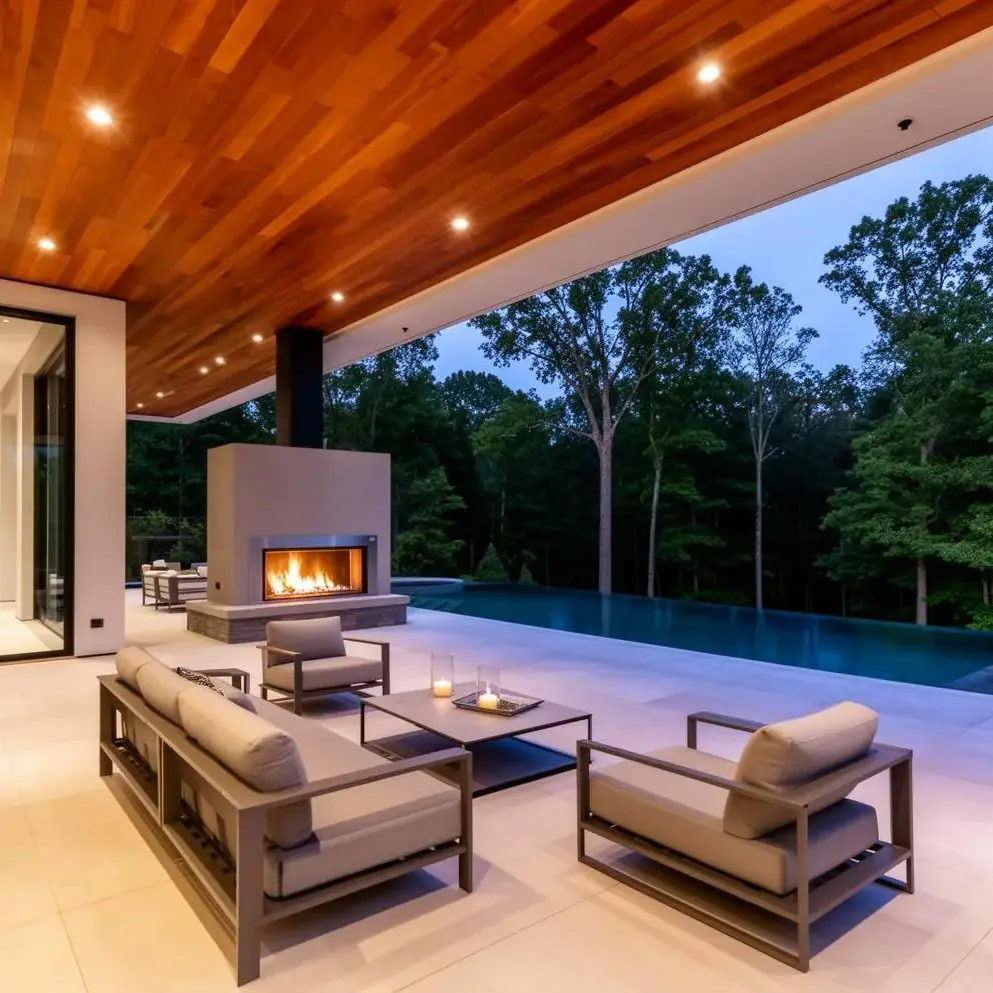
Outdoor living is not a luxury in Atlanta. It is a way of life. With a growing season that runs roughly nine months and temperatures that allow outdoor entertaining from early March through late November, the deck or patio is effectively another room in your home. And outdoor living improvements rank among the stronger-returning home upgrades, with deck and patio additions typically recovering a healthy share of their cost at resale.
For luxury homeowners, the outdoor space has become as important to buyers as the kitchen or primary suite. A well-designed deck or patio with quality materials, thoughtful lighting, and protection from Atlanta's rain and summer heat can transform how you live in your home and significantly impact its market value. A mediocre one, built with cheap materials or poor design, can actually detract from an otherwise well-presented property.
This guide covers the materials, design options, building codes, costs, and ROI data you need to make smart decisions about deck and patio construction for your Atlanta luxury home.
Deck Materials: From Premium Wood to Engineered Composite
The decking material you select determines the look, feel, longevity, and maintenance burden of your outdoor space. In the luxury segment, there are really three contenders worth considering.
Ipe (Brazilian Hardwood)
Ipe is the gold standard of natural decking. It is one of the densest commercially available hardwoods, with a Janka hardness rating of approximately 3,680 (compared to 1,010 for red oak). It is naturally resistant to rot, insects, mold, and fire (Class A fire rating). A properly installed Ipe deck can last 40 to 75 years. The rich chocolate-brown color can be maintained with annual oiling, or the wood can be left to weather to an elegant silver-gray patina. Cost runs $10 to $20 per square foot for material and $75 to $150 per square foot installed (including substructure). Ipe is harder to work with than domestic woods, requiring pre-drilling for fasteners and carbide-tipped saw blades. This adds to labor cost but ensures a premium result.
High-End Composite (Trex Transcend, TimberTech)
Premium composite decking has improved dramatically in the past decade. Products like Trex Transcend and TimberTech Advanced PVC closely mimic the look and texture of real wood without the maintenance. They resist fading, staining, scratching, and mold. Most carry 25-year warranties on both structural integrity and aesthetics. Composite does not splinter, warp, or require staining. Cost runs $8 to $15 per square foot for material and $45 to $80 per square foot installed. The one trade-off: composite can retain heat in direct sunlight, which matters in Atlanta's summers. Light colors and shaded sections mitigate this.
Pressure-Treated Pine
Pressure-treated Southern yellow pine remains the workhorse of residential decking in the Southeast. It is affordable ($2 to $5 per square foot for material, $25 to $45 installed), widely available, and handles Georgia's climate reasonably well when maintained. However, it requires staining or sealing every two to three years, and it will show wear faster than Ipe or composite. For a luxury home, pressure-treated pine is generally not the best choice for the decking surface itself but can work as a cost-effective substructure material under composite or Ipe boards.
Patio Materials: Stone, Paver, and Concrete Options
If your outdoor space is at grade (ground level), a patio is often the better choice. Patio materials offer different aesthetics, maintenance profiles, and price points.
Bluestone is the most popular natural stone for luxury patios in Atlanta. Its blue-gray tones complement both traditional brick homes and modern designs. Full-color bluestone (with rust and brown undertones) adds warmth. Thermal-finished bluestone provides a slip-resistant surface. Cost runs $15 to $35 per square foot for material and $30 to $60 per square foot installed with a proper compacted base on Georgia clay.
Travertine pavers offer a warm, Mediterranean aesthetic. They stay cooler underfoot than most stone in direct sun, which is a genuine advantage in Atlanta's summers. Travertine requires sealing to prevent staining and should be installed with a polymeric sand joint. Cost is similar to bluestone: $15 to $35 per square foot for material, $30 to $55 installed.
Large-format concrete pavers (24x24 or larger) create a clean, contemporary look. Brands like Belgard, Techo-Bloc, and Tremron offer concrete pavers that mimic natural stone at a lower price point. Cost runs $8 to $20 per square foot for material, $20 to $40 installed. They are more consistent in size and color than natural stone, which some homeowners prefer and others find too uniform.
Brick pavers are a natural fit for traditional Atlanta homes. They pair perfectly with the brick exteriors common in Buckhead, Sandy Springs, and Brookhaven. Brick patios age beautifully, developing a patina that adds character. Cost runs $10 to $25 per square foot for material, $25 to $45 installed. The herringbone pattern remains the most popular for both visual interest and structural stability.
Covered vs. Uncovered: What Atlanta Weather Demands
Atlanta averages approximately 50 inches of rain per year and 35 to 40 days above 90 degrees, per National Weather Service data. An uncovered deck or patio will be unusable during afternoon thunderstorms (which happen almost daily in July and August) and uncomfortably hot during the peak summer months. This is why covered outdoor living space is so valuable in the Atlanta luxury market.
A covered patio or deck with ceiling fans extends your usable outdoor season by weeks or months. Options range from simple pergolas (which provide partial shade but no rain protection) to fully roofed structures with lighting, electrical, and even HVAC. The most popular approach for luxury homes is a hybrid: a covered section for dining and lounging, with an open section for a fire pit area and sun exposure.
Pergola costs range from $5,000 to $15,000 for a basic wood or aluminum structure. A fully roofed pavilion with tongue-and-groove ceiling, recessed lighting, and ceiling fans typically costs $25,000 to $60,000 or more depending on size and finish. Screened-in porches (which add bug protection, critical in Atlanta's mosquito season) run $15,000 to $40,000 for a 200 to 400 square foot space. Retractable motorized screens offer the flexibility of open-air or enclosed living at the push of a button, at a cost of $10,000 to $30,000 per opening.
Multi-Level Designs and Outdoor Rooms
The most compelling outdoor spaces in Atlanta luxury homes are not single-level platforms. They are layered environments with distinct zones for different activities. Multi-level designs take advantage of Atlanta's rolling terrain (most lots in Buckhead and Sandy Springs have some grade change) to create separate outdoor "rooms."
A common layout for a luxury home on a sloped lot: an upper deck off the main living level for dining and entertaining (covered, with ceiling fans and built-in grill); a mid-level terrace with a fire pit and seating (open, with landscape lighting); and a lower patio at grade for a pool surround, bocce court, or garden space. Each level is connected by stone steps or composite stairways with built-in lighting.
This approach creates visual depth, maximizes usable square footage on a sloped lot, and provides different environments for different moods. The upper deck is for cooking and conversation. The fire pit terrace is for evening drinks. The lower patio is for recreation. Each zone has its own character and purpose.
Multi-level designs cost more than single-level builds because of the additional structural requirements (footings, posts, stairs, railings) and the complexity of integrating with the existing grade. Budget 30% to 50% more per square foot for a multi-level design compared to a simple single-level deck or patio.
Georgia Building Codes and Permits
Building codes in Georgia follow the International Residential Code (IRC) with state-specific amendments. Key requirements for deck and patio construction include the following.
Permits: Any deck more than 30 inches above grade requires a building permit in most Georgia jurisdictions. Covered structures (pergolas, pavilions) typically require permits regardless of height. The City of Atlanta, Fulton County, DeKalb County, and Cobb County each have their own permitting processes and fee schedules. Your contractor should handle the application, but verify that permits are pulled before work begins. Unpermitted construction can create title issues, insurance problems, and complications at resale.
Railing requirements: Decks more than 30 inches above grade require guardrails at least 36 inches high (42 inches in some jurisdictions). Balusters must be spaced no more than 4 inches apart. Cable railing systems are popular in modern designs but must comply with the same spacing requirements. Horizontal cable railings are code-compliant in most Georgia jurisdictions if cables are tensioned to prevent 4-inch gaps.
Structural requirements: Deck posts must bear on frost-proof footings (minimum 12 inches deep in metro Atlanta, though many contractors go to 24 to 36 inches for stability on clay soil). Ledger boards (where the deck attaches to the house) must be properly flashed and bolted with lag screws or through-bolts, not nails. Improper ledger connections are the leading cause of deck collapses nationally, per the Consumer Product Safety Commission.
Year-Round Use: Heating, Cooling, and Insect Control
Atlanta's climate is a strength for outdoor living, but each season presents challenges that smart design can address.
Summer (June-September): Heat and insects are the primary challenges. Ceiling fans (minimum 52-inch diameter for outdoor spaces) mounted under covered sections create air movement that reduces perceived temperature by 8 to 10 degrees. Misting systems ($1,000 to $5,000 installed) can drop ambient temperature by 15 to 25 degrees. Screened sections are essential for evening use when mosquitoes are active. Consider a mosquito misting system ($2,000 to $4,000 for a perimeter setup) for open areas.
Fall (October-November): Atlanta's best outdoor season. Temperatures in the 60s and 70s, low humidity, and minimal insects. This is when your outdoor investment pays off most visibly. Add throw pillows, blankets, and warm lighting to create an inviting atmosphere.
Winter (December-February): Atlanta's winters are mild by national standards, with average temperatures in the 40s and 50s. Outdoor fireplaces ($5,000 to $25,000 installed) and fire pits ($2,000 to $10,000) make winter evenings comfortable and inviting. Radiant patio heaters (gas or electric, $500 to $3,000 each) provide supplemental warmth for specific seating areas.
Spring (March-May): Pollen is the spring challenge in Atlanta. A covered patio catches falling pollen, and a weekly wash-down keeps surfaces clean. Spring is the second-best outdoor season after fall, with temperatures in the 60s to 80s and the garden in bloom.
Cost Ranges and ROI Data (Atlanta, 2026)
- Composite deck (500 sq ft): $22,500 to $40,000 installed. Good ROI for homes in the $1M-$2M range. Low maintenance and 25-year warranty.
- Ipe deck (500 sq ft): $37,500 to $75,000 installed. Premium choice for homes above $2M. 40+ year lifespan and highest resale perception.
- Bluestone patio (600 sq ft): $18,000 to $36,000 installed. Excellent complement to traditional Atlanta homes. Durable and attractive.
- Covered pavilion (300 sq ft): $25,000 to $60,000+ depending on roofing, ceiling finish, fans, and lighting. High ROI due to extended usability.
- Outdoor kitchen (built-in): $15,000 to $75,000+ depending on appliances, countertop material, and complexity. Strong buyer appeal.
- National ROI data: Per Remodeling Magazine, deck additions recoup 60% to 80% of cost nationally. Atlanta's climate and outdoor lifestyle may push that figure higher for well-executed projects.
Maintenance Comparison by Material
Maintenance requirements vary significantly by material, and the Atlanta climate (humidity, pollen, heavy rain) amplifies the differences.
Ipe: Annual oiling maintains the brown color (1-2 hours for a 500 sq ft deck). Without oiling, Ipe weathers to silver-gray, which many homeowners prefer. Occasional power washing removes mildew. No staining, sealing, or structural treatment needed. Ipe is essentially a "set it and forget it" material if you accept the gray patina.
Composite: Minimal maintenance. Wash with soap and water or a composite deck cleaner once or twice a year. No staining, sealing, or oiling required. Mold and mildew can develop in shaded areas in Atlanta's humid climate, but they wash off easily. Check manufacturer guidelines for specific cleaning products.
Pressure-treated pine: The highest-maintenance option. Stain or seal every two to three years. Power wash annually. Replace boards that crack, warp, or develop soft spots. Expect the deck to show wear within 5 to 8 years even with regular maintenance. Budget $1,500 to $3,000 every two to three years for staining a 500-square-foot deck.
Stone and pavers: Minimal maintenance. Sweep or blow leaves regularly. Power wash once a year with stone-safe cleaner. Re-sand paver joints every two to three years. Seal porous stones (travertine, limestone) every one to two years. Stone and pavers are among the lowest-maintenance outdoor surface materials.
Frequently Asked Questions
What is the best decking material for Atlanta's climate?
Ipe (Brazilian hardwood) and high-end composite (Trex Transcend, TimberTech) are the top choices for Atlanta's climate. Ipe is the premium natural wood option: it is incredibly dense, naturally resistant to rot, insects, and UV damage, and can last 40+ years with minimal maintenance. It handles Atlanta's heat, humidity, and rain exceptionally well. High-end composite decking offers similar durability with zero wood maintenance. It resists fading, staining, and mold, and comes with 25-year warranties. Pressure-treated pine is the budget option but requires staining every 2-3 years and has a shorter lifespan.
How much does a luxury deck cost in Atlanta?
A luxury deck in Atlanta typically costs $50 to $150+ per square foot installed, depending on material, design complexity, and features. Pressure-treated pine runs $25 to $45 per square foot. Composite (Trex Transcend, TimberTech) costs $45 to $80 per square foot. Ipe ranges from $75 to $150 per square foot. A 500-square-foot luxury deck with composite decking, built-in lighting, and cable railing might cost $30,000 to $50,000. A multi-level Ipe deck with an outdoor kitchen and covered dining area could exceed $100,000 to $200,000. Covered structures (pergolas, pavilions) add $15,000 to $60,000+ depending on size and finish.
What patio materials work best for Atlanta luxury homes?
Bluestone, travertine pavers, and natural stone flagging are the most popular patio materials for Atlanta luxury homes. Bluestone offers a sophisticated blue-gray color that complements traditional and modern architecture. Travertine pavers bring warmth and a Mediterranean feel but require sealing. Concrete pavers in large-format sizes offer a clean, contemporary look at moderate cost. Brick pavers complement traditional Southern homes. The best choice depends on your home's architectural style, the intended use of the space, and your maintenance tolerance. All of these materials handle Atlanta's climate well when properly installed with adequate drainage.
Should I build a covered or uncovered outdoor space?
In Atlanta, a covered outdoor space is almost always the better investment. Atlanta averages about 50 inches of rain per year and summer temperatures regularly exceed 90 degrees. A covered patio or deck extends usable days significantly by providing shade from the summer sun and protection from afternoon rain showers. Options range from simple pergolas ($5,000-$15,000) to fully roofed pavilions with ceiling fans and lighting ($25,000-$60,000+). The most popular approach for luxury homes is a combination: a covered dining and lounging area with an uncovered section for sun exposure and a fire pit.
Do I need a permit to build a deck in Atlanta?
Yes. The City of Atlanta and surrounding jurisdictions require building permits for decks and patios that meet certain thresholds. Generally, any deck more than 30 inches above grade requires a permit, and covered structures (pergolas, pavilions) may require permits regardless of height. The permitting process involves submitting plans that demonstrate compliance with the International Residential Code (IRC) as adopted by Georgia, including structural requirements, railing heights (minimum 36 inches), and connection to the house. Your contractor should handle the permitting process, but verify that permits are obtained before construction begins. Building without permits can create problems at resale.
What is the ROI on a deck or patio addition?
Outdoor living additions consistently rank among the stronger-returning home improvements, and deck and patio additions typically recoup a healthy share of their cost at resale, with well-executed projects performing best in strong markets. In Atlanta, where outdoor living is a year-round lifestyle, the ROI may be higher than national averages. The key is matching the scale and quality of the outdoor space to the home and neighborhood. Over-building relative to the neighborhood reduces ROI; under-building leaves value on the table.
How do I make my outdoor space usable year-round in Atlanta?
Atlanta's climate allows for near year-round outdoor living with the right features. For summer: ceiling fans, misting systems, shade structures, and screened-in sections control heat and insects. For winter: outdoor fireplaces, fire pits, radiant heaters (electric or gas), and windbreaks extend the season through Atlanta's mild winters. For rain: covered sections, retractable awnings, or screened porches keep the party going during afternoon showers. The most versatile designs layer multiple features: a covered section with a fireplace and fans, an open section with a fire pit, and a screened porch for bug-free evenings.
What is the difference between Ipe and composite decking?
Ipe is a natural Brazilian hardwood that is among the densest and most durable woods available. It has a rich brown color that can be maintained with annual oiling or allowed to weather to silver-gray. It does not splinter, warp, or crack easily, and it lasts 40+ years with minimal maintenance. Composite decking (Trex Transcend, TimberTech Pro) is a manufactured product made from wood fibers and plastic polymers. It comes in a wide range of colors and grain patterns, requires no staining or sealing, and carries 25-year warranties. Ipe is generally considered more premium and commands a higher resale perception, but composite has closed the aesthetic gap significantly and is easier to maintain.
How do I choose between a deck and a patio?
The choice often comes down to your lot's grade, your home's architecture, and your budget. Decks are ideal for homes with elevated rear exits, sloped lots, or situations where you want to be level with the main floor of the house. They provide a warm, elevated feel and work well for dining and lounging areas. Patios are ground-level stone or paver surfaces that work best on flat lots or as extensions of the backyard. They tend to be less expensive per square foot than decks, especially when using pavers or concrete. Many luxury homes combine both: a deck off the main level for dining with a patio below for fire pit seating and an outdoor kitchen.
What outdoor features add the most value to a luxury home?
The highest-value outdoor features for Atlanta luxury homes, based on buyer demand and appraisal data, include: outdoor kitchens with built-in grills and stone countertops, covered dining areas with ceiling fans and lighting, fireplaces or fire pits, swimming pools (in-ground, heated), screened porches, and professional landscape lighting. The features that deliver the strongest combination of lifestyle value and resale return are covered outdoor living spaces and outdoor kitchens. These create functional square footage that buyers increasingly treat as an extension of the home's living area.
Selling Your Atlanta Luxury Home?
Outdoor living space is one of the most powerful selling features in Atlanta real estate. If you are preparing to sell and want to know which outdoor improvements will maximize your return, we can help.
Get a Selling Consultation
Sources
- National Association of Realtors (NAR) - 2024 Remodeling Impact Report. Outdoor living improvement ROI data.
- Remodeling Magazine - Cost vs. Value Report, deck addition ROI data for the South Atlantic region.
- National Weather Service (Atlanta) - Annual precipitation data, temperature records, and climate normals.
- Consumer Product Safety Commission (CPSC) - Deck safety data, structural failure causes, and railing requirements.
- International Code Council (ICC) - International Residential Code (IRC) requirements for deck construction, railing standards, and structural specifications.
- North American Deck and Railing Association (NADRA) - Decking material performance data, maintenance guidelines, and industry standards.
Cost estimates reflect Atlanta metro area pricing as of early 2026 and may vary based on material availability, contractor, and project complexity. This article is for informational purposes only.
Disclaimer: This article is for informational purposes only and does not constitute professional construction, engineering, or financial advice. Building codes, permit requirements, and material specifications are subject to change. Always consult with licensed contractors, engineers, and your local building department before beginning deck or patio construction. The Luxury Realtor Group is a real estate brokerage and does not provide construction or engineering services.