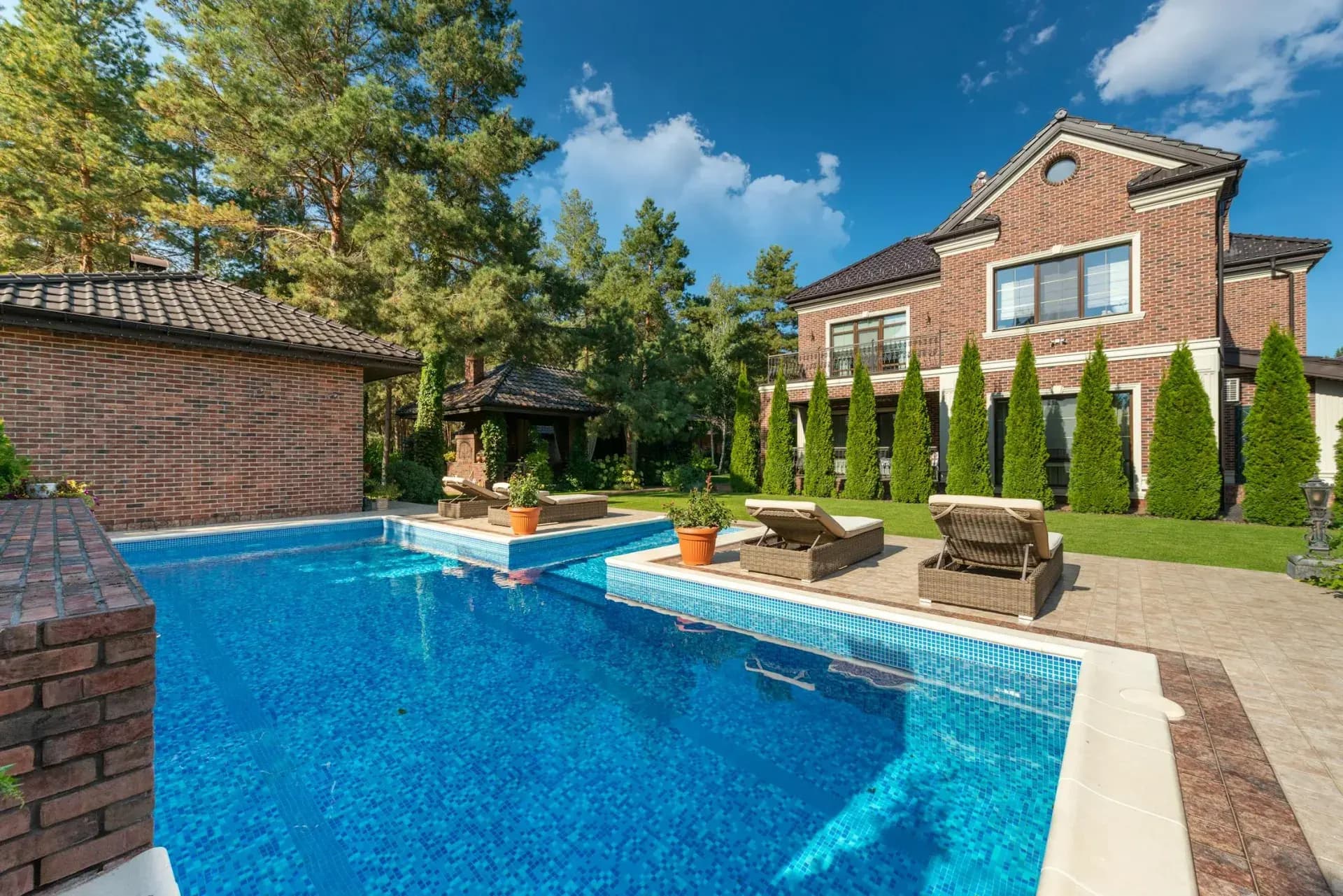
"Should I put in a pool?" and "Is my pool actually worth anything when I sell?" are two of the most common questions we hear from Atlanta homeowners. The answer is not as simple as a yes or no. A pool can add significant value to an Atlanta luxury home, or it can be a liability that narrows your buyer pool and complicates your sale. The difference comes down to price point, neighborhood expectations, and the condition of the pool itself.
There is a lot of generic advice online about pool ROI, most of it pulled from national averages that mean very little to someone selling a home in Buckhead or Sandy Springs. National data says a pool adds about 7% to a home's value. But that number hides enormous variation. In a $250,000 neighborhood with no other pools, it might add 2%. In a $2M Buckhead estate neighborhood where every home has a pool, not having one could cost you 10%.
Let's look at the actual data, broken down by the factors that matter for Atlanta homeowners.
The Data on Pool ROI in Atlanta
According to the National Association of Realtors (NAR), swimming pools typically add 5-8% to a home's value in markets where outdoor living is part of the lifestyle. Atlanta, with its long swimming season from May through September, falls squarely into that category. HouseLogic research supports similar numbers, noting that the value increase is strongest in warmer climates and higher price brackets.
Here is what that looks like at different price points in the Atlanta market:
Pool Value by Atlanta Price Point
- $300K-$500K home: A pool may add $15,000-$30,000 in value, but a new inground pool costs $60,000-$90,000 to install. The math does not work as a pure investment. Buyers in this range are often more concerned about the added maintenance cost than the lifestyle benefit.
- $500K-$1M home: A pool may add $30,000-$60,000 in value. The ROI improves because buyers in this bracket increasingly expect outdoor living amenities. In the right neighborhood, a pool becomes a genuine selling advantage.
- $1M-$2M home: A pool may add $50,000-$160,000 in value. At this price point, a pool shifts from an amenity to an expectation. In neighborhoods like Buckhead and Sandy Springs, not having a pool can be a competitive disadvantage that costs more than the pool itself would have.
- $2M+ home: A pool is essentially required. Buyers at this level are not asking whether the home has a pool. They are asking about the pool's design, features, and condition. An estate without a pool at this price point is incomplete in most buyers' eyes, and it will show up in the sale price.
The key takeaway: building a new pool as a pure investment to boost resale value rarely works out dollar for dollar. Per the Remodeling Magazine Cost vs. Value Report, major outdoor improvements typically return 50-70% of their cost at resale. But that framing misses the real question. If you are in a luxury neighborhood where 70% of comparable homes have pools, the question is not "how much value does a pool add?" The question is "how much value am I losing by not having one?"
Where Pools Add the Most Value in Atlanta
Pool value is directly tied to neighborhood context. In areas where the majority of comparable homes have pools, yours needs one too. Showing up without a pool in these neighborhoods is like listing a luxury home without a two-car garage. It is not a dealbreaker for every buyer, but it eliminates you from the consideration set for many of them.
High-Pool-Prevalence Neighborhoods
- Buckhead: An estimated 60-75% of homes over $1M in Buckhead neighborhoods like Tuxedo Park, Chastain Park, and Peachtree Battle have pools. At this prevalence, a pool is a baseline expectation. Homes without pools in these areas typically sell at a discount relative to comparable pool homes.
- Sandy Springs: The established neighborhoods along the Chattahoochee and in the Mount Vernon corridor have high pool prevalence among luxury homes. Lot sizes accommodate pools well, and the outdoor living culture in these neighborhoods makes a pool a strong selling point.
- Alpharetta and Johns Creek: The luxury subdivisions in north Fulton County have high pool adoption. In communities where lots run half an acre or more, buyers at the $800K+ level typically expect outdoor living that includes a pool. Homes with well-designed pool areas command a clear premium.
- Roswell: Especially in the Roswell estate sections and newer luxury developments, pools are common at the $750K+ price point. The larger lots in historic Roswell are particularly well suited for pools, and demand for private outdoor recreation remains strong.
- East Cobb and Dunwoody: In the higher-end pockets of these established suburban communities, pool homes consistently outperform non-pool homes at comparable price points, particularly in the $600K-$1.2M range.
Where Pools Add Less Value (or Hurt You)
A pool is not always an asset. In certain situations, a pool can make your home harder to sell, not easier. This is not about the pool being bad. It is about the pool not matching buyer expectations for that particular property type or location.
Condos and Townhomes
Private pools are rare in Atlanta's condo and townhome market, and buyers in these segments typically value low-maintenance living. A plunge pool or small courtyard pool on a townhome can be a unique selling point, but the pool maintenance adds to the HOA or owner responsibility in a way that contradicts the townhome lifestyle. Most condo and townhome communities already have a community pool, which satisfies the swimming need without the individual maintenance burden.
Smaller Lots and Starter Home Neighborhoods
A pool on a quarter-acre lot in a $300K-$450K neighborhood may actually turn off some buyers. The pool takes up most of the usable yard, which is a problem for buyers who want open yard space or dog owners who need room to run. First-time buyers in this range are also more sensitive to the ongoing costs of pool ownership (we will cover those costs below). In these neighborhoods, a pool can narrow the buyer pool rather than expand it.
Communities With Community Pools
Many Atlanta subdivisions include a community pool as part of the HOA amenities. In these neighborhoods, a private pool provides less incremental value because the swimming amenity is already covered. Buyers still appreciate a private pool, but they are less willing to pay a premium for one when there is a community option within walking distance that they are already paying for through HOA fees.
Properties Targeting Older Buyers
Downsizing buyers are a significant segment in certain Atlanta neighborhoods. Many of these buyers view a pool as a maintenance burden they do not want. If your home's natural buyer demographic skews older, the pool may need to be marketed as a low-maintenance feature (automated systems, professional weekly service) rather than as a recreation amenity. Listing agents who understand this dynamic can position pool homes effectively for this audience.
Pool Types and Their Impact on Value
Not all pools are created equal in the eyes of buyers and appraisers. The type, construction material, system, and features of your pool directly affect how much value it contributes to your home. Here is how the main options stack up in the Atlanta market.
Saltwater vs. Chlorine Systems
Saltwater pools have become the clear preference among Atlanta luxury buyers. They are easier on skin and eyes, require less hands-on chemical management, and have lower ongoing chemical costs. A saltwater system adds approximately $2,000-$5,000 to conversion cost but is viewed as a significant upgrade by most buyers. If you are selling a home with a traditional chlorine pool, converting to saltwater before listing is one of the highest-ROI pool upgrades you can make. Buyers specifically search for "saltwater pool" in listing filters.
Gunite/Concrete Pools
Gunite is the gold standard for Atlanta luxury pool construction. These pools are fully customizable in shape, size, and depth. They last 50+ years with proper maintenance and can be replastered and refinished multiple times. Gunite pools command the highest resale premiums because buyers and appraisers recognize their durability and quality. The downsides: they cost more to build ($70,000-$150,000+), they require resurfacing every 10-15 years ($8,000-$15,000), and they use more chemicals than fiberglass. But at luxury price points, gunite is what buyers expect.
Fiberglass Pools
Fiberglass pools offer a compelling middle ground: lower maintenance than gunite, faster installation (days instead of months), smoother surface that resists algae, and a competitive price point ($45,000-$75,000 installed). The limitation is shape. Fiberglass pools come in pre-manufactured molds, so custom shapes are not possible. In mid-range neighborhoods ($500K-$800K), fiberglass pools are well received. In luxury markets above $1M, buyers may perceive fiberglass as a step below gunite, but a well-installed fiberglass pool is still a strong asset.
Vinyl Liner Pools
Vinyl liner pools are the least expensive option ($35,000-$55,000) but also the least valued at resale. The liner requires replacement every 7-10 years ($3,000-$6,000), and buyers in the Atlanta luxury market associate vinyl liners with lower-end construction. In neighborhoods below $500K, a vinyl pool is acceptable. Above that price point, a vinyl pool can actually detract from the home's perceived quality. If you are selling a luxury home with a vinyl pool, consider whether a liner replacement (at minimum) is warranted before listing.
Pool + Spa Combinations
An attached spa (hot tub built into the pool structure) adds $15,000-$30,000 to construction cost but consistently increases buyer interest and appraised value. In luxury markets, a pool without a spa feels incomplete. Spa additions provide year-round use, extending the pool area's value beyond the summer swimming season. Freestanding portable hot tubs, on the other hand, add little to no value and are typically removed before sale.
Infinity and Vanishing Edge Pools
On properties with elevation changes or scenic views, an infinity edge pool is a high-impact feature that photographs beautifully and creates a luxury statement. These pools cost more than a standard pool of the same size due to the catch basin and additional engineering. At luxury price points ($1.5M+), an infinity pool can be a genuine differentiator that sets your home apart from comparable listings. The visual impact in listing photos and showings is significant.
Pool Size: What Works and What Does Not
Size matters, but not in the way most people think. A pool that is too small (under 250 square feet) feels like a glorified hot tub and does not add meaningful value. The sweet spot for most Atlanta luxury homes is 400-600 square feet of water surface, which accommodates swimming laps, entertaining, and family use without overwhelming the yard. Pools over 800 square feet can actually work against you if they consume too much of the lot, leaving insufficient green space. The best pool-to-yard ratio preserves functional outdoor space for dining, play areas, and landscaping.
Whether a Pool Pays Off Depends on Your Address
National averages will not tell you much. What matters is your price point, your lot, and what buyers in your immediate area have paid recently. We can look at all three before you build or list.
Assess My Pool and Home Valueor call (770) 727-4052
The Cost of Pool Ownership in Atlanta
The purchase price or construction cost is just the beginning. Ongoing pool ownership costs are a significant factor in the value equation, because they affect both your holding costs as an owner and the perceived cost to buyers when you sell. According to HouseLogic, annual pool maintenance costs average $3,000-$6,000 nationally, and Atlanta falls within that range. For a full breakdown of all luxury home ownership costs including pools, see our luxury home ownership cost guide.
Annual Pool Ownership Costs in Atlanta
- Weekly maintenance service: $150-$400/month ($1,800-$4,800/year). This covers chemical balancing, skimming, vacuuming, filter cleaning, and equipment checks. Most Atlanta luxury homeowners use professional pool service rather than DIY maintenance.
- Chemicals and supplies: $500-$1,200/year for chlorine pools, $300-$800/year for saltwater pools. Salt cells need replacement every 3-5 years ($400-$900).
- Utilities: Running the pool pump, heater, and lighting typically adds $100-$300/month to your electric and gas bills during swimming season. Variable speed pumps (now required by code for new installations) reduce energy costs by 50-70% compared to older single-speed pumps.
- Insurance increase: $100-$500/year additional on homeowners insurance. An umbrella liability policy ($200-$400/year) is strongly recommended for pool owners.
- Resurfacing (gunite): $8,000-$15,000 every 10-15 years. Pebble finishes last longer (15-20 years) than standard plaster (7-12 years) but cost more initially.
- Equipment replacement: Pool pumps ($1,000-$3,000), filters ($500-$2,000), heaters ($2,500-$6,000), and automation systems ($1,500-$4,000) each have 8-15 year lifespans. Budget for rolling replacements.
- Opening and closing: Atlanta's mild winters mean most pool owners keep pools running year-round with reduced service during winter months. Winterizing and spring opening (if applicable) costs $300-$600.
Total annual cost: Budget $3,000-$6,000/year for standard maintenance, with an additional $1,500-$3,000/year set aside for equipment and surface reserve.
Selling a Home With a Pool: What Buyers Look For
When buyers tour a home with a pool, they are evaluating two things at once: the lifestyle appeal and the financial liability. Your job as a seller is to maximize the first impression and minimize the perceived risk. According to NAR data, 93% of buyers start their search online, which means your pool needs to photograph well. But it also needs to pass scrutiny during the showing and inspection. Here is what buyers care about most.
What Turns Buyers On
- Crystal-clear water and clean surfaces. Nothing sells a pool like sparkling water. If your pool is green, stained, or cloudy during a showing, you have lost the buyer before they even look at the equipment.
- Updated equipment. Modern variable-speed pumps, saltwater chlorine generators, LED lighting, and automation systems signal a well-maintained pool. Old single-speed pumps, corroded filter housings, and manual valve systems signal deferred maintenance and future expense.
- Safety features. Compliant fencing with self-closing gates, pool covers (especially automated), and alarm systems reduce liability exposure and can matter to insurers. These features are also favorable for insurance underwriting.
- Outdoor living integration. A pool that connects to an outdoor kitchen, covered patio, fire pit, or landscaped entertaining area creates a resort-style experience that buyers love. Isolated pools surrounded by a concrete pad feel utilitarian by comparison.
- A clean inspection report. Offering buyers a recent pool inspection report from a certified pool contractor removes uncertainty and builds confidence. It shows you maintain the pool and have nothing to hide.
What Turns Buyers Off
- Stained or deteriorating plaster. Visible staining, rough surfaces, or exposed aggregate tell buyers the pool needs resurfacing. That is a $10,000-$15,000 mental line item they add to their offer.
- Cracked or heaving decking. Concrete decking that is cracked, uneven, or stained suggests drainage problems, settling, or age-related deterioration. Deck repair or replacement runs $5,000-$20,000.
- Outdated or non-functional equipment. Equipment that is visibly rusted, leaking, or older than 10 years makes buyers question overall pool condition. An equipment area that looks like a plumbing disaster zone kills confidence.
- Non-compliant fencing or safety issues. Missing fences, broken gates, or non-compliant barriers are immediate red flags for buyers. They also create insurance and liability concerns that make buyers nervous.
Selling a Home Without a Pool in a Pool Neighborhood
If you are selling a home without a pool in a neighborhood where most comparable homes have one, you have a strategic challenge. Building a pool before selling rarely makes financial sense because of the construction timeline (3-6 months) and the cost-to-value gap. Instead, you need a pricing and marketing approach that accounts for the absence.
Pricing strategy: Price your home using comparable sales of non-pool homes in the area, not pool homes. If pool homes in your neighborhood are selling for $1.2M and the typical pool premium is 5-8%, price your home at $1.1M-$1.14M to reflect the market reality. Overpricing a non-pool home by comparing it to pool homes will result in extended days on market and eventual price reductions. This is one of the most common mistakes sellers make.
Marketing approach: Emphasize what your yard offers instead. A large, flat, fenced backyard is attractive to families with young children and dog owners. Highlight the "pool-ready" lot if the space and grading support easy pool installation. Show buyers the potential: "This half-acre, level lot is ready for your custom pool design." Some buyers actually prefer this because they can build exactly the pool they want rather than inheriting someone else's choices.
Alternative outdoor features: Invest in other outdoor living upgrades that provide high ROI and appeal to buyers who may not want a pool. An outdoor kitchen ($10,000-$30,000) returns 55-75% at resale, per the Cost vs. Value Report. A fire pit with built-in seating ($3,000-$10,000), a covered patio or pergola ($8,000-$25,000), and professional landscaping ($5,000-$15,000) create an inviting outdoor environment without the maintenance commitment of a pool. For more on which upgrades actually pay off, see our guide on the best home upgrades for Atlanta home value.
Selling Your Atlanta Home?
Whether your home has a resort-style pool or a pool-ready backyard, our team knows how to position your property for maximum value. We price based on real data, market to the right buyers, and handle every detail of the selling process.
The Bottom Line
A pool adds value to an Atlanta home when the neighborhood expects it, the price point supports it, and the pool itself is well-maintained. At luxury price points ($1M+), a pool is less of an upgrade and more of a requirement. At mid-range price points, it is a lifestyle amenity that some buyers want and others see as a burden. The smartest move is to understand your specific market, your specific buyer profile, and price accordingly.
If you are considering building a pool, do it for your own enjoyment first and resale value second. The ROI rarely covers the full construction cost, but the lifestyle value and the competitive positioning in luxury neighborhoods are real.
If you are selling a home with a pool, invest in making it show-ready. Clean water, updated equipment, good condition, and clear documentation. A well-presented pool is a selling point. A neglected pool is a negotiation liability.
If you are selling a home without a pool in a pool neighborhood, do not pretend the gap does not exist. Price for it, market around it, and offer buyers a vision for what the space could become.
Frequently Asked Questions
Does a pool increase property taxes in Atlanta?
In most cases, yes. Fulton County and surrounding counties assess the pool as an improvement to the property, which increases the assessed value and therefore the property tax bill. The exact amount varies by county, pool type, and home value, but homeowners typically see an increase of $500-$2,000 per year in property taxes after adding an inground pool. The increase is based on the pool's contribution to overall assessed value, not the pool's construction cost.
How much does it cost to build a pool in Atlanta?
As of 2025-2026, a standard inground pool in the Atlanta metro area typically costs $60,000-$120,000 depending on size, material, and features. A basic vinyl liner pool starts around $45,000-$60,000. A mid-range gunite (concrete) pool runs $70,000-$100,000. A high-end gunite pool with spa, water features, and custom finishes can reach $120,000-$200,000+. These figures include excavation, plumbing, electrical, decking, fencing, and basic landscaping. Permits in most Atlanta-area counties add $500-$2,000.
Do pools help sell homes faster in Atlanta?
It depends on the price point and neighborhood. In affluent areas like Buckhead, Sandy Springs, and Alpharetta where most comparable homes have pools, a pool can help your home sell faster because buyers expect one. In mid-range neighborhoods or areas with community pools, a pool may actually narrow your buyer pool by adding perceived maintenance costs. According to NAR data, homes with pools in luxury markets tend to sell at similar speeds to homes without pools, but the pool can be a deciding factor when a buyer is choosing between two otherwise comparable properties.
What is the best type of pool for Atlanta?
Gunite (concrete) pools are the most popular choice for Atlanta luxury homes because of their durability, customization options, and longevity (50+ years with proper maintenance). Saltwater systems are increasingly preferred over traditional chlorine for lower maintenance and a more comfortable swimming experience. For resale value, a gunite pool with a saltwater system, LED lighting, and a spa or tanning ledge offers the best combination of buyer appeal and long-term durability. Fiberglass pools are a good mid-range option with lower maintenance costs but limited shape options.
Does pool condition affect home appraisal?
Yes, significantly. A well-maintained pool with updated equipment adds value to the appraisal. A pool with cracked plaster, outdated equipment, staining, or safety issues can actually reduce the appraised value because the appraiser factors in the cost of necessary repairs. Appraisers look at the pool surface condition, equipment age and function, decking condition, fencing compliance, and overall aesthetics. A pool that needs $15,000-$25,000 in repairs is treated as a liability, not an asset, in the appraisal.
Should I renovate my pool before selling?
If your pool has visible cosmetic or functional issues, yes. A pool with stained plaster, cracked decking, or outdated equipment signals deferred maintenance to buyers and appraisers. At minimum, ensure the equipment works, the water is clear, the surface is clean, and the decking is in good condition. For pools that need significant work (replastering, equipment replacement, deck resurfacing), the investment typically returns 60-80% at resale. A $15,000 pool renovation on a $1M home can prevent a $30,000-$50,000 price reduction that buyers would otherwise demand.
Do home insurance rates increase with a pool?
Yes. Most insurance carriers charge an additional premium for homes with pools due to the increased liability risk. In the Atlanta area, expect an increase of $100-$500 per year on your homeowners insurance premium. Some carriers also require specific safety features such as a four-sided fence with a self-latching gate, a pool cover, or an alarm system. Diving boards and slides may increase premiums further or be excluded from coverage. An umbrella liability policy ($1M-$2M) is strongly recommended for pool owners and costs approximately $200-$400 per year.
"Buying a home remotely seemed impossible, but the team handled everything. Video tours, detailed neighborhood breakdowns, even coordinating inspections when we couldn't be there. Seamless."
Andrew and Rachel P.
Relocated to Atlanta, bought from out of state
Ready to find out which upgrades will pay off for your home?

Sources
- National Association of Realtors (NAR) - Research on home feature preferences, buyer demographics, and the impact of amenities on home value across U.S. markets.
- Remodeling Magazine Cost vs. Value Report - Annual analysis of home improvement project costs and resale value returns by region, including outdoor living improvements.
- HouseLogic (NAR) - Consumer-facing research on swimming pool value, maintenance costs, and resale impact by climate region and price point.
- FMLS (First Multiple Listing Service) - Atlanta metro area listing data, sold price comparisons between pool and non-pool properties, and days-on-market analysis by neighborhood.
- Fulton County Tax Assessor - Property assessment data showing the impact of pool improvements on assessed values and property tax calculations in metro Atlanta.
Value estimates and cost ranges are based on Atlanta-area market data and may vary by specific location, property characteristics, and market conditions. Pool construction and maintenance costs reflect 2025-2026 pricing and are subject to change.
Disclaimer: This article is for informational purposes only and does not constitute financial, legal, or real estate advice. Home values, pool costs, and ROI figures are estimates based on available market data and may vary significantly by property, neighborhood, and market conditions. Past performance and historical value trends do not guarantee future results. Consult with a licensed real estate professional and qualified pool contractor for guidance specific to your property and situation.