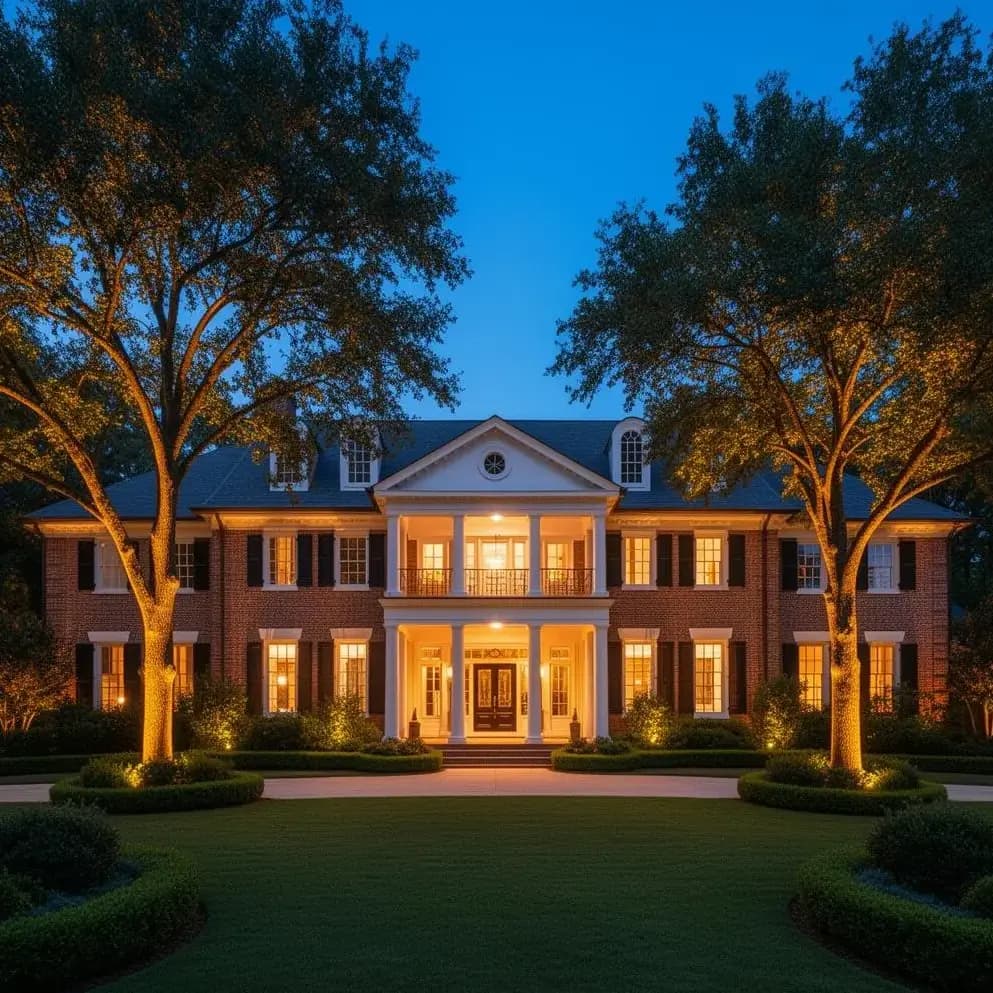
Something shifted in the last five years. The executives who used to split time between a Manhattan apartment and a Connecticut estate started looking south. The tech founders who swore they'd never leave the Bay Area bought plane tickets to Atlanta. The hedge fund managers in Greenwich started asking their accountants about Georgia tax law.
Atlanta is now the number-one domestic relocation destination in the United States. Not for the first time - it has held that position for three consecutive years. But the profile of who is moving has changed. This is not a story about affordable housing attracting first-time buyers. This is about wealthy, established Americans making a calculated decision to leave the cities they built their careers in and put down roots in Atlanta.
The reasons are not mysterious. They are mathematical. And once you see the numbers, the question stops being "why Atlanta?" and starts being "why did it take this long?"
The Short Answer
Wealthy Americans are choosing Atlanta for math they can verify: Georgia's 4.99% flat income tax can save a high-earning household tens of thousands of dollars per year in state income tax compared to New York or California, and $2M buys a 6,000+ sq ft Buckhead estate instead of a two-bedroom Manhattan condo.
Add 16 Fortune 500 headquarters, no state estate or inheritance tax, and the world's busiest airport, and Atlanta has held the number-one domestic relocation spot for three consecutive years. Our relocation guides break down the move city by city.
The Numbers That Matter
- 16 Fortune 500 companies are headquartered in metro Atlanta - more than San Francisco, Boston, or Miami.
- Georgia's 4.99% flat income tax can save high-earning households tens of thousands of dollars per year vs. New York or California.
- $2M in Buckhead buys a 6,000+ sq ft estate on a half-acre lot. That same $2M gets a two-bedroom condo in Manhattan or a teardown in Palo Alto.
- Hartsfield-Jackson is the world's busiest airport - direct flights to 150+ domestic and 70+ international destinations. You can run a national business from here without layovers.
- No state estate tax, no inheritance tax - Georgia is one of the most estate-planning-friendly states in the country.
The Tax Math That Started the Migration
Let's start with the thing nobody talks about at cocktail parties but everyone calculates on the flight home.
A household earning $750,000 in New York pays approximately $60,000 in state and city income tax. The same household in Georgia pays roughly $41,000. That is a $19,000 annual difference on income tax alone - before you factor in property tax savings, lower cost of living, and the fact that your dollar buys dramatically more house.
California is worse. The top marginal rate is 13.3%. A $1M earner in Los Angeles pays about $110,000 in state income tax. In Georgia, that same earner pays approximately $55,000. The difference - $55,000 a year - covers the annual mortgage payment on a $900,000 home.
These are not abstract projections. They are the calculations that financial advisors across the country are running for their high-net-worth clients. And the answer keeps coming back the same: Atlanta's cost structure makes it one of the most financially efficient places for affluent Americans to live.
Georgia also has no state estate tax and no inheritance tax. For those building generational wealth, that is not a footnote - it is a primary driver. Combined with the lower property tax burden in Fulton County (effective rate around 1% of market value with homestead exemption), the total tax picture is hard to argue with.
What Relocators Save - By Origin City
| Moving From | Tax Savings | Housing Delta | Top Neighborhood Pick |
|---|---|---|---|
| New York | $30K-$50K/yr | less | Buckhead (Tuxedo Park, Peachtree Heights) |
| San Francisco | $35K-$55K/yr | less | North Buckhead, Alpharetta |
| Los Angeles | $30K-$50K/yr | less | Buckhead Village, Midtown |
| Chicago | $10K-$20K/yr | less | Chastain Park, Sandy Springs |
| Miami | Similar | less | Ansley Park, Virginia Highland |
| Washington DC | $15K-$30K/yr | less | Peachtree Battle, Garden Hills |
Tax savings estimated for a household earning $500K/year. Housing delta based on comparable neighborhoods and home sizes. Actual savings vary by individual tax situation.
Planning a Move to Atlanta?
Start with someone who does this every week. We work with relocating buyers from these exact cities and can map your budget and lifestyle to the right neighborhoods before you ever book a flight.
or call (770) 727-4052
Thinking about the move yourself?
We will send a shortlist of neighborhoods matched to your commute, schools and price band before you fly in.
The Corporate Anchor
Tax savings get people to look at Atlanta. The business ecosystem is what gets them to stay.
Metro Atlanta is home to 16 Fortune 500 companies: Coca-Cola, Home Depot, Delta Air Lines, UPS, Southern Company, Aflac, Genuine Parts, Graphic Packaging, NCR Voyix, Veritiv, and more. That concentration of corporate headquarters creates a density of executive talent, professional services, and business infrastructure that self-reinforces. Lawyers, bankers, consultants, and private equity firms follow the Fortune 500 - and their partners and employees need homes.
The tech corridor is the newer story. Google opened its largest engineering hub outside the Bay Area in Midtown Atlanta. Microsoft, Visa, Airbnb, Mailchimp (now Intuit), and dozens of high-growth startups have planted flags. Georgia Tech produces more engineers than MIT and Stanford combined. The talent pipeline is real, and the companies following it are not opening satellite offices - they are building second headquarters.
Then there is the entertainment industry. Georgia's film tax credit has turned Atlanta into the largest film production center in the world outside of Los Angeles. Marvel, Netflix, Tyler Perry Studios, and hundreds of productions have generated over $4 billion in annual economic impact. The crew members, producers, directors, and executives who work on these productions need housing - and many of them have decided to stop commuting from LA and just buy here.
The World Cup factor: Atlanta was one of 16 host cities for the 2026 FIFA World Cup. Mercedes-Benz Stadium hosted multiple matches, including a semifinal. The infrastructure investment, global media exposure, and tourism surge may continue to support demand for luxury housing in the months ahead. See our Atlanta World Cup guide.
Where They're Actually Buying
Not all of Atlanta is created equal, and affluent relocators figure that out fast. Here is where the money is going, broken down by buyer profile.
Buckhead - The Center of Gravity
Buckhead absorbs more luxury relocation dollars than any other Atlanta neighborhood, and it is not close. The combination of estate homes, walkable retail, top private schools, and country club access is unique in the Southeast.
Corporate executives and C-suite
Tuxedo Park ($3M-$19.8M), Paces ($2M-$12M), and Peachtree Heights ($1.5M-$7M). Gated entrances, security patrols, multi-acre lots, and total privacy. Many of Atlanta's most prominent business leaders live in these three neighborhoods.
Buyers prioritizing top schools
Chastain Park ($1.5M-$5M) and Garden Hills ($900K-$2.5M). Proximity to Westminster, Pace Academy, Lovett, and top-rated public schools. Chastain Park itself is 268 acres - playgrounds, pool, amphitheater, horse park, and Bobby Jones Golf Course.
Dual-income relocating households
Buckhead Village ($400K-$2M) and Peachtree Hills ($700K-$2M). Walk Score of 93 in Buckhead Village - restaurants, shopping, and MARTA access without a car. The dining scene and retail corridor along Peachtree Road are what sell these neighborhoods.
Entertainment and film industry
Mount Paran ($2M-$10M) and North Buckhead ($800K-$3M). Privacy, mature tree canopy, and large lots appeal to people who value discretion. Several prominent producers and athletes have purchased in these neighborhoods for exactly these reasons.
Beyond Buckhead
Buckhead is the default answer, but it is not the only one. Several other Atlanta neighborhoods attract meaningful luxury relocation volume.
Ansley Park
Walkable Midtown living. Historic homes on tree-lined streets, 5 minutes from Piedmont Park. Popular with executives who want an urban feel without high-rise living. $800K-$3M.
Virginia-Highland
Vibrant intown neighborhood with independent restaurants, boutiques, and BeltLine access. Younger affluent buyers who want energy and walkability. $600K-$1.8M.
Sandy Springs
Its own incorporated city just north of Buckhead. Lower property taxes (Sandy Springs has its own millage rate), excellent schools, and estate homes along the Chattahoochee. $500K-$5M+.
Milton
For buyers who want land - 1-5 acre lots, equestrian properties, top-ranked Fulton County schools, and a 30-minute drive to Buckhead. Think Greenwich, but with actual space. $800K-$8M+.
Alpharetta
The Avalon district is Alpharetta's answer to Buckhead Village - walkable, upscale, and home to a growing tech corridor. Families from San Francisco and Seattle gravitate here. $500K-$3M+.
Midtown
Atlanta's cultural and tech hub. Piedmont Park, High Museum, Fox Theatre, and the densest concentration of tech offices in the Southeast. Luxury condos and townhomes $400K-$2M+.
Brookhaven
One of Atlanta's fastest-growing cities. Historic Capital City Club, Town Brookhaven shopping, and a mix of renovated ranch homes and new luxury construction. $500K-$2.5M.
Druid Hills
Designed by Frederick Law Olmsted. Grand historic estates, Emory University, the Fernbank Museum, and some of the most beautiful tree canopy in Atlanta. $700K-$4M+.
Roswell
Historic Canton Street with independent restaurants and shops, excellent Fulton County schools, and large lots at a lower price point than Buckhead. $400K-$2M.
Dunwoody
Perimeter Center business district, top DeKalb County schools, and direct MARTA access. Corporate relocators working at State Farm, Cox, or Intercontinental Exchange often land here. $400K-$1.5M.
The Housing Arbitrage
The housing math is what closes the deal. When a relocating buyer from New York sells a 1,400 sq ft Upper East Side co-op for $2.5M and buys a 7,000 sq ft estate in Peachtree Battle for $2.2M, they do not feel like they are downgrading. They feel like they found a cheat code.
This is not about cheap housing. Buckhead is expensive by Atlanta standards - the median sits around $1.15M. But compared to comparable neighborhoods in gateway cities, the value gap is enormous. A $5M home in Tuxedo Park - 10,000 sq ft, 3 acres, pool, motor court - would cost $15M-$25M in Greenwich, $20M+ in Beverly Hills, or would simply not exist in Manhattan at any price.
The luxury condo market tells the same story. A 3,000 sq ft unit at the St. Regis Residences in Buckhead - full concierge, valet, spa - runs $1.5M-$4M. A comparable branded residence in Manhattan, Miami, or Los Angeles starts at $5M and goes up from there. The Waldorf Astoria Residences opening in Buckhead are expected to price from $1.5M to $10M+, still a fraction of the Waldorf's New York or Miami properties.
What $2M Buys You - By City
The Quality of Life Argument
The financial case is clear. But people do not move their families across the country for a spreadsheet. The lifestyle has to work.
Atlanta's restaurant scene has matured into one of the best in the country. Buckhead alone has Bones (the power-lunch steakhouse that has been running since 1979), Kyma (Mediterranean seafood that holds its own against anything in New York), Atlas at the St. Regis, and dozens of chef-driven restaurants along Peachtree Road. The BeltLine corridor has added another layer - Ponce City Market, Krog Street Market, and a growing list of independent restaurants that would be at home in Brooklyn or Silver Lake.
The school situation is a major draw. Buckhead's private schools - Westminster, Pace Academy, Lovett, Atlanta International School - compete with the best in the country at tuition rates lower than comparable schools in New York or San Francisco. Westminster alone sends 25%+ of its graduates to Ivy League or equivalent institutions. Public school options in Buckhead (North Atlanta High School's IB program, E. Rivers Elementary) and the north suburbs (Milton, Alpharetta, Johns Creek) are strong and getting stronger.
Country club culture is alive and well. Cherokee Town and Country Club, Capital City Club, and Piedmont Driving Club are the social hubs where business relationships form and deals get done. Membership is not just recreation - it is infrastructure. For executives relocating from markets where private clubs are either extinct or prohibitively exclusive, Atlanta's club landscape is a genuine asset.
And then there is the outdoors. Chastain Park's 268 acres, the Chattahoochee River corridor, the BeltLine trail network, and a climate that allows outdoor activity 10 months of the year. Relocators from New York and Chicago are not used to dining on a patio in February. It changes how you live.
Considering the Move?
We work with relocating buyers every week - from Manhattan co-op owners selling remotely to Bay Area tech executives doing flyover weekends. We know which neighborhoods match which lifestyles, and we can get you inside homes before they hit the market. Start the conversation whenever you are ready.
The Airport Nobody Talks About Enough
Hartsfield-Jackson is the busiest airport in the world by passenger traffic. For wealthy Americans who still need to be in New York on Tuesday, Los Angeles on Thursday, and London next week, that is not a trivia fact - it is the reason the move works.
Direct, nonstop flights to every major domestic city. Multiple daily departures. Delta's hub means you can be in Manhattan in 2 hours and 15 minutes, in Los Angeles in 4 hours and 30 minutes, in London in 8 hours. The private aviation facilities (Peachtree DeKalb Airport and Fulton County Airport/Charlie Brown Field) handle the G650 crowd without the congestion of Teterboro.
From Buckhead, the airport is 25-35 minutes via GA-400 and I-85. MARTA rail connects Buckhead Station to the airport in about 40 minutes. For a business traveler who needs to be on a 7am flight, living 30 minutes from the world's busiest airport beats living 90 minutes from JFK in traffic.
What Relocating Buyers Get Wrong
Here are the mistakes out-of-state buyers make most often.
Buying in the wrong neighborhood because it "looked nice online"
Atlanta neighborhoods can change character block by block. A street in Buckhead that looks similar to one in Midtown can have completely different school zones, property tax rates, and appreciation trajectories. You need local guidance, not Zillow filters.
Underestimating how car-dependent most of Atlanta is
If you are coming from New York or San Francisco, you are used to walking and transit. Most of Atlanta requires a car. The exceptions are Buckhead Village (Walk Score 93), Midtown, and parts of the BeltLine corridor. If walkability matters to you, that narrows your search significantly.
Trying to time the market instead of buying the right home
Relocators sometimes delay because they think the market will drop. In Atlanta's luxury tier, timing matters less than location. A well-located home in Peachtree Battle or Chastain Park will hold its value regardless of short-term market fluctuations. Read our 2026 market timing analysis.
Skipping the visit and buying sight-unseen
Virtual tours are useful for narrowing the list. They are terrible for making a $2M decision. The energy of a neighborhood, the traffic patterns at 5pm, the noise from GA-400 two blocks away - none of that shows up in a listing video. We have talked clients out of homes they loved online and into homes they would have never found without a boots-on-the-ground visit. Our moving to Buckhead guide walks through the full relocation timeline.
The 2026 Window
If you have been thinking about Atlanta, 2026 is a favorable window for several converging reasons.
Luxury inventory is up 15-20% year-over-year. Rates have settled near 6% - not the 3% of 2021, but manageable for buyers in this tier and dramatically better than the 7.5%+ of late 2023. More sellers are offering concessions (62% of Atlanta sellers offered buyer concessions in Q4 2025 according to the Atlanta REALTORS Association). The market is balanced in a way it has not been since before the pandemic.
The World Cup this summer brought global attention and investment to Atlanta. Over $10 billion in development projects are underway or recently completed, including Centennial Yards (the largest mixed-use development in the Southeast), the Buckhead Village redevelopment, and significant BeltLine expansion. These projects are not speculative - they are funded, permitted, and under construction.
For the current Atlanta market forecast and neighborhood-specific data, our 2026 report covers pricing trends, inventory levels, and where we see the most opportunity.
Frequently Asked Questions
Why are wealthy people moving to Atlanta?
Lower taxes (Georgia's 4.99% flat income tax vs. 13.3% in California or 10.9% in New York), dramatically lower housing costs for equivalent quality, a concentration of Fortune 500 headquarters, world-class airport access, and a cultural scene that rivals any major city. A $2M budget buys a 6,000 sq ft estate in Buckhead. The same money gets you a two-bedroom condo in Manhattan.
What are the best neighborhoods in Atlanta for wealthy buyers?
Buckhead is the clear center of gravity for luxury buyers, particularly Tuxedo Park ($3M-$20M estates), Chastain Park ($1.5M-$5M park-side estates), and Paces ($2M-$12M gated properties). Outside Buckhead, Ansley Park offers walkable Midtown living, Virginia Highland attracts younger affluent buyers, and Milton/Alpharetta draw buyers who want top-ranked schools with acreage.
How much do you save moving from New York or California to Atlanta?
The math is stark. A high-earning family can save tens of thousands of dollars per year in state income tax alone, depending on income. Housing costs are lower for equivalent quality. A $3M home in Buckhead would cost $7M-$10M in comparable neighborhoods in Manhattan, Beverly Hills, or San Francisco. Property taxes in Fulton County run about 1% of assessed value vs. 1.5-2.5% in New York and New Jersey.
Is Atlanta good for business owners and entrepreneurs?
Extremely. Georgia ranks in the top 5 states for business climate. Atlanta is home to 16 Fortune 500 headquarters including Coca-Cola, Delta, UPS, Home Depot, and Southern Company. The city's tech sector is booming (Google, Microsoft, Visa, NCR all have major Atlanta operations). Georgia's film industry generates $4B+ annually. And the cost of commercial real estate and talent is significantly lower than coastal cities.
What is the luxury real estate market like in Atlanta right now?
The $1M+ segment in Atlanta is active but not overheated. Inventory has loosened compared to 2022-2023, giving buyers more selection and negotiating room. The median luxury home in Buckhead sits around $1.15M, with the ultra-luxury tier ($5M+) seeing steady demand from relocating executives. Well-priced homes in top neighborhoods still move within 30-45 days.
How does Atlanta's cost of living compare to other major cities?
Atlanta's overall cost of living is above the national average, but that's driven almost entirely by housing in premium neighborhoods. By comparison, New York is 130% above average, San Francisco 80%, and Miami 25%. Groceries, transportation, healthcare, and utilities in Atlanta are all near or below national averages. The gap is even wider when you factor in state tax savings.
What should I know about Georgia taxes before moving?
Georgia has a 4.99% flat state income tax rate as of 2026. There is no state-level property tax - only county. Fulton County (where Buckhead and Midtown sit) has an effective property tax rate around 1% of market value. Georgia offers a homestead exemption that reduces your assessed value. There is no estate tax and no inheritance tax. For high earners relocating from New York, California, or New Jersey, the tax savings alone can be six figures annually.
Is now a good time to buy luxury real estate in Atlanta?
For relocating buyers, 2026 remains a favorable window. Inventory in the luxury tier has increased 15-20% year-over-year, rates have settled near 6%, and more sellers are offering concessions. The World Cup matches Atlanta hosted in June and July 2026 brought a surge of global attention and tourism investment. Buyers who act while inventory is elevated typically have better selection and negotiating leverage.
"Buying a home remotely seemed impossible, but the team handled everything. Video tours, detailed neighborhood breakdowns, even coordinating inspections when we couldn't be there. Seamless."
Andrew and Rachel P.
Relocated to Atlanta, bought from out of state
Ready to see what your budget buys in Atlanta?

Sources
- U.S. Census Bureau - American Community Survey migration data, metro Atlanta population growth and domestic migration patterns. census.gov
- Tax Foundation - State individual income tax rates and brackets, state and local tax comparisons by metro area. taxfoundation.org
- Atlanta REALTORS Association - Market briefs, median home prices, inventory levels, and days on market for metro Atlanta. atlantarealtors.com
- Metro Atlanta Chamber - Fortune 500 headquarters list, economic impact data, corporate relocation statistics. metroatlantachamber.com
- Georgia Department of Economic Development - Film and entertainment industry economic impact, business climate rankings. georgia.org
Tax savings estimates are illustrative and based on publicly available state tax rates applied to stated income levels. Actual tax liability varies by individual circumstances including deductions, credits, filing status, and local taxes. Consult a qualified tax professional before making relocation decisions based on tax considerations. Housing comparisons based on MLS data and public records for comparable properties in referenced neighborhoods.
Disclaimer: This article is for informational purposes only and does not constitute financial, tax, or legal advice. Real estate market conditions, tax rates, and economic factors change frequently. The Luxury Realtor Group provides real estate advisory services and is not a tax advisor, financial planner, or attorney. Always consult qualified professionals before making relocation or real estate investment decisions.