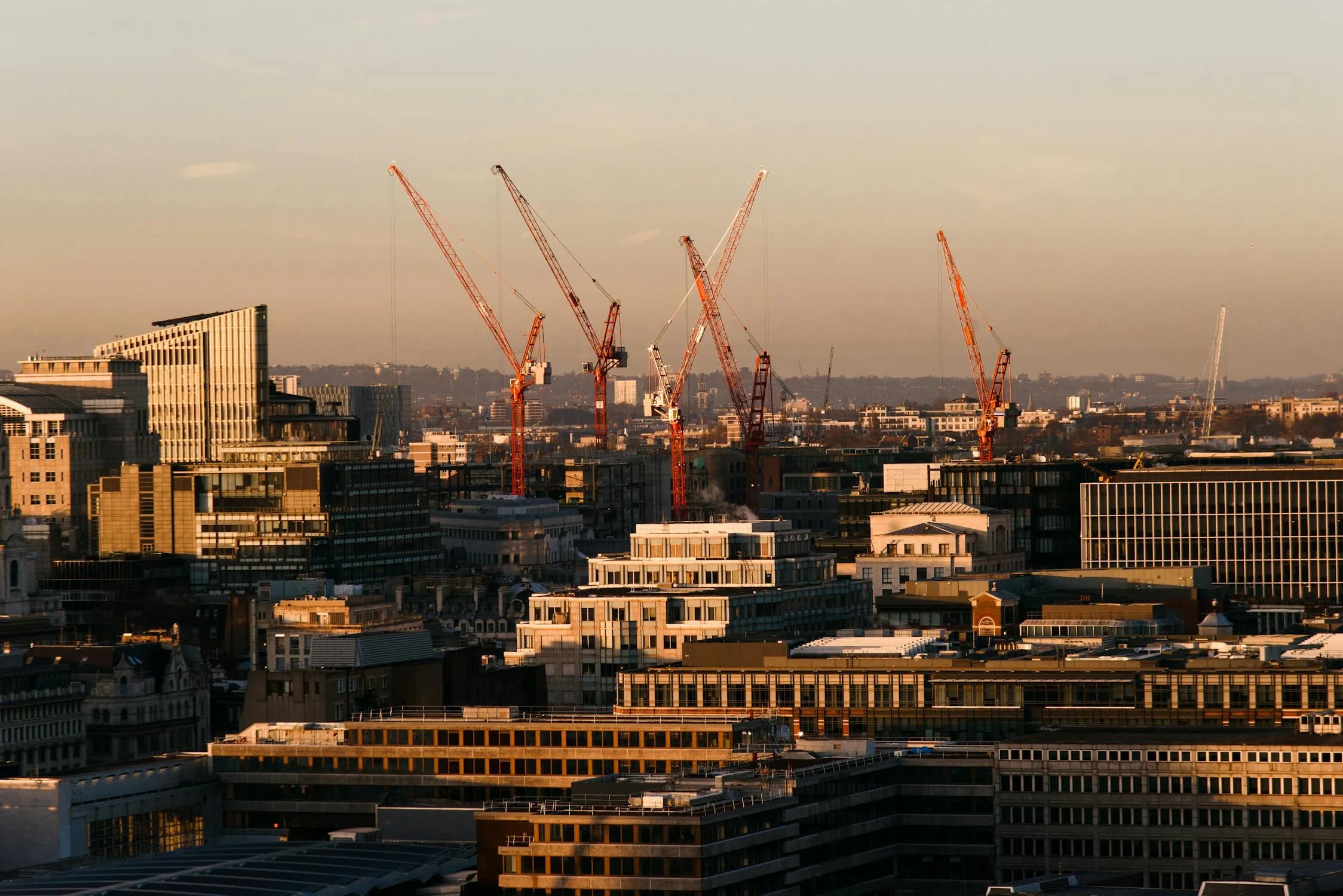
A buyer from San Francisco asked me last month whether Atlanta's development boom was “real or just marketing.” I drove her past six active construction sites within a 3-mile radius of her target neighborhood. She made an offer that weekend.
Here's the thing about Atlanta right now: we're not talking about a few scattered projects. We're talking about over $10 billion in committed capital reshaping entire corridors of the city simultaneously. Centennial Yards alone is $5 billion. The Beltline keeps expanding. Buckhead is reinventing itself with mixed-use density. And suburban nodes like Halcyon and Avalon are pulling luxury buyers who never would have considered life outside the Perimeter five years ago.
But the question that actually matters to you isn't what's being built. It's what it means for the home you own or the one you're about to buy. That's what this piece is about — project by project, neighborhood by neighborhood, with the numbers that matter.
For the full rundown on every major project, see our comprehensive $10B development guide. This article focuses specifically on what those projects mean for your home's value.
Development Impact at a Glance
Highest Value Impact
- • Centennial Yards — Downtown (+20-35%)
- • Beltline Southside — Adair Park, Capitol View (+25-40%)
- • Buckhead Mixed-Use — Peachtree corridor (+10-18%)
Strong Suburban Uplift
- • Assembly Yards — Doraville/Chamblee (+15-25%)
- • Halcyon — South Forsyth (+12-20%)
- • Avalon Expansion — Alpharetta (+8-15%)
*Estimated appreciation ranges based on comparable development completions in Atlanta and peer cities. Actual results vary by micro-location, timeline, and market conditions.
Centennial Yards: The $5B Gravity Well Reshaping Downtown
Let's start with the elephant in the room. Centennial Yards is a $5 billion, 50-acre mixed-use development transforming the Gulch — that dormant expanse of rail yards between Mercedes-Benz Stadium, State Farm Arena, and the Five Points MARTA station. It's the largest urban core redevelopment in the Southeast's history, and it's not theoretical anymore. Vertical construction is underway.
When you drop 12 million square feet of office, residential, retail, and entertainment space into a concentrated area, the ripple effects on surrounding home values are enormous. We're already seeing it play out in real time.
Which Neighborhoods Win
Castleberry Hill is ground zero. It's the closest established residential neighborhood to Centennial Yards, and loft prices there have already climbed 18% year-over-year. Once the project delivers its first retail and restaurant phase, expect another 15-20% push. The walkability premium alone justifies the trajectory.
Vine City and English Avenue sit just northwest. These neighborhoods are experiencing a double catalyst — Centennial Yards to the south and the completed Westside Park (the largest free park in Atlanta) to the north. Homes that were $180,000 three years ago are trading above $350,000. The appreciation isn't slowing.
South Downtown is being simultaneously transformed by a separate $2 billion redevelopment of 57 historic buildings. The combination of Centennial Yards and South Downtown creates a continuous corridor of new amenities that extends the value uplift deeper into neighborhoods like Mechanicsville and Summerhill.
For investors evaluating these corridors, our Atlanta investment properties neighborhood breakdown provides detailed cap rate and rental yield data.
The Construction Discount Window
During active construction, homes within a half-mile of major project sites typically trade at a 10-20% discount compared to post-completion projections. Buyers willing to tolerate 18-24 months of construction noise and traffic disruption can capture meaningful upside. But timing matters — once the first retail tenants open and the “neighborhood feel” materializes, that discount evaporates fast.
The Beltline Effect: Where the Trail Goes, Values Follow
If there's one development pattern that's been proven in Atlanta, it's the Beltline effect. Neighborhoods adjacent to completed trail segments have consistently outperformed the metro average by 25-40% in appreciation. Old Fourth Ward, Inman Park, the Eastside corridor — the data is clear and the pattern is repeating.
What makes 2026 significant is that the Southside and Westside trail segments are entering their final construction phases. These are the last major pieces of the 22-mile loop, and they're cutting through neighborhoods where entry prices are still 40-60% below what Eastside Beltline-adjacent homes command.
Southside Beltline: The Biggest Remaining Opportunity
Adair Park sits directly on the Southside trail alignment. Current median home prices hover around $380,000 — compare that to $750,000+ for comparable Eastside Beltline homes in Inman Park. As trail construction completes and the planned commercial nodes activate, we're projecting 25-35% appreciation over the next 36 months.
Capitol View and Pittsburgh are slightly further along the trail and even more affordable. These neighborhoods appeal to buyers who see the Eastside Beltline trajectory and want to position early in the cycle. New construction townhomes are already appearing, which is always the leading indicator of an area tipping toward mainstream appeal.
West End benefits from both the Beltline and proximity to the new Westside Park. It's further along in its transition than Adair Park — prices have already moved meaningfully — but still offers value relative to where the trajectory points. Several of the emerging luxury neighborhoods we identified sit along this corridor.
Westside Beltline: The Sleeper Segment
The Westside trail segment connecting to Quarry Yards (a separate 70-acre mixed-use project) creates an entirely new amenity corridor through Grove Park and Bankhead. These neighborhoods are earlier in the cycle and carry more risk, but the upside potential is substantial. Quarry Yards alone will deliver thousands of residential units, retail space, and direct Beltline access.
The key insight for luxury buyers: you don't need to buy in these transitioning neighborhoods. Owning in established areas adjacent to Beltline-connected development zones captures uplift with less risk. Think Brookhaven benefiting from the Peachtree Creek Greenway extension, or Ansley Park gaining from enhanced Midtown connectivity.
Buckhead's Mixed-Use Renaissance: From Suburban Feel to Urban Village
Buckhead was already Atlanta's most expensive residential market. What the current development wave is doing is fundamentally changing the type of value it offers. The old model — gated estates, car-dependent living, Lenox Square anchoring the commercial core — is being augmented with walkable mixed-use nodes that appeal to a younger, more urban-oriented luxury buyer.
The Peachtree Road corridor between Lenox and Buckhead Village is being transformed by several billion dollars in mixed-use projects. New luxury condominiums, boutique office buildings, and street-level retail are replacing aging strip malls and surface parking lots. The effect is creating an actual walkable neighborhood center where one didn't exist before.
Impact on Existing Home Values
Here's what's interesting: the new development isn't cannibalizing existing Buckhead home values. It's expanding the buyer pool. Executives who previously chose Midtown for walkability are now considering Buckhead because these new mixed-use projects deliver similar urban amenities while keeping the established neighborhood's prestige and school quality.
Homes within walking distance of Buckhead Village and the new PATH400 trail extension are commanding a 10-18% premium over comparable homes deeper in residential-only pockets. That's a pattern we've never seen in Buckhead before — historically, the most valuable properties were the ones furthest from commercial activity.
For estate homes in the $2M+ range, the development boom is net positive. New restaurants, retail, and cultural venues add lifestyle value without encroaching on the quiet, tree-canopied streets where these homes sit. Our smart money neighborhoods analysis details where these premiums are strongest.
Suburban Power Centers: Assembly Yards, Halcyon & Avalon
Not every transformative project is inside the Perimeter. Three suburban developments are creating entirely new value centers that are pulling luxury demand in directions that didn't exist five years ago.
Assembly Yards (Doraville): MARTA + Mixed-Use = Value Engine
Assembly Yards is a 135-acre mixed-use development on the former General Motors plant site in Doraville, anchored by a MARTA station. It's a model that's proven in cities like Arlington (Amazon HQ2) and Denver (Union Station) — transit-oriented development that creates a walkable neighborhood from scratch.
The ripple effect is already hitting Chamblee and surrounding neighborhoods hard. Homes within a mile of Assembly Yards have appreciated 22% year-over-year, outpacing the broader metro by 3x. New construction townhomes that were $450,000 at pre-sale are now commanding $550,000+.
For luxury buyers, the play is Brookhaven — close enough to benefit from Assembly Yards' amenity uplift while offering the established neighborhood character, tree canopy, and school quality that luxury families demand.
Halcyon (South Forsyth): Creating a Lifestyle Anchor
Halcyon in Forsyth County is doing something different — creating a lifestyle-driven town center in an area that was previously defined by subdivisions and strip malls. The development includes boutique retail, restaurants, a food hall, an outdoor amphitheater, and attainable luxury living options.
What matters for home values: Halcyon is giving the South Forsyth corridor an identity and a gathering point it never had. Luxury homes within a 10-minute drive have seen 12-20% appreciation attributed to the “Halcyon effect” — the same way proximity to Avalon boosted Alpharetta values a decade ago.
Avalon Expansion (Alpharetta): Doubling Down on What Works
Alpharetta's Avalon proved that suburban mixed-use development drives luxury home values. Now it's expanding with additional residential towers, hotel space, and an expanded retail footprint. The expansion reinforces Avalon's position as north metro Atlanta's premier lifestyle destination.
Luxury homes within a mile of Avalon carry an 8-15% premium over comparable properties further out in Alpharetta. As the expansion completes and adds more dining, entertainment, and residential density, that premium will widen. Avalon-adjacent neighborhoods like Windward and downtown Alpharetta continue to attract corporate executives who want walkable luxury without the ITP commute.
Development Risk: What Could Go Wrong
Construction delays. Large-scale projects routinely slip 12-24 months. Centennial Yards' full buildout is a 10+ year timeline. Don't buy solely based on a developer's projected completion date.
Oversupply risk in condos. When multiple towers deliver simultaneously in Midtown or downtown, condo values can soften. Single-family and townhome values near development sites tend to be more resilient because supply is naturally constrained.
Gentrification pushback. Community opposition can slow or alter development plans, particularly along the Beltline's Southside and Westside segments. Projects with strong community engagement (like Quarry Yards) tend to proceed more smoothly.
Interest rate sensitivity. Developer timelines are tied to financing conditions. Rising rates can pause phases of multi-year projects. As our 2026 market forecast details, rate trajectory matters for both buyers and developers.
The FIFA Accelerant: Why Timelines Are Compressed
The 2026 FIFA World Cup is the single biggest catalyst compressing Atlanta's development timeline. Projects that would normally unfold over a decade are being fast-tracked to have major components operational before the tournament. This creates an unusual dynamic: accelerated infrastructure improvement meets a concentrated window of global attention.
The Stitch — a $713 million project to cap a section of the I-75/I-85 Downtown Connector and create 14 acres of new park space — is pushing hard to hit World Cup milestones. Centennial Yards is prioritizing its entertainment and hospitality phases. MARTA is upgrading stations and service frequency. Street improvements, wayfinding, and beautification projects are everywhere.
For home values, this matters because infrastructure improvements that would normally drip in over 5-7 years are arriving in a concentrated burst. The cumulative effect on neighborhood livability — and therefore property values — is amplified when multiple improvements land simultaneously rather than sequentially. Our deep dive on the FIFA World Cup's impact on Atlanta luxury real estate covers this timeline in detail.
Where to Buy Before Development Completes
The smartest buyers in development-driven markets follow a simple principle: buy the disruption, hold for the amenity. That means entering neighborhoods during the messy construction phase when prices reflect temporary inconvenience rather than long-term value.
Based on current project timelines and price dynamics, here's where the value-to-risk ratio looks strongest right now:
Tier 1: Highest Conviction (Funded, Under Construction)
- Castleberry Hill / South Downtown corridor — Adjacent to Centennial Yards and South Downtown projects, both fully funded and under construction. Entry at $300-500K for condos/lofts, with 20-35% upside projected.
- Adair Park / Capitol View — Beltline Southside trail actively under construction. Entry at $350-450K for renovated single-family, with 25-35% upside as trail completes.
- Chamblee / near Assembly Yards — MARTA-anchored development well underway. Entry at $400-550K for townhomes, with 15-25% upside as phases deliver.
Tier 2: Strong Thesis (Committed, Early Phase)
- West End / near Westside Park — Dual catalyst from Beltline and park. Entry at $400-600K, with 20-30% upside over 3-5 years.
- Buckhead Village walkable zone — Mixed-use transformation creating new premiums. Entry at $800K-1.5M for condos, with 10-18% upside as village concept matures.
- Sandy Springs City Springs district — Continued densification around the performing arts center and city center. Entry at $600K-1M, steady 8-12% appreciation trajectory.
Tier 3: Speculative but Promising (Planned, Not Yet Under Construction)
- Grove Park / Bankhead (near Quarry Yards) — Highest upside potential but longest timeline and most uncertainty. Only for buyers with a 5-7 year horizon.
- South Forsyth / near Halcyon Phase 2 — Expansion plans announced but dependent on market conditions. Strong fundamentals but suburban supply can dampen appreciation.
Our analysis of the 2026 buying window explains why this particular moment in Atlanta's development cycle may not repeat. And for buyers actively entering the spring 2026 market, timing around these project milestones is critical.
Which Projects Drive the Most Luxury Value
Not all development creates equal value for luxury homeowners. The projects that drive the highest premiums for $1M+ homes share specific characteristics: they add lifestyle amenities (dining, entertainment, green space) without adding density that competes directly with existing luxury housing stock.
By that filter, the projects with the most positive impact on luxury home values rank as follows:
1. The Beltline expansion — adds trails, parks, and commercial nodes without meaningful residential supply that competes with established single-family neighborhoods. Every completed segment has lifted luxury values in adjacent areas.
2. Buckhead Village mixed-use — adds the walkable dining and retail that Buckhead estate homeowners have wanted for decades, without changing the residential character of surrounding streets.
3. PATH400 and greenway extensions — trail and green space improvements that enhance livability for existing luxury neighborhoods in Buckhead, Brookhaven, and Sandy Springs without any associated density increase.
4. Avalon expansion — strengthens Alpharetta's lifestyle proposition for luxury buyers comparing north metro to ITP options.
5. Assembly Yards — creates a genuine urban node in an area that lacked one, lifting the entire Chamblee-Brookhaven-Doraville corridor.
Projects like Centennial Yards and South Downtown are transformative for the city but have more indirect impact on luxury home values since they're primarily creating new residential inventory rather than enhancing existing neighborhoods. The exception is for luxury condo buyers who want a brand-new downtown lifestyle product — those units will carry significant premiums once the surrounding amenity ecosystem activates.
Key Takeaways for Luxury Buyers and Homeowners
If you own near a major project: Sit tight. The disruption is temporary and the long-term value trajectory is strongly positive. This is not the time to sell at a construction discount.
If you're buying for investment: Target Tier 1 neighborhoods with funded, under-construction projects. The construction discount window is closing fast for Centennial Yards and Beltline-adjacent areas.
If you're buying a primary residence: Prioritize neighborhoods where development adds lifestyle amenities you'll actually use — trail access, walkable dining, green space. The value uplift is a bonus, not the reason to buy.
If you're in the suburbs: Proximity to mixed-use lifestyle centers (Avalon, Halcyon, Assembly) is becoming a significant value differentiator. The suburban homes that appreciate fastest are the ones closest to “something to walk to.”
The Bottom Line
Atlanta's $10 billion development boom isn't just changing the skyline. It's fundamentally restructuring which neighborhoods command premiums and why. The old value map — where Buckhead was expensive, downtown was cheap, and the suburbs were subdivisions — is being redrawn in real time.
The buyers who benefit most are the ones who understand the specific projects near their target neighborhoods, the realistic timelines for those projects, and the historical patterns of how development completions translate to value. The Atlanta market rewards informed positioning more than raw capital — and right now, the information advantage is available to anyone paying attention.
If you're evaluating a purchase or wondering how a nearby development affects your current home's value, we track every major project's progress and its real-time impact on neighborhood pricing. That's the kind of analysis that makes the difference between a good investment and a great one.
Get a Development Impact Analysis for Your Target Neighborhood
Tell us where you're looking and we'll show you exactly which projects will affect values, projected timelines, and where the best entry points are right now.

Disclaimer: This article is for educational purposes only and does not constitute financial, legal, or investment advice. Appreciation projections are estimates based on historical patterns and comparable developments; actual results may vary significantly. Market data, home prices, and development timelines change frequently. Consult qualified professionals before making investment decisions.