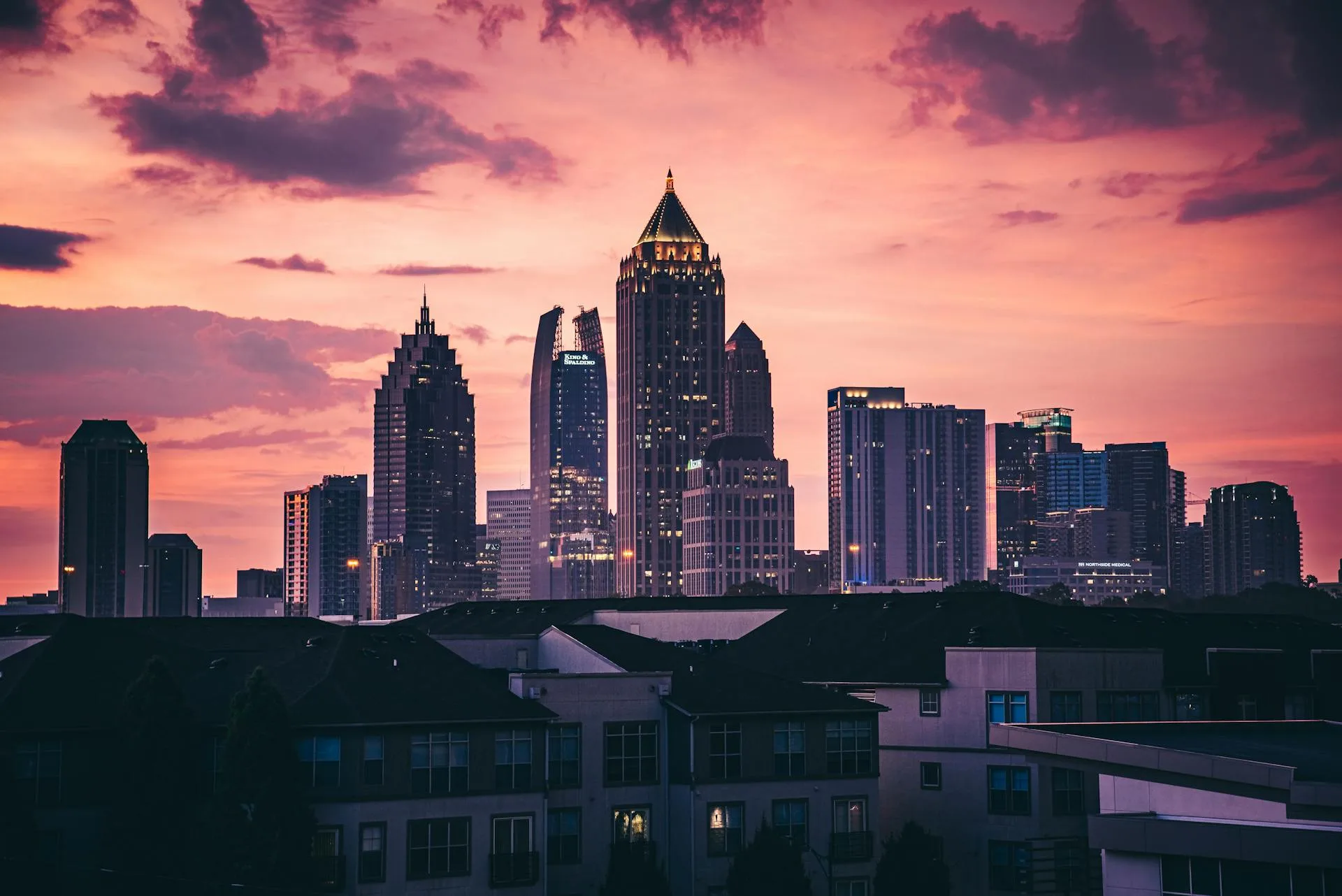
The Short Answer
- Atlanta hosted 8 World Cup matches at Mercedes-Benz Stadium, including a semifinal. The city's final match was played July 19, 2026.
- The Atlanta World Cup Host Committee projected 520,000+ visitors and $500M-$1B in economic impact. Official post-event tallies typically take months to publish.
- What remains: $242M in BeltLine investment, MARTA upgrades, 3,000+ new hotel rooms, and the $5B Centennial Yards buildout next to the stadium.
- Host-city history suggests 2-5% additional appreciation in luxury corridors near venues, typically playing out over the 12 months around an event.
- The one-time short-term rental premium has closed. The post-event window may now favor prepared sellers and decisive buyers.
Atlanta's World Cup is over. Mercedes-Benz Stadium hosted eight matches, including a semifinal, before the city's tournament run ended on July 19, 2026. The Atlanta World Cup Host Committee projected more than 520,000 visitors and an economic impact between $500 million and $1 billion. Official post-event numbers will take months to arrive, but the question for luxury homeowners and buyers has already changed.
In the run-up to the tournament, Urbanize Atlanta reported short-term rental search volume in Buckhead up 2,335% year over year, with some neighborhoods above 4,700%. Hotels added more than 3,000 new rooms across the metro. The $5 billion Centennial Yards development adjacent to the stadium accelerated its timeline specifically to capitalize on World Cup visibility. The visitors have gone home. The infrastructure, the hotel inventory, and the global exposure have not.
For luxury homeowners and buyers, the question is no longer how to position for the tournament. It is what the post-event window means and how to use it. Here is what the projections said, what remains, and what history suggests comes next.
The Numbers That Mattered
- 8 matches at Mercedes-Benz Stadium including a semifinal. Atlanta was one of 16 host cities across the U.S., Mexico, and Canada, and its final match was played July 19, 2026.
- 520,000+ projected visitors over the tournament window, per the Atlanta World Cup Host Committee. That projection exceeded the Super Bowl, College Football Playoff, and Peach Bowl combined.
- $500M-$1B estimated economic impact for metro Atlanta, according to the Atlanta World Cup Host Committee. Final tallies are published on the committee's schedule, not the market's.
- Short-term rental search demand in Buckhead was up 2,335% YoY ahead of the tournament, per Urbanize Atlanta, with some neighborhoods near venues above 4,700%.
- Airbnb prices jumped 112% in host cities during the 2022 Qatar World Cup, according to AirDNA. Analysts expected Atlanta to follow a similar pattern.
- 3,000+ new hotel rooms added across metro Atlanta ahead of the event. That inventory is permanent.
- $5 billion Centennial Yards development adjacent to Mercedes-Benz Stadium, accelerated by the World Cup timeline and still building out.
Which Neighborhoods Felt It Most
The World Cup's impact was never going to be evenly distributed across metro Atlanta. Proximity to Mercedes-Benz Stadium, walkability, dining options, and hotel density determined which neighborhoods were positioned to absorb the most visitor traffic. Those same fundamentals shape which areas may carry the most post-event momentum.
Buckhead
Atlanta's luxury center. Proximity to high-end dining, shopping, and the city's best hotels. In the run-up to the tournament, luxury homes near Peachtree Road and Buckhead Village saw the strongest STR demand spikes, and estate properties that rarely enter the rental market were listed at $2,000-$5,000+ per night for match weekends. Buckhead sits 15-20 minutes from the stadium, but it offers the lifestyle experience international visitors expect, which is why it remains the natural landing spot for buyers the tournament introduced to Atlanta.
Midtown
Walkable, MARTA-connected, and home to the highest concentration of hotels in metro Atlanta. Condo owners near Piedmont Park and along Peachtree Street were well positioned for tournament rental demand. The 10-15 minute proximity to the stadium, combined with easy transit access, made Midtown attractive to visitors who wanted to walk to restaurants and bars after matches. Those same qualities keep it attractive to buyers now that the matches are over.
Downtown and Centennial Yards
Mercedes-Benz Stadium is here. The $5 billion Centennial Yards project is transforming the Gulch into a mixed-use destination with hotels, residential, retail, and entertainment. The timing was deliberate - developers wanted the world watching as the first phases opened. With the tournament over, the buildout continues, and properties within walking distance of the stadium district may benefit as each phase delivers.
Westside and West Midtown
The BeltLine Westside Trail runs through this area, connecting it to the stadium district. The Westside has seen significant luxury development over the past three years, with new restaurants, galleries, and loft conversions attracting a younger, affluent demographic. It is 5-10 minutes from Mercedes-Benz Stadium, which put it squarely in the tournament's footprint. For a full look at where luxury growth is happening outside the traditional corridors, see our guide to Atlanta's emerging luxury neighborhoods.
The Short-Term Rental Window Has Closed. Now What?
The pre-event numbers were striking. Urbanize Atlanta reported Buckhead STR searches up 2,335% year over year, with some neighborhoods closer to the stadium above 4,700%. AirDNA data showed Airbnb prices jumped 112% in host cities during the 2022 Qatar World Cup, and analysts expected Atlanta to follow a similar trajectory, with luxury properties commanding the highest premiums.
Pre-event estimates put well-located luxury homes in Buckhead or Midtown at $1,500-$5,000+ per night during match days, with a 4-bedroom estate near Buckhead Village projected to generate $15,000-$25,000 over a single match weekend and $50,000-$100,000 over the full tournament window for the right property. Whatever an individual home actually earned, that window was a one-time event. Tournament pricing is gone, and short-term rental economics in Atlanta have returned to normal seasonal patterns.
Atlanta STR Regulations Still Apply
You need a short-term rental license from the City of Atlanta whether or not a global event is in town. There are different rules for owner-occupied and non-owner-occupied properties. Fulton County and the City of Atlanta have separate regulatory frameworks, so your specific address matters. Some HOAs in Buckhead and Midtown condominiums prohibit short-term rentals entirely. If you plan to keep renting post-tournament, verify your eligibility with the city and review your HOA covenants.
The Post-Tournament Decision
Owners who furnished and licensed homes for the tournament now face a choice: keep operating as a standard STR at baseline nightly rates, convert to a furnished mid-term rental, return the home to personal use, or sell while the property shows at its best. A professionally furnished, recently photographed luxury home is unusually well positioned to list. The right answer depends on your carrying costs, your neighborhood's year-round rental demand, and your longer-term plans.
Insurance and Liability
Standard homeowner's insurance policies typically do not cover short-term rental guests. If you are continuing to host, you will need a landlord or commercial policy, or at minimum a rider that covers STR activity. Airbnb and VRBO offer host protection programs, but they are not a substitute for proper coverage. Talk to your insurance agent before your next booking, not after.
What This Means for Property Values
World Cups and Olympic Games have historically driven 2-5% additional appreciation in luxury corridors within host cities, and those effects typically play out over the 12 months around an event rather than in a single summer. That is a meaningful bump, but it was never the main story. The bigger impact is not the tournament itself. It is the infrastructure the tournament forced into existence, and all of it is still here.
Atlanta committed $242 million to BeltLine construction timed around the World Cup, according to Atlanta BeltLine Inc. MARTA accelerated transit upgrades. Streetscape improvements around Mercedes-Benz Stadium changed the pedestrian experience downtown. More than 3,000 new hotel rooms were added across the metro. And the $5 billion Centennial Yards project, which might have taken 15 years under normal conditions, moved on a compressed timeline because the world was watching in June and July.
This is the pattern that played out after Atlanta's 1996 Olympics. The Games lasted 17 days. The infrastructure they left behind - Centennial Olympic Park, the expanded transit system, the hotel inventory - reshaped the city's real estate trajectory for the next two decades. The World Cup may do the same thing with modern projects aimed at a modern city.
Then there is the visibility factor. Every World Cup match broadcast to a global audience measured in the billions. Atlanta was positioned not just as a domestic relocation destination but as a global one. The city's value proposition - Fortune 500 headquarters, lower cost of living than coastal cities, year-round mild climate - reached an audience that may never have considered Atlanta before. For the full picture of what was built, see our $10 billion development guide.
Where International Buyer Interest Goes From Here
International buyer inquiries about Atlanta luxury properties increased in the months leading up to the tournament. The interest came from expected markets - the U.K., Germany, Brazil, Argentina, Mexico, and the Gulf states - but also from less obvious ones. South Korean and Japanese buyers, drawn by Atlanta's position as a tech and logistics hub, were researching neighborhoods they had not previously considered.
The World Cup accelerated a trend that was already underway. Atlanta added 64,400 new residents in a single recent year. Wealthy Americans have been moving from New York, San Francisco, and Los Angeles to Atlanta for the past five years, drawn by tax advantages, space, and quality of life. International buyers were starting to follow the same playbook, but they needed a reason to visit. The World Cup provided that reason for hundreds of thousands of people at once.
Consider the math. A luxury home in Buckhead that costs $2 million sits in the same quality tier as a $5-8 million property in Manhattan, a $4-6 million home in the Bay Area, or a $3-5 million property in London. International visitors who spent a week exploring the city around a match often leave with a very different perception than the one they arrived with. Historically, that perception shift converts to purchases gradually, over the 6-18 months following an event, as visitors return on their own schedule. For a full breakdown of why this trend was already accelerating, see our analysis of wealthy migration to Atlanta.
The Window After a Global Event Is When Positioning Happens
The crowds are gone, but the exposure, the infrastructure, and any buyer interest they seeded are still working through the market. Whether you are weighing a sale while your home shows at its best or buying before post-event demand appears in the data, we can pull the current numbers for your neighborhood.
What Sellers Should Know
If you are planning to sell a luxury home in Atlanta over the next 6-12 months, the post-event window changes the calculus on timing and presentation. Here is what matters.
Expect a Post-Event Listing Wave
Some owners bought or held properties specifically for tournament rental income. Once a global event passes, a portion of those owners typically list, which may add competition in exactly the neighborhoods that drew the most attention. If you are selling, that argues for going to market before the wave builds, with presentation strong enough to stand out if it does.
Be Market-Ready for International Buyers
International buyers introduced to Atlanta this summer often purchase after a single return visit, or in some cases sight-unseen based on video tours and detailed documentation. Professional photography, 3D virtual tours, and detailed neighborhood information packages are not optional. Your listing needs to sell the home and the city at the same time.
Staging and Photography Matter More Than Usual
When your property is competing for attention from buyers who spent the summer comparing Atlanta against other global cities, first impressions carry more weight. Professional staging, architectural photography, and drone footage of the property and surrounding neighborhood are the baseline for luxury listings. Buyers weighing Atlanta against other markets need to see your home at its best to understand the value.
Price for the Market, Not for Hype
The World Cup was not a reason to add 10% to an asking price, and neither is its afterglow. Overpriced homes still sit, regardless of what happened at Mercedes-Benz Stadium in July. The fundamentals of supply, demand, and comparable sales still drive pricing. Smart pricing in a high-attention environment gets you more showings, more offers, and a faster close. Overpricing gets you the same result it always does - a price reduction 45 days later. For more on pricing strategy, see our guide on common mistakes Atlanta home sellers make.
What Buyers Should Know
The months after a global event create a specific set of dynamics that luxury buyers may want to factor into their timing and strategy.
Through much of 2026, Atlanta has ranked among the most buyer-friendly luxury markets in the country. Inventory is up 44%. Two-thirds of sellers have cut prices. Concessions are standard. You can negotiate from a position of strength with contingencies intact. Conditions like these had not existed since before the pandemic.
The post-event math works like this. International buyers who visited Atlanta during the tournament and decided to purchase would typically enter the market in late summer, fall, and into 2027. If that demand materializes, it will concentrate in the same Buckhead and Midtown neighborhoods that are already the most desirable, which may tighten inventory and reduce the negotiating room buyers currently enjoy. Moving before that demand shows up in the data means competing with fewer bidders.
There is also the rate factor. Mortgage rates near 6% have kept a portion of the buyer pool on the sideline. If rates drop into the high 5s - which several forecasters see as possible by late 2026 - buyers who have been waiting on rates may come off the sidelines quickly. Combine that with any post-World Cup international interest and you get a market that may look very different within a year.
The old line applies here: you can always refinance a rate, but you cannot renegotiate a purchase price. For a full analysis of current buyer conditions, see our guide to buying a home in Atlanta right now.
The Bottom Line
The World Cup was never going to double property values or crash the market. What events like this historically do is accelerate trends already underway: international interest in Atlanta, infrastructure investment, and global recognition of the city as a luxury destination.
The neighborhoods that were already strong entered the tournament strong. Buckhead, Midtown, and the Westside were attracting capital and residents before anyone knew Atlanta would host World Cup matches. The tournament confirmed and accelerated what the market was already telling us. The $5 billion in development around Mercedes-Benz Stadium would have happened eventually. The World Cup made it happen now, and the buildout continues with the cameras gone.
For homeowners who ran a short-term rental during the tournament, the premium window has closed. The decision now is what to do with a furnished, market-ready property: keep renting at baseline rates, convert to a longer-term arrangement, return it to personal use, or list while the home shows at its best. For sellers, moving before any post-event listing wave builds may matter more than squeezing out the last dollar of asking price.
For buyers, the setup is unusual. Inventory remains elevated, sellers remain flexible, and whatever international demand the tournament seeded has not yet had time to show up in closed sales. That combination historically does not last. The developments that are already funded will keep delivering. Visitors who liked what they saw this summer may start acting on it this fall. The buyers and sellers who prepare now may be in the best position when they do.
Frequently Asked Questions
How did the 2026 World Cup affect Atlanta home prices?
It is too early to isolate the tournament's effect in closed sales data. Historically, World Cup host cities have seen 2-5% additional appreciation in luxury corridors near venues, and those effects typically play out over the 12 months around an event rather than overnight. The more durable drivers are the ones that remain: infrastructure investment, international visibility, and accelerated development timelines, which may support price growth over the next 3-5 years.
Was renting a luxury home during the World Cup as lucrative as projected?
Pre-event estimates suggested well-located luxury homes in Buckhead, Midtown, and near Mercedes-Benz Stadium could command $1,500-$5,000+ per night during match days, and AirDNA reported that Airbnb prices jumped 112% in host cities during the 2022 Qatar World Cup. Actual results varied by property, location, and pricing. With the tournament over, that one-time premium window has closed and short-term rental economics in Atlanta have returned to normal seasonal patterns.
What are the short-term rental rules in Atlanta?
Atlanta requires a short-term rental license. There are different rules for owner-occupied and non-owner-occupied properties. Fulton County and the City of Atlanta have separate regulatory frameworks. HOA restrictions may also apply and many luxury condominiums prohibit short-term rentals entirely. Consult with a local attorney to verify compliance.
Which Atlanta neighborhoods are closest to Mercedes-Benz Stadium?
Mercedes-Benz Stadium, which hosted all eight of Atlanta's World Cup matches, is in downtown Atlanta. The Westside and West Midtown are 5-10 minutes away. Midtown is 10-15 minutes. Virginia-Highland and Inman Park are 10-15 minutes east. Buckhead is 15-20 minutes north. All distances depend on traffic and time of day.
Did the World Cup bring international buyers to Atlanta?
Inquiry volume from international buyers in Europe, South America, and the Middle East increased in the months leading up to the tournament, and the matches broadcast Atlanta to a global audience. Historically, that kind of exposure converts to purchases gradually, over the 6-18 months following an event, as visitors who liked what they saw return to buy. Atlanta's value compared to New York, London, and Miami received exposure that no marketing budget could replicate.
Should I buy a luxury home in Atlanta now that the World Cup is over?
The post-event window may favor prepared buyers. Some homeowners who held properties for tournament rental income typically list once the event passes, which may add inventory, while any international demand seeded by the tournament tends to arrive gradually. Buyers who move before post-event demand shows up in the data may keep more negotiating power than those who wait. Market conditions change, so review current data for your target neighborhood before acting.
What infrastructure improvements were made for the World Cup?
$242M in BeltLine investment, MARTA transit upgrades, streetscape improvements around Mercedes-Benz Stadium, 3,000+ new hotel rooms, and accelerated progress on the $5 billion Centennial Yards development. These improvements are permanent and may benefit surrounding neighborhoods for decades.
How long will the World Cup's impact on Atlanta real estate last?
The tournament ran June-July 2026, and Atlanta's final match was played July 19. The infrastructure and visibility impact may last far longer. Historical data from previous World Cup and Olympic host cities shows sustained demand growth in the 3-5 years following an event, driven by infrastructure completion and international recognition.
"Buying a home remotely seemed impossible, but the team handled everything. Video tours, detailed neighborhood breakdowns, even coordinating inspections when we couldn't be there. Seamless."
Andrew and Rachel P.
Relocated to Atlanta, bought from out of state
Ready to find out what the post-World Cup window means for your plans?
Sources
- FIFA / Atlanta World Cup Host Committee - Match schedule (8 matches including a semifinal, concluded July 19, 2026), pre-event visitor projections (520,000+), and economic impact estimates ($500M-$1B).
- Urbanize Atlanta - Pre-tournament short-term rental demand data (Buckhead up 2,335% YoY, select neighborhoods up 4,700%), Centennial Yards development updates, and new hotel room counts.
- AirDNA - Historical World Cup Airbnb pricing data, including the 112% price increase during the 2022 Qatar World Cup in host cities.
- Atlanta BeltLine Inc. - Infrastructure investment figures ($242M in BeltLine construction) and timelines tied to World Cup preparation.
- City of Atlanta - Short-term rental licensing requirements, owner-occupied vs. non-owner-occupied regulations, and compliance guidelines.
Neighborhood-level observations are based on our direct experience working with buyers and sellers across metro Atlanta and analysis of FMLS data. Figures published before the tournament are identified above as projections or estimates; official post-event totals are released on the issuing organizations' schedules and may differ.
Disclaimer: This article is for informational purposes only and does not constitute financial, legal, or investment advice. Short-term rental regulations, housing market data, and economic conditions change frequently. Verify all licensing requirements with the City of Atlanta and consult with qualified legal, insurance, and real estate professionals before making decisions. Past performance of host city real estate markets is not indicative of future results.