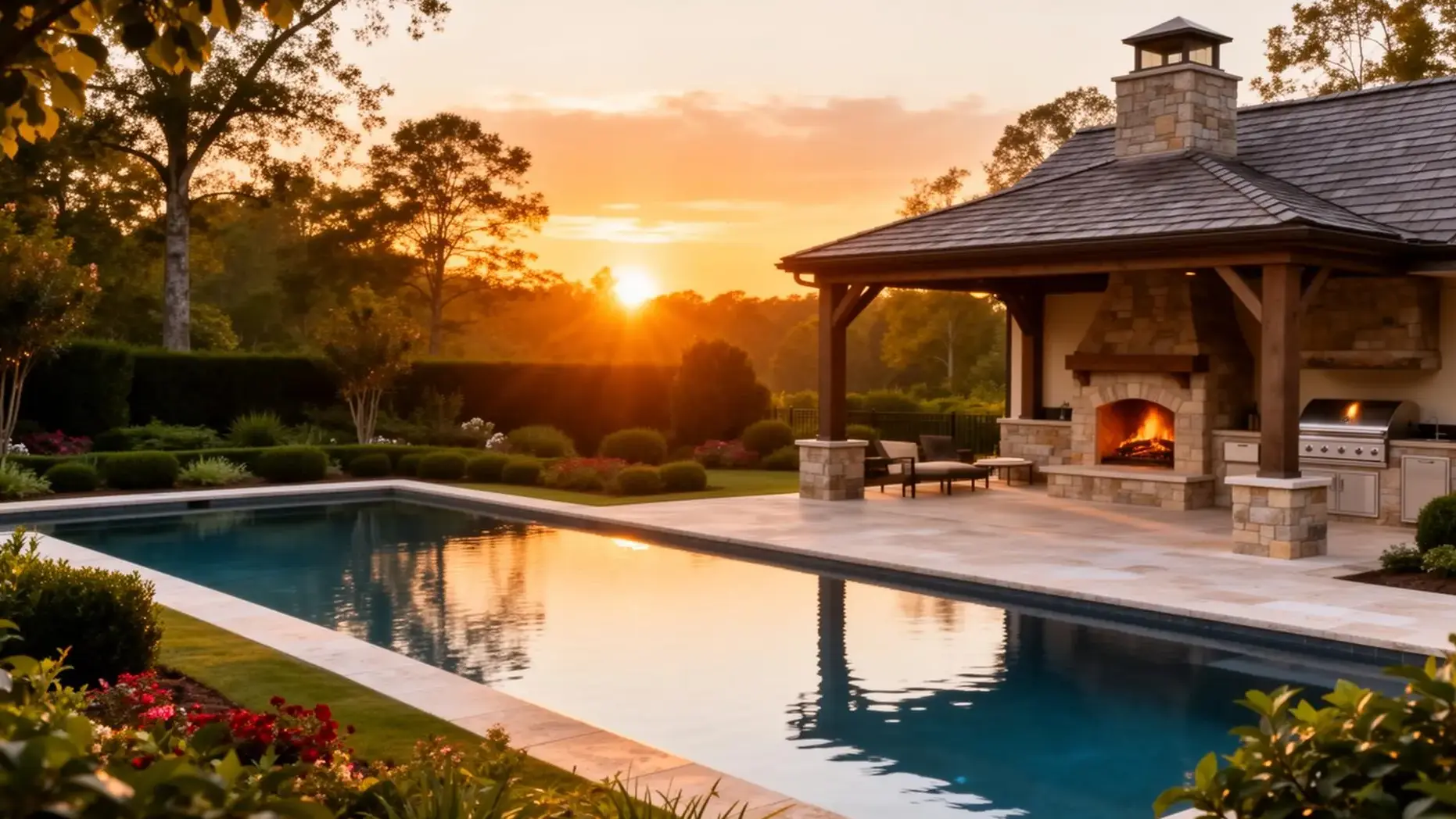
Outdoor fire features have become one of the most requested amenities in Atlanta's luxury real estate market. When we show homes with well-designed outdoor fireplaces or fire pits, buyers consistently react with more enthusiasm than they do for many interior features that cost far more. There is something primal about fire that draws people in, and when that fire is set within a thoughtfully designed outdoor living space, it transforms a backyard into a destination.
Atlanta's climate is particularly well-suited to outdoor fire features. According to National Weather Service data, Atlanta has approximately 220 days per year with high temperatures below 80 degrees, meaning evenings are cool enough to enjoy a fire for roughly 8 to 9 months of the year. That is a longer usable season than most buyers realize, and it makes the investment in a quality fire feature more justifiable than it would be in a northern climate with a 4-month outdoor season.
This guide covers the key decisions involved in adding an outdoor fireplace or fire pit to a luxury home in Atlanta: fireplace versus fire pit, gas versus wood-burning, design styles, materials that hold up in Georgia's climate, code compliance, cost ranges, and the return on investment you can expect when it comes time to sell.
Outdoor Fireplace vs. Fire Pit: Which Is Right for Your Property?
This is the first decision, and it shapes everything that follows. Outdoor fireplaces and fire pits serve different purposes, create different atmospheres, and work best in different settings. Understanding the distinction helps you choose the right feature for your outdoor space.
Outdoor fireplaces are vertical, architectural structures with a firebox, chimney, and often a mantel. They function as a focal point and anchor for an outdoor room. Because they direct heat and flame forward (not in all directions like a fire pit), they create a more intimate seating arrangement. The chimney channels smoke upward, which reduces smoke exposure for people sitting nearby. Outdoor fireplaces work best on covered or semi-covered patios, against retaining walls or privacy walls, and as the centerpiece of a dedicated outdoor living room.
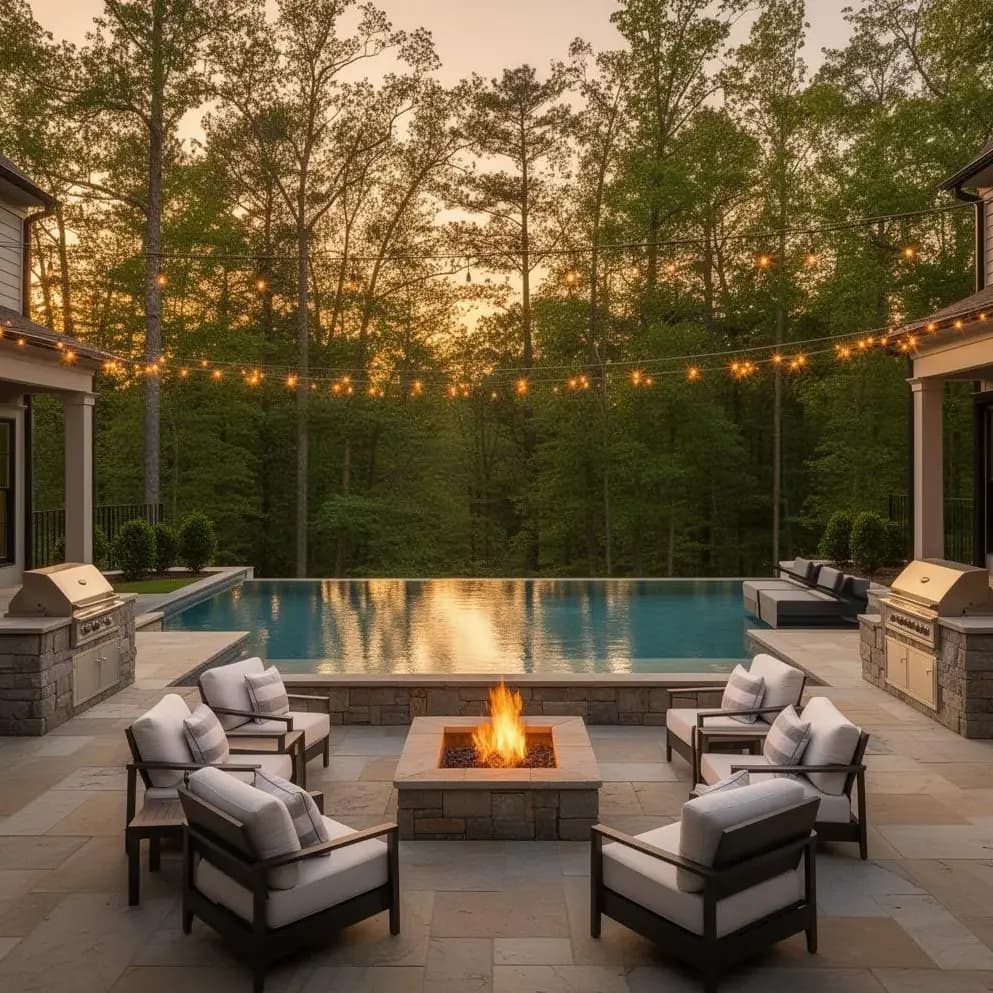
Fire pits are ground-level or slightly raised features that radiate heat in all directions. They naturally create a circular seating arrangement (think campfire) and encourage a more social, casual atmosphere. Fire pits work well in open yard settings, on large patios, and as part of a broader outdoor entertainment zone. They are typically less expensive than fireplaces and can be more versatile in terms of placement.
Many luxury homes in Atlanta incorporate both. A formal outdoor fireplace anchors the covered patio or outdoor living room, while a fire pit creates a secondary gathering spot further out in the yard. This dual approach works particularly well on larger properties in Buckhead, Sandy Springs, and other areas where lot sizes support multiple outdoor zones.
Gas vs. Wood-Burning: The Fuel Decision
The choice between gas and wood-burning affects convenience, cost, maintenance, aesthetics, and even your relationship with your neighbors (smoke travels). Both options have their strengths, and the right choice depends on how you plan to use the feature.
Gas (Natural Gas or Propane)
Gas fire features turn on and off with a switch or remote control. No wood to haul, no kindling to light, no ashes to clean. The flame is adjustable and consistent. There is no smoke, which means no smoke blowing into your face or your neighbor's yard. Gas is the overwhelmingly preferred choice for fireplaces in Atlanta's luxury outdoor living rooms because of its convenience and cleanliness. Natural gas (connected to your home's gas line) is the most cost-effective fuel over time. Propane requires a tank (which needs to be concealed or buried for aesthetics) and costs more per BTU. Gas line installation from the home to the fireplace typically costs $1,000 to $3,000 depending on distance.
Wood-Burning
Wood-burning fire features offer the authentic fire experience that gas cannot fully replicate: the crackle of burning wood, the shifting flame patterns, the unmistakable aroma. For many homeowners, this experience is worth the extra effort. Wood-burning fireplaces require a properly constructed chimney with a spark arrestor. They produce smoke, which can be a concern in neighborhoods with close lot spacing or strict HOA rules. You need to store and season firewood (at least 6 months of drying time for optimal burning). And cleanup is required after each use. Wood-burning options work best for fire pits in open yard settings and for homeowners who view fire-building as part of the experience rather than a chore.
Design Styles for Atlanta Luxury Homes
The outdoor fireplace or fire pit should complement the architectural style of your home and the design of your outdoor space. Here are the primary design approaches we see working well in Atlanta's luxury market.
Traditional/Southern. This is the most popular style in Atlanta's established luxury neighborhoods. Think stacked stone or brick fireplace with a substantial mantel, flanked by built-in wood storage or shelving. The materials echo the home's exterior (if the house is brick, the fireplace is brick; if the house is stone, the fireplace is stone). Oversized proportions work well here because the design language is about permanence and presence. This style pairs beautifully with Buckhead's Georgian and Colonial homes.
Contemporary/Modern. Clean lines, minimal ornamentation, and often a linear fire feature rather than a traditional firebox. Linear gas fireplaces built into low walls or raised platforms create a dramatic horizontal flame that reads as modern and sophisticated. Materials tend toward smooth concrete, steel, or clean-cut stone. This style works with Atlanta's growing inventory of modern and contemporary luxury homes, particularly in Midtown, West Midtown, and newer construction throughout the metro area.
Transitional. A blend of traditional form with cleaner detailing. Natural stone with minimal ornamentation, straightforward proportions, and a mix of organic and geometric elements. This is the most versatile style and works with the transitional architecture that dominates much of Atlanta's newer luxury construction. A fieldstone fireplace with a simple stone mantel and no corbeling is a good example of the transitional approach.
Rustic/Lodge. Oversized stone fireplaces that evoke mountain lodge aesthetics. This style works best on larger properties with wooded settings or in north Georgia communities. Rough-cut stone, heavy timber mantels, and large-scale proportions define this approach. While less common in intown Atlanta, this style is popular on estate properties in Milton, Alpharetta, and north Fulton County where lots are larger and the landscape is more wooded.
Building an Outdoor Fireplace This Season?
Placement, permits, and how the structure ties into the house all affect what it adds at resale. Worth settling before the footing gets poured.
Get a Value Read on the Projector call (770) 727-4052
Materials That Hold Up in Georgia's Climate
Georgia's climate subjects outdoor structures to intense UV radiation, high humidity, heavy rainfall (Atlanta averages 50 inches per year, per the National Weather Service), and occasional freezing temperatures. The materials you choose must withstand all of these conditions for decades without significant deterioration.
Natural stone is the gold standard for outdoor fireplaces in Atlanta. Granite is the most durable option, resisting moisture absorption, UV degradation, and freeze-thaw cycling. Georgia fieldstone (a locally quarried stone with natural irregular shapes) is extremely popular because it is durable, locally available, and aesthetically fits the southern landscape. Limestone works well but is softer and more porous, requiring more maintenance in wet climates. All natural stone should be installed with proper mortar that allows for thermal expansion and contraction.
Brick is a traditional choice that complements many Atlanta home styles. Modern exterior-grade brick is designed to handle moisture and freeze-thaw cycles. Reclaimed brick adds character but should be tested for durability before use in a fireplace application (some older bricks were not rated for exterior moisture exposure). Brick fireplaces should be sealed to reduce moisture absorption.
Concrete block with veneer is a cost-effective structural approach. A concrete block core provides strength and heat resistance, while stone or brick veneer provides the finished appearance. This construction method is common in Atlanta and produces excellent results when done by a skilled mason. The key is proper waterproofing behind the veneer to prevent moisture from reaching the block core.
Stucco finishes work well with Mediterranean, Spanish, and some contemporary designs. Stucco is applied over a concrete block core and painted. It is affordable and flexible in terms of color and texture. In Atlanta's climate, stucco requires periodic maintenance (repainting, crack repair) because the humidity and rainfall can cause deterioration faster than in drier climates.
Code Compliance and Permitting
Outdoor fireplaces are regulated structures in most metro Atlanta jurisdictions. The specific requirements vary by city and county, but the general framework follows the International Residential Code (IRC) as adopted locally. Here are the key compliance areas to understand.
Setbacks. Outdoor fireplaces must be set back a minimum distance from the house, property lines, and other structures. Common requirements include 10 feet from the home (or 3 feet if the fireplace has a properly constructed chimney) and 10 to 15 feet from property lines. These setbacks vary by jurisdiction, so check your local building code before finalizing the design.
Chimney requirements. Wood-burning outdoor fireplaces require a chimney that extends at least 2 feet above any portion of the structure within 10 feet. A spark arrestor (mesh screen at the top of the chimney) is typically required for wood-burning models to prevent ember escape. Gas fireplaces may have different venting requirements depending on the type and BTU output.
Gas line code. Gas line installation must comply with local gas piping codes and typically requires inspection. In Georgia, gas piping for outdoor appliances must be performed by a licensed plumber or gas technician. The gas shutoff valve must be accessible and located near the appliance.
HOA restrictions. Many luxury communities in Atlanta have HOA rules that govern outdoor structures, including fireplaces and fire pits. Some HOAs require architectural review committee approval before construction. Others restrict wood-burning options due to smoke concerns. Review your HOA covenants before starting the design process.
Creating a Three-Season Outdoor Room
The most valuable outdoor fire features are those integrated into a complete outdoor room rather than standing alone in the yard. An outdoor fireplace paired with a covered structure (pergola, pavilion, or extended roofline), comfortable seating, lighting, and possibly a television or sound system creates a space that functions like an additional room in the home.
In Atlanta's climate, a covered outdoor room with a fireplace is usable from roughly March through November, with comfortable temperatures most evenings from September through May. Adding ceiling fans extends summer usability by improving air circulation. Electric radiant heaters (mounted overhead or freestanding) provide supplemental warmth on the coldest winter evenings, potentially making the space a true four-season room.
The most successful outdoor room designs in Atlanta's luxury market include a fireplace as the focal point, an outdoor kitchen or bar within convenient distance, weather-resistant seating (often with Sunbrella or similar performance fabric cushions), ambient lighting (integrated into the fireplace surround, overhead structure, and landscaping), and a flat-screen television mounted above or beside the fireplace with proper weather protection. According to the National Association of Realtors' Remodeling Impact Report, outdoor living improvements consistently rank among the highest-satisfaction home improvements, with homeowners rating their enjoyment at 9 or higher on a 10-point scale.
Cost Ranges and ROI
- Basic fire pit (installed): $1,500 to $5,000
- Mid-range custom fire pit with surround: $5,000 to $15,000
- Basic outdoor fireplace: $5,000 to $10,000
- Mid-range custom fireplace: $10,000 to $25,000
- High-end custom fireplace with outdoor room: $25,000 to $75,000+
- Complete outdoor living space (fireplace + kitchen + covered structure): $75,000 to $200,000+
- Estimated ROI: Outdoor living improvements are typically among the stronger-returning exterior projects at resale. In Atlanta's luxury market, well-designed outdoor spaces tend to perform especially well because buyer expectations for outdoor living are high, and homes without quality outdoor spaces face a competitive disadvantage.
The Bottom Line
An outdoor fireplace or fire pit is one of those improvements that delivers on both lifestyle and investment value. You get to use it and enjoy it for years, and when you sell, it helps your home stand out in a competitive luxury market. The key is doing it right: choosing the right type for your space and lifestyle, using materials that hold up in Georgia's climate, complying with local codes, and integrating the fire feature into a cohesive outdoor living design.
For sellers, a well-designed outdoor fire feature is one of the most photographable and emotionally compelling features you can offer. It creates the kind of lifestyle imagery that stops buyers mid-scroll and gets them in the door. For buyers, finding a home that already has a quality outdoor living space with fire features saves you the time, cost, and hassle of adding one yourself.
Whether you are planning an outdoor improvement to prepare your home for sale, or searching for a luxury home that already has the outdoor living space you want, our team can help. We know which outdoor features move the market in Atlanta, and we will make sure your investment pays off.
Frequently Asked Questions
How much does an outdoor fireplace cost in Atlanta?
Outdoor fireplace costs vary significantly based on design, materials, and complexity. A basic masonry outdoor fireplace starts around $5,000 to $8,000 for a simple design with standard materials. Mid-range custom fireplaces with quality stone veneer, a mantel, and a chimney typically run $10,000 to $25,000. High-end custom outdoor fireplaces with premium natural stone, integrated seating, built-in wood storage, and television mounting capability can range from $25,000 to $60,000 or more. These estimates include materials and professional installation. Gas line installation (if needed) adds $1,000 to $3,000 depending on the distance from the gas meter.
How much does a fire pit cost?
Fire pits are generally less expensive than fireplaces. A basic in-ground or above-ground fire pit with a simple surround starts at $1,500 to $3,000 installed. Mid-range fire pits with natural stone surrounds, built-in seating walls, and gas connections typically run $5,000 to $15,000. High-end custom fire pit installations with premium materials, water features, integrated lighting, and elaborate surrounding hardscape can reach $15,000 to $40,000 or more. Linear fire features (long, narrow gas-fed flames built into walls or tables) are increasingly popular in modern luxury designs and typically cost $3,000 to $12,000 for the fire element alone.
Is a fireplace or fire pit better for resale value?
Both add value, but outdoor fireplaces typically have a stronger impact on resale in the luxury market. According to the National Association of Realtors' Remodeling Impact Report, outdoor fire features are among the most desired outdoor amenities for luxury buyers. A well-designed outdoor fireplace creates a focal point for an outdoor room, extends the usable season, and photographs beautifully for listing images. Fire pits offer a more casual, social atmosphere and work well in open yard settings. For maximum resale impact, the fire feature should be part of a cohesive outdoor living design that includes seating, lighting, and landscaping rather than a standalone addition.
Do I need a permit for an outdoor fireplace in Atlanta?
In most jurisdictions within metro Atlanta, permanent outdoor fireplaces require a building permit. The specific requirements depend on your county or city. In the City of Atlanta, outdoor fireplaces must comply with the International Residential Code as adopted by the city, which includes setback requirements from structures and property lines, chimney height specifications, and spark arrestor requirements for wood-burning models. Fulton County, DeKalb County, Cobb County, and Gwinnett County each have their own permitting processes. Portable fire pits typically do not require permits but may be subject to open burning regulations. Your contractor should pull all necessary permits as part of the project.
Can I use a wood-burning fireplace outdoors in Atlanta?
Yes, but with some considerations. Wood-burning outdoor fireplaces are permitted in most metro Atlanta jurisdictions, though some HOA communities restrict open fires. The City of Atlanta has open burning regulations that may apply to some fire pit configurations (check with the Atlanta Fire Rescue Department). Wood-burning fireplaces require a properly constructed chimney with a spark arrestor to prevent embers from escaping. They produce smoke, which can be a concern in neighborhoods with close lot spacing. Many luxury homeowners in Atlanta choose gas-burning options for convenience and to avoid smoke, but wood-burning fireplaces offer the authentic crackle, smell, and ambiance that gas cannot fully replicate.
What is the best material for an outdoor fireplace in Georgia?
For Georgia's climate (hot, humid summers, moderate rainfall, occasional freezing temperatures), the best materials are natural stone (granite, limestone, or fieldstone), brick, and concrete block with stone or brick veneer. Natural stone is the most durable and weather-resistant option, but it is also the most expensive. Georgia fieldstone is a locally sourced option that blends well with the natural landscape. Brick is a classic choice that complements Atlanta's traditional architectural styles. Stucco-over-block is an affordable option that works well with Mediterranean or contemporary designs. Avoid materials that absorb excessive moisture, as freeze-thaw cycles can cause cracking. All masonry materials should be set on a proper foundation to prevent settling and structural failure.
How long can you use an outdoor fireplace in Atlanta?
Atlanta's mild climate makes outdoor fireplaces usable approximately 8 to 9 months of the year. The peak usage season runs from late September through early May, when evening temperatures are cool enough to make a fire enjoyable (typically below 70 degrees). However, even during summer months, an outdoor fireplace serves as a design focal point and can be used on cooler evenings or during occasional cool fronts. With the addition of a covered structure (pergola, pavilion, or covered patio), an outdoor fireplace becomes a true three-season or even four-season feature. Many Atlanta luxury homes with well-designed outdoor rooms use their fireplaces year-round.
What is the difference between gas and wood-burning outdoor fireplaces?
Gas fireplaces offer convenience (instant on/off, adjustable flame, no ash cleanup, no wood storage needed), cleaner operation (no smoke or sparks), and lower maintenance. They run on natural gas (connected to your home's gas line) or propane (tank storage). Wood-burning fireplaces offer a more authentic experience (real wood crackle, natural flame patterns, wood smoke aroma) and do not require a gas connection. The trade-offs are more maintenance (ash removal, chimney cleaning), the need for wood storage, smoke management, and the effort of building and maintaining a fire. In Atlanta's luxury market, gas fireplaces are more common for primary outdoor living spaces due to convenience, while wood-burning fire pits are popular for more casual backyard settings.
Can an outdoor fireplace be added to an existing patio?
Yes, but the existing patio must be evaluated for structural adequacy. A masonry outdoor fireplace is heavy (often 2,000 to 5,000 pounds or more) and requires a proper foundation, typically a reinforced concrete footing that extends below the frost line. If your existing patio slab was not designed to support this weight, a separate foundation may need to be poured adjacent to or through the existing patio. A qualified contractor can assess your patio and determine the best approach. Gas line installation to the fireplace location is also required for gas-burning models. Plan for 4 to 8 weeks for design, permitting, and construction of a custom outdoor fireplace addition.
What outdoor fireplace designs work best with Atlanta architecture?
The fireplace design should complement your home's architectural style. For traditional Atlanta homes (Georgian, Colonial Revival, Tudor), a stone or brick fireplace with a substantial mantel and classic proportions works best. For contemporary or modern homes, clean-lined designs with linear fire features, concrete surrounds, or sleek metal accents create a cohesive look. For transitional homes (which represent a large portion of Atlanta's luxury market), a fireplace with natural stone and clean lines bridges the gap between traditional and modern. Regardless of style, the fireplace should be proportioned to the outdoor space. A massive fireplace overwhelms a small patio, while a small fire pit can get lost in a large outdoor room.
Ready to buy or sell a luxury home with exceptional outdoor living?
Sources
- National Association of Realtors (NAR) - Remodeling Impact Report, outdoor living improvement satisfaction data, and buyer preference surveys.
- National Weather Service - Atlanta climate data, annual temperature averages, and precipitation statistics.
- Remodeling Magazine - Cost vs. Value Report, outdoor improvement cost estimates, and return on investment data for the Atlanta market.
- International Code Council - International Residential Code (IRC) outdoor fireplace provisions and setback requirements.
- City of Atlanta, Fulton County, DeKalb County - Local building code requirements, permitting processes, and open burning regulations.
Cost estimates, code requirements, and ROI data referenced in this article reflect conditions in the Atlanta metro area as of early 2026 and are subject to change. This article does not constitute professional design, construction, or financial advice.
Disclaimer: This article is for informational purposes only and does not constitute professional design, construction, or real estate advice. Building codes, permit requirements, and HOA regulations vary by jurisdiction and may change. Consult with qualified contractors, code officials, and design professionals before building an outdoor fireplace or fire pit. Cost estimates are approximate and may vary based on market conditions, materials, and project scope.