
Atlanta's construction cranes tell a story. Across Midtown, Buckhead, downtown, and the Westside, new luxury residential projects are rising at a pace not seen since the pre-2008 boom. But unlike that era, the current cycle is backed by different fundamentals: genuine population growth, corporate relocations, and a city that has matured into a legitimate top-five metro for high-net-worth migration. According to the U.S. Census Bureau, metro Atlanta added over 70,000 residents in 2025 alone, making it one of the fastest-growing major metros in the country.
For luxury buyers, the development pipeline creates both opportunity and complexity. New construction means modern floor plans, the latest building technology, and the chance to customize. But it also means evaluating developers you may not know, understanding deposit structures, assessing delivery timelines, and gauging whether a project will hold its value once the sales center closes and the building enters the resale market.
This guide covers the most significant luxury developments coming to Atlanta in 2026, how to evaluate pre-construction purchases, and what to watch out for when buying in a new building.
Centennial Yards: The Largest Mixed-Use Development in the Southeast
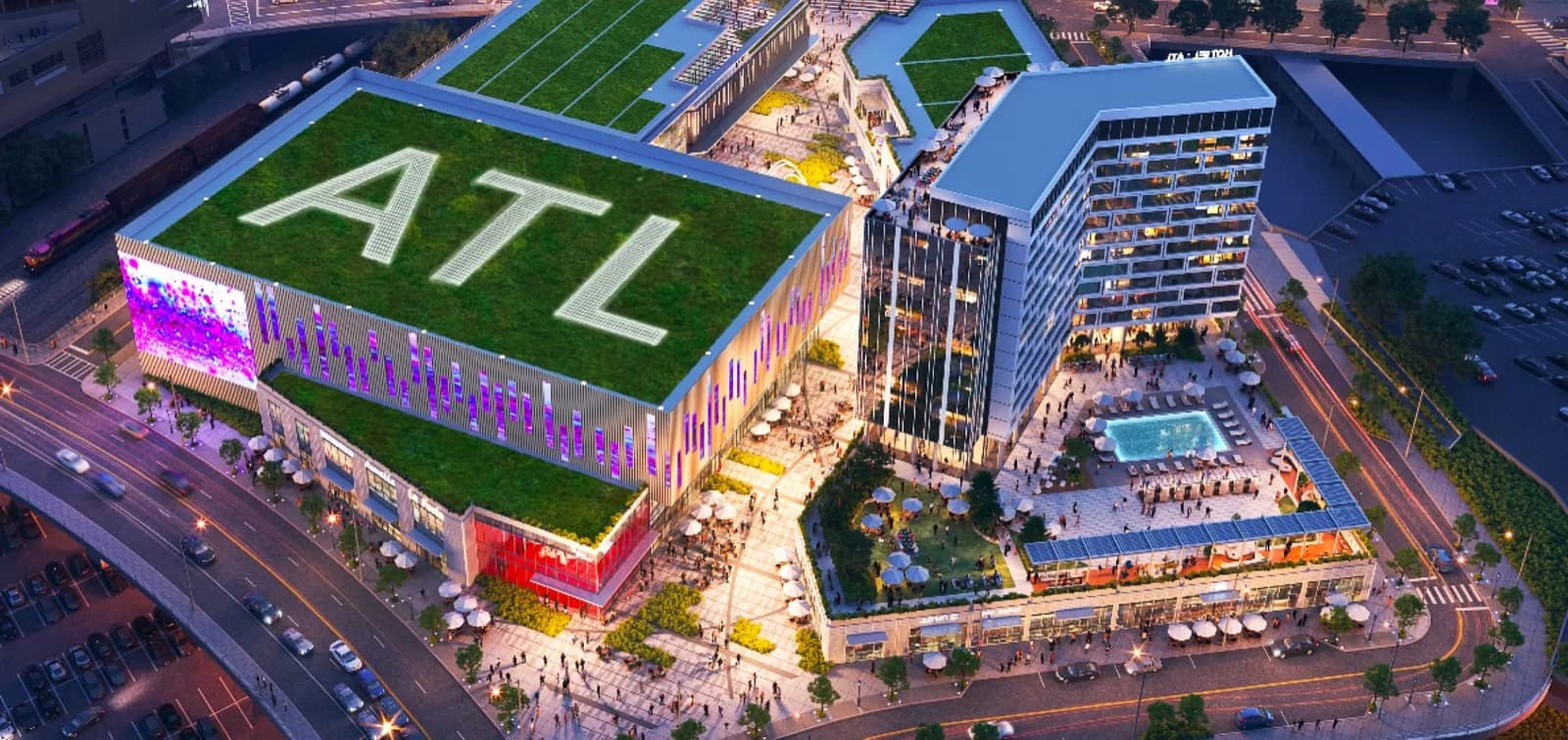
Centennial Yards is the headliner. Developed by CIM Group on the 50-acre former railroad gulch site in downtown Atlanta, this $5 billion-plus project is transforming what was essentially a void in the city's core into a walkable, mixed-use district. The project is expected to include over 8 million square feet of development across residential, office, retail, hospitality, and entertainment uses when fully built out.
The residential component includes luxury rental apartments and for-sale condominiums. The first residential towers began pre-leasing in late 2025, with initial occupancy expected in late 2026 and into 2027. The development sits adjacent to State Farm Arena, Mercedes-Benz Stadium, and the Georgia World Congress Center, giving residents walkable access to the city's major entertainment venues.
For luxury buyers, the key question is whether downtown Atlanta can sustain premium pricing. Historically, downtown has lagged Buckhead and Midtown in luxury home values. But Centennial Yards is betting that critical mass of retail, dining, and entertainment will shift that equation. The development includes a significant green space component and pedestrian infrastructure designed to make the district feel more like a neighborhood than a commercial center.
Buckhead: Boutique Condos and Mixed-Use Reinvention
Buckhead remains Atlanta's established luxury market, and 2026 brings several new projects that reflect the neighborhood's evolution from a car-dependent commercial strip into a more walkable, village-oriented district. The Buckhead Community Improvement District has invested heavily in streetscape, transit connectivity, and pedestrian infrastructure, which is attracting a new wave of residential development.
Several boutique condo projects are in various stages of development in the Buckhead Village area, targeting the $800,000 to $3 million range. These smaller buildings (typically 30 to 80 units) offer a more intimate alternative to the large towers that dominated Buckhead's condo market in previous cycles. Think concierge-level service, curated amenity packages, and architectural designs that stand apart from the generic glass-tower template.
Mixed-use redevelopment of older commercial sites along Peachtree Road and Piedmont Road is also adding luxury residential units. These projects typically combine ground-floor retail with four to eight stories of residential above, offering an urban lifestyle within Buckhead's tree-lined streets. Pricing in new Buckhead construction generally starts at $500 to $700 per square foot for standard finishes and can exceed $1,000 per square foot for penthouse-level units with premium buildouts.
Midtown: High-Rise Luxury at Full Speed
Midtown continues to be the epicenter of Atlanta's high-rise residential development. The corridor along Peachtree Street from 10th Street to 17th Street has more residential towers under construction or in planning than any other submarket in the Southeast. According to data from the Midtown Alliance, over $5 billion in development is currently in the pipeline within the Midtown district.
For luxury buyers, Midtown's appeal is straightforward: walkability to the arts district, Piedmont Park, high-end dining, and MARTA transit. The neighborhood has attracted a disproportionate share of Atlanta's tech workforce, which has pushed condo prices steadily upward. New luxury towers in Midtown are pricing at $450 to $800 per square foot, with top-floor penthouses breaking the $1,000 per square foot barrier.
Several towers expected to deliver in 2026 and 2027 are pushing the boundaries of amenity packages. Expect rooftop pools, co-working spaces, private dining rooms, golf simulators, wellness suites with saunas and cold plunge pools, and concierge services that rival boutique hotels. The competition among developers to attract luxury buyers has elevated the standard for what a high-rise residential building must offer.
Westside and West Midtown: Where Industrial Meets Luxury
Atlanta's Westside has undergone one of the most dramatic transformations of any U.S. urban neighborhood in the past decade. Former industrial warehouses and manufacturing sites have become loft-style luxury residences, high-end restaurants, and creative office spaces. The BeltLine's Westside Trail and the proximity to major employment centers have accelerated this shift.
New luxury townhome communities in the Westside and West Midtown corridor are particularly active in 2026. These projects target buyers who want more space than a condo but prefer an urban location over a suburban lot. Pricing for new luxury townhomes in the area ranges from $600,000 to $1.5 million, with sizes typically from 2,000 to 3,500 square feet. Many feature rooftop terraces, private garages, and modern industrial aesthetics (exposed brick, steel beams, oversized windows).
Adaptive reuse projects continue to attract attention. Converting former warehouses and factory buildings into luxury lofts preserves architectural character while adding modern systems. These projects tend to command a premium over ground-up construction because the historic fabric creates a design authenticity that new buildings cannot replicate. Buyers looking for something distinctive should pay close attention to the Westside pipeline.
How to Buy Pre-Construction: A Step-by-Step Framework
Buying a luxury home that has not been built yet requires a different process than buying resale. Here is the framework we recommend to clients considering new development purchases in Atlanta.
Step 1: Evaluate the Developer
This is the most important step. Research the developer's completed projects, financial backing, and reputation. Visit their existing buildings. Talk to residents and HOA boards. Check for lawsuits, construction defect claims, and Better Business Bureau complaints. A developer with three successful Atlanta projects and institutional financing is a very different proposition from a first-time developer with private equity money and no local track record.
Step 2: Understand the Contract
Pre-construction purchase agreements are long, complex documents that heavily favor the developer. Have a real estate attorney (not the developer's attorney) review every clause. Key items to scrutinize: deposit escrow terms, cancellation and refund provisions, delivery timeline and what happens if it is missed, change order policies, and the developer's right to modify floor plans, finishes, or amenities. In Georgia, there is no automatic right of rescission on new construction contracts, so you need contractual protections.
Step 3: Assess the Deposit Structure
Deposits typically total 20% to 30% of the purchase price, paid in stages. Understand exactly when each deposit is due, where the funds are held (escrow vs. developer's operating account), and under what conditions you can get your deposit back. In a worst-case scenario (developer default or project cancellation), your deposit protection depends entirely on the contractual and escrow terms negotiated upfront.
Step 4: Lock in Pricing and Customization Early
Pre-sale pricing is typically 5% to 15% below projected market value at delivery. The best units (corner positions, high floors, park views) go first. Customization options narrow as construction progresses. If you are seriously interested in a project, buying during the early pre-sale phase gives you the best combination of pricing, unit selection, and customization flexibility.
Step 5: Plan Your Financing
Most lenders will not lock a mortgage rate until 60 to 90 days before closing. For a project that delivers 12 to 24 months from your contract signing, you are exposed to interest rate risk. Factor this into your decision. Some buyers mitigate the risk by purchasing with cash and refinancing later. Others negotiate rate-lock extensions with their lender. Discuss your financing strategy with a lender experienced in new construction closings before you sign a purchase agreement.
Red Flags When Evaluating New Developments
Not every new development deserves your attention. Here are the warning signs that experienced buyers and agents watch for.
Unrealistic timelines. If a developer promises delivery in 14 months on a 30-story tower, be skeptical. Typical construction timelines for mid-rise (5-8 stories) are 18 to 24 months from groundbreaking. High-rise (20+ stories) projects take 24 to 36 months or more. Add 6 to 12 months for permitting and site preparation before construction even begins.
Below-market pricing that seems too good to be true. Aggressive pricing during pre-sales is normal. Pricing that is 30% below comparable delivered product is a red flag. It may indicate the developer is desperate for deposits to secure financing, or that the project's cost basis does not support the promised quality level.
No construction financing in place. Legitimate luxury developers secure their construction loan before opening sales. If a developer is collecting deposits before they have a construction lender committed, your money may be more at risk than you realize.
Vague or missing specifications. A serious luxury development provides detailed specifications: appliance brands and models, countertop materials, flooring types, window specifications, HVAC systems, and building systems. If the sales materials say "high-end finishes" without specifics, the finished product may not match the renderings.
No track record in Atlanta. Out-of-market developers sometimes underestimate Atlanta's construction environment: labor availability, permitting timelines, soil conditions (Georgia clay), and buyer expectations. A developer with successful projects in Miami or New York may struggle with the specifics of the Atlanta market. This does not mean you should never buy from a new-to-Atlanta developer, but it warrants extra scrutiny.
Atlanta New Development Market: Key Numbers
- Population growth: Metro Atlanta added approximately 70,000+ residents in 2025, per U.S. Census estimates. This sustained growth creates organic demand for new housing at all price points.
- Luxury condo pricing: New luxury condos in Midtown and Buckhead are pricing between $450 and $1,000+ per square foot, depending on location, floor, and finishes. This represents a 15% to 25% increase from 2022 pricing, per FMLS data.
- Luxury townhome pricing: New luxury townhomes in intown Atlanta range from $600,000 to $1.5 million, with the highest concentrations in West Midtown, Buckhead, and Virginia-Highland.
- Construction pipeline: According to the Midtown Alliance and Buckhead CID, over $10 billion in development is in various stages of planning or construction across the two districts combined.
Frequently Asked Questions
Is it safe to buy pre-construction in Atlanta in 2026?
Buying pre-construction can be a sound investment if you do your homework. The key risk factors are developer track record, financing structure, and market conditions at delivery. In 2026, Atlanta's luxury market fundamentals remain strong with population growth, job creation, and limited luxury inventory supporting demand. However, pre-construction carries risks that resale does not: construction delays, cost overruns that may change finishes or amenities, and the possibility that market conditions shift before delivery. Work with a real estate attorney to review contracts, and focus on developers with proven Atlanta track records and strong financial backing.
How much deposit is required for pre-construction luxury condos in Atlanta?
Deposit structures vary by developer and project. Typically, luxury condo pre-sales in Atlanta require 10% to 20% of the purchase price at contract signing, with additional deposits of 5% to 10% due at construction milestones (foundation pour, topping out, etc.). Total pre-delivery deposits usually range from 20% to 30% of the purchase price. Some developers offer more favorable terms for early buyers during the pre-sale phase. Deposits are usually held in escrow, but the specific protections vary by contract. Have your attorney review the deposit structure and escrow terms carefully before signing.
What is the difference between pre-sale and inventory pricing?
Pre-sale pricing is the price offered before or during construction, typically at a discount of 5% to 15% compared to the expected market value at delivery. Developers offer pre-sale discounts to secure financing and demonstrate demand to lenders. Inventory pricing applies to units that remain unsold at or after completion, which may be higher or lower than pre-sale prices depending on market conditions. In a strong market, inventory pricing is usually higher than pre-sale pricing, rewarding early buyers. In a soft market, inventory pricing may include concessions that were not available during pre-sales.
Which Atlanta neighborhoods have the most new luxury development activity?
As of 2026, the most active areas for new luxury development in Atlanta are Midtown (high-rise condos and mixed-use towers), Buckhead (boutique condos and mixed-use redevelopments), the Westside/West Midtown corridor (adaptive reuse and new construction lofts), and downtown near Centennial Yards (the largest mixed-use project in the Southeast). Sandy Springs and Brookhaven are also seeing significant luxury townhome and mid-rise development. Each submarket draws different demand, from lock-and-leave high-rise units in Midtown to larger townhomes in Sandy Springs.
Can I customize finishes in a pre-construction luxury condo?
Most luxury developers offer some level of customization during the pre-sale phase. This typically includes choosing from curated finish packages (countertop materials, cabinet finishes, flooring, fixture styles) and sometimes structural changes like combining units or modifying closet layouts. The earlier you purchase, the more customization options are usually available. Once construction reaches certain milestones, customization becomes limited or impossible without costly change orders. Some ultra-luxury projects offer fully bespoke buildouts where the developer delivers a raw shell and the buyer works with their own designer.
How do I evaluate a developer's track record?
Start by examining their completed projects in Atlanta. Visit the buildings in person, talk to residents if possible, and check for any outstanding construction defect claims or HOA lawsuits. Review the developer's financial backing by checking SEC filings (for public companies) or news coverage of their capital partners. Ask the sales team directly about the general contractor, architect, and design firm. A reputable developer will be transparent about their team. Check the Better Business Bureau and Georgia Secretary of State records. Finally, ask your real estate attorney to review the developer's previous offering plans and any history of project delays or cancellations.
What are the HOA fees like in new luxury Atlanta condos?
HOA fees in new luxury condo buildings in Atlanta typically range from $0.75 to $2.00 per square foot per month, depending on the amenity package and building systems. A 2,000-square-foot unit might pay $1,500 to $4,000 per month. New buildings often start with lower HOA fees that increase as the building ages and reserve funds need replenishing. Be cautious of unusually low initial HOA fees, as developers sometimes subsidize them during the sellout period. Ask for the reserve study and the projected fee schedule for the first five years.
Should I use the developer's preferred lender?
You are not required to use the developer's preferred lender, though there may be incentives to do so (closing cost credits, rate buydowns, or streamlined processing). Always get competing quotes from at least two other lenders. The developer's lender may offer convenience since they are familiar with the project's documents and construction timeline, but they do not always offer the best rate. For jumbo loans common in luxury purchases, specialized lenders and private banks often provide more competitive terms than the developer's retail lending partner.
What happens if a developer goes bankrupt during construction?
Developer bankruptcy during construction is the worst-case scenario for pre-construction buyers. Your deposit may be at risk depending on how it was held and the terms of your purchase agreement. In Georgia, deposits held in escrow by a third party (such as a title company or attorney) offer more protection than deposits held in the developer's operating account. If the developer files for bankruptcy, a court may approve the project's completion by a successor developer, or it may liquidate the assets. This is why vetting the developer's financial strength and having an attorney review escrow provisions is critical before signing any pre-construction contract.
When is the best time to buy in a new development?
The best pricing is usually available during the initial pre-sale phase, often before a shovel hits the ground. Developers offer early-bird pricing to secure enough sales to obtain construction financing. However, buying earliest also carries the most risk because you are betting on a rendering and a promise. The sweet spot for many buyers is during active construction, when you can see the building taking shape, verify the location and views, and still benefit from pre-delivery pricing. Waiting until completion gives you the most certainty but usually the highest price. Your risk tolerance and timeline should guide the decision.
Interested in Atlanta New Construction?
We track every major luxury development in metro Atlanta. Whether you want early access to pre-sales or need help evaluating a project, our team can guide you through the process.
Get New Development Updates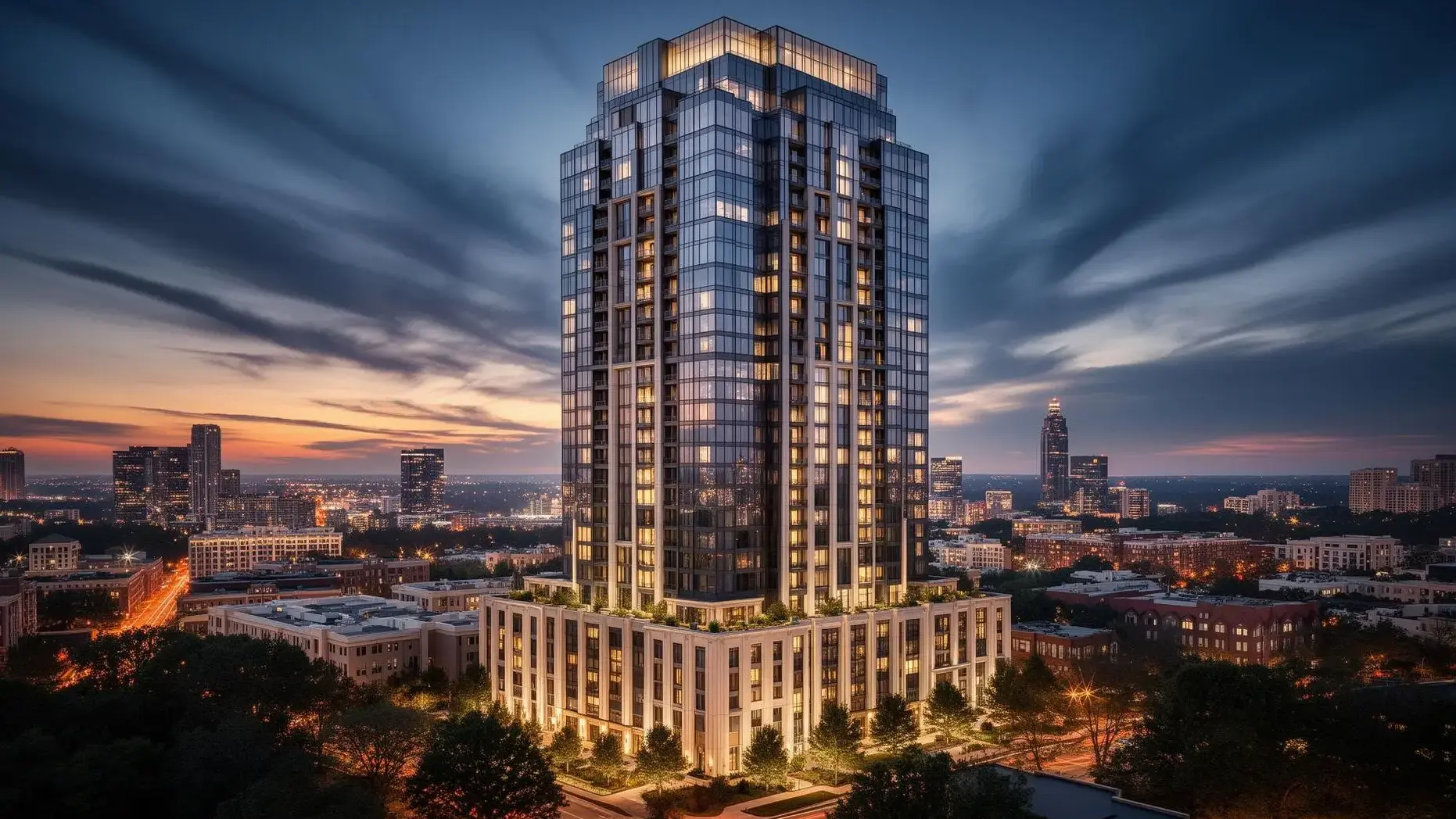
Sources
- U.S. Census Bureau - Population estimates for metro Atlanta, annual migration and growth data.
- Centennial Yards - Official project information, residential component details, and development timeline.
- Midtown Alliance - Development pipeline data, construction activity reports, and district economic data.
- Buckhead Community Improvement District - Infrastructure investment data, development activity tracking, and streetscape improvement plans.
- FMLS (First Multiple Listing Service) - New construction pricing data, luxury condo and townhome sales statistics for metro Atlanta.
- Georgia Secretary of State - Corporate filings and registration data for developer entities operating in Georgia.
Development details, pricing, and timelines reflect information available as of early 2026 and are subject to change. This article is for informational purposes only and does not constitute an endorsement of any specific development project or developer.
Disclaimer: This article is for informational purposes only and does not constitute financial, legal, or investment advice. Pre-construction purchases carry inherent risks including construction delays, developer default, and market fluctuations. Past development performance does not guarantee future results. The Luxury Realtor Group is a real estate brokerage and does not develop, build, or sell new construction directly. Always consult with a real estate attorney before signing a pre-construction purchase agreement.