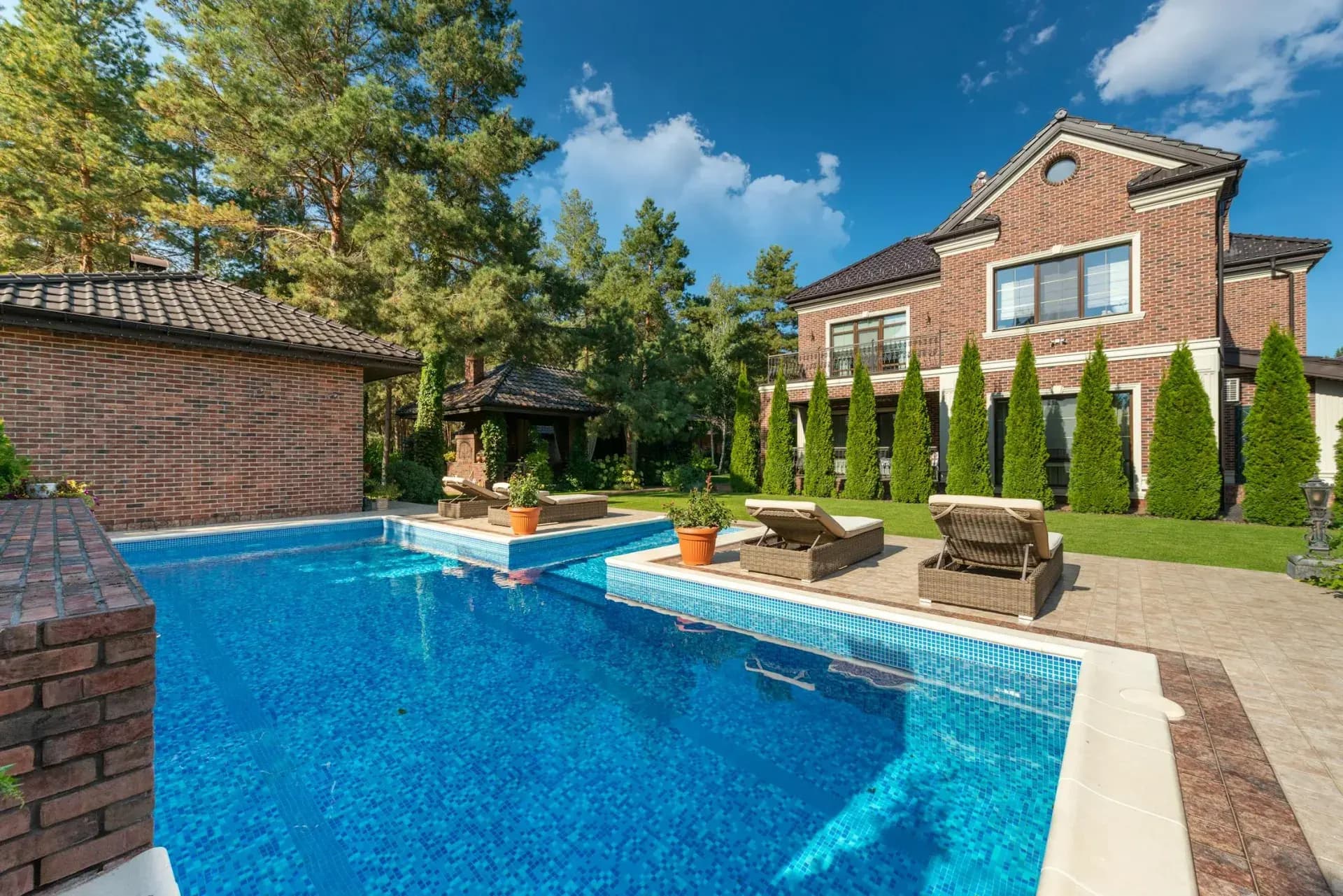
A pool is one of the most significant outdoor investments you can make on an Atlanta luxury property. It also might be one of the most misunderstood. Between the permitting requirements in Fulton, DeKalb, and Cobb counties, the wide range of construction methods, and the real impact on resale value, there is a lot to get right before breaking ground.
Atlanta sits in USDA Hardiness Zone 7b/8a, which means outdoor pools can be used comfortably from May through September without heating and potentially year-round with the right equipment. The region's red clay soil presents specific engineering challenges for pool construction, and the occasional winter freeze means your design needs to account for freeze protection on plumbing lines and equipment.
This guide covers the pool styles that work best for Atlanta luxury homes, what they cost, how the permitting process works, and what you need to know about maintenance, insurance, and return on investment. Whether you are building new or renovating an existing pool on a property you just purchased, this is the information you need to make a well-informed decision.
Pool Styles for Atlanta Luxury Homes
The pool you choose should complement your home's architecture, the lot's topography, and how you actually plan to use it. In the Atlanta luxury market, four main styles dominate.
Infinity Edge (Vanishing Edge) Pools
Infinity edge pools are the signature feature of many high-end Atlanta properties, particularly those in Buckhead and Sandy Springs where lots often have significant grade changes. The design creates the illusion that the water extends to the horizon by allowing it to flow over one or more edges into a hidden catch basin below.
The engineering behind an infinity edge is more complex than a standard pool. You need a secondary basin (called a catch pool or surge tank) below the vanishing edge, plus a more powerful pump system to recirculate water from the catch basin back to the main pool. According to builders in the Atlanta market, an infinity edge adds roughly $20,000 to $80,000 to the base cost of a Gunite pool, depending on the length of the edge, the grade change, and the finish materials.
The visual impact is significant. On a lot that overlooks trees or a golf course, an infinity edge creates a dramatic visual line that integrates the pool with the surrounding environment. From a resale perspective, infinity edge pools consistently rank among the most desirable features in the Atlanta luxury market for homes above $2 million.
Classic Geometric Pools
Rectangular and geometric pools remain the most common choice for luxury homes in Atlanta, particularly those with Georgian, Colonial, or Neoclassical architecture. The clean lines of a rectangular pool complement formal architecture and work well with structured landscaping, stone coping, and symmetrical hardscape layouts.
A well-designed geometric pool with quality finishes (think natural stone coping, pebble aggregate interior, and integrated spa) typically costs $120,000 to $250,000 in the Atlanta market. The simplicity of the shape keeps construction costs lower than freeform or infinity designs while still delivering an upscale look. Many luxury builders in Tuxedo Park and Chastain Park favor this style for its timeless appeal.
Freeform and Natural Pools
Freeform pools mimic natural water features with curved edges, rock formations, waterfalls, and grotto elements. They suit properties with heavily wooded lots, rustic or craftsman-style homes, and homeowners who want their pool to feel like a natural extension of the Georgia landscape.
Natural swimming pools (also called biological pools or swimming ponds) take this concept further by eliminating chemical treatment entirely. Instead, a planted regeneration zone filters the water biologically. These are rare in Atlanta but growing in popularity among eco-conscious luxury homeowners. The cost premium for a natural pool versus a traditional Gunite pool of the same size runs 20% to 40%, primarily due to the additional space and specialized planting required for the filtration zone.
Lap Pools and Sport Pools
For fitness-focused homeowners, a dedicated lap pool (typically 40 to 75 feet long and 8 to 10 feet wide) is a practical and visually striking addition. Lap pools work particularly well on narrower lots or as a secondary pool adjacent to a larger recreational pool. Sport pools, which combine lap swimming depth with a shallower recreational area, offer a compromise for homeowners who want both fitness and leisure functions in a single body of water.
Gunite vs. Fiberglass: Which Is Right for Your Property?
In the luxury segment, this is often a straightforward decision. Gunite (a type of shotcrete sprayed over a rebar framework) is the dominant construction method for custom luxury pools in Atlanta. It offers unlimited design flexibility, accommodates any shape or size, and can be finished with a wide range of interior surfaces from standard plaster to hand-laid glass mosaic tile.
Fiberglass pools, which are factory-molded shells lowered into a prepared excavation, offer faster installation (often 2 to 4 weeks versus 8 to 16 for Gunite) and lower lifetime maintenance costs due to the non-porous gel coat surface. However, fiberglass pools are limited to the manufacturer's available shapes and sizes, with most maxing out around 16 feet wide and 40 feet long. For a luxury property where the pool needs to be a custom design element, this limitation is usually a dealbreaker.
Atlanta Luxury Pool Cost Breakdown (2026 Estimates)
- Basic Gunite pool (400-600 sq ft): $80,000 to $150,000. Includes excavation, steel, shotcrete, standard plaster finish, basic coping, standard pump and filter, and basic LED lighting.
- Mid-range luxury pool with spa: $150,000 to $300,000. Adds pebble aggregate or tile finish, natural stone coping and decking, integrated spa, water features, automation system, and enhanced landscaping.
- High-end custom pool with pool house: $300,000 to $500,000+. Full custom design, infinity edge, glass tile interior, pool house with bath and kitchenette, outdoor kitchen integration, fire features, and premium automation.
- Pool house only: $75,000 to $200,000. A separate structure with bathroom, changing area, storage, and optional kitchenette. Cost depends on size, finishes, and whether HVAC and plumbing are included.
- Annual maintenance: $3,000 to $8,000 for chemicals, cleaning, and equipment service. Add $1,500 to $4,000 per year for heating if using a gas heater or heat pump during shoulder months.
Heating Options for Year-Round Use
Atlanta's climate is mild enough that an unheated pool is comfortable from roughly mid-May through mid-September. But many luxury homeowners want to extend that season to 8 to 10 months or even year-round. The three primary heating options each have distinct advantages for Atlanta conditions.
Gas heaters (natural gas or propane) are the fastest way to heat a pool and work effectively regardless of outside air temperature. They can raise water temperature by 1 to 2 degrees per hour for a typical luxury pool. The trade-off is operating cost: running a gas heater to maintain 82 degrees from March through November on a 600 square-foot pool can cost $3,000 to $5,000 per season in the Atlanta market, based on current natural gas rates.
Electric heat pumps extract heat from the surrounding air and transfer it to the pool water. They are three to five times more energy-efficient than gas heaters, per the U.S. Department of Energy, making them the most cost-effective option for regular heating. The downside is that heat pumps lose efficiency when air temperatures drop below 50 degrees Fahrenheit, which limits their effectiveness during Atlanta's coldest winter weeks.
Solar heating uses rooftop or ground-mounted solar collectors to warm pool water. It has the lowest operating cost of any heating method but depends on sun exposure and is least effective during cloudy or cold periods. In Atlanta, solar heating can extend your comfortable swimming season by 4 to 6 weeks on each end of summer. According to the Solar Energy Industries Association, solar pool heating systems typically cost $3,000 to $7,000 to install and can pay for themselves in reduced energy costs within 2 to 4 years.
The most common setup among Atlanta luxury pool owners is a combination system: an electric heat pump for day-to-day heating from March through November, with a gas heater as a booster for rapid heating during cool snaps or for last-minute entertainment. This dual approach balances energy efficiency with the ability to get the pool to temperature quickly when needed.
Thinking About Adding a Pool to Your Property?
Before you commit to a design, it helps to know what pools typically do to value on your specific street. We can look at your lot, your budget, and the resale side together.
Review My Lot and Pool Plansor call (770) 727-4052
Fulton County Permits and Safety Requirements
Building a pool in metro Atlanta involves multiple layers of permitting and code compliance. The specifics vary depending on whether your property is in unincorporated Fulton County, the City of Atlanta, or one of the surrounding municipalities, but the general framework is consistent.
Building permit: Required in all metro Atlanta jurisdictions. The application typically requires a site plan showing the pool location relative to property lines and structures, structural engineering plans for the pool shell, electrical plans for pumps, heaters, and lighting, and a plumbing plan. In Fulton County, the current permit fee for a residential pool ranges from $200 to $500 depending on project value. Processing time runs 2 to 6 weeks.
Setback requirements: Most metro Atlanta jurisdictions require pools to be at least 10 feet from rear and side property lines, though this varies by zoning district. In some Buckhead neighborhoods with large lots, setbacks are more generous. Pools generally cannot be placed in front yards or side yards that face a street. Check your specific lot's zoning overlay before committing to a pool location.
Fencing requirements: Georgia law and local codes require a barrier around residential swimming pools. The standard requirement is a 4-foot minimum height fence with a self-closing, self-latching gate. Some HOAs impose stricter standards. If your property already has a perimeter fence of the required height, that may satisfy the requirement, but verify with your local code enforcement office.
Electrical requirements: Pool electrical work must be performed by a licensed electrician and comply with the National Electrical Code (NEC). This includes bonding all metal components within 5 feet of the pool, GFCI protection on all pool-related circuits, and proper grounding of pumps, heaters, and lighting fixtures. A separate electrical permit and inspection are typically required.
Inspections: Multiple inspections are required during construction. Typical checkpoints include the excavation, steel/rebar placement, plumbing and electrical rough-in, the Gunite or fiberglass shell, decking and fencing, and a final inspection before the pool can be filled and used. Your contractor should coordinate all inspections, but staying informed about the schedule helps avoid delays.
Pool Houses and Outdoor Living Integration
In the Atlanta luxury market, a pool house has become almost as important as the pool itself. It extends the usability of the outdoor space by providing shade, shelter from afternoon thunderstorms (which are frequent in Atlanta from May through September), and amenities that keep guests comfortable without tracking through the main house.
A basic pool house includes a covered seating area, a half bath, and storage for pool equipment and supplies. Higher-end versions add a full bathroom with shower, a changing area, a kitchenette or wet bar, and even a small lounge or media area. The most elaborate pool houses in the Buckhead and Sandy Springs markets function as self-contained guest suites with bedroom, full kitchen, and independent HVAC systems.
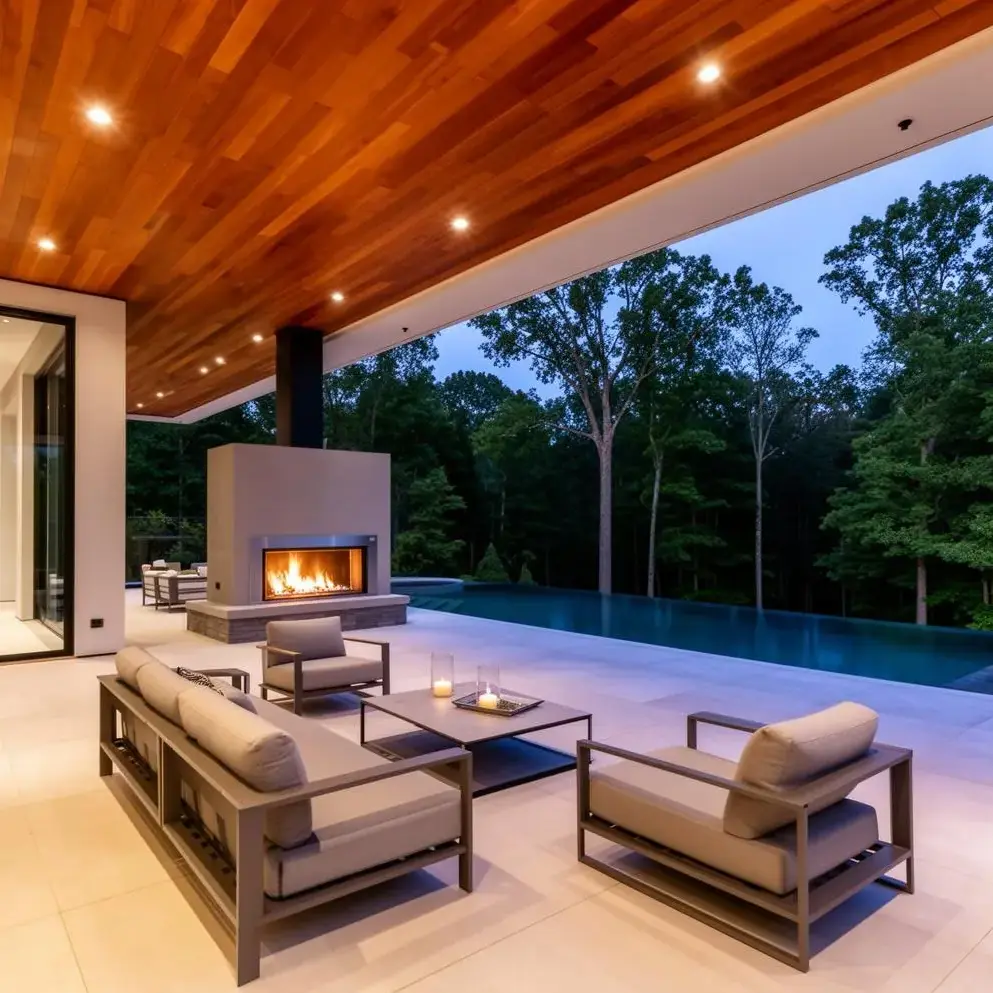
When planning a pool house, consider how it integrates with the overall outdoor living design. The best luxury pool environments in Atlanta treat the pool, pool house, outdoor kitchen, fire feature area, and landscaping as a single cohesive design rather than separate elements. This integrated approach creates an outdoor living space that feels intentional and functions seamlessly for entertaining.
Insurance Considerations
Adding a pool to your property creates additional liability exposure, and your insurance should reflect that. According to the Insurance Information Institute, homeowner's insurance premiums typically increase by $50 to $150 per year when a pool is added, though the exact amount depends on your insurer, your location, and the pool's features.
Most insurers require a minimum fence height (typically 4 feet with a self-closing gate) and may exclude coverage for certain high-risk features like diving boards and slides. If your standard homeowner's policy has a $300,000 liability limit, consider increasing it to $500,000 or $1 million, or adding an umbrella liability policy. For a luxury property, an umbrella policy with $1 million to $5 million in additional coverage typically costs $200 to $500 per year and provides a meaningful layer of protection.
Document your pool investment with photographs, receipts, and detailed specifications. If you ever need to file a claim for storm damage, equipment failure, or other covered events, having a complete record of your pool's features and value will expedite the process.
How to Choose a Luxury Pool Builder in Atlanta
- Verify licensing and insurance: Georgia requires pool contractors to hold a valid residential or general contractor license. Verify through the Georgia Secretary of State's office. Confirm they carry general liability insurance and workers' compensation coverage.
- Review completed projects: Ask for references and visit completed pools in person, not just online photos. Look at pools that are 3 to 5 years old to see how the finishes, coping, and equipment have held up over time.
- Understand the contract: A detailed contract should specify every element of the pool including dimensions, depths, finish materials, equipment brands and models, lighting, decking, and landscaping. Vague language invites disputes later.
- Get a realistic timeline: Quality Gunite pools take 8 to 16 weeks minimum. If a builder promises significantly faster completion on a custom design, ask how. Cutting corners on cure time or rushing finishes leads to problems down the road.
- Ask about warranty: Look for a builder who warranties the shell structure for 10 to 25 years, equipment for the manufacturer's warranty period (typically 1 to 3 years), and workmanship for at least 1 to 2 years. Get warranty terms in writing.
Frequently Asked Questions
How much does a luxury pool cost to build in Atlanta?
A high-end custom Gunite pool in metro Atlanta typically costs between $150,000 and $500,000 or more, depending on size, features, and finishes. A basic rectangular Gunite pool with standard coping and plaster might start around $80,000 to $120,000, but once you add infinity edges, custom tile, water features, and a pool house, costs escalate quickly. According to data from the Association of Pool and Spa Professionals, the national average for a custom inground pool is roughly $65,000, but luxury builds in Atlanta routinely exceed that by two to five times.
Do I need a permit to build a pool in Fulton County?
Yes. Fulton County requires a building permit for all inground swimming pool installations. You will need to submit site plans showing the pool location, setbacks from property lines, fencing plans, and electrical layouts. The county also requires compliance with the International Swimming Pool and Spa Code and local zoning ordinances. The permit process typically takes 2 to 6 weeks, and inspections are required at multiple stages of construction. Your pool contractor should handle most of the permitting paperwork, but verify that permits are in place before any excavation begins.
What is the best pool type for Atlanta's climate?
Gunite (shotcrete) pools are the most popular choice for luxury homes in Atlanta because they can be built in any shape and size, are highly durable, and handle the freeze-thaw cycles that occasionally occur in north Georgia winters. Gunite pools also allow for the widest range of finish options, from pebble aggregate to glass tile. Fiberglass pools are a faster and sometimes more affordable alternative, but they come in pre-molded shapes and have size limitations. For a true custom luxury pool, Gunite is the standard in the Atlanta market.
How does a pool affect my home's resale value in Atlanta?
In the Atlanta luxury market (homes priced above $1 million), a well-designed pool is generally considered an asset, though it may recoup only part of its cost at resale. In certain luxury neighborhoods like Buckhead, Tuxedo Park, and Sandy Springs, a pool is practically expected and its absence can actually be a negative. However, in more modest price ranges, a pool may not add proportional value and can deter some buyers concerned about maintenance costs and safety liability.
What are the annual maintenance costs for a luxury pool in Atlanta?
Annual maintenance for a luxury pool in Atlanta typically runs $3,000 to $8,000 for basic chemical treatment, cleaning, and equipment maintenance. If you have a heated pool, energy costs for a gas or heat pump heater can add $1,500 to $4,000 per year depending on how many months you heat and your target temperature. Salt systems, automation controls, and water features may add additional maintenance costs. Many luxury homeowners hire a weekly pool service at $200 to $500 per month, which covers chemical balancing, skimming, filter maintenance, and equipment checks.
How long does it take to build a luxury pool in Atlanta?
A custom Gunite pool typically takes 8 to 16 weeks from excavation to completion, though complex builds with pool houses, outdoor kitchens, and extensive hardscaping can take 4 to 6 months or longer. Weather delays are common in Atlanta, particularly during the spring rainy season. Permitting adds 2 to 6 weeks on the front end. If you want your pool ready for summer, plan to begin the permitting and design process by late fall or early winter of the prior year.
What pool features add the most value to a luxury home?
In the Atlanta luxury market, the features that tend to add the most perceived value are: infinity (vanishing) edges, especially on properties with grade changes or views; integrated spas with separate temperature controls; automated chemical and cleaning systems; LED color-changing lighting; natural stone coping and decking; and a covered outdoor living area adjacent to the pool. Pool houses with bathrooms, changing areas, and kitchenettes are also highly valued in the $2 million-plus market. The key is designing features that complement the home's architecture and the property's topography.
Does a pool increase my homeowner's insurance in Atlanta?
Yes, adding a pool typically increases homeowner's insurance premiums by $50 to $150 per year in metro Atlanta, according to insurance industry data. The increase varies based on pool type, whether it has a diving board or slide, fencing and safety features, and your insurer's specific underwriting guidelines. Most insurers require at least a four-foot perimeter fence with a self-closing, self-latching gate. An umbrella liability policy is also recommended for pool owners. Some insurers may require additional liability coverage of $300,000 to $500,000.
What heating options work best for Atlanta pools?
Atlanta's climate allows for comfortable swimming from roughly May through September without heating. To extend the season into March through November or year-round, the most common heating options are gas heaters, electric heat pumps, and solar heating. Gas heaters (natural gas or propane) heat water quickly and work in any temperature but cost more to operate. Electric heat pumps are more energy-efficient but heat more slowly and lose effectiveness when air temperatures drop below 50 degrees. Solar heating is the least expensive to operate but depends on sun exposure and is less effective in cooler months. Many luxury homeowners combine a heat pump for regular use with a gas heater for quick heating during cold snaps.
Are natural pools a good option in Atlanta?
Natural swimming pools, which use biological filtration rather than chlorine, are gaining interest among eco-conscious luxury homeowners in Atlanta. These pools use a regeneration zone planted with aquatic vegetation to filter and clean the water. They can be beautiful and low-chemical, but they require more space (the regeneration zone can be as large as the swimming area), cost 20% to 40% more than a traditional Gunite pool of similar size, and require specialized design and maintenance expertise. Atlanta's warm, humid climate can also promote algae growth, which demands careful plant selection and ongoing biological management. They work well for homeowners who prioritize sustainability and do not mind a more naturalistic aesthetic.
Ready to find a luxury Atlanta home with room for the perfect pool?
Sources
- Association of Pool and Spa Professionals (APSP) - National pool construction cost data, industry standards, and builder certification programs.
- National Association of Realtors (NAR) - Home feature value estimates, pool impact on resale data, and luxury market trend reports.
- U.S. Department of Energy - Heat pump efficiency data, solar pool heating performance estimates, and energy cost comparisons for pool heating methods.
- Solar Energy Industries Association (SEIA) - Solar pool heating system cost and payback period data.
- Insurance Information Institute - Homeowner's insurance premium impact data for pool additions, liability coverage recommendations.
- Fulton County Department of Building Inspections - Permit requirements, setback regulations, fencing standards, and inspection procedures for residential pools.
- International Code Council - International Swimming Pool and Spa Code (ISPSC), residential pool safety standards.
- FMLS (First Multiple Listing Service) - Atlanta luxury home sales data, pool feature impact on listing prices and days on market.
Cost estimates, permit requirements, and market data referenced in this article reflect conditions as of early 2026 and are subject to change. Local regulations vary by jurisdiction. This article does not constitute legal, financial, or engineering advice. Consult qualified professionals before beginning pool construction.
Disclaimer: This article is for informational purposes only and does not constitute construction, legal, or financial advice. Pool construction costs, permit requirements, and insurance impacts vary by location, contractor, and individual property. The Luxury Realtor Group is a real estate brokerage and does not provide construction or engineering services. Always work with licensed, insured contractors and verify all permit requirements with your local jurisdiction before beginning construction.