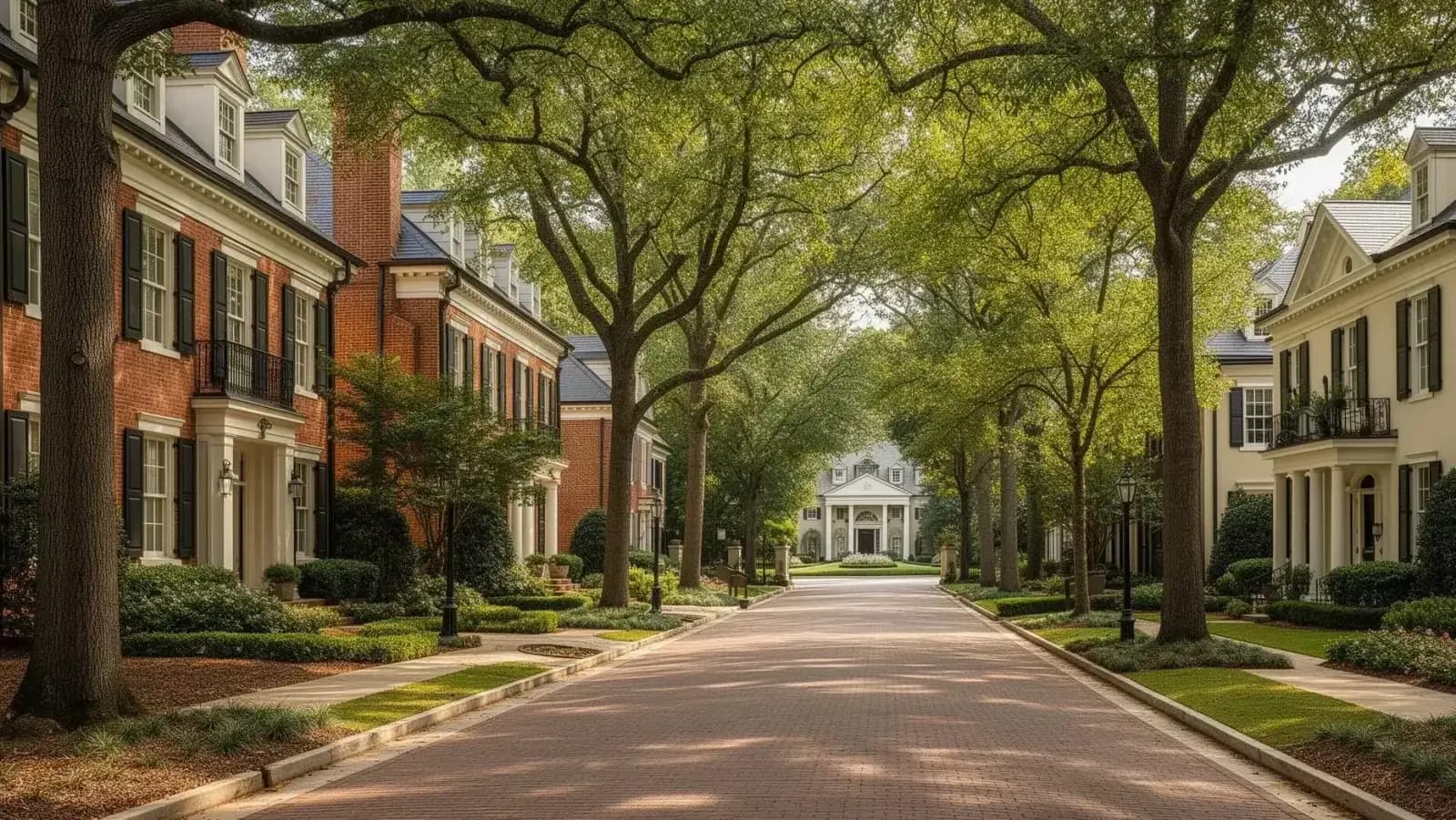
Atlanta has dozens of neighborhoods worth exploring, but only a handful combine genuine architectural heritage, mature tree canopies, walkable streets, and strong long-term appreciation. Ansley Park, Druid Hills, and Inman Park sit at the top of that list. Each one offers a distinct flavor of historic living, and each attracts a different kind of buyer.
This guide breaks down what makes each neighborhood unique, what homes actually cost there, and what you should know before making an offer. Whether you are drawn to the grand estates of Druid Hills, the Midtown convenience of Ansley Park, or the creative energy of Inman Park, here is what to expect.
Why Buy in an Atlanta Historic Neighborhood?
Historic neighborhoods in Atlanta are not just about charm. They represent some of the most stable real estate investments in the metro area. Per Fulton County and DeKalb County tax records, homes in designated historic districts have historically appreciated at rates that outpace many newer suburban developments. There are a few reasons for that.
First, supply is limited. You cannot build more land on Peachtree Circle or along Ponce de Leon Avenue. When a home comes on the market in one of these neighborhoods, it draws serious attention because buyers know there will not be many more chances to buy in.
Second, historic preservation rules protect your investment. The regulations that govern what can be built and how homes can be modified prevent the kind of incompatible development that can erode property values in unprotected areas. A neighbor cannot demolish a 1920s Tudor and replace it with a five-story apartment building.
Third, the infrastructure is already in place. Mature tree canopies (many of these streets are lined with oaks and magnolias that are 80 to 100 years old), established parks, walkable sidewalks, and proximity to Atlanta's cultural and business centers are built into the fabric of these neighborhoods. You are not waiting for a town center to be developed or a park to be built. It is already there.
According to the National Association of Realtors, homes in historic districts tend to hold value better during market downturns and recover faster during upswings. That pattern has held true in Atlanta through multiple cycles.
Ansley Park: Midtown's Premier Estate Neighborhood
Ansley Park sits between Midtown and Piedmont Park, roughly bounded by 15th Street to the north, Piedmont Avenue to the east, Ponce de Leon Avenue to the south, and the connector (I-75/85) to the west. It was developed starting in 1904 by Edwin P. Ansley, who envisioned a residential neighborhood with curving streets, generous lots, and easy access to the city center. That vision largely survived intact.
What Homes Look Like
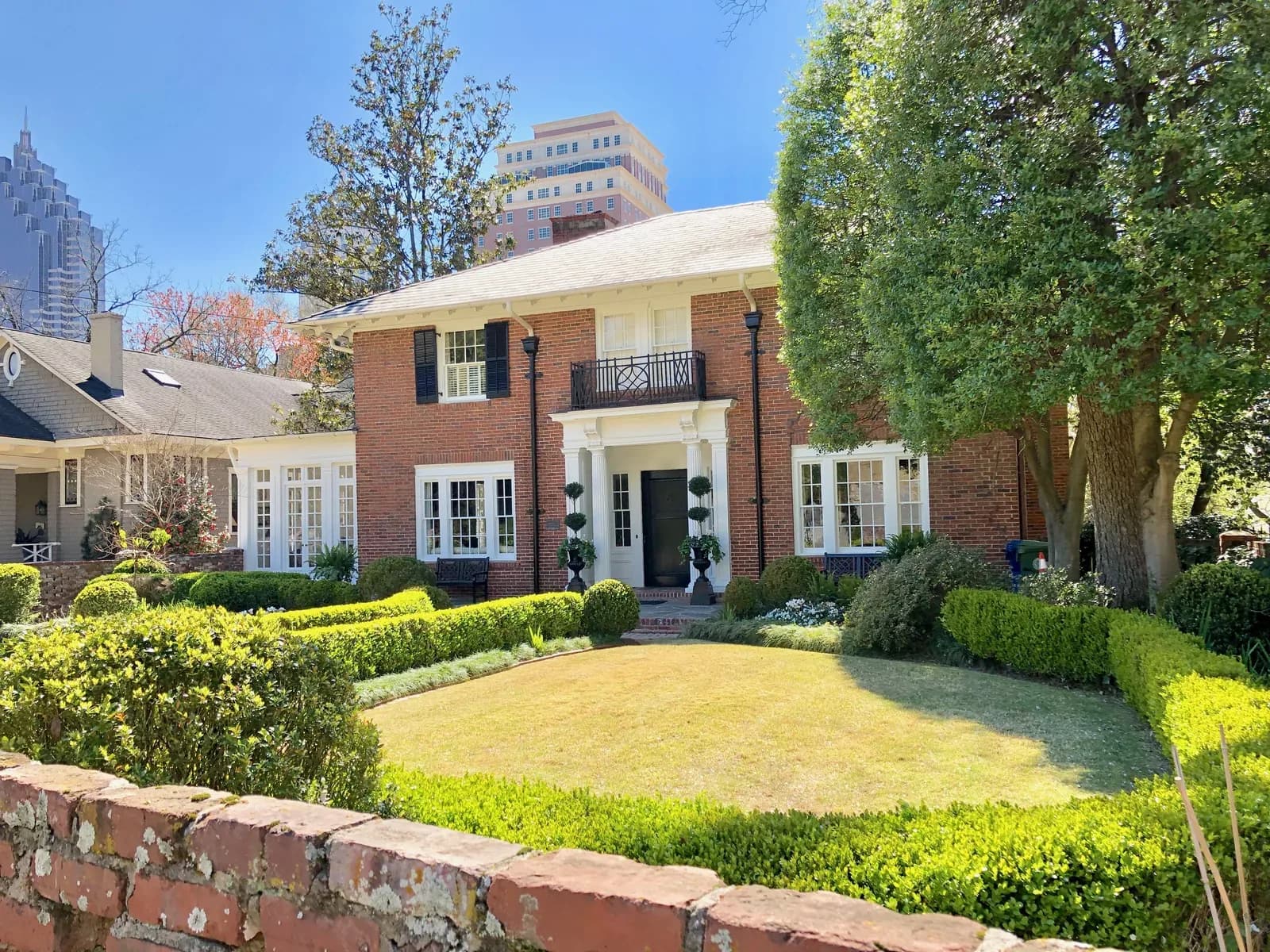
The architectural variety in Ansley Park is one of its strongest features. You will find Tudor Revival homes with steeply pitched roofs and decorative half-timbering, Colonial Revival homes with symmetrical facades and columned porches, Craftsman bungalows with wide front porches and exposed rafter tails, and a number of Georgian and Italian Renaissance-style residences.
Most homes were built between 1904 and 1935. Lot sizes vary but tend to be generous by intown standards, with many properties sitting on a quarter acre to over half an acre. Some of the larger estates along Beverly Road, Peachtree Circle, and The Prado exceed 5,000 square feet of living space.
Pricing and Market Data
Ansley Park is one of Atlanta's most expensive intown neighborhoods. Per recent MLS data and Fulton County records, single-family homes typically sell between $1.2 million and $2.5 million. Larger estates on premium streets regularly exceed $3 million, and a handful of properties have traded above $4 million in recent years.
Condominiums and townhomes in and around the neighborhood boundaries offer entry points starting around $400,000 to $700,000, though these are not technically within the historic district in all cases.
Days on market for well-priced Ansley Park homes tend to be short. Properties that are updated and priced appropriately often go under contract within two to three weeks.
Lifestyle and Location
The defining feature of Ansley Park's location is its immediate adjacency to Piedmont Park, Atlanta's 200-acre flagship green space. Residents can walk to the park in minutes, which means access to running trails, tennis courts, the Piedmont Park Aquatic Center, the Atlanta Botanical Garden, and weekend farmers markets.
Midtown's dining, arts, and business districts are also within walking distance. The Woodruff Arts Center (home to the High Museum of Art, Atlanta Symphony Orchestra, and Alliance Theatre) is less than a mile away. Colony Square, with its restaurants and shops, is a short walk north.
For commuters, Ansley Park offers quick access to I-75/85 and is a short drive to Buckhead, Downtown, and the Midtown MARTA station.
Things to Know Before Buying
Ansley Park is a City of Atlanta Historic District. Exterior modifications visible from the street require approval from the Atlanta Urban Design Commission (AUDC). This includes changes to siding, windows, roofing materials, and additions. Interior work is not regulated. The review process typically takes four to six weeks and requires architectural drawings.
Many homes in Ansley Park were built over 100 years ago. Common issues include aging HVAC systems, outdated electrical panels, older plumbing (some homes still have cast iron or galvanized pipes), and foundation settling. A thorough pre-purchase inspection by a firm experienced with historic properties is essential. Budget for deferred maintenance, especially on homes that have not been recently updated.
Druid Hills: Grand Estates and Olmsted-Designed Parks
Druid Hills is one of Atlanta's most storied residential neighborhoods, located in unincorporated DeKalb County east of the city. The neighborhood was originally planned by Frederick Law Olmsted, the landscape architect behind New York's Central Park, and his sons. That Olmsted heritage is visible everywhere: winding roads that follow the natural topography, a chain of linear parks along Ponce de Leon Avenue, and an emphasis on integrating homes with the surrounding landscape.
What Homes Look Like
Druid Hills features some of the largest and most architecturally significant homes in metro Atlanta. The neighborhood is particularly known for its grand Tudor Revival and English Country-style estates, many designed by prominent Atlanta architects including Neel Reid, Philip Trammell Shutze, and Walter T. Downing.
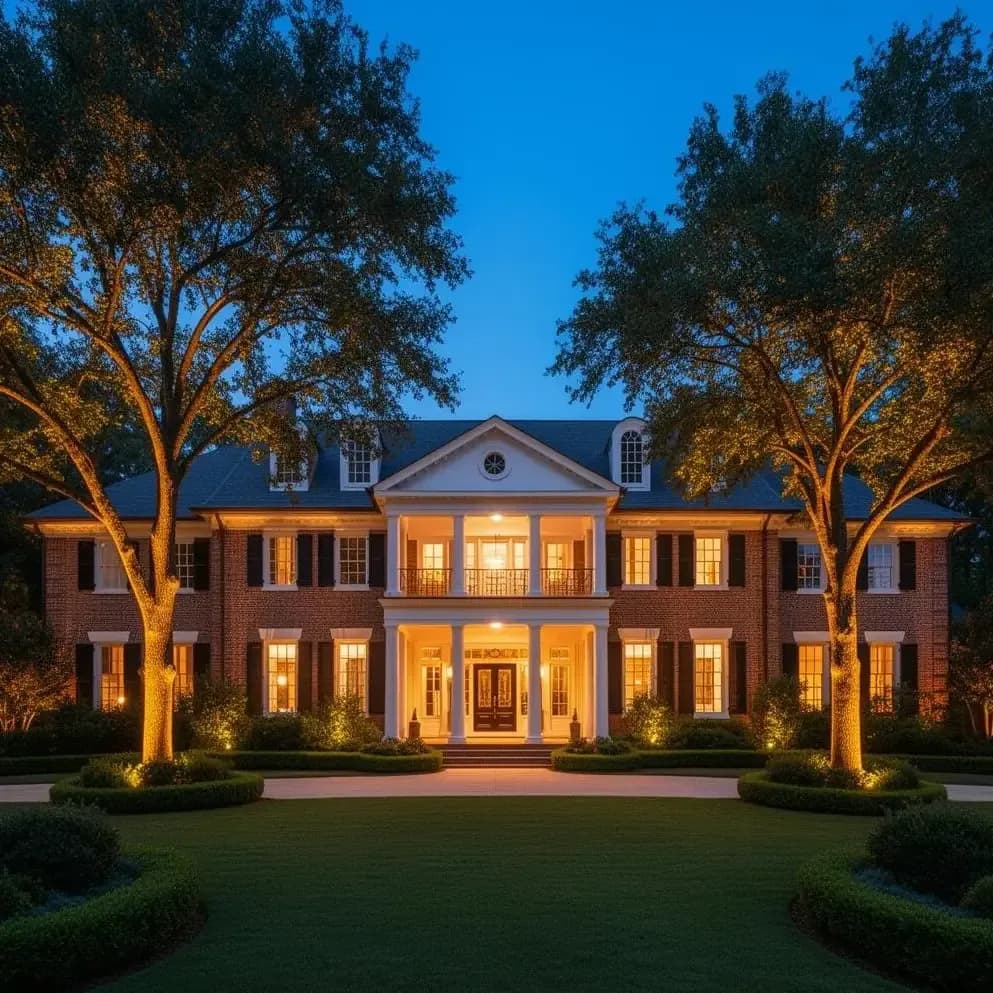
Homes along Lullwater Road, Oakdale Road, Fairview Road, and Ponce de Leon Avenue are among the most impressive residential properties in the Southeast. Many sit on lots ranging from half an acre to over two acres, with mature landscaping, stone walls, and circular drives.
Beyond the grand estates, Druid Hills also includes more modest Craftsman bungalows and mid-century homes, particularly in the areas closer to Emory University and along North Decatur Road.
Pricing and Market Data
The price range in Druid Hills is wide. Per DeKalb County tax records and recent MLS data, smaller bungalows and mid-century homes may start around $500,000 to $800,000. The neighborhood's signature estates on premium streets typically trade between $1.5 million and $3.5 million, with the largest and most architecturally significant homes occasionally exceeding $4 million to $5 million.
Druid Hills has seen steady appreciation, driven by limited inventory, the Emory University employment base, and the enduring appeal of Olmsted-designed surroundings. According to DeKalb County assessor data, values in Druid Hills have appreciated roughly 40% to 60% over the past decade, varying by micro-location within the neighborhood.
Lifestyle and Location
Druid Hills offers a quieter, more residential feel compared to Ansley Park or Inman Park. The neighborhood's linear parks, designed by the Olmsted firm, include Deepdene Park, Virgilee Park, and Dellwood Park, all connected by walking paths.
Fernbank Museum of Natural History and the 65-acre Fernbank Forest are located in Druid Hills, providing one of the largest old-growth forests within any American city. Lullwater Preserve, a 154-acre nature area on the Emory campus, is also accessible to neighborhood residents.
Emory University and the Centers for Disease Control and Prevention (CDC) are both located in or adjacent to Druid Hills, creating a strong local employment base. Emory Village offers a walkable cluster of restaurants, shops, and a pharmacy.
The commute to Midtown or Downtown Atlanta is typically 15 to 25 minutes depending on traffic. Druid Hills is not directly served by MARTA rail, though bus routes run along Ponce de Leon Avenue and North Decatur Road.
Things to Know Before Buying
Druid Hills has a mix of preservation protections. Some portions are listed on the National Register of Historic Places, which does not restrict what private owners can do with their property but may qualify them for rehabilitation tax credits. Other areas fall within local historic overlay districts administered by DeKalb County, which do impose design review requirements.
Buyers should verify the specific preservation status of any property they are considering. The level of oversight varies significantly from one block to the next.
Druid Hills homes tend to be older (many date to the 1910s through 1930s) and larger, which means higher maintenance costs. Roof replacement on a 5,000-square-foot Tudor estate with slate or cedar shake roofing can cost $80,000 to $150,000 or more. HVAC systems in these older homes may need upgrading to handle the large floor plans efficiently.
Torn Between Ansley Park, Druid Hills, and Inman Park?
These three neighborhoods attract very different buyers, and good inventory in each is thin. We can tell you which one actually fits what you are looking for.
Compare These Three for Meor call (770) 727-4052
Inman Park: Atlanta's First Planned Suburb, Reinvented
Inman Park holds a special place in Atlanta's history as the city's first planned residential suburb, established in 1889 by Joel Hurt. The neighborhood was connected to downtown by one of the South's first electric streetcar lines, and it quickly became the address of choice for Atlanta's business elite in the late 19th and early 20th centuries.
After decades of decline through the mid-20th century, Inman Park became the proving ground for Atlanta's historic preservation movement. Residents organized in the late 1960s and 1970s to save homes from demolition and neglect, and the neighborhood has been on an upward trajectory ever since. Today, it is one of the most sought-after intown addresses in Atlanta.
What Homes Look Like
Inman Park's architectural character is heavily Victorian. Queen Anne-style homes with ornate woodwork, wraparound porches, turrets, and stained glass windows are the neighborhood's signature. You will also find Craftsman bungalows, Folk Victorians, and a number of thoughtfully designed new-construction homes that blend contemporary interiors with traditional exterior proportions.
Lot sizes in Inman Park are generally smaller than Ansley Park or Druid Hills, with most properties sitting on a tenth to a quarter of an acre. The homes themselves typically range from 1,500 to 4,000 square feet, though some of the grander Victorian homes exceed that.
Pricing and Market Data
Inman Park's transformation from a distressed neighborhood to a luxury market has been one of Atlanta's most dramatic real estate stories. Single-family homes in Inman Park now typically sell between $700,000 and $1.5 million. The most desirable Victorian homes on streets like Euclid Avenue, Elizabeth Street, and Edgewood Avenue can command $1.5 million to $2 million or more.
Newer construction and renovated homes in the neighborhood tend to price between $800,000 and $1.3 million. Condos and lofts in adjacent developments like Inman Quarter offer entry points starting around $350,000 to $600,000.
Inman Park has benefited enormously from the Atlanta BeltLine. According to Atlanta BeltLine, Inc., the Eastside Trail section that runs through Inman Park has attracted over $5 billion in private development along the corridor since construction began.
Lifestyle and Location
Inman Park is arguably the most vibrant and walkable of these three neighborhoods. The BeltLine Eastside Trail provides a car-free connection to Ponce City Market, Krog Street Market, Old Fourth Ward, and Piedmont Park. You can walk or bike to some of Atlanta's best restaurants, breweries, and shops without touching a steering wheel.
The annual Inman Park Festival, held each spring, is one of Atlanta's largest neighborhood festivals, drawing tens of thousands of visitors for a weekend of art, music, food, and the famous Tour of Homes. The Inman Park neighborhood association is one of the most active in the city.
Dining options within walking distance include some of Atlanta's most acclaimed restaurants. The intersection of Inman Park and the Old Fourth Ward has become one of the city's densest clusters of independent restaurants, bars, and coffee shops.
For transit, the Inman Park/Reynoldstown MARTA station provides direct rail access to the airport and destinations throughout the metro area.
Things to Know Before Buying
Inman Park is a City of Atlanta Historic District with design review requirements similar to Ansley Park. The AUDC reviews exterior changes, and the neighborhood has an active historic preservation committee that provides input on proposed projects.
Because Inman Park is smaller and denser than Druid Hills or Ansley Park, parking can be tight, especially near the BeltLine access points and during popular events. Some homes lack garages or off-street parking, which is worth considering if you have multiple vehicles.
The BeltLine has brought tremendous investment to the area, but it has also increased foot traffic and noise levels on streets closest to the trail. Homes directly adjacent to the BeltLine trade a premium for access but may experience more pedestrian activity than homes deeper in the neighborhood.
Side-by-Side Comparison
Here is how the three neighborhoods stack up across the factors that matter most to buyers:
Price Range
Ansley Park: $1.2M - $4M+ | Druid Hills: $500K - $5M | Inman Park: $700K - $2M
Typical Lot Size
Ansley Park: 0.25 - 0.5+ acres | Druid Hills: 0.5 - 2+ acres | Inman Park: 0.1 - 0.25 acres
Walkability
Ansley Park: Moderate (walkable to Midtown/Piedmont Park) | Druid Hills: Low (car-dependent for most errands) | Inman Park: High (BeltLine, MARTA, walkable retail)
Public Schools
Ansley Park: Atlanta Public Schools | Druid Hills: DeKalb County Schools (Fernbank Elementary) | Inman Park: Atlanta Public Schools (Mary Lin Elementary)
Architectural Character
Ansley Park: Tudor, Colonial, Craftsman mix | Druid Hills: Grand Tudor estates, Olmsted parks | Inman Park: Victorian, Queen Anne, Craftsman bungalows
Best For
Ansley Park: Midtown professionals, arts/culture access | Druid Hills: Families, space, privacy | Inman Park: Walkability, BeltLine access, vibrant social scene
Tips for Buying a Historic Home in Atlanta
Buying a historic home is different from buying new construction. Here are the key things we tell our clients before they make an offer:
Hire a specialized inspector. General home inspectors may miss issues specific to older construction. Look for an inspector with experience evaluating foundation systems from the early 1900s, knob-and-tube wiring (if present), older roofing materials like slate or wood shake, and plaster walls. Some firms in Atlanta specialize in historic property inspections.
Understand the preservation rules before you buy. If you plan to add a wing, change the roofing material, or modify the front facade, know what the review process looks like before closing. The AUDC process in Ansley Park and Inman Park is straightforward but takes time. DeKalb County's process for Druid Hills varies by area.
Budget for higher maintenance. Historic homes are beautiful but demanding. Wood windows, slate roofs, plaster walls, and older mechanical systems require ongoing attention. A general rule of thumb is to budget 1.5% to 2% of the home's value per year for maintenance, compared to 1% for newer construction.
Confirm the designation before you plan a renovation. Local designation and a National Register listing are different things and only one of them typically governs what you may build. See what you can and cannot change in an Atlanta historic district before you write an offer that depends on a renovation.
Research tax credit opportunities. Georgia offers a state income tax credit of 25% of qualified rehabilitation expenses for certified historic properties. The federal government offers a 20% credit for income-producing historic properties. These credits can significantly offset renovation costs. Per the National Park Service, Georgia consistently ranks among the top states for historic tax credit utilization.
Work with an agent who knows historic inventory. Many of the best historic homes in these neighborhoods sell through networks and relationships before reaching the open market. An agent with deep roots in Atlanta's intown historic neighborhoods will know about upcoming listings, off-market opportunities, and which streets and blocks command premium values. Contact our team to discuss your search.
Check insurance requirements. Historic homes may require specialized insurance, particularly for features like slate roofs, plaster walls, and period-specific finishes. Coverage should account for the cost of rebuilding with historically appropriate materials and methods, which can be significantly more expensive than standard construction. For a detailed breakdown of insurance considerations, read our guide to luxury home insurance in Atlanta.
Long-Term Investment Outlook
All three neighborhoods have strong long-term fundamentals. Limited supply, strong demand from well-qualified buyers, and preservation protections that prevent incompatible development create conditions that tend to support values over time.
Inman Park may offer the most upside potential in the near term, driven by continued BeltLine development and the neighborhood's growing appeal to younger affluent buyers. Georgia State University research has associated BeltLine proximity with meaningful price premiums, and additional trail segments and transit improvements are planned through 2030 and beyond.
Druid Hills offers stability and scale. The neighborhood's proximity to Emory University and the CDC provides a steady base of well-compensated potential buyers, and the sheer size of the lots and homes creates a product that is nearly impossible to replicate elsewhere in the metro area.
Ansley Park benefits from Midtown's continued growth as a commercial and cultural center. As companies continue to establish offices in Midtown (Microsoft, Google, and numerous tech firms have Midtown presences), the demand for high-quality housing within walking distance of those offices should remain strong.
Past performance does not guarantee future results, and real estate values can fluctuate. But the structural advantages of these three neighborhoods position them well relative to the broader metro Atlanta market.
Interested in Atlanta's Historic Neighborhoods?
We help buyers find, evaluate, and close on homes in Ansley Park, Druid Hills, Inman Park, and other premier Atlanta neighborhoods. Whether you are looking for a grand estate or a renovated bungalow, we can guide your search.
Frequently Asked Questions
Which Atlanta historic neighborhood has the highest home values?
Ansley Park typically commands the highest prices among these three neighborhoods. According to recent Fulton County tax records, the median sale price for single-family homes in Ansley Park runs between $1.2 million and $2.5 million, with some estates exceeding $4 million. Druid Hills in DeKalb County tends to range from $800,000 to $2.5 million, while Inman Park homes generally fall between $700,000 and $1.8 million. All three neighborhoods have seen strong appreciation over the past decade, but Ansley Park's proximity to Midtown and Piedmont Park gives it a consistent premium.
Are homes in these historic neighborhoods protected by preservation rules?
Yes. All three neighborhoods have some form of historic preservation oversight. Ansley Park is a City of Atlanta Historic District, which means exterior changes visible from the street require a Certificate of Appropriateness from the Atlanta Urban Design Commission. Druid Hills has a mix of locally designated and National Register-listed properties. Inman Park is also a City of Atlanta Historic District with similar review requirements. These regulations protect architectural character but can add time and cost to renovation projects. Buyers should factor in the review process before purchasing with major renovation plans.
What architectural styles are most common in Ansley Park?
Ansley Park features a wide range of early 20th-century styles including Tudor Revival, Colonial Revival, Craftsman bungalows, Georgian Revival, and Italian Renaissance. Many homes were built between 1904 and 1930 when the neighborhood was first developed by Edwin P. Ansley. You will also find mid-century homes from the 1940s and 1950s, plus a handful of sensitive new construction designed to complement the existing streetscape.
How walkable are Ansley Park, Druid Hills, and Inman Park?
Inman Park is the most walkable of the three, with a Walk Score typically around 80 or higher. The BeltLine's Eastside Trail runs directly through the neighborhood, connecting residents to Ponce City Market, Krog Street Market, and Piedmont Park on foot or by bike. Ansley Park scores well for walkability to Midtown and Piedmont Park but is more residential and car-dependent for errands. Druid Hills is the least walkable in terms of daily errands, though Emory Village and portions of Ponce de Leon Avenue offer pockets of walkable retail and dining.
What is the property tax situation in these neighborhoods?
Ansley Park and Inman Park are in the City of Atlanta and Fulton County, so homeowners pay both city and county property taxes. The combined millage rate is typically around 40 to 43 mills. Druid Hills sits in unincorporated DeKalb County, which has its own millage rate that tends to be slightly lower overall but includes DeKalb County School District taxes. For a $1.5 million home, annual property taxes in Ansley Park or Inman Park may run $15,000 to $20,000, while a comparable Druid Hills home may be slightly less. Georgia's homestead exemption and senior exemptions can reduce the taxable value.
Are there good schools near these neighborhoods?
Yes, all three neighborhoods have access to strong public and private school options. Druid Hills has some of the best-regarded public schools in the area, including Fernbank Elementary and Druid Hills High School in the DeKalb County School District. Ansley Park is zoned for Atlanta Public Schools, with Morningside Elementary being a popular option nearby. Inman Park is zoned for Mary Lin Elementary, which is highly rated. All three neighborhoods are close to top private schools including The Paideia School, The Westminster Schools, Pace Academy, and The Lovett School.
How much does it cost to renovate a historic home in Atlanta?
Renovation costs for historic homes in Atlanta vary widely based on the scope of work and the home's condition. Per data from local contractors specializing in historic renovations, a cosmetic update (kitchen, bathrooms, paint, floors) typically runs $150 to $250 per square foot. A full gut renovation with structural work, updated mechanicals, and period-appropriate finishes can range from $300 to $500 per square foot or more. Historic designation may qualify the property for state and federal tax credits on rehabilitation expenses, which can offset 25% to 45% of qualified costs depending on the programs used.
What is the BeltLine's impact on Inman Park property values?
The Atlanta BeltLine has been a major driver of appreciation in Inman Park. Georgia State University research has associated BeltLine proximity with meaningful price premiums. Inman Park's direct access to the Eastside Trail has made it one of the most desirable intown neighborhoods for buyers who prioritize walkability and outdoor recreation. The BeltLine's continued expansion is expected to sustain demand in the area for years to come.
Can I build new construction in these historic districts?
New construction is possible but heavily regulated in all three neighborhoods. In Ansley Park and Inman Park, the Atlanta Urban Design Commission reviews new construction proposals to ensure compatibility with the existing streetscape. Design elements like setbacks, building height, materials, roof pitch, and facade proportions must align with the historic character of the district. In Druid Hills, new construction on vacant lots is less common but subject to DeKalb County zoning requirements and, in some sections, historic overlay district review. Working with an architect experienced in Atlanta's historic districts is strongly recommended.
Which neighborhood offers the best combination of schools and outdoor space?
Druid Hills may be the strongest choice for buyers prioritizing schools and outdoor space. The neighborhood has larger lots (many over half an acre), lower traffic volumes, and proximity to Fernbank Museum, Fernbank Forest, and Lullwater Preserve. The public schools in the Druid Hills cluster are well-regarded. Inman Park excels in walkability, parks, and community events like the Inman Park Festival. Ansley Park works well for buyers who want a Midtown address with quick access to Piedmont Park and top private schools. All three offer parks, community events, and well-regarded school options, but Druid Hills offers the most space and the quietest streets.
Sources
- Fulton County Board of Assessors - Property tax records, assessed values, and sales history for Ansley Park and Inman Park properties.
- DeKalb County Tax Assessor - Property tax records, assessed values, and sales history for Druid Hills properties.
- National Association of Realtors (NAR) - Research on historic district property value trends, buyer demographics, and market resilience data.
- Atlanta BeltLine, Inc. - Economic impact reports, private development investment data along the BeltLine corridor, and trail usage statistics.
- Georgia State University - Research on BeltLine-adjacent property appreciation rates and neighborhood economic impact studies.
- National Park Service - Federal Historic Preservation Tax Incentives program data, Georgia tax credit utilization statistics.
- Atlanta Urban Design Commission (AUDC) - Historic district regulations, Certificate of Appropriateness requirements, and design review guidelines.
- FMLS (First Multiple Listing Service) - Active and sold listing data, days on market, and pricing trends for all three neighborhoods.
Disclaimer: This article is for informational purposes only and does not constitute financial, legal, or real estate advice. Home prices, property tax rates, school ratings, and market conditions referenced in this article are based on publicly available data and are subject to change. Past appreciation does not guarantee future results. The Luxury Realtor Group recommends that buyers conduct their own due diligence, including independent inspections, title searches, and consultations with qualified professionals before purchasing any property.