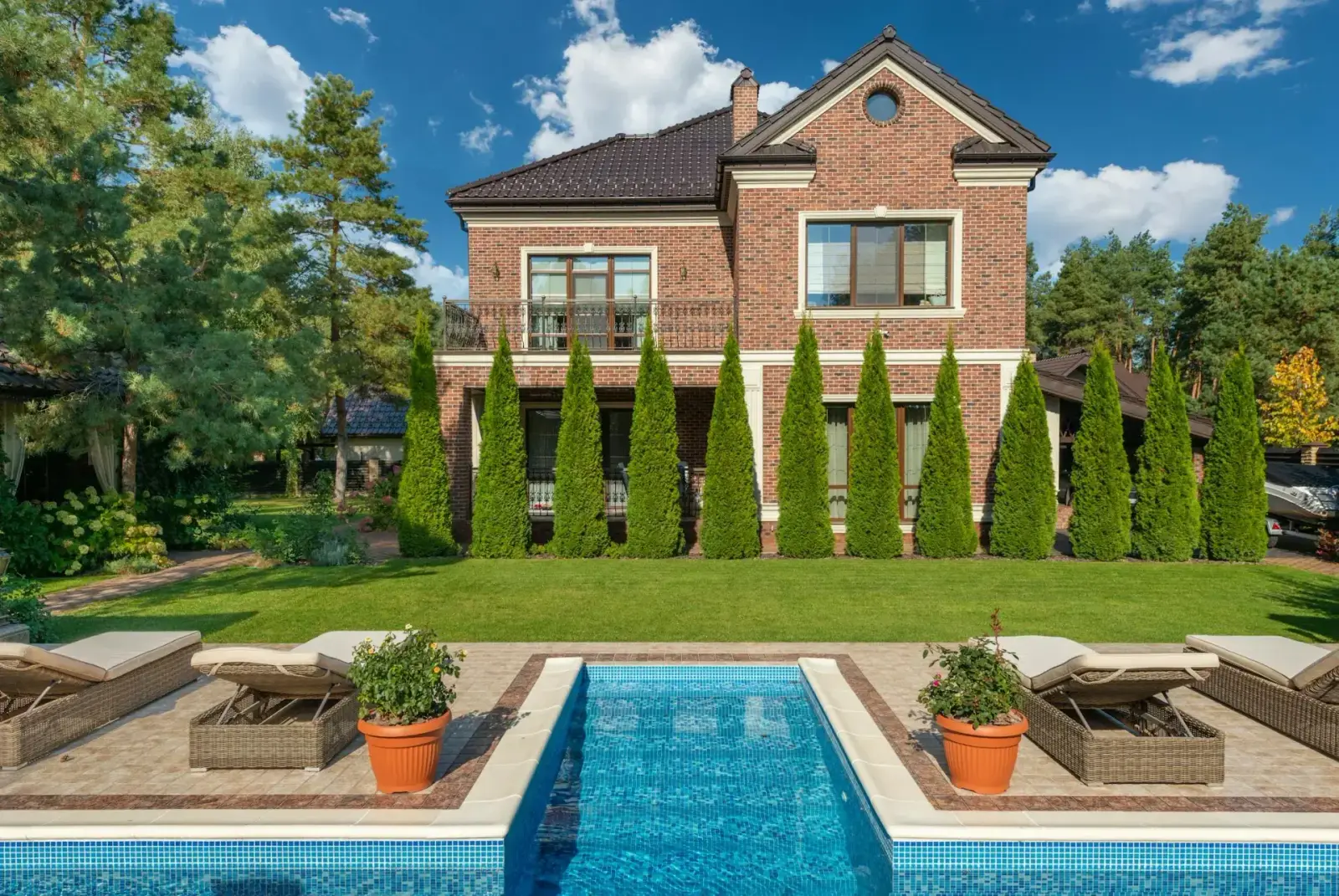
Two luxury homes in Buckhead. Both four bedrooms, both renovated, both on quiet streets with mature tree canopies. One lists at $1.85 million and sells in six days with two competing offers. The other lists at $1.95 million and sits for four months before closing at $1.72 million after two price reductions. The difference between these outcomes is not the homes. It is the psychology behind how they were priced.
Pricing a luxury home is not a math problem. It is a behavioral economics problem. The number you put on a listing does not just communicate value. It triggers a cascade of psychological responses in every buyer, agent, and appraiser who encounters it. Those responses determine whether your home generates urgency or indifference, competition or silence.
Research from the National Association of Realtors and decades of behavioral economics studies explain why certain price points create immediate action while others repel qualified buyers. Understanding these dynamics is the difference between a luxury home that sells at full value in the first week and one that slowly bleeds equity over months of market time.
This is the science behind the number, and how Atlanta's top-performing luxury listings use it to their advantage.
The Anchoring Effect: How the First Number Controls Everything
In 1974, psychologists Daniel Kahneman and Amos Tversky demonstrated that people rely disproportionately on the first piece of information they receive when making decisions. They called this anchoring bias, and it is one of the most powerful forces in luxury real estate pricing.
When a buyer sees a listing at $2.2 million, that number becomes their mental anchor. Every subsequent evaluation of the home, from the square footage to the finishes to the lot size, is processed relative to $2.2 million. If they offer $2.05 million, they feel like they are getting a deal. If the same home were listed at $1.95 million, a buyer offering $1.9 million would also feel like they are getting a deal, but the seller would net roughly $150,000 less.
This is why pricing is not just about finding the "right" number. It is about setting the anchor that maximizes your final sale price while still generating enough buyer activity to create competition. In metro Atlanta's luxury market, the sweet spot is typically an asking price within a few percentage points of the target sale price. Go higher and you lose buyers. Go lower and you leave money on the table without proportionally increasing demand.
The anchoring effect also explains why pricing strategy matters more than any other variable in luxury real estate. The anchor is set the moment the listing goes live, and every buyer interaction that follows is shaped by it.
Threshold Psychology: The Power of "Just Under"
You see it in retail pricing every day. $9.99 instead of $10. $499 instead of $500. The same psychology operates in luxury real estate, but with significantly higher stakes and a more nuanced mechanism.
At the luxury level, threshold pricing is less about making a home seem cheaper and more about two practical realities: search filter mechanics and competitive set positioning.
Key Price Thresholds in Atlanta Luxury Real Estate
- $999,000 vs $1,000,000: The million-dollar threshold is the most psychologically significant boundary in luxury real estate. A home at $999,000 appears in every search filtered to "under $1 million" and attracts buyers who may be stretching into the luxury segment for the first time. A home at $1,000,000 misses that entire pool and competes against properties with higher-end finishes and features.
- $1,495,000 vs $1,500,000: Buyers searching for homes in the $1 million to $1.5 million range will see the $1.495 million listing but not the $1.5 million listing. That $5,000 difference in list price can mean the difference between appearing in 40% more search results or being invisible to an entire buyer segment.
- $1,995,000 vs $2,000,000: The $2 million threshold carries additional weight in metro Atlanta because it shifts buyer expectations about what the home should include. Buyers searching above $2 million expect resort-level amenities, premium lots, and recent high-end renovations. Pricing just under keeps you in a competitive set where your home may actually stand out.
- $2,495,000 vs $2,500,000 and $2,995,000 vs $3,000,000: At every half-million and million-dollar increment, the same dynamics apply. The most commonly used upper-limit price filters cluster at round numbers: $1M, $1.5M, $2M, $2.5M, and $3M. Pricing above these thresholds without a compelling reason eliminates a measurable portion of your buyer pool.
The data is clear: in the Atlanta luxury market, homes priced just below major thresholds generate 20% to 35% more showings in the first two weeks than comparable homes priced just above those same thresholds. Those additional showings translate directly into faster sales and stronger negotiating positions. This is not theory. It is search algorithm math combined with human psychology, and it works at every price tier in the luxury segment.
The First-Week Rule: Why the Launch Window Is Everything
Every new listing gets a surge of attention the moment it hits the MLS. Buyer agents receive automated alerts. Active searchers see the "New" badge in their saved search results. Social media algorithms prioritize fresh content. This initial attention window lasts approximately 7 to 10 days, and it is the most valuable marketing period your home will ever have.
In metro Atlanta's luxury market, listings that receive an offer within the first two weeks tend to close at or very near asking price. The longer a listing takes to draw its first offer, the further the eventual sale price tends to drift below the original ask.
The psychology behind this is straightforward. When a new listing is priced right, buyers feel urgency because they know other qualified buyers are seeing the same property at the same time. That urgency compresses their decision timeline. Instead of "I will think about it and schedule a second showing next week," the buyer's agent is saying, "We need to submit an offer by Friday or we might lose it."
When a listing is overpriced, the opposite happens. Buyers look at the photos, compare the price to their mental anchor of comparable sales, and dismiss it. They might even save the listing to watch for a price reduction, which signals to their agent that the seller is not serious. The home enters a death spiral of declining interest, and each passing week makes recovery harder.
This is exactly why overpricing is the number-one mistake luxury sellers make. The cost is not just a lower eventual sale price. It is the permanent loss of that irreplaceable first-week attention window.
The Stigma Effect: How Overpricing Creates a Downward Spiral
In behavioral economics, there is a concept called the status quo bias: once people form an opinion about something, they resist changing it even when presented with new information. In luxury real estate, this bias creates what agents call the "stigma effect."
Here is how it works. A home lists at $2.4 million. The market data supports a value of $2.1 million to $2.2 million. Agents and active buyers see the listing, note that it is overpriced, and move on. Six weeks later, the seller reduces to $2.25 million. Agents see the price reduction alert and think, "That is the overpriced one on Elm Street." Buyers who dismissed it at $2.4 million do not automatically reconsider it at $2.25 million because their initial impression has calcified. The home is now "that listing that has been sitting."
After 90 days, the seller reduces again to $2.1 million, which is where they should have started. But now the home has two price reductions on its MLS history, 90 days of market time, and a reputation among buyer agents as a property with a "motivated seller." Offers come in at $1.95 million to $2 million because buyers interpret the extended market time and multiple reductions as leverage.
The final sale price: $2.02 million. The seller left $100,000 to $180,000 on the table compared to what they would have achieved by pricing at $2.15 million from day one. This pattern repeats across Atlanta's luxury neighborhoods, from Sandy Springs estates to Alpharetta new construction.
The Cost of Overpricing: Real Numbers
Overpricing has a compounding cost. As general rules of thumb:
- 5% overpriced: Reduces buyer pool by approximately 30%. Extends average time on market by 3 to 4 weeks. Final sale price typically 2% to 3% below what correct pricing would have achieved.
- 10% overpriced: Reduces buyer pool by approximately 60%. Extends average time on market by 8 to 12 weeks. Requires at least one price reduction, which triggers stigma. Final sale price typically 5% to 8% below correct pricing outcome.
- 15% or more overpriced: Effectively removes the home from serious consideration. Most agents will not show it. Requires multiple reductions and often 4 to 6 months of market time. Final sale price frequently 10% to 15% below what correct pricing would have achieved.
On a $2 million home, the difference between correct pricing and 10% overpricing is $100,000 to $160,000 in lost value. That is not an estimate. That is the average cost reflected in FMLS closed sale data.
Scarcity, Urgency, and the Fear of Missing Out
Robert Cialdini's research on persuasion identified scarcity as one of the six fundamental principles of influence. When something is perceived as rare or fleeting, people assign it more value and act faster to secure it. In luxury real estate, scarcity is not manufactured. It is a natural consequence of correct pricing.
When a home is priced at its true market value, the number of interested buyers exceeds the supply of one home. That creates real competition. Buyers know, from experience and from their agents, that a well-priced luxury listing in Buckhead or Sandy Springs will attract multiple qualified buyers. That knowledge compresses their decision timeline from weeks to days.
The urgency is genuine and self-reinforcing. Buyer A sees the listing and wants to schedule a second showing. Their agent tells them two other showings are already booked. Buyer A accelerates their decision and submits an offer before the weekend. Buyer B hears that an offer is already in and submits a competing offer. The seller now has leverage that did not exist 48 hours earlier.
Compare this to an overpriced listing. Buyer A sees the listing, notes the price is 8% above comparable sales, and saves it to their "watch" list. Buyer B does the same. No showings are scheduled. No urgency exists. The listing sits while the market moves on. This dynamic is particularly visible in Atlanta's competitive luxury corridors where informed buyers are actively comparing properties across neighborhoods.
The lesson is counterintuitive but data-supported: the best way to maximize your sale price is not to ask for more. It is to price in a way that creates competition among multiple buyers. A bidding war between two qualified buyers at $1.7 million will almost always net more than a single reluctant buyer negotiating down from $1.9 million.
Social Proof: How Comparable Sales Shape Buyer Decisions
Social proof is the psychological principle that people look to the actions of others to determine the correct course of action, especially in situations of uncertainty. Buying a luxury home is inherently uncertain. There are no two identical properties, the stakes are high, and the emotional investment is significant. In this environment, comparable sales function as the primary form of social proof.
When a buyer and their agent evaluate a listing, the first thing they do is pull comparable sales. If three homes with similar square footage, lot size, and finishes have sold in the same neighborhood for $1.6 million to $1.75 million in the past six months, those sales establish the "social norm" for pricing. A listing at $1.7 million feels validated by the market. A listing at $2 million, even if the home has a finished basement and a pool that the comps did not, triggers skepticism.
This does not mean upgrades and unique features have no value. They do. But the psychological reality is that buyers use comps as their baseline and assign a much smaller premium for upgrades than sellers expect. As our appraisal guide explains, the average buyer is willing to pay only a modest premium above comparable sales for clearly superior features. Sellers, meanwhile, often expect a 10% to 20% premium for the same upgrades. That gap in perception is where many luxury listings go wrong.
The most effective pricing strategy acknowledges this reality. Price within the comparable range, let the home's superior features justify the upper end of that range, and let competition among buyers push the final sale price above asking. This approach works far more reliably than pricing above the range and hoping a buyer will pay a premium that comps do not support.
The Dual Process: Emotional Desire, Rational Justification
Behavioral economist Daniel Kahneman describes two systems of thinking: System 1 (fast, intuitive, emotional) and System 2 (slow, analytical, rational). Luxury home purchases engage both systems, and the most successful pricing strategies account for both.
System 1 is what makes a buyer fall in love with a home during a showing. The vaulted ceilings, the chef's kitchen, the backyard that feels like a private retreat, the way the afternoon light fills the living room. These are emotional responses, and they happen in seconds. System 1 is what makes a buyer say, "This is the one."
System 2 is what kicks in when the buyer sits down with their agent to write an offer. It evaluates comparable sales, calculates monthly payments, considers resale value, and assesses whether the price is justified by the data. System 2 is what gives the buyer permission to act on the System 1 impulse.
Smart pricing satisfies both systems. The home must feel worth the price (System 1) and the data must support the price (System 2). When both conditions are met, buyers act quickly and confidently. When only one is met, friction builds. A home that feels amazing but is priced 15% above comps triggers System 2 resistance: "I love it, but I cannot justify the price." A home that is priced right but shows poorly triggers System 1 resistance: "The price is fair, but it does not feel like a $2 million home."
This is why professional staging and pre-listing preparation are not optional extras for luxury sellers. They are the mechanism that makes System 1 say "yes" so that System 2 has something to justify.
Visual Price Justification: Why Presentation Is the Price Tag
Before a buyer ever sets foot in your home, they have already decided whether it looks like it is worth the asking price. That decision happens on a laptop or phone screen, based on listing photos. Listings with professional photography consistently attract more views and tend to sell faster than those with amateur photos. For luxury homes, the gap is even wider because the expectations are higher.
When a buyer sees a listing at $1.8 million, their brain instantly compares the photos to their mental model of what $1.8 million should look like. If the photos are dark, poorly composed, or show cluttered rooms, the subconscious verdict is "overpriced" before any rational analysis occurs. The buyer scrolls past. They never schedule a showing. They never experience the home in person where System 1 could take over.
Professional architectural photography does more than make a home look good. It creates a visual narrative that matches the price point. Wide-angle shots that capture scale and flow. Detail shots that highlight premium materials and craftsmanship. Twilight exterior photography that creates aspiration and emotional resonance. Drone footage that shows the lot, the neighborhood context, and the proximity to amenities.
The investment is $3,000 to $6,000 for a complete photography, video, and drone package on a luxury listing. On a $2 million home, that is 0.15% to 0.3% of the sale price. That investment tends to pay for itself many times over in faster sale time and stronger offers. Few other marketing spends in real estate come close.
This is also why the marketing strategy for luxury homes must be coordinated from day one. Staging, photography, and pricing are not three separate decisions. They are three components of a single message: this home is worth every dollar of the asking price.
Exclusivity and Perceived Value: The Luxury Premium
In behavioral economics, the Veblen effect describes goods that become more desirable as their price increases, because the high price itself signals quality, status, and exclusivity. Luxury real estate operates on this principle more than most sellers realize.
A home priced at $3.2 million carries an implicit message: this property is in a different category. It attracts a specific buyer profile, one who is not just looking for square footage and bedrooms but for a lifestyle statement. That buyer expects exclusivity in every dimension: the address, the architecture, the finishes, the lot, and the marketing itself.
This is where the psychology of pricing intersects with the psychology of luxury branding. The listing presentation, from the dedicated property website to the invitation-only broker preview, must reinforce the exclusivity that the price implies. When the marketing matches the price point, buyers experience what psychologists call cognitive consistency: everything they see confirms their expectation, which reduces resistance and accelerates decision-making.
Conversely, when a home is priced at a luxury level but marketed with generic MLS descriptions, amateur photography, and no digital advertising, buyers experience cognitive dissonance. The price says "exclusive" but the presentation says "ordinary." That dissonance creates doubt, which delays decisions, which leads to longer market times, which triggers the stigma effect.
The K-shaped dynamics in Atlanta's housing market amplify this effect. At the top of the market, buyers have options. They are comparing your listing not just against other homes in your neighborhood but against properties in other luxury corridors across the metro. Your pricing and presentation must be competitive across all of them.
Putting It All Together: The Pricing Framework That Sells Luxury Homes Fast
Understanding the psychology is valuable. Applying it systematically is what produces results. Here is the framework that consistently generates fast, full-price sales for luxury homes in metro Atlanta.
Step 1: Establish the Comparable Range
Pull every comparable sale within 6 to 12 months and within a reasonable geographic radius. For luxury homes, "comparable" means similar in square footage (within 15%), lot size (within 25%), age, condition, and neighborhood quality. Identify the range that the market has established. This is your foundation, not your ceiling and not your floor.
Step 2: Assess Competitive Inventory
How many active listings are competing for the same buyer pool right now? If there are 8 active listings in your price range and neighborhood, you need to be priced aggressively to stand out. If there are 2 active listings, you have more room to price at the upper end of the comparable range. Absorption rate, calculated as months of inventory at the current sales pace, tells you whether you are in a buyer's or seller's market at your specific price point.
Step 3: Apply Threshold Positioning
Once you have your target price, evaluate whether it falls near a major threshold ($1M, $1.5M, $2M, $2.5M, $3M). If it does, price just below the threshold to maximize search visibility and buyer pool size. The $5,000 to $10,000 you "give up" in list price is recovered many times over in the form of additional showings and competitive offers.
Step 4: Coordinate Presentation to Match Price
Before the listing goes live, ensure that the home's presentation, from staging to photography to marketing materials, visually justifies the asking price. Every buyer will evaluate the photos against the number. If there is any gap between what the price implies and what the photos show, close that gap before launch. A pre-listing assessment identifies exactly where to invest for maximum impact.
Step 5: Launch with Momentum
Coordinate the MLS listing, digital advertising, email campaigns, and social media to launch simultaneously. The goal is to generate maximum attention during the irreplaceable first-week window. Every showing in week one is worth three showings in week eight. Price to create urgency, present to justify the price, and market to ensure every qualified buyer knows the home exists.
The Bottom Line
The luxury homes that sell in days are not lucky. They are strategically priced by sellers and agents who understand how buyers actually make decisions, not how we wish they would.
Anchoring sets the frame. Threshold positioning maximizes visibility. The first-week launch window creates urgency. Professional presentation satisfies the emotional brain. Comparable sales satisfy the rational brain. And correct pricing, tight to the market from day one, is the thread that connects all of it.
The homes that sit for months are not unlucky either. They are almost always the result of pricing that ignores these psychological dynamics: anchored to what the seller paid rather than what the market supports, positioned above thresholds that fragment the buyer pool, and presented in a way that creates cognitive dissonance between the price and the perceived value.
If you are preparing to sell a luxury home in Atlanta, the pricing conversation should start well before the listing goes live. The data, the comps, the competitive inventory, the threshold analysis, and the presentation strategy all need to be aligned before the market sees your home for the first time. Reach out to our team to discuss a pricing strategy built on the behavioral economics that actually drive luxury home sales.
Get a Data-Driven Pricing Strategy for Your Luxury Home
We combine market analytics with behavioral pricing principles to position your home for the fastest sale at the highest price. Every listing starts with a detailed pricing analysis.
Frequently Asked Questions
Why do some luxury homes sell in days while others sit for months?
The single biggest factor is pricing accuracy relative to the current market. Homes priced at or slightly below their true market value create urgency among qualified buyers, often generating multiple showings and offers within the first week. Homes priced even 5% to 10% above market value lose that initial momentum and enter a cycle of stagnation, price reductions, and buyer skepticism. In metro Atlanta, luxury homes that sell within the first two weeks typically close at or very near their asking price, while those that sit for 90 or more days often close well below it.
Does pricing just under a round number actually work for luxury homes?
Yes, threshold pricing is effective even at luxury price points, though the psychology operates differently than it does at lower price points. At $1 million and above, the effect is less about the perception of a bargain and more about search filter mechanics and competitive positioning. A home listed at $1.495 million appears in every search filtered to under $1.5 million, while a home at $1.5 million may not. In a market where buyers are filtering by price range, that visibility difference can mean the difference between 15 showings in the first week and 5. FMLS search data confirms that the most common upper-limit filters in the luxury segment are $1 million, $1.5 million, $2 million, $2.5 million, and $3 million.
What is price anchoring and how does it apply to luxury real estate?
Price anchoring is a cognitive bias where the first number a person encounters influences their judgment of subsequent numbers. In real estate, the listing price serves as the anchor. If a home is listed at $2.2 million, buyers evaluate it against that number. They might offer $2.05 million, feeling they are getting a deal. If the same home were listed at $1.95 million, buyers might offer $1.9 million, also feeling they are getting a deal, but the seller nets $150,000 less. Strategic anchoring means setting your asking price high enough to anchor buyer expectations but not so high that it eliminates buyers or triggers the overpricing stigma. The sweet spot is typically within 2% to 3% of your target sale price.
How quickly should a luxury home get showings after listing?
A correctly priced luxury home in a healthy Atlanta market should generate 5 to 10 showings within the first 7 to 10 days of listing. If you are seeing fewer than 3 showings in the first two weeks, the price is almost certainly too high, regardless of how well the home shows. The first two weeks on market are when buyer interest is highest because the listing appears as new in MLS alerts and search results. After that initial window closes, the home becomes part of the background inventory and requires a price adjustment or significant marketing refresh to recapture attention.
Should I price my luxury home high and leave room for negotiation?
This is one of the most common and most costly mistakes in luxury real estate. The logic seems sound: price high, negotiate down, land at your target number. In practice, overpricing by 5% to 10% eliminates a significant portion of your buyer pool, reduces showings, and causes the home to sit on the market long enough to develop stigma. Homes that undergo one or more price reductions typically sell for meaningfully less than homes that are priced correctly from day one, and in the luxury segment that gap can easily reach six figures on a $2 million home. The strongest negotiating position is a well-priced home with multiple interested buyers, not an overpriced home with no offers.
What role does photography play in justifying a luxury home's price?
Photography is the single most important factor in whether a buyer's first impression matches the asking price. When a buyer sees a listing at $1.8 million, they immediately form expectations about what that price should look like. If the photos are dark, poorly composed, or show cluttered rooms, the buyer's subconscious reaction is that the home is overpriced before they ever visit. Professional architectural photography, drone footage, and virtual tours create a visual narrative that justifies the price point. Listings with professional photography consistently attract more views and tend to sell faster. For luxury homes, the investment of $3,000 to $6,000 in professional media is the highest-ROI marketing spend available.
How does the concept of scarcity affect luxury home pricing?
Scarcity is one of the most powerful psychological drivers in luxury real estate. When buyers perceive that a property is unique or that competition exists, urgency increases and price sensitivity decreases. Effective scarcity is created through accurate pricing (which generates multiple showings), strategic marketing that highlights unique features, and transparent communication about buyer interest. Artificial scarcity tactics like fake deadlines or fabricated competing offers are unethical and counterproductive. Real scarcity comes from pricing the home correctly so that genuine demand exceeds supply at that price point.
What is the 'stigma effect' of an overpriced luxury listing?
When a luxury home sits on the market for an extended period, buyers and agents begin to assume something is wrong with it, even if the only issue is the price. This is the stigma effect. After 60 to 90 days on market, agents start telling their clients that the home is overpriced or that the seller is unrealistic. After 120 days, the listing becomes functionally invisible to most active buyers because they have already seen it, dismissed it, and moved on. Even a significant price reduction at this point may not recover the lost momentum because the home is now perceived as stale inventory. Luxury homes in metro Atlanta that sit for more than 90 days often sell well below their original asking price.
How do comparable sales influence buyer psychology?
Comparable sales serve as the strongest form of social proof in real estate. When a buyer sees that three similar homes in the same neighborhood sold for $1.6 million to $1.75 million in the past six months, that range becomes their mental benchmark. A listing at $1.7 million feels reasonable. A listing at $2.1 million feels aggressive, regardless of any upgrades or features the seller has added. Buyers use comps to validate their decisions, and their agents use comps to advise them. Pricing within the established comparable range, even if your home has superior features, is almost always more effective than pricing above it and hoping buyers will pay a premium for upgrades.
Is the luxury home buying decision emotional or rational?
Research in behavioral economics consistently shows that high-value purchases are driven primarily by emotion and justified after the fact with rational analysis. Luxury home buyers experience the same pattern. They fall in love with a home during a showing, feeling an emotional connection to the architecture, the views, the lifestyle it represents, and then they use comparable sales, inspection reports, and financial analysis to justify the decision. Smart pricing accounts for both: the home must feel worth the price (emotional) and the data must support it (rational). Homes that satisfy both criteria sell quickly. Homes that satisfy only one tend to stall.
Want a pricing strategy built on data and behavioral science?

Sources
- Daniel Kahneman & Amos Tversky - Anchoring bias research (1974), dual-process theory (System 1 and System 2), and foundational behavioral economics frameworks applied to pricing decisions.
- Robert Cialdini - Principles of persuasion research, including scarcity, social proof, and their application to high-value purchase decisions.
- National Association of Realtors (NAR) - Buyer decision-making and behavioral research.
- FMLS (First Multiple Listing Service) - Metro Atlanta listing and sales activity for homes above $1 million.
Market data, pricing benchmarks, and behavioral economics principles referenced in this article are based on general market conditions, academic research, and industry reports as of early 2026. Individual results will vary based on property specifics, market conditions at the time of sale, agent performance, and buyer demand. These figures should not be interpreted as guarantees of sale price, timeline, or financial return.
Disclaimer: This article is for informational purposes only and does not constitute financial, investment, or real estate advice. Sale prices, timelines, ROI estimates, and pricing outcomes described in this article are based on general market data, behavioral economics research, and industry reports. Individual outcomes will vary based on property condition, location, market conditions, pricing accuracy, and agent performance. Consult with a licensed real estate professional for advice specific to your property and situation.