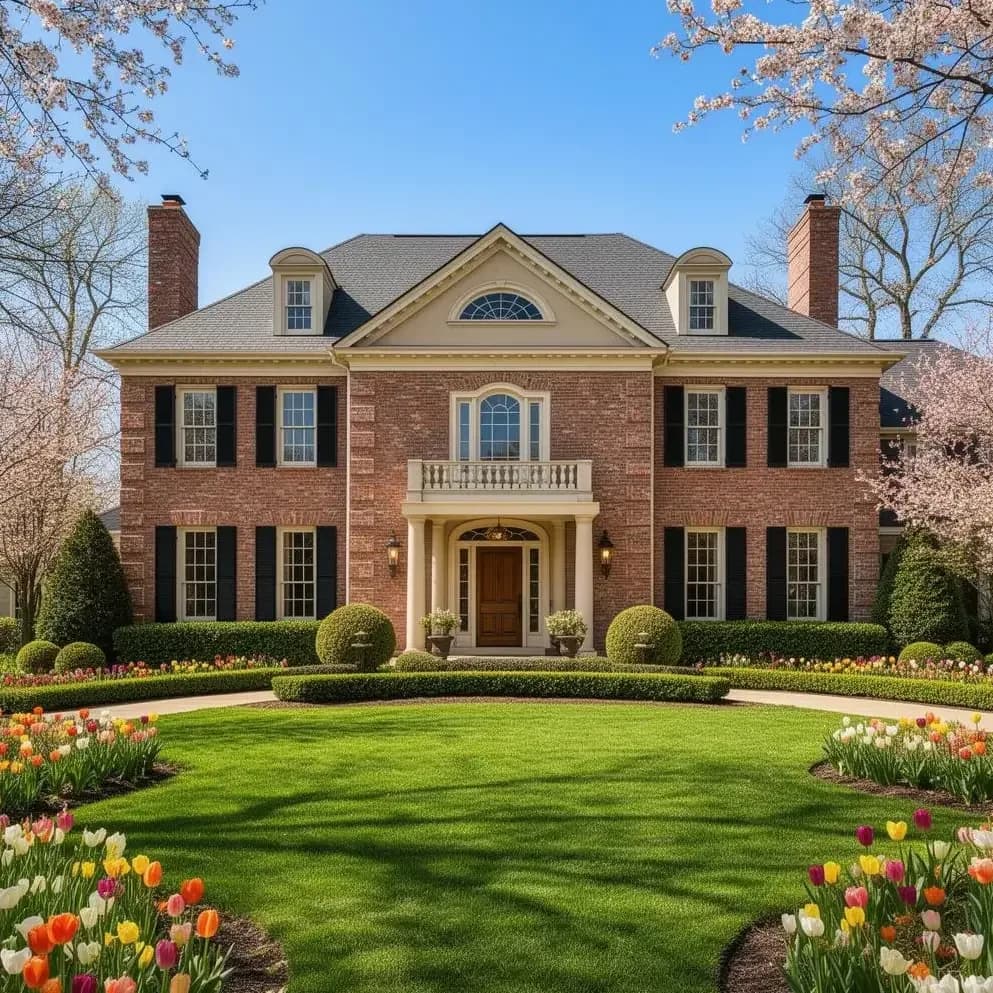
You think your home is worth $2.5 million. Zillow says $2.1 million. Your neighbor sold for $2.8 million last year, but their house had a pool and yours does not. So what is your Atlanta luxury home actually worth? The answer matters more than most sellers realize, because the number you start with determines everything that follows: how you price, how long you sit on the market, and how much money you walk away with at closing.
In the general housing market, pricing errors of 3% to 5% are usually absorbed by volume. There are enough buyers that the market corrects itself quickly. But in Atlanta's luxury segment, above $1 million, the buyer pool is dramatically smaller. For any given home above $1.5 million in metro Atlanta, the pool of active, qualified buyers is small at any moment. Overprice by 10% and you may lose half of them before a single showing.
A pre-listing assessment is the process of determining your home's actual market value before you go live on the MLS. It is the single most important step in the selling process, and it is the one that most sellers either skip or do poorly. This guide covers exactly how pre-listing assessments work for luxury homes in Atlanta, why automated estimates fail at this price point, and how to use the assessment process to maximize your starting position.
Why Zillow and Redfin Estimates Fail for Luxury Homes
Zillow's Zestimate and Redfin's Estimate are useful tools for homes in the $300,000 to $600,000 range where there are abundant comparable sales and relatively standardized features. At the luxury level, these algorithms break down for several specific reasons.
First, the data is thin. Automated valuation models (AVMs) work by analyzing recent sales of similar properties. In a subdivision where 30 homes sell per year, all built by the same builder with similar floor plans, the algorithm has plenty of data points. In Buckhead, where a $3 million estate might have only 2 to 4 comparable sales within a mile radius over the past 12 months, the algorithm is guessing.
Second, AVMs cannot see inside your home. They know the square footage, lot size, year built, and number of bedrooms and bathrooms from public records. But they do not know that you spent $200,000 on a custom kitchen renovation, that your primary suite has hand-laid Italian marble, or that your outdoor living space features a professional-grade kitchen and heated infinity pool. They also do not know that the comparable sale down the street had original 1990s finishes and a roof that needed replacing.
Third, luxury homes are not commodities. A 4,500-square-foot home in Brookhaven with a flat, private backyard backing to a park is worth meaningfully more than a 4,500-square-foot home on the same street backing to a commercial property, even though the algorithm sees them as nearly identical.
Where Automated Estimates Go Wrong
- Limited comparable data: AVMs need volume to be accurate. Luxury homes have low transaction volume, so the algorithm relies on less relevant sales from further away or longer ago, compounding the error.
- No interior quality assessment: A builder-grade kitchen and a $150,000 custom renovation look the same to the algorithm. Finishes, materials, and design quality are invisible to automated tools but account for significant value differences in luxury homes.
- Lot and privacy factors: Backing to trees versus backing to a road, a flat yard versus a steep slope, a cul-de-sac versus a through street. These factors create 10% to 20% value differences that AVMs routinely miss.
- Unique features are invisible: Guest houses, wine cellars, home theaters, motor courts, sport courts, and resort-style pools are high-value features that do not fit neatly into the algorithm's model.
- Market timing lag: AVMs update periodically but can lag behind rapid market shifts. In a market where luxury home values shifted 5% in a quarter, the algorithm may still reflect last quarter's reality.
Zillow itself acknowledges this limitation. The company reports a median error rate of roughly 6% to 8% nationally, but that is the median. For luxury homes, the error rate is often 15% to 25%. On a $2.5 million home, a 20% error means the Zestimate could be off by $500,000. That is not a rounding error. That is the difference between selling well and leaving a significant amount of money on the table, or overpricing and watching your listing go stale.
How a Luxury CMA Works for $1M+ Properties
A Comparative Market Analysis for a luxury home is not the same as a CMA for a $400,000 home. At the general market level, an agent can pull five comparable sales from the same subdivision, adjust for square footage and lot size, and arrive at a defensible price in an afternoon. For luxury properties, the process is more nuanced, more time-intensive, and requires specific expertise in the high-end segment.
A thorough luxury CMA starts with comparable sales from the past 6 to 12 months, but the definition of "comparable" is much stricter. The agent needs to find homes that match not just in size and bedroom count, but in quality level, lot characteristics, architectural style, and neighborhood micro-location. In Sandy Springs, a renovated mid-century modern on a one-acre lot is not comparable to a traditional colonial on a third of an acre, even if both are 5,000 square feet and five bedrooms.
Beyond recent sales, a luxury CMA examines active competition. How many homes are currently listed in your price range and area? What do they offer? How long have they been on the market? If there are four active listings between $2 million and $2.5 million in your neighborhood, your home needs to be priced to compete with those specific properties, not just with historical sales data.
The CMA should also include expired and withdrawn listings. Homes that were listed but did not sell tell you something important: what the market rejected. If three homes in your price range failed to sell in the past year, the CMA should examine why, because those same conditions may affect your listing. Understanding what the market would not pay is as important as understanding what it did pay. For a deeper look at the mechanics, see our appraisal guide for Atlanta luxury homes.
Pre-Listing Appraisal vs. Agent CMA: Which Do You Need?
Both a CMA and a pre-listing appraisal serve the same core purpose: determining what your home is worth. But they approach it differently, and for luxury homes, there are specific situations where one is more appropriate than the other.
Agent CMA
Prepared by your listing agent, typically at no cost. Focuses on what the home will sell for in the current market based on comparable sales, active competition, and the agent's knowledge of buyer demand. A good luxury CMA is market-facing: it tells you not just what the data says, but how buyers are likely to respond based on the agent's experience showing and selling in your area. The CMA should be the primary tool for setting your list price.
Pre-Listing Appraisal
Conducted by a licensed, independent appraiser. Costs $750 to $2,000 for luxury homes. Produces a formal valuation report using standardized methodology. The appraisal is particularly valuable when there are few comparable sales, when the home has significant unique features, when there is a disagreement between spouses or partners about value, or when you anticipate that the buyer's lender-ordered appraisal may be a challenge. Having a pre-listing appraisal gives you a defensible, third-party valuation to reference during negotiations.
When You Need Both
For homes above $2.5 million, homes with extensive custom work, or properties with limited comparable sales, we recommend getting both a CMA and a pre-listing appraisal. The CMA gives you market intelligence. The appraisal gives you a defensible valuation. Together, they create a pricing strategy built on data rather than hope. The cost of the appraisal is trivial compared to the cost of mispricing a luxury home by even 5%.
The Factors That Actually Drive Luxury Home Value in Atlanta
In the general market, value is largely driven by square footage, bedroom count, and location. In the luxury market, the equation is more complex. Understanding which factors move the needle, and by how much, is essential for setting the right price and knowing where to invest before listing.
Primary Value Drivers
- Location and neighborhood prestige: This is the single biggest value driver in luxury real estate and the one factor you cannot change. A home in Buckhead's Tuxedo Park or Chastain Park neighborhoods carries a premium over comparable homes in less established areas. Location drives a large share of value variance in the Atlanta luxury market.
- Lot size, topography, and privacy: In Atlanta's luxury market, the lot often matters as much as the house. A flat, usable one-acre lot with mature hardwoods and no visible neighbors is a premium asset. Steep terrain, drainage issues, or proximity to commercial development subtract value. Homes backing to parks, golf courses, or protected green space consistently command 10% to 15% premiums over comparable homes on standard lots.
- Interior finishes and materials: Custom millwork, imported stone, wide-plank hardwood floors, designer lighting, and high-end appliance packages (Sub-Zero, Wolf, Thermador) signal quality that buyers recognize. A recently renovated kitchen with top-tier finishes can add $100,000 to $200,000 in perceived and actual value over a dated but functional kitchen of the same size. See our guide on the best upgrades to boost home value in Atlanta.
- Outdoor living and views: Atlanta's climate supports year-round outdoor living, and luxury buyers expect it. A well-designed outdoor space with a pool, covered patio, outdoor kitchen, and mature landscaping can add 5% to 10% to a home's value. Views, whether of a city skyline, rolling hills, or a wooded ravine, add measurable premiums. Our spring curb appeal guide covers how to maximize exterior presentation.
- Architectural integrity and design: Homes designed by recognized architects or built by reputable custom builders carry a premium. The architectural style should be cohesive, not a collection of trendy additions bolted onto a dated core. Buyers at this level recognize and pay for thoughtful design, quality construction, and spaces that flow logically.
Secondary factors also matter: school district quality (particularly for Alpharetta and North Fulton buyers who prioritize schools), smart home technology, energy efficiency, and the overall condition of the home. But the primary drivers listed above account for the vast majority of value differences between luxury homes in the same general area.
Why Price Per Square Foot Is Misleading in Luxury
Price per square foot is the most commonly cited metric in real estate, and it is one of the most misleading for luxury homes. Sellers love to use it. Buyers use it to argue for lower prices. And neither side is usually using it correctly.
The problem is that price per square foot treats all square footage as equal. But in a luxury home, it is not. A square foot of custom kitchen with quartzite counters and integrated appliances is not the same as a square foot of unfinished bonus room over the garage. A 7,000-square-foot home with 2,000 square feet of it in a partially finished terrace level is not directly comparable to a 5,000-square-foot home where every square foot is above grade with nine-foot ceilings and premium finishes.
In metro Atlanta's luxury market, price per square foot for homes above $1 million ranges from roughly $250 to $600 or more, depending on neighborhood, quality, and lot characteristics. A renovated estate in Tuxedo Park might sell for $550 per square foot while a similar-sized home in a less prestigious pocket sells for $320 per square foot. Both prices are "right" for their respective contexts.
The correct way to use price per square foot is as one data point among many, not as a pricing formula. Your agent's CMA should use it for context but should never rely on it exclusively. The pricing strategy for luxury homes requires a much more nuanced approach that accounts for the specific qualities that make your home unique.
How to Prepare for Your Pre-Listing Assessment
Whether you are working with an agent on a CMA or hiring an appraiser, the quality of the assessment depends partly on the information you provide. Luxury homes have features that do not appear in public records, and it is your job to make sure the assessor knows about them.
Compile Your Improvement History
Create a detailed list of every significant improvement you have made, including the year, cost, and scope. Kitchen renovation, 2023, $120,000, including new cabinetry, countertops, appliances, and lighting. Roof replacement, 2022, $35,000. Pool and outdoor kitchen, 2021, $85,000. This gives the assessor concrete data about the quality and recency of upgrades, which directly affects value.
Document Unique Features
Make a list of features that set your home apart: custom closet systems, whole-house generator, elevator, wine cellar, home theater, sport court, guest house, or any other feature that would not be obvious from a quick walkthrough. Include brand names where relevant. A Lutron whole-house lighting system or Savant smart home system adds value that a generic "smart home features" description does not capture.
Know Your Lot's Story
If your lot has attributes that add value, make sure the assessor knows: survey dimensions, mature tree inventory, creek frontage, views, adjacency to parks or protected land, topography advantages (flat and usable versus steep and unusable), and any easements or restrictions that affect usability.
Gather Existing Documentation
Pull together your most recent property tax statement, the original builder's plans or floor plans if available, the survey, HOA documents if applicable, and any warranties that transfer to the buyer (roof, HVAC, appliances). The more information the assessor has, the more accurate and defensible the valuation will be.
Strategic Improvements: What to Fix Before You List
Once you have your pre-listing assessment, you have a baseline. The next question is whether strategic improvements can move that number meaningfully higher. The answer is almost always yes, but the key word is strategic. Not every dollar you spend before listing comes back at closing. The goal is to invest in improvements that deliver a 2x to 4x return, not to renovate the entire house.
The assessment itself should guide this decision. If your home is valued at $2.2 million and a $30,000 kitchen refresh could push it to $2.35 million or higher, that is a clear investment. If the assessment shows that your value ceiling is capped by location rather than by condition, spending $100,000 on renovations may not be justified. This is one of the primary reasons to get the assessment first, before writing any checks.
The improvements that consistently deliver the highest ROI in Atlanta's luxury market are: fresh neutral interior paint ($5,000 to $15,000), updated lighting fixtures ($3,000 to $10,000), refinished hardwood floors ($5,000 to $12,000), professional landscaping refresh ($5,000 to $20,000), and kitchen updates that do not involve a full gut renovation, such as new countertops, cabinet refinishing, and updated hardware ($15,000 to $40,000). For a full breakdown, see our guide on the best upgrades to boost home value.
Avoid major structural renovations, full bathroom guts, and highly personal design choices (bold paint colors, niche finishes) right before listing. These are expensive, time-consuming, and may not align with buyer preferences. The smartest pre-listing improvements are ones that make the home feel fresh, well-maintained, and move-in ready without overspending. For presentation, professional staging often delivers a better return per dollar than physical renovations.
Pre-Listing Repairs: Fix It Now or Negotiate Later
Every luxury home has items that need attention. The question is whether to fix them before listing or let the buyer's inspection reveal them. In almost every case, fixing known issues before listing is the better strategy. Here is why.
When a buyer's inspector flags an issue, it becomes a negotiation point. A roof repair that would cost you $3,000 to fix proactively will turn into a $10,000 to $15,000 credit request from the buyer, because the buyer will get quotes from their own contractors and add a margin of uncertainty. Even worse, inspection findings create doubt. One unexpected issue makes the buyer wonder what else is wrong. Three unexpected issues can kill a deal entirely.
We recommend a pre-listing home inspection ($500 to $800) conducted before you begin any repairs or improvements. This gives you a complete picture of the home's condition and lets you address issues on your terms, with your contractors, at your prices. Per the American Society of Home Inspectors, 86% of home inspections identify at least one issue. For older luxury homes, that number is closer to 100%. Knowing what a buyer's inspector will find and addressing it in advance eliminates objections and keeps negotiations focused on price rather than repairs. For a broader look at common selling pitfalls, read our guide on the five mistakes Atlanta home sellers make.
Using the Assessment to Set Your Pricing Strategy
The assessment gives you a value. Your pricing strategy determines how you use that value to attract the right buyers and maximize your sale price. These are two different things, and confusing them is one of the most common mistakes sellers make when listing luxury homes.
If your assessment indicates a value of $2.4 million, that does not automatically mean you should list at $2.4 million. Depending on market conditions, competition, and your timeline, you might list at $2.35 million to generate more showings and potentially attract multiple offers. Or you might list at $2.45 million if the market is trending up and inventory is low.
The assessment also helps you set expectations about what to accept. If the data supports $2.4 million and a buyer offers $2.15 million, you have the data to counter at a level the market supports. If you are negotiating without an assessment, you are negotiating based on feelings rather than facts, and luxury buyers and their agents will take advantage of that.
Additionally, understand the tax implications of your sale. The price you accept affects your capital gains calculation, especially if you have owned the home for a long time or made significant improvements. Review our guide to capital gains tax when selling a home in Georgia so you can factor net proceeds into your pricing decisions.
The Bottom Line
A pre-listing assessment is not a formality. It is the foundation of your entire selling strategy. It tells you what your home is worth, where the value comes from, what improvements will move the number, and how to price for maximum results. Skipping this step, or relying on Zillow's best guess, is one of the most expensive shortcuts a luxury home seller can take.
The best time to get a pre-listing assessment is 8 to 12 weeks before your target listing date. That gives you time to receive the assessment, make strategic improvements based on the findings, complete any pre-listing repairs, stage the home, and launch with a price that is grounded in data and positioned to attract qualified buyers.
Whether you are selling a $1.2 million home in Brookhaven or a $4 million estate in Buckhead, the process starts with knowing exactly what you have. Not what you hope it is worth. Not what a website estimates. What the market will actually pay, based on real data and professional analysis. Reach out to our team to schedule a confidential pre-listing assessment and start the process of positioning your home for the best possible outcome.
What Is Your Luxury Home Actually Worth?
We provide detailed, data-driven pre-listing assessments for luxury homes across metro Atlanta. Know your starting position before you make any decisions.
Frequently Asked Questions
How accurate is Zillow's Zestimate for luxury homes in Atlanta?
Zillow's own data shows that its Zestimate has a median error rate of approximately 6% to 8% nationally, but for luxury homes that number is often significantly higher. In the Atlanta luxury market, Zestimates can be off by 15% to 25% or more because the algorithm relies on public data and recent sales of similar homes. When there are few truly comparable sales, which is common above $1.5 million, the algorithm fills in gaps with less relevant data. A $2 million home with a 20% error means the estimate could be off by $400,000 in either direction. That is why a professional CMA or pre-listing appraisal is essential before pricing a luxury home.
What is the difference between a CMA and an appraisal?
A Comparative Market Analysis (CMA) is prepared by a licensed real estate agent and uses recent comparable sales, active listings, and market trends to estimate a home's market value. It is typically free when provided by a listing agent and is focused on what the home will sell for in the current market. An appraisal is conducted by a licensed, independent appraiser and produces a formal valuation document. Appraisals cost $500 to $1,500 or more for luxury homes and are required by lenders when a buyer uses financing. Both are valuable, but they serve different purposes. A CMA tells you what the market will pay. An appraisal tells you what the home is worth based on a standardized methodology. For pre-listing purposes, most luxury sellers benefit from both.
How much does a pre-listing appraisal cost in Atlanta?
A pre-listing appraisal for a luxury home in Atlanta typically costs between $750 and $2,000, depending on the size and complexity of the property. Homes above $3 million or those with unique features like guest houses, significant acreage, or custom construction may cost more because the appraiser needs additional time and may need to search a wider geographic area for comparable sales. While this is an out-of-pocket expense, it provides an independent, defensible valuation that can be used during negotiations and can help avoid pricing mistakes that cost far more than the appraisal fee.
What factors most affect the value of a luxury home in Atlanta?
The primary value drivers for luxury homes in metro Atlanta are location and neighborhood prestige, lot size and privacy, architectural quality and design, interior finishes and materials, outdoor living spaces, renovation recency and quality, school district (a top priority for many buyers), and proximity to amenities like golf courses, parks, and shopping. In neighborhoods like Buckhead, Brookhaven, and Sandy Springs, specific micro-locations within the neighborhood can create significant value differences. A home on a quiet cul-de-sac with mature trees and no rear neighbors may be worth 10% to 20% more than a comparable home on a busier street with less privacy, even within the same subdivision.
Should I get a pre-listing assessment before making improvements?
Yes. A pre-listing assessment should be your first step, before you spend any money on repairs, upgrades, or staging. The assessment establishes your baseline value and helps identify which improvements will actually increase the sale price versus which ones are unlikely to deliver a return. For example, a $50,000 kitchen renovation might add $60,000 to $70,000 in value for a home in Buckhead, but only $30,000 in a less competitive market. Without knowing your starting position, you risk over-investing in improvements that do not move the needle or under-investing in areas that would have made a meaningful difference.
How long does a pre-listing assessment take?
A thorough pre-listing CMA from a luxury real estate agent takes 3 to 7 days to prepare properly. The agent needs to research comparable sales, tour the property, analyze active competition, review market trends, and compile the data into a detailed presentation. A pre-listing appraisal typically takes 1 to 3 weeks from scheduling to receiving the final report, depending on the appraiser's availability and the complexity of the property. Rushing either process leads to less accurate results. Plan to have your assessment completed at least 6 to 8 weeks before your target listing date so you have time to act on the findings.
What is price per square foot and why is it misleading for luxury homes?
Price per square foot is calculated by dividing the sale price by the total heated square footage. While it is a useful general metric, it can be highly misleading in the luxury market. A 6,000-square-foot home that sells for $1.8 million has a price per square foot of $300. But a 4,000-square-foot home with a superior lot, better finishes, a pool, and a three-car garage might sell for $1.6 million, or $400 per square foot. The smaller home is worth more per foot because of its quality and features, not because the larger home is undervalued. Luxury buyers do not buy square footage. They buy lifestyle, location, and quality. Use price per square foot as a starting point for comparison, but never as the sole basis for pricing a luxury home.
Can I use my tax assessment to determine my home's market value?
No. Tax assessments in Fulton, DeKalb, Cobb, and Gwinnett counties are conducted for the purpose of calculating property taxes, not for determining market value. In Georgia, the assessed value is typically 40% of the fair market value as determined by the county assessor, but the assessor's estimate of fair market value often lags behind actual market conditions by 1 to 3 years. It is not uncommon for a luxury home's tax assessed fair market value to be 15% to 30% below or above what the home would actually sell for in the current market. Tax assessments are not a reliable indicator of what a buyer will pay.


Sources
- FMLS (First Multiple Listing Service) - Metro Atlanta luxury home transaction volume, days on market data, absorption rates, list-to-sale price ratios, and price per square foot ranges for homes above $1 million.
- Zillow - Published Zestimate accuracy data and median error rates. Zillow reports a national median error rate of approximately 6% to 8%, with higher error rates acknowledged for unique and luxury properties with limited comparable sales.
- National Association of Realtors (NAR) - Buyer search behavior statistics (97% internet usage), home staging impact data, and market trend analysis for luxury price segments.
- American Society of Home Inspectors (ASHI) - Pre-listing inspection statistics, including the finding that 86% of home inspections identify at least one issue that could affect a transaction.
- Georgia Department of Revenue - Property tax assessment methodology, including the 40% assessment ratio applied to fair market value for Georgia residential properties and county-level assessment timing.
Market data, pricing benchmarks, and ROI estimates referenced in this article are based on general market conditions and industry reports as of early 2026. Individual results will vary based on property specifics, market conditions at the time of sale, agent performance, and buyer demand. These figures should not be interpreted as guarantees of sale price, timeline, or financial return.
Disclaimer: This article is for informational purposes only and does not constitute financial, investment, or real estate advice. Home valuations, sale prices, timelines, ROI estimates, and market conditions described in this article are based on general market data and are not guarantees of results. Individual outcomes will vary based on property condition, location, market conditions, pricing accuracy, and agent performance. Automated valuation model accuracy varies by property and location. Consult with a licensed real estate professional for advice specific to your property and situation.