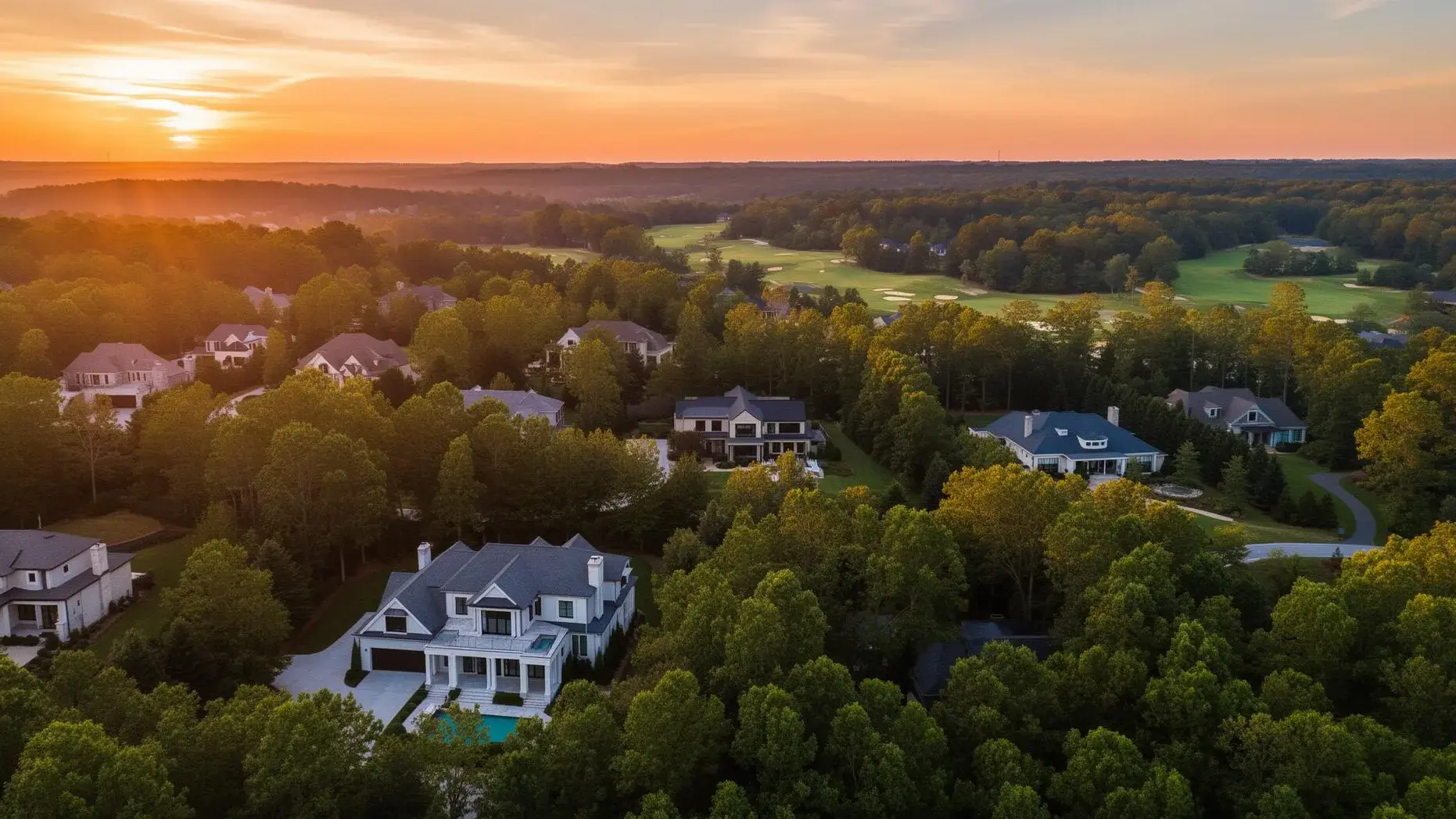
Two million dollars. In New York City, it buys you a nice apartment. In Atlanta, it buys you an estate. That single sentence summarizes one of the most dramatic real estate value gaps in the country right now, and it is reshaping where affluent Americans choose to live.
In 2025, Georgia saw a 34% increase in relocations from the New York metro area, and the pace has only accelerated into 2026. Remote work normalized. State tax burdens became impossible to ignore. And buyers started doing the math on what their money could actually buy outside the five boroughs.
I have worked with more than 30 families this year alone relocating from the Northeast to Atlanta. The reaction is always the same: stunned silence when they see the listings. Let me show you exactly why.
For the full picture beyond housing, our New York to Atlanta relocation guide compares taxes, cost of living, neighborhoods, and schools side by side.
Note: All figures below are estimates based on current market conditions and typical properties in each area. Actual prices vary by specific location, property condition, and market timing. Use our calculator for personalized estimates.
$2M in Manhattan: The 900 Sq Ft Reality
Let us start with the borough everyone thinks of first. In Manhattan, $2 million in 2026 gets you a one- or two-bedroom condo in a desirable neighborhood like the Upper West Side, Tribeca, or Chelsea. We are talking about roughly 800 to 1,000 square feet of living space, a doorman building if you are lucky, and monthly HOA fees that could run $2,000 to $4,000 on top of your mortgage.
No outdoor space beyond a Juliet balcony. No garage; parking in Manhattan runs $500 to $800 per month. Storage is a luxury you will pay extra for. And that $2M price tag does not include the city's mansion tax (1% on sales over $1M) or the state transfer taxes that add another $20,000 to $40,000 at closing.
For buyers who need bedrooms, Manhattan at this price point is particularly brutal. A two-bedroom leaves no room to spare. A three-bedroom in a decent school zone? You are looking at $3M minimum, and even then it will be under 1,500 square feet.
$2M in Brooklyn: More Space, Still Compromising
Cross the river and $2M stretches further, but not as far as you might think. In neighborhoods like Park Slope, Carroll Gardens, or Brooklyn Heights, your budget gets you a renovated brownstone floor-through or a small townhouse. Expect around 1,200 to 1,500 square feet of living space across two or three levels.
A full brownstone in these neighborhoods? That is $3.5M to $5M territory. At $2M, you are more likely looking at a condo conversion within a brownstone, maybe a duplex if the building needs work. You might get a small backyard, which in Brooklyn qualifies as a major luxury. Parking is still a nightmare, schools are a zip code lottery, and property taxes on a $2M Brooklyn property run $18,000 to $24,000 per year.
Brooklyn buyers at this price point typically want more character than a Manhattan high-rise but accept they are still living in tight quarters by national standards.
$2M in Westchester: Suburban Tax Shock
Many New Yorkers assume the suburbs will deliver better value. Westchester County, the most popular suburban escape, tells a more complicated story. In Scarsdale, Bronxville, or Rye, $2M buys a modest Colonial or Cape Cod: 2,500 to 3,000 square feet on a quarter-acre lot. Often built in the 1930s through 1960s with outdated kitchens and bathrooms that need another $200K to $400K in renovations.
And then there are the property taxes. Westchester County has some of the highest property taxes in the nation. A $2M home in Scarsdale? Expect $45,000 to $55,000 per year in property taxes alone. That is $3,750 to $4,500 every single month before you make a mortgage payment, buy groceries, or fill up the car.
Add in New York State income tax (up to 10.9%) plus New York City income tax if you still work in the city (up to 3.876%), and the financial picture gets heavy fast. A household earning $500K is paying roughly $70,000 to $75,000 per year in state and local income taxes before federal.
The $2M Side-by-Side Comparison
Typical examples based on current 2026 market data
New York Metro
Manhattan
- 1-2 bed condo, 800-1,000 sq ft
- $2,000-$4,000/mo HOA fees
Brooklyn
- Brownstone floor-through, 1,200-1,500 sq ft
- $18,000-$24,000/yr property tax
Westchester
- Modest colonial, 2,500-3,000 sq ft
- $45,000-$55,000/yr property tax
Atlanta Metro
Buckhead
- 5-6 bed estate, 5,500-6,500 sq ft
- $12,000-$16,000/yr property tax
Sandy Springs
- New construction, 5,000-6,000 sq ft
- Smart home, pool, 3-car garage
Alpharetta
- Estate on 1+ acres, 6,000-7,500 sq ft
- Pool, guest suite, finished basement
$2M in Buckhead: The Estate You Thought You Could Not Afford
Now let us cross the Mason-Dixon line and see what happens. Buckhead is Atlanta's most established luxury neighborhood, the kind of address that carries weight in business and social circles. Think of it as Atlanta's answer to Greenwich or the Upper East Side, except your money goes five to six times further.
At $2M in Buckhead, you are looking at a 5,500 to 6,500 square foot estate home on a half-acre or more. Five to six bedrooms, four to five full bathrooms, a chef's kitchen with professional-grade appliances, hardwood floors throughout, and a primary suite that is larger than most Manhattan apartments.
Step outside and you will find a resort-style pool, covered outdoor kitchen, manicured landscaping with mature trees, and a three-car garage. Many Buckhead homes at this price point sit on quiet, tree-lined streets minutes from Lenox Square, Phipps Plaza, and some of the best dining in the Southeast.
Property taxes on a $2M Buckhead home? Roughly $12,000 to $16,000 per year. That is less than a third of what you would pay in Westchester for a home half the size. The savings alone could fund a luxury vacation every year. For buyers wondering about the full financial picture, our guide on income requirements for Atlanta luxury homes breaks down the numbers in detail.
$2M in Sandy Springs: New Construction, Zero Compromises
Sandy Springs has become one of the hottest destinations for New York transplants, and it is easy to see why. At $2M, you are getting brand-new construction: 5,000 to 6,000 square feet of modern luxury with every upgrade you can imagine.
Think open floor plans with 10-foot ceilings, white oak hardwood floors, Thermador or Wolf appliance suites, quartz waterfall islands, spa-like primary bathrooms with heated floors, and whole-home smart systems. These are the kinds of finishes that would push a Manhattan condo to $5M or more.
Sandy Springs also offers something New Yorkers rarely experience: a genuine sense of community within a city that has its own downtown, parks, and cultural amenities. The city has invested heavily in walkable mixed-use development, greenspace, and infrastructure. You get suburban space with urban convenience, a combination that simply does not exist in the New York metro at any price point.
Top-rated schools, proximity to major employers, and easy access to GA-400 make Sandy Springs especially attractive to families with one spouse commuting and one working remotely. It is no surprise that Fortune 500 demand has been a major driver of home values here.
$2M in Alpharetta: The Estate on Acreage
If Buckhead is Atlanta's Upper East Side and Sandy Springs is its Tribeca, then Alpharetta is its Greenwich, except at a fraction of the price. This is where $2M truly becomes absurd in the best possible way.
At this price point in Alpharetta, you are looking at a 6,000 to 7,500 square foot estate on one to two acres of land. Six or seven bedrooms, a finished basement with home theater, wine cellar, and gym. A saltwater pool with an outdoor fireplace and covered pavilion. A separate guest suite or in-law apartment. A four-car garage. And these are not unusual listings; this is the standard expectation at $2M in north Fulton County.
Alpharetta also sits at the center of Georgia's Technology Corridor, with major offices for Microsoft, Amazon, and dozens of other firms within a 15-minute drive. Avalon, the area's upscale mixed-use development, gives you walkable shopping and dining that rivals anything in the New York suburbs. Schools in the Alpharetta and Milton clusters consistently rank among the top in Georgia.
For New York families used to paying a premium for space and good schools, Alpharetta feels almost unfair. Our smart money neighborhoods guide explains why investors and relocators keep gravitating here.
The Tax Savings That Change Everything
The home price gap is dramatic, but the tax differential is where New York-to-Atlanta relocations go from smart to transformative. Let us walk through the numbers for a household earning $500K, a common income level among families making this move.
State and Local Income Tax
New York State's top marginal rate is 10.9%. If you live in New York City, add another 3.876% for city income tax. That is a combined state and local income tax rate of up to 14.776%. Georgia's flat rate? 4.99% as of 2026, after recent reductions. For a $500K household income, that is roughly $45,000 to $50,000 per year in income tax savings alone.
Property Tax Comparison
This is where the gap becomes almost comical. Here is what property taxes look like on a $2M home in each area:
- Manhattan co-op/condo: $20,000-$30,000/year (plus $24,000-$48,000 in HOA/maintenance)
- Brooklyn townhouse: $18,000-$24,000/year
- Westchester (Scarsdale): $45,000-$55,000/year
- Buckhead, Atlanta: $12,000-$16,000/year
- Sandy Springs: $11,000-$15,000/year
- Alpharetta: $10,000-$14,000/year
A family moving from Westchester to Brookhaven or Sandy Springs could save $30,000 to $40,000 per year in property taxes alone. Over a decade, that is $300,000 to $400,000 in savings, enough to fund college tuition, accelerate retirement, or simply enjoy life more.
Annual Savings Estimate: NYC to Atlanta ($500K Household Income)
$136,000
Estimated annual savings
Important: These are estimates based on a typical relocating family comparing Westchester to Atlanta metro. Savings from Manhattan or Brooklyn vary based on HOA structures and specific tax situations. Use our calculator for personalized numbers.
Beyond the Numbers: The Lifestyle Upgrade
Money is only part of this equation. The lifestyle shift from New York to Atlanta is just as dramatic as the financial one, and it is often what tips families from considering the move to actually making it.
Space to breathe. Your kids will have a backyard for the first time. You will have a home office that is not also your bedroom. Hosting Thanksgiving will not require rearranging furniture. This sounds trivial until you have lived in 1,000 square feet with a family of four.
Commute transformation. The average Atlanta commute is 28 minutes by car. Compare that to the 45-minute subway ride from Brooklyn to Midtown, assuming no delays. Many Atlanta luxury neighborhoods put you 15 to 20 minutes from major business districts. And with remote work, many transplants barely commute at all.
Airport access. Hartsfield-Jackson is the world's busiest airport with direct flights everywhere, and most Atlanta luxury neighborhoods are 20 to 35 minutes away. For frequent business travelers, this alone is a quality-of-life upgrade. Direct flights to LaGuardia and JFK run hourly, making it easy to maintain New York business relationships.
Dining and culture. Atlanta's restaurant scene has exploded. Buckhead and Midtown offer dining that rivals Brooklyn and Lower Manhattan, from James Beard nominees to world-class sushi and steakhouses. The High Museum, Atlanta Symphony, and a thriving arts district mean you are not giving up culture, you are discovering a different version of it.
For a deeper look at the adjustment period, our guide on what nobody tells you about moving to Atlanta covers the surprises, both good and bad, that transplants encounter in their first year.
The Honest Trade-Offs
I would be doing you a disservice if I only painted the rosy picture. Atlanta is exceptional, but it is not New York, and some things cannot be replicated.
Walkability. If you currently walk everywhere in Manhattan or brownstone Brooklyn, Atlanta will be an adjustment. This is a car-centric city. MARTA exists but does not offer the same coverage as the MTA. Neighborhoods like Buckhead and Midtown are becoming more walkable, but you will need a car.
Summers. July and August in Atlanta are hot and humid. There is no sugarcoating it. You will run air conditioning from May through September. The trade-off is gorgeous springs and falls, mild winters with no snow shoveling, and outdoor living eight to nine months of the year.
Cultural density. New York has an unmatched concentration of world-class museums, Broadway, and late-night culture. Atlanta has excellent options but not at the same density. You will find yourself being more intentional about cultural experiences rather than stumbling into them.
The energy. New York has an electric, frenetic energy that some people thrive on. Atlanta's pace is different: warm, friendly, and more relaxed. Whether that is a pro or a con depends entirely on what stage of life you are in. Most transplants find Atlanta's pace to be exactly what they needed, even if they did not know it yet.
For a detailed market comparison with another popular relocation destination, see our Atlanta vs Nashville luxury real estate analysis.
Where New York Buyers Land in Atlanta
Based on working with dozens of New York transplants, here is how different profiles tend to match with Atlanta neighborhoods:
Manhattan executives seeking prestige: Buckhead. The country club culture, established wealth, and proximity to fine dining and high-end shopping feel familiar. Buckhead's tree-lined estates offer the elegance Manhattan buyers expect, with ten times the space.
If you are coming from Brooklyn: Brookhaven or Midtown. Walkable pockets, trendy restaurants, and a more progressive, urban feel. Brookhaven in particular attracts former Brooklyn residents who want community, parks, and modern homes without losing their urban identity.
Westchester families prioritizing schools and space: Alpharetta or Sandy Springs. Top-rated public schools, new construction, and the suburban lifestyle they are accustomed to, but at a third of the cost with twice the home. Our neighborhood map for Northeast buyers with a $2 million budget compares these areas in more detail.
Finance professionals who travel frequently: Sandy Springs or Buckhead. Easy airport access, proximity to the growing Atlanta financial sector, and homes that impress colleagues and clients. The California-to-Atlanta comparison reveals a similar pattern among West Coast transplants.
Making the Move: What I Tell Every New York Client
After helping more than 30 New York families relocate this year, I have developed a playbook that consistently leads to happy outcomes.
1. Visit in July. Come see Atlanta when it is 95 degrees and humid. If you can picture yourself living here at the city's worst, you will love the other ten months. Too many buyers visit in October and are unprepared for their first Georgia summer.
2. Consider renting for six months. Atlanta neighborhoods have distinct personalities that are hard to understand from a weekend visit. Renting lets you test your commute, find your grocery store, discover your favorite coffee shop, and make a confident purchasing decision.
3. Do not try to replicate New York. The buyers who love Atlanta are the ones who embrace what makes it different. You did not move here for the subway. You moved here for the backyard, the space, the pace, and the financial freedom that comes with keeping an extra $100K-plus per year.
4. Work with an agent who understands the transition. A local agent who has helped New York families before knows the questions you will have, the neighborhoods that match your energy, and how to translate your priorities from New York real estate language into Atlanta options.
The buyers who thrive here are the ones who came ready for a genuinely different chapter, not a cheaper version of what they left behind, but something better in ways they did not expect.
Frequently Asked Questions
What does $2 million buy in Atlanta compared to New York City?
In Atlanta, $2 million typically buys a four- to six-bedroom estate with 4,000 to 7,000 square feet, a large lot, pool, finished basement, and multi-car garage in a premier neighborhood. In New York City, the same budget generally gets a one- to two-bedroom apartment in Manhattan or a modest brownstone in Brooklyn, often with significantly less space and no private outdoor area.
How much lower are property taxes in Atlanta than NYC?
Property taxes in metro Atlanta typically range from 0.8% to 1.2% of assessed value, and Georgia offers homestead exemptions that further reduce the bill. In New York City, effective property tax rates on luxury properties can be comparable, but the much higher purchase prices mean the dollar amount paid in taxes is substantially larger for an equivalent home.
Is Atlanta a good city for New Yorkers to relocate to?
Atlanta is one of the top destinations for New Yorkers relocating in 2026. The city offers a major international airport with direct flights back to NYC, a thriving cultural and dining scene, significantly more living space per dollar, lower overall cost of living, and a warmer climate. Many former New Yorkers settle in Buckhead, Midtown, or Decatur for a familiar urban energy.
What are the best Atlanta neighborhoods for NYC transplants?
Midtown Atlanta appeals to those who want walkability and a high-rise lifestyle similar to Manhattan. Buckhead offers luxury estates with a more suburban feel while staying close to restaurants and shopping. Virginia-Highland and Inman Park attract buyers who love Brooklyn's brownstone-neighborhood character. Sandy Springs suits buyers seeking top schools and more space.
How does Atlanta's cost of living compare to New York City?
Atlanta's overall cost of living is roughly 30% to 50% lower than New York City's, depending on lifestyle. Housing is the biggest difference, but groceries, dining, transportation, and childcare are also notably less expensive. Many relocating New Yorkers find they can maintain or improve their quality of life while spending significantly less.
Can I keep my NYC job and work remotely from Atlanta?
Many professionals have successfully relocated to Atlanta while keeping New York-based jobs. However, tax implications matter: Georgia will tax income earned while residing in the state, and some employers require employees to update their work location. Consulting with a tax professional who understands multi-state taxation is important before making the move.
How does the Atlanta luxury market compare to NYC in terms of appreciation?
Atlanta luxury homes have shown steady appreciation of roughly 5% to 8% annually in top neighborhoods, driven by population growth, corporate relocations, and limited inventory. NYC luxury appreciation has been more uneven, with some segments softening since the pandemic. Atlanta's lower entry point and stronger growth fundamentals make it attractive for long-term value.
What should I know about Georgia income taxes coming from New York?
Georgia has a flat income tax rate that is meaningfully lower than New York's top marginal rates, especially when you factor in New York City's additional local income tax. Relocating to Georgia can result in significant annual tax savings for high-income earners, though the exact benefit depends on your income sources and filing situation.
Considering the Move from New York?
We help New York families find the right fit in Atlanta. A quick conversation can help you understand which neighborhoods match your lifestyle and what your specific budget unlocks here. The difference between what you are paying now and what you could have is worth exploring.
Ready to see what your New York budget buys in Atlanta?


Disclaimer: This article is for educational purposes only and does not constitute financial, legal, or investment advice. Market data, tax rates, and property values change frequently. Property tax estimates are based on typical assessed values and current millage rates; actual taxes vary by specific property and jurisdiction. Consult qualified tax and real estate professionals before making relocation or investment decisions.