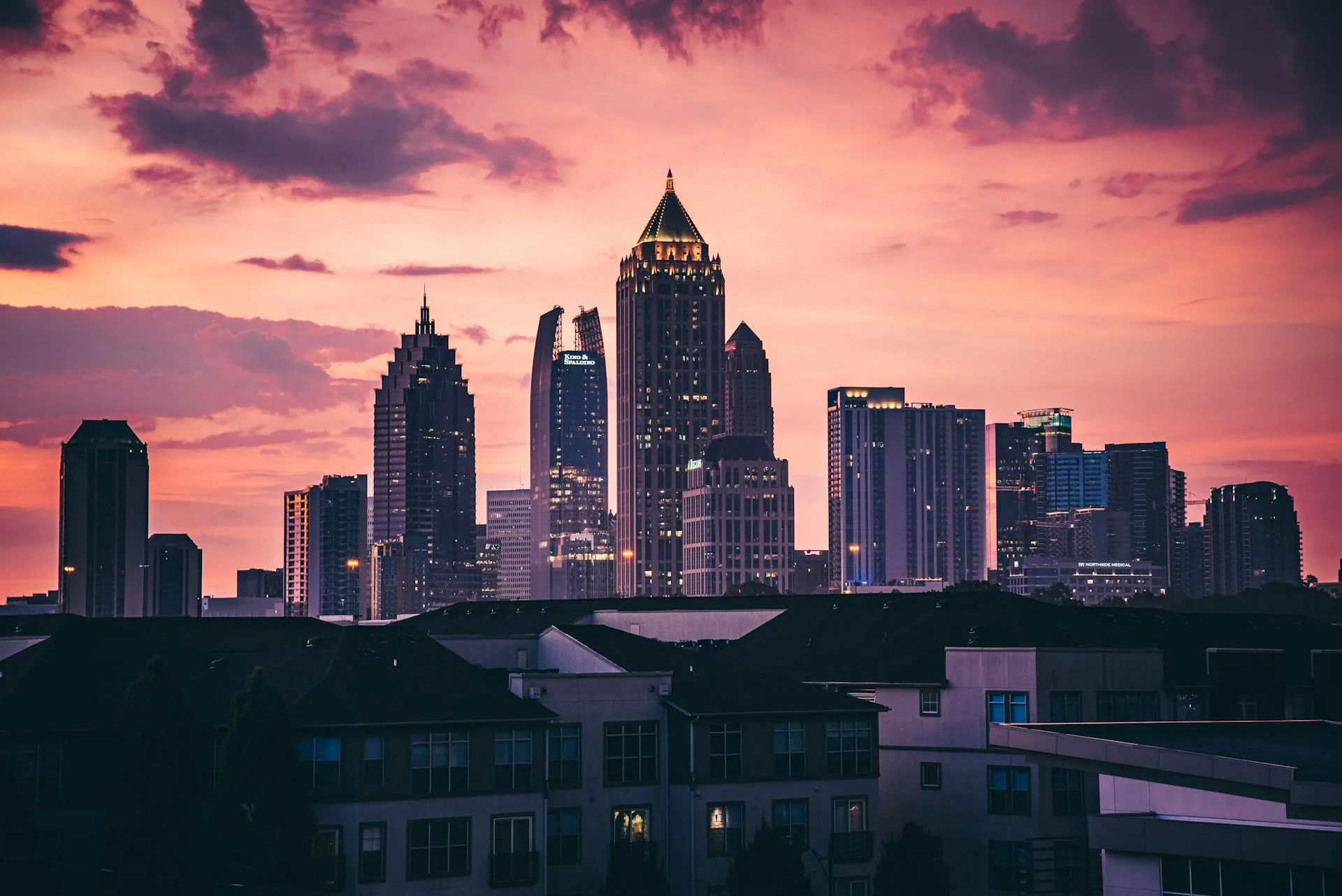
The 2026 FIFA World Cup is now just weeks away, and the transformation happening across Atlanta is impossible to ignore. Construction crews are working overtime on MARTA station upgrades. New hotels are racing to finish before the first match kicks off at Mercedes-Benz Stadium. Roads around the stadium district are being resurfaced, widened, and redesigned for pedestrian flow. And behind all of this visible activity, real estate values in key corridors are moving in ways that will outlast the tournament by decades.
This is not just a sporting event. It is the largest catalyst for concentrated infrastructure investment Atlanta has seen since the 1996 Olympics. And if history is any guide, the neighborhoods that receive permanent improvements during World Cup preparations will see sustained real estate appreciation that far exceeds the metro average for years to come.
We have been tracking the real estate implications of World Cup preparations since Atlanta was announced as a host city. Our earlier analysis of the World Cup’s impact on Atlanta luxury real estate covered the broad strokes. This update gets specific: which corridors are being transformed, where the money is flowing, and what it means for homeowners and investors right now.
World Cup Impact at a Glance
- $300-400 million in direct infrastructure investment tied to World Cup preparations across metro Atlanta.
- Properties within 2 miles of Mercedes-Benz Stadium have appreciated 8-12% faster than the metro average over the past 18 months.
- 3,500+ new hotel rooms under construction or recently completed in the Downtown-Midtown corridor.
- MARTA station renovations at Five Points, Dome/GWCC, and Peachtree Center creating lasting transit improvements.
- Short-term rental properties near the stadium could command $500-$2,000+/night during match days.
1. The Infrastructure Transformation
The most significant and lasting impact of the World Cup on Atlanta real estate comes from infrastructure investment. Unlike a temporary event, new roads, transit stations, parks, and streetscapes permanently change the character and value proposition of a neighborhood.
MARTA Upgrades. The Metropolitan Atlanta Rapid Transit Authority is executing its most ambitious renovation program in decades, accelerated specifically for the World Cup. The Five Points station, which serves as MARTA’s central hub, is receiving a $150 million overhaul that includes modernized platforms, improved wayfinding, enhanced lighting, and better pedestrian connections to surrounding streets. The Dome/GWCC/Philips Arena/CNN Center station (now simply the Stadium station) is being upgraded with wider platforms and additional escalators to handle the surge in match-day ridership.
These are not cosmetic changes. They fundamentally improve the transit experience for the 400,000+ daily riders and make properties along these corridors more accessible and desirable. Historical data from other cities shows that significant transit station upgrades correlate with 5-15% property value increases within a half-mile radius over the subsequent 5 years.
Road and Streetscape Improvements. The corridors connecting Mercedes-Benz Stadium to hotels, entertainment districts, and transit hubs are being redesigned. Northside Drive, Martin Luther King Jr. Drive, and Centennial Olympic Park Drive are all receiving streetscape improvements including wider sidewalks, protected bike lanes, improved lighting, and enhanced crosswalks. Mitchell Street and the areas connecting to the Castleberry Hill neighborhood are getting similar treatment.
This is consistent with the broader $10 billion development boom reshaping Atlanta, but the World Cup has accelerated timelines and concentrated investment in specific corridors that might otherwise have waited years for improvements.
Major World Cup Infrastructure Projects
2. The Hotel Development Surge and What It Means for Neighborhoods
Atlanta’s hospitality sector is experiencing its most aggressive expansion since the pre-Olympics building boom of the mid-1990s. More than 3,500 new hotel rooms are under construction or recently completed in the Downtown-Midtown corridor, with the World Cup serving as the catalyst that pushed developers to commit capital.
New luxury and upscale properties are concentrated in three areas: the Centennial Olympic Park district, Midtown along Peachtree Street, and the emerging Castleberry Hill/Gulch area. Several internationally branded hotels are making their Atlanta debut, bringing the kind of hospitality infrastructure that signals a city’s arrival on the global stage.
For residential real estate, hotel development is a double-edged sword. On one hand, new hotels bring foot traffic, restaurants, retail, and a general vibrancy that supports residential property values. On the other hand, hotel development can also bring construction noise, traffic congestion, and changes in neighborhood character that some residents find unwelcome.
The net effect for Atlanta has been overwhelmingly positive. Neighborhoods that have seen hotel investment over the past decade, including Midtown, Buckhead, and the BeltLine corridor, have all experienced above-average residential appreciation. The World Cup hotel surge is extending this pattern into previously underserved areas like Vine City, English Avenue, and Summerhill.
3. Neighborhood-by-Neighborhood: Where the Impact Is Greatest
Not every neighborhood benefits equally from the World Cup preparations. The impact follows a clear geographic pattern, radiating outward from Mercedes-Benz Stadium and along the transit corridors that connect to it. Here is what we are seeing in the neighborhoods experiencing the most change. For broader context on Atlanta’s emerging luxury areas, see our guide to Atlanta’s emerging luxury neighborhoods in 2026.
World Cup Impact by Neighborhood
Vine City / English Avenue (Highest Impact)
Directly west of Mercedes-Benz Stadium, these historically underinvested neighborhoods are receiving the most transformative investment. New mixed-use development, improved parks, streetscape upgrades, and better transit connections are fundamentally changing the area. Home values have increased 22-28% over the past two years. The Westside Park at Bellwood Quarry, one of the largest urban parks in the Southeast, anchors the area. Long-term, this corridor has the most upside potential as it transitions from undervalued to established.
Summerhill / Peoplestown (High Impact)
South of the stadium, Summerhill has already been transforming thanks to the Georgia State University expansion and new mixed-use development around the former Turner Field site. World Cup preparations are accelerating streetscape improvements and transit connectivity. The neighborhood offers relative affordability compared to in-town alternatives, with median home prices still below $400K, making it attractive for investors and first-time luxury buyers looking for value.
Castleberry Hill / The Gulch (High Impact)
The Centennial Yards development, one of the largest mixed-use projects in the country, is transforming the Gulch area adjacent to the stadium into a vibrant urban district. Castleberry Hill, the established loft neighborhood next door, is benefiting from the spillover investment. Loft and condo prices have appreciated 15-18% over the past 18 months. This area has the strongest short-term rental potential during the World Cup due to its walkability to the stadium.
Midtown (Moderate-High Impact)
Already Atlanta’s most dynamic urban neighborhood, Midtown benefits from World Cup preparations primarily through MARTA improvements and increased international visibility. The Midtown Mile along Peachtree Street is receiving streetscape enhancements, and the concentration of new hotel development strengthens the neighborhood’s luxury condo and townhome market. Midtown luxury condos have appreciated 6-8% year-over-year, outpacing the metro average.
Buckhead (Moderate Impact)
Buckhead’s World Cup benefit is less about direct infrastructure investment and more about Atlanta’s elevated global profile. As the city’s premier luxury district, Buckhead stands to attract international buyers and investors who discover Atlanta through the World Cup. The MARTA Buckhead station is receiving upgrades, and the neighborhood’s hotel and restaurant infrastructure is already world-class.
4. The Short-Term Rental Opportunity: Real Numbers, Real Regulations
The most immediate income opportunity from the World Cup is in short-term rentals. With 500,000+ visitors expected over a 4-6 week period and hotel rooms already commanding $400-$800+ per night for match days, demand for alternative accommodations will be intense.
Properties within walkable distance of Mercedes-Benz Stadium (roughly 1-2 miles) are positioned for the highest nightly rates, potentially $1,000-$2,000+ for well-appointed units during match days. Properties along MARTA lines connecting to the stadium can command strong rates even at greater distances, as visitors will pay a premium for easy transit access.
However, the regulatory landscape for short-term rentals in Atlanta is important to understand before investing. The City of Atlanta requires short-term rental licenses and has specific zoning restrictions that limit where non-owner-occupied rentals can operate. In some neighborhoods, HOA restrictions add additional limitations. Enforcement has increased significantly over the past two years, and operating without proper licensing during a high-profile event like the World Cup carries meaningful risk.
The smarter play for most investors is to purchase a property that makes sense as a long-term investment, whether as a rental property or a residence, and then capture the World Cup income as a bonus. Buying a property solely for World Cup short-term rental income is risky because the event is temporary and the regulatory environment may tighten further after the tournament ends.
For a comprehensive analysis of where to invest in Atlanta rental properties, see our neighborhood-by-neighborhood investment breakdown.
Key Insight: The World Cup short-term rental window is roughly 4-6 weeks. Do not make a multi-year investment decision based solely on one month of income. The properties that make sense to buy for World Cup rental income are the ones that also make sense as investments after the tournament ends.
Interested in World Cup-Adjacent Investment Opportunities?
We are tracking development, infrastructure investment, and property values across every neighborhood impacted by World Cup preparations. Tell us what you are looking for and we will send you a targeted analysis.
5. The 1996 Olympics Playbook: What History Tells Us
Atlanta has been through this before. The 1996 Summer Olympics transformed the city in ways that are still visible and impactful 30 years later. Understanding what happened then provides the best framework for anticipating what the World Cup will mean for real estate values over the next decade.
The Olympics left behind Centennial Olympic Park, which became the anchor for billions of dollars in subsequent Downtown development. The Georgia Aquarium, World of Coca-Cola, National Center for Civil and Human Rights, and the College Football Hall of Fame all cluster around the park. Neighborhoods that received Olympic-era infrastructure investments, including parts of Midtown, Old Fourth Ward, Grant Park, and the areas around the Olympic venues, experienced sustained appreciation that significantly outpaced the metro average for 10-15 years following the games.
The pattern was clear: temporary event investment translated into permanent neighborhood improvement, which drove long-term property value appreciation. Areas that received only cosmetic or temporary upgrades saw little lasting impact. Areas that received structural improvements in transit, parks, streetscapes, and utilities saw compounding returns.
The World Cup preparation pattern is following the same playbook. The neighborhoods receiving the most lasting infrastructure investment, MARTA station renovations, permanent streetscape improvements, new park development, and improved connectivity, are the ones positioned for the strongest long-term appreciation. As we detailed in our analysis of where smart money is flowing in Atlanta, infrastructure investment is the single most reliable predictor of long-term neighborhood value growth.
6. Investment Timing: Is It Too Late to Buy Before the World Cup?
With the World Cup just weeks away, the obvious question is whether the investment opportunity has already been priced in. The answer is nuanced.
For short-term rental income: It is tight but not too late. If you can close on a property within the next 30-45 days and have it licensed and furnished in time, there is still significant income potential. But the window is closing rapidly. Properties that are already licensed and rental-ready are commanding a premium because buyers know they can generate income immediately.
For long-term appreciation: You are still early. While properties closest to the stadium have already appreciated meaningfully, the ripple effects of World Cup infrastructure investment will continue playing out for 5-10 years. Secondary neighborhoods, those 3-5 miles from the stadium along improved transit corridors, are still in the early stages of price adjustment. The neighborhoods where smart money is buying overlap significantly with World Cup-impacted areas.
For luxury homebuyers: The World Cup’s biggest impact on luxury real estate is Atlanta’s elevated global profile. The international exposure, combined with the infrastructure improvements and the development momentum, reinforces Atlanta’s position as a top-tier city for luxury living. Areas like Buckhead, Sandy Springs, and Brookhaven benefit from this rising-tide effect. Our spring 2026 market guide covers the broader luxury market conditions that make this a favorable time to buy.
7. After the Final Whistle: Post-Event Value Retention
The most important question for real estate investors is not what happens during the World Cup, but what happens after. Research from previous World Cup host cities shows a consistent pattern: cities that used the event as a catalyst for lasting infrastructure investment saw sustained property value growth, while cities that focused primarily on temporary event infrastructure saw values plateau or decline post-event.
Atlanta is firmly in the first category. The MARTA station renovations, streetscape improvements, park developments, and transit connectivity upgrades are all permanent. The Centennial Yards development will continue building out for a decade. The hotel inventory will serve the city’s growing convention and tourism industry long after the tournament ends.
The short-term rental market will normalize after the event. Properties that were commanding $1,500/night during match days will return to their normal nightly rates of $150-$300. This is why the long-term investment thesis matters more than the short-term rental opportunity.
The properties positioned for the strongest post-event performance are those in neighborhoods that benefited from permanent infrastructure improvements, in areas with strong underlying demand fundamentals (job growth, population growth, transit access, amenity base), and purchased at prices that make sense based on long-term rental income or owner-occupancy value, not just World Cup income.
Bottom Line: The World Cup is a once-in-a-generation catalyst for Atlanta real estate, but the smart money is not chasing the event itself. It is investing in the permanent transformation that the event is accelerating. The neighborhoods receiving lasting infrastructure improvements will outperform the metro average for years to come, just as they did after the 1996 Olympics.
What This Means for You
Whether you are a luxury homebuyer, a residential investor, or a homeowner in an impacted neighborhood, the World Cup preparations represent an inflection point for Atlanta real estate. The infrastructure being built right now will shape property values for the next decade.
For homeowners in impacted neighborhoods, the message is straightforward: hold. Your property is gaining value from improvements you did not have to pay for. For investors, the window to capture World Cup rental income is closing, but the window to invest in long-term appreciation driven by infrastructure investment remains open. For luxury buyers, Atlanta’s global visibility is rising, and properties in premier neighborhoods stand to benefit from increased international interest.
We are tracking every development corridor, infrastructure project, and neighborhood price trend tied to the World Cup preparations. If you want specific data on how your neighborhood or target investment area is being affected, reach out. We are happy to share what we are seeing on the ground.
Frequently Asked Questions
When is Atlanta hosting FIFA World Cup 2026 matches?
Atlanta is one of 16 host cities for the 2026 FIFA World Cup, with matches scheduled at Mercedes-Benz Stadium from mid-June through mid-July 2026. Atlanta is expected to host 5-6 group stage matches and potentially a round of 16 match. The exact schedule and team assignments were finalized in late 2025, and the city is preparing for an estimated 500,000+ visitors during the tournament period. The matches represent the largest international sporting event Atlanta has hosted since the 1996 Olympics.
How is the World Cup affecting Atlanta real estate prices?
The World Cup impact on Atlanta real estate is primarily indirect but meaningful. Properties within a 2-mile radius of Mercedes-Benz Stadium have appreciated 8-12% faster than the metro average over the past 18 months, driven by infrastructure upgrades, new hospitality development, and increased investor interest. Neighborhoods along the MARTA corridors connecting to the stadium are also seeing above-average appreciation. The long-term effect will likely mirror what we saw after the 1996 Olympics: permanent infrastructure improvements that continue to support property values well beyond the event itself.
Is it worth investing in short-term rental property near the World Cup venues?
The short-term rental opportunity around the World Cup is real but requires careful analysis. Properties within 3-5 miles of Mercedes-Benz Stadium with proper short-term rental licensing could command $500-$2,000+ per night during match days, representing significant income potential during the 4-6 week tournament window. However, Atlanta has specific short-term rental regulations that vary by neighborhood, and the city has been tightening enforcement. The investment case is strongest when the property also makes sense as a long-term rental or primary residence after the tournament ends, rather than buying solely for World Cup income.
What infrastructure improvements is Atlanta making for the World Cup?
Atlanta is investing approximately $300-400 million in World Cup-related infrastructure. Major projects include MARTA station upgrades along the east-west and north-south lines, streetscape improvements around Mercedes-Benz Stadium and the Gulch development, road resurfacing and traffic management upgrades along key corridors, pedestrian and cycling infrastructure in Midtown and Downtown, and expanded rideshare staging areas. The Centennial Yards development near the stadium, a $5 billion mixed-use project, is accelerating construction timelines to have key phases operational before the tournament.
Which Atlanta neighborhoods will benefit most from the World Cup long-term?
The neighborhoods positioned for the strongest long-term benefit are those receiving permanent infrastructure improvements rather than just temporary event amenities. Vine City and English Avenue, directly west of the stadium, are seeing the most transformative investment with new mixed-use development and improved transit connections. Summerhill and Peoplestown south of the stadium are benefiting from streetscape and park improvements. Castleberry Hill and the Gulch area are positioned to gain from the massive Centennial Yards development. For luxury buyers, Midtown and Buckhead benefit from MARTA improvements and increased international visibility for Atlanta as a world-class city.
How did the 1996 Olympics impact Atlanta real estate and what does that tell us about the World Cup?
The 1996 Olympics permanently transformed several Atlanta neighborhoods and established patterns that are likely to repeat with the World Cup. Centennial Olympic Park became an anchor for Downtown development that continues to attract investment 30 years later. Neighborhoods that received infrastructure upgrades during the Olympics, including parts of Midtown, Old Fourth Ward, and the areas around the venues, saw sustained appreciation that outpaced the metro average for over a decade. The key lesson is that the event itself matters less than the permanent infrastructure it leaves behind. Areas receiving lasting improvements in transit, streetscapes, parks, and connectivity are the ones that show long-term value appreciation.
"The team identified the World Cup development corridor early and helped us purchase an investment property in a neighborhood that has since appreciated 15% in just one year. Their understanding of how infrastructure investment drives real estate value is exceptional."
James & Sarah K.
Investment property purchase, World Cup corridor
Ready to invest in Atlanta’s World Cup-driven transformation?
Sources
- FIFA World Cup 2026 Host City Committee, Atlanta - Official infrastructure investment plans, venue preparations, and economic impact projections. fifa.com
- MARTA Capital Improvement Program, 2025-2026 - Station renovation plans, budgets, and timelines for World Cup-related transit upgrades. itsmarta.com
- Invest Atlanta, Economic Development Reports 2026 - Hotel development pipeline, infrastructure investment tracking, and neighborhood impact analysis. investatlanta.com
- FMLS (First Multiple Listing Service) Market Reports, Q1 2026 - Neighborhood-level property appreciation data and market statistics for metro Atlanta. fmls.com
Neighborhood appreciation estimates and investment analysis are based on our direct market observation and proprietary data. Individual property performance varies based on location, condition, and market timing.
Disclaimer: This article is for informational purposes only and does not constitute financial, legal, or investment advice. Real estate markets are subject to change and past performance does not guarantee future results. Short-term rental regulations vary by location and are subject to change. Consult qualified professionals before making real estate investment decisions.