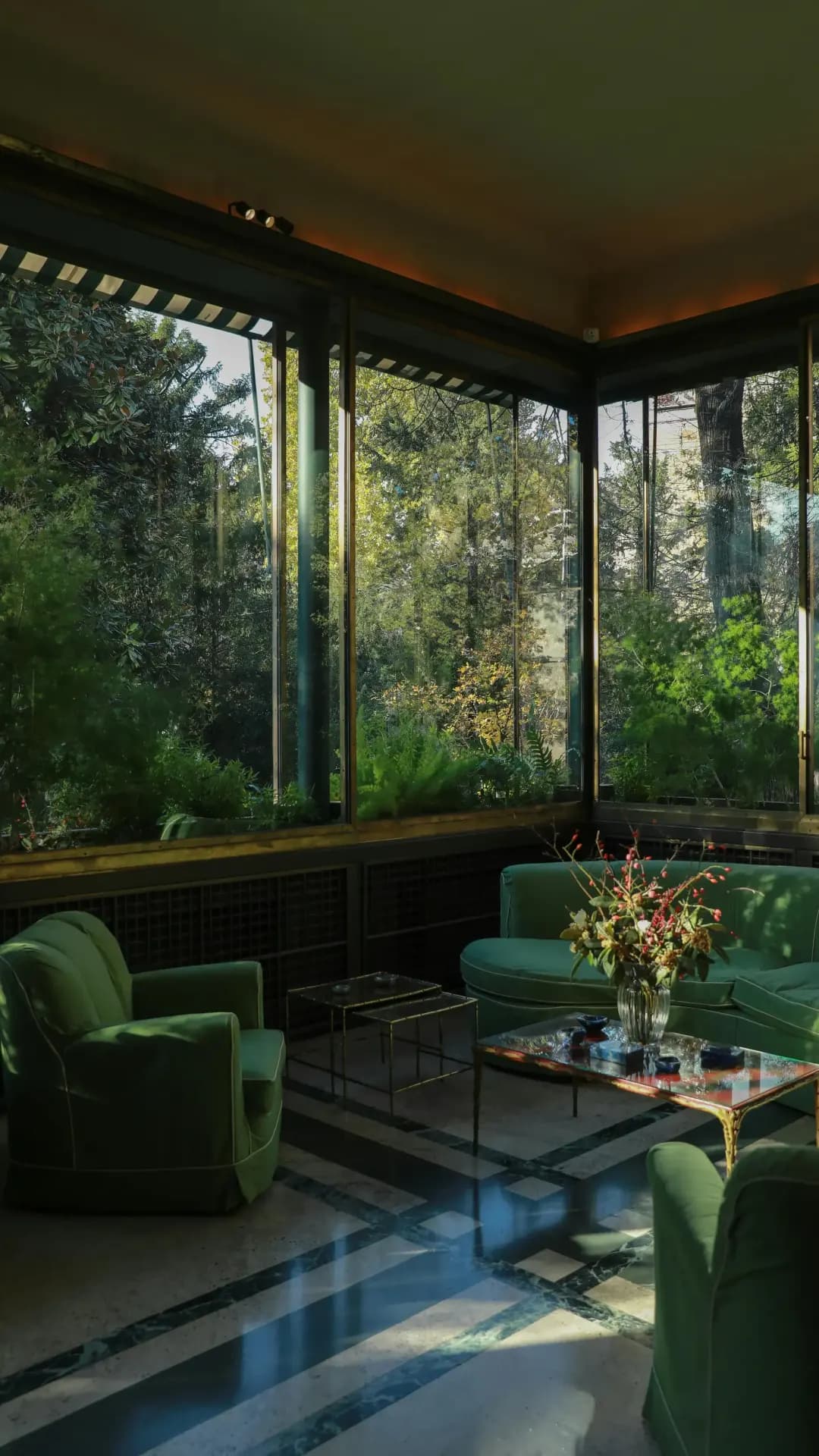
There is a room in some luxury homes that changes the entire feel of the house. It is not the kitchen, and it is not the primary suite. It is the room that connects you to the outdoors without actually putting you outside: the sunroom, the conservatory, the garden room, whatever you want to call it. In Atlanta, where the climate gives you eight to nine months of genuinely pleasant weather and the tree canopy is one of the densest of any American city, a well-designed sunroom can be the most used room in the house.
But there is a meaningful difference between a sunroom that works and one that does not. A poorly designed sunroom in Atlanta becomes a greenhouse in July and an icebox in January, a room you added for $100,000 that you actually avoid using half the year. A well-designed sunroom, built with the right glass, the right climate control, and the right orientation, becomes the room where you start your mornings, host your dinner parties, and spend your Sundays.
This guide covers what Atlanta luxury homeowners and buyers need to know about sunrooms and conservatories: the design options, the climate challenges specific to Georgia, the costs, the permits, and the return on investment.
Three-Season vs. Four-Season: The Critical Decision
The first and most important decision is whether you want a three-season room or a four-season room. This choice affects everything: the budget, the construction method, the glass selection, the HVAC requirements, and how the room gets counted for appraisal purposes.
A three-season sunroom is essentially an enclosed porch. It uses single-pane or lightly insulated glass, has no HVAC connection (though ceiling fans and portable heaters can extend its usability), and typically has a non-insulated roof. In Atlanta, a three-season room is comfortable from roughly late March through mid-November, which is actually seven to eight months of the year. The advantage is lower cost ($50,000 to $100,000 for a luxury version) and simpler construction. The disadvantage is that it is not counted as conditioned living space on an appraisal, which limits its impact on home value.
A four-season sunroom is a fully conditioned room addition. It uses double or triple-pane Low-E glass, has insulated walls and roof, sits on a proper foundation, and connects to the home's HVAC system (or has a dedicated mini-split system). It functions as usable living space 365 days a year. In Atlanta's mild winters (average January lows in the mid-30s), a four-season sunroom requires relatively modest heating. The bigger challenge is summer cooling, which we will address in the climate control section. Four-season rooms cost more ($80,000 to $200,000+ for luxury versions) but are counted as conditioned square footage on an appraisal, directly increasing the home's value on a per-square-foot basis.
For luxury homes, the four-season option is almost always the right choice. The cost difference between three-season and four-season construction is typically 40% to 60%, but the four-season room contributes to home value as finished square footage. In Atlanta's luxury market, where finished square footage in desirable neighborhoods sells for $200 to $500+ per square foot, the additional investment in four-season construction typically pays for itself at resale.
Glass Technology: The Key to Year-Round Comfort
Glass selection is the single most important technical decision in sunroom design, and it is where many projects go wrong. The wrong glass turns a sunroom into a sauna in summer and a freezer in winter. The right glass makes the room comfortable year-round while flooding it with natural light.
For Atlanta's climate, double-pane Low-E (low-emissivity) glass is the minimum standard for a four-season sunroom. Low-E coatings are microscopically thin metallic layers applied to the glass that reflect infrared radiation (heat) while allowing visible light to pass through. The result is a room that stays bright and airy but does not overheat in summer or lose excessive heat in winter. Argon gas fill between the panes provides additional insulation.
The key specification to look at is the Solar Heat Gain Coefficient (SHGC), which measures how much solar heat passes through the glass. A lower SHGC means less heat gain. For Atlanta sunrooms, look for glass with an SHGC of 0.25 or lower for south and west-facing walls, where sun exposure is most intense. North-facing walls can use glass with a slightly higher SHGC to allow more natural warmth in winter. Spectrally selective coatings, available from manufacturers like Guardian, PPG, and AGC, offer the best combination of light transmission and heat rejection.
For sunroom roofs, the options include tempered glass panels (beautiful but expensive and heavy), polycarbonate panels (lighter and less expensive with good light transmission), and solid insulated roof panels (better thermal performance but less light). In Atlanta's climate, a hybrid approach works well: glass or polycarbonate roof panels on the north-facing portion for maximum light, and insulated panels on the south-facing portion for better heat management.
Climate Control in Georgia's Heat
Atlanta's summer heat is the primary engineering challenge for any sunroom. Average high temperatures exceed 85 degrees from June through September, with frequent days above 90 and occasional days above 95. Humidity compounds the discomfort, with summer dew points regularly in the upper 60s and low 70s. A sunroom without adequate cooling in Atlanta is not a room you will use from June through September.
The cooling strategy for a luxury sunroom should include multiple layers. First, high-performance glass with low SHGC ratings blocks the majority of solar heat before it enters the room. Second, motorized exterior shades or retractable awnings provide additional heat rejection on the hottest days. Third, the HVAC system must be sized appropriately. Sunrooms typically require 30% to 50% more cooling capacity per square foot than a standard room due to the glass exposure. A dedicated mini-split system (ductless heat pump) is often the best solution because it provides independent temperature control without overloading the home's main HVAC system.
Ceiling fans are essential. A quality ceiling fan (52 to 60 inches for most sunrooms) creates air movement that improves perceived comfort by 4 to 6 degrees, reducing the load on the cooling system. Radiant barrier technology in the roof assembly, which reflects radiant heat before it enters the room, can reduce cooling loads by an additional 15% to 25% according to the Department of Energy.
Winter heating is less of a concern in Atlanta. A four-season sunroom connected to the home's HVAC system or served by a mini-split will maintain comfortable temperatures through Atlanta's mild winters without difficulty. In-floor radiant heating is a luxury upgrade that provides even warmth and eliminates cold spots near the glass, making the room particularly comfortable on cold January mornings.
Design Styles: From Garden Room to Glass Box
The design style of your sunroom should complement the home's architecture. In Atlanta's luxury market, three primary styles dominate.
Traditional conservatory/garden room: This style features divided-light glass panels, ornamental framing (often in powder-coated aluminum that mimics wrought iron or timber), a pitched glass or standing-seam metal roof, and a brick or stone base wall (typically 24 to 36 inches high). This style works best with Georgian, Colonial, and French Provincial homes, which are the dominant luxury architectural styles in Buckhead, Sandy Springs, and similar areas. Custom conservatories from manufacturers like Tanglewood Conservatories and Town & Country Conservatories represent the highest end of this category.
Transitional sunroom: A cleaner-lined approach that uses larger glass panels, simpler framing, and a combination of solid roof sections and glass or skylight openings. This style bridges traditional and contemporary, making it versatile enough for most architectural styles. The framing is typically aluminum or steel with a thin profile that maximizes glass area. Transitional sunrooms are the most common style in Atlanta luxury homes because they complement the region's mix of traditional and transitional architecture.
Contemporary glass room: Floor-to-ceiling glass walls with minimal framing, a flat or very low-slope roof, and a seamless transition from interior to exterior. This style works with modern and contemporary homes and creates the strongest indoor-outdoor connection. The structural requirements are more demanding (the glass must be structural or supported by concealed steel), which increases cost. Contemporary glass rooms are less common in Atlanta than in markets like Los Angeles or Miami but are increasingly popular in modern new construction and high-end renovations.
Find Out What Your Sunroom Adds to List Price
Not every glass addition returns what it costs to build. We can look at your existing sunroom or your drawings and show you how comparable Atlanta homes have been valued with one.
Value My Sunroom Against Local Compsor call (770) 727-4052
Sunroom Investment Guide: Atlanta 2026
- Three-season sunroom (luxury): $50,000 to $100,000 for 200 to 400 square feet. Not counted as conditioned space on appraisal. Best for homes where budget is a consideration or where the room will primarily be used for fair-weather entertaining.
- Four-season sunroom (luxury): $80,000 to $150,000 for 200 to 400 square feet. Counted as conditioned square footage. The preferred option for luxury homes where the sunroom should feel like a natural extension of the living space.
- Custom conservatory: $150,000 to $300,000+ depending on size, materials, and manufacturer. Includes architectural glass roof, ornamental framing, and masonry base. The premium choice for estate-style homes.
- Resale value impact: Per Remodeling Magazine, sunroom additions in the South Atlantic region recoup approximately 40% to 55% of cost at resale. However, four-season rooms that add conditioned square footage may recoup more in the luxury market where buyers value finished living space at $200 to $500+ per square foot.
Permits, Foundation, and Construction Considerations
Any sunroom addition in metro Atlanta requires a building permit, regardless of size. The permitting process involves submitting architectural and structural plans to the local building department (county or city, depending on your location) and passing inspections at key construction milestones. In HOA communities, you will also need architectural review committee approval, which should be obtained before applying for the building permit.
Foundation requirements depend on the sunroom type. Three-season rooms can sometimes be built on an existing concrete patio if a structural engineer confirms it can handle the load. Four-season rooms require a foundation that meets the same standards as any room addition: footings below the frost line (12 inches in metro Atlanta per Georgia code), properly prepared subgrade, and structural capacity for the combined weight of the walls, roof, glass, and furnishings. Pier and beam foundations are common for sunrooms because they allow construction over uneven terrain or existing yard features.
Zoning setback requirements are another consideration. Most metro Atlanta jurisdictions require a minimum distance between structures and property lines (typically 10 to 25 feet for rear setbacks, depending on the zone). If the sunroom would encroach on a setback, you may need a variance, which adds time and uncertainty to the permitting process. Check your property survey and local zoning requirements before committing to a design.
Construction timelines for luxury sunroom additions typically run 3 to 6 months from permit approval to completion. Custom conservatories from specialized manufacturers can take 6 to 12 months due to the lead time on custom glass and metalwork fabrication.
Frequently Asked Questions
What is the difference between a three-season and four-season sunroom?
A three-season sunroom is designed for use during spring, summer, and fall but is not insulated or heated for comfortable winter use. It typically features single-pane or lightly insulated glass, a non-insulated roof, and no HVAC connection. A four-season sunroom is fully insulated, uses double or triple-pane glass, has a properly insulated roof and foundation, and is connected to the home's HVAC system (or has dedicated heating and cooling). A four-season room functions as year-round living space and is counted as conditioned square footage for appraisal purposes. In Atlanta's climate, a four-season sunroom is usable 12 months a year, while a three-season room is typically comfortable from April through October.
How much does a luxury sunroom addition cost in Atlanta?
A luxury sunroom addition in Atlanta typically costs $50,000 to $200,000 or more, depending on size, type, and finish level. A high-quality three-season sunroom (200 to 400 square feet) usually runs $50,000 to $100,000. A four-season sunroom with full insulation, HVAC, and premium finishes typically costs $80,000 to $150,000. A custom conservatory with architectural glass, stone or brick foundation, and high-end structural details can exceed $200,000. These figures include design, permitting, construction, and basic finishes but not furnishings. Per-square-foot costs for luxury sunroom additions typically fall between $200 and $500.
Do I need a building permit for a sunroom in Atlanta?
Yes. In virtually all metro Atlanta jurisdictions, a sunroom addition requires a building permit. The permit process typically involves submitting architectural plans, a structural engineering review (especially if the sunroom attaches to the existing structure), and compliance with local zoning setback requirements. In unincorporated areas, the county building department handles permits. In incorporated cities like Atlanta, Buckhead, Sandy Springs, or Brookhaven, the city's permitting department is the authority. If the home is in an HOA community, you will also need architectural review committee approval, which is a separate process from the building permit. Allow 4 to 12 weeks for the permitting process.
What type of glass is best for a sunroom in Georgia?
For a four-season sunroom in Georgia's climate, the best glass is double-pane, low-emissivity (Low-E) glass with argon gas fill. Low-E coatings reflect infrared heat while allowing visible light to pass through, which is critical in Atlanta's hot summers where solar heat gain is a primary concern. Some manufacturers offer spectrally selective coatings that block even more heat while maintaining high light transmission. Triple-pane glass provides better insulation but adds significant cost and weight. For roof panels, polycarbonate or tempered glass with a high-performance tinting are common choices. Avoid single-pane glass for any room you plan to use year-round, as the energy costs will be substantial.
Can a sunroom be used year-round in Atlanta?
A properly built four-season sunroom with adequate insulation, quality glass, and HVAC service can absolutely be used year-round in Atlanta. The key challenge is not winter cold (Atlanta winters are mild, with average lows in the mid-30s) but summer heat. Without proper glass selection and cooling capacity, a sunroom can become an oven from June through September. The solution is Low-E glass that blocks solar heat gain, adequate HVAC tonnage (sunrooms typically need more cooling capacity per square foot than standard rooms), and potentially supplemental ceiling fans or a mini-split system. A well-designed four-season sunroom in Atlanta should maintain comfortable temperatures in every season.
Does a sunroom add value to a luxury home?
A well-designed, well-built sunroom typically adds value to a luxury home, though the exact return depends on the quality of construction and how it integrates with the home's design. According to Remodeling Magazine's Cost vs. Value Report, sunroom additions in the South Atlantic region typically recoup 40% to 55% of their cost at resale. However, in the luxury market, the calculation is different. A four-season sunroom that functions as genuine year-round living space and integrates seamlessly with the home's architecture can enhance the overall appeal of the property beyond the raw square footage math. A poorly designed or cheaply built sunroom that looks like an afterthought can actually detract from a luxury home's value.
What is the difference between a sunroom and a conservatory?
A conservatory is a specific type of sunroom distinguished by its architectural pedigree and construction. Traditional conservatories feature an all-glass or mostly-glass structure including a glass roof, ornamental metalwork (often wrought iron, aluminum, or timber framing), and a masonry or stone base. The design traces back to Victorian-era orangeries and garden rooms. A sunroom is a broader term that covers any enclosed room designed to admit large amounts of natural light, including rooms with solid roofs and large windows. In the luxury market, conservatories tend to be more expensive and architecturally significant than standard sunrooms, and they carry a certain prestige that appeals to buyers of traditional or estate-style homes.
How do I control the temperature in a sunroom during Atlanta summers?
Temperature control in an Atlanta sunroom during summer requires a multi-layered approach. Start with the right glass: Low-E coatings with high solar heat gain coefficient (SHGC) ratings block a significant portion of infrared heat. Add motorized exterior shades or interior cellular shades for supplemental heat control. Ensure the HVAC system serving the sunroom has adequate capacity, as sunrooms typically need 30% to 50% more cooling capacity per square foot than a standard room. Ceiling fans improve air circulation and perceived comfort. Proper roof insulation (for solid-roof sunrooms) or reflective roof panels (for glass-roof designs) prevent radiant heat from above. Some luxury sunrooms use radiant barrier technology in the roof assembly for additional heat reduction.
What foundation does a sunroom need?
The foundation requirements for a sunroom depend on the type. Three-season sunrooms on existing patios or decks may use the existing concrete slab or deck structure as a foundation, though a structural engineer should verify load capacity. Four-season sunrooms that add conditioned square footage typically require a proper foundation: either a concrete slab on grade (with footings below the frost line, which is 12 inches in the Atlanta area per Georgia building code), a crawl space foundation, or pier footings. The foundation must meet the same structural requirements as any other room addition. For conservatories with masonry bases, the foundation may need additional reinforcement to support the weight of stone or brick.
What are the best design styles for a luxury sunroom in Atlanta?
The best sunroom design style depends on the home's architecture. For traditional Atlanta homes (Georgian, Colonial, French Provincial), a conservatory or garden room with divided-light glass, a standing-seam metal roof or glass roof, and a brick or stone base integrates most naturally. For transitional homes, a clean-lined sunroom with large glass panels, a flat or low-slope roof, and minimal framing provides a modern feel while respecting the home's overall character. For contemporary homes, floor-to-ceiling glass walls, a flat roof, and minimalist structural elements create a seamless indoor-outdoor connection. Regardless of style, the sunroom should feel like a natural extension of the home rather than an obvious addition.
Looking for a Luxury Home With Natural Light?
Whether you want a home with a stunning sunroom already in place or a property with the perfect orientation for an addition, we can help you find the right fit in Atlanta.
Sources
- Remodeling Magazine - Cost vs. Value Report, South Atlantic region data for sunroom addition return on investment.
- U.S. Department of Energy - Radiant barrier technology data, energy efficiency guidelines for glass selection, and SHGC specifications.
- National Fenestration Rating Council (NFRC) - Glass performance ratings, Low-E coating specifications, and window energy efficiency standards.
- Georgia Department of Community Affairs - State building code requirements, foundation specifications, and frost line depth for metro Atlanta.
- FMLS (First Multiple Listing Service) - Atlanta luxury home sales data and square footage valuation for conditioned versus non-conditioned space.
Cost estimates, building code information, and glass specifications referenced in this article reflect conditions as of early 2026 and are subject to change. Permitting requirements vary by jurisdiction. This article is for informational purposes only and does not constitute design, construction, or financial advice.
Disclaimer: This article is for informational purposes only and does not constitute professional design, construction, or financial advice. Cost estimates are based on Atlanta-area market conditions as of early 2026 and may vary based on project scope, materials, contractor, and local requirements. Building code and zoning information is provided as a general reference; always confirm requirements with your local building department. The Luxury Realtor Group is a real estate brokerage and does not provide design, construction, or financial advisory services. Consult qualified professionals for project-specific guidance.