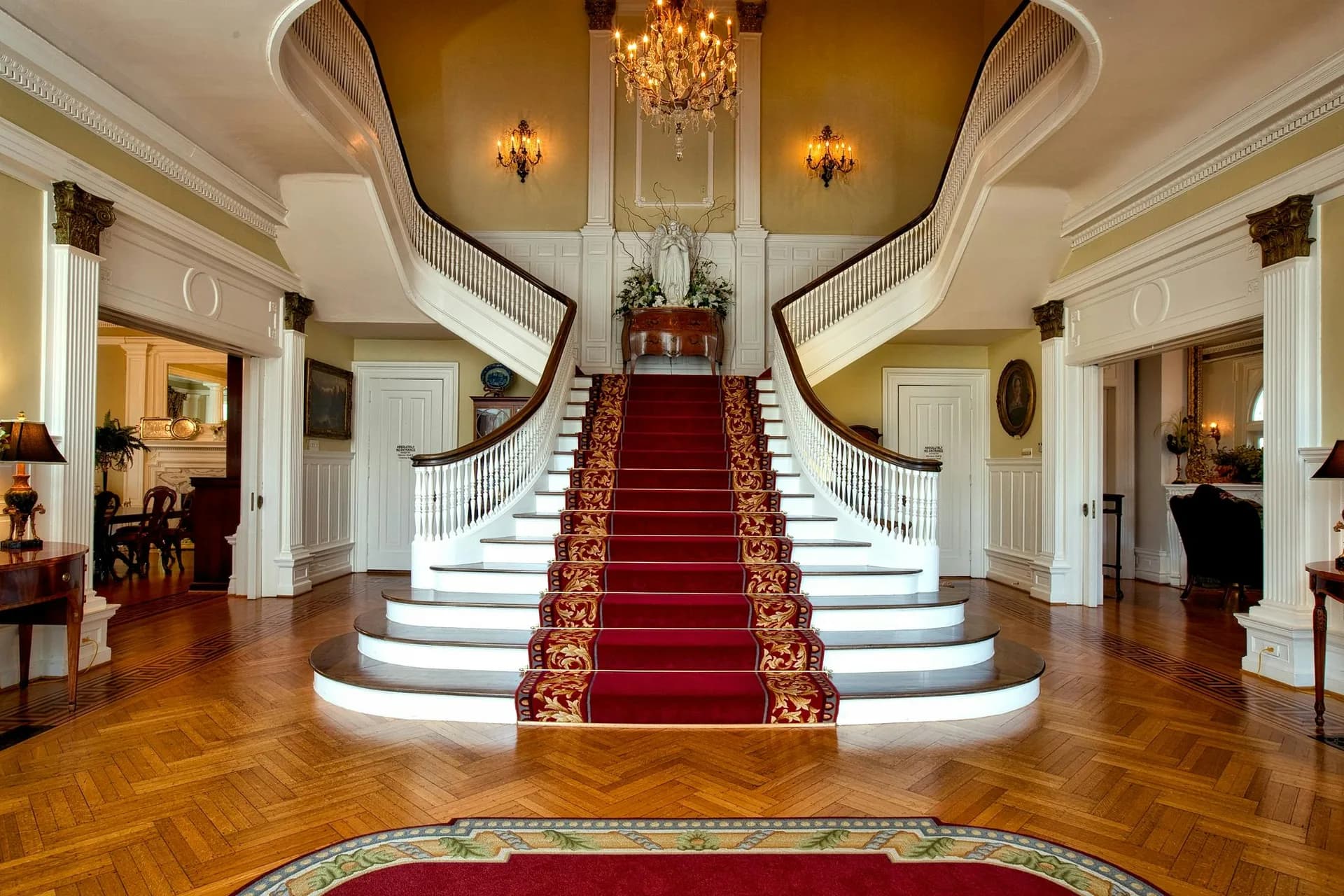
Walk into any luxury home in Buckhead, Sandy Springs, or Brookhaven, and the staircase is likely the first architectural element that registers. It sets the tone for the entire property. A sweeping curved staircase in a double-height foyer communicates traditional Southern grandeur. A cantilevered floating staircase with glass railings signals contemporary design confidence. A straight-run staircase with hand-forged iron balusters says transitional sophistication.
The staircase is also one of the most structurally and financially significant elements in a luxury home. It involves engineering, code compliance, material selection, craftsmanship, and design coordination that few other interior features require. Getting it right demands planning. Getting it wrong is expensive and visible.
This guide covers the primary staircase types found in Atlanta luxury homes, the materials and railing options available, the code requirements that constrain design decisions, and the cost ranges buyers and homeowners should expect.
Curved and Sweeping Staircases: The Southern Standard
The curved staircase is the most iconic staircase form in Atlanta luxury real estate. It appears in Georgian, Colonial, Greek Revival, and traditional homes throughout the city's most prestigious neighborhoods. The defining feature is a continuous curve from the ground floor to the upper level, typically following the wall of a round or elliptical foyer.
Building a curved staircase is significantly more complex than a straight run. The stringer (the structural backbone of the staircase) must be custom-bent or laminated to follow the curve precisely. Each tread is a different width, tapering from wider on the outside to narrower on the inside of the curve. The railing must follow the same curve while maintaining consistent height and a graspable profile. This is specialized work that requires craftspeople with specific experience.
In Atlanta's luxury market, a custom curved staircase with forged iron balusters and hardwood treads typically costs between $40,000 and $100,000, depending on the radius of the curve, the height, and the complexity of the ironwork. The most elaborate versions, with hand-forged scrollwork, marble treads, and gold-leaf accents, can exceed $150,000.
The double-height foyer is the natural setting for a curved staircase. With ceilings ranging from 18 to 24 feet, these spaces allow the staircase to be both functional and theatrical. An oversized chandelier centered in the foyer, paired with a sweeping staircase, remains one of the most effective first impressions in luxury real estate. According to agents who list luxury homes in Atlanta, the foyer and staircase are among the top three features that generate buyer interest during showings.
Straight-Run and L-Shaped Staircases
Straight-run staircases are the most common configuration in residential construction, and they are well represented in Atlanta luxury homes, particularly in transitional and contemporary designs. A single straight flight from one floor to the next is structurally simpler, less expensive to build, and easier to maintain than a curved staircase. That does not make it less impressive when executed well.
The key to making a straight staircase feel luxurious is the detailing. Open risers that allow light to pass through, wide treads (12 inches or more), and carefully designed railings transform a simple staircase into a design feature. In many contemporary Atlanta homes, the straight staircase serves as a visual spine for the house, connecting floors while allowing sightlines to pass through.
L-shaped staircases (a straight run with a 90-degree turn at a landing) and U-shaped staircases (two parallel runs connected by a 180-degree landing) are common in homes where the floor plan does not accommodate a single straight run or a curved design. The landing provides a natural pause point and can be enhanced with a window, art niche, or built-in bench. In traditional Atlanta homes, the landing often features a large Palladian window that floods the stairwell with natural light.
Cost for a custom straight staircase in a luxury home ranges from $15,000 to $40,000, with L-shaped and U-shaped configurations adding $5,000 to $15,000 for the additional landing construction and railing work.
Floating Staircases: The Modern Statement
Floating staircases have become the signature element of contemporary luxury homes in Atlanta. The design creates the illusion that each tread is suspended in mid-air, unsupported from below. In reality, floating staircases rely on a hidden mono-stringer (a single steel beam running beneath the treads) or a wall-mounted steel structure that carries the load through concealed connections.
The visual effect is striking. Without risers, balusters, or visible structural support, a floating staircase creates openness and allows light to pass through the stair volume. This makes them particularly effective in homes with floor-to-ceiling glass, open floor plans, and minimalist design philosophies. They also work well in smaller luxury homes and townhomes where a traditional staircase would feel heavy and space-consuming.
The engineering requirements are substantial. Each tread must be individually supported to carry both static loads (the weight of people and furniture moving up and down) and dynamic loads (the bounce and sway that occurs during use). Building codes require the same structural performance from floating stairs as from conventional stairs, which means significant steel structure hidden within the walls or beneath the treads.
Materials for floating staircases typically include thick hardwood treads (white oak and walnut are most popular), glass railings (tempered or laminated safety glass), and concealed steel structure. The combination of these premium materials and the specialized engineering drives costs into the $50,000 to $150,000 range for a full-floor floating staircase in an Atlanta luxury home.
Materials and Railing Styles at a Glance
- Wrought/forged iron: The most popular railing material in Atlanta luxury homes. Available in simple vertical balusters (transitional), scrollwork patterns (traditional), or geometric designs (contemporary). Typically finished in matte black, dark bronze, or oil-rubbed bronze.
- Structural glass: Tempered or laminated glass panels mounted in a channel or with point-fixed hardware. Creates maximum transparency and works best with modern and floating staircases. Requires regular cleaning to maintain appearance.
- Cable railing: Stainless steel cables stretched horizontally between posts. Popular in modern and industrial-style homes. More affordable than glass but offers a different aesthetic. Must meet the 4-inch sphere test for code compliance.
- Hardwood treads: White oak is the 2026 standard. Walnut for premium applications. Treads should be 1.5 to 2 inches thick for luxury feel. Finished to match the home's primary flooring for visual continuity.
- Stone treads: Marble (Calacatta, Carrara) and natural stone for formal traditional homes. Typically used on the first few steps or a full formal staircase. Requires anti-slip finishing for safety compliance.
Will This Staircase Read as an Asset to Buyers?
A curved or floating stair can anchor a foyer, but the payoff depends on how it fits the rest of the house. We can review your plans and tell you what buyers in your price band typically respond to.
Review My Staircase Plans With an Agentor call (770) 727-4052
Building Code Requirements in Georgia
Georgia adopts the International Residential Code (IRC) with some state-specific amendments. Staircase code requirements apply to all residential staircases regardless of style, which means floating staircases, curved staircases, and conventional staircases must all meet the same dimensional and safety standards.
The key code requirements include: minimum tread depth of 10 inches (measured from nosing to nosing), maximum riser height of 7.75 inches, minimum stairway width of 36 inches (clear of the handrail), handrails required on at least one side for stairs with four or more risers, handrail height between 34 and 38 inches measured from the stair nosing, and guardrail height of at least 36 inches where the staircase is open to a room below. Balusters (whether iron, glass, or cable) must not allow a 4-inch sphere to pass through at any point, a requirement designed to prevent small children from getting trapped.
For floating and cantilevered staircases, the code also requires structural calculations demonstrating that each tread can support a concentrated load of 300 pounds and a distributed load that accounts for regular traffic. These calculations must be stamped by a licensed structural engineer in Georgia and submitted with the building permit application. Some jurisdictions in metro Atlanta are stricter than others about floating staircase approvals, so it is worth checking with the local building department early in the design process.
Under-Stair Features and Elevator Alternatives
The space beneath a staircase is valuable real estate within the home, and luxury design in 2026 treats it as an opportunity rather than an afterthought. The most popular under-stair features in Atlanta luxury homes include temperature-controlled wine storage (glass-fronted cabinets that showcase a collection while keeping it properly stored), built-in bookshelves and display niches, concealed powder rooms, and custom coat closets with integrated lighting and built-in organization.
For floating staircases, the space beneath is typically left open and integrated into the adjacent room. This works well in living rooms, libraries, and entry halls where the staircase functions as a sculptural element visible from multiple angles.
Home elevators deserve mention as a complement to staircases. They do not replace stairs (building code requires stairs for egress in residential construction), but they supplement them in important ways. For aging-in-place design, a home elevator provides long-term accessibility. For three-story homes, it adds convenience. For homes with second-floor primary suites, it provides an alternative to climbing stairs daily.
Residential elevators in Atlanta luxury homes typically cost $30,000 to $80,000 installed, with the price depending on the number of stops, cab finish level, and whether the shaft is constructed as part of new construction or retrofitted into an existing home. Elevator-ready shafts have become an increasingly common feature in new luxury construction.
Staircase Cost Ranges for Atlanta Luxury Homes
- Standard straight with iron railings: $15,000 to $40,000. Custom iron balusters, hardwood treads, painted risers. The most common configuration in transitional luxury homes.
- Curved/sweeping with iron railings: $40,000 to $100,000+. Custom-bent stringer, forged iron, hardwood or stone treads. The traditional Southern luxury standard.
- Floating with glass railings: $50,000 to $150,000. Concealed steel structure, thick hardwood treads, tempered glass panels. The modern luxury statement.
- Railing replacement only: $8,000 to $25,000. Replacing existing wood balusters with iron, glass, or cable. One of the highest-impact visual upgrades available for the cost.
- Home elevator (supplement): $30,000 to $80,000 installed. Two to four stops, residential cab, machine-room-less design. Increasingly included in new luxury construction.
Resale Considerations and Buyer Expectations
The staircase is one of the most visible and memorable features in a luxury home, and it directly affects buyer perception during showings. Listing photos almost always include the foyer and staircase as one of the first images, which means it shapes impressions before buyers even walk through the door.
Dated staircase elements that concern buyers include: turned wood balusters (especially in light oak or whitewashed finishes), carpet-covered treads without hardwood underneath, brass or gold-plated hardware, ornate scrollwork that reads as 1990s or early 2000s, and hollow-core painted railings. Replacing these elements with simple iron balusters, exposed hardwood treads, and a clean handrail profile is one of the highest-impact renovation projects available in the $8,000 to $25,000 range.
For buyers evaluating a luxury home, the staircase should be assessed on three levels. First, structural: is the staircase solidly built with no squeaks, movement, or visible settling? Second, material: are the treads, risers, and railings made from quality materials that will age well? Third, design: does the staircase complement the home's architecture and create a positive first impression? The answers to these questions significantly influence how buyers perceive the overall quality and value of the property.
Frequently Asked Questions
How much does a custom staircase cost in an Atlanta luxury home?
Custom staircase costs in Atlanta luxury homes vary widely based on style, materials, and complexity. A standard straight staircase with custom iron railings typically runs $15,000 to $40,000. A curved or sweeping staircase with forged iron and hardwood treads ranges from $40,000 to $100,000 or more. Floating staircases with structural glass railings can cost $50,000 to $150,000 depending on engineering requirements. These figures include materials, fabrication, and installation but do not include structural modifications to the home. For new construction, the staircase cost is typically built into the overall project budget.
What is the most popular staircase style in Atlanta luxury homes?
The curved or sweeping staircase remains the most popular choice in Atlanta luxury homes, particularly in traditional, transitional, and Georgian-style architecture. These staircases create a dramatic focal point in the foyer and are strongly associated with Southern luxury. However, straight staircases with open risers and modern railings have gained significant ground in contemporary and transitional homes built or renovated in the last five years. The choice is heavily influenced by the home's overall architectural style.
What railing materials are trending in 2026?
The dominant railing material in Atlanta luxury homes remains wrought or forged iron, typically in a matte black or dark bronze finish. Simple vertical balusters with minimal ornamentation define the transitional look that most buyers prefer. For contemporary homes, structural glass panels paired with metal or wood handrails are increasingly popular. Cable railings have a niche following in modern builds. Wood balusters are rare in new luxury construction but are still found in historic properties. Brass and gold-toned metal railings have appeared in high-end designer projects but remain a small segment of the market.
Can I add a floating staircase to an existing home?
Yes, but it requires significant structural engineering. Floating staircases rely on a hidden steel stringer or wall-mounted steel structure to support each tread without visible support from below. Retrofitting this into an existing home requires a structural engineer to assess the wall or floor capacity, and the installation often involves opening walls to install steel supports. The cost premium for retrofitting versus new construction is typically 30% to 50% higher. It is feasible in most luxury homes with proper engineering, but not every wall or floor system can support the loads without reinforcement.
What are the building code requirements for staircases in Georgia?
Georgia follows the International Residential Code (IRC) for single-family homes. Key requirements include: minimum tread depth of 10 inches, maximum riser height of 7.75 inches, minimum width of 36 inches, handrails required on at least one side (both sides if wider than 44 inches), handrail height between 34 and 38 inches, and baluster spacing no more than 4 inches apart (to prevent a child from passing through). Landing requirements also apply at the top and bottom. Local jurisdictions may have additional requirements. Custom and floating staircases must meet the same code requirements as conventional staircases, which is sometimes the most challenging engineering constraint.
Should I include an elevator as an alternative to stairs?
Home elevators have become increasingly common in Atlanta luxury homes, particularly in properties with three or more floors, homes designed for aging in place, and properties where the primary suite is on the second floor. A residential elevator typically costs $30,000 to $80,000 installed, depending on the number of stops, cab size, and finish level. Most luxury homes above $2 million in new construction include at least an elevator-ready shaft, even if the cab is not installed at the time of construction. An elevator does not replace stairs (code requires stairs for egress), but it supplements them and adds both convenience and long-term accessibility.
What can I do with the space under a staircase?
Under-stair space in luxury homes is increasingly designed as intentional, finished space rather than dead storage. Popular uses include: wine storage or wine display walls (temperature-controlled cabinets built into the under-stair void), built-in bookshelves or display niches, a small home office nook, a powder room, a pet washing station, or a coat closet with custom built-ins. In homes with floating staircases, the space beneath is left open to maintain the visual lightness of the design. The best approach depends on the staircase configuration and the homeowner's specific needs.
How does staircase design affect resale value?
The staircase is typically the first architectural element buyers see when entering a luxury home, and it sets the tone for their entire impression of the property. A well-designed, well-built staircase in a double-height foyer can be the feature that sells a home. Conversely, a dated staircase with ornate brass balusters, carpeted treads, or cheap materials can create an immediately negative impression. While it is difficult to isolate the dollar value of a staircase upgrade, the foyer and staircase together are among the most photographed and commented-upon features in luxury listings. They are worth investing in.
What stair tread materials are best for luxury homes?
Hardwood remains the standard for stair treads in Atlanta luxury homes. White oak is the most popular choice in 2026, typically finished to match the home's hardwood flooring. Walnut is the premium alternative, offering a darker, richer tone. For formal traditional homes, marble or natural stone treads are occasionally used, particularly for the first few steps in a grand foyer. Engineered hardwood is acceptable for upper-floor staircases where cost control matters. Carpet runners over hardwood are making a comeback in traditional and transitional homes, adding texture, color, and sound absorption while still showcasing hardwood on the edges.
What is a double-height foyer and why does it matter for staircase design?
A double-height foyer is an entry space with a ceiling height of approximately 18 to 24 feet, spanning two full stories. This is the classic setting for a dramatic staircase in luxury homes, as the vertical space allows the staircase to sweep upward with visual impact that a standard 9-foot ceiling cannot achieve. In Atlanta luxury real estate, a double-height foyer with a prominent staircase is one of the most recognizable markers of a high-end home. It creates an immediate sense of grandeur and allows for design elements like oversized chandeliers, floor-to-ceiling windows, and gallery walls that enhance the staircase presentation.
Shopping for a Luxury Home in Atlanta?
From grand traditional estates to sleek contemporary builds, our team helps buyers find luxury homes with the architectural details that matter. Tell us what you are looking for.
Sources
- International Code Council (ICC) - International Residential Code (IRC) staircase requirements, dimensional standards, and guardrail specifications.
- National Association of Home Builders (NAHB) - Home feature preferences survey, elevator adoption data, and luxury home construction trends.
- Remodeling Magazine - Cost vs. Value Report data for staircase and foyer renovation projects in the South Atlantic region.
- FMLS (First Multiple Listing Service) - Atlanta luxury home listing data, feature descriptions, and buyer preference information.
- Georgia Department of Community Affairs - State building code amendments and local jurisdiction requirements for residential construction.
Cost estimates, code requirements, and design trends referenced in this article reflect conditions as of early 2026 and are subject to change. Building codes vary by jurisdiction. This article does not constitute design, engineering, or construction advice.
Disclaimer: This article is for informational purposes only and does not constitute design, engineering, construction, or investment advice. Staircase construction requires licensed professionals and must comply with local building codes. Cost estimates are approximate and vary based on materials, labor, and project complexity. The Luxury Realtor Group is a real estate brokerage and does not provide design, engineering, or construction services. Work with qualified architects, engineers, and contractors for your specific project.