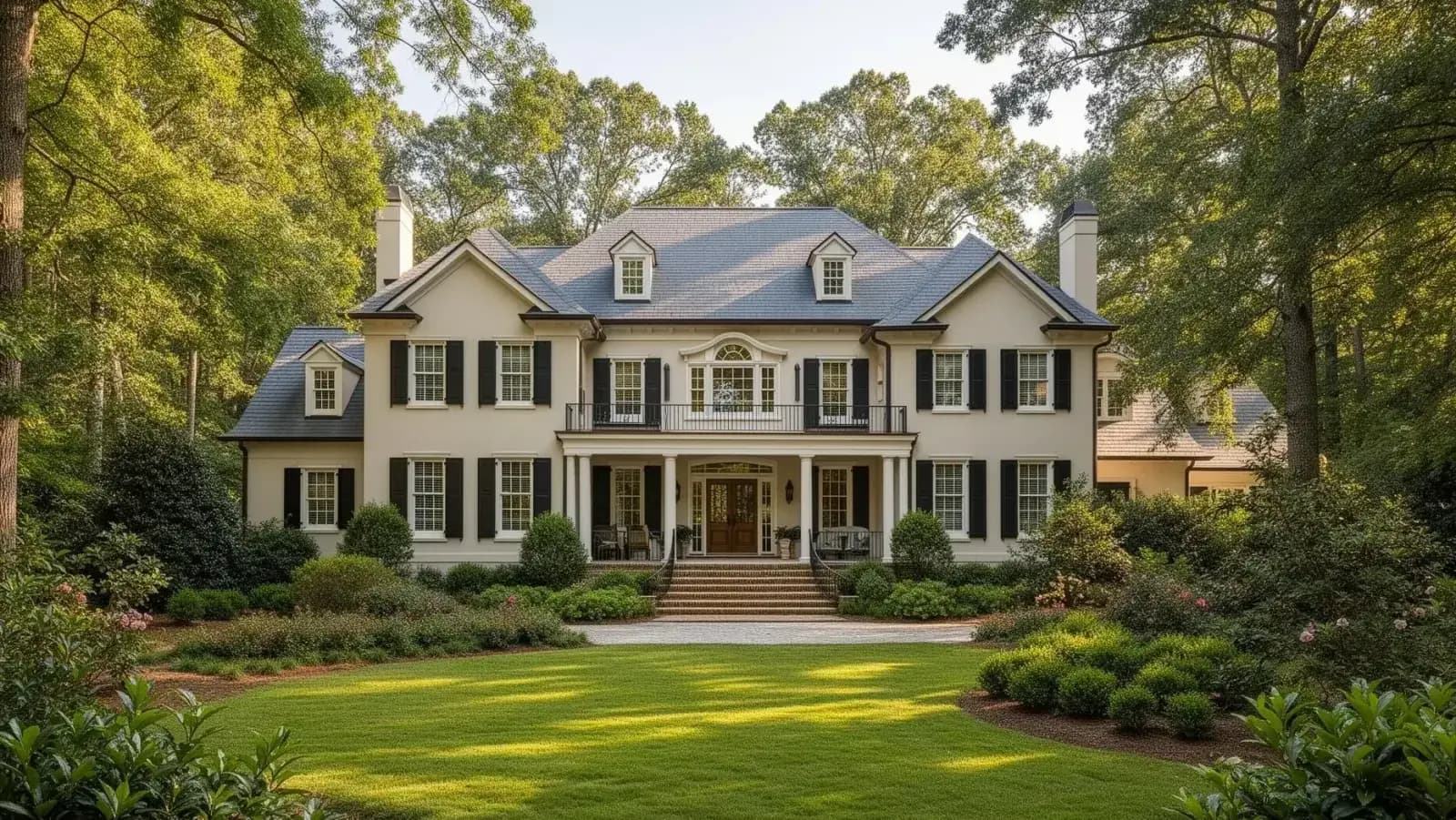
A standard home inspection covers the basics. It was designed for a 2,000-square-foot ranch with one HVAC system, one water heater, and a composition shingle roof. When you are buying a $2 million estate in Buckhead with four HVAC zones, a slate roof, a pool house, a whole-home generator, and a wine cellar - that standard inspection leaves dangerous gaps.
Luxury homes have more systems, more complexity, and more expensive components. A missed issue on a $400,000 home might cost $5,000 to fix. A missed issue on a $3 million home can cost $50,000 to $150,000. The inspection is your single best opportunity to find problems before they become your problems. But only if you know what to look for - and only if you hire inspectors who know what they are looking at.
This is the inspection checklist we use with every luxury buyer we represent across Buckhead, Sandy Springs, Brookhaven, and metro Atlanta. It goes well beyond what a standard inspector covers. Print it, bring it with you, and check every item. For the broader buying process, see our complete due diligence checklist.
Why Luxury Homes Need Specialized Inspections
A general home inspector sees 300-400 homes per year. The vast majority are under 3,000 square feet with standard residential systems. When they walk into a 7,000-square-foot estate with a commercial-grade Sub-Zero and Wolf kitchen, a Crestron automation system, radiant floor heating, and a four-zone HVAC setup, they are outside their normal scope.
This is not a criticism of general inspectors. It is a recognition that luxury homes contain systems and materials that require specialized knowledge. A standard inspector might note that the HVAC "appears to function" without recognizing that the system is undersized for the space by 30%. They might check that the pool pump runs without knowing that the variable-speed motor is failing. They might see a wine cellar without testing whether the cooling unit maintains proper temperature and humidity.
What Standard Inspectors Miss on Luxury Homes
- HVAC capacity mismatches: Multiple zones that appear functional but cannot maintain temperature under peak load. Replacement cost per system: $15,000-$30,000.
- Smart home integration failures: Systems that appear connected but have failing controllers, outdated protocols, or proprietary hardware no longer supported. Rewiring and replacement: $10,000-$50,000+.
- Specialty roofing deterioration: Slate, copper, and tile roofs require expert evaluation. A roofer who only works with asphalt shingles will miss delaminating slate or corroding copper flashing. Full replacement: $40,000-$150,000.
- Foundation issues masked by finishes: Finished basements in older estates can hide active settlement, water intrusion, and structural cracking. Remediation: $10,000-$100,000+.
- Pool and water feature aging: Equipment that runs today but is 2 years from catastrophic failure. Complete pool system overhaul: $15,000-$40,000.
Structural and Foundation Assessment
Atlanta sits on red clay soil that expands when wet and contracts when dry. This seasonal movement is the single biggest structural threat to homes in the metro area, and it is especially pronounced on the older estates in Buckhead, Druid Hills, and Ansley Park that were built 50-100 years ago. Many of these homes have had additions over the decades, and the connection points between original construction and additions are common failure points.
Foundation Inspection Checklist
- Horizontal and stair-step cracking in block or brick foundations (cracks wider than 1/4 inch warrant structural engineering evaluation - cost: $500-$1,000 for the evaluation)
- Evidence of previous foundation repair (piers, wall anchors, carbon fiber straps) - ask for documentation and warranties
- Basement moisture: staining, efflorescence (white mineral deposits), musty odor, dehumidifier running constantly
- Doors and windows that stick or do not close properly (indicator of active settlement)
- Uneven or sloping floors - use a marble test or digital level across multiple rooms
- Crawl space inspection: check for standing water, vapor barrier condition, pier condition, and joist integrity
Repair costs: Minor crack repair and sealing: $500-$2,000. Helical pier installation: $1,200-$1,800 per pier (typical homes need 8-15 piers: $10,000-$27,000). Full basement waterproofing with interior drain system: $8,000-$20,000. Major structural repair on older Buckhead estates: $25,000-$100,000+.
Roofing and Exterior Envelope
Luxury homes in Atlanta feature roofing materials that standard inspectors rarely encounter. Slate roofs, standing-seam copper, clay tile, and synthetic composites each have unique failure modes, maintenance requirements, and lifespans. A slate roof done properly lasts 75-100 years - but individual slates crack, flashing deteriorates, and improper repairs can cause cascading damage. You need a roofer who specializes in the material on the home you are buying.
Roofing Checklist
- Material type, age, and remaining life expectancy
- Flashing condition at valleys, chimneys, skylights, and wall junctions
- Evidence of previous repairs - were they done with matching materials and proper technique?
- Gutters and downspouts: capacity adequate for roof area? Properly directing water away from foundation?
- Attic inspection: ventilation, insulation depth, moisture staining, daylight visible through roof deck
- Flat roof sections (common on modern luxury homes): membrane condition, ponding water, drainage
Repair costs: Slate roof repair (per square): $1,000-$3,000. Full slate replacement: $50,000-$150,000. Standing-seam copper repair: $1,500-$5,000. Asphalt shingle replacement: $15,000-$35,000. Flat roof membrane replacement: $8,000-$20,000.
Exterior Checklist
- Stucco: check for cracking, bubbling, or soft spots (stucco failure is a major issue on Atlanta luxury homes built in the 2000s - remediation: $30,000-$80,000)
- Brick and stone: mortar joints, weep holes, lintel condition above windows and doors
- Wood siding and trim: rot, paint failure, termite damage (especially at ground-level contact points)
- Drainage and grading: water should flow away from the foundation on all sides. On large lots, check for erosion, retaining wall condition, and French drain systems
- Driveway and hardscape: settling, cracking, tree root damage. Circular driveways on large estates may need $10,000-$30,000 in resurfacing
HVAC and Climate Control Systems
Atlanta's climate demands serious HVAC capacity. Summers regularly hit 95 degrees with high humidity. A luxury home with 6,000-10,000 square feet, tall ceilings, and extensive glass needs multiple properly sized systems working in coordination. This is where standard inspections fail most often - the inspector confirms each unit runs, but does not evaluate capacity, efficiency, ductwork design, or whether the zoning actually works under peak load.
HVAC Inspection Checklist
- Number of systems and tonnage for each zone - is each system properly sized for its area?
- Age of each unit (average lifespan: 12-15 years; luxury systems may last 15-20 with maintenance)
- Refrigerant type: R-22 (Freon) systems are obsolete and extremely expensive to service. Budget $15,000-$25,000 per system for replacement
- Ductwork: condition, insulation, connections, evidence of leaks. Poorly sealed ductwork can waste 20-30% of conditioned air
- Humidity control: whole-house dehumidifiers, humidifiers, and how they integrate with HVAC
- Zoning controls: do individual zones maintain set temperatures? Test each zone independently
Specialty Climate Systems
- Wine cellar cooling: Dedicated climate unit maintaining 55-58 degrees and 60-70% humidity. Replacement: $3,000-$10,000 for the unit alone, plus installation. A failed unit can destroy a $50,000+ wine collection overnight
- Server room / media room cooling: Dedicated cooling for home theaters and network equipment
- Garage climate control: For collector car storage - check for proper ventilation and temperature regulation
- Geothermal systems: Increasingly common in high-end new construction. Require specialized maintenance and inspection. Loop field evaluation: $500-$1,000
For a full breakdown of ongoing climate control costs, see our guide to the real cost of owning a luxury home in Atlanta.
Have an Inspection Coming Up?
Luxury homes need specialist inspections that a general walkthrough does not cover. We can tell you which ones your specific property calls for.
Build My Inspection Planor call (770) 727-4052
Electrical Systems and Smart Home Infrastructure
Modern luxury living demands enormous electrical capacity. Between HVAC systems, pool equipment, EV chargers, home automation, commercial kitchen appliances, outdoor lighting, and whole-house generators, a luxury home can draw 400-800 amps. Older estates that were built for 200-amp service may have been upgraded over the years, but the quality of those upgrades varies dramatically. A home with insufficient electrical capacity will trip breakers, cannot support new additions, and may present fire hazards.
Electrical Checklist
- Main panel capacity (amps) and condition - is there room for additional circuits?
- Sub-panels: location, capacity, and proper installation
- Wiring type: copper throughout? Any aluminum branch wiring (fire hazard, common in 1960s-1970s homes)?
- GFCI protection in all wet locations (kitchens, bathrooms, exterior, pool areas)
- AFCI protection in bedrooms and living areas (current code requirement)
- Outdoor lighting: landscape lighting transformers, condition of low-voltage wiring, pathway and accent lighting systems
- EV charger readiness: is there a 240V circuit available in the garage? What amperage?
Generator Systems
- Whole-house generators (Generac, Kohler): check kW rating vs. home load requirements. Undersized generators cannot power the entire home
- Age and service history - generators need annual maintenance ($300-$500) and have a 10,000-30,000 hour lifespan
- Automatic transfer switch: does it engage properly? Test under load if possible
- Fuel source: natural gas vs. propane. Tank size and condition if propane
- Generator replacement: $15,000-$40,000 installed for whole-house units
Smart Home and Automation
Smart home systems are a major investment in luxury properties - and a major inspection point. Systems like Crestron, Control4, Savant, and Lutron require specialized evaluation. Check whether the system is current and supported, whether the installer is still in business and available for service, and whether the homeowner can transfer licenses and accounts. A Crestron system that was cutting-edge in 2015 may need $20,000-$50,000 to update. Read more in our guide to smart home features that add value in Atlanta.
- Network infrastructure: Cat6/Cat6a wiring, fiber connections, wireless access point coverage
- Lighting control: Lutron, Ketra, or other systems - test every scene and zone
- Audio/video: distributed audio, home theater equipment age and condition
- Motorized shades and window treatments: test every motor, check for binding or slow operation
- Integration: does everything talk to each other? Or is it a patchwork of disconnected systems?
Plumbing and Water Systems
Luxury homes stress plumbing systems in ways standard homes do not. Multiple master bathrooms with rain showers and soaking tubs, commercial kitchen equipment, outdoor kitchens, pool fill lines, irrigation systems, and sometimes radiant floor heating all depend on plumbing infrastructure that must be properly designed and maintained.
Plumbing Checklist
- Supply line material: copper, PEX, or older galvanized steel? Galvanized pipes corrode internally and restrict flow over time. Full re-pipe: $8,000-$25,000
- Drain line material: PVC, cast iron, or clay? Cast iron in homes built before 1980 may be corroding. Camera inspection of main sewer line: $250-$500
- Water heater(s): number, type (tank vs. tankless), age, and capacity. Luxury homes often need 2-3 water heaters or multiple tankless units. Replacement: $2,000-$5,000 per unit
- Water pressure: test at multiple fixtures simultaneously. Low pressure when running multiple fixtures indicates undersized supply lines
- Radiant floor heating: check for leaks in the hydronic loops, verify boiler condition and capacity. Repair: $3,000-$15,000 depending on accessibility
- Irrigation system: zone coverage, head condition, backflow preventer, controller programming. Overhaul: $2,000-$8,000
- Well water (in Sandy Springs and Brookhaven outer areas): water quality testing, pump age, pressure tank condition, filtration system
Buying a Luxury Home in Atlanta?
We coordinate the entire inspection process for our buyers - from hiring luxury-specialized inspectors to reviewing every report and negotiating repairs. On a $2M+ purchase, the inspection is too important to leave to chance.
Pool, Spa, and Outdoor Living Systems
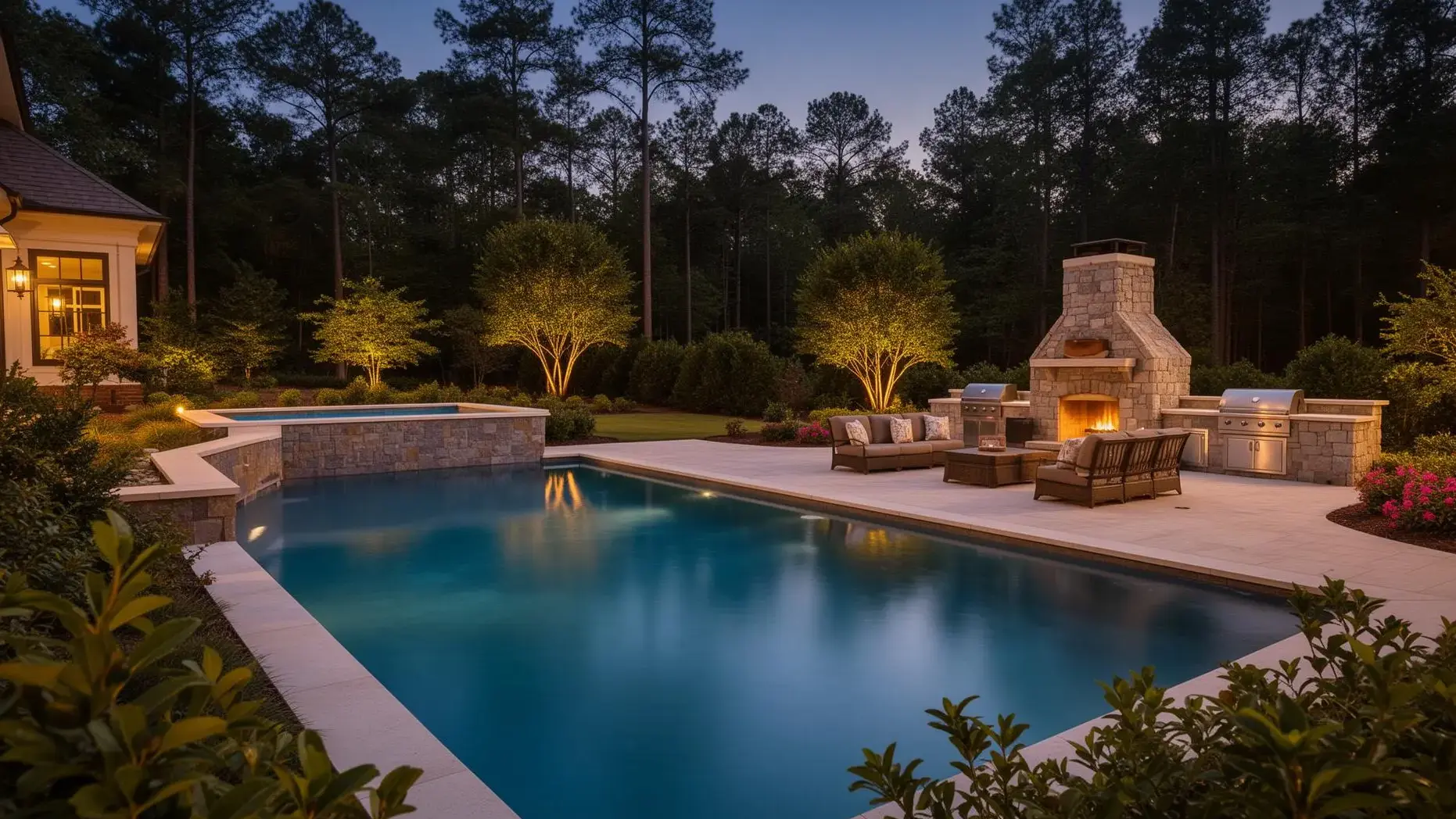
Outdoor living is a defining feature of Atlanta luxury homes. Atlanta's climate allows roughly nine months of outdoor entertaining, and high-end properties deliver with pools, spas, outdoor kitchens, fire features, and extensive hardscaping. Every one of these systems has a lifespan, maintenance requirements, and potential failure modes that need to be evaluated before you buy. For a deep dive on pool value specifically, see our analysis of whether a pool adds value to an Atlanta home.
Pool and Spa Checklist
- Pool surface: plaster, pebble, or tile? Check for staining, roughness, cracking, delamination. Resurfacing: $8,000-$20,000
- Equipment age: pump, filter, heater, salt chlorine generator, automation controller. Most equipment lasts 8-12 years. Full equipment replacement: $8,000-$20,000
- Plumbing: leak detection (pressure test of lines), skimmer and return condition
- Decking: settling, cracking, trip hazards, drainage away from the home. Deck replacement: $15,000-$40,000
- Safety compliance: fencing, gates with self-closing hardware, drain covers (Virginia Graeme Baker Act compliance)
- Spa: separate heater and pump? Jet condition, shell integrity, cover condition
- Water features: fountains, waterfalls, grottos - pump and plumbing condition, leak testing
Outdoor Kitchen and Living
- Gas lines: proper sizing, leak testing, shut-off valve accessibility
- Built-in grills and appliances: age, condition, brand (some brands have limited parts availability)
- Countertops and cabinetry: weather damage, material degradation (granite holds up; some natural stones do not)
- Covered structures: pergola, pavilion, or porch condition. Check posts for rot at ground level
- Fire features: gas fire pits and fireplaces - valve condition, ignition system, gas leak testing
- Outdoor electrical: GFCI protection, lighting condition, outlet placement
Security and Access Control Systems
Security infrastructure on luxury properties ranges from basic alarm systems to sophisticated setups with perimeter cameras, gate access control, biometric locks, and safe rooms. All of it needs to be inspected, and all of it has ongoing costs. Read our full guide to privacy and security features in Atlanta luxury homes for what to expect.
Security Checklist
- Entry gate: motor condition, safety sensors, remote and keypad access, intercom system. Gate motor replacement: $2,000-$8,000
- Camera system: number and placement of cameras, recording system (NVR/DVR), storage capacity, remote access. Age and resolution of cameras - older analog systems may need full replacement: $5,000-$20,000
- Alarm system: monitoring service, sensor coverage (every door, window, glass break), cellular backup, battery backup
- Smart locks and access control: condition, compatibility with home automation, battery life
- Safe room: ventilation, communication, power backup, door and wall reinforcement. Verify construction meets intended protection level
- Perimeter lighting: motion sensors, timer controls, bulb condition, wiring integrity
- Fencing: condition, height, secure attachment at gates, any gaps or damage
Key question: Is the security system proprietary to one monitoring company, or is it an open system you can service with any provider? Proprietary systems lock you into one vendor and one pricing structure. Budget $2,000-$5,000/year for professional monitoring on a complete luxury security system.
Specialty Inspections to Request
Beyond the general inspection and the system-specific evaluations above, luxury properties in Atlanta often need specialty inspections that standard buyers never think about. Georgia's climate, soil, and pest environment create specific risks that you need to address during due diligence. For related wellness considerations, see our guide on wellness features that add value to Atlanta luxury homes.
Arborist Evaluation
Mature trees are one of Atlanta's greatest assets - and one of its biggest liabilities. A 100-foot oak that drops a limb on the roof costs $20,000-$50,000 in damage. A tree with root systems undermining the foundation can cost even more. Hire a certified arborist ($300-$600) to evaluate mature trees within falling distance of the home. They assess health, structural integrity, root damage potential, and maintenance needs. Tree removal on a luxury property: $2,000-$15,000 per tree depending on size and access.
Mold Testing
Atlanta's humidity makes mold a persistent concern, especially in basements, crawl spaces, and around bathrooms. Air quality testing ($300-$600) reveals mold spore levels even when visible mold is not present. Surface sampling confirms the type and severity. Mold remediation on a luxury home ranges from $2,000 for a localized issue to $30,000+ for extensive contamination behind walls or in HVAC ductwork.
Radon Testing
Parts of north metro Atlanta, including areas of Sandy Springs and Brookhaven, have elevated radon levels. Testing costs $150-$300 and takes 48 hours with a continuous monitor. EPA action level is 4.0 pCi/L. Mitigation (sub-slab depressurization system) costs $800-$2,500 and is highly effective. This is one of the easiest and cheapest issues to identify and fix - but only if you test.
Termite and Wood-Destroying Organism Inspection
Georgia is in the highest termite activity zone in the country. Every luxury home purchase needs a termite inspection ($75-$200). Check for: active infestation, previous damage and repairs, existing termite bond status and transferability, and wood-to-ground contact points. A termite bond runs $800-$1,500/year and is essential for ongoing protection. Undetected termite damage repair: $5,000-$50,000+. For insurance considerations related to pest damage, see our luxury home insurance guide.
Structural Engineering Evaluation
If the general inspector flags foundation concerns, cracking, or settlement - or if the home is over 50 years old with significant additions - hire a licensed structural engineer ($500-$1,500). They provide a definitive assessment of structural integrity, specify repair requirements, and give you documentation that supports negotiation. A structural engineer's report carries far more weight with sellers and their agents than a general inspector's opinion.
Red Flags That Kill Deals
Not every inspection finding is a deal-breaker. A 10-year-old water heater that needs replacement is a negotiation point, not a walk-away issue. But some findings should make you seriously reconsider the purchase - or at minimum, require significant price adjustments. In Atlanta's luxury market, these are the issues that most often terminate transactions:
- Active structural movement with no clear remediation plan. Foundation piers can stabilize settled foundations, but active movement that has not been addressed suggests ongoing problems. Cost uncertainty alone can kill a deal.
- Extensive water intrusion in finished basements. If water is coming in and the source cannot be definitively identified and repaired, you are inheriting an open-ended problem.
- Multiple major systems at end of life simultaneously. If the roof, HVAC, and plumbing all need replacement within 2-3 years, you are looking at $80,000-$200,000 in near-term capital expenses beyond the purchase price.
- Unpermitted additions or modifications. Unpermitted work creates insurance exposure, resale complications, and potential code compliance requirements that can cost more than the original work.
- Environmental contamination. Underground oil tanks, asbestos throughout the home (not just in isolated areas), or contaminated well water create remediation costs and liability that are difficult to quantify.
- Seller blocking access to areas. If a seller will not allow inspection of certain areas - a finished basement wall, a locked room, a section of crawl space - that is a red flag. You have a right to inspect everything during due diligence.
How to Find Luxury-Specialized Inspectors in Atlanta
The inspector you hire for a $2 million home should not be the same inspector you would hire for a $400,000 home. Here is what to look for:
- Experience at the price point. Ask how many homes over $1.5 million they have inspected in the last 12 months. If the answer is fewer than 10, they may not have the specialized knowledge you need.
- Relevant certifications. ASHI (American Society of Home Inspectors) or InterNACHI certification is a baseline. Look for additional training in commercial HVAC, roofing specialties, or structural assessment.
- Time on site. A luxury home inspection should take 4-6+ hours. If an inspector quotes 2-3 hours for a 6,000-square-foot home, they are not being thorough enough.
- Report quality. Ask for a sample report. You want detailed written findings with photos, severity ratings, and specific repair recommendations - not a checkbox form.
- Referrals from luxury agents. Your buyer's agent should have a vetted list of luxury-specialized inspectors. We maintain relationships with inspectors who specialize in high-end residential across every system category.
Negotiating After Inspection Findings
The inspection report is your most powerful negotiation tool. How you use it determines whether you get the repairs or credits you need - or whether you damage your position with an unfocused request. Here is the approach we use with our luxury buyers:
- Prioritize material defects. Focus on structural issues, safety hazards, and major systems nearing failure. Do not dilute your request with cosmetic items or minor maintenance. A repair request for $45,000 in legitimate structural and HVAC issues is taken seriously. A 47-item list that includes loose doorknobs undermines your credibility.
- Get independent repair estimates. Do not rely on the inspector's cost estimates. Get written quotes from licensed contractors for every significant item. This gives you documentation that supports your request and makes it harder for the seller to argue the numbers.
- Request credits over repairs. In most cases, a closing credit is better than asking the seller to make repairs. You control the quality, the contractor selection, and the timeline. A seller making repairs before closing is incentivized to do the work as cheaply and quickly as possible.
- Know when to walk. If the inspection reveals problems that would cost more than 5-10% of the purchase price to address, and the seller is unwilling to negotiate meaningfully, walking away is often the right decision. Your due diligence fee is the cost of discovering that information. It is far cheaper than inheriting the problems.
For the full picture on appraisals and how inspection findings affect property valuation, review our luxury home appraisal guide.
Complete Luxury Inspection Budget (Typical $2M-$4M Home)
- General inspection (luxury specialist): $600-$1,200
- HVAC inspections (3-4 systems): $450-$1,600
- Roof inspection: $300-$600
- Pool and spa inspection: $250-$500
- Termite inspection: $75-$200
- Radon testing: $150-$300
- Mold testing: $300-$600
- Arborist evaluation: $300-$600
- Sewer camera inspection: $250-$500
- Structural engineer (if needed): $500-$1,500
- Total inspection budget: $3,175-$7,600
On a $2.5 million purchase, this represents 0.13-0.30% of the price. It is the cheapest insurance available for what is likely your largest single asset purchase.
The Bottom Line
A luxury home inspection is not a bigger version of a standard home inspection. It is a fundamentally different process that requires specialized inspectors, more time, and a checklist that accounts for systems and materials that standard inspectors encounter once a year, if ever.
The stakes are proportional to the price. A $15,000 HVAC system that was missed on a $300,000 home represents 5% of the purchase price. That same system missed on a $3 million home is still $15,000 out of your pocket. But the luxury home probably has four of those systems, plus a pool, plus a generator, plus a smart home system, plus a slate roof. The aggregate risk on a luxury property is exponentially higher.
Spend the money on the inspection. Hire the specialists. Check every system. Get the repair estimates. Use the findings to negotiate. And if the inspection reveals problems that make the purchase unwise, be willing to walk. The due diligence fee you lose is a fraction of the repair costs you avoid.
Your agent should be coordinating every inspector, reviewing every report, and building your negotiation strategy based on the findings. If they are not - if they are leaving the inspection process entirely to you - they are not providing the representation that a luxury purchase demands.
Frequently Asked Questions
How much does a luxury home inspection cost in Atlanta?
A full inspection package for a luxury home in Atlanta typically costs $3,000-$7,000 depending on the property size and systems involved. This includes the general inspection ($600-$1,200), individual HVAC system inspections ($150-$400 each), roof inspection ($300-$600), pool and spa inspection ($250-$500), termite inspection ($75-$200), radon testing ($150-$300), and any specialty inspections like structural engineering or mold testing. On a $2M+ purchase, this represents less than 0.35% of the price and is the best insurance you can buy against hidden problems.
How long does a luxury home inspection take?
A thorough general inspection on a 5,000-8,000 square foot luxury home takes 4-6 hours. Homes over 8,000 square feet or with extensive outdoor features (pools, outdoor kitchens, guest houses) can take a full day. Specialty inspections like HVAC, roofing, and pool are scheduled separately and each takes 1-3 hours. Plan for the full inspection process to span 3-5 business days across all specialists. Do not try to rush this on a luxury property - the complexity justifies the time.
Do I need a specialized inspector for a luxury home?
Yes. Standard home inspectors handle 1,500-2,500 square foot homes most of the day. They may not have experience with commercial-grade HVAC systems, wine cellar climate controls, whole-house generators, elevator mechanics, slate or copper roofing, radiant floor heating, or integrated smart home systems. Look for inspectors who specifically market luxury or high-end residential inspections and can provide references from transactions at your price point. The difference between a $400 standard inspection and a $1,000 luxury inspection is significant.
What are the most common inspection issues in older Buckhead homes?
Older Buckhead estates commonly present: foundation settling and cracking due to Atlanta’s red clay soil ($5,000-$100,000+ to repair depending on severity), outdated electrical panels that cannot support modern load demands ($3,000-$15,000 to upgrade), galvanized or cast iron plumbing nearing end of life ($8,000-$25,000 to replace), insufficient HVAC capacity for the square footage, aging slate roofs needing restoration ($40,000-$100,000+), and basement moisture intrusion from inadequate waterproofing. Many of these homes were built in the 1920s-1960s and have had multiple additions that create their own set of integration issues.
Should I attend the home inspection?
Absolutely. Being present for the general inspection allows you to see issues firsthand, ask questions in real time, and understand the severity of findings in context. Walk through with the inspector and take your own photos and notes. Your real estate agent should also attend. Reading a report after the fact does not give you the same understanding as watching the inspector point to the crack, explain what caused it, and show you the water stain that confirms it is active. Budget 4-6 hours for a luxury home inspection walkthrough.
What inspection red flags should make me walk away from a luxury home?
Major structural issues (active foundation movement, significant settling, load-bearing wall modifications without engineering), active water intrusion in basements or crawl spaces with no clear remediation path, extensive mold behind walls or in HVAC systems, knob-and-tube or aluminum wiring that would require full rewiring, environmental contamination (underground storage tanks, asbestos throughout), and any situation where the seller is blocking access to areas for inspection. No home is perfect, but some problems are too expensive or too risky to inherit. When repair estimates exceed 5-10% of the purchase price, the economics change significantly.
Ready to buy with confidence? We manage the entire inspection process.
Sources
- American Society of Home Inspectors (ASHI) - Standards of practice for residential home inspections, luxury property inspection protocols, and inspector qualification requirements.
- Georgia Association of Realtors (GAR) - Due diligence period framework, property condition disclosure requirements, and repair negotiation guidelines for Georgia residential transactions.
- EPA (Environmental Protection Agency) - Radon testing guidelines, action levels for residential properties, and mitigation system effectiveness data.
- Georgia Department of Agriculture - Structural Pest Control Commission - Termite activity data for Georgia, wood-destroying organism inspection requirements, and termite bond regulations.
- International Association of Certified Home Inspectors (InterNACHI) - Inspection standards for specialty systems including pools, generators, smart home infrastructure, and commercial-grade residential equipment.
Cost estimates are based on Atlanta metro area pricing as of early 2026 and may vary by property size, system complexity, and contractor. Consult with licensed professionals for project-specific quotes.
Disclaimer: This article is for informational purposes only and does not constitute legal, financial, or professional inspection advice. Inspection requirements, costs, and findings vary by property. Georgia real estate law and building codes change periodically. Consult with qualified inspection, legal, and real estate professionals for guidance specific to your purchase.