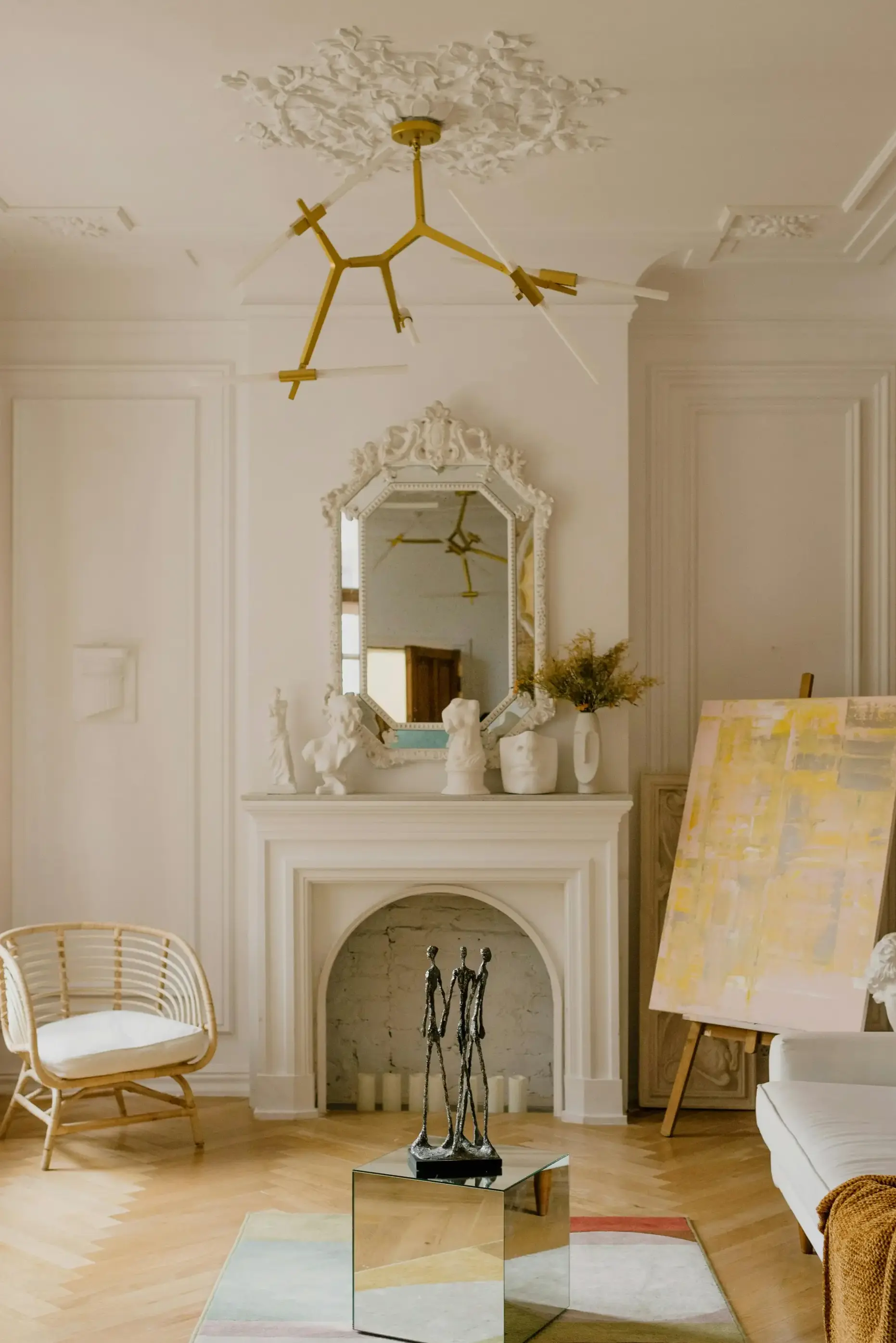
A luxury home is more than a place to live. For many collectors and art enthusiasts in Atlanta, it is also a private gallery. But displaying fine art well requires more than finding an empty wall and hammering in a nail. The wrong lighting fades pigments. Poor humidity control warps canvases and cracks frames. UV exposure through a south-facing window can destroy a painting worth more than the room it hangs in.
Whether you are building a serious collection or simply want to display the pieces you love in a way that protects and showcases them, the decisions you make about lighting, climate control, placement, and security matter. They affect the longevity of your art, the aesthetic of your home, and in many cases the resale value of both the art and the property.
This guide covers the practical and technical side of displaying fine art in a luxury home, with specific considerations for Atlanta's climate and the local gallery scene.
Museum-Quality Lighting for Residential Spaces
Lighting is the single most important factor in how art is perceived. The same painting can look flat and lifeless under bad lighting or luminous and commanding under proper illumination. Museums spend enormous resources on lighting design, and the principles they use apply directly to residential settings.
The current standard for art lighting is LED with a Color Rendering Index (CRI) of 95 or above. CRI measures how accurately a light source renders colors compared to natural daylight (which scores a perfect 100). Most residential LED fixtures have a CRI of 80 to 85, which is fine for general use but not adequate for art. Fixtures from manufacturers like Soraa, Erco, and iGuzzini offer CRI ratings of 95 to 98 and are widely used in galleries and museums.
Color temperature matters too. For residential art display, 2700K to 3000K (warm white) creates an inviting atmosphere while accurately rendering colors. Higher color temperatures (4000K and above) can make a space feel clinical. According to the Illuminating Engineering Society (IES), the recommended illumination level for residential art display is 15 to 30 foot-candles for oil and acrylic paintings, and 5 to 10 foot-candles for works on paper, watercolors, and photographs.
Fiber optic lighting systems offer another option, particularly for light-sensitive works. In a fiber optic system, the light source (and its heat) is located in a remote box, and light is delivered to the art via fiber optic cables. This eliminates heat and UV exposure at the point of illumination entirely. The installation cost is higher than standard LED track lighting, but for high-value works on paper, textiles, or photographs, the added protection may be worth it.
Lighting Options Compared
- Recessed adjustable LED: Clean ceiling-mounted option. No visible fixtures. Best for modern and transitional interiors. Cost: $200 to $500 per fixture installed. Works well for paintings and two-dimensional works.
- Track lighting with directional heads: Flexible and repositionable. Allows adding or moving art without electrical changes. Cost: $150 to $400 per head. Popular in homes where the collection rotates frequently.
- Picture lights (hardwired or battery): Mounted directly on or above the frame. Traditional aesthetic. Cost: $100 to $800+ depending on finish and brand. Best for traditional and classical interiors. Battery-powered options (like Rechargeable Art Lights by Cocoweb) avoid wiring entirely.
- Fiber optic systems: Maximum protection for sensitive works. Zero UV, zero heat at the art surface. Cost: $1,000 to $3,000+ per run including light source and installation. Primarily used for museum-quality collections.
UV Protection: The Invisible Threat
Ultraviolet radiation is the primary cause of fading and deterioration in artwork. UV breaks down molecular bonds in pigments, dyes, paper fibers, and textiles. The damage is cumulative and irreversible. A painting hung in direct sunlight for a few years can suffer more degradation than one stored properly for decades.
In Atlanta, where southern and western exposures get intense afternoon sun, UV management is essential. The first line of defense is UV-filtering window film. Products from 3M, Vista, and LLumar block 99% or more of UV radiation while remaining virtually invisible. Professional installation on a typical luxury home costs $8 to $15 per square foot, and the film lasts 15 to 20 years.
For framed works, museum-quality UV-filtering glass or acrylic is the standard. TruVue Museum Glass and Optium Museum Acrylic block over 99% of UV while providing anti-reflective properties that make the glass nearly invisible. The cost premium over standard glass is significant ($15 to $30 per square foot versus $3 to $5 for regular glass), but for works of any meaningful value, it is a worthwhile investment. According to the American Institute for Conservation (AIC), UV-filtering glazing is one of the most effective single measures a collector can take to preserve framed works.
Automated window treatments add another layer of protection. Motorized shades from Lutron, Hunter Douglas, or Crestron can be programmed to close during peak UV hours (typically 10 AM to 4 PM on south and west exposures) and integrate with your smart home system. Some systems use light sensors to close shades automatically when UV intensity reaches a threshold.
Buying a Home That Has to Hold a Collection?
Wall runs, ceiling heights, light exposure, and mechanical layout decide what a house can display. We can screen for those things before you ever tour.
Find a Home Built for a Collectionor call (770) 727-4052
Humidity and Climate Control for Art
Atlanta's humid subtropical climate presents a specific challenge for art preservation. Summer outdoor humidity routinely exceeds 80%, and even well-sealed homes can experience indoor humidity levels of 60% to 70% without active dehumidification. At these levels, canvas stretches, paper buckles, mold can form, and wooden frames warp.
The AIC recommends maintaining relative humidity between 40% and 55% for most types of artwork, with fluctuations of no more than 5% in any 24-hour period. Achieving this in an Atlanta luxury home requires a whole-home dehumidification system separate from your standard HVAC. Your air conditioning removes some moisture, but it cycles on and off throughout the day, creating humidity fluctuations that are harmful to art.
Dedicated whole-home dehumidifiers from manufacturers like AprilAire, Santa Fe, or Ultra-Aire integrate with your HVAC ductwork and maintain a consistent humidity level regardless of outdoor conditions. Installation costs typically range from $2,500 to $5,000 for the unit and installation. For homes with dedicated art rooms or galleries, a separate HVAC zone with precise humidity control may be warranted.
Temperature also matters, though it is less critical than humidity for most art. The general recommendation is 65 to 75 degrees Fahrenheit, which is the normal comfort range for most homes. Avoid placing art near heat sources (fireplaces, HVAC vents, radiators) or on exterior walls that experience significant temperature swings.
Gallery Walls, Placement, and Spatial Design
How and where you place art in your home affects both the visual impact and the conservation of the work. The standard museum hanging height places the center of the artwork at 57 to 60 inches from the floor, which corresponds to average eye level. In residential settings, you can adjust this based on ceiling height and furniture placement, but the center-of-the-work-at-eye-level principle is a reliable starting point.
For gallery walls (groupings of multiple works), plan the layout before making any holes. Cut paper templates to the size of each frame and tape them to the wall to test arrangements. Maintain consistent spacing between pieces: 2 to 3 inches for tight salon-style groupings, 4 to 6 inches for more formal arrangements. Align the center line of the overall grouping at eye level. A laser level ensures precision.
Wall color plays a significant role. Museums use white or off-white walls because neutral backgrounds let the art speak for itself. In a residential setting, warm whites (Benjamin Moore White Dove, Sherwin-Williams Alabaster) and soft warm grays work well. Darker accent walls can create drama behind a single statement piece, but use them deliberately. The wrong shade can compete with the art or alter how colors are perceived.
For sculpture, placement requires thinking in three dimensions. Free-standing sculpture needs space for viewers to walk around it. The center of the work should be at eye level for standing viewers (approximately 60 inches). Pedestals should be proportionate to the sculpture: too small looks unstable, too large competes with the piece. Lighting for sculpture should come from above at an angle to create shadows that reveal form and texture. Avoid flat, even lighting, which makes three-dimensional work look flat.
Security and Insurance for Valuable Art
If your art collection has meaningful financial value, security and insurance should be priorities, not afterthoughts. The FBI's Art Crime Team estimates that art theft is a $6 billion to $8 billion annual criminal enterprise worldwide, and residential collections are targets because they typically have less security than commercial galleries or museums.
A layered security approach is best. Start with a professionally monitored alarm system with motion, door, and window sensors. Add interior security cameras in rooms where valuable works are displayed (visible cameras deter theft; hidden cameras provide evidence). For individual high-value pieces, vibration sensors attached to the back of the frame or the wall mount trigger an alert if the work is disturbed. Companies like SimpliSafe, Vivint, and ADT offer systems that can accommodate these specialized sensors.
On the insurance side, standard homeowner policies are not adequate for valuable art collections. Most policies have sub-limits for "fine art" that cap coverage at $5,000 to $10,000 per piece unless items are individually scheduled. A scheduled fine art endorsement or a standalone fine art policy provides agreed-value coverage (the insurer and policyholder agree on the value upfront, and that amount is paid in a covered loss without depreciation or dispute), coverage during transit, and protection against accidental damage.
Specialty art insurers include Chubb, AXA Art Insurance, and Berkley Asset Protection. Annual premiums for art insurance typically range from $0.10 to $0.50 per $100 of insured value, depending on the type of art, security measures in place, and claims history. A collection valued at $500,000 might cost $500 to $2,500 per year to insure. Get appraisals from a qualified art appraiser (look for the ASA or AAA designation) every three to five years, as art values can fluctuate significantly.
The Atlanta Gallery Scene and Art Consultants
Atlanta's art scene has matured significantly over the past decade. The High Museum of Art is the anchor institution, with a world-class permanent collection and rotating exhibitions. But the commercial gallery scene has grown substantially, driven by Atlanta's expanding tech and creative industry base.
The Westside arts district, centered around Huff Road and Ellsworth Industrial Boulevard, is home to many of Atlanta's most respected galleries, including Whitespace, Sandler Hudson Gallery, and Marcia Wood Gallery. Castleberry Hill, near downtown, has another concentration of galleries. The BeltLine corridor has attracted newer, more contemporary spaces. Atlanta Contemporary, a non-collecting contemporary art center in the Westside, hosts exhibitions, studio visits, and events that are good entry points for new collectors.
For luxury homeowners who want professional help building or curating a collection, Atlanta-based art consultants offer services ranging from sourcing and acquisition to installation planning and collection management. A good art consultant understands your aesthetic preferences, your home's architecture and lighting, and your budget. They have relationships with galleries, artists, and auction houses that give them access to works you might not find on your own.
Art consulting fees vary. Some consultants charge an hourly rate ($100 to $300 per hour), while others work on a commission basis (typically 10% to 20% of the purchase price). For a collection build-out for a new luxury home, expect to spend $5,000 to $15,000 in consulting fees for a detailed plan, plus the cost of the art itself.
The Bottom Line
Displaying fine art in a luxury home is equal parts aesthetics and preservation science. The right lighting, climate control, UV protection, and security measures protect your investment while ensuring your art looks its best. In Atlanta's humid climate, these considerations are especially important.
Start with the basics: LED lighting with high CRI, UV-filtering glass on framed works, a whole-home dehumidification system, and proper insurance coverage. From there, you can refine your approach with fiber optic systems, automated shading, dedicated gallery spaces, and professional art consulting.
If you are searching for a luxury home in Atlanta that can accommodate a fine art collection, or if you want to make sure your current home is set up properly for the works you own, connect with our team. We understand what collectors need in a home and can help you find a property where your art and your lifestyle work together.
Frequently Asked Questions
What type of lighting is best for displaying fine art at home?
LED lighting with a Color Rendering Index (CRI) of 95 or above and a color temperature between 2700K and 3000K is currently the gold standard for residential art lighting. LEDs produce virtually no UV radiation and minimal heat, which protects artwork from fading and deterioration. Fiber optic systems are another excellent option for light-sensitive works because the light source is located remotely from the artwork. Avoid halogen and incandescent bulbs, which emit significant heat and UV light. For paintings, adjustable picture lights or recessed track lighting with directional heads allow precise aiming. The American Institute for Conservation recommends keeping illumination levels below 15 foot-candles for oil paintings and below 5 foot-candles for works on paper.
What humidity level should I maintain for artwork in my home?
The ideal relative humidity range for most artwork is 40% to 55%, with minimal fluctuation. Rapid changes in humidity are more damaging than a steady level that is slightly outside the ideal range. In Atlanta's humid subtropical climate, where outdoor humidity regularly exceeds 80% in summer, a whole-home dehumidification system is essential for protecting valuable art. Systems from brands like AprilAire, Santa Fe, or Ultra-Aire can maintain precise humidity levels throughout your home. The American Institute for Conservation of Historic and Artistic Works (AIC) recommends that humidity fluctuations not exceed 5% over any 24-hour period for valuable works.
How do I protect artwork from UV damage?
UV radiation causes irreversible fading and degradation of pigments, dyes, paper, and textiles. The primary sources of UV in a home are sunlight through windows and certain artificial light sources. Use UV-filtering window film (which blocks 99% or more of UV radiation while remaining nearly invisible) on any windows near artwork. Museum-quality UV-filtering glass or acrylic (like TruVue Museum Glass) for framed works blocks over 99% of UV while reducing glare. Position artwork away from direct sunlight, and use LED lighting (which produces negligible UV) instead of halogen or fluorescent sources. For particularly valuable works, some collectors install motorized shades that automatically close during peak sun hours.
How should I hang heavy artwork or sculptures on walls?
For heavy works (over 30 pounds), use structural wall anchors or mount directly into wall studs. French cleats are the preferred method for heavy pieces because they distribute weight evenly and allow for precise leveling. For very large or extremely heavy works, a structural engineer should assess the wall's load-bearing capacity. The hanging hardware should be rated for at least twice the weight of the piece. For sculptures on pedestals, ensure the pedestal base is weighted or secured to prevent tipping. On hardwood or stone floors, use padding under pedestals to prevent scratching. Professional art installers (available in Atlanta through firms like Hang It Up Atlanta or through gallery referrals) have the equipment and expertise to handle valuable and heavy works safely.
Do I need a separate insurance policy for fine art?
Standard homeowner insurance typically covers personal property on an actual cash value or replacement cost basis, with sub-limits for certain categories. For fine art worth more than a few thousand dollars per piece, you should schedule individual pieces on your policy or obtain a separate fine art floater policy. Specialized art insurance (from carriers like Chubb, AXA Art, or Berkley Asset Protection) covers agreed value (you and the insurer agree on the value upfront), provides broader coverage (including accidental damage, which many homeowner policies exclude), and covers works while in transit. Get a professional appraisal from a qualified art appraiser (look for ASA or AAA credentials) every three to five years, as art values can change significantly.
What security measures should I take for valuable art in my home?
A multi-layered approach works best. Start with a professionally monitored alarm system with door, window, and motion sensors. Add security cameras in rooms where valuable works are displayed. For individual high-value pieces, consider vibration sensors that trigger an alert if the work is touched or moved. A central monitoring station should be connected to local law enforcement. Keep a detailed inventory of all artwork with photos, descriptions, provenance documentation, and current appraisals, stored securely off-site or in encrypted cloud storage. Limit information about your collection on social media. Some collectors install museum-style security glass or barriers for their most valuable pieces.
How do I create a gallery wall in my luxury home?
A successful gallery wall requires planning before any nails go into the wall. Start by laying out your arrangement on the floor or using paper templates cut to the size of each frame. Maintain consistent spacing between pieces (typically 2 to 3 inches for tightly grouped arrangements, 4 to 6 inches for more open layouts). Choose a unifying element: consistent frame style, color palette, subject matter, or medium. For a cohesive look, align the center line of the arrangement at 57 to 60 inches from the floor, which is standard museum hanging height. Use a laser level for precision. Consider the wall color carefully. Neutral tones (white, warm gray, soft linen) let artwork stand on its own. Dark walls can create drama but may overwhelm smaller or lighter works.
Where should I place sculpture in my home?
Sculpture needs room to breathe. Place three-dimensional works where viewers can walk around them or see them from multiple angles. Entryways and foyers are excellent locations because they create an immediate impression and visitors naturally move around the space. Living room corners, dining room niches, and dedicated alcoves also work well. Consider the sightlines from different rooms and seating positions. Lighting is critical for sculpture. Directional lighting from above or below creates dramatic shadows that reveal form and texture. Floor sculptures should be on pedestals appropriate to their scale. The center of the sculpture should generally be at eye level (approximately 60 inches from the floor) for standing viewers.
What is the Atlanta gallery scene like for collectors?
Atlanta has a growing and increasingly respected art scene. The High Museum of Art is the anchor institution, but the city's gallery district centered around the Westside and Castleberry Hill neighborhoods offers a range of contemporary galleries representing emerging and established artists. Atlanta Galleries Night (held monthly) is a good way to explore multiple venues in one evening. Notable galleries include Whitespace, Sandler Hudson, and Marcia Wood Gallery. The Atlanta Contemporary art center, Mason Fine Art, and the galleries along the BeltLine corridor add to the mix. For collectors seeking advisory services, several Atlanta-based art consultants specialize in building residential collections, including sourcing, acquisition, and installation planning.
Can displaying art well actually increase my home's resale value?
While art itself is personal property and does not convey with the home, the infrastructure for displaying art can add measurable value. Museum-quality lighting systems, climate control systems that maintain gallery-grade humidity levels, and purpose-built gallery spaces or display walls are all features that luxury buyers notice and value. According to luxury real estate marketing studies, homes that are staged with thoughtfully curated art sell faster and often at higher prices than comparable homes without. The key is that the built-in features (lighting, climate control, wall preparation, display niches) become part of the home's infrastructure and appeal to the subset of luxury buyers who collect art themselves.
Looking for a luxury home that can showcase your art collection?



Sources
- American Institute for Conservation (AIC) - Guidelines for environmental standards, UV exposure limits, and humidity recommendations for artwork conservation.
- Illuminating Engineering Society (IES) - Recommended illumination levels for residential and museum art display settings.
- FBI Art Crime Team - Art theft statistics and residential collection security recommendations.
- High Museum of Art, Atlanta - Gallery standards, lighting specifications, and art conservation practices used in their permanent collection.
- TruVue - Technical specifications for Museum Glass and Optium Museum Acrylic UV-filtering properties.
- Chubb, AXA Art Insurance - Fine art insurance coverage terms, premium ranges, and appraisal requirements for residential collections.
Lighting specifications, product recommendations, cost estimates, and conservation guidelines referenced in this article reflect conditions as of early 2026 and are subject to change. This article does not constitute professional conservation, insurance, or security advice. Consult qualified professionals for guidance specific to your collection and property.
Disclaimer: This article is for informational purposes only and does not constitute art conservation, insurance, or security advice. Product recommendations are for informational purposes only and do not represent endorsements. The Luxury Realtor Group is a real estate brokerage and does not provide art conservation, insurance, or security services. Consult qualified professionals for advice specific to your collection.