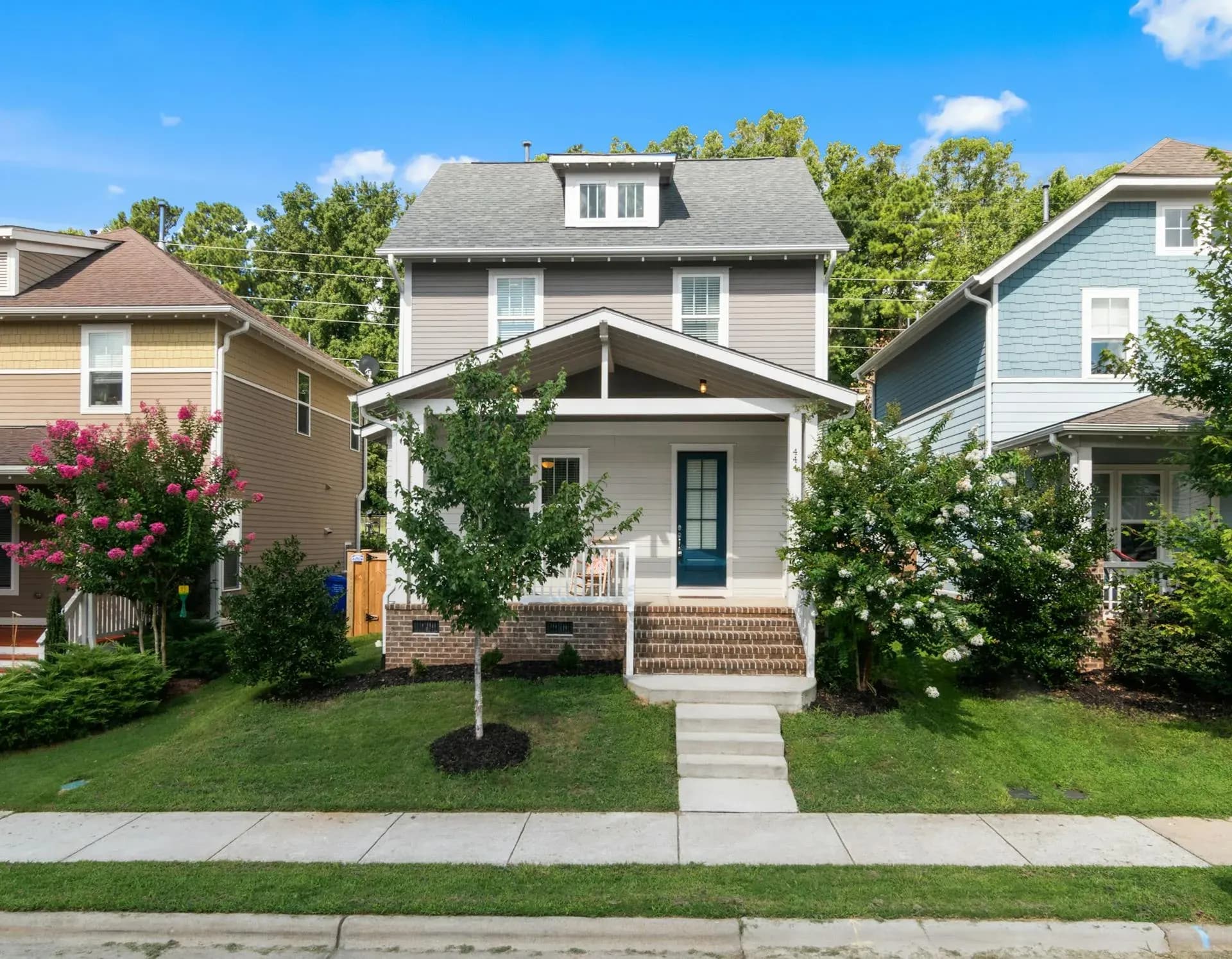
For decades, luxury living in Atlanta meant one thing: a gated estate on a multi-acre lot in Buckhead or Sandy Springs, surrounded by manicured lawns and a 15-minute drive to anywhere worth going. That model is not dead, but it is no longer the only option. A growing number of luxury buyers want something different. They want to walk.
Walk to dinner. Walk to the park. Walk to a coffee shop on Saturday morning without searching for parking. Walk along the BeltLine to meet friends at Ponce City Market. The desire for walkability is not about giving up luxury. It is about redefining what luxury means in a city that was built around the car.
Atlanta has responded. Fueled by the BeltLine, a wave of mixed-use development, and a cultural shift toward urban living, several Atlanta neighborhoods now deliver genuine walkability alongside homes priced from $700K to well over $4M. These are not compromises. They are some of the most desirable addresses in the metro area.
This guide covers nine neighborhoods where walkability and luxury coexist. For each, we include walk scores, luxury price ranges, what you can actually walk to, and how the BeltLine is reshaping access. If you are considering a move from a car-dependent suburb into a walkable intown neighborhood, or relocating from a city like New York or Chicago and want that same pedestrian lifestyle in Atlanta, this is your starting point.
The Short Answer
Atlanta's most walkable luxury addresses: Midtown (Walk Score 92, condos and penthouses $800K to $3M+), Old Fourth Ward (85, $600K to $1.8M), Inman Park (84, Victorian and modern homes $900K to $2.8M), and Virginia-Highland (82, renovated bungalows $800K to $2.5M). For a single-family home beside a great park, Ansley Park (78) runs $1M to $4M+.
Georgia State University research has associated BeltLine proximity with meaningful price premiums. The only reliable way to compare these streets is on foot, which is why we tour them with buyers before they commit.
Key Numbers: Walkability and Luxury in Atlanta
- Walk scores above 70 in 8+ intown neighborhoods compared to a metro-wide average below 35. Atlanta has distinct pockets of genuine walkability surrounded by car-dependent sprawl.
- Georgia State University research has associated BeltLine proximity with meaningful price premiums. Walkability premiums are real and measurable.
- Luxury price range: $600K to $5M+ across walkable intown neighborhoods. Entry points start lower in Old Fourth Ward and West Midtown. Ansley Park and Buckhead Village reach the highest tiers.
- Walkable luxury neighborhoods appreciate 5-10% annually, outperforming suburban luxury areas averaging 3-5%. The premium reflects structural demand that is accelerating, not slowing.
- 22 miles of BeltLine trail planned, connecting 40+ neighborhoods. Roughly half is complete as of 2026, with each new segment unlocking walkability in adjacent areas and driving price appreciation.
- Remote work is accelerating the trend. Buyers who no longer commute daily are prioritizing walkable lifestyle over proximity to an office park, shifting demand from suburban to intown neighborhoods.
Want walkable at your price point?
Walkability and luxury inventory overlap in fewer Atlanta pockets than you would expect. We will show you where.
Why Luxury Buyers Are Prioritizing Walkability
The shift toward walkable luxury is not a fad. It reflects three structural forces converging in Atlanta.
Demographics. Baby owners downsizing from sprawling estates want to simplify without sacrificing quality. They have spent 25 years driving to everything and are done with it. At the same time, affluent millennials and Gen X buyers who grew up in car-dependent suburbs are deliberately choosing a different lifestyle for themselves and their families. Both groups are converging on the same walkable intown neighborhoods.
Remote work. When you no longer commute to an office five days a week, the calculus changes. A home in Sandy Springs that was convenient to a Perimeter office loses its primary advantage. A home in Virginia-Highland where you can walk to lunch, the park, and dinner becomes far more appealing when your commute is down the hall.
The BeltLine effect. The Atlanta BeltLine is the most transformative infrastructure project in the city's modern history. It has turned formerly car-dependent neighborhoods into walkable destinations, created linear parks connecting communities, and attracted billions in private investment. Neighborhoods that were marginal a decade ago are now among the most desirable in the metro area. The BeltLine did not just add a trail. It created an entirely new way to experience Atlanta on foot.
Walkable Luxury Neighborhoods at a Glance
| Neighborhood | Walk Score | Luxury Range | Property Type | YoY Growth | Best For |
|---|---|---|---|---|---|
| Midtown | 92 | $800K - $3M+ | Condos / Penthouses | +5% | Urban luxury, arts, transit |
| Virginia-Highland | 82 | $800K - $2.5M | Renovated bungalows / Homes | +6% | Village walkability, dining |
| Inman Park | 84 | $900K - $2.8M | Victorian / Modern homes | +8% | BeltLine, restaurants, festivals |
| Ansley Park | 78 | $1M - $4M+ | Historic estates | +5% | Piedmont Park, Midtown access |
| Old Fourth Ward | 85 | $600K - $1.8M | Condos / Townhomes / Homes | +8% | BeltLine, Ponce City Market |
| Decatur | 80 | $700K - $2M | Homes / Townhomes | +7% | Downtown square, MARTA, dining |
| Buckhead Village | 74 | $800K - $5M+ | Condos / Estates | +4% | High-end shopping, nightlife |
| West Midtown | 78 | $600K - $1.5M | Lofts / Townhomes | +10% | Galleries, restaurants, BeltLine |
| Brookhaven Town Center | 62 | $700K - $1.8M | Homes / Townhomes | +6% | MARTA, Town Brookhaven, parks |
Walk scores from WalkScore.com. Price ranges reflect the luxury segment as of early 2026. Appreciation is year-over-year for luxury homes in each area.
Midtown: Walk Score 92
Midtown is Atlanta's most walkable neighborhood by the numbers, and it is not close. A walk score of 92 puts it in Walker's Paradise territory, comparable to neighborhoods in Manhattan, San Francisco, and Chicago. For luxury buyers who want true urban walkability, Midtown is the benchmark.
What you can walk to: Piedmont Park (Atlanta's Central Park equivalent), the High Museum of Art, the Atlanta Botanical Garden, dozens of restaurants along Peachtree Street, Whole Foods, multiple MARTA stations, and the Midtown tech corridor where Microsoft, Google, and dozens of startups are headquartered. You can genuinely live car-free in Midtown, which is rare for Atlanta.
Luxury options: The luxury market here is condo-dominated. Buildings like The Residences at Mandarin Oriental, One Museum Place, and 1065 Midtown offer penthouses and full-floor units from $800K to $3M and beyond. If you want a luxury condo versus a house, Midtown is where the selection is deepest. Square footage ranges from 1,500 to 5,000+ in the top buildings, with finishes that rival anything in Buckhead.
The trade-off: Very few single-family homes exist in Midtown. If you want a yard, a garage, and 3,000+ square feet of living space on one level, this is not your neighborhood. Midtown is vertical luxury. You are buying the view, the location, and the lifestyle.
Virginia-Highland: Walk Score 82
Virginia-Highland is the neighborhood that proves you can have a house with a yard and still walk to everything that matters. The commercial strip along Highland Avenue and Virginia Avenue is one of the best walkable village centers in the Southeast, with independent restaurants, boutiques, coffee shops, and bars packed into a few walkable blocks.
What you can walk to: Murphy's, Fontaine's, Dark Horse Tavern, Highland Bakery, John Howell Park, the BeltLine Eastside Trail (a short walk south), and Virginia-Highland's legendary commercial village. Saturday mornings in VaHi feel like a small town inside a big city. People walk dogs, grab coffee, and run into neighbors on the sidewalk.
Luxury options: Renovated Craftsman bungalows, new construction, and expanded traditional homes from $800K to $2.5M. Many homes here started as modest 1920s bungalows and have been meticulously renovated or expanded to 2,500 to 4,000 square feet while preserving the original character. Lot sizes are typically 0.15 to 0.35 acres, small by suburban standards but large enough for a yard and outdoor entertaining.
The trade-off: Inventory is extremely limited. Virginia-Highland is a preservation-minded neighborhood, and very few lots come available for new construction. Expect competition on well-priced homes, especially those walking distance to the village core.
Inman Park: Walk Score 84
Inman Park is Atlanta's oldest planned suburb, and it may be the best example of how historic neighborhoods can deliver both character and walkability. The neighborhood sits directly on the BeltLine Eastside Trail and is walking distance to the Krog Street Market, one of Atlanta's best food halls.
What you can walk to: Krog Street Market, Barcelona Wine Bar, Wisteria, the BeltLine Eastside Trail, Freedom Park, Little Five Points (adjacent), Inman Park MARTA station, and the annual Inman Park Festival, one of the largest neighborhood festivals in the Southeast. The BeltLine connection means you can walk or bike to Ponce City Market, Piedmont Park, and beyond.
Luxury options: Grand Victorian homes from the 1890s, fully renovated and expanded, from $900K to $2.8M. New construction townhomes and modern infill homes also populate the market. Inman Park has some of the most architecturally significant homes in Atlanta, with wraparound porches, turrets, and original millwork that cannot be replicated. This is where luxury meets history.
The trade-off: Single-family price per square foot is among the highest in Atlanta, generally ranging from $350 to $550. You pay a premium for the BeltLine access, the historic housing stock, and the walkable lifestyle. Homes in walkable, BeltLine-adjacent corridors have historically held their value well, which helps justify the entry price.
Ansley Park: Walk Score 78
Ansley Park is Atlanta's most exclusive walkable neighborhood for single-family homes. Developed in 1904 as one of Atlanta's first garden suburbs, it sits between Midtown and Piedmont Park, giving residents walkable access to the best of both without living in a high-rise. The tree canopy is extraordinary, the lots are generous by intown standards, and the homes are some of the finest in the city.
What you can walk to: Piedmont Park (directly adjacent), the Midtown restaurant and arts district, Colony Square, the High Museum, MARTA Arts Center station, and the entire Peachtree Street corridor. Ansley Park residents can walk to Piedmont Park in under five minutes and be at a Midtown restaurant in ten.
Luxury options: Grand historic homes on large lots from $1M to $4M+. Architectural styles include Tudor, Colonial Revival, Georgian, and Craftsman, many dating to the 1910s and 1920s with modern renovations. Lot sizes range from 0.25 to over 1 acre, unusually large for a neighborhood this close to Midtown. This is where Atlanta's old-money families have lived for a century.
The trade-off: The walk score of 78 reflects the fact that Ansley Park itself is residential with no commercial strip. You are walking to Midtown's amenities, not a neighborhood village center. Some blocks are more walkable than others depending on proximity to Piedmont Park and Peachtree Street.
Old Fourth Ward: Walk Score 85
Old Fourth Ward is the neighborhood most transformed by the BeltLine, and it shows in the walk score. A decade ago, O4W was transitional. Today it is one of Atlanta's most desirable walkable neighborhoods, anchored by Ponce City Market and the BeltLine Eastside Trail. For young professionals and established buyers alike, O4W delivers an energy that few Atlanta neighborhoods can match.
What you can walk to: Ponce City Market (food hall, shops, rooftop amusements), the BeltLine Eastside Trail, Historic Fourth Ward Park, dozens of restaurants along North Highland and Ponce de Leon, and direct BeltLine connectivity to Inman Park, Virginia-Highland, and Piedmont Park. The dining scene in O4W is arguably the best in Atlanta.
Luxury options: The luxury market here spans modern condos in buildings like The Telephone Factory Lofts (converted) and new-build townhomes and single-family homes from $600K to $1.8M. The product is newer and more modern than what you find in Virginia-Highland or Inman Park, appealing to buyers who want contemporary finishes, open floor plans, and rooftop decks.
The trade-off: O4W is still evolving. Some blocks are polished and fully gentrified. Others are still in transition. Prices have risen dramatically, and the 8% annual appreciation means buyers need to move decisively. HOA fees in newer condo developments can run $400 to $800 per month.
Decatur: Walk Score 80
Decatur is its own city, technically outside Atlanta, but it delivers walkability that rivals any intown neighborhood. The Decatur Square is a genuine town center with some of the best restaurants, bars, and independent shops in metro Atlanta. Add a MARTA station directly in the square, a highly-rated school system, and an unusual density of parks and playgrounds, and Decatur becomes the rare neighborhood where walkability, luxury, and transit all coexist.
What you can walk to: Decatur Square (Leon's Full Service, Kimball House, The Pinewood, Butter & Cream), Eddie's Attic (legendary live music), Decatur MARTA station, multiple parks, the Decatur Farmers Market, and a walkable grid of residential streets with mature tree canopy.
Luxury options: Renovated Craftsman and Colonial homes, new construction, and luxury townhomes from $700K to $2M. The highest-end homes are within a 10-minute walk of the square, on streets like Sycamore, West Davis, and Clairemont Avenue. City Schools of Decatur is a significant draw, and proximity to the school cluster adds a premium.
The trade-off: Decatur's popularity has driven prices up sharply. The inventory of luxury homes within walking distance of the square is limited, and competition is fierce. Property taxes in the City of Decatur are higher than comparable areas in Fulton County due to the independent school system.
Buckhead Village: Walk Score 74
Buckhead as a whole is car-dependent, but the Village district is the exception. The ongoing redevelopment of Buckhead Village has created a walkable core of luxury retail, dining, and nightlife anchored by the Shops Around Lenox, Phipps Plaza, and the new Buckhead Village District development. For buyers who want walkable access to high-end shopping, this is the only Atlanta neighborhood that delivers at this level.
What you can walk to: Buckhead Village District (restaurants, bars, boutiques), Lenox Square, Phipps Plaza, the Buckhead MARTA station, St. Regis Residences, and a growing restaurant scene along Peachtree and Bolling Way. The planned BeltLine Northeast Trail extension will eventually connect Buckhead Village to the broader trail network, further improving walkability.
Luxury options: This is where Atlanta's most expensive condos and residences cluster. The St. Regis Residences, The Charles, Sovereign, and Waldorf Astoria Residences (under development) offer units from $800K to $5M+. A handful of estate-sized homes on streets like Habersham Road and Blackland Road are within a 15-minute walk of the Village core, priced from $2M to $8M+. For the full spectrum, see our emerging luxury neighborhoods guide.
The trade-off: The walk score of 74 is specific to the Village core. Move a half mile in any direction and walkability drops dramatically. Buckhead's wider residential areas are firmly car-dependent. If walkability is your top priority, you need to be precise about location within Buckhead.
Walk These Neighborhoods Before You Choose One
A walk score cannot tell you how a street feels at 8am or 8pm. We arrange private tours of Atlanta's walkable luxury neighborhoods, on foot, built around your shortlist.
or call (770) 727-4052
West Midtown: Walk Score 78
West Midtown is Atlanta's fastest-appreciating walkable neighborhood, and for good reason. The Westside BeltLine Trail, the Westside Provisions District, and a critical mass of Atlanta's best restaurants have transformed this former industrial area into one of the city's most dynamic neighborhoods. Appreciation is running at roughly 10% annually, the highest on this list.
What you can walk to: Westside Provisions District (Bacchanalia, JCT Kitchen, Star Provisions), the Westside BeltLine Trail, multiple art galleries, TopGolf (adjacent), and a growing roster of restaurants and bars along Howell Mill Road and Huff Road. The BeltLine Westside Trail provides pedestrian and bike connectivity south toward the Westside Park, Atlanta's largest green space.
Luxury options: Industrial loft conversions, modern townhomes, and new construction from $600K to $1.5M. The aesthetic here is different from Virginia-Highland or Ansley Park. Think exposed brick, steel beams, rooftop terraces, and contemporary design. Developers are actively building, so inventory is better here than in most walkable neighborhoods.
The trade-off: West Midtown is still being built. Construction is constant. The neighborhood character is less established than Virginia-Highland or Inman Park, and some blocks feel more commercial than residential. If you want tree-lined streets and a century of neighborhood history, look elsewhere. If you want energy, restaurants, and the strongest appreciation curve in Atlanta, this is the spot.
Brookhaven Town Center: Walk Score 62
Brookhaven as a whole is suburban, but the Town Brookhaven area around the Brookhaven MARTA station has emerged as a genuinely walkable pocket within an otherwise car-dependent city. For luxury buyers who want MARTA access, proximity to Buckhead, and a walkable town center without moving deep intown, Brookhaven Town Center is the compromise that works.
What you can walk to: Town Brookhaven (restaurants, shops, fitness studios), Brookhaven MARTA station, Blackburn Park, multiple dining options along Peachtree Road, and the Brookhaven Village commercial node. The MARTA connection means you can walk to the station and be in Midtown or the airport without a car.
Luxury options: A mix of renovated ranch homes, new construction, and luxury townhomes from $700K to $1.8M. Brookhaven offers more lot size and square footage per dollar than comparable intown neighborhoods, which appeals to families and buyers who want space without going fully suburban. The Ashford Park and Drew Valley sub-neighborhoods are particularly popular with luxury buyers.
The trade-off: The walk score of 62 is the lowest on this list, and it reflects reality. Outside the immediate Town Brookhaven and MARTA station area, Brookhaven requires a car. You are buying walkable access to a pocket of amenities, not a fully walkable neighborhood. If maximum walkability is your priority, you will be happier farther intown.
The BeltLine Effect: How a Trail Changed Atlanta's Walkability Map
No conversation about walkability in Atlanta is complete without the BeltLine. This 22-mile multi-use trail loop, built on a former railroad corridor encircling the city's core, has fundamentally reshaped which neighborhoods are walkable and which are not.
Before the BeltLine, Atlanta's walkable neighborhoods were islands. Virginia-Highland was walkable within its village core but disconnected from Inman Park. Old Fourth Ward had no connective tissue to Midtown. West Midtown was an industrial zone. The BeltLine created a pedestrian spine linking these neighborhoods together, and in doing so, it multiplied the walkability of every neighborhood it touches.
The economic impact is measurable. Georgia State University research has associated BeltLine proximity with meaningful price premiums. Ponce City Market, Krog Street Market, and dozens of restaurants, shops, and parks have opened specifically because of BeltLine foot traffic. The trail did not just make neighborhoods more walkable. It made them more valuable.
As of 2026, roughly half of the 22-mile loop is complete. The Eastside Trail (connecting Piedmont Park to Inman Park and beyond) and the Westside Trail (connecting West Midtown to Adair Park) are open. The Northeast Trail extension toward Buckhead and the Southeast Trail toward Reynoldstown are under construction. Each new segment will unlock walkability in adjacent neighborhoods, creating investment opportunities for buyers who position early.
How to Choose the Right Walkable Luxury Neighborhood
Walk score alone does not tell the full story. Here are the questions we ask luxury clients who prioritize walkability.
What do you actually want to walk to? If it is parks and culture, Ansley Park and Midtown win. If it is restaurants and nightlife, Old Fourth Ward and West Midtown are stronger. If it is a neighborhood village with independent shops, Virginia-Highland and Decatur are the best in Atlanta. The walk score measures proximity to amenities in general, but your specific walking priorities should drive the decision.
Do you want a condo or a house? This narrows the field significantly. If you insist on a single-family home, Midtown is off the table. If you want a luxury condo with concierge and amenities, most neighborhoods outside Midtown and Buckhead Village have limited options. Virginia-Highland, Inman Park, Ansley Park, and Decatur are primarily single-family markets.
How important is transit? If you want walkable MARTA access, your options narrow to Midtown, Decatur, Buckhead Village, and Brookhaven Town Center. These four neighborhoods have rail stations within walking distance. The other neighborhoods on this list are walkable to local amenities but not to regional transit.
What is your appreciation priority? If you are optimizing for growth, West Midtown and Old Fourth Ward lead at 8 to 10% annually. If you want stability and predictability, Ansley Park and Virginia-Highland have decades of consistent appreciation with less volatility. Our 2026 market forecast covers broader trends across all price segments.
The Bottom Line
Atlanta is not Portland or Manhattan. It will never be a city where you can live without a car entirely in most neighborhoods. But the nine neighborhoods in this guide prove that luxury buyers no longer have to choose between a beautiful home and the ability to walk out the front door and be somewhere worth going.
The BeltLine is the catalyst, but the trend goes deeper than one trail. Atlanta's best intown neighborhoods are investing in sidewalks, mixed-use development, and pedestrian infrastructure in ways that would have been unthinkable 15 years ago. The result is a city where walkability is becoming a genuine luxury amenity, one that commands a premium and delivers real lifestyle value.
If you are considering a move from a car-dependent suburb into one of these walkable neighborhoods, or relocating to Atlanta from a city where walking is the default, the selection has never been better. Prices reflect the demand, and inventory in these neighborhoods moves quickly. But the investment thesis is strong: walkable luxury in Atlanta is appreciating faster, attracting more buyers, and showing no signs of slowing down.
Frequently Asked Questions
What is the most walkable luxury neighborhood in Atlanta?
Midtown consistently ranks as Atlanta's most walkable luxury neighborhood with walk scores above 90. You can walk to Piedmont Park, the High Museum, dozens of restaurants, and MARTA stations without a car. Luxury condos and penthouses in Midtown range from $800K to well over $3M. If you prefer a single-family home with high walkability, Virginia-Highland and Inman Park both score above 80 and offer homes from $800K to $2.5M with walkable village centers.
How does walkability affect luxury home values in Atlanta?
Walkability has a measurable impact on home values in Atlanta. Georgia State University research has associated BeltLine proximity with meaningful price premiums. More broadly, luxury homes in neighborhoods with walk scores above 70 command a 10 to 20 percent premium over similar-sized homes in car-dependent areas. Buyers increasingly view walkability as a non-negotiable amenity, not a luxury.
Can you find single-family luxury homes in walkable Atlanta neighborhoods?
Yes. Virginia-Highland, Inman Park, Ansley Park, and Decatur all offer single-family homes priced from $800K to $3M or more with walk scores above 70. These neighborhoods have walkable commercial districts with restaurants, boutiques, and parks within a 5 to 15 minute walk. The trade-off is lot size. Walkable intown neighborhoods typically have lots between 0.15 and 0.5 acres, compared to 1 to 3 acres in car-dependent luxury areas like Buckhead estates or Sandy Springs.
Is the Atlanta BeltLine making more neighborhoods walkable?
The BeltLine is the single biggest driver of walkability improvement in Atlanta. As new trail segments are completed, they connect neighborhoods that were previously car-dependent to dining, retail, parks, and transit. Old Fourth Ward, West Midtown, and portions of Buckhead Village have seen significant walkability improvements directly tied to BeltLine access. The full 22-mile loop, expected to complete in the late 2020s, will connect over 40 neighborhoods and fundamentally change how residents move through the city.
What is a good walk score for a luxury neighborhood?
Walk Score rates locations on a 0 to 100 scale. A score above 70 is considered Very Walkable, meaning most errands can be accomplished on foot. Above 90 is Walker's Paradise. For luxury buyers, we recommend targeting neighborhoods with walk scores of 70 or higher if walkability is important to you. In Atlanta, that narrows the field to roughly 8 to 10 intown neighborhoods. Anything below 50 means you will need a car for virtually everything, which is the case for most of suburban Atlanta including parts of Sandy Springs and North Buckhead.
How does MARTA access factor into walkability in Atlanta?
MARTA rail access is a significant walkability multiplier. Living within walking distance of a MARTA station means you can reach the airport, downtown, Midtown, and Buckhead without a car. Neighborhoods like Midtown, Decatur, and Brookhaven Town Center are directly on MARTA rail lines. This matters for luxury buyers who travel frequently or want to eliminate a second car. MARTA proximity also supports long-term property values as transit-oriented development continues to expand.
Which walkable Atlanta neighborhoods work best for downsizing?
Ansley Park, Virginia-Highland, and Decatur are the neighborhoods buyers most often choose when downsizing from a suburban estate into something walkable. Ansley Park offers large historic homes close to Piedmont Park and Midtown amenities. Virginia-Highland has a village atmosphere with restaurants and shops steps away. Decatur has a vibrant downtown square with some of the best restaurants in metro Atlanta. All three offer the ability to walk to daily errands while maintaining a high-end residential feel.
Are walkable luxury neighborhoods in Atlanta a good investment?
Walkable luxury neighborhoods in Atlanta have consistently outperformed car-dependent areas in appreciation over the past decade. Inman Park, Virginia-Highland, and Old Fourth Ward have averaged 6 to 9 percent annual appreciation. The structural trend favoring walkability is accelerating as remote work allows more buyers to prioritize lifestyle over commute proximity. Limited land supply in these intown neighborhoods creates natural scarcity that supports long-term value. We do not see this trend reversing.
Ready to find your walkable luxury neighborhood in Atlanta?

Sources
- Walk Score - Walkability, transit, and bike scores for Atlanta neighborhoods based on proximity to amenities, transit stops, and daily errands. walkscore.com
- Georgia MLS / FMLS - Transaction data, median sale prices, and inventory levels for luxury homes in intown Atlanta neighborhoods. georgiamls.com
- Redfin - Neighborhood-level price trends, year-over-year appreciation, and days on market for Atlanta luxury properties. redfin.com
- Georgia State University - Research on BeltLine impact on surrounding property values and walkability-driven appreciation differentials. gsu.edu
- Atlanta BeltLine, Inc. - Trail construction progress, neighborhood connectivity plans, and economic impact data for the 22-mile multi-use trail. beltline.org
- City of Decatur - Walkability initiatives, school system information, and downtown development plans for the City of Decatur. decaturga.com
Walk scores are approximate and can vary by specific address within a neighborhood. Price ranges reflect the luxury segment based on FMLS transaction data and our direct experience. All market data is subject to change. Past appreciation does not guarantee future performance.
Disclaimer: This article is for informational purposes only and does not constitute financial, legal, or investment advice. Walk scores, housing market data, appreciation rates, and neighborhood conditions change frequently. Past performance is not indicative of future results. Consult with qualified financial, legal, and real estate professionals before making purchasing decisions.