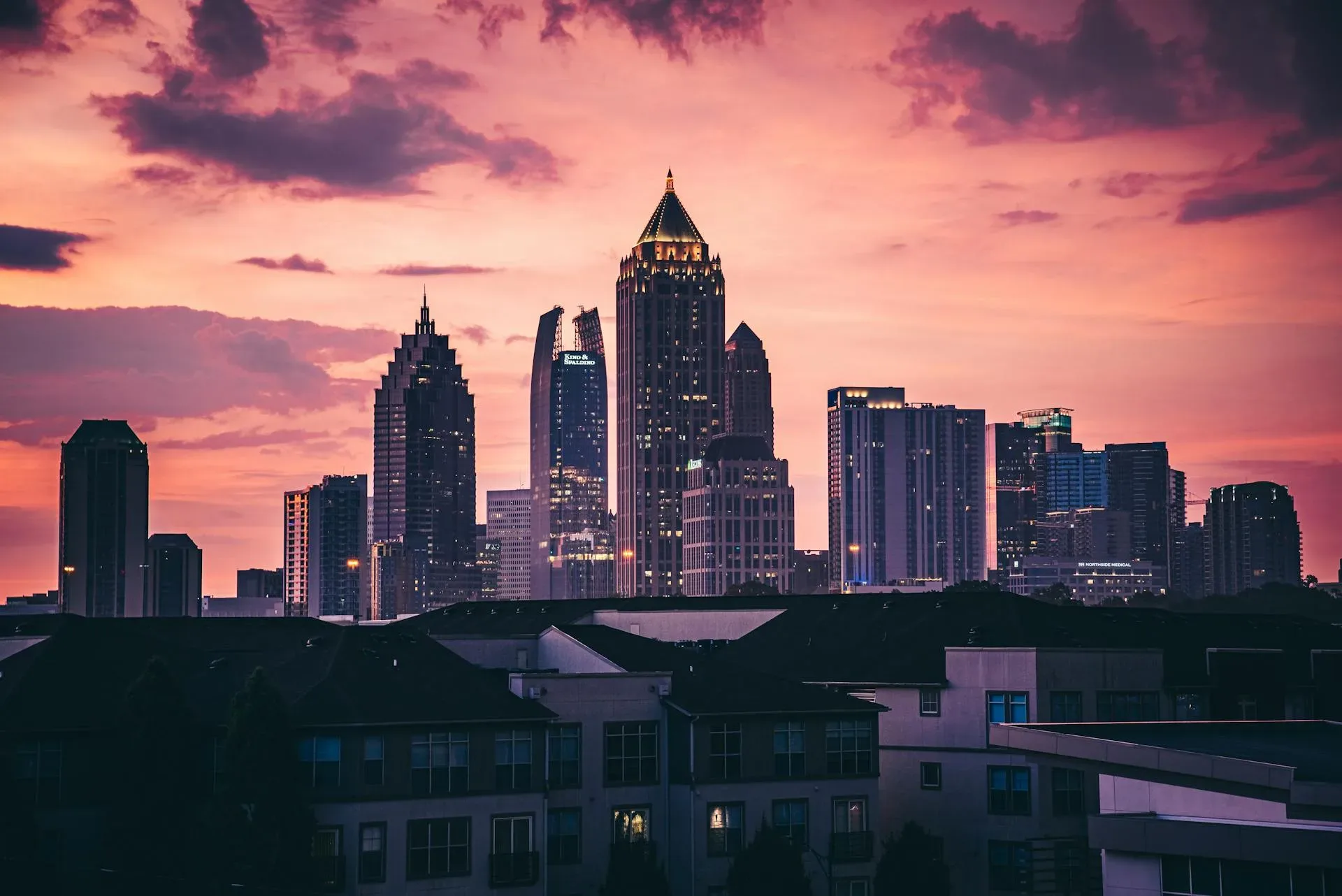
Atlanta is not just a business city. It is a cultural powerhouse that most people outside the Southeast consistently underestimate. The city that gave the world Outkast, Tyler Perry Studios, and one of the most influential hip-hop scenes in history also houses a Grammy-winning symphony orchestra, a world-class art museum, and a theater scene that rivals cities twice its size.
For luxury buyers, this matters more than you might think. Cultural infrastructure drives property values. Neighborhoods anchored by arts institutions, gallery districts, and thriving nightlife consistently outperform the broader market in appreciation. They attract high-income professionals, creative entrepreneurs, and the kind of economic diversity that makes a neighborhood resilient through market cycles.
This guide covers eight Atlanta neighborhoods where arts, culture, and nightlife converge with luxury real estate. For each one, we break down the cultural assets, the nightlife, the housing market, and who it fits best. Whether you want a Midtown high-rise overlooking Piedmont Park or a converted warehouse loft steps from gallery row, Atlanta has a neighborhood that matches your cultural appetite and your real estate ambitions.
Atlanta's Cultural Real Estate at a Glance
- Midtown's arts corridor anchors over $3 billion in cultural institutions including the High Museum, Woodruff Arts Center, Alliance Theatre, Atlanta Symphony Orchestra, and the Fox Theatre within a walkable one-mile stretch.
- West Midtown gallery district has tripled in size since 2018 with over 30 galleries, design studios, and creative spaces along the Howell Mill and Ellsworth Industrial corridors.
- Homes within a half-mile of major cultural venues tend to hold and grow value well compared to properties in areas without cultural anchors.
- Atlanta is the #3 film and TV production hub in the U.S. behind only Los Angeles and New York, adding economic depth and creative talent to neighborhoods across the city.
- Entry points range from $200K in Castleberry Hill to $2M+ in Midtown and Inman Park, meaning there is a culturally rich neighborhood for virtually every luxury budget level.
- The BeltLine has become Atlanta's largest public art installation, with over 100 commissioned works along the trail connecting Old Fourth Ward, Inman Park, and West Midtown to the broader cultural ecosystem.
Neighborhood Quick Comparison
| Neighborhood | Price Range | Housing Type | Cultural Focus |
|---|---|---|---|
| Midtown | $300K - $2M+ | Condos / High-rises | Institutional arts |
| West Midtown | $400K - $900K | Lofts / Townhomes | Galleries & design |
| Virginia-Highland | $600K - $1.5M | Bungalows / Homes | Live music & boutiques |
| Old Fourth Ward | $350K - $1.2M | Condos / Homes | BeltLine art / MLK sites |
| Inman Park | $700K - $2M+ | Victorians / Homes | Festivals & theater |
| Little Five Points | $400K - $900K | Eclectic homes | Indie arts & music |
| Castleberry Hill | $200K - $600K | Lofts / Warehouses | Gallery strolls |
| Decatur | $450K - $900K | Homes / Condos | Independent scene |
Price ranges reflect early 2026 FMLS data and our direct transaction experience. Ranges cover typical inventory, not outliers.
Midtown: The Institutional Arts Capital
If you want to live at the center of Atlanta's cultural universe, Midtown is the only answer. No other neighborhood in the Southeast concentrates this much cultural infrastructure in such a walkable footprint. The Woodruff Arts Center alone houses the High Museum of Art, the Alliance Theatre, and the Atlanta Symphony Orchestra on a single campus. Walk five minutes south and you are at the Fox Theatre, one of the most spectacular performing arts venues in America. Walk five minutes north and you are in Piedmont Park, the city's 200-acre green heart that hosts the Atlanta Jazz Festival, Music Midtown, and dozens of cultural events throughout the year.
The High Museum's permanent collection includes over 18,000 works spanning from the Renaissance to contemporary art. The Atlanta Symphony Orchestra is a 16-time Grammy winner. The Alliance Theatre premiered the musical adaptation of The Color Purple before it went to Broadway. This is not a secondary arts market. This is a city that produces and premieres world-class work.
Nightlife and dining. Midtown's restaurant scene has exploded over the past five years. The Biltmore corridor, Colony Square, and the 10th Street area offer everything from Michelin-caliber dining to late-night cocktail bars. The dining scene alone is reason enough for many buyers to choose Midtown. You can walk from dinner at a James Beard-nominated restaurant to a rooftop bar to a jazz club without ever getting in your car.
Real estate. Midtown is predominantly a condo and high-rise market. Luxury towers like The Residences at Mandarin Oriental, 1065 Midtown, The Charles, and Opus command $700 to $1,200+ per square foot. Entry-level condos in older buildings start around $300K. Renovated two-bedroom units in prime locations run $500K to $800K. Penthouse and full-floor units regularly trade above $2M. Annual appreciation runs 5 to 7 percent in the luxury segment, buoyed by Midtown's status as Atlanta's tech employment corridor.
Best for: Buyers who want walkable access to world-class arts institutions, prefer high-rise luxury living, and value being at the center of Atlanta's professional and cultural gravity.
Want to be walking distance from it?
The pockets that combine culture, walkability and luxury inventory are specific and small. We will show you which.
West Midtown: The Gallery District and Design Corridor
West Midtown is where Atlanta's creative class lives, works, and shapes the city's cultural future. What was an industrial warehouse district fifteen years ago has transformed into the city's most dynamic gallery and design corridor. The Ellsworth Industrial Boulevard area alone houses over a dozen galleries, including Whitespace Gallery, Marcia Wood Gallery, and Poem 88. The annual Westside art walk draws thousands of collectors and enthusiasts. If Midtown is where you go to experience institutional art, West Midtown is where you go to discover what is next.
The Westside Provisions District and Star Metals complex have become anchors for the neighborhood's food, retail, and nightlife scene. Bacchanalia, one of Atlanta's most acclaimed restaurants, calls West Midtown home. The neighborhood's cocktail bar scene rivals any in the city, with spots like The Consulate, Ormsby's, and a rotating cast of pop-up concepts in repurposed industrial spaces. This is a neighborhood that does not stand still.
Real estate. West Midtown offers a mix of converted warehouse lofts, modern townhomes, and new-construction condos. Loft conversions in established buildings run $400K to $700K. New-construction townhomes and condos in developments like Star Metals Residences, The Interlock, and Westside Paper range from $500K to $900K. There is very limited single-family inventory, which keeps the neighborhood feeling urban and dense. Appreciation has been among the strongest in Atlanta at 8 to 12 percent annually, though the pace is expected to moderate as the area matures and new supply comes online. For buyers interested in emerging luxury neighborhoods, West Midtown remains a top pick.
Best for: Creative professionals, design-focused buyers, and anyone who wants to live in the neighborhood that is defining Atlanta's next cultural chapter. Strong for investors who understand the long-term value of arts-district adjacency.
Virginia-Highland: Live Music, Boutiques, and Village Charm
Virginia-Highland is the neighborhood that proves you do not have to choose between cultural vibrancy and residential charm. The commercial strip along Highland Avenue and Virginia Avenue is one of Atlanta's most beloved walkable districts, lined with independent boutiques, locally owned restaurants, and some of the city's best live music venues. Blind Willie's has been a blues institution for decades. Dark Horse Tavern and Atkins Park are nightlife staples. The Highland Inn Ballroom hosts indie bands and comedy shows in an intimate setting that larger venues cannot replicate.
What makes Virginia-Highland unique in this list is the village feel. Unlike Midtown's vertical skyline or West Midtown's industrial edge, VaHi is tree-lined streets, craftsman bungalows, and neighbors who actually know each other. The annual Summerfest and the Virginia-Highland Tour of Homes are community events that have run for decades. The neighborhood's proximity to the BeltLine Eastside Trail adds another layer of cultural connectivity, linking VaHi to Piedmont Park, Ponce City Market, and Inman Park.
Real estate. Virginia-Highland is predominantly single-family, with a mix of original 1920s bungalows and extensively renovated or new-construction homes. Original bungalows in need of updates start around $600K. Renovated homes run $800K to $1.2M. New construction on tear-down lots commands $1.2M to $1.5M or more. The neighborhood is one of Atlanta's most walkable luxury neighborhoods, with a walk score in the low 80s. Appreciation is steady at 5 to 7 percent, driven by limited inventory and consistent demand from buyers who want walkable culture without high-rise density.
Best for: Buyers who want live music and nightlife within walking distance of a tree-lined residential street. Families and professionals who value community character alongside cultural access.
Old Fourth Ward: BeltLine Art, Historic Legacy, and Edgewood Nightlife
Old Fourth Ward is where Atlanta's history and its future collide. This is the neighborhood where Martin Luther King Jr. was born and raised. The King Center and Ebenezer Baptist Church are cultural landmarks of national significance. But OFW is not living in the past. The BeltLine Eastside Trail, which runs through the heart of the neighborhood, has become Atlanta's largest outdoor art gallery, with over 100 commissioned murals, sculptures, and installations that rotate and evolve every year. Art on the BeltLine is one of the Southeast's most significant public art programs.
Ponce City Market, the massive adaptive reuse of the old Sears building, is the neighborhood's commercial anchor. It houses restaurants, retail, a food hall, offices, and luxury apartments under one roof. The rooftop amusement park and event space have become iconic Atlanta experiences. Beyond Ponce City Market, the Edgewood Avenue bar strip is one of Atlanta's most eclectic and energetic nightlife corridors, with venues ranging from craft cocktail bars to dance clubs to underground music venues.
Real estate. Old Fourth Ward offers the widest range of housing types on this list. Modern condo developments line the BeltLine, starting around $350K for one-bedrooms and $500K to $800K for larger units with trail views. Townhomes run $550K to $900K. Single-family homes, mostly renovated bungalows and new construction, range from $500K to $1.2M. The neighborhood has appreciated 7 to 10 percent annually, making it one of the strongest investment stories in intown Atlanta. Buyers looking at the broader young professional market consistently rank OFW among their top choices.
Best for: Buyers who want to be at the intersection of history, public art, and contemporary nightlife. Ideal for those who value BeltLine access and do not mind trading yard space for cultural proximity.
Want to Live Inside the Culture, Not a Drive From It?
Walkability, noise, and parking change block to block in these neighborhoods. We can point you to the streets that give you the scene without the Friday night soundtrack.
Get My Neighborhood Shortlistor call (770) 727-4052
Inman Park: Victorian Elegance Meets Festival Culture
Inman Park is Atlanta's oldest planned suburb, established in 1889, and it remains one of the city's most culturally rich and architecturally significant neighborhoods. The annual Inman Park Festival, held every April, is one of Atlanta's largest and most beloved cultural events, drawing over 50,000 visitors for a weekend of live music, art markets, a parade, and a tour of the neighborhood's historic homes. It is the kind of event that defines neighborhood identity and creates the communal bonds that make a place more than just a collection of houses.
The historic architecture is the cultural asset itself. Queen Anne Victorians, Craftsman bungalows, and Romanesque Revival mansions line streets canopied by mature oaks. The neighborhood connects directly to the BeltLine Eastside Trail, Krog Street Market (a food hall and cultural gathering space), and Little Five Points. Dad's Garage Theatre Company, one of Atlanta's most innovative improv and experimental theater groups, performs in Inman Park.
Nightlife and dining. Inman Park's restaurant scene is among the best in the city. Barcelona Wine Bar, Wisteria, BeetleCat, and Two Urban Licks anchor a dining corridor that runs from the BeltLine to Euclid Avenue. The nightlife is more restaurant-bar than club scene, which suits the neighborhood's upscale residential character. Krog Street Market provides a casual food hall experience that locals use multiple times a week.
Real estate. Inman Park is one of the most expensive intown neighborhoods. Restored Victorians and large historic homes run $1M to $2M or more. Newer construction on infill lots commands $900K to $1.5M. Condos and townhomes near the BeltLine start around $700K. Appreciation runs 6 to 9 percent annually. The neighborhood's combination of historic designation, BeltLine access, and cultural cachet creates a floor under values that most other neighborhoods cannot match.
Best for: Buyers who want architectural beauty, established cultural community, and walkable access to some of Atlanta's best dining. This is a neighborhood for people who appreciate history and are willing to pay a premium for it.
Little Five Points and Surrounding Area: Atlanta's Indie Arts Soul
Little Five Points is Atlanta's counterculture heart and has been since the 1970s. If Midtown is where you go for the symphony, L5P is where you go for the punk show, the indie film screening, the spoken word night, and the mural that appeared overnight on the side of a building. The commercial district is compact and completely walkable, anchored by Criminal Records (one of the best independent record stores in the Southeast), The Porter Beer Bar, and The Vortex Bar and Grill.
The music venue scene is what defines L5P culturally. The Variety Playhouse (now Coca-Cola Roxy's sister venue) has hosted touring acts for decades. Aisle 5 and smaller venues in the surrounding blocks keep the independent music ecosystem alive. The Little Five Points Halloween Parade is legendary, drawing tens of thousands of costumed participants and spectators. The Horizon Theatre Company produces award-winning contemporary plays. This is not curated or corporate culture. This is organic, community-driven creativity that has survived gentrification pressures for decades.
Real estate. Homes in the Little Five Points area (technically straddling Inman Park, Candler Park, and Lake Claire) range from $400K for smaller bungalows needing work to $900K or more for renovated Craftsman homes on large lots. The housing stock is eclectic, which matches the neighborhood's personality. There is almost no new condo or townhome development in the immediate L5P core, which keeps the character intact but limits inventory. Appreciation runs 5 to 8 percent, with strongest gains in properties closest to the BeltLine connection points.
Best for: Buyers who want authentic, grassroots cultural energy over polished institutional arts. Musicians, artists, and creative professionals who want a neighborhood that reflects their identity. People who value independent businesses and community-driven culture.
Castleberry Hill: Atlanta's Original Arts District
Before West Midtown had galleries and before the BeltLine had public art, Castleberry Hill was Atlanta's arts district. Located just south of downtown, this small but culturally significant neighborhood is built around converted industrial warehouses that now house artist studios, galleries, and some of the most affordable loft living in intown Atlanta. The monthly Castleberry Hill Art Stroll, held on the second Friday of each month, transforms the neighborhood into an open-air gallery walk that draws collectors, curators, and casual art lovers.
The gallery scene is anchored by spaces like ZuCot Gallery, Besharat Gallery (one of the largest contemporary art galleries in the Southeast), and numerous working artist studios that open their doors during the monthly stroll. No Mas! Cantina combines a restaurant with a massive art and design retail space. The neighborhood's proximity to Mercedes-Benz Stadium means event-night energy spills into local bars and restaurants, adding a layer of nightlife that the neighborhood did not have a decade ago.
Real estate. Castleberry Hill offers the lowest entry point on this list. Loft condos in converted warehouses start around $200K for studios and one-bedrooms. Larger lofts with high ceilings and original industrial details run $350K to $600K. There is minimal single-family inventory. The neighborhood is primarily a loft market, which appeals to a specific buyer profile. Appreciation has been uneven, running 3 to 6 percent in recent years, but the Gulch redevelopment immediately adjacent to Castleberry Hill could be a major catalyst. This is a neighborhood to watch for value-oriented buyers who want arts-district authenticity at a fraction of West Midtown prices.
Best for: Artists, first-time buyers, and investors who want exposure to Atlanta's arts scene at the most accessible price point. Buyers who value creative authenticity and are willing to bet on the Gulch redevelopment lifting the surrounding area.
Decatur: The Independent Cultural Capital
Decatur is its own city, with its own government, its own school system, and its own fiercely independent cultural identity. The downtown Decatur square is one of the most walkable and culturally vibrant town centers in metro Atlanta, anchored by independent bookstores, craft cocktail bars, James Beard-nominated restaurants, and a community that actively supports local over national chains. The Decatur Book Festival (now rebranded as the AJC Decatur Book Festival) is one of the largest independent book festivals in the country and sets the tone for the city's intellectual and creative culture.
Eddie's Attic is a live music venue that has launched careers, including that of John Mayer, who played there regularly before he became a household name. The Decatur arts scene extends to galleries, public art installations throughout the downtown area, and a rotating calendar of cultural events including film screenings, poetry readings, and seasonal festivals. MARTA rail access at the Decatur station connects you to Midtown and downtown Atlanta in under 15 minutes.
Real estate. Decatur's housing market is driven by its excellent school system (City Schools of Decatur), walkability, and cultural infrastructure. Homes near the downtown square range from $450K for smaller bungalows to $900K or more for renovated homes on larger lots. Condos and townhomes in downtown Decatur run $350K to $600K. The neighborhoods surrounding downtown, including Winnona Park, Oakhurst, and MAK Historic District, offer distinct architectural character and slightly lower prices. Demand near the square has generally stayed consistent. For buyers relocating to Atlanta who want cultural depth without living inside the city of Atlanta, Decatur is the answer.
Best for: Buyers who want independent, community-driven culture in a walkable small-city setting. Buyers who value excellent schools alongside cultural access. People who prefer a town square over a skyline.
Why Cultural Neighborhoods Are Smart Investments
The connection between cultural infrastructure and real estate value is not anecdotal. Research from the National Endowment for the Arts and multiple urban planning studies shows that neighborhoods with concentrated arts and cultural amenities consistently outperform comparable areas in property appreciation, resident retention, and economic resilience during downturns.
In Atlanta specifically, neighborhoods along the BeltLine art corridor have appreciated 40 to 60 percent faster than the city average since the trail opened. Midtown's luxury condo market has remained resilient through economic cycles in large part because the Woodruff Arts Center, Piedmont Park, and the Fox Theatre create a quality-of-life floor that pure residential neighborhoods lack. Suburban luxury markets like Brookhaven are strong, but they rely on different value drivers.
The lesson for buyers: when you buy in a culturally rich neighborhood, you are not just paying for proximity to galleries and music venues. You are buying into an ecosystem that attracts talent, drives economic activity, and creates the kind of demand that supports long-term value. Atlanta's cultural neighborhoods are not just great places to live. They are great places to own.
Atlanta's Cultural Calendar Highlights
January - March
Atlanta Film Festival submissions, High Museum winter exhibitions, Atlanta Ballet season, Fox Theatre Broadway series
April - June
Inman Park Festival, Atlanta Film Festival, Atlanta Jazz Festival (Piedmont Park), Decatur Arts Festival, Shaky Knees Music Festival
July - September
Music Midtown, Dragon Con, National Black Arts Festival, Atlanta Fringe Festival, Castleberry Hill art strolls
October - December
Little Five Points Halloween Parade, AJC Decatur Book Festival, High Museum holiday exhibitions, Atlanta Symphony holiday concerts, West Midtown gallery season
How to Choose Your Cultural Neighborhood
The right neighborhood depends on what kind of cultural experience you want to live inside, not just visit on weekends.
If you want world-class institutional arts: Midtown is the clear choice. Nothing else in Atlanta comes close to the concentration of major cultural institutions within walking distance of luxury housing.
If you want galleries, design, and creative energy: West Midtown is the epicenter. The gallery district, the design studios, and the culinary scene create a creative ecosystem that feeds on itself.
If you want live music and neighborhood charm: Virginia-Highland delivers both. Walkable bars with live music, independent boutiques, and a residential character that larger neighborhoods lack.
If you want public art, history, and nightlife variety: Old Fourth Ward sits at the crossroads of all three. The BeltLine art trail, the King Center, and Edgewood Avenue nightlife create a layered cultural experience.
If you want architectural beauty and festival culture: Inman Park combines Victorian elegance with one of Atlanta's best cultural event calendars and an exceptional restaurant scene.
If you want indie and counterculture authenticity: Little Five Points has been Atlanta's creative soul for fifty years. It is not for everyone, and that is exactly the point.
If you want affordable arts-district living: Castleberry Hill offers gallery access and loft living at the lowest price point on this list, with potential upside from the Gulch redevelopment.
If you want independent culture in a walkable small city: Decatur is a self-contained cultural ecosystem with its own identity, its own events, and its own exceptional school system.
Explore Atlanta's Luxury Markets
Frequently Asked Questions
Which Atlanta neighborhood has the best arts and culture scene?
Midtown is the undisputed center of Atlanta’s institutional arts scene, home to the High Museum of Art, Woodruff Arts Center, Alliance Theatre, Atlanta Symphony Orchestra, and the Fox Theatre. For gallery culture and emerging art, West Midtown and Castleberry Hill lead the way. For eclectic, grassroots creativity, Little Five Points and Inman Park offer a completely different but equally vibrant experience. The best choice depends on whether you prefer world-class institutions or independent, community-driven culture.
What are the best Atlanta neighborhoods for nightlife?
Virginia-Highland offers an upscale but relaxed bar and live music scene with walkable options along Highland Avenue. West Midtown has become the epicenter of Atlanta’s trendy cocktail bar and restaurant nightlife. Old Fourth Ward combines BeltLine-adjacent venues with Edgewood Avenue’s legendary bar strip. Buckhead remains Atlanta’s high-energy nightlife district with upscale clubs and lounges. For live music specifically, Little Five Points and East Atlanta Village have the strongest independent venue scenes.
How much do homes cost near Atlanta’s cultural districts?
Prices vary significantly by neighborhood. Midtown condos near the Woodruff Arts Center start around $300K and range up to $2M or more for luxury high-rises. West Midtown lofts and townhomes run $400K to $900K. Virginia-Highland bungalows and renovated homes range from $600K to $1.5M. Old Fourth Ward offers condos from $350K and single-family homes from $500K to $1.2M. Castleberry Hill lofts start around $200K and go to $600K. Inman Park, the most expensive on the list, runs $700K to $2M or more for restored Victorians.
Is Midtown Atlanta a good place to buy luxury real estate?
Midtown is one of the strongest luxury markets in the Southeast. The combination of walkability, arts institutions, Piedmont Park, and Atlanta’s densest restaurant scene creates consistent demand. Luxury high-rises like The Residences at Mandarin Oriental, 1065 Midtown, and The Charles command $700 to over $1,200 per square foot. Values in the district have generally held steady. The neighborhood also benefits from being the center of Atlanta’s tech corridor, which drives demand from high-income professionals.
What cultural events happen in Atlanta throughout the year?
Atlanta has a packed cultural calendar. Major annual events include the Atlanta Film Festival in spring, Music Midtown in September, Dragon Con over Labor Day weekend, the Inman Park Festival in April, the Decatur Book Festival, Atlanta Jazz Festival in Piedmont Park over Memorial Day, the Little Five Points Halloween Parade, and dozens of gallery walks in Castleberry Hill and West Midtown throughout the year. The Fox Theatre hosts over 150 performances annually, and the Woodruff Arts Center programs year-round exhibitions, symphony seasons, and theater productions.
Are West Midtown homes a good investment?
West Midtown has been one of Atlanta’s strongest appreciation stories over the past decade. The Westside Provisions District, Star Metals, and the gallery corridor along Howell Mill Road have transformed a former industrial area into one of the city’s most desirable neighborhoods. Home prices have appreciated 8 to 12 percent annually in recent years. New development continues, but the neighborhood’s proximity to Midtown and Buckhead, combined with its creative identity, gives it staying power. The risk is that heavy new supply could moderate appreciation somewhat as the area matures.
What is Castleberry Hill known for?
Castleberry Hill is Atlanta’s original arts district, located just south of downtown. It is known for converted warehouse lofts, working artist studios, and a monthly gallery stroll that draws hundreds of visitors. The neighborhood has some of the most affordable loft-style living in intown Atlanta, with prices starting around $200K. It is adjacent to Mercedes-Benz Stadium and the Gulch redevelopment, which is bringing significant new investment to the area. Castleberry Hill appeals to buyers who value creative authenticity over polish.
How does Atlanta’s arts scene compare to other major cities?
Atlanta punches well above its weight culturally. The High Museum of Art is one of the top art museums in the Southeast with over 18,000 works in its permanent collection. The Atlanta Symphony Orchestra is a Grammy-winning ensemble. The city is the third-largest film and TV production hub in the country behind Los Angeles and New York. The independent music scene rivals Austin and Nashville for depth, particularly in hip-hop, R&B, and indie rock. What sets Atlanta apart is that you can access all of this culture while paying a fraction of New York or LA housing costs.
Find Your Perfect Cultural Neighborhood
Tell us what matters most to you, gallery access, live music, walkable nightlife, architectural beauty, and we will match you with homes in the neighborhoods that fit your cultural lifestyle.
Sources
- Redfin - Neighborhood-level price trends, year-over-year appreciation, and inventory data for intown Atlanta neighborhoods. redfin.com
- Georgia MLS / FMLS - Transaction data, median sale prices, and market activity for City of Atlanta and DeKalb County. georgiamls.com
- High Museum of Art - Collection information, exhibition schedules, and institutional data for the Woodruff Arts Center campus. high.org
- Atlanta BeltLine Inc. - Public art program data, trail connectivity, and neighborhood impact studies. beltline.org
- National Endowment for the Arts - Research on the relationship between arts infrastructure and property values in urban neighborhoods. arts.gov
- Walk Score - Walkability scores for Atlanta neighborhoods based on proximity to amenities, transit, and daily errands. walkscore.com
Price ranges and appreciation figures are compiled from our direct experience selling in these neighborhoods and analysis of FMLS and Redfin transaction data. Cultural venue information is current as of early 2026. All market data is subject to change.
Disclaimer: This article is for informational purposes only and does not constitute financial, legal, or investment advice. Housing market data, appreciation rates, and neighborhood conditions change frequently. Past performance is not indicative of future results. Cultural venues, events, and businesses mentioned may change schedules, locations, or close. Consult with qualified financial, legal, and real estate professionals before making purchasing decisions.