
Atlanta Relocation Specialists
Raleigh-Durham to Atlanta,
Backed by Real Numbers
Raleigh's Research Triangle calm and lower-density living often appeal to families, yet many find Atlanta offers more space, deeper job markets, and standout schools.
Start Your Atlanta Search
Tell us about your move from the Triangle and we'll send a tailored neighborhood and school shortlist.
We reply within one business day. Phone is optional, and we never share your information.
The Short Version
- Metro Atlanta (about 6.5 million) is roughly two and a half times the size of the Research Triangle (about 2.5 million).
- Atlanta's typical home (about $373,000) is more affordable than Cary or Chapel Hill at the median, while luxury submarkets like Buckhead and Milton run from the $650,000s past $1.3 million.
- Georgia's flat 4.99% income tax is higher than North Carolina's 3.99%, so this move is not a tax cut; the payoff is scale, careers, and the airport.
- The closest Atlanta matches for Triangle neighborhoods are Buckhead, Johns Creek and Alpharetta, Druid Hills, Decatur, and Midtown.
- Top public districts like Forsyth and North Fulton rival Wake County and Chapel Hill-Carrboro, but school quality varies sharply by exact address.
By the Numbers
The Triangle and Atlanta, Side by Side
The honest, sourced comparison. Every figure is current and cited.
Data reviewed June 2026. Home values and populations shift over time; verify current figures for your situation.
Macro Comparison
Atlanta vs the Research Triangle
Metro Scale
The Research Triangle (Raleigh, Durham, Chapel Hill, Cary, Apex) is about 2.5 million people. Fast-growing, but still three mid-size cities with their own identities.
Metro Atlanta is about 6.5 million, roughly two and a half times larger, with the job market, culture, and neighborhood variety of a top-tier metro.
Economy
Anchored by Research Triangle Park, Duke, UNC, and NC State, with deep biotech, pharma, and software. The largest public company is Durham's IQVIA (Fortune #282).
Far more diversified: 16 Fortune 500 headquarters including Home Depot, UPS, Delta, and Coca-Cola, plus the CDC, logistics, fintech, and film. Delta, headquartered here, is the metro's largest single employer.
Connectivity
RDU offers 134 nonstop destinations. A genuinely good airport, but limited long-haul and international service.
Hartsfield-Jackson is the world's busiest: 106.3 million passengers (2025) and more than 240 nonstop destinations. Raleigh to Atlanta is about a 90-minute flight.
See Where You'd Live
Your Triangle Neighborhood, Translated to Atlanta
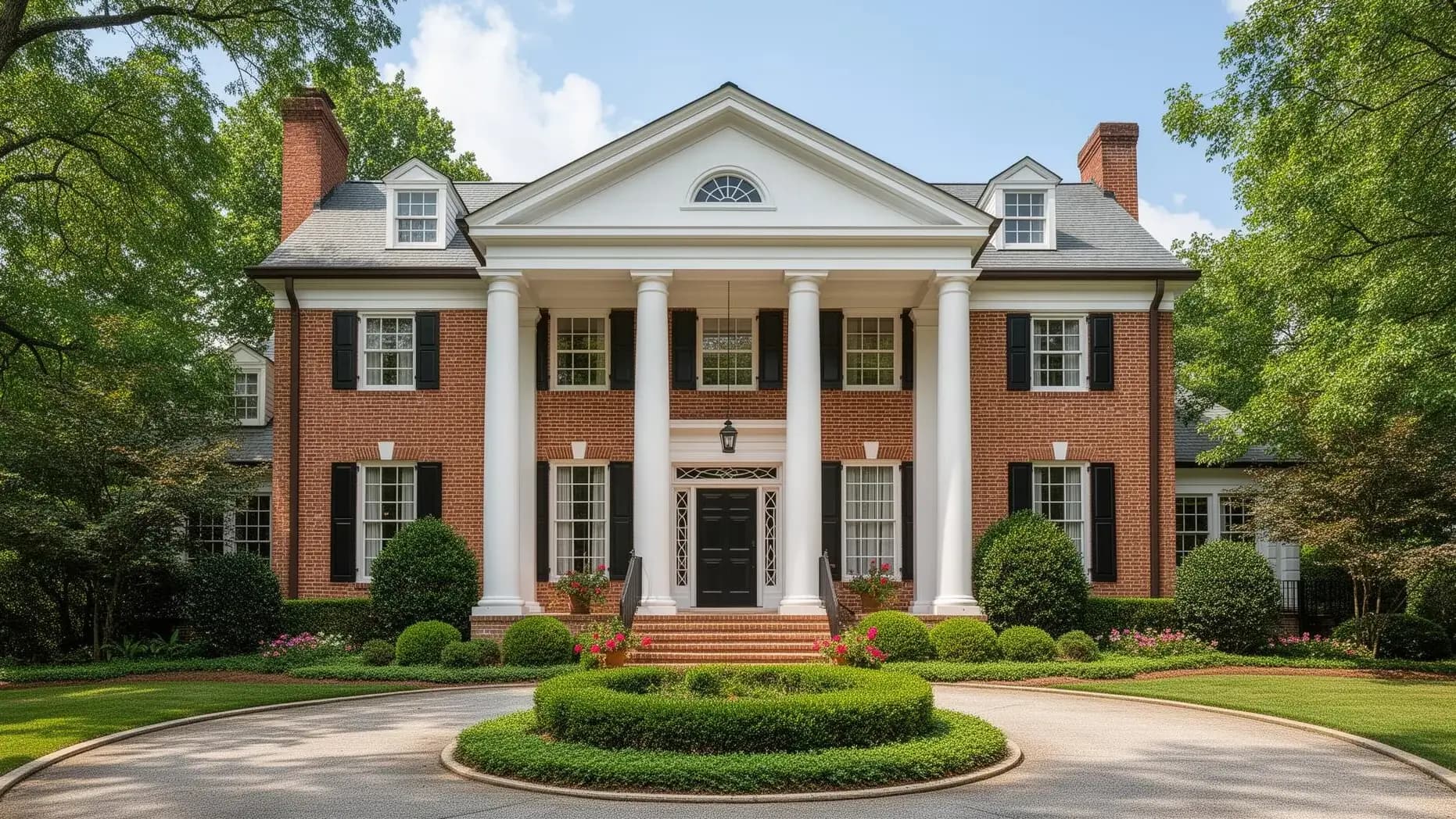
New to Atlanta? Start here. Each area below is the closest match to a place you already know in the Triangle. Tap any one to explore homes and details.





What Your Budget Buys
Home Prices, Triangle vs Atlanta
Metro Atlanta is more affordable at the median, while its premium submarkets carry the luxury inventory the Triangle has less of.
Research Triangle
- Durham$396,000
- Raleigh$431,000
- Apex$584,000
- Cary$600,000
- Chapel Hill$605,000
Metro Atlanta
- Metro Atlanta (overall)$373,000
- Johns Creek$651,000
- Alpharetta$656,000
- Brookhaven$735,000
- Druid Hills$757,000
- Milton$860,000
- Buckhead$620K to $1.3M+
Source: Zillow Home Value Index (typical home value), April 2026. Figures shift monthly.
The Honest Tax Picture
Atlanta Is Not a Tax Cut
We would rather you know this up front. Both states use a single flat income tax, and Georgia's is higher. The case for Atlanta is scale, careers, and connectivity, not lower taxes.
Rounded estimates for a single filer using each state's 2026 flat rate and standard deduction (NC 3.99% with a $12,750 deduction; GA 4.99% with a $15,000 deduction under HB 463). Sources: NC and GA Departments of Revenue, Tax Foundation. An illustration, not tax advice.
Property Tax Differs by System
North Carolina assesses near market value; Wake County's rate is about 0.51% effective before city taxes (NC DOR). Georgia assesses at 40% of value, then applies combined county, school, and city millage with a homestead exemption (GA DOR). Effective rates across metro Atlanta counties generally land near or a little under 1%.
It Varies by County, Not Just State
Two similar Atlanta homes can carry property-tax bills thousands apart depending on county, city, and exemptions. Georgia's HB 581 capped some increases, but Fulton and Atlanta Public Schools opted out, so do not assume it applies. We model the exact parcel before you commit.
Schools
Education: How the Districts Compare
For most relocating families this is the deciding factor. The short version: Atlanta's best public districts match the Triangle's best, but quality varies more by address, so the specific school matters as much as the city.
Triangle Districts
- Wake County Public Schools: about a 90.6% graduation rate, one of the Southeast's largest and most consistent systems
- Chapel Hill-Carrboro City Schools: about 94.8%, among North Carolina's highest
- Durham Public Schools: about 84%, with strong magnet and arts programs
Atlanta Options
- Forsyth County (Cumming): ranked among Georgia's top districts, about a 94% graduation rate
- North Fulton (Johns Creek, Milton, Alpharetta): Northview, Johns Creek, Milton, and Alpharetta High rank among Georgia's best
- Decatur City Schools: a small, highly regarded city system, much like Chapel Hill-Carrboro
Atlanta also has a deeper private-school culture than the Triangle, with long-established options like Westminster, Pace Academy, Lovett, and Marist. Whichever direction you lean, we verify the exact public-school assignment for every home we show you, because in metro Atlanta two houses a few miles apart can feed very different schools.
Sources: NC Department of Public Instruction, Georgia Department of Education, and US News district rankings, 2025.

Living Here
Daily Life, From the Triangle to Atlanta
Scale and Traffic
Atlanta's footprint means recalibrating distance. A 45-minute drive to dinner is normal. Traffic on I-285 and GA-400 is heavier than I-40, but choosing the right side of town relative to work matters more than total size.
Dining
Durham's food scene is excellent, but Atlanta operates at another magnitude. Buford Highway alone outdoes the entire Triangle for international food, on top of Buckhead fine dining and Decatur's restaurant row.
Climate, Nearly Identical
Both metros are humid subtropical with hot summers near 90 degrees and mild winters. Atlanta is slightly wetter (about 50 inches of rain) and gets a bit less snow. You keep four real seasons and a lush, green setting.
Outdoors
Trade Umstead and Jordan Lake for the Chattahoochee River, the BeltLine, Stone Mountain, and the north Georgia mountains within about 90 minutes. More river and foothills, less lake culture.
See exactly what you'd pay or save
Run your own numbers in the cost calculator below, or have us build a tailored Triangle-to-Atlanta plan.
Avoid These
Common Relocation Mistakes
Assuming Triangle School Logic Applies
In Wake County, strong schools are predictable by area. In Atlanta, quality varies sharply by specific address, even within a district. Verify the exact school assignment before you commit.
Defaulting to New Construction
Atlanta's best neighborhoods often feature renovated 1940s to 1980s homes with character, mature lots, and gardens that new builds cannot match. Do not overlook established areas.
Expecting Income-Tax Savings
North Carolina's flat tax is 3.99%; Georgia's is 4.99%. You will likely pay somewhat more state income tax in Atlanta, not less. The case for Atlanta is scale and careers, not tax relief.
Underestimating County Tax Differences
Metro Atlanta spans many counties and cities with different millage and exemptions. Two similar homes can carry property-tax bills thousands of dollars apart depending on jurisdiction.
Choosing a Neighborhood from a Map
Atlanta changes character block by block in ways the Triangle's uniform subdivisions do not. Always visit, walk, and drive at different times of day before deciding.
Rushing Out of Habit
Wake County's tight inventory trained buyers to move fast. Atlanta's larger market usually offers more room to evaluate a neighborhood and negotiate terms.
Smart Approach
How to Approach the Move
Rent Strategically First
If your timeline allows, renting in your target area for 6 to 12 months provides neighborhood intelligence no online research can replicate, and prevents expensive corrections.
Map Lifestyle Before Commute
In Atlanta, the quality-of-life gap between neighborhoods can be large enough that a slightly longer commute to the right area beats a short one to the wrong area.
Leverage Triangle Equity
A typical Cary home near $600,000 funds a strong move into Johns Creek, Alpharetta, or a renovated intown property. We help you avoid overpaying or under-buying.
Access Off-Market Inventory
Atlanta's luxury tier has a real off-market component in Buckhead, Brookhaven, and Sandy Springs. Early advisory relationships open doors that never reach Zillow.
Interactive Tool
Cost of Living Comparison
Loading comparison tool...
Raleigh-Durham to Atlanta
Frequently Asked Questions
Specific questions from Raleigh, Durham, Chapel Hill, and Research Triangle residents considering the move to Atlanta.
How do North Carolina and Georgia income taxes compare?
Both states use a single flat rate, and Georgia's is higher. North Carolina is 3.99% in 2026; Georgia is 4.99% (NC DOR, GA DOR). For a single filer at $150,000, that is roughly $5,500 in North Carolina versus $6,750 in Georgia, about $1,250 more per year. At $400,000 the gap is about $3,750. A move to Atlanta is not a tax cut. These are rounded estimates using each state's flat rate and standard deduction, not tax advice.
What does my Triangle home budget buy in Atlanta?
A typical Cary or Chapel Hill home, around $600,000 (Zillow, 2026), reaches comfortably into Johns Creek or Alpharetta (each in the mid-$650,000s) with strong schools, and approaches a typical Brookhaven or Druid Hills home in the mid-$700,000s. Step up to the luxury tier and Atlanta opens a depth the Triangle cannot match, with Milton estates near $860,000 and Buckhead from roughly $620,000 to well past $1.3 million.
How do Atlanta schools compare to Wake County schools?
Atlanta's best public districts match the Triangle's best. Forsyth County ranks among Georgia's top districts, and North Fulton schools serving Johns Creek, Milton, and Alpharetta rank well above the broader Fulton average. The difference is variance: quality changes sharply by address, so verify the exact assignment. Private-school enrollment is also more common in Atlanta.
I work in RTP or at Duke. Where would I land in Atlanta?
If your work is academic medicine, research, or higher education, the closest parallel to the Duke and RTP cluster is the Emory University and Emory Healthcare corridor in Druid Hills, joined by the CDC and Children's Healthcare of Atlanta. Druid Hills, Morningside, and Virginia-Highland are established, walkable neighborhoods within a short commute, much like Trinity Park or Forest Hills relative to Duke. If your work is biotech or life sciences, the activity around Georgia Tech and Tech Square in Midtown is the comparable base.
Is Atlanta traffic really worse than Raleigh traffic?
Yes on the major corridors at peak hours, but Atlanta also has a more extensive highway network, so alternative routes exist. Many transplants find that choosing the right neighborhood relative to work produces commutes comparable to I-40 or 540. A poor location choice, though, can be far worse than anything the Triangle produces, so location strategy matters.
How does Durham's food scene compare to Atlanta's?
Durham punches well above its weight and many transplants rate it the strongest food town in the Triangle. Atlanta operates at a larger scale rather than a higher ceiling: you keep the chef-driven quality, but with far more breadth, from Buford Highway's international corridor to Buckhead fine dining and Decatur's restaurant row.
How long should I plan for the move?
From first exploration to closed purchase, plan for three to six months. Triangle buyers tend to move efficiently, but Atlanta rewards a more deliberate approach. We recommend a complimentary consultation and starting your search at least four to five months before your target move date.
Will I miss the university-town culture of the Triangle?
If Chapel Hill's campus culture or Durham's Duke-influenced atmosphere is central to you, you will notice the shift. Atlanta has Georgia Tech and Emory, but neither defines the city the way Duke, UNC, and NC State define the Triangle. Decatur and Virginia-Highland offer some of that independent, intellectual character if you seek it out.
Client Reviews
What Our Clients Say
“They made buying from out of state effortless.”
Buying a home remotely seemed impossible, but the team handled everything. Video tours, detailed neighborhood breakdowns, even coordinating inspections when we couldn't be there. Seamless.
Meet Your Team
Local Expertise, Personal Service

Featured Agent
David Wilson
Luxury Real Estate Advisor
Georgia Real Estate License #334679
David brings nearly two decades of Atlanta market expertise and a distinctive background, from building a multinational healthcare company to representing high-profile clients in Atlanta's film and entertainment industry, sourcing luxury estates for production executives with exacting standards.
Having called Old Fourth Ward home for 17 years, he's witnessed Atlanta's transformation firsthand. His deep understanding of what drives value, from emerging neighborhoods to Beltline influence and arts district momentum, informs every client conversation.
Areas of Focus
Next Steps
Ready to Find Your Atlanta Home?
We help families from Raleigh, Durham, Chapel Hill, Cary, and across the Triangle land in the right Atlanta neighborhood and the right schools. Start with a complimentary consultation.
Schedule a Complimentary Consultation
Tell us about your move from Raleigh-Durham or anywhere in the Research Triangle, and we'll start your personalized home search in Atlanta.
We reply within one business day. Phone is optional, and we never share your information.
Sources and Methodology
Populations are U.S. Census Bureau 2025 estimates. Typical home values are Zillow Home Value Index figures from April 2026 and shift monthly. Income tax rates are from the North Carolina and Georgia Departments of Revenue and the Tax Foundation; tax estimates assume each state's flat rate and standard deduction and are illustrations, not tax advice. Property tax structure is from the NC and GA Departments of Revenue. Employer and Fortune 500 figures are from the Metro Atlanta Chamber (2025). Airport figures are from Hartsfield-Jackson and Raleigh-Durham International. School data reflects state report cards and US News district rankings (2025). Figures are current as of mid-2026; verify time-sensitive numbers for your situation.
More Relocation Guides
Explore Other City-to-Atlanta Guides
Currently serving these Georgia locations
Atlanta
- Buckhead
- Peachtree Hills
- Peachtree Battle
- Garden Hills
- North Buckhead
- Brookwood Hills
- Chastain Park
- Midtown
- Ansley Park
- Virginia-Highland
- Morningside
- Inman Park
- Druid Hills
- Old Fourth Ward
- Candler Park
- West Midtown
- Tuxedo Park
Sandy Springs
- Riverside
- Dunwoody Panhandle
- Mount Vernon Woods
- High Point
- North Springs
- Lake Forrest
Alpharetta
- Windward
- Crabapple
- Avalon
- North Point
- Mansell Crossing
Milton
- White Columns
- Birmingham
- Hopewell
- Fowler Springs
- Milton Estates
Johns Creek
- Ocee
- St. Ives
- Bellmoore Park
- Country Club of the South
Roswell
- Historic Roswell
- Riverside
- East Roswell
- Crabapple
Decatur
- Oakhurst
- North Decatur
- Winnona Park
- East Lake
Brookhaven
- Historic Brookhaven
- Lynwood Park
- Brookhaven Village
- Drew Valley
Dunwoody
- Georgetown
- Perimeter Summit
Marietta
- East Cobb
- Indian Hills
- Mountain Park
- West Highlands
Smyrna
- Market Village
- Belmont Hills
- Nickajack
Vinings
- Historic Vinings
- Vinings Estates
- Hillandale
Suwanee
- Providence
- Town Center
- Suwanee Dam
Duluth
- Berkeley Lake
- Sugarloaf
- Town Green
Peachtree Corners
- The Forum
- Technology Park
- Simpson Park
Norcross
- Historic Norcross
- Sugarloaf Estates
- Hamilton Mill
Canton
- Ball Ground
- Hickory Flat
- Lake Allatoona
Woodstock
- Downtown Woodstock
- Towne Lake
- Bridgemill
Cumming
- Sawnee
- Chestnut
- Vickery
South Metro
- Jonesboro
- Forest Park
- Morrow
- McDonough
- Stockbridge
West Metro
- Douglasville
- Lithia Springs
- Chapel Hill
Peachtree City
- Braelinn
- Kedron
- Glenloch
- Fayetteville
Gainesville
- Lake Lanier
- Flowery Branch
- Oakwood
Braselton
- Chateau Elan
- The Legends
- Traditions