
Atlanta Relocation Specialists
Portland to Atlanta,
Backed by Real Numbers
Many families leaving Portland's gray, rainy Pacific Northwest skies and tight city lots often find Atlanta's sunnier weather, tree-lined acreage, strong schools, and far more home for the money.
Start Your Atlanta Search
Tell us about your move from Portland and we'll send a tailored neighborhood and school shortlist.
We reply within one business day. Phone is optional, and we never share your information.
The Short Version
- Atlanta is a genuine major metro of more than 6 million versus Portland's roughly 2.5 million, bringing deeper job diversity, infrastructure, and cultural depth.
- Your housing dollar stretches much further: Atlanta typically delivers 30 to 50 percent more square footage and larger lots, so a $750K Portland budget can access far more home here.
- Income tax actually drops: Oregon's top marginal rate is 9.9 percent while Georgia's flat roughly 4.99 percent sits well below it, often offsetting Oregon's lack of sales tax once you run your own numbers.
- Pearl District buyers map to Midtown, Lake Oswego and West Linn families to Sandy Springs and Brookhaven, West Hills to Buckhead, and Beaverton and Hillsboro tech families to Alpharetta and Johns Creek.
- The biggest lifestyle shift is sunshine: Atlanta averages about 217 sunny days a year versus Portland's 150-plus days of gray, a change transplants consistently describe as transformative.
By the Numbers
Portland and Atlanta, Side by Side
The honest, sourced comparison most relocation pages skip. Each figure is current and cited; the details follow in the sections below.
Sources: U.S. Census Bureau (2024 to 2025 metro estimates), Zillow Home Value Index (typical home value, early 2026, shifts monthly), state Departments of Revenue and the Tax Foundation (income tax, 2026), the Metro Atlanta Chamber (2025 employer data), and airport authorities. Figures are current as of mid-2026; verify time-sensitive numbers for your situation.
Macro Comparison
Atlanta vs Portland: Big Picture
Portland and Atlanta occupy very different positions among American metros. One is a mid-size Pacific Northwest city defined by lifestyle quality. The other is a sprawling Southern powerhouse defined by economic scale and diversity. Understanding these structural differences frames every other decision.
Cost of Living
No state sales tax in Oregon, but state income tax rates are among the highest in the country (a 9.9% top marginal rate, with most households paying an effective rate below that). Housing costs have climbed sharply, particularly inside Portland proper. Everyday expenses remain elevated relative to national averages.
Georgia has state sales tax (typically 7-8% combined with local), but the state income tax is a flat rate of roughly 4.99%. Housing delivers substantially more space and quality per dollar. The net financial picture often favors Atlanta, especially for homeowners.
Economic Foundation
Anchored by Nike, Intel, and the Silicon Forest tech corridor. Strong craft manufacturing, outdoor industry headquarters, and creative sector. Economy is concentrated in fewer large employers with significant tech and semiconductor dependence.
Home to over a dozen Fortune 500 headquarters spanning logistics (UPS, Delta), media (Cox, CNN), fintech, healthcare, and consumer goods (Coca-Cola, Home Depot). Economy is broadly diversified, making it more resilient to sector-specific downturns.
Metro Scale
Metro population around 2.5 million. A mid-size city that punches above its weight culturally but has inherent limitations in job market depth, flight options, and infrastructure investment. Growth has moderated after a significant influx in the 2010s.
Metro population exceeding 6 million and growing. A genuine major metro with the infrastructure, job diversity, and cultural depth that scale enables. Corporate relocations and population growth continue at a sustained pace.
Connectivity
PDX is a well-regarded airport but limited by size. Direct flights cover the West Coast and major domestic hubs well but international options are thin. Reaching the East Coast or Europe typically requires connections.
Hartsfield-Jackson is the world's busiest airport with nonstop flights to virtually every domestic destination and extensive international routes. Business travel, family visits, and spontaneous trips become dramatically easier.



Housing Markets
Real Estate Comparison
Portland's housing market operates under unique constraints, from the urban growth boundary to specific architectural traditions. Understanding how Atlanta's market differs prevents misaligned expectations.
What Portland Buyers Are Used To
- Craftsman bungalows and mid-century homes as the dominant housing stock, with character but often deferred maintenance and outdated systems
- Urban growth boundary creating artificial supply constraints and pushing prices higher inside city limits
- Competitive bidding in desirable neighborhoods like Laurelhurst, Irvington, and Alameda, often above asking price
- Smaller lots as standard, with 5,000 square feet considered generous in most inner Portland neighborhoods
- Property taxes that escalate with Measure 5 compression, plus additional bonds and levies that can shift year to year
How Atlanta Differs
- Architectural diversity including single-family homes, luxury homes, and new construction across metro Atlanta with larger footprints across the board
- No urban growth boundary means more homes for sale and a natural supply-demand balance across a larger geography
- More balanced negotiating conditions in most segments, with contingencies respected and timelines more reasonable
- Lot sizes that would be considered estates by Portland standards, particularly in Buckhead, Sandy Springs, and north Fulton
- Property taxes vary significantly by county and city, but overall housing costs per square foot are meaningfully lower than Portland equivalents
What Your Budget Buys
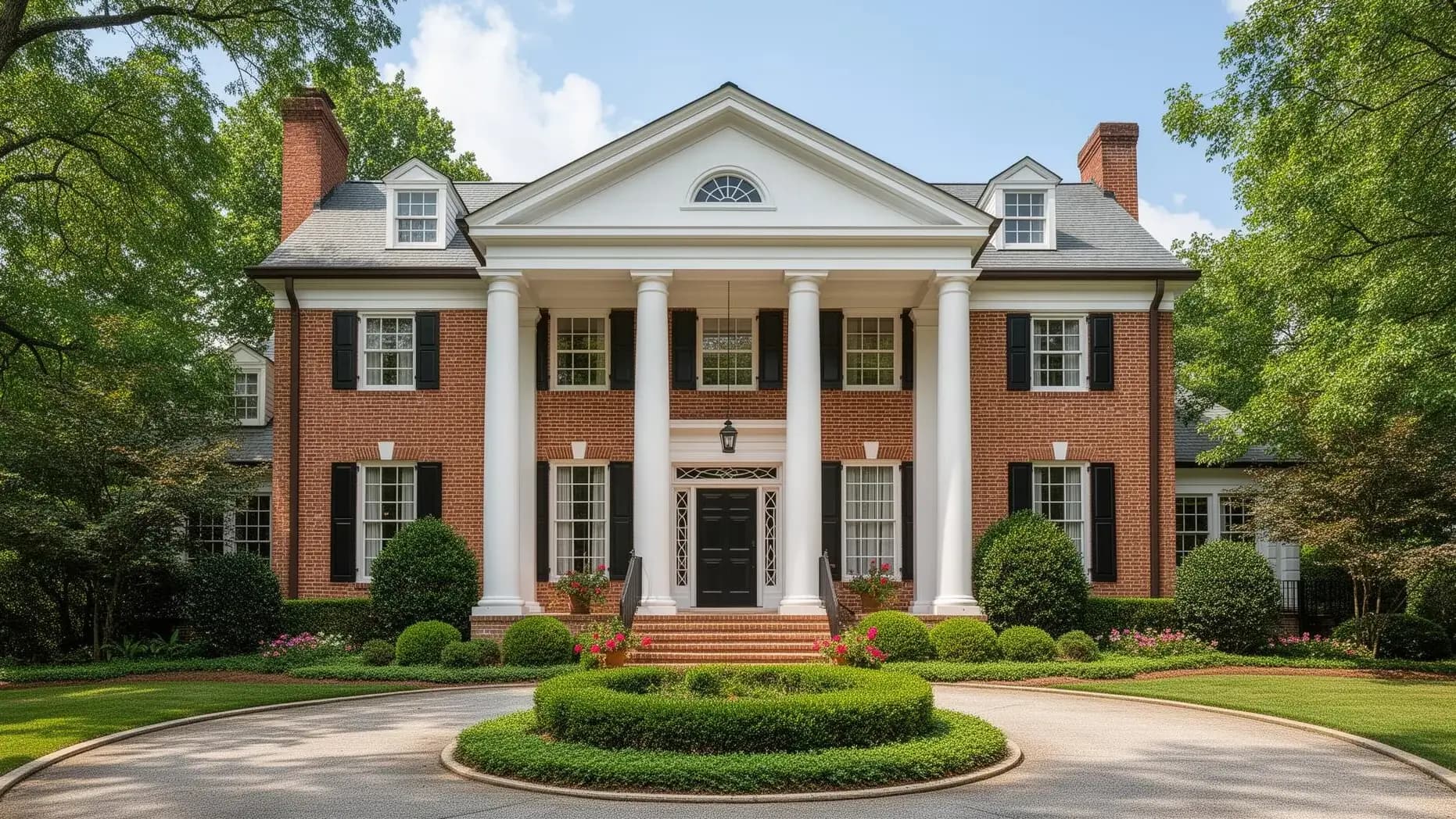
At comparable price points, Atlanta typically offers more square footage, significantly larger lots, and often newer construction with modern finishes. A $750K budget that buys a renovated 1,600 sq ft Craftsman on a 5,000 sq ft lot in a good Portland neighborhood can often access a 3,000+ sq ft home on a quarter acre in Atlanta's equivalent areas. For luxury buyers, the differential is often even more dramatic. What costs $1.5M in Lake Oswego or Portland Heights may translate to estate-level properties in Buckhead or Sandy Springs. Tech-corridor families often look first toward Alpharetta for newer construction and top-rated schools.
See Where You'd Live
Your Portland Neighborhood, Translated to Atlanta
New to Atlanta? Start here. Each area below is a close match to a place you already know in Portland. Tap any one to explore homes and details.





Living Here
Lifestyle Adjustments
Beyond housing, the Portland-to-Atlanta transition involves recalibrating daily habits, social expectations, and your relationship with weather, food, and mobility.
The Weather Revelation
This is the single biggest lifestyle shift. Portland averages over 150 days of rain and cloud cover annually. Atlanta gets roughly 217 sunny days per year. The psychological impact of consistent sunlight after years of Pacific Northwest gray is something Portland transplants consistently describe as transformative. You will also discover what genuine summer heat and humidity feel like, a different challenge but one most find preferable to seasonal depression.
Food and Drink Culture
Portland's food cart pods, third-wave coffee obsession, and craft brewery density are genuinely special and hard to replicate. Atlanta's food scene is different in character but arguably deeper. Buford Highway alone offers more international cuisine diversity than most American cities. Fine dining in Buckhead, soul food traditions, and a growing independent restaurant scene provide breadth Portland cannot match. You will miss specific Portland institutions, like screen-door brunch and Salt & Straw. You will discover new favorites you could not have found in Oregon.
Driving Patterns
Portland's MAX light rail, streetcar, and bike infrastructure create genuine alternatives to driving. Atlanta is fundamentally a car city. MARTA exists and serves certain corridors well, but for most residents, a car is non-negotiable. The trade-off: parking is abundant and mostly free, gas is cheaper, and the highway network, while congested at peak times, provides connectivity Portland's infrastructure cannot. Bike commuting shifts from year-round to seasonal.
Social Dynamics
Portland's culture leans toward understated, introverted, and progressive-uniform. The 'Seattle Freeze' has a Portland cousin. Atlanta's social culture is warmer on the surface and more diverse in every dimension. Southern hospitality is real, though deeper social integration still takes effort. You will encounter a broader range of perspectives, backgrounds, and lifestyles than Portland's relatively homogeneous progressive bubble. For many transplants, this is refreshing rather than challenging.
Nature Access
Portland's proximity to Mt. Hood, the Columbia River Gorge, the Oregon Coast, and Forest Park is legitimately world-class. Atlanta cannot replicate that specific combination. What it offers instead: the Chattahoochee River National Recreation Area, proximity to the Appalachian Trail and North Georgia mountains, and Lake Lanier. Weekend trips to the Blue Ridge are comparable in drive time to Portland-to-Hood trips. The landscape is different, lush and green but flatter. It is not inferior, just different.
Avoid These
Common Relocation Mistakes
Patterns we see repeatedly from Portland transplants making the move to Atlanta. Awareness of these pitfalls prevents costly or frustrating outcomes.
Assuming the Tax Math Is Simple
Oregon has no sales tax but high income tax. Georgia has sales tax but lower income tax. Property tax rates, homestead exemptions, and local levies differ significantly between counties. The net financial comparison requires actual calculation for your specific income and spending profile, not assumptions.
Expecting Portland's Walkability Everywhere
Portland ranks among America's most walkable cities. Only specific Atlanta neighborhoods, such as Midtown, Virginia-Highland, and Decatur, offer comparable pedestrian infrastructure. Choosing a home based on Portland walkability expectations without verifying the specific Atlanta neighborhood leads to disappointment.
Underestimating Neighborhood Variance
Portland neighborhoods shift gradually. Atlanta neighborhoods can change dramatically within a few blocks. School districts, safety profiles, property values, and community character vary more sharply here. Research at the street level, not the ZIP code level. Drive the neighborhood at different times of day before committing.
Dismissing the Suburbs Reflexively
Portland culture tends to valorize urban living and view suburbs skeptically. Atlanta's suburbs, particularly in north Fulton, east Cobb, and DeKalb's better pockets, offer a quality of life that Portland's suburbs rarely match. Larger lots, highly rated schools, newer construction, and genuine community infrastructure. Keep an open mind.
Timing the Move Around Portland Weather
Some relocators try to leave Portland during the rainy season and arrive in Atlanta during spring. Smart in theory, but Atlanta's spring market is also the most competitive. Fall arrivals find more motivated sellers, pleasant house-hunting weather, and the chance to settle before the holidays. Let strategy drive timing, not weather frustration.
Not Preparing for Summer Humidity
Portland summers are dry and mild, among the best urban summers in America. Atlanta summers are hot and humid. This is not a minor difference. If you have never experienced sustained 90-degree heat with high humidity, visit Atlanta in July before committing. Most people adapt within a season, but going in unaware creates unnecessary shock.
Smart Approach
Relocation Strategy
A framework for approaching the Portland to Atlanta transition with intention, strategy, and respect for how different these two cities actually are.
Rent-First Strategy
Portland and Atlanta are culturally very different cities. If you have flexibility, renting in your target Atlanta neighborhood for 6-12 months provides insight no amount of online research can replicate. You will learn commute patterns, neighborhood rhythms, and personal preferences that only emerge through daily experience. This is especially valuable for Portland lifers who have never lived in the Southeast.
Seasonal Market Timing
Atlanta's real estate market follows seasonal patterns. Spring brings the most inventory and the most competition. Summer slows slightly as heat rises. Fall offers a strategic window with motivated sellers and less buyer competition. Winter can yield the best values. Your personal timeline typically matters more than trying to time the market, but understanding these rhythms helps set expectations.
Leverage the Equity Differential
Portland home equity translates into significant Atlanta purchasing power. A $700K Portland bungalow's equity can access properties in Atlanta that would require $1M+ in Portland. This arbitrage is one of the primary financial motivations for the move. Working with advisors who understand both markets ensures you capture this value rather than leaving it on the table through overpayment or misallocation.
Access Off-Market Inventory
Atlanta's luxury segment has a meaningful private and off-market inventory layer that does not appear on Zillow or Redfin. Coming-soon listings, pocket listings, and relationship-driven opportunities often match relocation timelines better than publicly listed properties. Establishing advisory relationships before you need to buy immediately opens access to inventory that Portland buyers typically never encounter.
Client Reviews
What Our Clients Say
“They made buying from out of state effortless.”
Buying a home remotely seemed impossible, but the team handled everything. Video tours, detailed neighborhood breakdowns, even coordinating inspections when we couldn't be there. Seamless.
Meet Your Team
Local Expertise, Personal Service

Featured Agent
David Wilson
Luxury Real Estate Advisor
Georgia Real Estate License #334679
David brings nearly two decades of Atlanta market expertise and a distinctive background, from building a multinational healthcare company to representing high-profile clients in Atlanta's film and entertainment industry, sourcing luxury estates for production executives with exacting standards.
Having called Old Fourth Ward home for 17 years, he's witnessed Atlanta's transformation firsthand. His deep understanding of what drives value, from emerging neighborhoods to Beltline influence and arts district momentum, informs every client conversation.
Areas of Focus
Next Steps
Ready to Find Your Dream Home in Atlanta?
Our real estate agents and dedicated buyer's agents specialize in helping relocating families from Portland find their dream home in metro Atlanta. Schedule a complimentary consultation to start your home search across Atlanta's best neighborhoods, luxury homes, and single-family homes.
Schedule a Complimentary Consultation
Tell us about your move from Portland and we'll start your personalized home search in Atlanta.
We reply within one business day. Phone is optional, and we never share your information.
What Your Budget Buys
Home Prices, Portland vs Atlanta
Portland's typical home value is about $546,000 (Zillow, early 2026). Here is what metro Atlanta's submarkets cost, from the median to the luxury tier.
Metro Atlanta
- Metro Atlanta (overall)$373,000
- Johns Creek$651,000
- Alpharetta$656,000
- Brookhaven$735,000
- Druid Hills$757,000
- Milton$860,000
- Buckhead$620K to $1.3M+
Reading the Numbers
That budget is comparable to Atlanta's strong submarkets and reaches Johns Creek, Alpharetta, Brookhaven, or Druid Hills with more space and top-rated schools.
Source: Zillow Home Value Index (typical home value), early 2026. Figures shift monthly.
The Honest Tax Picture
Income Tax, Worked Out
Georgia's flat 4.99% income tax is lower than Oregon's for most households, so the move typically reduces your state income tax. Here is the single-filer comparison.
Rounded estimates for a single filer using each state's 2026 tax brackets and standard deduction (Georgia is a flat 4.99% with a $15,000 deduction under HB 463). Local and city income taxes are not included. Sources: state Departments of Revenue and the Tax Foundation. An illustration, not tax advice.
Schools
Education: How the Districts Compare
For most relocating families this is the deciding factor. The short version: Atlanta's best public districts match Portland's best, but quality varies more by address, so the specific school matters as much as the city.
Portland Districts
- Lake Oswego and West Linn-Wilsonville are consistently ranked among Oregon's top public school districts.
- Beaverton, the metro's largest district, offers strong magnet and option programs alongside its neighborhood schools.
- Within Portland proper, outcomes differ meaningfully from one attendance area to the next.
Atlanta Options
- Forsyth County (Cumming): ranked among Georgia's top districts, about a 93% graduation rate
- North Fulton (Johns Creek, Milton, Alpharetta): Northview, Johns Creek, Milton, and Alpharetta High rank among Georgia's best
- Decatur City Schools: a small, highly regarded city system with its own identity
Atlanta also has a deeper private-school culture than many metros, with long-established options like Westminster, Pace Academy, Lovett, and Marist. Whichever direction you lean, we verify the exact public-school assignment for every home we show you, because in metro Atlanta two houses a few miles apart can feed very different schools.
Sources: Georgia Department of Education and US News district rankings (2025), plus state report cards for the origin metro.
Interactive Tool
Cost of Living Comparison
Loading comparison tool...
Portland → Atlanta
Frequently Asked Questions
Specific questions from Portland residents considering the move to Atlanta.
How much cheaper is Atlanta than Portland?
Housing typically offers more value in terms of square footage, lot size, and finish quality per dollar. Overall cost of living is moderately lower, though the comparison is nuanced. Oregon's lack of sales tax narrows the gap on purchases, while Georgia's lower income tax rate benefits higher earners. The housing value differential is the most significant factor for most relocators.
Will I miss the lack of sales tax?
Initially, yes. Oregon's no-sales-tax culture is deeply ingrained, and seeing tax added to purchases feels noticeable at first. However, Georgia's lower income tax rate (a flat rate of roughly 4.99%, versus Oregon's 9.9% top marginal rate) often more than compensates, particularly for higher earners. Keep in mind Oregon's 9.9% is the top marginal rate, so most households pay an effective rate below that. Most Portland transplants find the net tax burden comparable or lower once they run the actual numbers for their situation.
How does Atlanta traffic compare to Portland traffic?
Both cities have traffic challenges, but the character differs. Portland's congestion is concentrated on a few bridges and highway chokepoints. Atlanta's sprawl creates broader congestion across more corridors, but also more route options. Atlanta's highway network is more extensive, and strategic neighborhood selection relative to your workplace can minimize commute impact significantly. Neither city is easy, but Atlanta offers more flexibility in routing.
Can I survive Atlanta without a car like I did in Portland?
Realistically, no. Portland's MAX, streetcar, and bike infrastructure provide genuine car-free options that Atlanta cannot match. MARTA serves specific corridors well, and Midtown and a few other neighborhoods are walkable, but most Atlanta residents need a car for daily life. Budget for a vehicle if you have been car-free in Portland. The upside: free parking, cheaper gas, and no parallel parking on rainy hillsides.
What about Portland's food culture? Will I find good coffee and beer?
Atlanta's specialty coffee scene has grown significantly, with roasters like Revelator, East Pole, and Chrome Yellow earning national recognition. The craft beer scene is strong and expanding, led by Monday Night, Creature Comforts, and others. You will not find Portland's specific density of options, food cart pods are not a thing here, but Atlanta's overall food scene is larger and more diverse. Buford Highway's international corridor alone offers cuisine breadth that Portland cannot match.
Is Atlanta progressive enough for a Portland transplant?
Atlanta proper is solidly progressive and has been for decades. It is a historically significant center of the civil rights movement and Black political power. The metro area is more politically diverse than Portland's relatively uniform progressivism. Many Portland transplants find the diversity of perspectives and lived experiences in Atlanta to be genuinely enriching. The city is not Portland, but it is not the caricature that some West Coast residents imagine either.
How will the weather change affect me?
Dramatically and mostly positively. Portland's 150+ days of gray and rain contribute to measurable seasonal affective disorder rates. Atlanta's 217 sunny days per year represent a genuine mental health upgrade for many transplants. The trade-off is summer heat and humidity, which runs roughly June through September. Most people adapt within one full seasonal cycle. Spring and fall in Atlanta are spectacular, mild and extended in a way Portland's brief summers cannot match.
What neighborhoods should Portland transplants consider first?
It depends on what you valued in Portland. Pearl District and inner SE types gravitate toward Midtown, Virginia-Highland, or Decatur for walkability and culture. Lake Oswego and West Linn families often land in Sandy Springs, Brookhaven, or north Fulton for top school districts and space. West Hills buyers find Buckhead's luxury homes and gated communities revelatory. A dedicated real estate agent can tailor your home search to the best neighborhoods based on your buying priorities.
Should I sell my Portland home before buying in Atlanta?
It depends on your financial position and risk tolerance. Portland's market has stabilized, and homes in desirable neighborhoods still sell well. Atlanta's market generally accepts contingent offers more readily than Portland's competitive segments. Bridge financing, sale-leaseback arrangements, and sequential timing with a temporary Atlanta rental are all viable approaches. Our real estate agents help structure the buying and home search process based on your specific circumstances.
What do Portland transplants like most after moving to Atlanta?
The sunshine, consistently and overwhelmingly. After that: the space, both in homes and on lots. The value proposition of what their dollar buys. The airport access that makes national and international travel effortless. And often, the diversity and cultural depth of a larger, more cosmopolitan metro. What they miss: Forest Park, the proximity to mountains and coast, the specific coffee shops and food carts, and the ability to bike year-round.
More Relocation Guides
Explore Other City-to-Atlanta Guides
Sources and Methodology
Metro populations are U.S. Census Bureau estimates. Typical home values are Zillow Home Value Index figures from early 2026 and shift month to month. Income tax rates are from the relevant state Departments of Revenue and the Tax Foundation; Georgia is a flat 4.99% with a $15,000 standard deduction for 2026 (HB 463). Any tax figures assume each state's flat rate and standard deduction and are illustrations, not tax advice. Employer and Fortune 500 figures are from the Metro Atlanta Chamber (2025). Airport figures are from the respective airport authorities. School data reflects state report cards and US News district rankings (2025). Figures are current as of mid-2026; verify time-sensitive numbers for your own situation before making decisions.
Currently serving these Georgia locations
Atlanta
- Buckhead
- Peachtree Hills
- Peachtree Battle
- Garden Hills
- North Buckhead
- Brookwood Hills
- Chastain Park
- Midtown
- Ansley Park
- Virginia-Highland
- Morningside
- Inman Park
- Druid Hills
- Old Fourth Ward
- Candler Park
- West Midtown
- Tuxedo Park
Sandy Springs
- Riverside
- Dunwoody Panhandle
- Mount Vernon Woods
- High Point
- North Springs
- Lake Forrest
Alpharetta
- Windward
- Crabapple
- Avalon
- North Point
- Mansell Crossing
Milton
- White Columns
- Birmingham
- Hopewell
- Fowler Springs
- Milton Estates
Johns Creek
- Ocee
- St. Ives
- Bellmoore Park
- Country Club of the South
Roswell
- Historic Roswell
- Riverside
- East Roswell
- Crabapple
Decatur
- Oakhurst
- North Decatur
- Winnona Park
- East Lake
Brookhaven
- Historic Brookhaven
- Lynwood Park
- Brookhaven Village
- Drew Valley
Dunwoody
- Georgetown
- Perimeter Summit
Marietta
- East Cobb
- Indian Hills
- Mountain Park
- West Highlands
Smyrna
- Market Village
- Belmont Hills
- Nickajack
Vinings
- Historic Vinings
- Vinings Estates
- Hillandale
Suwanee
- Providence
- Town Center
- Suwanee Dam
Duluth
- Berkeley Lake
- Sugarloaf
- Town Green
Peachtree Corners
- The Forum
- Technology Park
- Simpson Park
Norcross
- Historic Norcross
- Sugarloaf Estates
- Hamilton Mill
Canton
- Ball Ground
- Hickory Flat
- Lake Allatoona
Woodstock
- Downtown Woodstock
- Towne Lake
- Bridgemill
Cumming
- Sawnee
- Chestnut
- Vickery
South Metro
- Jonesboro
- Forest Park
- Morrow
- McDonough
- Stockbridge
West Metro
- Douglasville
- Lithia Springs
- Chapel Hill
Peachtree City
- Braelinn
- Kedron
- Glenloch
- Fayetteville
Gainesville
- Lake Lanier
- Flowery Branch
- Oakwood
Braselton
- Chateau Elan
- The Legends
- Traditions