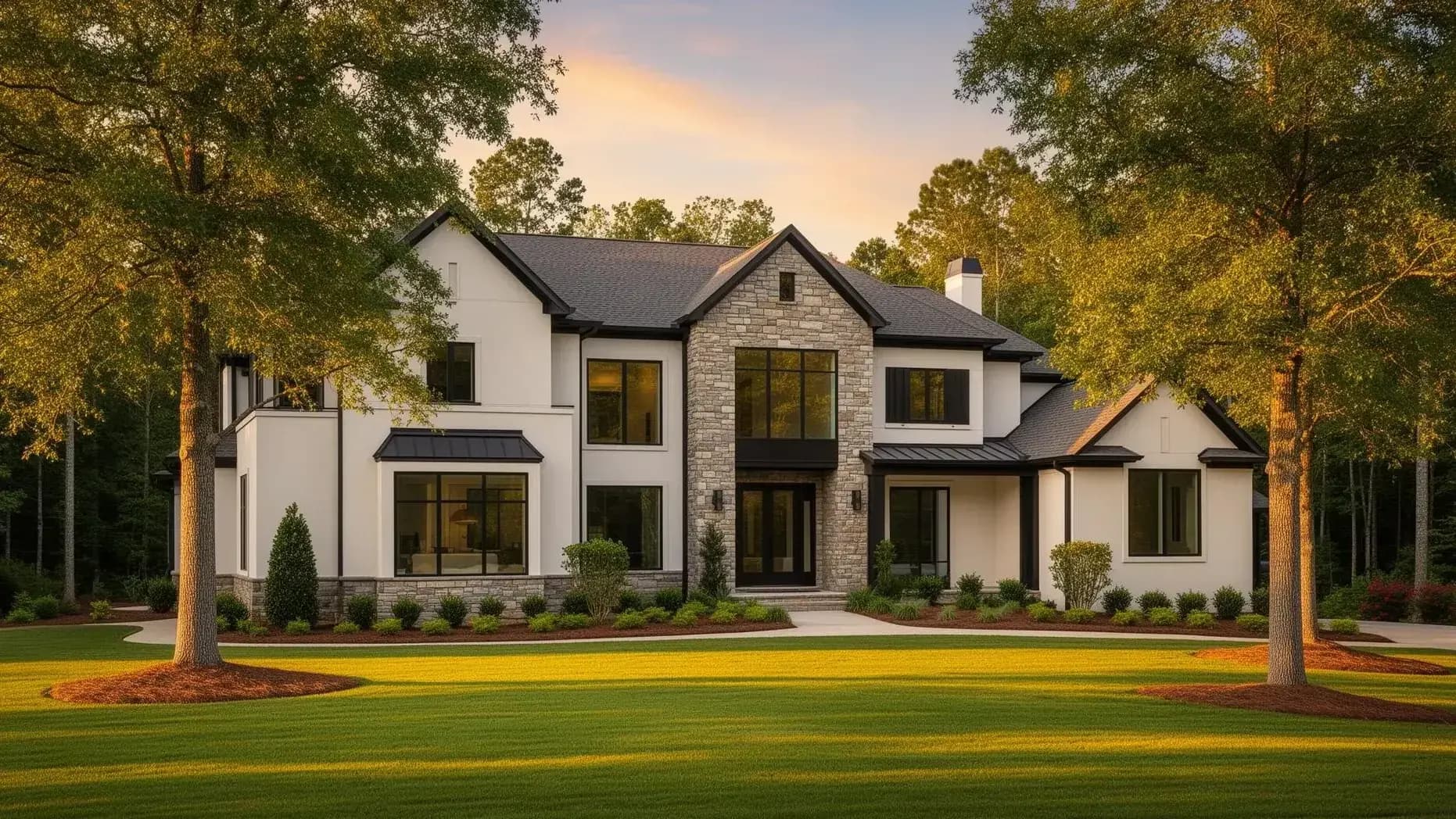
Three generations under one roof used to be the default in most of the world. Then the American suburb happened, and for a few decades everyone spread out. Now the pendulum is swinging back. According to the National Association of Realtors (NAR), roughly 14% of all home purchases in recent years have been multi-generational, and that number keeps climbing.
The reasons are practical. Housing costs have made it harder for young adults to buy on their own. Aging parents need proximity and care. Childcare is expensive, and having grandparents nearby changes the math. Some families simply prefer living together, whether for cultural reasons or because they genuinely enjoy it. Whatever the reason, the question is the same: how do you find a home in Atlanta that actually works for everyone?
Atlanta is one of the best markets in the country for this kind of purchase. The metro area has large-lot neighborhoods with estate homes, ranch-style properties with finished basements, new construction with in-law suites built in, and relatively favorable zoning for accessory dwelling units. You get more square footage per dollar here than in most major metros, which means multi-generational living does not require the kind of budget it would in New York or the Bay Area.
This guide covers what to look for in a multi-generational home, which Atlanta neighborhoods offer the best options, how to finance the purchase, and how to handle the legal and personal dynamics that come with shared living.
Why Multi-Generational Living Is Growing
This is not a fringe trend. Per NAR data, multi-generational home purchases have increased steadily since 2011, when the share was closer to 8%. The jump to 14% represents millions of additional households choosing to combine generations. The Pew Research Center reports that roughly 60 million Americans now live in multi-generational households, the highest number on record.
Several forces are driving this shift at the same time.
Key Drivers of Multi-Generational Living
- Cost savings: Pooling resources lets families afford larger, better-located homes than any one household could buy alone. Shared mortgage payments, utilities, and maintenance costs reduce the financial burden on everyone.
- Aging parents: As Baby Boomers age, many adult children prefer to have Mom and Dad close rather than in an assisted living facility. In-home care is often more comfortable and more affordable, especially when the home is designed for it.
- Boomerang kids: Per Census Bureau data, roughly a third of adults aged 18 to 34 live with their parents. High rents, student loans, and the gap between entry-level wages and housing costs have made it common for young adults to stay home longer or return after college.
- Childcare support: With the average annual cost of daycare in Georgia running above $9,000 per child, according to the Economic Policy Institute, having grandparents in the home can save a family tens of thousands of dollars per year while giving children more quality time with extended family.
- Household preferences: Many Atlanta households want parents or adult children under one roof, which drives demand for second kitchens, separate entrances, and main-level suites.
In Atlanta specifically, the trend is amplified by the region's relative affordability compared to other major metros. A home with enough space for multiple generations might cost $1.5 million in Buckhead, but the same configuration could easily run $3 million to $5 million in Los Angeles or the New York suburbs. That price gap is one of the reasons so many families are relocating to Atlanta and bringing the whole family with them.
What Makes a Home Work for Multiple Generations
Not every large home is a good multi-generational home. Square footage alone does not solve the problem. What matters is how the space is organized. The best multi-generational homes give each household its own distinct living area while providing shared spaces where the family can come together by choice, not by default.
Here are the features that make the biggest difference in daily life.
Separate Entrances
A private entrance for the secondary living area is the single most important feature for multi-generational households. It allows each family unit to come and go independently, maintain their own schedules, and host guests without disrupting the rest of the home. In Atlanta, this often takes the form of a side door to a finished basement suite, a separate entrance to an above-garage apartment, or a detached guest house with its own front door.
In-Law Suites and Dual Master Layouts
A true in-law suite includes a bedroom, full bathroom, sitting area, and ideally a kitchenette or small kitchen. Dual master layouts place two primary bedroom suites in different parts of the home, often on different floors. Both configurations work, but the key is separation. Two master bedrooms that share a wall offer little privacy. Two master suites on opposite sides of the house, or on different levels, give each occupant the feeling of having their own space.
Second Kitchen or Kitchenette
Sharing one kitchen is where multi-generational living often breaks down. Different meal schedules, cooking styles, and dietary needs create friction fast. A second kitchen (even a compact one with a microwave, mini fridge, sink, and cooktop) gives the secondary household independence for daily meals while the main kitchen remains the gathering spot for family dinners and holidays.
Separate HVAC Zones
Anyone who has lived with someone who runs the thermostat differently knows why this matters. Separate HVAC zones let each living area control its own temperature. In Atlanta, where summer cooling bills can exceed $300 per month in larger homes, individual zone control also helps manage energy costs by letting unoccupied areas stay warmer or cooler.
ADU Potential
An accessory dwelling unit (ADU) is a secondary living unit on the same property as the main home. This could be a detached cottage, a converted garage apartment, or a basement unit with its own entrance. Atlanta has become increasingly friendly to ADUs in recent years, and properties with ADU potential (large lots, existing outbuildings, or detached garages) give families the option to build a fully independent living space without moving.
Best Atlanta Neighborhoods for Multi-Generational Homes
Not every Atlanta neighborhood works equally well for multi-generational buyers. The right fit depends on lot sizes, home styles, zoning flexibility, price points, and proximity to the services your household needs. Here are the neighborhoods we recommend most often for multi-generational purchases.
Buckhead: Estate Homes with Guest Houses
Buckhead is Atlanta's premier luxury neighborhood, and it offers exactly what multi-generational families need at the high end: large lots (often one to three acres), estate homes with 6,000 to 15,000+ square feet, and properties that frequently include detached guest houses, pool houses with living quarters, or carriage houses above multi-car garages. Neighborhoods like Tuxedo Park, Chastain Park, and Paces regularly feature homes with secondary living structures that are already built and permitted. Expect to invest $1.5 million and up for properties with genuine multi-generational potential in Buckhead.
Sandy Springs: Ranches with Finished Basements
Sandy Springs is one of the best-kept secrets for multi-generational living in metro Atlanta. The city has a strong inventory of ranch-style homes from the 1960s through 1980s, many sitting on flat or gently sloping lots with walkout basements. A ranch with a finished basement effectively gives you two full living levels with minimal stairs, which is ideal for aging parents. Many of these basements already have full bathrooms, bedrooms, and separate entrances. Properties in the $700,000 to $1.5 million range often provide 4,000 to 6,000 square feet of total living space across both levels. The flat lot profile is also critical for accessibility: no steep driveways or hillside stairs that become dangerous as family members age.
Alpharetta and Milton: New Construction with In-Law Suites
If you want multi-generational features built in from day one, Alpharetta and Milton are the places to look. Several builders in the area now offer floor plans specifically designed for extended families, with main-level in-law suites, dual master bedrooms, and optional second kitchens. New construction in these communities typically runs from $800,000 to $2 million+, and many builders will customize the in-law suite layout during the design phase at minimal additional cost. The area also offers top-rated schools in the Fulton County and Forsyth County districts, which matters if the household includes school-age children. Milton, in particular, provides the feel of a rural community with large lots while still being within 30 minutes of Buckhead.
Brookhaven: Mid-Century Homes with Basement Apartments
Brookhaven offers a mix of 1950s and 1960s mid-century ranch homes, many of which have been renovated and expanded in recent years. The neighborhood's topography creates natural walkout basements, and many homeowners have converted these lower levels into full apartments with separate entrances, kitchens, and bathrooms. Brookhaven also has excellent MARTA access (the Brookhaven/Oglethorpe station), which is a real benefit for aging parents who may not want to drive. Homes in the $600,000 to $1.2 million range frequently offer multi-generational potential, and the neighborhood's central location puts families within easy reach of Emory, Children's Healthcare of Atlanta, and the dining and shopping along Peachtree Road.
East Cobb: Large Homes with Strong Value per Square Foot
East Cobb has been a perennial favorite in metro Atlanta for decades, and it remains one of the best value plays for multi-generational buyers. Homes in neighborhoods like Walton, Lassiter, and Pope school districts regularly offer 4,000 to 7,000 square feet for $500,000 to $1 million, which is significantly more space per dollar than you will find closer to the city. Many East Cobb homes have finished terrace-level spaces, oversized garages that can be converted, and lots large enough to support an ADU. The trade-off is distance from Midtown and Downtown Atlanta, but for buyers whose daily life is centered around the northern suburbs, East Cobb delivers size and quality that is hard to match elsewhere at the same price point.
Homes With Separate Suites and Guest Quarters
Main-level bedrooms, terrace levels with a private entrance, and true second kitchens are rarely searchable filters on listing sites. We can pull the Atlanta properties that actually have them.
Find Homes With a Private Suiteor call (770) 727-4052
Floor Plan Features to Prioritize
When touring homes or reviewing floor plans, these are the features that separate a house that happens to be big from a home that genuinely works for multiple generations.
Multi-Generational Floor Plan Checklist
- At least two master suites: Positioned in separate wings or on different floors. Both should have full en-suite bathrooms with walk-in showers (tubs are optional but showers are essential for aging-in-place).
- Separate HVAC zones: Individual climate control for each living area. This is both a comfort issue and a cost-management tool, especially during Atlanta summers.
- Soundproofing between living areas: Insulated interior walls, solid-core doors, and staggered stud construction between units significantly reduce noise transfer. This is cheap to add during construction but expensive to retrofit.
- ADA accessibility or easy modification: At least one bathroom with a zero-threshold shower, grab bar blocking in the walls, 36-inch doorways on the main level, and no steps between the garage and living area. Even if no one in the household currently needs accessibility features, planning for them now avoids costly retrofits later.
- Separate laundry facilities: A second washer/dryer hookup in the secondary living area eliminates one of the most common daily friction points in shared households.
- Flexible common spaces: A large kitchen, open family room, or outdoor living area where the whole family can gather comfortably. The best multi-generational homes have strong private spaces AND strong shared spaces.
- Private outdoor access: A separate patio, deck, or garden entrance for the secondary living area. Having your own outdoor space to sit with morning coffee makes a real difference in daily quality of life.
Looking for a Multi-Generational Home in Atlanta?
We help families find homes that work for everyone, whether that means an estate with a guest house, a ranch with a finished basement, or new construction with an in-law suite built in. Tell us what your family needs, and we will find properties that fit.
Financial Benefits of Multi-Generational Living
Beyond the emotional and practical benefits, buying a multi-generational home in Atlanta often makes strong financial sense. Here is how the numbers typically work.
Shared housing expenses. When two or three households split a mortgage, property taxes, insurance, utilities, and maintenance, the per-person cost drops significantly. A family paying $4,000 per month total for a $1.2 million home with a finished basement is spending far less per household than if each family unit rented or owned separately. In metro Atlanta, where average rents for a two-bedroom apartment now exceed $1,700 per month, according to Zillow Rental Manager data, consolidating into one property can save a family $20,000 to $40,000 per year.
Qualify for a larger home together. When family members co-borrow, their combined income allows qualification for a larger mortgage. A dual-income couple earning $200,000 combined might qualify for a $700,000 home on their own. Add a parent or adult child earning $80,000 as a co-borrower, and the qualifying amount may increase to $1 million or more, depending on debts and credit scores. That additional buying power opens up homes with genuine multi-generational layouts that would be out of reach for a single household.
Potential rental income. If the secondary living unit has its own entrance, kitchen, and bathroom, it may qualify as a rental unit when family circumstances change. A well-finished basement apartment or detached guest house in a desirable Atlanta neighborhood can generate $1,200 to $2,500 per month in rental income. This creates long-term flexibility: the space serves family now and generates income later.
Reduced care costs. According to Genworth's Cost of Care survey, the median cost of assisted living in Georgia is approximately $4,000 per month. Keeping an aging parent at home, even with some in-home care support, typically costs far less. And the quality of life for the parent is often significantly better when they are living with family in a familiar, comfortable environment rather than in a facility.
Mortgage Options for Multi-Generational Purchases
Financing a multi-generational home comes with a few unique considerations. The good news is that several loan programs are specifically designed to accommodate this type of purchase.
FHA Loans with Non-Occupant Co-Borrowers
FHA guidelines allow a family member to be a co-borrower on the mortgage even if they will not live in the home. This is useful when an adult child wants to help a parent buy a home, or when a parent wants to help their child qualify for a larger property. The non-occupant co-borrower's income counts toward qualification, and FHA down payment requirements (3.5% with a 580+ credit score) are lower than conventional options. The property must be a primary residence for at least one borrower, and FHA loan limits in metro Atlanta (currently $498,257 for a single-family home in most counties) cap how much you can borrow through this program.
Fannie Mae Boarder Income
Fannie Mae allows lenders to count "boarder income" as qualifying income when a borrower has a documented history of receiving rent payments from someone living in the home. If a parent or adult child has been paying rent in the current living arrangement and can document it with bank statements or cancelled checks, that income can be factored into the mortgage qualification. This can meaningfully increase the loan amount a family qualifies for without requiring a formal co-borrower arrangement.
Conventional Co-Borrower Loans
Any conventional loan can include multiple borrowers. Both (or all) borrowers' incomes and debts are considered in qualification. The advantage over FHA is higher loan limits and no mortgage insurance with 20% down. The consideration is that all borrowers' credit scores matter, and the loan terms are typically based on the lowest score among the group. If one family member has a lower credit score, it may make sense to structure the purchase with only the strongest borrowers on the mortgage and address ownership through a separate legal agreement.
Jumbo Loans for Larger Purchases
For multi-generational homes above the conforming loan limit of $766,550, a jumbo loan is required. Jumbo lenders are generally flexible about co-borrower arrangements and may consider non-traditional income documentation. With multiple family members contributing to the down payment and monthly payments, jumbo qualification becomes more attainable than many families expect.
ADU and Zoning Rules in Atlanta
If you are considering building a secondary living unit on your property, understanding local zoning is essential. Atlanta and the surrounding cities and counties each have their own rules, and they have been evolving in recent years.
Within the City of Atlanta, accessory dwelling units are permitted in most single-family residential zones. The city updated its ADU ordinance in recent years to streamline the permitting process and relax some of the earlier restrictions. Generally, an ADU in Atlanta must be smaller than the primary dwelling, cannot exceed a certain percentage of the lot, and must meet setback requirements. The unit can be attached (like a basement apartment) or detached (like a backyard cottage or garage apartment).
In unincorporated Fulton County, DeKalb County, and Cobb County, the rules are different and often more restrictive. Some areas allow ADUs by right, while others require a special use permit or variance. Sandy Springs, Brookhaven, and Dunwoody each have their own municipal codes. Before buying a property with the intention of adding an ADU, verify the zoning with the local planning department or hire a local architect who works with ADU projects regularly.
Key factors that affect ADU feasibility include minimum lot size requirements, impervious surface limits, parking requirements (some jurisdictions require an additional off-street parking space for the ADU), and whether the property is in a historic district or has HOA restrictions. An HOA can prohibit ADUs entirely, regardless of what the zoning allows.
Renovation Options for Existing Homes
You do not have to buy a home that is already set up for multi-generational living. Many Atlanta families purchase a well-located home with good bones and then renovate to create the separate living space they need. Here are the most common approaches.
Basement Conversion
This is the most popular option in metro Atlanta because so many homes have full, unfinished basements due to the region's hilly terrain. A complete basement conversion into an in-law suite typically costs $50,000 to $120,000 and includes a bedroom, bathroom, living area, kitchenette, and separate entrance. Walkout basements are ideal because they provide natural light and direct exterior access. The timeline is typically 3 to 5 months from permits to completion.
Garage Apartment
Converting the space above a detached garage into a living unit is another common approach. If the garage is already two stories, the conversion is relatively straightforward: add plumbing, electrical, insulation, HVAC, and finishes. Building a second story on top of an existing single-story garage is more involved and typically costs $80,000 to $150,000 depending on size and finishes. The advantage is complete physical separation from the main home, which provides the highest level of privacy.
Addition
Building an addition onto the main home is the most expensive option but offers the most flexibility in design. A well-planned addition can create a fully self-contained in-law suite with its own entrance, kitchen, bathroom, bedroom, and living area while connecting to the main home through a shared hallway or breezeway. In Atlanta, per-square-foot costs for quality additions typically run $150 to $300 depending on finishes, foundation requirements, and structural complexity. A 600-square-foot addition might cost $90,000 to $180,000.
Detached Cottage or Guest House
For buyers with enough lot space, a detached cottage or guest house provides the most independence. Prefabricated ADU units have become increasingly popular and can be installed for $100,000 to $250,000 depending on size and features. Custom-built detached cottages cost more but can be designed to match the main home's architecture. This option works best on lots of half an acre or more, and zoning must permit it.
For any renovation, get permits. Unpermitted work creates legal exposure, complicates insurance claims, and can reduce your home's resale value. A permitted, inspected in-law suite adds value. An unpermitted one creates risk. Work with a licensed contractor who has experience with ADU and multi-generational projects in your specific jurisdiction.
Legal Considerations for Shared Ownership
When multiple family members are contributing financially to a home purchase, getting the legal structure right protects everyone. This is not the time to wing it or rely on handshake agreements, even among people who love each other.
Ownership structure. If multiple parties are buying together, you need to decide how the title will be held. Joint tenancy with right of survivorship means that if one owner passes away, their share automatically transfers to the surviving owners. Tenancy in common allows each owner to hold a specific percentage and pass their share to their own heirs. The right choice depends on the family's estate planning goals, and a real estate attorney should be involved in this decision.
Cost-sharing agreement. Put it in writing. Who pays what percentage of the mortgage, taxes, insurance, utilities, maintenance, and repairs? What happens if one party cannot make their payment? How are major expenses (a new roof, an HVAC replacement) divided? A written cost-sharing agreement, reviewed by an attorney, prevents misunderstandings and protects relationships.
Estate planning. If a parent is living in the home and passes away, what happens to their financial contribution? Does their share of ownership transfer to the mortgage holder, to other family members, or into a trust? Estate plans should be updated to reflect the shared property arrangement. A Georgia estate planning attorney can help structure this properly.
Exit strategy. What happens if someone wants to move out? If the arrangement stops working? If the home needs to be sold? Having a clear, documented process for unwinding the arrangement is just as important as having a plan for entering it. Include provisions for buy-out rights, sale timelines, and how proceeds are divided.
Privacy and Boundaries Within Shared Living
The physical home matters, but the living arrangement only works long-term if everyone's need for autonomy is respected. The most common reason multi-generational living fails is not money or logistics. It is boundary issues.
Good design solves many of these problems before they start. Separate entrances mean no one has to walk through someone else's living room to get home. Separate kitchens mean no one is waiting for the stove. Private outdoor spaces mean a grandparent can sit on their own patio without feeling like they are intruding on the family cookout (or vice versa).
Beyond the floor plan, households that succeed at multi-generational living tend to establish clear expectations early. Some topics worth discussing before anyone moves in:
- Daily schedules: Who wakes up early? Who stays up late? How will noise be managed during different hours?
- Guest policies: Are guests welcome in shared spaces at any time, or should there be notice? What about overnight guests?
- Childcare expectations: If grandparents are in the home, is there an expectation that they will provide childcare? How often? On what terms? Clarity here prevents resentment on both sides.
- Household responsibilities: Who handles lawn care, cleaning of shared spaces, grocery shopping, cooking for group meals? Dividing these tasks fairly and explicitly avoids the slow build of frustration.
- Private space boundaries: Can family members enter each other's living areas unannounced, or is knocking expected? This seems small, but it matters.
- Check-in frequency: Regular family meetings (monthly or quarterly) to discuss how the arrangement is working give everyone a structured way to raise issues before they become conflicts.
The goal is not to over-formalize family life. It is to create a structure where everyone feels heard and respected, so the arrangement works for years rather than becoming a source of tension within months.
The Bottom Line
Multi-generational living is not a compromise. When it is done right, with the right home, in the right neighborhood, with the right financial and legal structure, it is one of the smartest housing decisions a family can make. You get more home for less per person, you reduce care costs and childcare costs, and you give your family the daily proximity that previous generations took for granted.
Atlanta is an exceptionally strong market for this kind of purchase. The combination of large lots, diverse housing stock, favorable ADU zoning, and strong value per square foot means that families here can find, build, or renovate homes that genuinely work for two or three generations living together comfortably.
The key is to start with the floor plan and the neighborhood, not just the price or the curb appeal. Think about how each person in the household will move through their daily routine. Think about where noise will travel, where privacy is needed, and where the family will gather by choice. Then find the home that makes all of that possible.
Your whole family deserves a home that works for everyone. That home exists in Atlanta. It is just a matter of knowing where to look and what to look for.
Frequently Asked Questions
What percentage of home buyers are purchasing multi-generational homes?
According to the National Association of Realtors (NAR), approximately 14% of home purchases in recent years have been multi-generational. The number has grown steadily over the past decade, driven by rising housing costs, aging parents who need care, adult children returning home, and cultural preferences for extended family living. In Atlanta specifically, the trend is amplified by the region's affordability compared to coastal cities, which makes it realistic for buyers to purchase homes large enough to accommodate multiple generations.
What Atlanta neighborhoods are best for multi-generational homes?
Buckhead offers estate-sized properties with guest houses and separate living quarters. Sandy Springs has ranch-style homes with finished basements on flat lots, ideal for aging family members. Alpharetta and Milton feature newer construction that often includes in-law suites as a standard option. Brookhaven has mid-century homes with basement apartments, and East Cobb provides larger homes with strong value per square foot. The best neighborhood depends on your family's priorities: lot size, new versus existing construction, school districts, and budget.
Do I need a special mortgage for a multi-generational home?
Not necessarily, but you have options worth exploring. FHA loans allow non-occupant co-borrowers, meaning a parent or adult child can be on the loan without living in the home. Fannie Mae guidelines allow lenders to count boarder income (rent from a family member living in the home) toward your qualifying income. If you are buying with another family member as a co-borrower, both incomes count toward qualification, which can help you afford a larger property. Talk to a mortgage professional about which structure works best for your family's situation.
Can I add an ADU or in-law suite to an existing Atlanta home?
Atlanta updated its zoning regulations in recent years to make accessory dwelling units (ADUs) easier to build. In many residential zones within the City of Atlanta, you can add a detached ADU (such as a garage apartment or cottage) or convert existing space (like a basement or above-garage area) into a separate living unit. Regulations vary by zone, and unincorporated areas of Fulton, DeKalb, and Cobb counties each have their own rules. Permitting, setback requirements, and size limits all apply. Consult with a local contractor or architect who has experience with Atlanta ADU projects before committing to a plan.
How much does it cost to convert a basement into an in-law suite in Atlanta?
A full basement conversion in Atlanta typically runs between $50,000 and $120,000, depending on the scope. A basic finish with a bedroom, bathroom, and living area falls on the lower end. Adding a kitchenette, separate HVAC zone, exterior entrance, and soundproofing pushes costs higher. If the basement is unfinished and needs waterproofing, egress windows, or structural work, budget on the higher end. Per HomeAdvisor and local contractor estimates, Atlanta basement conversion costs are generally 15% to 25% below similar projects in coastal markets.
What floor plan features should I prioritize for multi-generational living?
The most important features are at least two master suites (ideally on different floors or in separate wings), separate HVAC zones so each household can control their own temperature, a second kitchen or kitchenette, a private entrance for the secondary living area, and at least one full bathroom that is ADA accessible or can be easily modified. Soundproofing between living areas, separate laundry facilities, and flexible common spaces that allow the family to gather without forcing togetherness also make a meaningful difference in day-to-day quality of life.
How does multi-generational ownership affect property taxes in Atlanta?
In Georgia, property taxes are based on the assessed value of the property, not on how many people live there or the ownership structure. Adding an ADU or finishing a basement may increase the assessed value at the next reassessment, which could raise your property tax bill. However, if one of the occupants is 65 or older, they may qualify for a senior homestead exemption that reduces the taxable value. Fulton County and DeKalb County each have their own exemption programs. Consult a tax professional for advice specific to your property and county.
What legal issues should I consider before buying a multi-generational home?
The biggest considerations are ownership structure, financial responsibility, and estate planning. If multiple family members are contributing to the purchase, you need clear documentation about who owns what percentage, who is responsible for which costs, and what happens if someone wants to sell their share. A real estate attorney can help you structure a tenancy-in-common agreement or other ownership arrangement. You should also update estate plans to reflect the shared property and discuss scenarios like job loss, divorce, disability, or death. Having these conversations upfront is far easier than resolving them later.
Will a multi-generational home hurt resale value?
Generally, no. Homes with in-law suites, guest houses, finished basements, and flexible floor plans tend to appeal to a wider range of buyers. According to NAR research, multi-generational features are increasingly seen as desirable rather than unusual. The key is quality: a well-designed in-law suite with proper permitting adds value, while an unpermitted basement conversion with low ceilings may not. As the trend continues to grow, homes designed for extended family living are likely to become even more appealing to future buyers.
How do I set boundaries when multiple generations share one home?
Physical design matters more than most families realize. Separate entrances, distinct living areas, and private outdoor spaces create natural boundaries without requiring awkward conversations. Beyond the house itself, successful multi-generational households typically establish clear agreements about shared expenses, household responsibilities, noise expectations, guest policies, and common area usage. Many families find it helpful to put these agreements in writing. The homes that work best for multi-generational living are the ones designed to give everyone both togetherness and privacy, so they can choose connection rather than having it forced by the floor plan.
"Buying a home remotely seemed impossible, but the team handled everything. Video tours, detailed neighborhood breakdowns, even coordinating inspections when we couldn't be there. Seamless."
Andrew and Rachel P.
Relocated to Atlanta, bought from out of state
Ready to find out which upgrades will pay off for your home?


Sources
- National Association of Realtors (NAR) - Home Buyers and Sellers Generational Trends reports, multi-generational purchase statistics, and buyer motivation survey data.
- Pew Research Center - Multi-generational household population data and demographic trend analysis.
- U.S. Census Bureau - Young adult living arrangement statistics and household composition data.
- Economic Policy Institute - Childcare cost data by state, including Georgia-specific average annual daycare expenses.
- Genworth Financial - Cost of Care Survey, median assisted living costs in Georgia.
- Fannie Mae - Boarder income qualification guidelines for conventional mortgage lending.
- Federal Housing Administration (FHA) - Non-occupant co-borrower guidelines and loan limit data for metro Atlanta counties.
- City of Atlanta Department of City Planning - Accessory dwelling unit zoning regulations and permitting requirements.
Statistics and cost estimates referenced in this article reflect general market conditions and publicly available data as of early 2026. Actual costs, qualification requirements, and zoning regulations vary by location, property, and individual circumstances. Consult with qualified professionals for advice specific to your situation.
Disclaimer: This article is for informational purposes only and does not constitute legal, financial, tax, or real estate advice. Multi-generational home purchases involve complex ownership, financing, and legal considerations that vary by family situation. Renovation costs, ADU regulations, and mortgage qualification requirements change over time and differ by jurisdiction. Nothing in this article guarantees any specific outcome or return on investment. Consult with a licensed real estate attorney, mortgage professional, tax advisor, and/or financial planner for advice specific to your family's circumstances.