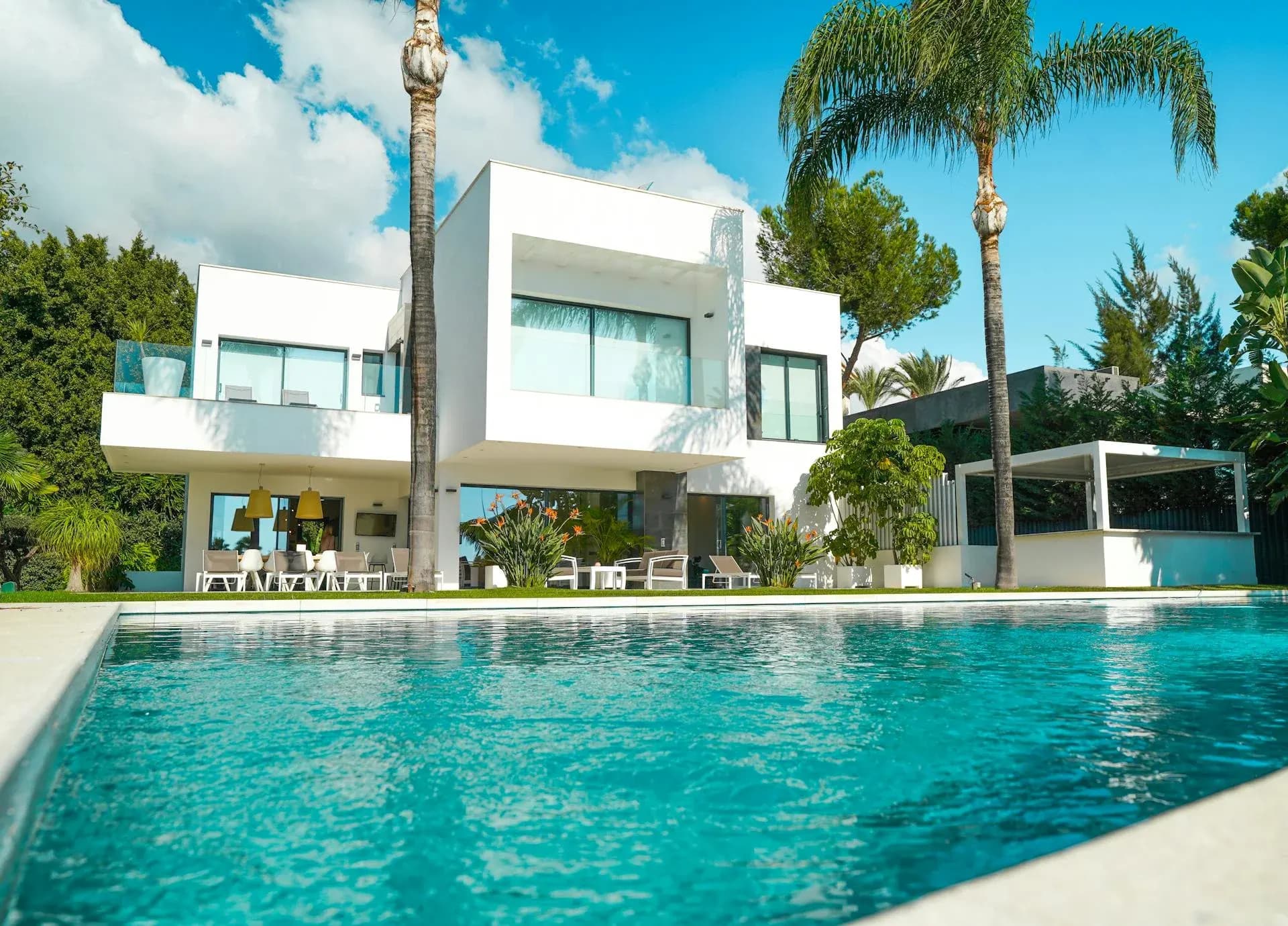
One of the most sought-after features in Atlanta luxury real estate is a property that comes with more than just the main house. Guest houses, carriage homes, and accessory dwelling units have moved from a nice-to-have to a defining characteristic of the most desirable estates across metro Atlanta.
The reasons are practical. Families are living closer together across generations. Remote work has created demand for separate home offices with real walls and real silence. Rental income from a guest house can offset the carrying costs of a high-value property. And for buyers relocating to Atlanta from higher-cost markets in California, New York, or the Northeast, the idea that you can buy a luxury estate with a fully separate guest house for what a single-family home costs in their old neighborhood is a revelation.
But finding the right property, understanding what you can build, and working through the zoning rules across different Atlanta jurisdictions takes real knowledge. The rules in Buckhead differ from those in Sandy Springs. What flies in unincorporated DeKalb County may not work in Brookhaven. And your HOA can override all of it.
This guide covers the neighborhoods where luxury properties with guest houses are most common, the zoning landscape across metro Atlanta, what it costs to build or renovate, the income potential, and how these secondary structures affect property values.
Atlanta Neighborhoods Where Luxury Guest Houses Are Most Common
Not every luxury neighborhood in Atlanta lends itself to guest houses. The critical factors are lot size, zoning, HOA restrictions, and the historic building patterns of the area. Some neighborhoods have guest houses woven into their DNA. Others make them nearly impossible.
Buckhead Estates: Tuxedo Park, West Paces Ferry, and Chastain Park
Buckhead is the epicenter of luxury guest house properties in Atlanta. The estate-sized lots along West Paces Ferry Road, Habersham Road, and throughout Tuxedo Park commonly range from one to five acres, providing ample room for detached guest houses, pool houses with living quarters, and converted carriage homes. Many of these properties were built in the 1920s through 1960s and already include secondary structures. Prices for Buckhead estates with guest houses typically start around $2.5 million and can exceed $10 million for the most prominent addresses. The neighborhood's R-1 and R-2 zoning districts allow ADUs under the city's ordinance, though many properties fall within HOA-governed communities that may impose additional architectural review.
Druid Hills: Historic Carriage Houses and Estate Properties
Druid Hills, the Frederick Law Olmsted-designed neighborhood east of midtown, has one of Atlanta's richest collections of original carriage houses. These structures date to the early 1900s and were originally built for horse-drawn carriages and later automobiles, with servants' quarters above. Many have been beautifully converted into guest apartments while preserving their historic character. Properties along Ponce de Leon Avenue, Oakdale Road, and Lullwater Road frequently feature these secondary structures. Because much of Druid Hills falls within a locally designated historic district, any new construction or significant renovation requires approval from the Atlanta Urban Design Commission, which adds time but also protects the architectural integrity that makes these properties so valuable.
Ansley Park: In-Town Estates with Guest Quarters
Ansley Park occupies a prime in-town position between Midtown and Piedmont Park, and its largest lots along The Prado, Westminster Drive, and Peachtree Circle include some of the most desirable in-town estate properties in the city. Several homes here feature detached guest cottages, converted garage apartments, and pool houses with living quarters. The neighborhood is a locally designated historic district, so new construction must pass design review. But the payoff is significant: an Ansley Park estate with a permitted guest house offers the rare combination of walkability, proximity to Piedmont Park, historic charm, and flexible secondary living space. Luxury properties in Ansley Park with guest houses typically trade between $1.8 million and $5 million.
Sandy Springs: River Estates and Newer Luxury Communities
Sandy Springs offers two distinct opportunities. Along the Chattahoochee River corridor, older estate properties on large lots have the space and privacy for guest houses, though the city's zoning provisions for accessory structures differ from Atlanta proper. In the newer luxury developments throughout Sandy Springs, some builders have begun incorporating detached guest suites as part of the original site plan. Sandy Springs has been evolving its zoning code, so current rules should be verified directly with the city's Community Development Department. Luxury estates with guest houses in Sandy Springs generally range from $1.5 million to $6 million.
Alpharetta and North Fulton: Gated Communities with Guest Suites
Alpharetta and the surrounding North Fulton communities including Johns Creek and Milton feature luxury neighborhoods where guest houses are built into the community design. The Manor Golf and Country Club, Country Club of the South, and Windward have properties with separate guest structures. These tend to be newer construction from the 1990s through today, with guest houses designed as contemporary living spaces rather than converted historic structures. Lot sizes in these communities commonly range from half an acre to two or more acres. Guest suites in these areas often include full kitchens, private entrances, and are finished to the same standard as the main home. Prices range from $1.2 million to $4 million depending on the community and amenities.
Wondering whether a lot can take one?
Whether a guest house is permitted depends on zoning, lot size and setbacks. Send the address and we will check.
ADU Zoning Rules Across Metro Atlanta
One of the biggest mistakes luxury buyers make is assuming the rules are the same everywhere. Atlanta is a patchwork of cities, counties, and unincorporated areas, each with its own zoning code. What the City of Atlanta allows may be prohibited a mile north in Sandy Springs. Understanding the ADU rules for your specific address is the essential first step before buying a property with ADU plans in mind or adding one to a home you already own.
City of Atlanta
Atlanta adopted its ADU ordinance in 2019, permitting accessory dwelling units by right in all single-family residential zones (R-1 through R-5, RG, and R-LC). The ADU cannot exceed 750 square feet or 50% of the primary home's heated floor area, whichever is smaller. For most luxury homes, the 750 square foot cap is the binding constraint. The property owner must live in either the primary dwelling or the ADU. Detached structures must meet setback requirements of typically 7 feet from side and rear property lines, with a maximum height of 20 feet. One ADU is permitted per lot. No special use permit or variance is required.
Sandy Springs
Sandy Springs has historically maintained more restrictive policies on accessory structures than Atlanta proper. The city has been reviewing and updating its zoning code, and the current provisions for accessory dwelling units should be verified with the Sandy Springs Community Development Department. Setback requirements, lot coverage limits, and use restrictions may differ significantly from Atlanta's. Many luxury properties in Sandy Springs are also governed by HOA covenants that add another layer of restrictions.
Brookhaven
Brookhaven permits ADUs under specific conditions, with its own set of size limits, setback requirements, and design standards. The city has been actively working to refine its accessory dwelling unit policies. Brookhaven's requirements may be more or less restrictive than Atlanta's depending on the zoning district. Properties in the Brookhaven-Oglethorpe neighborhood and along Peachtree Road are most commonly considered for guest house additions.
Unincorporated Fulton and DeKalb Counties
Properties in unincorporated areas fall under county zoning codes rather than city ordinances. Fulton County and DeKalb County each have their own regulations for accessory structures. Some of the largest estate lots in metro Atlanta, particularly in areas like Druid Hills (which straddles Atlanta and unincorporated DeKalb) and parts of North Fulton, are governed by county rules. These can be more permissive in some respects and more restrictive in others. Always confirm your property's jurisdiction before proceeding.
HOA Covenants: The Override Layer
Regardless of what the city or county allows, your HOA covenants, conditions, and restrictions (CC&Rs) can prohibit or further restrict accessory dwelling units. Many luxury communities in Buckhead, Sandy Springs, and North Fulton have covenants that limit outbuildings, impose architectural review, or explicitly ban secondary dwelling units. These are private contractual obligations that supersede zoning permissions. Violating CC&Rs can result in fines, legal action, and forced removal of structures. Always review your HOA documents before investing in design or permitting work.
Types of Guest Houses on Atlanta Luxury Properties
Guest houses on luxury Atlanta properties take many forms, and the type matters for both value and functionality. Understanding the differences helps you evaluate existing properties and plan new construction.
Detached Guest Cottage
A standalone structure separate from the main home, typically 600 to 1,200 square feet for luxury properties. These offer the most privacy and flexibility, with their own entrance, outdoor space, and utility connections. In Buckhead and Druid Hills, detached guest cottages are often positioned at the rear of the property near gardens or pool areas. The best examples feature the same architectural materials and design language as the primary residence, creating visual continuity across the property.
Historic Carriage House
Original to many early 20th century estates in Druid Hills, Ansley Park, and parts of Buckhead, carriage houses were built to stable horses and store carriages, later adapted for automobiles. The upper levels typically served as quarters for staff. Converted carriage houses are among the most architecturally distinctive secondary structures in Atlanta, with exposed brick, original wood beams, and period details. Renovation costs can be significant due to structural upgrades and code compliance, but the character they add to a property is irreplaceable.
Pool House with Living Quarters
Many luxury properties feature pool houses that include a full living suite above or adjacent to the pool amenity area. These structures combine entertaining space on the pool level (outdoor kitchen, changing rooms, bathroom) with a self-contained apartment above. This design is especially common in newer Buckhead construction and North Fulton estate communities, where the pool house doubles as a guest apartment and entertainment pavilion.
Garage Apartment
A living space built above a detached garage, this is one of the most efficient guest house configurations because it uses the garage as a structural foundation. Garage apartments are particularly common in in-town neighborhoods where lot sizes are smaller and maximizing the footprint of existing structures makes sense. In the luxury context, these are finished to the same standard as the main house and typically include a bedroom, full bath, kitchenette, and living area.
In-Law Suite or Attached Guest Wing
While not technically a separate structure, many luxury homes are designed with a distinct wing or suite intended for multi-generational living. These include a private entrance, bedroom, full bathroom, and often a kitchenette or full kitchen. Attached suites do not face the same zoning hurdles as detached ADUs because they are considered part of the primary residence, making them a lower-friction option for buyers who want proximity without full separation.
Rental Income Potential From a Luxury Guest House
For luxury homeowners who do not need their guest house for family or personal use full-time, the rental income potential is substantial. The numbers vary significantly based on location, size, finishes, and whether you pursue long-term or short-term rental strategies.
Long-term rental rates for a well-finished guest house in Buckhead, Sandy Springs, or Brookhaven typically range from $1,500 to $3,000 per month, depending on size and amenities. A one-bedroom guest cottage in a prime Buckhead location with high-end finishes can command $2,200 to $2,800 per month. That translates to $26,400 to $33,600 per year in gross rental income.
Short-term rental rates are higher on a nightly basis but involve more management and regulatory compliance. A luxury guest house near Buckhead or Midtown listed on Airbnb or VRBO might earn $150 to $300 per night with occupancy rates of 65% to 80%, generating $35,000 to $87,000 per year in gross revenue. However, you must account for platform fees, cleaning costs, furnishing, insurance, taxes, and the time investment of managing a short-term rental. You also need the appropriate short-term rental license from your jurisdiction.
For investment-minded luxury homeowners, a guest house that generates $30,000 or more per year in rental income can meaningfully offset property taxes, insurance, and maintenance costs on a high-value primary residence. Some owners use this income to justify the purchase of a more expensive property than they would otherwise consider, effectively treating the guest house as a built-in income property.
Thinking Through a Guest House on Your Property?
Zoning, setbacks, and resale impact vary block by block across Atlanta. We can review your lot and tell you what an ADU may realistically add before you spend anything on plans.
Review My Lot for ADU Potentialor call (770) 727-4052
Construction Costs and Modern Design Trends
Building a luxury guest house in Atlanta is not a weekend project. The costs are real, the timeline is longer than most people expect, and the design decisions will directly impact both the utility of the space and the value it adds to your property. Here is what to expect.
Typical Cost Ranges
Standard construction for a detached guest house runs $150 to $250 per square foot in metro Atlanta. Luxury-grade construction with premium materials, custom design, and high-end finishes pushes costs to $300 to $550 per square foot. For a 750 square foot guest house, expect total project costs of $120,000 to $200,000 for standard construction and $250,000 to $450,000 or more for luxury. These figures include design, engineering, permitting, site preparation, construction, utility connections, and landscaping. Carriage house renovations can range widely from $100,000 to $350,000 depending on the structural condition of the original building.
Design Trends in 2026
Current design trends for luxury ADUs in Atlanta emphasize seamless indoor-outdoor connections, with covered porches, large sliding glass doors, and private garden areas. Open floor plans maximize the feel of smaller spaces. High ceilings, typically 9 to 10 feet, are standard in luxury guest houses even at modest square footage. Smart home integration, including separate climate control, keyless entry, and dedicated Wi-Fi, makes guest houses feel fully independent. Material choices increasingly mirror the main residence: if the primary home features natural stone and hardwood, the guest house should match. The most successful projects treat the guest house not as an afterthought but as an architectural extension of the property.
Prefabricated Luxury ADUs
Prefabricated ADUs have matured significantly and now offer luxury-grade options that were not available five years ago. Companies specializing in prefab ADUs deliver factory-built units that are assembled on-site in weeks rather than months. Prices range from $150,000 to $300,000 installed for models with high-end finishes, efficient layouts, and modern aesthetics. The primary advantage is speed: site preparation, foundation, and assembly can take 8 to 12 weeks compared to 6 to 12 months for traditional construction. The limitation is customization. Prefab units work best on properties where the modern design language complements the main residence.
The Permitting Timeline
Within Atlanta city limits, the permitting process for an ADU typically takes 8 to 16 weeks from application to building permit issuance. Add design and engineering time before that (4 to 8 weeks minimum) and construction time after (4 to 8 months for a luxury build). If your property is in a historic district, add 2 to 4 months for the Certificate of Appropriateness review. From initial concept to a finished, move-in-ready guest house, expect 9 to 18 months for a luxury project. Properties outside Atlanta city limits may face different timelines depending on the local permitting office workload and requirements.
Best Uses for a Guest House on a Luxury Property
The flexibility of a guest house is one of its greatest value propositions. A well-designed secondary structure can serve different purposes at different stages of life. Here are the most common uses among luxury homeowners in Atlanta.
Multi-Generational Living
Housing aging parents in a guest house allows families to provide proximity and care while maintaining independence for everyone. The parent has their own kitchen, living space, and entrance. The adult children are close enough to help but not so close that boundaries disappear. This is the fastest-growing use case for luxury guest houses in Atlanta, driven by demographic shifts and the rising cost of assisted living. For many families, a $300,000 guest house build is far more appealing than $8,000 to $15,000 per month for a quality senior living facility. Our guide to multi-generational living in Atlanta covers this topic in depth.
Adult Children and Transitional Living
Adult children returning home after college, starting a career in Atlanta, or saving for their own home are a common reality. A guest house provides a dignified living arrangement with real independence rather than moving back into a childhood bedroom. This use case is especially relevant for buyers considering neighborhoods popular with empty nesters who may later welcome children back.
Dedicated Home Office or Creative Studio
Remote and hybrid work have permanently changed how luxury buyers evaluate homes. A detached guest house converted to a professional home office provides the separation, quiet, and dedicated space that a room inside the main house cannot match. For executives, consultants, artists, and entrepreneurs, this is not a luxury but a functional requirement. The commute is a walk across the yard. The interruptions are minimal. And when work ends, you close the door and leave it behind.
Guest Accommodations
Atlanta is a major destination for business travel, family visits, and events. A private guest house offers visiting friends and family a hotel-quality experience with the comfort and privacy of their own space. For homeowners who entertain frequently or have family visiting from out of state, a dedicated guest house eliminates the disruption of hosting visitors inside the main residence.
Rental Income
As detailed in the income section above, a permitted guest house can generate significant rental revenue. Some luxury buyers specifically structure their purchase around this model, using projected rental income to qualify for a larger mortgage or to offset the property tax burden of a high-value home. For those with a longer-term investment horizon, the guest house may also factor into a 1031 exchange strategy if the property is later sold as part of a real estate portfolio.
Staff Housing
For larger luxury estates with full-time household staff such as a property manager, nanny, personal chef, or caretaker, a guest house provides appropriate on-site housing. This is most common in Buckhead and North Fulton estate properties where the scale of the property and the lifestyle of the owner require a permanent on-site presence.
How Guest Houses Affect Luxury Property Values
The impact of a guest house on property value depends on several factors: whether the structure is permitted, the quality of construction, how well it matches the primary residence, and the local market demand for secondary structures.
In the luxury segment, a well-built and permitted guest house almost always adds value. Based on comparable sales across Buckhead, Druid Hills, Sandy Springs, and Brookhaven, a quality detached guest house can add $150,000 to $400,000 or more to a property's market value. Historic carriage houses in Druid Hills and Ansley Park, when properly restored, can add even more because of their architectural significance and rarity.
The return on investment is strongest when the guest house is architecturally consistent with the main home, uses comparable materials and finishes, and is fully permitted with a Certificate of Occupancy. Unpermitted structures are a liability. They must be disclosed, they may not be financeable through a traditional mortgage, and they can create insurance complications. In a worst-case scenario, an unpermitted guest house can reduce property value rather than increase it if the buyer's appraiser or lender flags the issue.
Appraisers in the luxury market typically evaluate guest houses using a combination of cost approach (what it would cost to rebuild), market comparison (what similar properties with guest houses have sold for), and income approach (the rental income the structure could generate). The most sophisticated appraisers also account for the functional utility and lifestyle premium that a guest house provides in the luxury segment.
For buyers, a property with an existing, permitted guest house is almost always a better value than buying a property and building one from scratch. The seller rarely recovers 100% of construction costs, which means the buyer benefits from the improvement at a discount. For sellers, the guest house is a competitive differentiator that can reduce time on market and attract a broader buyer pool, including multi-generational families, remote workers, and investors.
Key Considerations Before Buying or Building
Whether you are searching for a luxury property with an existing guest house or planning to build one, there are critical questions to answer before committing.
Verify the Permit Status
If the property already has a guest house, confirm that it was built with proper permits and has a Certificate of Occupancy. Request a copy of the building permit, the final inspection sign-off, and any relevant zoning approvals. Unpermitted structures create risk for financing, insurance, and future resale. If the guest house was built before current permitting requirements, work with a qualified inspector and the local building department to understand what, if anything, needs to be brought into compliance.
Confirm Your Jurisdiction and Zoning
Determine exactly which city or county governs your property. Atlanta, Sandy Springs, Brookhaven, unincorporated Fulton County, and unincorporated DeKalb County all have different rules. Then check your specific zoning district, lot size requirements, setback rules, and lot coverage limits. A lot that is technically large enough for a guest house may still not qualify if impervious surface limits or tree canopy regulations constrain the buildable area.
Review HOA Covenants Carefully
Get a complete copy of the covenants, conditions, and restrictions before making any plans. Look specifically for provisions about outbuildings, accessory structures, architectural review requirements, and short-term rental restrictions. If the HOA prohibits secondary dwelling units, no amount of favorable city zoning will help. If architectural review is required, factor the time and cost of that process into your project plan.
Assess Utility Infrastructure
A guest house needs water, sewer (or septic), electricity, gas, and potentially a separate HVAC system. Properties on septic systems may need an upgraded tank or additional drain field to support a second dwelling. Older properties may require electrical panel upgrades to support the additional load. Utility connection costs can range from minimal (if the main property has excess capacity) to $25,000 or more if significant infrastructure work is needed. Factor this into your budget early.
Plan for Property Tax Impacts
Building a guest house increases the improved value of your property, which means a higher tax assessment. Per the Fulton County Board of Assessors, new construction is typically assessed at 40% of fair market value for tax purposes. A $300,000 guest house could add roughly $120,000 to your assessed value, translating to an additional $3,600 to $4,800 per year in property taxes at typical Atlanta-area millage rates. Your homestead exemption still applies to the primary residence but does not extend to the ADU.
Frequently Asked Questions
What is the difference between a guest house, carriage house, and an ADU?
All three describe a secondary dwelling on the same property as a primary residence, but the terminology reflects different origins. A guest house is a standalone structure intended for visitors or family. A carriage house is a converted or purpose-built structure that historically served as a stable or garage, common in Atlanta neighborhoods like Ansley Park and Druid Hills. An ADU, or accessory dwelling unit, is the legal and zoning term that encompasses all of these, any self-contained residential unit on a single-family lot with its own kitchen, bathroom, and sleeping area. In Atlanta real estate listings, you will see all three terms used interchangeably, but what matters for zoning and permitting purposes is whether the structure meets the city's ADU definition.
Which Atlanta neighborhoods have the most luxury homes with guest houses?
Buckhead has the highest concentration of luxury estates with existing guest houses, particularly in the Tuxedo Park, West Paces Ferry, and Chastain Park areas where lot sizes commonly exceed one acre. Druid Hills is known for historic estates with original carriage houses dating to the early 1900s. Ansley Park features several properties with detached guest quarters on its larger lots near Piedmont Park. Outside the city, Sandy Springs estates along the Chattahoochee River corridor and Alpharetta properties in gated communities like The Manor and Country Club of the South frequently include guest houses. Brookhaven has also seen an increase in luxury new construction that incorporates detached guest suites as a standard feature.
Can I rent out a guest house on my luxury property in Atlanta?
Yes, but the rules depend on your jurisdiction, zoning, and HOA. Within Atlanta city limits, the owner-occupancy requirement means you must live in either the main house or the ADU and can rent the other. Long-term rentals are generally permitted. Short-term rentals require a Type 1 Short-Term Rental License, which allows owner-occupied properties to rent an accessory unit to guests. You must collect and remit hotel/motel excise tax and state sales tax. Outside Atlanta, each municipality has different rules. Sandy Springs, Brookhaven, and Alpharetta each regulate short-term rentals differently. Your HOA covenants may also restrict or prohibit rentals regardless of what the city allows.
How much does a guest house add to property value in Atlanta?
A well-built, permitted guest house or ADU typically adds significant value to a luxury Atlanta property. Based on comparable sales in Buckhead, Druid Hills, and Sandy Springs, a quality detached guest house with full kitchen and bath can add $150,000 to $400,000 or more to a property's market value, depending on size, finishes, and location. The return is strongest when the guest house matches the architectural style and quality of the main residence. Unpermitted structures, on the other hand, can create liability and may need to be disclosed, potentially reducing rather than increasing value. Appraisers typically value permitted ADUs using a combination of cost approach and comparable sales with similar secondary structures.
What are the zoning rules for building an ADU on a luxury property in Atlanta?
Within Atlanta city limits, ADUs are permitted by right in all single-family residential zones (R-1 through R-5, RG, and R-LC). The ADU cannot exceed 750 square feet or 50% of the primary home's heated floor area, whichever is smaller. For most luxury homes over 3,000 square feet, the 750 square foot cap applies. The property owner must occupy either the main house or the ADU. Detached ADUs must meet setback requirements, typically 7 feet from rear and side property lines, and height is generally limited to 20 feet. In unincorporated Fulton County and DeKalb County, different rules apply. Sandy Springs, Brookhaven, and Alpharetta each have their own ADU provisions that may be more or less restrictive than Atlanta proper.
How much does it cost to build a luxury guest house in Atlanta?
Construction costs for a luxury guest house in Atlanta typically range from $200,000 to $500,000 or more, depending on size, finishes, and site conditions. A high-end 750 square foot detached guest house with custom millwork, premium appliances, stone countertops, and designer fixtures might cost $350 to $550 per square foot for construction alone. Add design and architecture fees (typically 8% to 15% of construction cost), permitting, site preparation, utility connections, and landscaping, and total project costs can reach $400,000 to $600,000 for a luxury-grade structure. Prefabricated luxury ADUs offer a faster timeline at $150,000 to $300,000 installed, though customization options are more limited.
Can I build a guest house if my property is in a historic district?
Yes, but you will face additional design review requirements. Properties in Atlanta's locally designated historic districts, including Ansley Park, Druid Hills, and Inman Park, must obtain a Certificate of Appropriateness from the Atlanta Urban Design Commission before building any new structure. The commission reviews the design for compatibility with the historic character of the neighborhood, including materials, scale, setbacks, roof form, and architectural details. This adds time and cost to the project but does not prohibit ADU construction. Many homeowners in historic districts successfully build guest houses by working with architects experienced in historic preservation. The review process typically adds 2 to 4 months to the overall timeline.
What is the best use for a guest house on a luxury Atlanta property?
The most common uses among luxury homeowners in Atlanta include housing aging parents or adult children in a multi-generational arrangement, providing private guest quarters for frequent visitors, generating rental income through long-term or short-term leases, creating a dedicated home office or creative studio separate from the main residence, and housing full-time domestic staff. Many luxury buyers specifically seek properties with existing guest houses to accommodate these needs. The best use depends on your personal situation, but the flexibility of a well-designed guest house is a major selling point, it can serve different purposes at different stages of life.
Looking for a Luxury Property With a Guest House?
Whether you want an estate with an existing guest cottage, a property with ADU potential, or guidance on building a guest house on your current lot, we can help you navigate every step.
Ready to find your ideal luxury property with guest quarters?
Sources
- City of Atlanta Zoning Ordinance - Accessory dwelling unit provisions, permitted zoning districts (R-1 through R-5, RG, R-LC), size limits, setback requirements, owner-occupancy requirements, and design standards.
- City of Atlanta Department of City Planning - ADU permitting procedures, building permit requirements, inspection processes, and Certificate of Occupancy requirements.
- Fulton County Board of Assessors - Property assessment methodology, 40% assessment ratio for improvements, and reassessment procedures for new construction.
- Atlanta Urban Design Commission - Historic district design review requirements, Certificate of Appropriateness process for new construction in locally designated historic districts including Ansley Park and Druid Hills.
- Sandy Springs, Brookhaven, Alpharetta, and Johns Creek Municipal Codes - Jurisdiction-specific zoning provisions for accessory structures and dwelling units in suburban Atlanta municipalities.
- FMLS and Georgia MLS Comparable Sales Data - Luxury property sales with guest houses, carriage houses, and ADUs across metro Atlanta neighborhoods used for value impact analysis.
Zoning regulations, building codes, and permitting requirements are subject to change. Information reflects rules in effect as of early 2026. Always verify current requirements with the applicable jurisdiction before beginning design work or submitting permit applications.
Disclaimer: This article is for informational purposes only and does not constitute legal, tax, financial, or real estate advice. Zoning regulations, building codes, HOA covenants, permitting requirements, and tax rules are subject to change and vary by jurisdiction. The information provided reflects rules in effect as of early 2026 and may not be current at the time of reading. Construction cost estimates are approximations based on market conditions at the time of writing and may vary significantly based on project specifics. Rental income projections are estimates and not guarantees of future performance. Property value impacts are based on comparable sales analysis and may vary for individual properties. Consult with a qualified attorney, architect, contractor, CPA, or other professional for guidance specific to your property and situation. The Luxury Realtor Group is not responsible for losses or penalties arising from reliance on the information in this article.