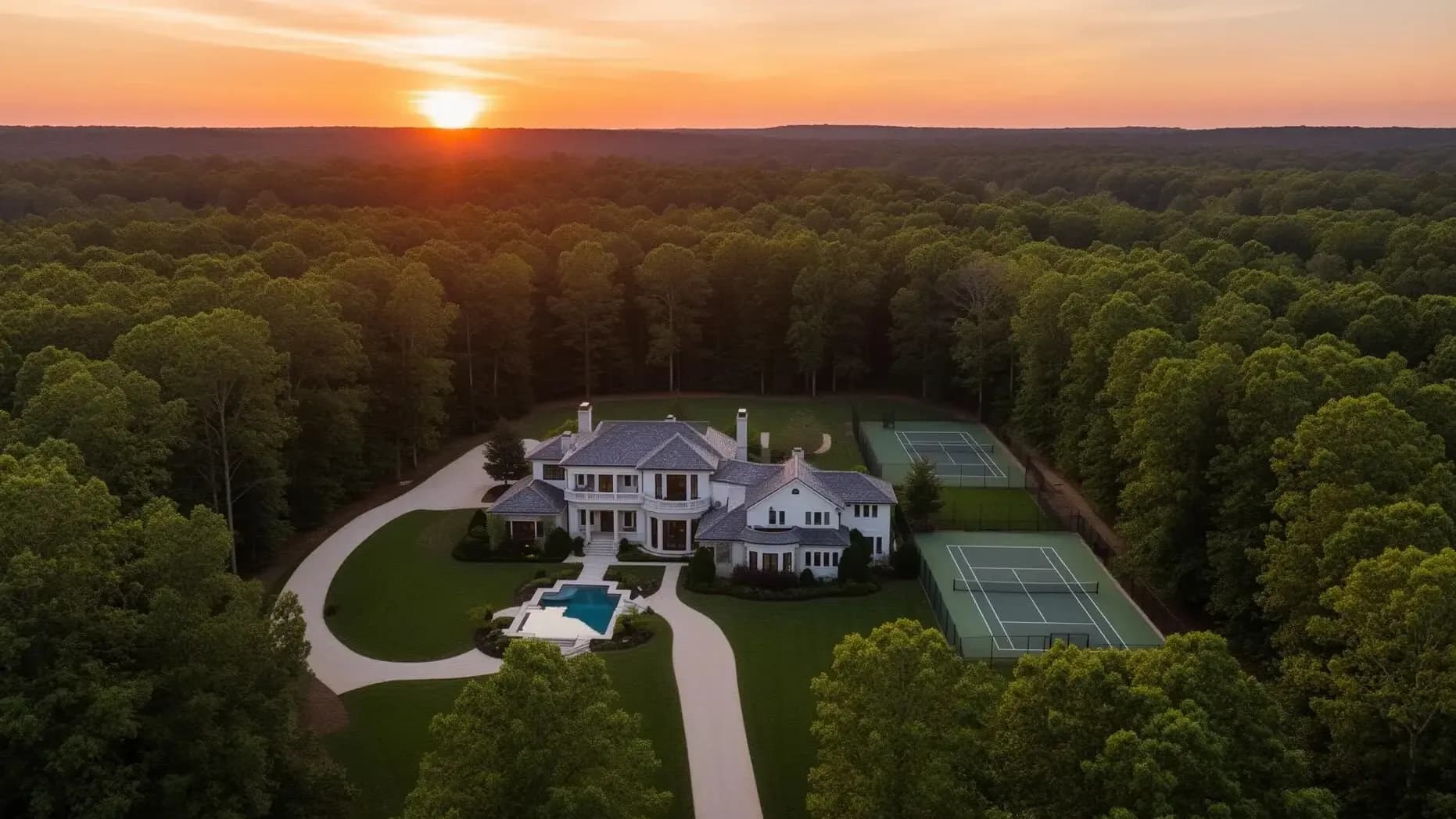
Atlanta is called the "City in a Forest" for good reason. The city's tree canopy covers approximately 47% of its land area, making it one of the most densely forested major cities in the United States, according to the American Forests organization. That canopy is a defining feature of Atlanta's luxury neighborhoods. The towering oaks, hickories, and tulip poplars that shade Tuxedo Park driveways and line Peachtree Battle streets are not just attractive. They are legally protected.
Atlanta's tree protection ordinance is one of the strictest in the Southeast. For luxury homeowners, this means that buying, building, renovating, or even landscaping a property involves understanding tree regulations that can significantly affect what you can do with your land, what it costs, and what penalties you face for getting it wrong.
This guide covers the City of Atlanta's tree ordinance in detail, explains how DeKalb and Fulton County rules differ, and provides practical guidance for luxury property owners who want to stay compliant while getting the most from their land.
The City of Atlanta Tree Protection Ordinance
The City of Atlanta's tree protection ordinance (Chapter 158 of the City Code) applies to all properties within the city limits. The core rules are straightforward, but the details matter.
Permit requirement: Any tree with a diameter at breast height (DBH) of 6 inches or greater requires a permit before removal. DBH is measured at 4.5 feet above the ground on the uphill side of the tree. This threshold is relatively low and means that most trees of any meaningful size on your property are regulated.
Heritage trees: Trees with a DBH of 30 inches or greater receive enhanced protection. These trees are classified as heritage trees and face stricter approval requirements for removal. Certain species, including Southern magnolia, live oak, white oak, and American beech, may qualify for heritage status at smaller sizes if they appear on the city's specimen tree list.
Tree density requirements: The ordinance requires minimum tree density on developed lots. For residential properties, the standard is roughly 10 to 15 density units per acre (depending on zoning classification). Each existing tree earns density credits based on its species and size, and new plantings can supplement the total. If tree removal drops your property below the minimum density, you must replant to compensate.
Replacement requirements: When a tree is approved for removal, the city typically requires replacement plantings. The ratio depends on the size and species of the removed tree but generally ranges from 1:1 for smaller trees to 3:1 or more for heritage trees. Replacement trees must meet minimum caliper requirements (usually 2 to 4 inches) and must be planted within 6 months of removal.
Understanding Recompense Value
Recompense value is the concept that causes the most surprise among luxury property owners. It is the assessed monetary value of a tree, and the City of Atlanta uses it both as a penalty for unauthorized removal and as a factor in permitting decisions.
The calculation follows the Council of Tree and Landscape Appraisers (CTLA) methodology, which considers species, trunk diameter, condition, and location. Per CTLA standards, a healthy, mature white oak with a 36-inch DBH in a residential setting could have a recompense value of $15,000 to $30,000 or more. A large heritage magnolia on a prominent Buckhead lot might appraise even higher.
Real-World Recompense Examples
- 30-inch white oak, good condition: Recompense value typically $12,000 to $20,000. Removal with permit and valid reason may be approved with replacement plantings. Removal without permit triggers the full recompense as a fine.
- 40-inch tulip poplar, fair condition: Recompense value typically $18,000 to $28,000. Declining condition may support a removal case, but an arborist report documenting the decline is essential.
- 24-inch Southern magnolia, excellent condition: May qualify as heritage depending on species list status. Recompense value typically $8,000 to $15,000. These trees are among the hardest to get approved for removal due to their cultural significance in Atlanta.
- Multiple-tree clearing for new construction: A luxury lot with 15 to 20 regulated trees could face $50,000 to $150,000 or more in recompense obligations if trees must be removed for a building footprint. This cost should be factored into land acquisition and construction budgets.
Building and Renovating Near Protected Trees
For luxury homeowners planning additions, pools, outdoor kitchens, driveways, or new construction, the critical root zone (CRZ) is the measurement that matters most. The CRZ is the area around a tree where roots are essential to the tree's health and stability. Disturbing this zone through excavation, compaction, grade changes, or root cutting can damage or kill the tree, potentially triggering recompense penalties even if the tree dies years later.
The standard CRZ calculation is one foot of radius per inch of trunk DBH. A 24-inch oak has a CRZ extending 24 feet from the trunk in all directions. That is a circle 48 feet across, a significant footprint on most residential lots.
The City of Atlanta requires tree protection fencing (typically orange construction fencing on posts) installed at the CRZ boundary before any construction begins. No storage of materials, no vehicle traffic, no excavation, and no grade changes are permitted within the fencing. City arborists may inspect the site during construction to verify compliance, and violations can result in stop-work orders.
For projects that must encroach on a CRZ, an arborist can sometimes develop a root pruning and protection plan that allows limited intrusion while preserving the tree. This requires root mapping, careful hand excavation near the trunk, and post-construction monitoring. Costs for this level of arborist involvement typically range from $2,000 to $8,000 per tree, according to International Society of Arboriculture (ISA) certified professionals in the Atlanta market.
Confirm the Tree Rules Before You Commit to a Lot
Protected specimen trees and critical root zones can reshape a buildable footprint and add recompense cost. We can check what is standing on a property before you go under contract.
Check Tree Constraints on a Propertyor call (770) 727-4052
The Permit Process: What to Expect
The tree removal permit process in Atlanta involves several steps, and timelines can vary from two weeks to two months depending on the complexity of the request and the city's current workload.
Step 1: Arborist assessment. Hire a certified arborist (ISA-certified is the standard) to evaluate the tree and prepare a report. The report should document species, DBH, condition, structural integrity, and any hazards. If you are requesting removal due to disease or structural failure, the arborist's documentation is your primary evidence.
Step 2: Application. Submit a tree removal application to the City of Atlanta Department of City Planning. The application requires the arborist report, a site plan showing tree locations, and a description of the reason for removal. If the project involves construction, a tree protection plan must accompany the application.
Step 3: City review. A city arborist reviews the application and may visit the property. Factors in the decision include the tree's health, its heritage status, the reason for removal, and whether the removal will drop the property below minimum density requirements.
Step 4: Approval conditions. If approved, the permit typically specifies replacement tree requirements, a timeline for removal, and any conditions (such as planting locations for replacement trees). Permits have an expiration date, usually 6 to 12 months.
DeKalb County, Fulton County, and Municipal Variations
If your luxury property is outside the City of Atlanta limits but within metro Atlanta, different tree regulations may apply. Here is a summary of the major jurisdictions.
Unincorporated Fulton County: Tree regulations in unincorporated Fulton County are generally less restrictive than the City of Atlanta. The permit threshold is typically 12 inches DBH rather than 6 inches. However, properties in overlay districts or near waterways may have additional protections. The North Fulton area (Alpharetta, Johns Creek, Milton) has its own municipal ordinances that vary by city.
DeKalb County: DeKalb County's tree ordinance applies to unincorporated areas and sets a 12-inch DBH permit threshold for most removals. Stream buffer zones along the Chattahoochee and its tributaries have stricter protections. Cities within DeKalb (Brookhaven, Dunwoody, Decatur) have their own municipal ordinances.
Sandy Springs: As an incorporated city in Fulton County, Sandy Springs has its own tree ordinance modeled on but distinct from the City of Atlanta's. The regulations are moderately strict, with a focus on tree canopy preservation during development. Properties in the Sandy Springs luxury market along the Chattahoochee corridor face additional buffer requirements.
Roswell and Milton: Both cities have tree ordinances that reflect their more suburban character. Lot sizes tend to be larger, which provides more flexibility. However, equestrian and agricultural properties in Milton sometimes face unique considerations around tree clearing for pasture maintenance.
Practical Tips for Luxury Property Owners
- Get a tree survey during due diligence. Before you close on any luxury property, hire a certified arborist to survey all trees on the lot. This identifies protected trees, hazardous trees, and potential limitations on future projects. Budget $500 to $1,500 for this service.
- Factor tree costs into construction budgets. If you are planning new construction on a wooded lot, budget $30,000 to $100,000 or more for tree-related costs: arborist surveys, permit fees, recompense payments, tree protection during construction, and replacement plantings.
- Work with tree-savvy architects. The best architects for Atlanta luxury projects design around significant trees rather than against them. A well-placed heritage oak can become a landscape focal point rather than an obstacle. Ask potential architects about their experience with the tree ordinance.
- Maintain your trees proactively. Regular pruning, disease treatment, and cabling (for structurally compromised trees) can extend a tree's life by decades and prevent emergency removals. Annual tree maintenance for a luxury property typically costs $2,000 to $6,000 per year, according to Atlanta-area ISA-certified arborists.
- Document everything. Photograph trees before and after construction projects. Keep copies of arborist reports, permits, and city correspondence. If a tree dies years after construction and the city investigates, documentation of your compliance protects you from penalties.
The Bottom Line
Atlanta's tree ordinance is a significant factor in luxury real estate decisions. It affects what you can build, where you can build it, how much construction costs, and what ongoing maintenance obligations you carry as a property owner. The regulations are not arbitrary. They protect the tree canopy that makes Atlanta one of the most livable cities in the country and that directly supports the property values in neighborhoods like Buckhead, Druid Hills, and Sandy Springs.
The luxury homeowners who handle trees well are the ones who plan ahead: getting arborist surveys before they buy, designing around significant trees rather than removing them, and budgeting for the real costs of compliance. Those who ignore the ordinance or try to work around it often end up paying far more in penalties and required replanting than they would have spent on proper planning from the start.
Frequently Asked Questions
Do I need a permit to remove a tree on my own property in Atlanta?
Yes, in most cases. Within the City of Atlanta, any tree with a diameter at breast height (DBH) of 6 inches or greater requires a permit before removal. This applies even if the tree is on private property and even if you own the land outright. The permit process is managed by the City of Atlanta Department of City Planning, Office of Zoning and Development. Exceptions exist for dead, dying, or hazardous trees, but you typically still need documentation from a certified arborist to qualify for an emergency removal.
What is a heritage tree in Atlanta?
Under the City of Atlanta Tree Protection Ordinance, a heritage tree is any tree with a DBH of 30 inches or greater, or any tree of a species listed on the city's specimen tree list regardless of size. Heritage trees receive the highest level of protection. Removal requires special approval and often involves paying the full recompense value, which can be thousands or tens of thousands of dollars for a large, healthy specimen. Some neighborhoods have additional heritage tree protections through historic district overlays.
What is tree recompense value and how is it calculated?
Tree recompense value is the assessed monetary value of a tree based on its species, size, condition, and location. The City of Atlanta uses the Council of Tree and Landscape Appraisers (CTLA) methodology. For a healthy heritage oak with a 36-inch DBH, the recompense value can easily exceed $15,000 to $25,000. When a property owner removes a tree without a permit or removes a protected tree that is denied removal, they may be required to pay the full recompense value as a penalty, plus additional fines. This cost is separate from the actual removal expense.
How does the tree ordinance affect new construction on a luxury lot?
Significantly. Before any construction project within the City of Atlanta, a tree survey must be completed by a certified arborist identifying all trees on the property with a DBH of 6 inches or greater. The builder must submit a tree protection plan showing which trees will be preserved, which require removal, and how protected trees will be shielded during construction. The city requires tree protection fencing at the critical root zone (typically the dripline or further) and will inspect the site during construction. Violation of tree protection requirements during construction can result in stop-work orders, fines, and required replanting.
Are the tree rules different in DeKalb County versus the City of Atlanta?
Yes. DeKalb County has its own tree ordinance that differs from the City of Atlanta's in several ways. DeKalb requires a permit for removal of any tree with a DBH of 12 inches or greater on most residential properties (compared to 6 inches in Atlanta). DeKalb also has specific buffer requirements along streams and in other sensitive areas. If your property falls in unincorporated DeKalb County, Sandy Springs, Brookhaven, or Dunwoody, check the specific municipality's ordinance, as each incorporated city within DeKalb may have adopted its own tree regulations.
What happens if I remove a tree without a permit?
Penalties for unpermitted tree removal in the City of Atlanta can be severe. The standard penalty is the full recompense value of the removed tree, plus additional fines that can range from $500 to $5,000 per tree. For heritage trees, penalties can exceed $25,000 per tree. The city may also require the property owner to plant replacement trees at a specified caliper-inch ratio, which can mean planting 10 or more trees to compensate for one large tree removed. In some cases, the city has pursued legal action against property owners and contractors for willful violations.
Can I build a pool or addition near a large tree?
You can, but it requires careful planning. Construction within the critical root zone of a protected tree requires an arborist's assessment and city approval. The critical root zone extends roughly one foot from the trunk for every inch of trunk diameter. For a 24-inch DBH oak, that means the protected zone extends 24 feet from the trunk in every direction. Root pruning, if necessary, must be done by a certified arborist and documented. Improperly cutting roots during pool or foundation excavation is one of the most common ways luxury homeowners accidentally kill protected trees, which can trigger recompense penalties years later when the tree dies.
Do I need an arborist report before buying a luxury property?
It is strongly recommended, particularly for properties with significant tree canopy. An arborist report during due diligence identifies dead or hazardous trees that may need immediate removal (and the associated cost), protected trees that limit future construction or renovation options, root systems that may be affecting foundations or hardscaping, and potential liabilities from trees that overhang neighboring properties. For a typical luxury lot in Buckhead, an arborist assessment costs $500 to $1,500 depending on the number of trees and the level of detail required.
How do Atlanta's tree laws affect property values?
Mature trees are generally a net positive for property values. Research published by the USDA Forest Service estimates that mature trees can increase residential property values by 3% to 15%, depending on species, size, health, and placement. In Atlanta's luxury market, properties with significant tree canopy often command premium pricing because the trees provide privacy, shade, and an established estate feel that cannot be replicated quickly. However, trees that create practical problems (blocking views, dropping debris on pools, threatening foundations) can become liabilities. The key is maintaining healthy, well-placed trees while managing those that pose genuine risks.
What should I do if a neighbor's tree is encroaching on my property?
In Georgia, you have the legal right to trim branches that overhang your property line, but only up to the property line itself. You cannot enter the neighbor's property or cut the tree trunk. If a neighbor's tree is diseased or hazardous and you believe it poses a risk to your property, document the issue (photographs, arborist assessment) and notify the neighbor in writing. If the tree falls and damages your property after the neighbor was notified of the hazard, the neighbor may be liable. This area of law can be complex, so consult an attorney for situations involving significant potential damage or heritage trees.
Need guidance on tree regulations for your Atlanta luxury property?
Sources
- City of Atlanta Code of Ordinances, Chapter 158 - Tree Protection Ordinance, permit requirements, heritage tree definitions, density requirements, and enforcement provisions.
- American Forests - Atlanta urban tree canopy coverage data and national urban forest comparisons.
- Council of Tree and Landscape Appraisers (CTLA) - Tree valuation methodology used by the City of Atlanta for recompense calculations.
- International Society of Arboriculture (ISA) - Certified arborist standards, critical root zone guidelines, and tree care best practices.
- USDA Forest Service - Research on the impact of mature trees on residential property values.
- DeKalb County Code of Ordinances - Tree protection regulations for unincorporated DeKalb County and comparative municipal ordinances.
- National Weather Service - Atlanta precipitation data relevant to tree health and species selection.
Tree ordinance details referenced in this article reflect regulations as of early 2026 and are subject to change. Municipal codes are amended regularly. This article does not constitute legal advice. Consult the relevant municipal arborist office and a qualified attorney for guidance on specific tree-related decisions.
Disclaimer: This article is for informational purposes only and does not constitute legal, arboricultural, or construction advice. Tree ordinances vary by jurisdiction and are subject to amendment. Penalty amounts, permit processes, and recompense calculations described here are based on publicly available information and may not reflect the most current regulations. The Luxury Realtor Group is a real estate brokerage and does not provide legal or arboricultural services. Consult certified arborists, municipal officials, and qualified attorneys for guidance on specific tree-related matters.