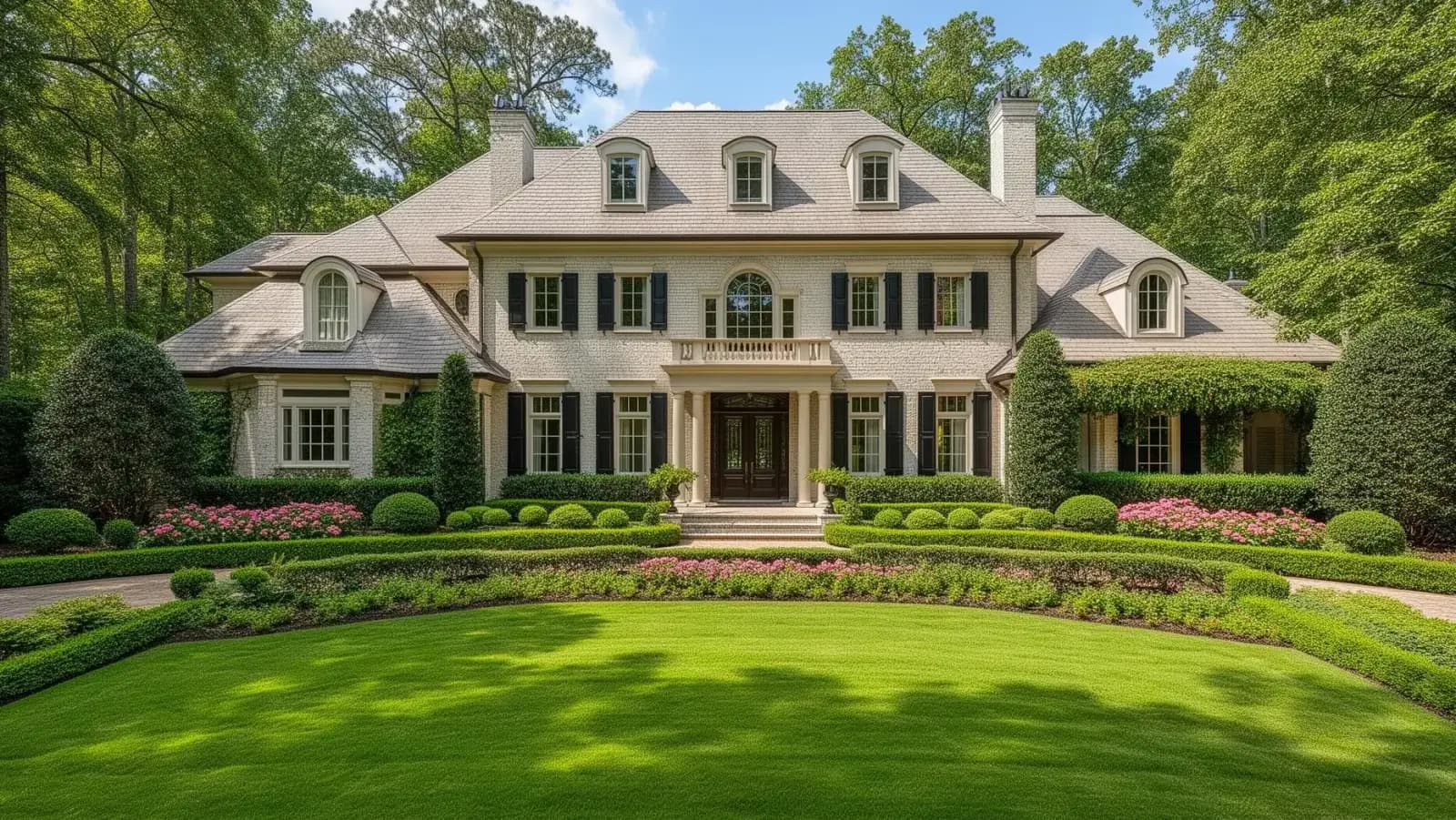
Architecture tells a story. In Atlanta, that story spans nearly three centuries of Southern history, cultural shifts, and evolving tastes. From the formal Georgian estates that line the streets of Tuxedo Park to the glass-and-steel contemporary homes rising in Buckhead Village, the city's luxury market offers one of the most architecturally diverse collections of any metro area in the Southeast.
Understanding architecture styles is not just an academic exercise. Style affects resale value, maintenance costs, renovation potential, and the pool of buyers you will attract when it comes time to sell. According to data from the National Association of Realtors, architectural style is among the top five factors luxury buyers cite when selecting a home, right behind location, square footage, lot size, and school district.
This guide covers the eight most prominent luxury home architecture styles found in metro Atlanta, with details on their history, defining features, where to find them, and what they typically cost. Whether you are buying, building, or just curious, this will give you a foundation for making informed decisions in Atlanta's luxury market.
Georgian: The Gold Standard of Atlanta Luxury
Georgian architecture is, without exaggeration, the single most important style in Atlanta's luxury market. Named for the four King Georges who ruled Britain from 1714 to 1830, the style arrived in the American colonies in the early 18th century and has remained a fixture of Southern wealth ever since.
The defining principle of Georgian design is symmetry. Everything balances: windows are evenly spaced on both sides of a centered front door, chimneys are paired, and the roofline is clean and orderly. The aesthetic communicates formality, permanence, and restraint. According to the Atlanta Preservation Center, many of the city's most valuable residential properties are Georgian in style, particularly in the Buckhead neighborhoods that were developed in the 1920s through 1960s.
Georgian: Key Features
- Facade: Red or Flemish bond brick, strictly symmetrical, with a prominent centered entry (often with a pediment or fanlight transom)
- Windows: Double-hung sash windows with six-over-six or nine-over-nine pane configurations, aligned vertically and horizontally
- Roof: Side-gabled or hipped, typically with dormers, slate or architectural shingle
- Interior: Center hall plan, formal living and dining rooms, crown molding, paneled walls, fireplaces with carved mantels
Where to find them: Tuxedo Park, Chastain Park, Peachtree Battle, Paces, Sandy Springs estates
Typical price range: $1.8 million to $12 million+ depending on lot size and location
Colonial Revival: Atlanta's Most Versatile Luxury Style
Colonial Revival is a broad category that encompasses homes built from the 1880s to the present day that reference architectural elements from America's colonial period. The movement gained momentum after the 1876 Centennial Exhibition in Philadelphia, which sparked a national interest in early American design. In Atlanta, the style exploded during the post-World War II suburban expansion and has never lost popularity.
What makes Colonial Revival so popular in the luxury market is its flexibility. The style allows for larger floor plans, modern open-concept interiors, and varied exterior materials while still maintaining the classical proportions and dignified appearance that Atlanta buyers consistently prefer. Colonial Revival homes consistently rank among the most common styles in metro Atlanta luxury listings above $1.5 million.
The best Colonial Revival homes borrow from Georgian principles (symmetry, brick, formal entries) but add scale. Grand two-story porticos with columns, side wings, and expansive motor courts are common in the luxury tier. Architects like Neel Reid, Philip Trammell Shutze, and more recently Harrison Design have built reputations on executing this style at the highest level in Atlanta.
Colonial Revival vs. Georgian: Quick Comparison
Georgian
- Strict symmetry required
- Restrained ornamentation
- Typically 2 to 3 stories
- Center hall floor plan
- Paired chimneys
Colonial Revival
- Symmetry preferred but not rigid
- More decorative freedom (porticos, columns)
- Flexible footprint and wings
- Open-concept options
- Varied roofline configurations
Where to find them: Nearly every luxury neighborhood in metro Atlanta. Highest concentrations in Buckhead, Sandy Springs, Brookhaven, Dunwoody, and East Cobb
Typical price range: $1.2 million to $8 million+
Tudor: Old World Character in the Heart of Atlanta
Tudor architecture draws from medieval English building traditions, and its presence in Atlanta dates primarily to the 1920s and 1930s when the style was at the peak of its American popularity. The most recognizable Tudor features are steeply pitched rooflines, decorative half-timbering (wood beams set against stucco or masonry), and tall, narrow windows often grouped in banks with diamond-pane leaded glass.
In Atlanta, Tudor homes carry a distinctive charm that sets them apart from the predominantly brick Colonial and Georgian inventory. The style suits the city's hilly, wooded terrain particularly well. Mature oaks and magnolias frame these homes beautifully, and the steeply pitched rooflines handle Georgia's heavy rainfall effectively.
The Druid Hills neighborhood, designed by Frederick Law Olmsted, contains what is widely considered the finest collection of Tudor homes in the Southeast. Many were designed by prominent architects including Ivey and Crook, Walter Downing, and Hentz, Reid and Adler. In Garden Hills and Peachtree Hills, you will find both original Tudors and newer homes that incorporate Tudor-inspired elements.
Tudor: Key Features
- Exterior: Steeply pitched cross-gabled roof, decorative half-timbering, mix of brick, stone, and stucco, prominent chimneys
- Windows: Tall, narrow, often grouped; leaded glass or diamond-pane casements in original homes
- Entry: Arched doorways, heavy wood or iron-bound doors, often recessed or set within a stone surround
- Interior: Large stone or brick fireplaces, exposed ceiling beams, plaster walls, intimate room proportions (originals), arched doorways
Where to find them: Druid Hills, Ansley Park, Virginia-Highland, Morningside, Garden Hills, Peachtree Hills
Typical price range: $1.2 million to $4 million for originals; new Tudor-inspired construction can exceed $5 million
Looking for a Specific Architectural Style in Atlanta?
Certain styles cluster in certain neighborhoods, and the good examples rarely sit on the market long. We can watch for the ones that match what you want.
Find Homes in This Styleor call (770) 727-4052
Mediterranean Revival: Southern European Elegance
Mediterranean Revival architecture draws from the building traditions of Spain, Italy, and southern France. The style became popular in the United States during the 1920s and experienced a strong resurgence in luxury construction during the early 2000s. In Atlanta, Mediterranean Revival homes stand out for their stucco exteriors, clay tile roofs, arched openings, and indoor-outdoor living spaces.
While less common than Georgian or Colonial Revival in metro Atlanta, Mediterranean Revival homes have a loyal following among buyers who want something distinct. The style works particularly well for homes with expansive outdoor living areas, pools, and courtyards. The arched loggias and covered terraces that define the style are genuinely functional in Atlanta's warm climate, extending the usable living season from March through November.
One consideration worth noting: Mediterranean Revival homes can be harder to resell in Atlanta than Georgian or Colonial homes because the style appeals to a narrower buyer pool. According to agents who specialize in the luxury tier, well-executed Mediterranean homes in prime locations sell well, but poorly executed versions (too much stucco, cheap-looking tile roofs, oversized for the lot) can linger on the market.
Mediterranean Revival: Key Features
- Exterior: Stucco walls (smooth or textured), clay barrel-tile roof, arched windows and doorways, wrought iron balconies and railings
- Outdoor spaces: Courtyards, loggias, covered terraces, often oriented around a pool or fountain
- Interior: Travertine or terra-cotta floors, arched interior passages, wrought iron stair railings, heavy wood beams, Venetian plaster walls
Where to find them: Buckhead (scattered), Sandy Springs, Johns Creek, Alpharetta (newer construction)
Typical price range: $1.5 million to $6 million
Contemporary Modern: Atlanta's Fastest-Growing Luxury Style
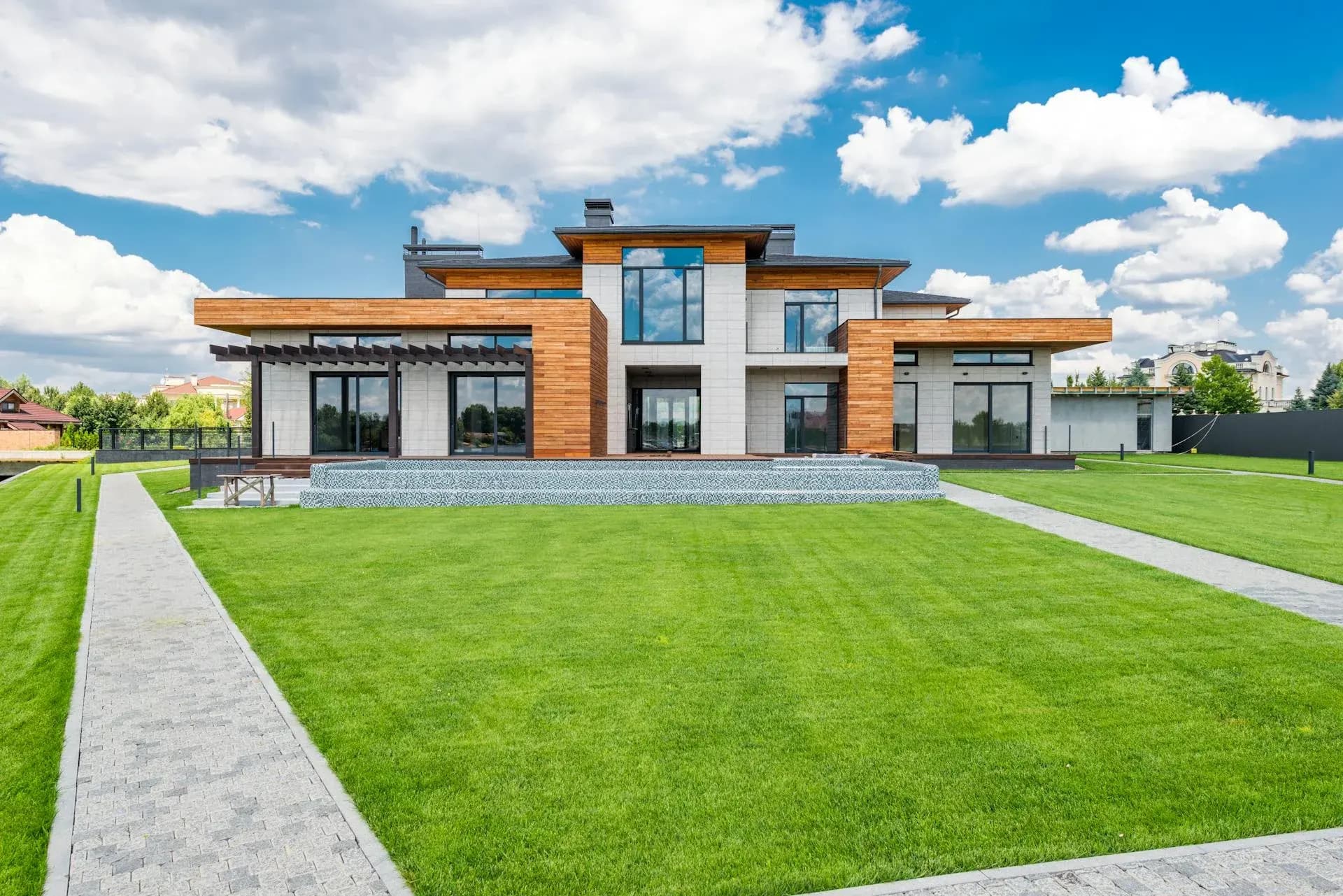
Contemporary modern architecture is the fastest-growing segment of Atlanta's luxury home market. The style is defined by clean lines, open floor plans, expansive glazing (floor-to-ceiling windows and glass walls), flat or low-slope rooflines, and a strong connection between indoor and outdoor living spaces. Materials tend toward concrete, steel, glass, and natural wood rather than the brick and stone that dominate traditional Atlanta styles.
Per data from the Atlanta Business Chronicle, modern-style home permits in the $1 million-plus category have grown faster than any other style category in Fulton County between 2021 and 2025. The growth is driven by tech-industry transplants from markets like Austin, San Francisco, and Seattle, and by owners who want a clean break from the traditional homes they have held for decades.
The best contemporary homes in Atlanta do not ignore context. They use natural materials (wood siding, stone accents) to soften the aesthetic and integrate with mature tree canopies. Firms like Plunkett Raysich Architects, Dencity, and Brian Bell of BLDGS have produced some of the most notable contemporary luxury homes in the metro area. The style works best on wooded lots where the architecture can create a dialogue with the natural setting rather than fighting it.
Contemporary Modern: Key Features
- Exterior: Flat or butterfly rooflines, floor-to-ceiling glass, mixed materials (steel, wood, concrete, stone), minimal ornamentation
- Floor plan: Open concept, seamless indoor-outdoor flow, multi-level designs on sloped lots
- Interior: Exposed structural elements, floating stairs, minimalist millwork, integrated smart home systems
Where to find them: Buckhead Village, Midtown, West Midtown, Westside Provisions, Morningside (infill), North Buckhead
Typical price range: $1.5 million to $7 million+
Craftsman: Handcrafted Artistry with Enduring Appeal
The Craftsman style emerged from the Arts and Crafts movement of the late 19th century as a reaction against mass-produced Victorian excess. The philosophy centered on honest materials, visible craftsmanship, and designs that connected to their natural surroundings. In Atlanta, Craftsman homes were built primarily between 1905 and 1940, and the best examples are found in the city's intown historic neighborhoods.
Craftsman homes in Atlanta's luxury market occupy a slightly different niche than Georgian or Colonial Revival. They appeal to buyers who value character, history, and walkable neighborhoods over sheer square footage. A 3,000-square-foot restored Craftsman on a tree-lined street in Inman Park or Midtown can command $1.2 million or more, while a comparable-sized generic ranch in the suburbs may sell for far less.
The key to Craftsman value is original detail. Homes that retain their original built-in cabinetry, woodwork, stone fireplaces, and exposed rafter tails command meaningful premiums over those that have been stripped and modernized. The most valuable Craftsman homes combine original character with updated kitchens, bathrooms, and mechanical systems.
Craftsman: Key Features
- Exterior: Low-pitched gabled roof with wide eaves, exposed rafter tails, tapered columns on stone or brick piers, wide front porches
- Materials: Wood siding (often shake or clapboard), stone or clinker brick accents, natural color palettes
- Interior: Built-in bookshelves and window seats, wood-paneled walls, large fireplaces with handcrafted tile or stone, warm wood tones throughout
Where to find them: Inman Park, Grant Park, Virginia-Highland, Midtown, Candler Park, Decatur
Typical price range: $800,000 to $2.5 million (luxury tier: fully restored with modern updates)
French Provincial: European Grandeur on Southern Soil
French Provincial architecture draws from the manor houses and chateaux of the French countryside, particularly the Loire Valley and Normandy regions. The American interpretation of this style became popular in the 1920s and has maintained a consistent presence in the luxury market ever since. In Atlanta, French Provincial homes are often among the most expensive listings in any given neighborhood, commanding premiums for their craftsmanship and distinctive curb appeal.
What sets French Provincial apart from other traditional styles is the emphasis on refined proportion and understated elegance. Where Georgian is formal and symmetrical, and Colonial Revival can be grand and columned, French Provincial achieves its effect through steep hip roofs, arched windows, natural stone or brick facades, and carefully balanced massing. The best examples feel substantial without being showy.
In Atlanta, architects like Stan Dixon and firms like Harrison Design have produced French Provincial homes that rank among the finest residential architecture in the Southeast. These homes typically feature high-quality natural stone (often imported), copper gutters and dormers, handmade brick, and interior finishes that include limestone floors, plaster wall treatments, and custom iron work.
French Provincial: Key Features
- Roof: Steep hip roof (often mansard or high-pitched hipped), copper or slate, with prominent dormer windows
- Exterior: Natural stone, brick, or stucco; arched windows and doors; balanced but not rigidly symmetrical facades; soft color palette
- Interior: Limestone or hardwood floors, plaster wall finishes, iron stair railings, carved stone fireplaces, high ceilings with exposed wood beams
Where to find them: Tuxedo Park, Paces, Mount Paran, Whitewater Creek, Sandy Springs
Typical price range: $2.5 million to $15 million+
Greek Revival: The Antebellum Icon
Greek Revival architecture holds a special place in Southern history. The style swept the United States from the 1820s through the 1860s, earning the nickname "the national style" for its dominance during that period. In Georgia, Greek Revival is strongly associated with antebellum plantation homes and the grandeur of the pre-Civil War South, though the style has been revived periodically in new construction.
The defining feature of Greek Revival is the columned portico. Full-height columns (Doric, Ionic, or Corinthian) supporting a triangular pediment give these homes an unmistakable presence. The style communicates permanence and civic importance, which is why it was also the dominant style for courthouses, banks, and government buildings throughout the 19th century.
Original antebellum Greek Revival homes are rare in metro Atlanta proper (most were destroyed during the Civil War), but fine examples survive in Madison, Covington, and Roswell. Within the metro area, you will find Greek Revival-inspired new construction scattered through luxury neighborhoods, particularly in North Fulton and the Chattahoochee corridor. These modern interpretations typically pair the columned portico with contemporary floor plans and updated systems.
Greek Revival: Key Features
- Portico: Full-height columns (round or square) supporting a triangular pediment, often spanning the full width of the facade
- Exterior: Painted wood or brick, symmetrical, wide entablature, pilasters at corners
- Interior: Wide center hall, high ceilings (12 to 14 feet), formal rooms flanking the entry, plaster medallions and cornices
Where to find them: Roswell Historic District, Madison, Covington; Greek Revival-inspired new construction in North Fulton, Sandy Springs, Buckhead
Typical price range: $1.5 million to $6 million (antebellum originals can vary widely based on condition and acreage)
Price Premiums by Architecture Style in Metro Atlanta
Directional patterns observed in metro Atlanta's luxury market. Style premiums vary widely by neighborhood, lot, and condition; treat these as tendencies, not guarantees.
- French Provincial: +12% to +20% premium. Highest premium of any style, driven by scarcity and construction quality.
- Georgian: +8% to +15% premium. Most consistent demand and strongest resale velocity.
- Contemporary Modern: +5% to +18% premium. Wide range depending on design quality and location. Top-tier modern can exceed Georgian premiums.
- Colonial Revival: Baseline (0% to +5%). Most common style, which means more supply and less scarcity premium.
- Tudor: +3% to +10% premium. Higher premiums for originals with intact period details in historic districts.
- Mediterranean Revival: -2% to +8%. Wider variance due to narrower buyer pool. Quality of execution matters enormously.
Choosing the Right Architecture Style for Your Purchase
Selecting a home based on architecture style is ultimately a personal decision, but there are practical considerations that should inform the choice.
Resale considerations. If maximizing resale value and minimizing days on market are priorities, Georgian and Colonial Revival remain the safest choices in Atlanta. They appeal to the broadest buyer pool and perform consistently across market cycles. Contemporary modern homes sell well when they are exceptional and well-located, but mediocre modern homes can struggle because the style leaves no room to hide flawed design or cheap materials.
Neighborhood context. Architecture style should fit the neighborhood. A glass-and-steel contemporary home in the middle of a traditional Georgian streetscape in Tuxedo Park would face both social resistance and potential resale challenges. Conversely, a formal Georgian in the middle of a contemporary infill development in West Midtown might feel out of place. Look at what surrounds the lot before committing to a style.
Maintenance reality. Some styles are more maintenance-intensive than others. Tudor homes with half-timbering require regular painting and caulking of the timber joints. Stucco (Mediterranean and some Contemporary) needs periodic inspection for cracks that can admit moisture. Brick (Georgian, Colonial) is about as low-maintenance as exteriors get. Factor ongoing maintenance costs into your total cost of ownership.
Renovation potential. If you are buying with plans to renovate, understand the constraints of each style. Adding a modern kitchen to a Georgian home requires skill to maintain the home's character. Converting a Craftsman's small rooms into an open floor plan requires careful structural work to preserve the roofline. Contemporary homes, by contrast, are generally the easiest to modify because the clean-line aesthetic accommodates changes without disrupting the design language.
Whatever style you choose, the quality of the specific home matters more than the style category. A brilliantly designed and well-maintained Tudor will outperform a poorly built Georgian every time. Focus on construction quality, lot position, neighborhood fundamentals, and the skill of the architect and builder before worrying about stylistic labels.
If you are exploring Atlanta's luxury market and want guidance on which styles perform best in specific neighborhoods, connect with our team. We help buyers understand the intersection of architecture, location, and long-term value across every corner of metro Atlanta.
Frequently Asked Questions
What is the most common luxury home style in Atlanta?
Georgian and Colonial Revival styles dominate Atlanta's luxury market, particularly in established neighborhoods like Buckhead, Brookhaven, and Sandy Springs. These traditional brick homes with symmetrical facades account for a large share of luxury listings above $1.5 million in intown Atlanta. Their popularity reflects both the Southern preference for formal architecture and the practical benefits of brick construction in Georgia's humid subtropical climate.
Do certain architecture styles command higher prices in Atlanta?
Yes, architecture style can significantly affect pricing. Custom Georgian and French Provincial estates in prime locations like Tuxedo Park or Chastain Park often carry a 10% to 20% premium over comparable square footage in other styles. Contemporary modern homes in Buckhead Village and Midtown also command premiums due to limited inventory. However, location and lot size typically matter more than style alone. A well-maintained Tudor in a top school district will generally outperform a neglected Georgian in a less desirable area.
Are contemporary modern homes increasing in popularity in Atlanta?
Yes. According to data from the Atlanta chapter of the American Institute of Architects (AIA), permit applications for contemporary and modern-style custom homes in metro Atlanta have increased approximately 35% between 2020 and 2025. Younger luxury buyers (ages 35 to 50) are driving much of this demand. Contemporary homes are most concentrated in Buckhead Village, Midtown, West Midtown, and the Westside Provisions area, though they are appearing in traditionally conservative neighborhoods as well.
What architecture style has the best resale value in Atlanta?
Georgian and Colonial Revival homes have historically demonstrated the strongest and most consistent resale performance in Atlanta's luxury market. These styles appeal to the broadest buyer pool, which means shorter days on market and stronger offers when it comes time to sell. That said, a well-designed contemporary home in the right location can also perform very well. The key factors for resale are quality of construction, lot size, location, and how well the home's style fits the character of its neighborhood.
Where can I find Tudor-style luxury homes in Atlanta?
Tudor homes are concentrated in several of Atlanta's most historic neighborhoods. Druid Hills (DeKalb County) has one of the highest concentrations of Tudor-style homes in the Southeast, many dating to the 1920s and 1930s. Ansley Park, Virginia-Highland, and Morningside also have notable Tudor inventory. In Buckhead, you will find Tudor-inspired new construction in neighborhoods like Garden Hills and Peachtree Hills. Prices for well-maintained Tudor homes in these areas typically range from $1.2 million to $4 million depending on size and lot.
Is it more expensive to maintain a historic architecture style in Atlanta?
Generally, yes. Historic homes with period-specific details like slate roofs, leaded glass windows, plaster walls, and custom millwork cost more to maintain than standard construction. A slate roof replacement can cost $40,000 to $80,000 compared to $15,000 to $25,000 for architectural shingles. However, many luxury buyers view these maintenance costs as worthwhile investments in preserving character and value. Homes in designated historic districts may also be eligible for state and federal tax credits that offset some restoration costs.
What should I look for when buying a Craftsman-style luxury home in Atlanta?
Craftsman homes in Atlanta typically date to the early 1900s through the 1930s, so structural inspection is critical. Check the foundation (many have original pier-and-beam construction), the condition of original woodwork, and whether any additions or renovations were done sympathetically with the original style. Look for original features that add value: built-in cabinetry, exposed rafter tails, clinker brick fireplaces, and wood-framed windows. In neighborhoods like Inman Park and Grant Park, well-restored Craftsman homes with modern updates regularly sell above $1 million.
Can I build a new home in a historic architecture style in Atlanta?
Absolutely. Many of the new luxury homes built in Buckhead and other Atlanta neighborhoods draw directly from Georgian, Colonial Revival, and French Provincial traditions while incorporating modern floor plans, systems, and amenities. Architects like Harrison Design, William T. Baker, and Stan Dixon specialize in designing new homes that honor traditional proportions and detailing while meeting contemporary living standards. New construction in a traditional style typically costs $350 to $600 per square foot in metro Atlanta, depending on the level of custom detail.
What is the difference between Georgian and Colonial Revival architecture?
Georgian architecture is the older style, originating in the early 1700s, characterized by strict symmetry, a centered front door, paired chimneys, and a formal, restrained appearance. Colonial Revival is a broader term for homes built in the late 1800s onward that revive elements of Colonial-era design, including Georgian details but also Dutch Colonial, Federal, and Cape Cod influences. In practice, many Atlanta real estate listings use these terms interchangeably. The key distinction is that true Georgian style demands rigid symmetry and classical proportions, while Colonial Revival allows more flexibility in design.
How does Atlanta's climate affect which architecture style is best?
Atlanta's humid subtropical climate with hot summers, mild winters, and significant rainfall (about 50 inches annually per NOAA data) favors certain design choices. Brick and stone exteriors handle moisture better than wood siding over time. Deep porches and covered entries provide shade and rain protection. High ceilings and cross-ventilation (common in Georgian and Colonial styles) were originally designed for heat management before air conditioning. Flat roofs on contemporary homes require careful waterproofing and drainage engineering due to Atlanta's heavy rainfall. Your architect should design with climate in mind regardless of style.
Looking for a specific architecture style in Atlanta?
Sources
- Atlanta Preservation Center - Architectural style guides and historic neighborhood resources for metro Atlanta.
- FMLS (First Multiple Listing Service) - Luxury home sales data, price per square foot analysis by style, and days-on-market statistics for metro Atlanta.
- National Association of Realtors (NAR) - Buyer preference surveys and luxury market trend reports.
- American Institute of Architects (AIA), Atlanta Chapter - Permit data, residential design trends, and new construction style analysis.
- Atlanta Business Chronicle - Construction permit trends and luxury home market reporting for metro Atlanta.
- NOAA (National Oceanic and Atmospheric Administration) - Atlanta climate data including annual precipitation and temperature averages.
Architecture style descriptions, price ranges, and market data referenced in this article reflect conditions as of early 2026 and are subject to change. Price ranges are approximate and vary based on specific location, lot size, condition, and market conditions at the time of sale.
Disclaimer: This article is for informational purposes only and does not constitute real estate, architectural, or investment advice. Price ranges, premiums, and market trends are based on available data and may not reflect current conditions at the time of reading. Architecture style classifications can vary between sources and are sometimes subjective. The Luxury Realtor Group recommends working with qualified architects, inspectors, and real estate professionals when making purchasing decisions.