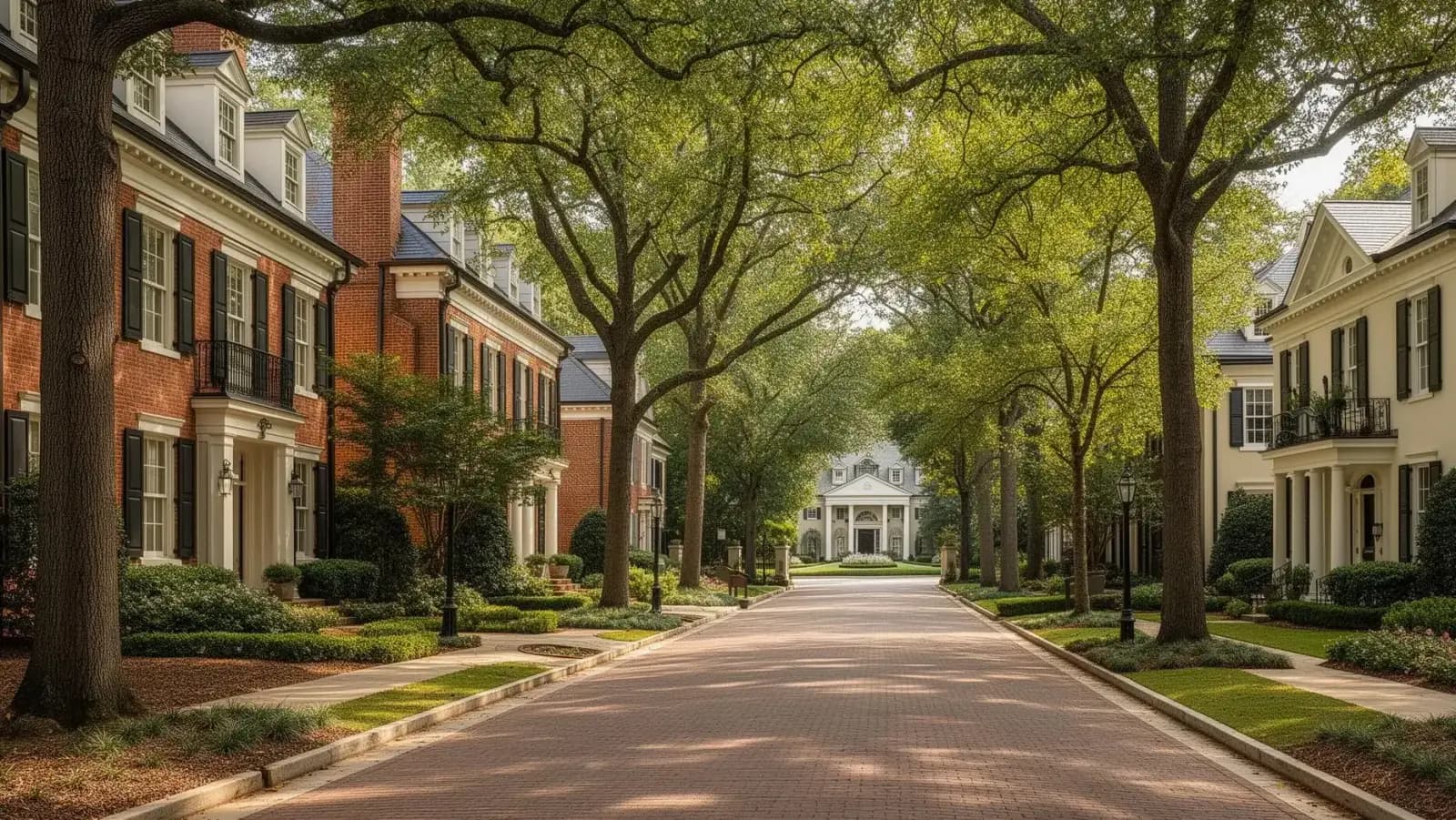
When people think of luxury real estate in Buckhead, the names that come up first are usually Tuxedo Park, Chastain Park, and Peachtree Battle. These are the marquee neighborhoods, the ones that show up in national publications and on "most expensive streets" lists. But two neighborhoods sitting right along Peachtree Road offer something the big-name enclaves often cannot: walkability, character, renovation upside, and a genuine neighborhood feel at a more accessible price point.
Peachtree Hills and Peachtree Heights sit on opposite sides of Peachtree Road in the heart of Buckhead. They are close to everything, full of architectural variety, and in the middle of a transformation that is pushing values upward while still leaving room for buyers who know where to look.
This guide breaks down both neighborhoods: what makes them different, what homes cost, where the opportunities are, and why serious Buckhead buyers should have them on the shortlist.
Peachtree Hills: The East Side Story
Peachtree Hills sits east of Peachtree Road, bounded roughly by Lindbergh Drive to the south, Peachtree Creek to the north, and the Norfolk Southern railroad corridor to the east. It is a compact neighborhood with a grid of tree-lined streets, a small commercial strip, and a mix of housing stock that ranges from original 1920s bungalows to brand-new contemporary builds.
The neighborhood was originally developed in the 1920s as a streetcar suburb, and many of the original lots are modest by today's luxury standards: a fifth of an acre to a quarter acre is typical. The homes that were built on these lots were equally modest: 1,200 to 1,800 square foot cottages and bungalows. What has changed is the value of the land they sit on.
Over the past 15 years, Peachtree Hills has undergone a significant transformation. Original cottages are being purchased, extensively renovated, or replaced with new construction that maximizes the footprint allowed by zoning. A lot that once held a 1,400 square foot bungalow may now support a 3,500 to 4,500 square foot home with three stories (including a finished basement or lower level). This renovation cycle has pushed average values upward while creating an interesting architectural mix on most streets.
The Peachtree Hills commercial strip along Peachtree Hills Avenue is a neighborhood asset. It includes local restaurants, a coffee shop, and small retail. It is the kind of walkable commercial node that most Atlanta neighborhoods lack and that urban planners spend millions trying to create. Residents can walk to dinner, grab a coffee, or meet friends without getting in a car. For a Buckhead address, that is unusual.
Peachtree Heights: The West Side Estate Character
Cross Peachtree Road heading west and the character shifts. Peachtree Heights (sometimes referred to in parts as Peachtree Heights East and Peachtree Heights West) features larger lots, more established homes, and a quieter, more estate-like atmosphere. Streets like Habersham Road, Andrews Drive, and Muscogee Avenue are lined with mature oaks and traditional Southern homes that have been maintained or expanded over decades.
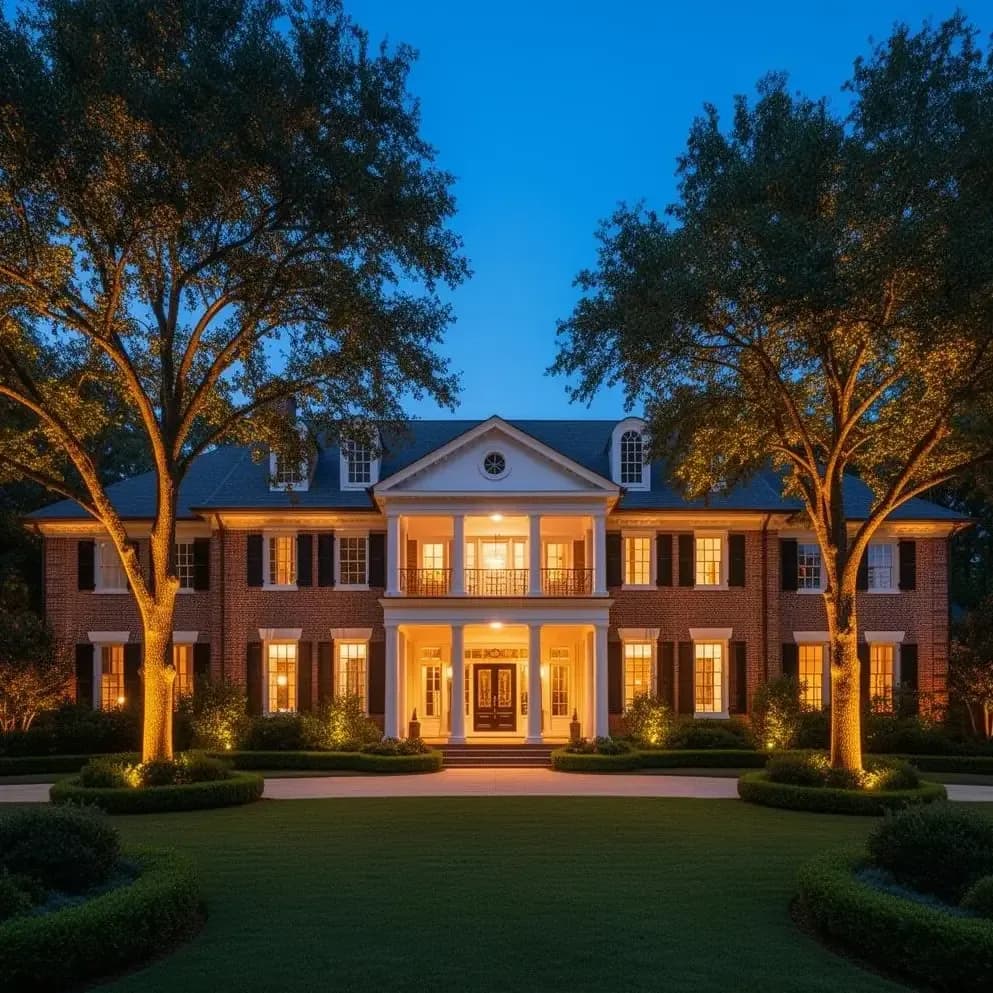
The housing stock in Peachtree Heights is more varied in age but generally grander in scale than Peachtree Hills. You will find Colonial Revival homes from the 1930s and 1940s, mid-century ranches on oversized lots, 1980s and 1990s brick traditional homes, and newer builds that have replaced original structures. Lot sizes tend to be a third of an acre to over an acre, with some of the largest properties along Habersham Road and in the Arden-Habersham area that borders Peachtree Heights.
The neighborhood has a more private, established feel than Peachtree Hills. There is less commercial activity within walking distance (the nearest commercial is along Peachtree Road or in Buckhead Village), but the trade-off is larger lots, more buffer between homes, and a more traditional luxury character. Buyers who want the established Buckhead aesthetic without paying Tuxedo Park prices often land in Peachtree Heights.
Price Ranges: Peachtree Hills vs. Peachtree Heights (2025-2026)
- Peachtree Hills entry level ($600K-$900K): Original bungalows and cottages needing significant renovation. Purchased primarily for lot value and location. These are teardown or major renovation candidates.
- Peachtree Hills mid-range ($900K-$1.8M): Renovated bungalows, expanded homes, and older construction in good condition. The sweet spot for buyers who want a Buckhead address with character and walkability.
- Peachtree Hills new construction ($1.5M-$3M+): Modern builds on teardown lots, typically 3,500-5,000 sq ft with high-end finishes. The top of the Peachtree Hills market.
- Peachtree Heights ($1.5M-$6M+): Larger range reflecting the variety of lot sizes and home quality. Updated traditionals on third-acre lots from $1.5M. Grand estates on larger lots from $3M to $6M+. The most prestigious addresses approach the quality and pricing of Tuxedo Park.
Get Ahead of Peachtree Hills Inventory
Homes in Peachtree Hills and Peachtree Heights often trade quickly and quietly. A standing search means you hear about a fit before it becomes a weekend crowd.
Set Up a Neighborhood Searchor call (770) 727-4052
Renovation and Value-Add Opportunities
One of the strongest arguments for buying in Peachtree Hills specifically is the renovation upside. Because many lots still hold original bungalows valued well below the neighborhood's potential, buyers who are willing to renovate or rebuild can create significant equity.
A typical scenario: purchase an unrenovated 1930s bungalow on a quarter-acre lot for $750,000 to $900,000. Invest $400,000 to $700,000 in a full renovation or addition (adding a second story, expanding the footprint, modernizing systems, and upgrading finishes). The finished product is a 3,000 to 4,000 square foot home worth $1.5 million to $2.2 million based on recent comparable sales. That is $100,000 to $500,000 in created equity, depending on execution and market conditions at the time of completion.
The teardown-rebuild approach produces even larger homes. Remove the original structure, build new from the ground up (3,500 to 5,000 square feet is typical for new builds on these lots), and you have a property competitive with anything in Buckhead at a total cost that is often below what you would pay for an equivalent finished product on the open market.
According to Remodeling Magazine's Cost vs. Value Report, major remodels in the Atlanta market have historically returned 60% to 80% of their cost at resale. In a neighborhood like Peachtree Hills where the gap between unrenovated and renovated comps is large, the actual return on investment can exceed those averages because you are also capturing the appreciation of the land itself.
Important caveat: renovation and new construction involve execution risk, timeline risk, and budget risk. Cost overruns of 10% to 20% are common in custom residential work. Work with an experienced builder and architect, and build contingency into your budget. This is not the place to wing it. For guidance on maximizing value through strategic home upgrades in Atlanta, see our detailed guide.
Walkability, Dining, and Daily Life
The walkability advantage of Peachtree Hills and Peachtree Heights is one of their most compelling selling points. In a city where driving is the default for almost everything, these neighborhoods offer a rare alternative.
Peachtree Hills. The commercial strip along Peachtree Hills Avenue includes neighborhood restaurants, a popular coffee shop, and small businesses. Residents walk to these spots regularly. Buckhead Village, with its restaurants (Marcel, Gypsy Kitchen, The Southern Gentleman) and Shops Buckhead Atlanta, is about a 15-to-20-minute walk south along Peachtree Road. Lenox Square and Phipps Plaza are within walking distance for the motivated (about 20 minutes) or a quick 5-minute drive.
Peachtree Heights. Less immediately walkable to commercial amenities than Peachtree Hills, but still within a short drive of everything Buckhead offers. Andrews Drive provides access to Buckhead Village. Some residents walk to Peachtree Road for restaurants and shops, though the walk is slightly longer than from Peachtree Hills. The trade-off is quieter, more private streets.
For groceries, Whole Foods on Peachtree Road and Publix at Peachtree Battle Shopping Center are both within a 5-minute drive. The Buckhead MARTA station is walkable from both neighborhoods (about 15 to 20 minutes), providing rail access to Midtown, Downtown, and the airport without driving.
The dining options in the broader Buckhead area are world-class. Bones, Chops Lobster Bar, Kyma, Umi, Hal's The Steakhouse, and dozens of other restaurants are all within a 10-minute drive. The combination of neighborhood walkability and proximity to Buckhead's dining core is one of the defining lifestyle advantages of living in Peachtree Hills or Peachtree Heights.
Location Advantage
Both neighborhoods occupy a central position within Buckhead that provides excellent access to multiple employment and lifestyle centers.
To Buckhead offices: 5 to 10 minutes. Many residents can walk or bike to offices along Peachtree Road.
To Midtown: 10 to 20 minutes via Peachtree Road or GA-400.
To Downtown: 15 to 25 minutes depending on traffic.
To Hartsfield-Jackson Airport: 30 to 45 minutes by car, or about 30 minutes via MARTA from the Buckhead station (which is walkable from both neighborhoods).
The proximity to the Buckhead MARTA station is a genuine advantage for residents who travel frequently or commute to Downtown or the airport. Few Buckhead neighborhoods are within walking distance of a rail station, which gives Peachtree Hills and Peachtree Heights a practical transportation edge.
Investment Outlook
Both neighborhoods benefit from structural factors that support long-term appreciation. Limited land supply (both are fully built out with no room for new subdivisions), strong demand from buyers who value walkability and Buckhead proximity, the ongoing renovation cycle that steadily raises comparable sale values, and excellent school access all contribute to a positive outlook.
Per FMLS data, both Peachtree Hills and Peachtree Heights have appreciated at or above the broader Buckhead average over the past five years, with Peachtree Hills showing slightly stronger percentage gains due to the lower starting base and the volume of new construction raising comps.
The risk factors to watch include development pressure along Peachtree Road (commercial or multifamily projects adjacent to residential areas can affect character and traffic), potential changes to zoning that could affect teardown-rebuild activity, and the broader Atlanta luxury market cycle. None of these represent imminent threats, but they are worth monitoring for buyers with long holding horizons.
For buyers considering an Atlanta luxury purchase as part of a broader wealth preservation strategy, Peachtree Hills and Peachtree Heights offer an interesting combination: Buckhead location, relative value compared to the marquee neighborhoods, and upside from the ongoing renovation and gentrification cycle. Past performance does not guarantee future results, but the demand drivers are real and durable.
The Bottom Line
Peachtree Hills and Peachtree Heights are two of Buckhead's most compelling neighborhoods for buyers who want walkability, character, and proximity to the action without paying the premium associated with the largest estate neighborhoods. Peachtree Hills offers renovation upside, a walkable commercial strip, and a more accessible entry point. Peachtree Heights offers larger lots, grander homes, and a more traditional luxury feel.
Both are transforming. Both are appreciating. And both offer the rare combination of Buckhead address, strong schools, and the kind of walkable community feel that money alone cannot create.
If you are interested in exploring homes in Peachtree Hills, Peachtree Heights, or anywhere else in Buckhead, our team knows every block. Start a conversation and we will help you find the right fit.
Frequently Asked Questions
What is the difference between Peachtree Hills and Peachtree Heights?
Peachtree Hills and Peachtree Heights are two distinct neighborhoods that share a border and a similar naming convention, which causes frequent confusion. Peachtree Hills sits east of Peachtree Road, roughly between Lindbergh Drive and Peachtree Creek. It is characterized by smaller lots (many under a quarter acre), a mix of original bungalows and new construction, and walkability to the Peachtree Hills commercial strip. Peachtree Heights sits west of Peachtree Road and is generally more upscale, with larger lots, grander homes, and a more established estate character. Peachtree Heights is further divided into Peachtree Heights East and Peachtree Heights West by some maps. Both neighborhoods are within the Buckhead area and share access to the same schools, restaurants, and amenities.
What do homes cost in Peachtree Hills?
Peachtree Hills has a wider price range than many Buckhead neighborhoods. Original bungalows and cottages from the 1920s-1940s that need renovation can occasionally be found for $600,000 to $900,000, though these are increasingly rare. Renovated homes on the smaller lots typically sell for $900,000 to $1.5 million. New construction or extensively rebuilt homes on larger lots range from $1.5 million to $2.5 million. The most desirable properties, particularly newer builds with modern finishes on corner or double lots, can reach $3 million or higher. Per FMLS data, the median sale price in Peachtree Hills has risen approximately 40% to 55% over the past five years.
What do homes cost in Peachtree Heights?
Peachtree Heights generally commands higher prices than Peachtree Hills due to larger lots and more established estate-quality homes. Renovated traditional homes typically sell for $1.5 million to $3 million. Larger estates on half-acre or bigger lots range from $3 million to $6 million or more. Some of the grandest properties along Habersham Road, which is technically in the Peachtree Heights/Arden Habersham area, have sold for well above $5 million. The neighborhood attracts buyers who want the prestige of a Buckhead address with more mature landscaping and architectural character than newer developments offer.
Is Peachtree Hills walkable?
By Atlanta standards, Peachtree Hills is exceptionally walkable. The neighborhood has its own small commercial strip along Peachtree Hills Avenue with restaurants, a coffee shop, and local businesses. Buckhead Village is about a 15-to-20-minute walk south along Peachtree Road. The Peachtree Road corridor provides sidewalk access to shops, restaurants, and offices in both directions. Many residents walk or bike to nearby restaurants and errands. However, like most Atlanta neighborhoods, you will still need a car for grocery shopping, school drop-offs (depending on your school), and trips outside the immediate area. For a Buckhead neighborhood, the walkability here is notably better than areas like Chastain Park or Tuxedo Park.
Are there good renovation opportunities in Peachtree Hills?
Yes. Peachtree Hills is one of the best neighborhoods in Buckhead for renovation projects. Because many homes were originally built in the 1920s through 1940s as modest bungalows and cottages, the structures on some lots are well below the lot's potential. Buyers regularly purchase older homes for land value, then either renovate extensively or tear down and rebuild. The neighborhood's mix of original cottages and modern builds is evidence of this ongoing transformation. A common approach is to purchase an unrenovated bungalow for $700,000 to $900,000, invest $400,000 to $600,000 in a full renovation or addition, and end up with a property worth $1.5 million to $2 million. Zoning allows for relatively generous lot coverage in most areas, though check specific regulations before committing to a project.
What schools serve Peachtree Hills and Peachtree Heights?
Both neighborhoods are served by Atlanta Public Schools. The elementary school assignment is E. Rivers Elementary, which has a strong reputation and consistently good ratings. The middle school is Sutton Middle School and the high school is North Atlanta High School, both of which are well-regarded within the APS system. For private schools, The Westminster Schools and Pace Academy are both within a 10-minute drive. The Lovett School is about 15 minutes north. Holy Spirit Preparatory School is in the immediate area. The combination of a strong public elementary and excellent private school proximity keeps these neighborhoods in steady demand.
What is the Peachtree Road corridor and why does it matter?
Peachtree Road is Atlanta's most iconic thoroughfare, running north-south through the heart of Buckhead. The stretch of Peachtree Road that borders Peachtree Hills and Peachtree Heights provides direct access to Buckhead Village (shops, dining, nightlife), Lenox Square and Phipps Plaza (luxury retail), office towers (major employers including law firms, financial services, and tech companies), Piedmont Hospital, and the Buckhead MARTA station. Living along or near this corridor means you are connected to Buckhead's commercial core without being in the middle of it. For residents of Peachtree Hills and Peachtree Heights, Peachtree Road is both their front door to Buckhead's amenities and the dividing line between their two neighborhoods.
How do Peachtree Hills and Peachtree Heights compare to other Buckhead neighborhoods?
Compared to Chastain Park or Tuxedo Park, Peachtree Hills and Peachtree Heights offer smaller lots but better walkability and proximity to Buckhead's commercial core. Compared to Buckhead Village, they are more residential and quieter while still being close to dining and retail. Price per square foot tends to be competitive with other established Buckhead neighborhoods, but the lower entry point (due to smaller homes on some lots) makes these neighborhoods accessible to buyers who might be priced out of the large-lot neighborhoods to the north. Think of them as Buckhead's 'best-kept secrets' for buyers who value location and walkability over acreage.
Is there a lot of new construction in Peachtree Hills?
Yes. Peachtree Hills has seen significant new construction activity over the past decade as original bungalows are replaced with larger, modern homes. New builds typically range from 3,000 to 5,000 square feet and feature open floor plans, high-end finishes, and contemporary or transitional architectural styles. Some new construction stretches lot coverage to the maximum allowed by zoning, which has generated occasional neighborhood discussion about preserving the area's character. The pace of teardown-rebuild activity has made Peachtree Hills one of the most architecturally diverse neighborhoods in Buckhead, with 1930s cottages sitting next to 2024 contemporary builds. For buyers, this means options at multiple price points and styles within a single neighborhood.
What is the investment outlook for Peachtree Hills and Peachtree Heights?
Both neighborhoods have strong investment fundamentals. The proximity to Buckhead's commercial core, the walkability, the school quality, and the limited land supply create structural support for values. Per FMLS data, both neighborhoods have appreciated at or above the broader Buckhead average over the past five years. Peachtree Hills in particular benefits from the ongoing renovation and new-construction cycle, which steadily raises comparable sale prices. The risk factor to monitor is traffic and development pressure along Peachtree Road, which could affect the residential character of streets closest to the corridor. Overall, the investment thesis is strong for buyers with a 5-to-10-year holding horizon. Past performance does not guarantee future results.
Interested in Peachtree Hills or Peachtree Heights?
Sources
- FMLS (First Multiple Listing Service) - Sale prices, days on market, inventory data, and appreciation trends for Peachtree Hills and Peachtree Heights.
- Remodeling Magazine - Cost vs. Value Report, renovation ROI data for the Atlanta metropolitan area.
- City of Atlanta - Zoning regulations, lot coverage allowances, and building permit data for Buckhead neighborhoods.
- Buckhead Council of Neighborhoods - Neighborhood boundary definitions and civic association information.
- GreatSchools - School ratings for E. Rivers Elementary, Sutton Middle School, and North Atlanta High School.
Market data, pricing, and renovation cost estimates referenced in this article reflect conditions as of early 2026 and are subject to change. Past appreciation does not guarantee future results. This article does not constitute investment or financial advice.
Disclaimer: This article is for informational purposes only and does not constitute real estate, financial, or legal advice. Home prices and market conditions change frequently. Renovation costs and returns vary by project and market conditions. School ratings and zoning may change. The Luxury Realtor Group is a real estate brokerage. Consult with qualified professionals before making purchase or renovation decisions.