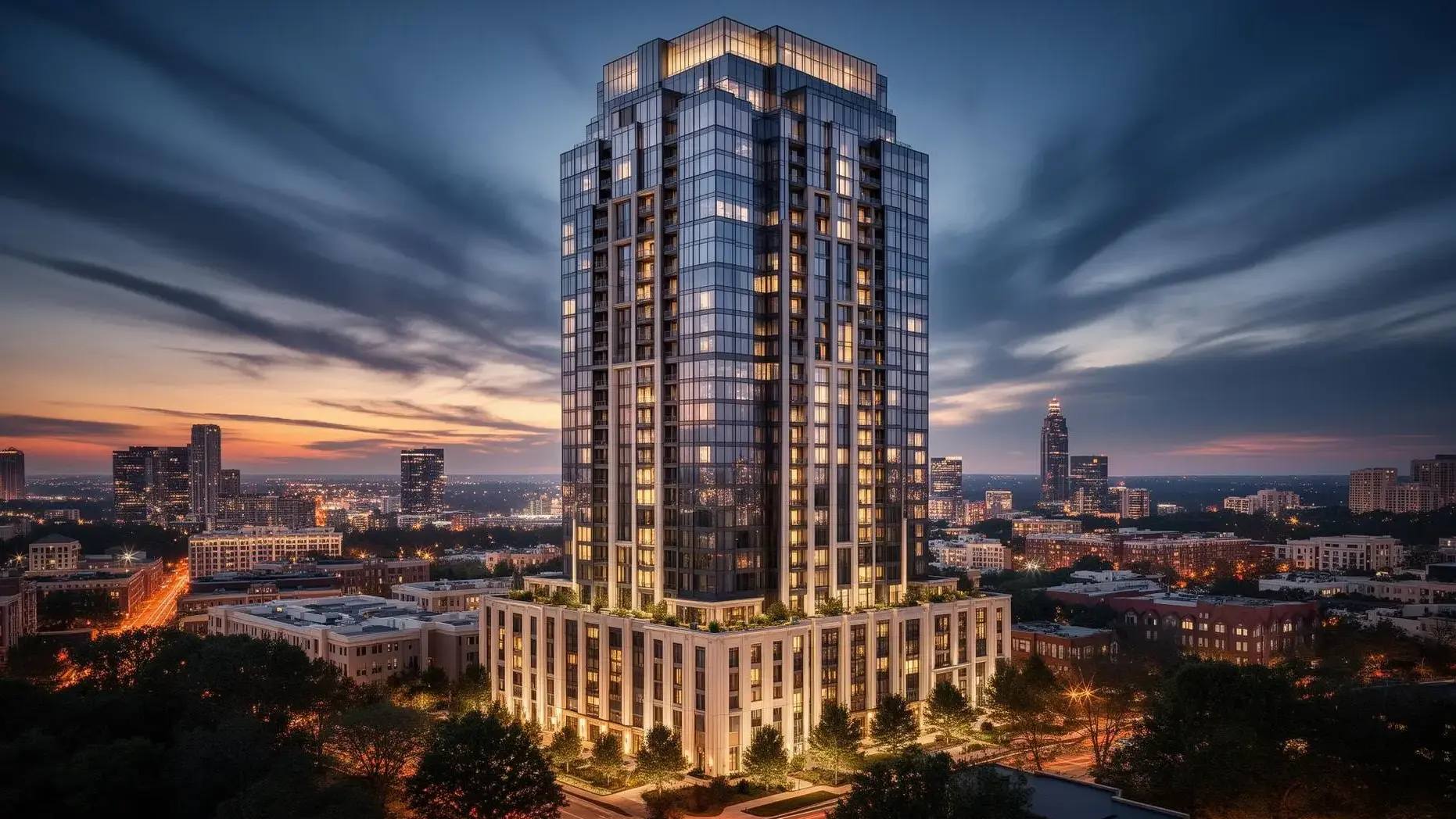
Old Fourth Ward has undergone one of the most dramatic transformations of any neighborhood in the American South. A decade ago, the area east of the Downtown Connector and north of I-20 was transitional at best. Today, O4W is the epicenter of Atlanta's urban luxury condo market, anchored by the BeltLine Eastside Trail, Ponce City Market, and a restaurant scene that rivals any neighborhood in the city.
For buyers who want walkable urban living with genuine character (not the sterile high-rise experience of some Midtown towers), Old Fourth Ward offers something Atlanta has historically lacked: a neighborhood where you can walk to dinner, walk to the park, walk to the grocery store, and walk home on a tree-lined trail without ever getting in a car. That lifestyle, combined with strong appreciation numbers and a growing inventory of quality condo and loft options, makes O4W one of the most compelling luxury markets in Atlanta.
This guide covers the real estate market, the lifestyle, the investment thesis, and the practical considerations of buying luxury in Old Fourth Ward in 2026.
Ponce City Market: The Anchor That Changed Everything
No discussion of Old Fourth Ward real estate starts anywhere other than Ponce City Market. The 2014 redevelopment of the massive former Sears, Roebuck and Co. building into a mixed-use destination was the catalyst that accelerated O4W's transformation from interesting to undeniable. The project brought a curated food hall, national retailers, major corporate tenants (including Mailchimp and Cardlytics), and luxury residences into a single building that sits directly on the BeltLine Eastside Trail.
The Flats at Ponce City Market, the residential component, offers luxury units ranging from studios to three-bedrooms within the building itself. Living at PCM means an elevator ride to the food hall, rooftop entertainment, and the BeltLine. These units command premium prices ($600 to $900+ per square foot) and rarely sit on the market long.
But Ponce City Market's biggest impact is not on the units inside the building. It is the gravitational pull the development exerts on the entire neighborhood. Per data from the Atlanta BeltLine Inc., the Eastside Trail section near PCM sees over 2 million visitors annually. That foot traffic supports restaurants, retail, and services throughout O4W, and it drives demand for residential properties within walking distance. The ripple effect of PCM on property values extends a half-mile or more in every direction.
Looking in Old Fourth Ward?
Prices vary sharply street to street around the BeltLine. We will show you what your budget reaches on each block.
BeltLine Access and Historic Fourth Ward Park
The BeltLine Eastside Trail is the infrastructure backbone that makes Old Fourth Ward work as a luxury neighborhood. This 2.25-mile paved path connects Piedmont Park to the north with Inman Park and Krog Street Market to the south, passing through the heart of O4W along the way. It serves as commuting infrastructure (cycling to Midtown offices), recreation (running, walking, dog-walking), and social artery (the trail is where O4W residents run into neighbors and discover new restaurants).
Historic Fourth Ward Park, a 17-acre greenspace built as part of the BeltLine project, adds another dimension. The park includes a splash pad, a skate park, walking paths, and a large stormwater retention pond that doubles as an attractive water feature. The park hosts food trucks, community events, and serves as the neighborhood's backyard for the condo and loft residents who do not have traditional yards. Properties overlooking or adjacent to the park command significant premiums.
The value impact of BeltLine proximity in O4W is well documented. Georgia State University research has associated BeltLine proximity with meaningful price premiums. In O4W specifically, BeltLine-adjacent properties have appreciated faster than properties even a few blocks away. When evaluating condos in the neighborhood, proximity to the trail should be a primary consideration for both lifestyle and investment purposes.
Old Fourth Ward Market Snapshot: Early 2026
- Luxury condo median price: $475,000 to $550,000 for two-bedroom units, with significant variation based on building, floor, views, and proximity to the BeltLine. Prices are up approximately 6% to 10% year-over-year.
- Price per square foot: $350 to $550 for standard luxury condos, $600 to $900+ for premium positions (BeltLine-facing, PCM residences, penthouses). Converted lofts with character features often command premiums at the top of these ranges.
- Five-year appreciation: 80% to 120% for the neighborhood overall, making O4W one of the top-performing markets in metro Atlanta. BeltLine-adjacent properties have outperformed the neighborhood average by approximately 15 to 20 percentage points.
- Days on market: Well-priced luxury units in desirable buildings average 25 to 40 days on market. Overpriced units or those in less desirable positions can sit for 60 to 90 days. The market rewards correct pricing and penalizes overreach.
Loft Conversions vs. New Construction: Two Different Products
Old Fourth Ward offers two distinct luxury condo experiences, and understanding the difference is important for making the right purchase decision.
Converted lofts occupy former industrial and commercial buildings that have been adapted into residential use. These spaces feature exposed brick walls, heavy timber or steel beams, concrete floors (sometimes polished), oversized windows, and ceiling heights of 12 to 16 feet or more. The floor plans tend to be open and irregular, reflecting the building's original industrial layout. Converted lofts appeal to buyers who value character, authenticity, and a sense of history. They are not for everyone: the open layouts offer less acoustic privacy, the older building systems may be less energy-efficient, and the industrial aesthetic can be challenging to furnish. But for the right buyer, a well-converted loft is the most distinctive living experience in Atlanta.
New construction condos from the 2015 to 2026 development wave offer modern efficiency: well-insulated walls, efficient HVAC, contemporary finishes (quartz counters, wide-plank flooring, designer fixtures), and building amenities that converted buildings typically lack (pools, fitness centers, concierge, package rooms, rooftop terraces). Floor plans are designed for residential use, with defined bedrooms, closet systems, and en-suite bathrooms. These buildings appeal to buyers who want move-in-ready modern living with the convenience of professional management and shared amenities.
From an investment standpoint, both product types have performed well. Converted lofts tend to have more limited supply (you cannot create new industrial buildings to convert), which supports long-term value. New construction condos have more competition as new buildings continue to deliver, which may moderate price growth in the standard-finish tier. Premium new construction (top floors, BeltLine views, high-end finishes) continues to perform strongly because supply at that level remains limited.
Restaurants, Bars, and Nightlife
Old Fourth Ward's dining scene is one of its biggest selling points, and it has grown from a few pioneer restaurants to one of Atlanta's densest concentrations of quality food and drink.
Ponce City Market's food hall anchors the dining experience with over 20 vendors ranging from H&F Burger (from the Holeman and Finch team) to Botiwalla (Indian street food) to Biltong Bar (South African-inspired). Outside PCM, the neighborhood boasts Staplehouse, which has held its place among Atlanta's top restaurants since its opening and operates as a nonprofit supporting hospitality industry workers. Two Urban Licks brings wood-fired rotisserie cooking and live music to the BeltLine. Ladybird Grove and Mess Hall offers casual outdoor dining on the trail. Barcelona Wine Bar provides a wine-focused counterpoint to the area's craft beer culture.
The bar and nightlife scene is lively and varied. Monday Night Brewing's Garage location brings craft beer directly to the neighborhood. New Realm Brewing offers a large BeltLine-adjacent patio. Cocktail bars and wine bars dot the side streets, and PCM's rooftop provides skyline views with drinks. The vibe is energetic but not chaotic, skewing toward craft cocktails and curated experiences rather than the bottle-service club scene of Buckhead. For buyers who want to be able to walk to dinner and drinks without planning a ride home, O4W is hard to beat.
Old Fourth Ward Prices Building by Building
Converted lofts, newer towers, and the townhome pockets along the BeltLine each move on their own inventory and their own HOA math. We can show you which buildings currently fit what you want to spend.
Compare Old Fourth Ward Buildingsor call (770) 727-4052
Green Space, Walkability, and Daily Life
For a neighborhood defined largely by condos and lofts (meaning no private yards), Old Fourth Ward compensates with exceptional public green space. Historic Fourth Ward Park provides 17 acres of open space, and the BeltLine trail itself serves as a linear park connecting O4W to Piedmont Park (189 acres) in just a 15-minute walk or 5-minute bike ride.
Walk Score rates O4W in the high 80s to low 90s, putting it among Atlanta's most walkable neighborhoods. The combination of BeltLine access, dense commercial development, and street-level retail means that many daily activities are possible on foot. Kroger on Ponce de Leon provides grocery access, with specialty options at PCM. The MARTA King Memorial station offers heavy rail transit to the airport, Midtown, and Buckhead. Multiple bus routes serve the neighborhood.
Daily life in O4W has a distinctly urban energy. The BeltLine is crowded on weekends with runners, cyclists, families, and people heading to brunch. The parks are well-used year-round. The neighborhood skews younger than areas like Buckhead or Sandy Springs, with a visible creative class presence and a social scene centered on restaurants, bars, and outdoor spaces. It is not a quiet suburban retreat, and it is not trying to be. Buyers who want energy, walkability, and a sense of being in the middle of things will find it here.
Investment Outlook and Appreciation Trends
Old Fourth Ward's appreciation story is one of the strongest in the Southeast. The BeltLine effect has driven sustained price growth that has outpaced both the metro Atlanta market and most other intown neighborhoods over the past decade.
Looking forward, the investment thesis rests on continued BeltLine development (new trail segments connecting O4W to additional neighborhoods), limited land for new development (the neighborhood is approaching buildout for large parcels), growing demand from corporate relocations bringing high-income workers to Atlanta, and the neighborhood's proven appeal to the largest homebuying demographics: millennials and downsizing baby boomers.
The primary risk is supply. Several new condo buildings have delivered or are under construction in O4W and adjacent neighborhoods. While demand has generally absorbed new supply, a prolonged economic slowdown combined with heavy delivery could create short-term price pressure, particularly for standard-finish units in the $350,000 to $500,000 range. Premium units in superior locations and buildings are less susceptible to supply pressure because they compete in a thinner market.
For buyers evaluating O4W as an investment, the strongest positions remain BeltLine-adjacent units in well-managed buildings with solid reserve funds. Converted lofts with irreplaceable character features also hold their value well due to scarcity. Avoid units with north-facing positions in buildings that will have future construction to the south (blocking light), units on lower floors of buildings near busy streets, and buildings with chronically underfunded HOAs.
Buying Tips for Old Fourth Ward
- Review the HOA financials carefully. Request the reserve study, recent financial statements, and meeting minutes. Buildings with healthy reserves (60%+ funded) and no history of special assessments are safer bets. Underfunded reserves often lead to surprise assessments of $5,000 to $20,000+ per owner.
- Check the rental cap. Many O4W condo buildings limit the percentage of units that can be rented. If a building is at its rental cap, you cannot rent your unit if you need to move, which reduces flexibility. If the building has a very high rental percentage, lender financing may be more difficult and the building may feel more transient.
- Consider noise carefully. O4W is an active neighborhood. Units facing the BeltLine or Ponce de Leon get trail and traffic noise. Units above restaurants and bars get evening noise. Ask to visit the unit at different times of day, including Friday and Saturday evenings, before making an offer.
- Parking matters more than you think. Most O4W buildings include one parking space per unit, with additional spaces available for purchase ($15,000 to $40,000). Street parking is limited and competitive. If you have two cars, confirm that the building can accommodate both before committing.
The Bottom Line
Old Fourth Ward is not just a neighborhood that has appreciated well. It is a neighborhood that has fundamentally changed what urban luxury living means in Atlanta. The BeltLine created the infrastructure. Ponce City Market created the commercial anchor. The restaurants, bars, parks, and community created the lifestyle. The result is a neighborhood where you can live without a car most days, walk to world-class dining, and enjoy a level of walkable urbanism that Atlanta has never had before.
For buyers who want that lifestyle, O4W delivers it better than any other Atlanta neighborhood. The condo and loft inventory ranges from character-rich industrial conversions to sleek new construction, with price points that, while they have risen substantially, still represent value compared to similar walkable urban neighborhoods in cities like Washington D.C., San Francisco, or New York.
If Old Fourth Ward sounds like the right fit, our team can help. We work with buyers throughout intown Atlanta and can guide you through the specific considerations of buying a condo or loft in O4W, from HOA evaluation to building-by-building analysis.
Frequently Asked Questions
What is the price range for luxury condos in Old Fourth Ward?
As of early 2026, luxury condos and lofts in Old Fourth Ward range from approximately $400,000 for a well-appointed one-bedroom to $1.5 million or more for premium units with BeltLine views or penthouse-level finishes. The sweet spot for luxury buyers is $500,000 to $900,000 for a two-bedroom, two-bath unit with modern finishes, parking, and good building amenities. Converted loft spaces in historic buildings can command premiums for their character, with exposed brick, timber beams, and soaring ceilings. New construction luxury condos with top-tier finishes and full amenity packages push into the $700 to $900 per square foot range.
Is Old Fourth Ward a good investment in 2026?
Old Fourth Ward has been one of Atlanta's top-performing real estate markets over the past decade, driven primarily by the BeltLine Eastside Trail. Property values in O4W have appreciated approximately 80% to 120% since 2016, depending on the specific location and property type. Properties closest to the BeltLine and Ponce City Market have seen the strongest gains. The continued maturation of the BeltLine, new commercial development, and Atlanta's overall growth trajectory support continued appreciation. However, new condo supply has increased, which may moderate price growth at the lower end of the market. For well-located luxury units, the supply-demand dynamics remain favorable.
What is the BeltLine Eastside Trail and why does it matter?
The BeltLine Eastside Trail is a 2.25-mile paved multi-use path that runs from Piedmont Park through Old Fourth Ward to Inman Park. It was the first completed segment of the Atlanta BeltLine, a planned 22-mile loop of trails, parks, and transit around the city's core. The Eastside Trail transformed Old Fourth Ward from a transitional neighborhood into one of Atlanta's most desirable addresses. It provides walking and cycling access to Piedmont Park, Ponce City Market, Krog Street Market, and dozens of restaurants and shops. Georgia State University research has associated BeltLine proximity with meaningful price premiums.
What is Ponce City Market and how does it affect real estate?
Ponce City Market is a mixed-use development in the former Sears, Roebuck and Co. building on Ponce de Leon Avenue. The massive building houses a food hall with 20+ vendors, retail shops, corporate offices (including Mailchimp's headquarters), and luxury residences called Flats at Ponce City Market. It also features a rooftop amusement park and entertainment venue. PCM has become the anchor commercial development for Old Fourth Ward and one of Atlanta's top destinations. Proximity to Ponce City Market directly impacts property values, with units in and adjacent to the building commanding the highest per-square-foot prices in the neighborhood.
What types of condos and lofts are available in Old Fourth Ward?
Old Fourth Ward offers several distinct condo and loft types. Converted industrial lofts in former warehouses and commercial buildings feature exposed brick, heavy timber beams, concrete floors, and open floor plans with high ceilings (often 12 to 16 feet). New construction condos from the 2015 to 2026 development boom offer modern finishes, efficient floor plans, and building amenities like fitness centers, pools, and rooftop terraces. Mid-rise developments (4 to 8 stories) are most common, with a few high-rise towers. Townhome-style condos offer multi-level living with private garages. Luxury penthouses in newer buildings provide premium views and finishes at the top of the market.
How walkable is Old Fourth Ward?
Old Fourth Ward is among the most walkable neighborhoods in Atlanta, with Walk Score ratings in the high 80s to low 90s depending on the specific location. Residents can walk to Ponce City Market, dozens of restaurants and bars, Historic Fourth Ward Park, Krog Street Market (via the BeltLine), and Piedmont Park. The BeltLine Eastside Trail serves as a pedestrian highway connecting O4W to adjacent neighborhoods. MARTA's King Memorial station provides heavy rail transit access. Daily errands, dining, entertainment, and exercise are all possible without a car, which is rare for Atlanta. Most residents still own a car for commuting and occasional trips, but day-to-day life can be largely car-free.
What is the restaurant and nightlife scene like?
Old Fourth Ward has one of Atlanta's strongest dining and nightlife concentrations. Ponce City Market alone houses over 20 food and drink establishments. Along the BeltLine and surrounding streets, you will find acclaimed restaurants like Staplehouse (consistently rated among Atlanta's best), Two Urban Licks, Ladybird Grove and Mess Hall, and Barcelona Wine Bar. The nightlife skews younger and more energetic than Buckhead, with craft cocktail bars, breweries (including Monday Night Brewing's Garage), music venues, and rooftop bars. The Masquerade music venue and other entertainment spots draw crowds on weekends. The dining and entertainment density is one of the strongest drivers of demand in O4W's luxury market.
What should I know about HOA fees in Old Fourth Ward condos?
HOA fees in Old Fourth Ward luxury condos typically range from $300 to $800 per month depending on the building's age, amenities, and reserve funding. Newer buildings with full amenity packages (pool, fitness center, concierge, rooftop) tend to fall at the higher end. Converted loft buildings with fewer amenities may charge $200 to $400 per month. When evaluating condos, look beyond the monthly fee to the reserve fund balance and recent special assessment history. A building with a low monthly fee but an underfunded reserve may hit owners with special assessments for major repairs. Request the HOA's financial statements, meeting minutes, and reserve study before making an offer. An experienced condo buyer's agent can help you evaluate these documents.
How does Old Fourth Ward compare to Midtown for luxury condo living?
Old Fourth Ward and Midtown are Atlanta's two premier condo markets, but they serve different buyers. Midtown offers high-rise living with skyline views, doorman buildings, and proximity to the arts district, Piedmont Park, and corporate offices. It feels more urban and vertical. O4W offers more character and variety: converted lofts, mid-rise developments, and townhome-style condos with a grittier, more creative energy. O4W is generally 10% to 20% less expensive per square foot than comparable Midtown buildings, offering better value for buyers who prefer walkability and neighborhood character over high-rise skyline views. Both neighborhoods benefit from BeltLine access, but O4W's Eastside Trail section is more developed commercially.
What makes Old Fourth Ward popular with luxury buyers?
Old Fourth Ward is one of the most in-demand intown neighborhoods in the luxury segment. The combination of walkability, BeltLine access, dining and nightlife concentration, proximity to Midtown and Downtown offices, and a social energy that other neighborhoods lack makes it particularly appealing to buyers in their late 20s through early 40s. The condo price points ($400,000 to $800,000 for well-finished units) are accessible for dual-income professionals, and the lifestyle eliminates the need for a car on many evenings and weekends. The neighborhood's energy also appeals to buyers moving to urban living after selling a suburban home.
Interested in Old Fourth Ward or other walkable Atlanta neighborhoods?

Sources
- FMLS (First Multiple Listing Service) - Old Fourth Ward sales data, condo pricing, and market trend analysis.
- Georgia State University - Research on BeltLine property value impacts and transit-oriented development in Atlanta.
- Atlanta BeltLine Inc. - Trail usage data, development statistics, and economic impact reports.
- Walk Score - Walkability, transit, and bike scoring data for Old Fourth Ward.
- Atlanta Regional Commission - Population growth, migration data, and housing market forecasts for intown Atlanta.
Market data, price ranges, and neighborhood characteristics referenced in this article reflect conditions as of early 2026 and are subject to change. Real estate values can decrease as well as increase. Past appreciation does not guarantee future results.
Disclaimer: This article is for informational purposes only and does not constitute real estate, investment, or financial advice. Condo purchases involve additional considerations including HOA governance, reserve funding, and building-specific factors that should be evaluated with qualified professionals. The Luxury Realtor Group is a real estate brokerage. Consult with your real estate agent, attorney, and financial advisor before making purchase decisions.