Ask any Atlanta real estate agent where families with means buy homes intown, and Morningside will be in the first three names they mention. This is not marketing hype. Morningside and its quieter neighbor Lenox Park have earned their reputation through decades of strong schools, walkable streets, mature tree canopy, and a community that genuinely shows up for its neighborhood.
These two neighborhoods sit east of Piedmont Park, roughly bounded by Monroe Drive to the west, Briarcliff Road to the east, and the Virginia-Highland commercial district to the south. Together they form one of Atlanta's most desirable residential pockets, offering a rare combination: the energy and convenience of intown living with the space, green canopy, and community feel that families need.
This guide covers what buyers should know about Morningside and Lenox Park in 2026, including real pricing data, school information, walkability, housing stock, and long-term investment performance.
What Makes Morningside and Lenox Park Different
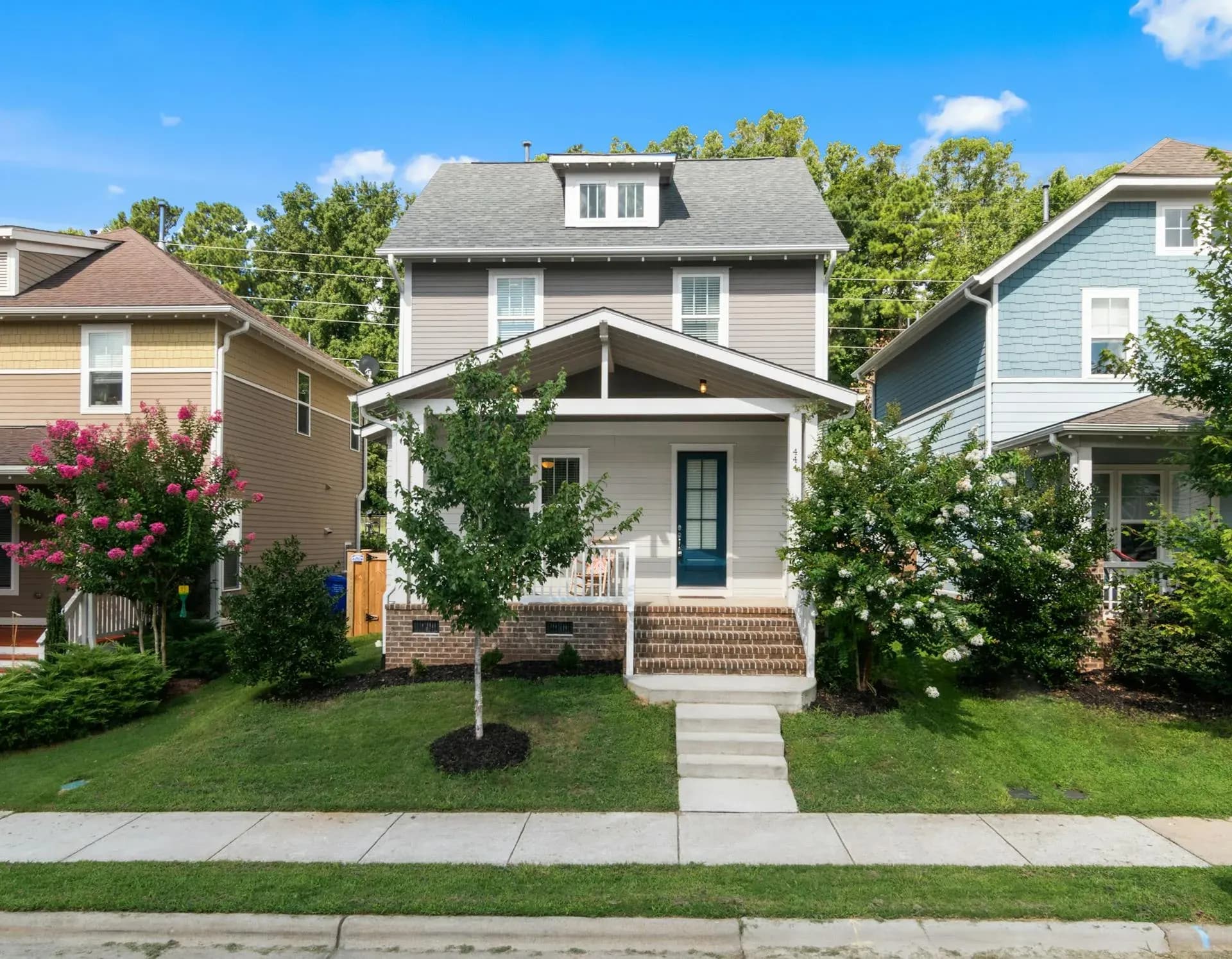
Morningside was developed in the 1920s and 1930s as one of Atlanta's early streetcar suburbs. The original homes were Craftsman-style bungalows, many of which still stand on their original lots. Over the decades, the neighborhood has evolved organically. Some original bungalows have been lovingly restored. Others have been expanded with modern additions. And a growing number have been replaced by larger new construction homes that reflect current tastes and family sizes.
The result is an architecturally diverse streetscape that feels lived-in rather than manufactured. You will find a 1928 Craftsman bungalow with original hardwoods and a screened porch sitting next to a 2024 transitional new build with a three-car garage and rooftop deck. This variety is part of the charm, and it creates entry points at multiple price levels.
Lenox Park, directly east of Morningside, shares the same tree canopy and residential character but tends to be quieter. The streets are calmer, the lots are slightly larger on average, and there is less commercial activity within its boundaries. Buyers who want the Morningside experience with a bit more seclusion often gravitate toward Lenox Park.
Both neighborhoods benefit from the Morningside Lenox Park Association (MLPA), one of Atlanta's most active civic organizations. The MLPA organizes community events, advocates on zoning and development issues, and publishes a monthly newsletter. This kind of engaged civic infrastructure is a leading indicator of long-term neighborhood stability, which has implications for both quality of life and property values.
Schools: The Neighborhood's Primary Draw
Schools drive more luxury home purchases in Morningside than any other single factor. And the anchor is Morningside Elementary.
According to GreatSchools and Niche, Morningside Elementary consistently ranks among the top public elementary schools in the Atlanta Public Schools (APS) district. The school benefits from an exceptionally active PTA that supplements the school budget with significant fundraising, supporting enrichment programs, technology upgrades, and arts education that many APS schools cannot offer. Class sizes are manageable, and the parent community is deeply involved.
For middle school, students in the Morningside zone typically attend David T. Howard Middle School. Howard has undergone substantial improvements in recent years, including facility upgrades and expanded programs. For high school, students are zoned for Midtown High School (formerly Grady), which offers an International Baccalaureate (IB) program and has seen rising test scores and graduation rates.
Private school options abound as well. The Paideia School, a progressive K-12 private school, is located within the Morningside neighborhood itself. Other popular private options within easy driving distance include The Westminster Schools (10 minutes), Pace Academy (12 minutes), Holy Innocents' Episcopal School (20 minutes), and The Lovett School (15 minutes). The combination of strong public school zoning and private school proximity makes Morningside attractive to families regardless of which educational path they choose.
What Homes Actually Cost in Morningside and Lenox Park
One of the things that makes Morningside work for a range of buyers is the spread of price points. Unlike some luxury neighborhoods where every home is $2 million and above, Morningside offers genuine options from the high six figures to well over $3 million.
Morningside / Lenox Park Price Ranges (Early 2026, FMLS Data)
- Original bungalows (unrenovated): $650,000 to $850,000. These are typically 1,200 to 1,800 square feet on 0.15 to 0.25 acre lots. Buyers purchase these either to renovate or for the lot value (teardown-rebuild). Condition varies widely.
- Renovated bungalows and expanded homes: $900,000 to $1.4 million. Updated kitchens and baths, often with modern additions (family rooms, primary suite expansions). These represent the heart of the Morningside market and sell quickly when priced correctly.
- New construction and major renovations: $1.5 million to $2.5 million. Homes of 3,500 to 5,500 square feet with modern floor plans, high-end finishes, and full smart home systems. This segment has grown significantly as teardown-rebuilds have accelerated.
- Estate-level homes: $2.5 million to $3.5 million+. The largest homes on the best lots, often with 5,500+ square feet, premium finishes, pools, and significant landscaping. These are rare and tend to sell through agent networks before hitting the public market.
Per FMLS data, the median days on market for Morningside homes priced under $1.5 million was approximately 12 days in 2025. Homes above $1.5 million averaged closer to 30 to 45 days. Well-priced homes in the core of the neighborhood continue to attract multiple offers, particularly those within the Morningside Elementary school zone.
The Bungalow-to-Mansion Spectrum
Morningside's architectural diversity is one of its defining features. The housing stock spans roughly a century, and each era contributes something to the neighborhood's character.
Original Craftsman bungalows (1920s-1940s). These are the homes that gave Morningside its character. Built during the streetcar era, they feature deep front porches, tapered columns, exposed rafter tails, and natural materials (stone, brick, wood siding). Interior details include built-in bookcases, original hardwood floors, and decorative fireplaces. The originals are modest in size by modern standards, typically 1,200 to 2,000 square feet with 2 to 3 bedrooms. Many have been expanded over the years with rear additions and second-story buildouts.
Midcentury homes (1950s-1970s). A smaller number of ranch-style and split-level homes from the postwar era. These are typically larger than the bungalows (1,800 to 2,800 square feet) and sit on generous lots. They offer strong renovation potential and are often purchased by buyers who want to expand and modernize within the existing footprint.
New construction (2010s-present). The teardown-rebuild trend has reshaped portions of Morningside. New homes tend to be 3,500 to 5,500 square feet, designed in transitional, modern farmhouse, or contemporary styles. They feature open floor plans, large kitchens with oversized islands, first-floor primary suites (increasingly common), and extensive outdoor living spaces. Pricing for new construction starts around $1.5 million and can exceed $3 million for premium builds on the best lots.
The renovation market is also active. Many buyers purchase older homes specifically to renovate, adding modern kitchens, primary suites, and outdoor spaces while preserving the character of the original structure. A well-executed renovation that respects the original architecture can be a strong investment, as renovated bungalows with period details command a premium over generic new construction in buyer preference surveys.
Wondering What Your Morningside Home Would Bring Today
An original bungalow, a midcentury ranch, and a rebuilt home on the same street each price against a different set of comps. We will value yours against the sales that actually apply.
Value My Morningside Homeor call (770) 727-4052
Walkability, Parks, and Everyday Life
Morningside regularly earns Walk Score ratings in the 70s, which qualifies as "Very Walkable" and is remarkable for an Atlanta neighborhood. The walkability is not theoretical; residents actually walk to daily errands, schools, restaurants, and parks.
Morningside Village. The small commercial node along Morningside Drive (near the intersection with North Highland Avenue) includes Alon's Bakery, a neighborhood institution for over two decades, along with several restaurants, a yoga studio, and specialty shops. The Morningside Farmers' Market operates on Saturday mornings and draws a loyal crowd from the neighborhood and beyond.
Parks and green space. For an intown neighborhood, Morningside has an exceptional amount of green space. The Morningside Nature Preserve covers 30 acres with wooded hiking trails along South Fork Peachtree Creek. Daniel Johnson Nature Preserve adds another 13 acres. Herbert Taylor Park provides playgrounds, tennis courts, and sports fields. And Piedmont Park, Atlanta's crown jewel urban green space, is about a mile from the neighborhood's western edge. Families with young children practically live at these parks on weekends.
Proximity to everything. One of Morningside's strategic advantages is its central location. Midtown is a 10-minute drive. Buckhead is 12 to 15 minutes. Emory University and the CDC are 7 to 10 minutes. Hartsfield-Jackson International Airport is roughly 25 minutes via I-85. For buyers who work at multiple locations or want easy access to Atlanta's cultural and dining destinations, Morningside offers a geographic sweet spot.
Investment Performance and Long-Term Value
Morningside has been one of intown Atlanta's most consistent performers in terms of property value appreciation. Per FMLS data, median home prices in Morningside have increased approximately 55% to 70% over the past decade, depending on the specific sub-area and property type. That outperformance relative to the broader metro Atlanta market (which appreciated roughly 50% to 60% over the same period, per Atlanta Realtors Association data) is driven by several structural factors.
Supply constraint. Morningside is fully built out. There are no large undeveloped parcels remaining. New inventory enters the market only through resales and teardown-rebuilds. This structural supply limitation creates a floor under prices, because when demand increases, there is no way to rapidly add supply. According to the National Association of Realtors (NAR), supply-constrained neighborhoods in growing metros tend to appreciate faster than neighborhoods where new construction can freely expand.
School-driven demand. The Morningside Elementary school zone creates persistent demand from buyers who prioritize public school quality. This is a reliable demand driver that persists through market cycles. Even during the 2008-2012 downturn, Morningside prices held up better than most Atlanta neighborhoods, per historical FMLS data.
Renovation and replacement value. As older homes are renovated or replaced with larger, more valuable homes, the overall price floor of the neighborhood rises. A teardown-rebuild that sells for $2.2 million sets a comparable for surrounding properties, gradually lifting values across the area. This replacement-value dynamic has been a powerful force in Morningside for the past decade and shows no signs of slowing.
For buyers considering Morningside as an investment, the combination of supply constraints, school demand, and ongoing renovation activity creates a strong long-term thesis. Past performance does not guarantee future results, but the structural dynamics that have driven Morningside's appreciation remain firmly in place.
Tips for Buying in Morningside and Lenox Park
Competition for well-priced homes in Morningside remains strong. Here is what we tell our buyer clients.
Get pre-approved before you start looking. Homes under $1.5 million in Morningside move fast. You need to be ready to write an offer within days of a listing going active. A strong pre-approval letter from a reputable lender signals to sellers that you are serious and capable.
Verify the school zone. Not every home marketed as "Morningside" is in the Morningside Elementary zone. School zone boundaries do not always align with neighborhood boundaries. Verify the specific school assignment for any property you are considering through the Atlanta Public Schools website. This matters for both lifestyle and resale value.
Inspect older homes carefully. Morningside's charm comes partly from its older housing stock, but pre-1950 homes can have issues: outdated electrical systems, aging plumbing (cast iron or galvanized pipes), foundation settling, and inadequate insulation. Budget for a thorough inspection and potentially a specialist assessment for older systems. These are not deal-breakers, but they should be factored into your renovation budget.
Understand the renovation economics. If you are buying an older home to renovate, understand that renovation costs in Atlanta have increased significantly since 2020. A full renovation of a Morningside bungalow (kitchen, baths, systems, addition) can run $250,000 to $500,000 or more, depending on scope. Make sure the post-renovation value justifies the total investment (purchase price plus renovation cost). Your agent can help you run the numbers before you commit.
If you are interested in buying in Morningside or Lenox Park, our team knows this market well. We can help you find the right home, whether that means a move-in-ready new build or a renovation project with strong long-term value. Learn more about how we work with buyers.
Frequently Asked Questions
What is the average home price in Morningside in 2026?
As of early 2026, the median sale price for homes in Morningside is approximately $1.1 million to $1.4 million, according to FMLS data. However, prices vary widely based on size, condition, and lot. Renovated bungalows on smaller lots may start around $750,000, while fully renovated or new construction homes on larger lots regularly exceed $2 million. The most expensive homes in the neighborhood, typically large new builds or historically significant estates, can reach $3 million or more. Price per square foot generally ranges from $350 to $550 depending on age and finish level.
How are the schools in Morningside?
Morningside Elementary is one of the most highly regarded public elementary schools in the Atlanta Public Schools system. It consistently receives strong ratings from GreatSchools and Niche, and its PTA is exceptionally active in funding enrichment programs, technology, and arts education. For middle school, students typically attend David T. Howard Middle School, which has improved significantly in recent years. High school zoning sends students to Midtown High School (formerly Grady), which offers International Baccalaureate programs. Many Morningside families also consider private school options including The Paideia School, which is located within the neighborhood.
Is Morningside walkable?
Yes, Morningside is one of the most walkable intown Atlanta neighborhoods. Morningside Village, the small commercial district along Morningside Drive, includes coffee shops, restaurants, and a popular farmers market. The neighborhood has sidewalks on most streets, and the PATH Foundation trail system connects to nearby parks and the BeltLine. Daniel Johnson Nature Preserve, Morningside Nature Preserve, and Herbert Taylor Park all offer walking trails within the neighborhood. Many residents walk to Piedmont Park (about 1 mile from the center of the neighborhood) and to restaurants along North Highland Avenue in Virginia-Highland.
What is the difference between Morningside and Lenox Park?
Morningside and Lenox Park are adjacent neighborhoods that share many characteristics but have distinct identities. Morningside is larger and more established, with a mix of 1920s-era bungalows, midcentury ranch homes, and newer construction. Lenox Park is a smaller, quieter enclave east of Morningside with slightly larger lots on average and a more residential feel. Lenox Park tends to have fewer commercial amenities within its immediate boundaries but benefits from proximity to both Morningside Village and Emory University. Home prices in Lenox Park are generally comparable to Morningside, though the inventory is smaller and turnover is lower.
Are there new construction homes in Morningside?
Yes, new construction has been a consistent trend in Morningside for the past decade. The pattern typically involves a buyer purchasing an older, smaller home (often a 1,200- to 1,800-square-foot bungalow) for the lot value, demolishing the existing structure, and building a larger home of 3,500 to 5,500 square feet. These new builds generally range from $1.5 million to $3 million or more, depending on size and finishes. The neighborhood has architectural guidelines through the Morningside Lenox Park Association that encourage designs compatible with the neighborhood character, though enforcement is advisory rather than mandatory.
How close is Morningside to Emory University?
Morningside is approximately 2 to 3 miles from the Emory University campus, making it one of the closest luxury intown neighborhoods to the university. The drive typically takes 7 to 12 minutes depending on traffic. This proximity makes Morningside popular with Emory faculty, physicians at Emory Healthcare, and staff at the Centers for Disease Control and Prevention (CDC), which is adjacent to the Emory campus. Lenox Park is even closer, with some streets just a mile from the Emory gates.
What types of homes are in Morningside?
Morningside has one of the most architecturally diverse housing stocks of any Atlanta neighborhood. You will find original 1920s and 1930s Craftsman bungalows (typically 1,200 to 2,200 square feet), midcentury ranch homes from the 1950s and 1960s, expanded and renovated bungalows with modern additions, and new construction ranging from transitional to modern farmhouse to contemporary styles. The mix creates a visually interesting streetscape and offers entry points at multiple price levels. Lot sizes typically range from 0.15 to 0.40 acres, with some larger parcels closer to the nature preserves.
Is Morningside a good investment?
Morningside has been one of the strongest-performing intown Atlanta neighborhoods for long-term appreciation. Per FMLS data, median home values in Morningside have increased approximately 50% to 70% over the past decade, outperforming the broader metro Atlanta market. The neighborhood benefits from structural supply constraints (it is fully built out, so new inventory comes only from teardown-rebuilds), strong school ratings, walkability, and proximity to major employment centers. These factors have historically supported consistent demand and price appreciation. Past performance does not guarantee future results, but the fundamentals remain strong.
What parks and green spaces are in Morningside?
Morningside is unusually well-served by parks and green space for an intown neighborhood. Daniel Johnson Nature Preserve (13 acres of wooded trails), Morningside Nature Preserve (30 acres with hiking trails and a creek), and Herbert Taylor Park (a neighborhood park with playgrounds, tennis courts, and athletic fields) are all within the neighborhood. Sidney Lanier Center (a community recreation center) offers a range of community programs. Piedmont Park, Atlanta's premier urban park with 185 acres of green space, is about a mile from the neighborhood's western edge. The proximity to multiple nature preserves is a rare feature for an intown location.
How does Morningside compare to Virginia-Highland?
Morningside and Virginia-Highland are neighboring communities that share the North Highland Avenue commercial corridor but have different characters. Virginia-Highland has a more active nightlife and restaurant scene, with a denser commercial district and faster turnover. Morningside is quieter, with larger lots, more green space, and a stronger school-focused community. Home prices are generally comparable, though Morningside's larger homes can push higher. Many buyers choose between the two based on lifestyle: Virginia-Highland for walkable dining and entertainment, Morningside for a quieter residential experience with nature access.
Ready to explore homes in Morningside or Lenox Park?

Sources
- FMLS (First Multiple Listing Service) - Home sale prices, days on market, and inventory data for Morningside and Lenox Park.
- Atlanta Realtors Association - Metro Atlanta market statistics and long-term appreciation data.
- GreatSchools / Niche - School ratings, reviews, and performance data for Morningside Elementary and other area schools.
- Atlanta Public Schools - School zoning maps and boundary information for the Morningside area.
- National Association of Realtors (NAR) - Research on supply-constrained neighborhoods and price appreciation patterns.
- Morningside Lenox Park Association (MLPA) - Neighborhood history, civic activity, and community data.
Market data and school information referenced in this article reflect conditions as of early 2026 and are subject to change. School zones and ratings can change without notice. Past appreciation does not guarantee future performance. This article does not constitute financial or educational advice.
Disclaimer: This article is for informational purposes only and does not constitute real estate, financial, or legal advice. Home prices and market conditions change frequently. School zone boundaries and ratings are subject to change by Atlanta Public Schools and rating organizations. The Luxury Realtor Group is a real estate brokerage and does not guarantee the accuracy of school or market data. Consult with qualified professionals before making purchasing decisions.