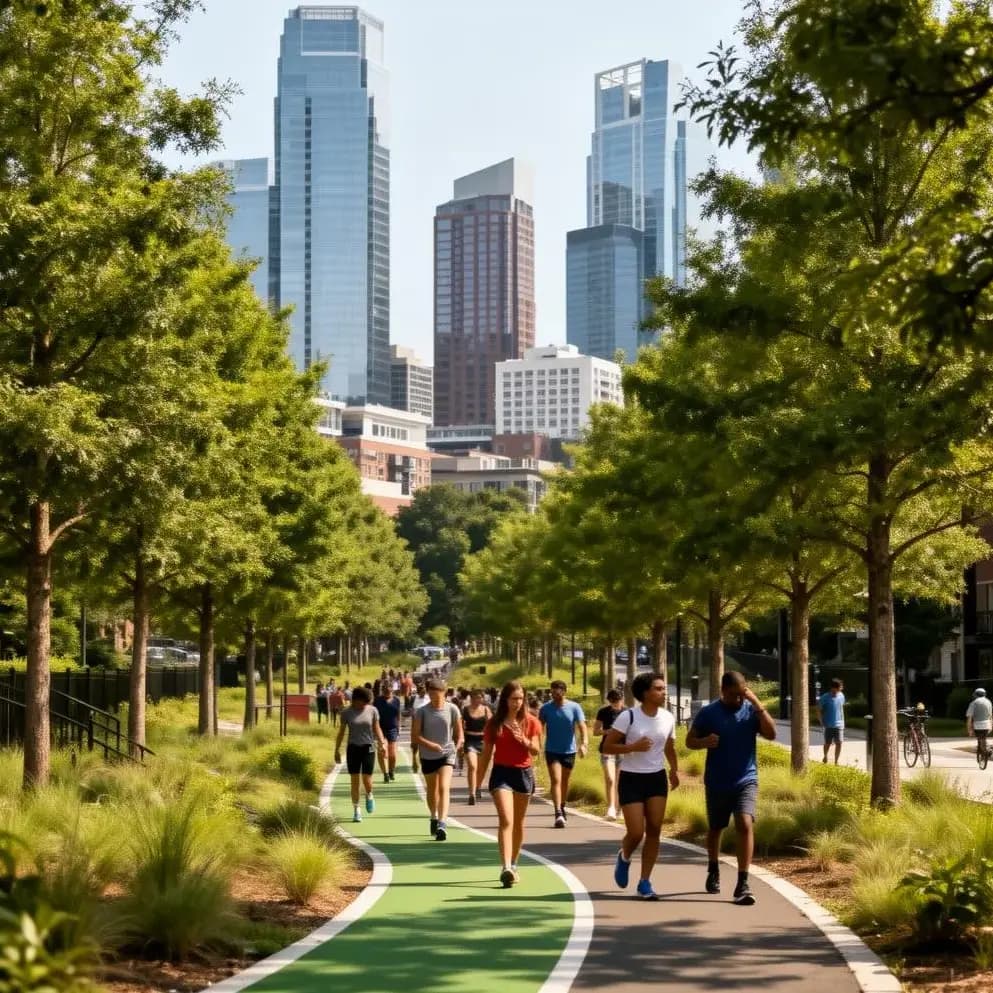
Inman Park holds a unique place in Atlanta's history and its real estate market. Developed in the 1890s by Joel Hurt as Atlanta's first planned suburb, it was connected to downtown by one of the city's first electric streetcar lines. The grand Victorian homes that Hurt's vision produced still stand on tree-lined streets, now surrounded by one of the most walkable, BeltLine-connected, and culturally active neighborhoods in the Southeast.
After decades of decline in the mid-twentieth century, Inman Park was rescued by residents who organized one of Atlanta's first historic preservation movements in the 1970s. That preservation ethic remains strong today, and the neighborhood's architectural heritage is one of its primary assets. But Inman Park is not a museum. It is a living, evolving neighborhood where Victorian mansions sit alongside modern townhomes, where the BeltLine connects residents to Krog Street Market and Ponce City Market on foot, and where the annual Inman Park Festival draws tens of thousands of visitors every spring.
For luxury buyers, Inman Park offers something that few Atlanta neighborhoods can match: genuine walkability, historic character, and proximity to both employment centers and cultural amenities. This guide covers what you need to know about buying in Inman Park in 2026.
A Brief History That Still Shapes the Market
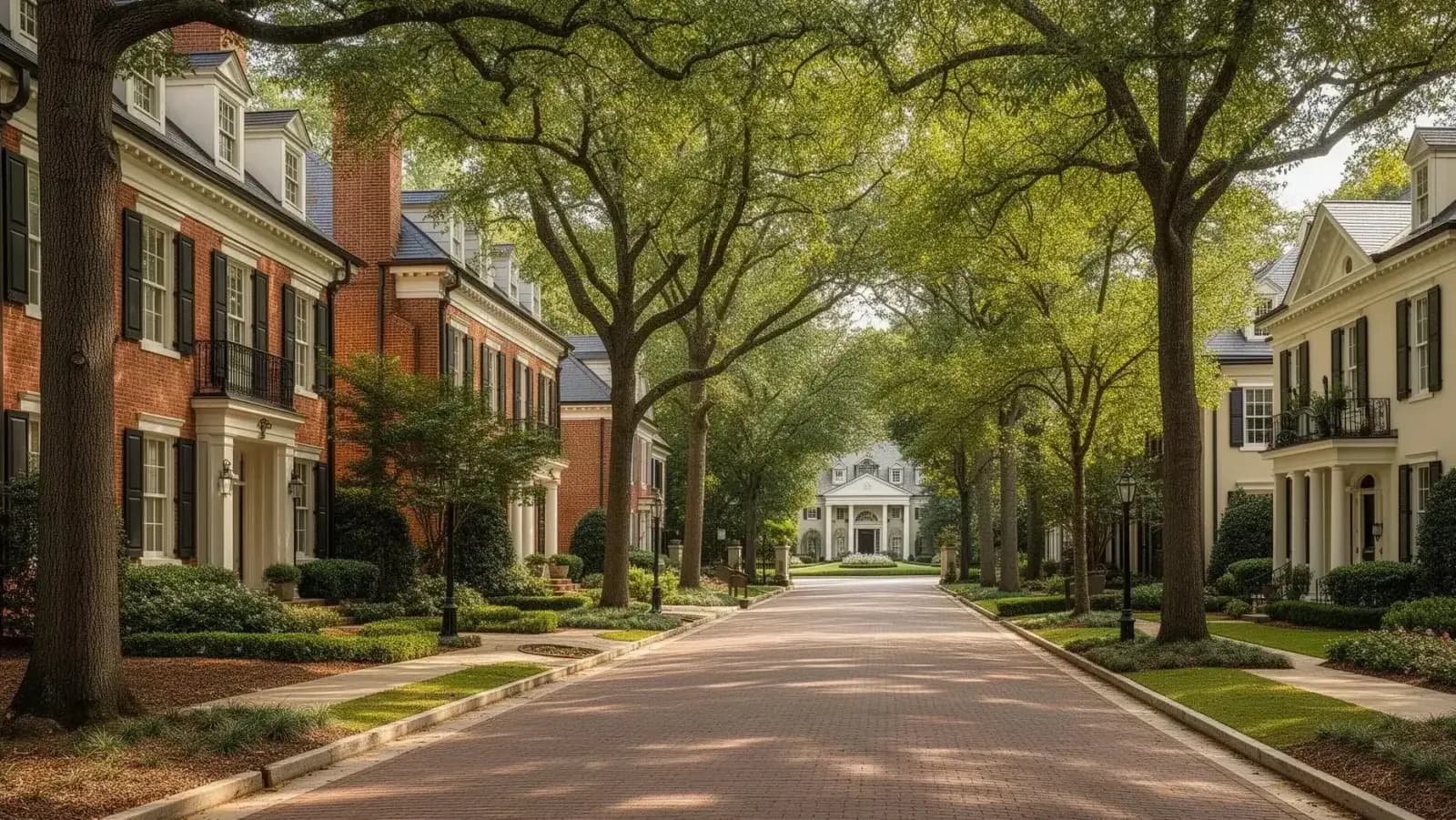
Understanding Inman Park's history is not just academic; it directly affects what you can buy, what you can build, and what you can renovate. Joel Hurt laid out the neighborhood in 1889 with curving streets, generous lots, and a central park (Springvale Park, now part of the neighborhood's green space). The grand homes built in the 1890s and 1900s were some of the finest in Atlanta, and many survive today as the neighborhood's most valuable properties.
The neighborhood declined through the mid-twentieth century as Atlanta's affluent residents moved to Buckhead and the northern suburbs. By the 1960s and 1970s, many of the grand homes had been subdivided into apartments or had fallen into disrepair. The turnaround began in the late 1960s when a group of residents organized to save the neighborhood from demolition and urban renewal projects. The Inman Park Restoration, Inc. organization (now Inman Park Neighborhood Association) was one of the pioneering neighborhood preservation groups in Atlanta.
That preservation heritage has real market implications. Several blocks of Inman Park are listed on the National Register of Historic Places, and the neighborhood operates under a historic preservation ordinance that regulates exterior modifications to contributing structures. If you buy a historic home, you will need to work within these guidelines for any visible exterior changes. This is not a burden for most buyers; it is a feature that protects the architectural character and, by extension, property values.
The Housing Stock: Victorian to Modern
Inman Park's architectural diversity is one of its most compelling features for buyers. The neighborhood includes homes spanning more than a century of construction, each type offering different advantages.
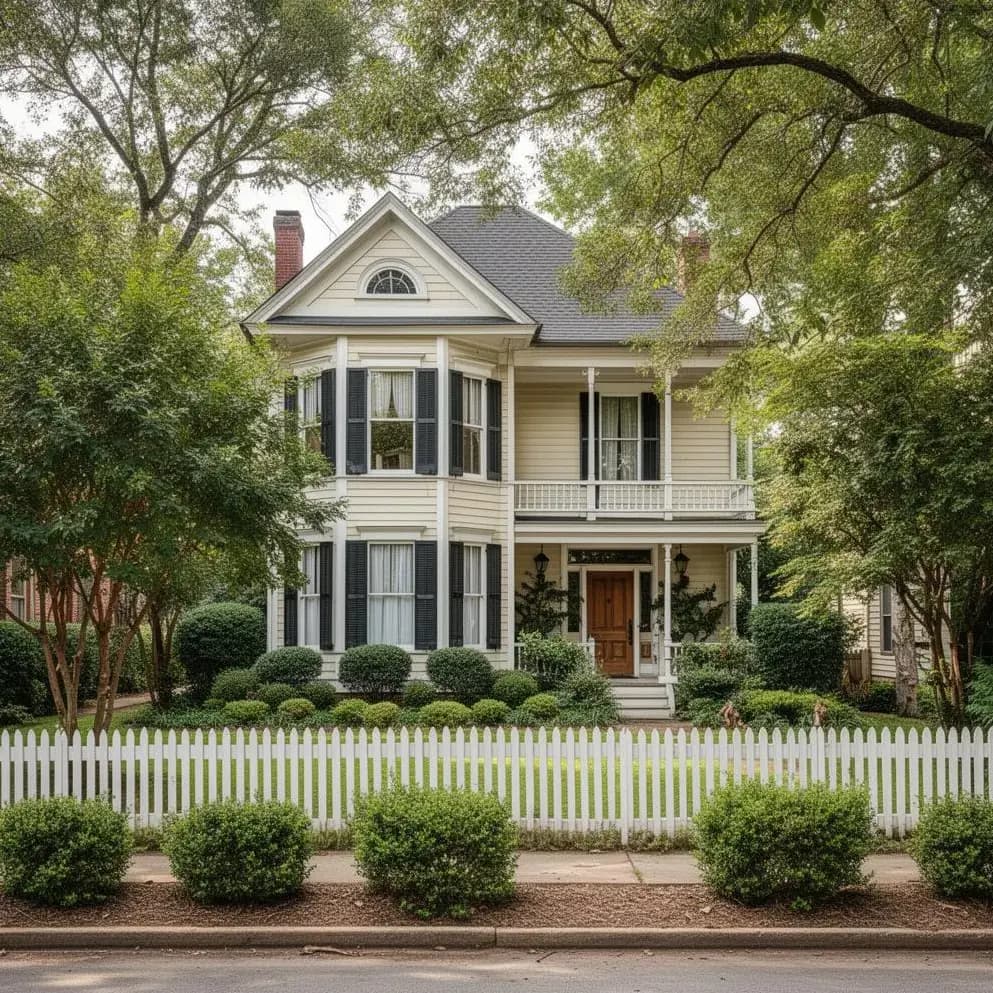
Victorian homes (1890s-1910s). These are the crown jewels of Inman Park. Queen Anne, Eastlake, and Folk Victorian styles predominate, featuring turrets, bay windows, wraparound porches, stained glass, ornate woodwork, and high ceilings (10 to 12 feet). Original homes range from 2,500 to 5,000+ square feet on lots of 0.25 to 0.75 acres. Fully restored Victorians in prime locations (along Euclid Avenue, Waverly Way, or Elizabeth Street) sell for $1.5 million to $3 million or more. The restoration quality varies widely; some homes have been meticulously returned to their original grandeur, while others have been updated with modern systems while preserving key period details.
Craftsman bungalows (1910s-1930s). Similar to those in Morningside and Virginia-Highland, Inman Park's bungalows offer smaller-scale historic charm. Typically 1,200 to 2,200 square feet with 2 to 3 bedrooms, these homes attract buyers looking for an entry point into the neighborhood or a renovation project. Prices for bungalows range from $600,000 to $1 million, depending on condition and lot size.
New construction and modern infill. Newer construction in Inman Park includes both single-family homes (often on lots where non-contributing structures were demolished) and townhome developments. The architectural style ranges from contemporary to modern farmhouse. New construction single-family homes typically range from $1 million to $2.5 million, while townhomes sell for $500,000 to $900,000. These properties offer modern floor plans and systems without the maintenance demands of a century-old home.
Loft and adaptive reuse. The industrial buildings that border Inman Park, particularly along the BeltLine corridor, have been converted to residential lofts and mixed-use developments. Krog Street Market itself was an adaptive reuse project. Loft-style condos in the area typically range from $300,000 to $700,000 and attract buyers who want the Inman Park lifestyle in a lower-maintenance format.
Inman Park Price Ranges (Early 2026, FMLS Data)
- Condos and lofts: $300,000 to $700,000. Mostly in adaptive reuse buildings and newer condo developments along the BeltLine corridor.
- Townhomes: $500,000 to $900,000. Modern construction with 2 to 3 bedrooms and rooftop terraces. Popular with buyers who want low-maintenance new construction.
- Bungalows and smaller homes: $600,000 to $1 million. Original Craftsman and cottage-style homes, some with modern updates, others ready for renovation.
- Renovated homes and new construction: $1 million to $2.5 million. Updated Victorians, Craftsmans with additions, and modern single-family homes. The core of the luxury market in Inman Park.
- Restored Victorian estates: $2 million to $3.5 million+. Fully restored homes on premium lots along the neighborhood's most prestigious streets. These rarely come to market and often sell through agent networks.
The BeltLine Effect: How a Trail Transformed a Market
The Atlanta BeltLine's Eastside Trail, which runs along Inman Park's western edge, has been the single most impactful infrastructure project for the neighborhood's real estate market in the past two decades. The first segment opened in 2012, and the effects on property values, commercial development, and daily life have been transformative.
According to research from the Georgia Institute of Technology, properties within a quarter mile of the BeltLine have appreciated 30% to 50% faster than comparable properties farther away since the trail opened. The trail provides direct walking and biking access to Ponce City Market (10 minutes north), Krog Street Market (5 minutes south), Piedmont Park (20 minutes north), and a growing network of restaurants, shops, and cultural venues along the corridor.
For Inman Park specifically, BeltLine proximity has created a premium tier within the neighborhood. Homes on streets closest to the trail (Delta Place, Waddell Street, the southern end of Hurt Street) command prices 10% to 20% above comparable homes deeper in the neighborhood. The walkable access to food, retail, and recreation without needing a car has become a primary lifestyle driver for buyers, particularly younger professionals and dual-income couples.
The BeltLine's continued expansion, including the Southside Trail and eventually a complete 22-mile loop, will likely continue to support property values in Inman Park and adjacent neighborhoods. The planned transit component (light rail or bus rapid transit) along the BeltLine corridor could further enhance connectivity and value, though that timeline remains uncertain.
See What Is Actually Available in Inman Park
Inventory here is limited, and the homes that match a specific budget and street preference typically surface in small numbers. We can watch the neighborhood and flag the ones worth your time.
Track Inman Park Availabilityor call (770) 727-4052
Dining, Shopping, and Daily Life
Inman Park's lifestyle amenities rival any neighborhood in Atlanta. The combination of walkable retail, two major food halls within walking distance, and a deep roster of independent restaurants makes it one of the most self-sufficient intown neighborhoods.
Krog Street Market. Just steps from Inman Park via the BeltLine, this food hall and market complex occupies a former warehouse and houses a rotating collection of restaurants, a butcher, a bakery, a flower shop, and specialty food vendors. It functions as both a daily shopping destination and a social gathering point for the neighborhood.
Ponce City Market. A 20-minute walk north on the BeltLine, Ponce City Market is one of Atlanta's most significant adaptive reuse projects. The former Sears, Roebuck & Co. building now houses restaurants, retail, office space, and a rooftop amusement park. For Inman Park residents, it is an easy walk or bike ride away.
Euclid Avenue corridor. Inman Park's own commercial strip along Euclid Avenue features restaurants including Barcelona Wine Bar, Sotto Sotto (one of Atlanta's best Italian restaurants), Wisteria, and several newer additions. The Little Five Points commercial district, at the neighborhood's eastern edge, adds independent shops, music venues, and a distinctly eclectic vibe.
Parks and green space. Springvale Park (the neighborhood's original park, designed by Joel Hurt), the Freedom Park trail connecting to the Carter Center and Candler Park, and Delta Park along the BeltLine provide green space and walking trails throughout the neighborhood.
Investment Trajectory and Long-Term Value
Inman Park has been one of the strongest performers in intown Atlanta's real estate market over the past two decades. According to FMLS data, home values in Inman Park have approximately doubled over the past 10 years, with the BeltLine's opening in 2012 serving as an inflection point. The neighborhood also recovered faster than most from the 2008 downturn, reaching pre-crash values by 2014 to 2015 while some suburban markets took until 2018 or later.
Several structural factors support continued demand. First, Inman Park is fully built out with virtually no undeveloped land remaining. New supply comes only through teardown-rebuilds (which face historic preservation constraints), townhome infill on small parcels, and the occasional conversion project. This supply constraint creates a floor under prices similar to what we see in Buckhead's established neighborhoods.
Second, the BeltLine's continued development and maturation will bring additional amenities, transit access, and connectivity to the neighborhood. Each new segment of the BeltLine that opens increases the network value for neighborhoods already connected to it. Inman Park, as one of the first and most directly connected BeltLine neighborhoods, benefits from every expansion.
Third, Atlanta's broader growth story, including job creation, inbound migration, and increasing demand for walkable urban living, benefits Inman Park disproportionately. According to the National Association of Realtors, walkable urban neighborhoods in growing metros have consistently outperformed car-dependent suburbs in long-term appreciation. Inman Park fits this profile precisely.
Past performance does not guarantee future results, and all real estate investments carry risk. But for buyers with a long-term horizon, Inman Park's combination of constrained supply, infrastructure investment, lifestyle amenities, and location fundamentals creates a compelling value proposition.
Tips for Buying in Inman Park
Inman Park is competitive. Well-priced homes, especially those with BeltLine proximity and historic character, move quickly. Here is what our team recommends for buyers targeting this neighborhood.
Understand the historic district rules. If you are buying a contributing structure in the historic district, exterior modifications require review by the Urban Design Commission. This includes changes to rooflines, siding, windows, and front-facing additions. Interior renovations are generally unrestricted. The review process is not meant to prevent improvement; it is meant to preserve architectural character. Work with a contractor experienced in historic renovation who understands the guidelines.
Inspect historic homes thoroughly. A 130-year-old Victorian home can have issues that a standard home inspection may miss. Hire a structural engineer in addition to a general inspector. Common concerns include foundation settling (pier and beam foundations are typical), old-growth wood framing that may have termite damage, outdated electrical systems (some homes still have original knob-and-tube wiring in portions), and aged plumbing (cast iron drain lines and galvanized supply pipes). None of these are deal-breakers, but they should be identified and budgeted for.
Be ready to move fast. Desirable homes in Inman Park typically receive offers within the first week of listing. Have your financing pre-approved, know your budget ceiling, and be prepared to write a competitive offer with minimal contingencies. Off-market opportunities exist in Inman Park; our team maintains relationships with owners who may be open to selling but have not listed publicly. If you are serious about buying here, let us know and we will keep you informed of these opportunities.
Consider the new-vs-historic trade-off carefully. A restored Victorian on Euclid Avenue has irreplaceable character and prestige. A new townhome near Krog Street Market has walkability and low maintenance. Both are excellent investments. Your decision should be based on your lifestyle, maintenance tolerance, and how you plan to use the space. Our team helps buyers evaluate these trade-offs based on individual priorities.
Frequently Asked Questions
What is the average home price in Inman Park in 2026?
As of early 2026, the median sale price for homes in Inman Park is approximately $900,000 to $1.2 million, according to FMLS data. Prices vary significantly based on the type of property. Smaller condos and townhomes start in the $400,000 to $600,000 range. Renovated Victorian and Craftsman homes typically sell for $850,000 to $1.5 million. New construction and fully restored historic estates can reach $2 million to $3 million or more. Price per square foot in Inman Park generally ranges from $350 to $550, among the highest in intown Atlanta.
Is Inman Park on the Atlanta BeltLine?
Yes, Inman Park has direct access to the Atlanta BeltLine Eastside Trail, which is the most developed and popular segment of the BeltLine. The trail runs along the neighborhood's western and southern edges, connecting Inman Park to Ponce City Market to the north and Krog Street Market to the south. The BeltLine has been one of the most significant factors in Inman Park's property value appreciation over the past decade, adding walkable access to restaurants, retail, parks, and other neighborhoods. Homes within a 5-minute walk of the BeltLine typically command a premium of 10% to 20% compared to similar homes farther from the trail.
What types of homes are in Inman Park?
Inman Park has one of the most diverse and architecturally significant housing stocks in Atlanta. The neighborhood includes grand Victorian homes from the 1890s and early 1900s (many on the National Register of Historic Places), Craftsman bungalows from the 1920s, midcentury homes, modern new construction (both single-family and townhome), and adaptive reuse loft conversions in former industrial buildings. The Victorian homes are the most iconic, featuring turrets, wraparound porches, ornate woodwork, and large lots. Newer construction tends toward contemporary and modern farmhouse styles that complement the historic fabric.
How walkable is Inman Park?
Inman Park is one of the most walkable neighborhoods in Atlanta, with Walk Scores typically in the 80s to 90s. Residents can walk to Krog Street Market, the BeltLine, numerous restaurants and bars, Inman Park MARTA station, and neighborhood parks. The combination of BeltLine access, a MARTA heavy rail station, and a dense retail corridor along Euclid Avenue and Highland Avenue makes Inman Park genuinely car-optional for daily life. Many residents walk or bike to work in Midtown or Downtown via the BeltLine, which is rare for an Atlanta neighborhood.
What is the Inman Park Festival?
The Inman Park Festival is one of Atlanta's oldest and most popular neighborhood festivals, held annually on the last weekend in April. It features an arts and crafts market, live music on multiple stages, a parade through the neighborhood, a tour of homes showcasing the area's historic architecture, and the famous 'Tour of Homes' component. The festival draws tens of thousands of visitors and is a source of significant civic pride. It's also a great opportunity for prospective buyers to experience the neighborhood's character and community spirit firsthand.
How has Inman Park appreciated over the past decade?
Inman Park has been one of the strongest-appreciating neighborhoods in intown Atlanta. Per FMLS data, median home values in Inman Park have approximately doubled over the past decade, with the most significant gains coinciding with the BeltLine Eastside Trail opening and the subsequent commercial development along the corridor. The combination of historic charm, walkability, BeltLine access, and proximity to employment centers has created consistent demand that outpaces the limited supply. Past performance does not guarantee future results, but the structural factors driving Inman Park's appreciation remain in place.
Are there good restaurants near Inman Park?
Inman Park is one of Atlanta's premier dining neighborhoods. Krog Street Market (technically just across the BeltLine in Cabbagetown) houses a collection of restaurants and food vendors. Along Euclid Avenue and Highland Avenue, you'll find acclaimed restaurants including Barcelona Wine Bar, Wisteria (Southern fine dining), Sotto Sotto (Italian), and One Eared Stag. Ponce City Market, accessible via a short BeltLine walk, adds another layer of dining options. The combination of neighborhood-scale restaurants and walkable access to two major food halls gives Inman Park one of the deepest dining scenes of any Atlanta residential neighborhood.
What schools serve Inman Park?
Inman Park is in the Atlanta Public Schools (APS) district. Elementary students are zoned for Mary Lin Elementary, which has strong ratings and an active parent community. Middle school students attend Inman Middle School. High school students are zoned for Midtown High School (formerly Grady), which offers International Baccalaureate programs. Private school options nearby include The Friends School of Atlanta, The Paideia School, and numerous others within a 10- to 15-minute drive. As with all APS zoning, verify the specific school assignment for any property through the APS website.
Should I buy a historic home or new construction in Inman Park?
This depends on your priorities and tolerance for older-home maintenance. Historic Victorian and Craftsman homes offer unmatched character, period details, and the prestige of living in an architecturally significant home. However, they often come with higher maintenance costs, older systems (plumbing, electrical, HVAC), and layouts that may not suit modern living without renovation. New construction offers modern floor plans, current building codes, energy efficiency, and lower near-term maintenance. The trade-off is that new builds lack the historic character that defines Inman Park. Many buyers find a middle ground: purchasing a historically renovated home that preserves the exterior character while updating interiors to modern standards.
How close is Inman Park to Downtown and Midtown Atlanta?
Inman Park is exceptionally well-located relative to Atlanta's employment centers. Downtown Atlanta is approximately 2 miles west (5 to 10 minutes by car, 15 minutes via MARTA from the Inman Park station). Midtown is about 2 miles northwest (7 to 12 minutes by car, or a 20-minute BeltLine bike ride). The neighborhood's MARTA station provides direct rail access to Downtown, Midtown, Buckhead, and the airport without transfers. For professionals who work in any of these areas, Inman Park offers one of the shortest and most convenient commutes of any intown neighborhood.
Ready to explore homes in Inman Park?
Sources
- FMLS (First Multiple Listing Service) - Home sale prices, days on market, and inventory data for Inman Park.
- Georgia Institute of Technology - Research on the Atlanta BeltLine's impact on property values and urban development patterns.
- National Register of Historic Places - Historic district designation data and contributing structure guidelines for Inman Park.
- National Association of Realtors (NAR) - Research on walkable neighborhood appreciation and inbound migration trends.
- Atlanta BeltLine Inc. - Trail development updates, planned expansions, and transit corridor plans.
- Inman Park Neighborhood Association - Neighborhood history, preservation guidelines, and community data.
Market data and neighborhood information referenced in this article reflect conditions as of early 2026 and are subject to change. Historic preservation rules and school zones may change without notice. Past appreciation does not guarantee future performance. This article does not constitute financial or investment advice.
Disclaimer: This article is for informational purposes only and does not constitute real estate, financial, or legal advice. Home prices and market conditions change frequently. Historic preservation regulations and school zone boundaries are subject to change. The Luxury Realtor Group is a real estate brokerage and does not guarantee the accuracy of market or neighborhood data. Consult with qualified professionals before making purchasing decisions.