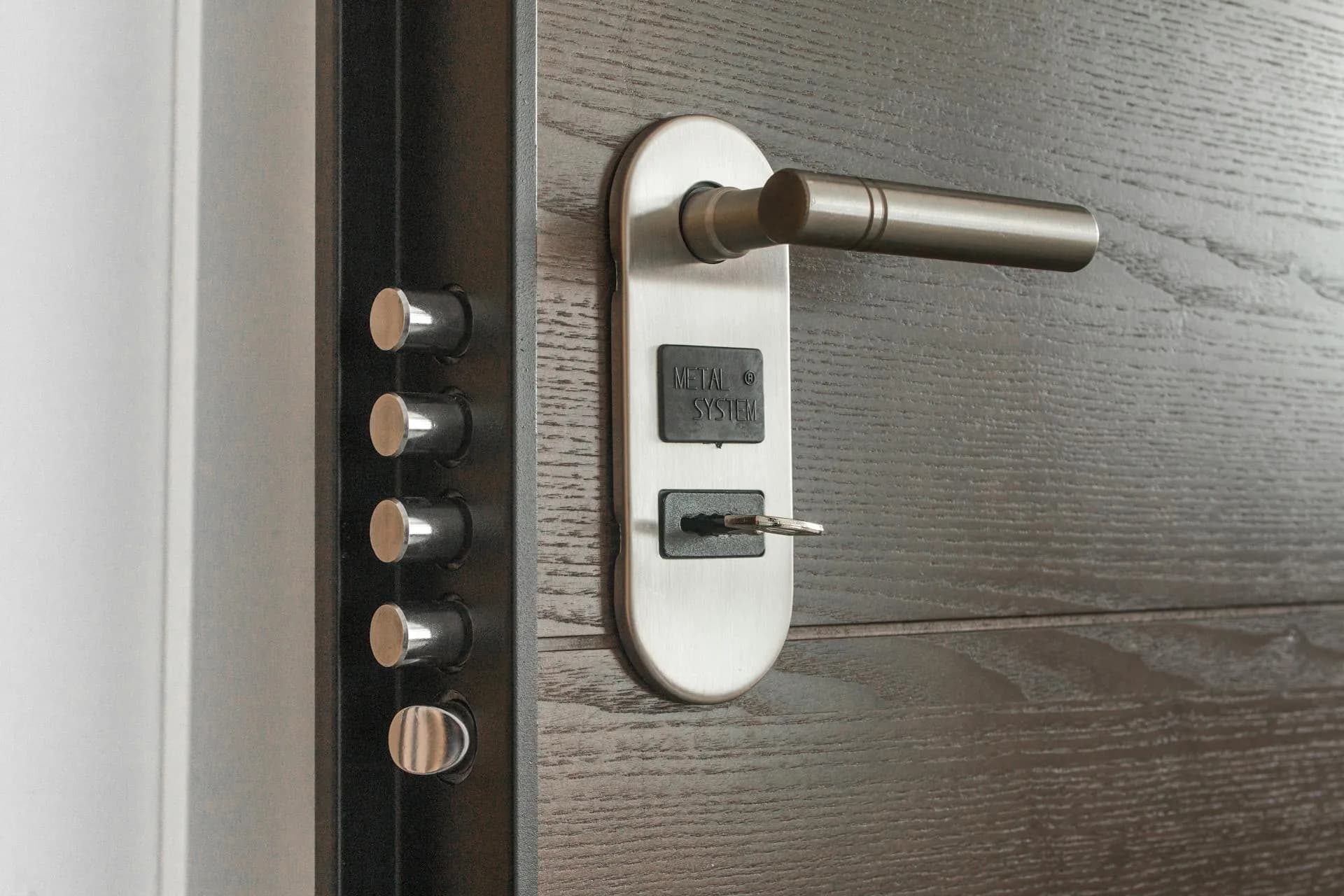
Two Atlanta listings can both say "gated community" and describe completely different realities. One has a guard who checks ID at 2 a.m. and a patrol truck circling the streets. The other has a keypad that has accepted the same four-digit code since 2011.
Buyers pay real money for the word "gated," so it is worth knowing exactly what the word means at each address. After years of writing offers behind these gates, I can tell you the difference is not marketing nuance. It shows up in the HOA budget, the guest experience, and what actually happens when something goes wrong at 2 a.m.
This is the explainer: the security tiers that exist in metro Atlanta, what your fees fund at each one, and the questions that separate a real security program from an expensive gate motor. For the community-by-community rundown with prices and club costs, start with our gated communities guide and the gated community comparison matrix.
The Short Answer
"Gated" is not one thing. It spans 24/7 staffed gatehouses with roaming patrols down to an unstaffed transponder arm.
The top tier is people, not hardware. Country Club of the South runs three staffed gates plus 24/7 roaming security, and its $2,900-$3,900 annual HOA funds exactly that.
Gate-only buys deterrence, not judgment. A transponder gate slows strangers; it does not verify anyone or answer a call.
Ask operational questions: staffing hours, guest protocol, patrol frequency, camera retention, and the security line in the HOA budget.
We know how each gate actually operates. Community by community. Ask us before you rely on a listing description.
Tier One: The 24/7 Staffed Gate and Roaming Patrol
This is the tier most buyers picture when they say "guard-gated," and in metro Atlanta the benchmark is Country Club of the South in Johns Creek. Three staffed gates, not one. The attendant checks ID, calls ahead to confirm you are expected, and logs the visit. Behind the gates, a roaming security patrol circulates around the clock, and residents can call the guardhouse to watch the house while they travel.
That operation costs money, and the HOA bill shows it honestly: $2,900-$3,900 per year at Country Club of the South, which covers the security program alongside common-area maintenance and swim and tennis access. The Manor in Milton runs a staffed gatehouse with HOA dues of $3,000 annually plus a $3,600 initiation fee at closing. The River Club in Suwanee pairs its staffed entrance with dues of roughly $2,900 per year.
What you are really buying at this tier is human judgment. A camera records a problem; a guard can intervene before one develops. A transponder admits whoever holds the device; a gatehouse attendant notices that the landscaping crew showed up on the wrong day with an unfamiliar truck. Buyers who travel half the year or keep a high public profile tend to value this tier because the system works whether or not they are home.
Tier Two: The Staffed Main Gate
The middle tier is the most common arrangement among Atlanta's large golf communities: a gatehouse anchors the primary entrance, while secondary resident gates run on transponders. St Ives in Johns Creek and Sugarloaf Country Club in Duluth operate in this family, as does St Marlo. Staffing hours and patrol arrangements vary by community and change over time, which is precisely why the operational questions later in this guide matter.
The fees reflect the lighter payroll. St Ives runs about $2,000 annually plus a one-time $2,500 initiation at purchase; Sugarloaf's mandatory HOA runs $2,316-$2,500 per year with no initiation to live in the community. You still get a controlled entrance, a guest protocol, and the visible signal of a gatehouse, at a meaningfully lower annual cost than the full 24/7 program.
For most buyers, this tier is the sweet spot: enough friction to deter anyone without a reason to be there, without funding a three-shift security operation they may never consciously notice.

Tier Three: Gate-Only
The third tier is the unstaffed electronic gate: a transponder arm or keypad, sometimes a camera, and no human being anywhere in the loop. This tier includes larger communities like White Columns in Milton as well as most of the smaller gated enclaves scattered across Alpharetta, Roswell, and the in-town neighborhoods, often a few dozen homes behind a single entrance.
Let me be fair to this tier, because it gets dismissed too quickly. A gate-only enclave eliminates cut-through traffic, stops casual door-to-door solicitation, and signals privacy to anyone cruising neighborhoods. For many buyers that is the entire requirement, and the HOA math is friendly: with no payroll to fund, fees typically run a fraction of what staffed communities charge.
The honest limits: gate codes leak to every vendor, ex-housekeeper, and food-delivery driver who ever needed one. Transponder arms admit tailgaters. And when the motor fails, many of these gates simply stand open until the repair company arrives. A gate-only community is a privacy feature. It is not a security program, and buyers should price it as the former.
One alternative worth naming: in-town, a full-service condominium building with 24/7 concierge and controlled elevator access can functionally deliver more security than most gatehouses, which is why some of our most privacy-conscious clients end up in Buckhead towers rather than behind suburban gates.
What Your Fees Actually Fund
Read a staffed community's HOA budget and the structure becomes obvious: security payroll is typically the largest recurring line, followed by common-area landscaping, gatehouse and equipment maintenance, camera systems, and reserves. That is why Country Club of the South's dues land in the $2,900-$3,900 range while a transponder-only enclave nearby can charge far less. You are not paying for the arm across the road. You are paying for the three shifts of people behind it.
This also explains why fees climb over time in staffed communities: labor costs rise, and a community that refuses to raise dues eventually cuts staffing hours instead. A community proud of its security program will show you the budget. Treat reluctance as information.
The Security Tiers, Compared
HOA figures come from our gated communities research as of mid-2026 and change over time. Confirm current fees and staffing directly during due diligence.
| Tier | What You Get | Example Communities | HOA Context |
|---|---|---|---|
| Guard-gated, 24/7 staffed + patrol | Staffed gatehouse around the clock, guest verification, roaming security patrols, and in some communities a house-watch service (confirm current offerings with the association) | Country Club of the South, The Manor, The River ClubJohns Creek | CCoS runs $2,900-$3,900/yr; The Manor $3,000/yr plus $3,600 initiation; The River Club ~$2,900/yr |
| Staffed main gate, transponder secondaries | A gatehouse anchoring the primary entrance, with resident gates on transponders; staffing hours vary by community | St Ives, Sugarloaf, St MarloDuluth | St Ives about $2,000/yr plus $2,500 initiation; Sugarloaf $2,316-$2,500/yr |
| Gate-only (transponder or keypad) | An unstaffed electronic gate, sometimes cameras; access control without human judgment behind it | White Columns, plus smaller enclaves across Alpharetta, Roswell, and in-townFull guide | Typically a fraction of staffed-gate fees, since no payroll is being funded |
| Vertical alternative: full-service condo | 24/7 concierge and controlled elevator access, which can exceed what most gatehouses deliver | Buckhead and Midtown luxury buildingsCondo buildings guide | Monthly dues fund staffing, amenities, and reserves; varies widely by building |
We Can Tell You How Each Gate Actually Operates
Listing descriptions say "gated." We can tell you which gatehouses are staffed at 3 a.m., how each community handles an unexpected guest, and which patrols actually patrol, because we have been through these gates for years. Ask.
The Questions That Separate Real Security from a Gate Motor
When we take buyers into these communities, we push past the brochure with operational questions. Bring this list to the HOA, the listing agent, and ideally a resident.
Staffing: Is the gate staffed 24/7, or only certain hours? By employees or a contracted firm, and what is the turnover like? A gatehouse that goes dark at 10 p.m. is a different product than one that never does.
Guest handling: How do visitors get in? Call-ahead list, standing list, one-time codes? What happens with an unannounced guest, a delivery, or a vendor truck? The gap between communities is widest right here.
Logs and cameras: Are visitor logs kept, and for how long? Where are cameras placed, and what is the footage retention period? If something happens, this is the record you will wish existed.
Patrols: Does a roaming patrol exist at all, how frequently does it circulate, and does it respond to resident calls? Some communities also offer vacation house-watch; at Country Club of the South, residents report the guardhouse has historically offered a house-watch service when notified. Confirm current services with the association.
Failure modes: What happens when the gate breaks or power fails? Who is liable if the gate damages a car? How often do codes get changed? Mundane questions, revealing answers.
The budget: What share of HOA dues funds security, and how has it trended? Ask for the current budget and the last year of board minutes. Communities that invest in their program are typically glad to show you.

The Answers Buyers Do Not Always Want to Hear
Is any of this worth the money?
If you value the service, yes; the staffed communities deliver what they charge for. But a gate has historically been a lifestyle amenity more than an investment thesis, so buy the tier you will actually use rather than the one that sounds impressive.
Will a gate make my home impossible to burgle?
No community is impervious, staffed or not. Gates deter opportunistic crime and add friction and evidence trails. Owners who want more layer on their own systems, and the estate tier often does.
Does the guard slow down my own guests?
A little, by design. Residents handle it with standing guest lists and call-aheads, and most will tell you the thirty seconds at the gatehouse is exactly the product they are paying for.
Matching the Tier to Your Life
The pattern we see after years of these purchases: buyers who travel extensively, keep a recognizable name, or simply sleep better knowing a human is on duty belong in tier one, and they never regret the dues. Buyers who want a controlled, orderly community with a real entrance but no security theater are well served in tier two, where most of Atlanta's gated golf communities live. And buyers who mainly want privacy from traffic and solicitors can pocket the difference in a gate-only enclave, or skip the suburbs entirely for a full-service building.
What you should not do is pay tier-one prices on the assumption that every gate works the same way. They do not, and the differences are knowable before you offer. Start with the full community guide, compare fees in the matrix, and then ask us how the specific gate on your shortlist actually runs.
Frequently Asked Questions
What is the difference between guard-gated and gated?
A guard-gated community staffs its entrance with people: a gatehouse attendant who verifies guests, plus in the top-tier communities a roaming patrol. A gate-only community controls access with a transponder or keypad gate and no staff. Both are marketed as gated, which is why buyers should ask specifically how the gate operates.
Which Atlanta communities have 24/7 staffed gates?
Country Club of the South in Johns Creek is the benchmark, with three staffed gates and 24/7 roaming security. The Manor in Milton and The River Club in Suwanee also operate staffed gatehouses. Staffing models change, so confirm current hours and patrol coverage during due diligence.
Do guard-gated communities cost more in HOA fees?
Typically yes, because security payroll is usually the largest line in the budget. Country Club of the South's HOA has recently been reported at $2,900-$3,900 annually and The Manor's at $3,000 plus a $3,600 initiation, while gate-only enclaves without staff to fund generally charge a fraction of that.
Do gates actually reduce crime?
Staffed gates and patrols deter opportunistic crime and create accountability through visitor logs and cameras, but no community is impervious. The honest framing: you are buying friction for intruders and peace of mind for yourself, not absolute security.
How do guests get into a guard-gated community?
Each community sets its own protocol. Typically residents call ahead or maintain a standing guest list, and the gatehouse verifies ID before admitting anyone. Some communities issue one-time codes or passes for events and vendors. Ask how unannounced visitors and deliveries are handled, because that is where protocols differ most.
What should I ask about security before buying in a gated community?
Ask whether the gate is staffed 24/7 or only part of the day, whether a roaming patrol exists and how often it circulates, whether visitor logs and camera footage are kept and for how long, what happens when the gate malfunctions, and what share of the HOA budget funds security. The HOA's budget and meeting minutes answer most of this in writing.
Shortlisting Gated Communities?
Tell us which communities you are weighing and what the gate needs to do for your household. We will give you the unvarnished version of how each one operates, then get you through it for a real look.
Explore These Neighborhoods
"Buying a home remotely seemed impossible, but the team handled everything. Video tours, detailed neighborhood breakdowns, even coordinating inspections when we couldn't be there. Seamless."
Andrew and Rachel P.
Relocated to Atlanta, bought from out of state
Ready to find out which gate, and which tier, fits your household?


Disclaimer: This article is for educational purposes only and does not constitute financial, legal, or security advice. HOA fees, staffing models, and community policies change frequently. Verify current details directly with each community before making purchase decisions.