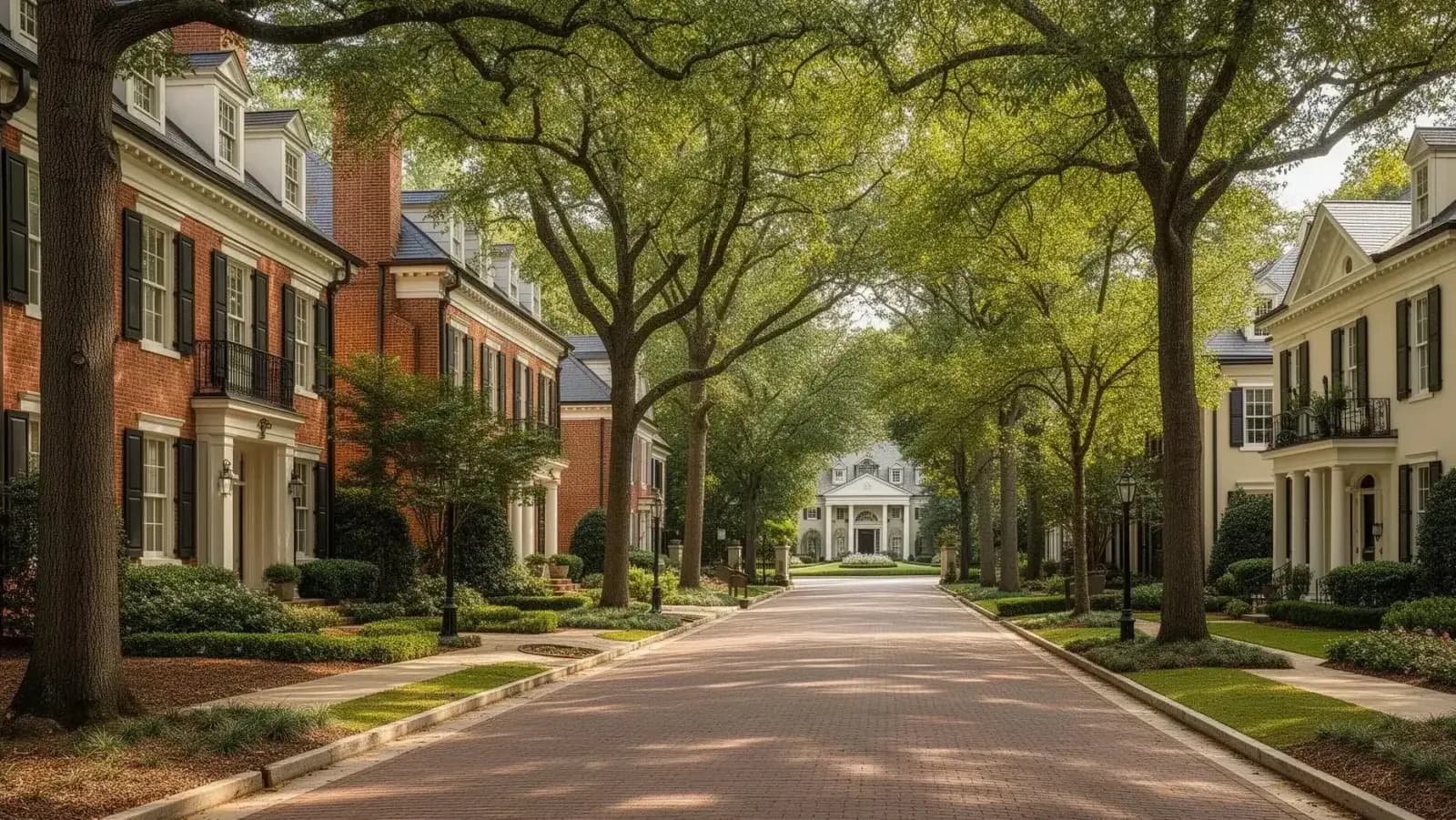
Druid Hills is one of those Atlanta neighborhoods that people fall in love with before they even step inside a house. The canopy of century-old oaks arching over Ponce de Leon Avenue, the Olmsted-designed parks winding through the community, the Tudor and Colonial Revival homes sitting on deep, landscaped lots. It has a quality that newer neighborhoods cannot replicate: the weight of history, combined with a thriving present.
Developed in the early 1900s by Joel Hurt as one of Atlanta's first planned suburban communities, Druid Hills was designed with intentionality that remains visible today. The landscape plan was created by Frederick Law Olmsted Sr., the father of American landscape architecture, and refined by his sons after his death. The homes were designed by architects like Neel Reid, Philip Trammell Shutze, and Walter T. Downing, names that still carry tremendous weight in Atlanta residential architecture.
Today, Druid Hills is a residential community of approximately 15,000 people spanning both DeKalb County and the City of Atlanta. It is home to Emory University, the Centers for Disease Control and Prevention (CDC), Fernbank Museum of Natural History, and some of the finest residential architecture in the Southeast. This guide covers everything a luxury buyer needs to know about Druid Hills in 2026: architecture, pricing, schools, parks, walkability, investment trends, and what it is actually like to live here.
The Olmsted Legacy: Parks That Define a Neighborhood
Few neighborhoods in the country can claim a park system designed by the Olmsted firm. Druid Hills is one of them, and the parks are not merely an amenity. They are the defining feature of the neighborhood's character, its property values, and its identity.
Frederick Law Olmsted Sr. visited the site in 1893 and created the initial landscape plan before his health declined. His sons, John Charles Olmsted and Frederick Law Olmsted Jr., completed the design through their firm, Olmsted Brothers. The result is a linear park system that follows the natural topography of Ponce de Leon Creek, creating a green spine running through the heart of the neighborhood.
The parks include Springdale Park, Virgilee Park, Dellwood Park, Deepdene Park (the largest, featuring a dramatic ravine with walking paths), and Burbanck Park. The Olmsted Linear Park Alliance maintains and preserves these spaces, which together form one of the few intact Olmsted-designed residential park systems remaining in the United States.
For home values, proximity to the Olmsted parks is a premium factor. Homes fronting or adjacent to the park system typically command a 10% to 20% premium over comparable homes elsewhere in the neighborhood, based on FMLS sales data. This is consistent with broader research from the National Recreation and Park Association, which has found that proximity to well-maintained parks consistently increases residential property values.
Architectural Styles: A Living Museum of Southern Design
Druid Hills is one of the most architecturally significant residential neighborhoods in the Southeast. The homes span from the 1910s through the present, with the most notable concentration of historic architecture along Ponce de Leon Avenue, Oakdale Road, Lullwater Road, and Fairview Road.
Tudor Revival
The most iconic architectural style in Druid Hills. Characterized by steeply pitched gable roofs, decorative half-timbering, tall narrow windows (often with diamond-shaped leaded glass panes), prominent chimneys, and irregular floor plans. Stone, brick, and stucco exteriors create a romantic, Old World character. Many of the finest Tudor homes in Druid Hills were built in the 1920s and 1930s and feature exceptional craftsmanship in their millwork, ironwork, and masonry.
Colonial Revival
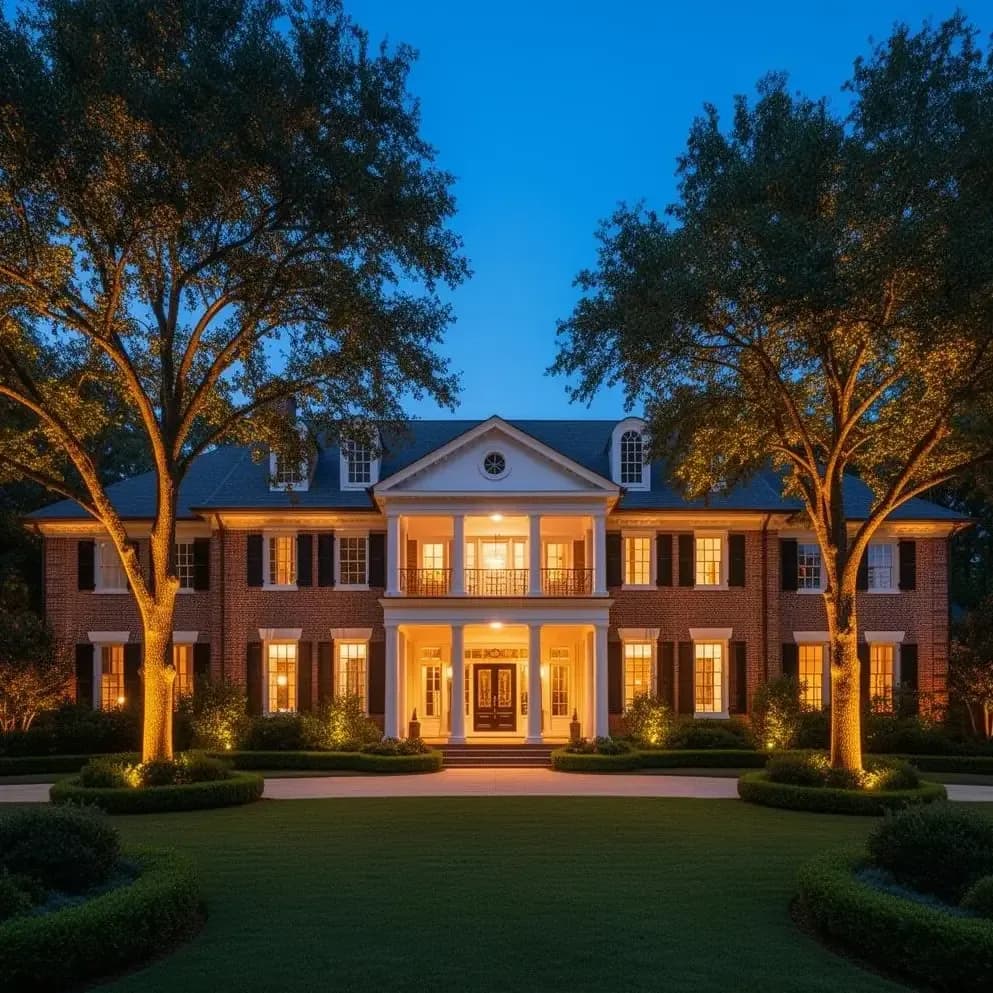
Symmetrical facades, central entries with columned porticos, shuttered windows, and formal proportions define the Colonial Revival homes in Druid Hills. These homes are typically brick, with slate or architectural shingle roofs, and range from 3,000 to 6,000+ square feet. The style remained popular from the 1910s through the 1960s, and many of the neighborhood's finest examples were designed by prominent Atlanta architects.
Georgian Revival
A subset of Colonial Revival, Georgian homes in Druid Hills feature red brick construction, symmetrical window patterns, classical pediments and pilasters, and formal interior layouts. Several of the most significant homes along Ponce de Leon Avenue are Georgian Revival, including several designed by Neel Reid, perhaps Atlanta's most celebrated residential architect.
Craftsman and English Cottage
Smaller than the Tudors and Colonials, the Craftsman bungalows and English Cottage-style homes in Druid Hills are found on the secondary streets and offer entry points into the neighborhood at lower price points. These homes typically range from 1,800 to 3,500 square feet and are the most common entry point into the neighborhood. Many have been thoughtfully renovated and expanded.
The Emory Effect: How a University Anchors a Neighborhood
Emory University occupies 630 acres adjacent to Druid Hills and is one of the top 25 research universities in the United States, according to U.S. News & World Report. The university employs over 30,000 people and generates approximately $4.5 billion in annual economic impact in the metro Atlanta area. The CDC, located adjacent to Emory's campus, adds another major institutional employer.
For Druid Hills real estate, Emory's presence creates a stable demand floor. Faculty, physicians, researchers, and administrators at Emory and Emory Healthcare represent a consistent pool of high-income buyers who want to live within walking or biking distance of campus. This institutional demand insulates Druid Hills from some of the market volatility that affects neighborhoods without major employment anchors.
Emory also brings cultural amenities that enhance the neighborhood: the Michael C. Carlos Museum (one of the finest university art museums in the South), Lullwater Preserve (a 185-acre nature preserve on Emory's campus open to the public), and a full calendar of lectures, performances, and events. For buyers who value intellectual community and academic culture, the Emory proximity is a major draw.
Price Ranges and What You Can Expect
Druid Hills offers a wider price range than many buyers realize. The neighborhood is not exclusively ultra-luxury; it accommodates buyers from approximately $500,000 to $3 million+, depending on the specific sub-area, architectural style, lot size, and renovation status.
Druid Hills Price Guide (Q1 2026, FMLS Data)
- $500K-$800K: Smaller Craftsman bungalows, unrenovated Colonials, and homes on the neighborhood's secondary streets. Typically 2,000-3,500 sq ft. Good opportunities for renovation.
- $800K-$1.5M: The sweet spot. Well-renovated Tudors and Colonials, larger homes in the Fernbank area, and mid-size historic homes on good lots. Typically 3,000-5,000 sq ft.
- $1.5M-$2.5M: Grand historic estates along Ponce de Leon, Oakdale, and Lullwater. Architect-designed homes with significant lot sizes (0.5 to 2+ acres). Typically 4,000-7,000 sq ft.
- $2.5M+: The finest homes in the neighborhood. Neel Reid or Shutze designs, premium Olmsted park frontage, fully restored or renovated to modern standards. Rare inventory at this level.
Get Ahead of the Next Druid Hills Listing
Homes on the park frontage and the Lullwater streets come up rarely, and a few change hands quietly. Tell us the section and price band you want, and we will keep you posted as things surface.
See What Is Available in Druid Hillsor call (770) 727-4052
Key Sub-Neighborhoods and Streets
Druid Hills is not monolithic. Different sections have different characters, price points, and appeal. Understanding the micro-geography helps you target your search.
Ponce de Leon Corridor: The historic spine of Druid Hills. The grandest homes line Ponce de Leon Avenue and the streets immediately off it (Oakdale, Lullwater, Fairview, Springdale). This is where you find the largest lots, the most significant architecture, and the highest prices. The Olmsted parks are integrated into this corridor.
Fernbank Area: The eastern section, anchored by Fernbank Museum and Fernbank Forest. Slightly newer housing stock (1940s-1970s), a quieter residential feel, and home to Fernbank Elementary School. Prices are generally 10% to 20% lower than the Ponce corridor for comparable square footage, making it an accessible entry point to the neighborhood.
Emory-Adjacent Streets: The areas closest to Emory University, including Clifton Road, North Decatur Road, and surrounding streets. These areas see strong demand from Emory-affiliated buyers and benefit from walkability to campus. A mix of historic and mid-century homes, with some newer infill.
South Druid Hills: Sometimes grouped with Druid Hills but technically a separate area south of Ponce de Leon Avenue. Generally more affordable, with a mix of housing types and styles. Less architecturally uniform than the historic core but still benefits from the Druid Hills association and proximity to Emory.
Investment Outlook and Market Trends
Druid Hills has several structural advantages that support long-term property values. The historic district designation limits new construction and prevents incompatible development, constraining supply. Emory University and the CDC provide stable institutional demand. The Olmsted parks and mature tree canopy create an environment that cannot be replicated. And the neighborhood's proximity to Midtown and Downtown Atlanta (15 to 25 minutes by car) makes it practical for professionals who work in the city.
Per FMLS data, luxury homes in Druid Hills ($1M+) have appreciated approximately 30% to 45% over the past five years, with the strongest gains in fully renovated historic homes and park-adjacent properties. The neighborhood has also seen increased interest from buyers relocating from outside Georgia, who are drawn to the combination of historic character, university proximity, and relative affordability compared to similar neighborhoods in cities like Washington D.C., Boston, or Philadelphia.
One factor to watch: the ongoing investment in the Atlanta BeltLine trail system, which will eventually connect to the eastside of Atlanta near Druid Hills. When completed, this connection will improve connectivity and could drive additional appreciation in the neighborhoods along the BeltLine's eastern extensions.
Schools and Education
Education is a primary driver of Druid Hills real estate demand. The neighborhood offers strong options in both the public and private school systems, and the presence of Emory University adds an academic culture that permeates the community.
Fernbank Elementary School is the anchor of the Druid Hills public school experience. Rated 8/10 by GreatSchools.org, Fernbank serves the Fernbank area and portions of greater Druid Hills within DeKalb County. It is one of the most sought-after elementary school zones in DeKalb County and directly influences property values in its district.
The Paideia School is the premier private school in the area, offering a progressive K-12 education on a campus adjacent to Druid Hills. Paideia is known for small class sizes, emphasis on critical thinking, and strong arts programming. It consistently ranks among Atlanta's top private schools on Niche.com.
For high school, the public options include Druid Hills High School (DeKalb County) and, for students in the City of Atlanta portion, various APS high schools. Many families supplement with or switch to private schools for the high school years, with options including Paideia, Westminster, Lovett, and Pace Academy (the latter three in Buckhead).
The Bottom Line
Druid Hills occupies a unique position in Atlanta's luxury real estate market. It is not the most expensive neighborhood (that distinction belongs to Tuxedo Park and certain streets in Buckhead). It is not the most urban (Midtown and Buckhead Village offer more walkable commercial density). And it is not the newest (the housing stock dates primarily from the 1910s through the 1960s).
What Druid Hills offers is something harder to quantify and impossible to replicate: a neighborhood that was planned with care more than a century ago, executed with the finest architects and landscape designers of the era, anchored by world-class institutions, and maintained by residents who value its history and character. The Olmsted parks, the Neel Reid homes, the mature tree canopy, the Emory community, the Fernbank forest. These are not amenities that can be built by a developer. They are the product of time, intention, and stewardship.
For buyers who value architectural heritage, established community, academic culture, and the kind of beauty that only comes from a century of growth, Druid Hills is one of the finest neighborhoods in Atlanta. Reach out to our team if you are interested in exploring homes in Druid Hills. We will show you the neighborhood in a way that online listings cannot capture.
Frequently Asked Questions
What is the average home price in Druid Hills?
Home prices in Druid Hills vary significantly depending on the specific section and property type. As of early 2026, based on FMLS data, the median home sale price in Druid Hills is approximately $850,000 to $1.1 million. However, the range extends from approximately $500,000 for smaller or less renovated homes to $3 million+ for the grand estates along Ponce de Leon Avenue, Oakdale Road, Lullwater Road, and Fairview Road. The Fernbank area and properties adjacent to Emory University tend to command premium pricing due to walkability and institutional proximity. Price per square foot typically ranges from $250 to $450 depending on condition, lot size, and location within the neighborhood.
Is Druid Hills a good investment?
Druid Hills has strong investment fundamentals. The neighborhood benefits from severe supply constraints (it is a historic district with limited new construction), proximity to Emory University and the CDC (two major institutional anchors that provide stable demand), desirable school options, and architectural significance that attracts a specific buyer profile. According to FMLS data, Druid Hills luxury homes have appreciated approximately 30% to 45% over the past five years. The neighborhood's historic district designation protects against incompatible development, which helps preserve property values long-term. However, homes in historic districts can be more expensive to maintain and renovate due to preservation requirements. Past appreciation does not guarantee future performance.
What architectural styles are found in Druid Hills?
Druid Hills is one of Atlanta's most architecturally significant neighborhoods. The predominant styles include Tudor Revival (featuring steeply pitched roofs, decorative half-timbering, and stone or brick exteriors), Colonial Revival (symmetrical facades, columned porticos, and formal proportions), Georgian Revival (red brick with classical detailing), Craftsman bungalows (on the smaller end of the spectrum), English Cottage style, and Mediterranean Revival. Many of the grandest homes were designed by notable architects including Neel Reid, Philip Trammell Shutze, and Walter T. Downing. The Druid Hills Historic District, listed on the National Register of Historic Places, preserves the architectural character of the neighborhood.
What are the Olmsted parks in Druid Hills?
The park system in Druid Hills was designed by Frederick Law Olmsted Sr. and later his sons (the Olmsted Brothers firm), the same landscape architects behind Central Park in New York and the Biltmore Estate grounds in Asheville. The Druid Hills parks form a linear chain along Ponce de Leon Avenue and include Springdale Park, Virgilee Park, Dellwood Park, Deepdene Park, Burbanck Park, and the Olmsted Linear Park connecting them. These parks feature winding paths, mature hardwood forests, streams, and naturalistic landscaping characteristic of Olmsted's design philosophy. The parks are maintained by the Olmsted Linear Park Alliance and are a defining feature of the neighborhood's character and property values.
What schools serve Druid Hills?
Druid Hills is split between two school systems depending on the specific location. The DeKalb County portion is served by Fernbank Elementary (highly rated, GreatSchools 8/10), Druid Hills Middle School, and Druid Hills High School. The City of Atlanta portion falls within Atlanta Public Schools. Private school options nearby include The Paideia School (progressive, K-12, widely regarded as one of Atlanta's best private schools), Ben Franklin Academy, and several schools associated with Emory University. Emory itself is a significant draw for academic families, and the proximity of the university adds cultural and educational resources to the neighborhood.
How does Druid Hills compare to Buckhead for luxury homes?
Druid Hills and Buckhead offer different luxury experiences. Buckhead is larger, more commercially developed, and offers a wider range of luxury price points ($1M to $10M+). Druid Hills is smaller, more residential, and more architecturally distinctive, with most luxury homes in the $800K to $3M range. Buckhead offers better walkability to high-end retail and dining. Druid Hills offers more historic character, larger mature lots, Olmsted-designed parks, and proximity to Emory University. Buckhead attracts buyers who want urban luxury with easy access to shopping and nightlife. Druid Hills attracts buyers who value architectural heritage, established tree canopy, academic community, and a quieter residential atmosphere.
Are there renovation restrictions in the Druid Hills Historic District?
Yes. The Druid Hills Historic District, listed on the National Register of Historic Places, has guidelines that affect exterior renovations. Properties within the locally designated historic district (which covers a portion of the broader neighborhood) must obtain a Certificate of Appropriateness from the local historic preservation commission before making significant exterior changes. This includes alterations to the facade, roofline, windows, siding, additions, and demolition. Interior renovations are generally not regulated. The preservation requirements help maintain property values by preventing incompatible development, but they can add time and cost to renovation projects. Work with an architect experienced in historic properties if you plan to renovate.
What is the Fernbank area of Druid Hills like?
The Fernbank area sits in the eastern portion of Druid Hills, adjacent to Fernbank Museum of Natural History and Fernbank Forest (a 65-acre old-growth Piedmont forest, one of the largest urban old-growth forests in the United States). Homes in the Fernbank area tend to be slightly newer than those along Ponce de Leon Avenue (1940s-1970s vs. 1910s-1930s), with a mix of ranch-style, Colonial, and transitional homes. Fernbank Elementary School, one of DeKalb County's highest-rated public elementary schools, anchors the sub-neighborhood and drives significant demand from families. Home prices in the Fernbank area typically range from $600,000 to $1.5 million.
What is the commute from Druid Hills to Downtown Atlanta?
Druid Hills is approximately 5 to 7 miles east of Downtown Atlanta. The drive takes 15 to 25 minutes in moderate traffic via Ponce de Leon Avenue, North Avenue, or I-85. Druid Hills does not have a MARTA rail station within its boundaries, but the Candler Park/Edgewood MARTA station is nearby to the south, and the Decatur MARTA station is a short drive east. The lack of a MARTA station within the neighborhood is one of the few drawbacks compared to areas like Buckhead or Midtown, which have direct rail access. However, the proximity to Emory University and the CDC means that many Druid Hills residents have very short commutes to those institutions.
Interested in Druid Hills luxury real estate?
Sources
- FMLS (First Multiple Listing Service) - Druid Hills home sale prices, price per square foot, days on market, and inventory data, Q1 2026.
- Olmsted Linear Park Alliance - History of the Olmsted-designed park system, park maintenance, and preservation efforts.
- National Register of Historic Places - Druid Hills Historic District listing, architectural significance documentation, and preservation guidelines.
- Emory University - Employment data, economic impact reports, and campus information.
- U.S. News & World Report - University rankings, including Emory University national ranking.
- GreatSchools.org - School ratings for Fernbank Elementary, Druid Hills Middle, and Druid Hills High School.
- National Recreation and Park Association - Research on park proximity and residential property value impacts.
- Atlanta BeltLine, Inc. - Trail connectivity plans and eastern extension development timeline.
Market data, school ratings, and neighborhood information referenced in this article reflect conditions as of early 2026 and are subject to change. Real estate values can decrease as well as increase. Past appreciation does not guarantee future performance. This article does not constitute investment advice.
Disclaimer: This article is for informational purposes only and does not constitute real estate, investment, or legal advice. Property values, school ratings, and neighborhood characteristics are subject to change and should be independently verified. Historic district regulations may affect property use and renovation. The Luxury Realtor Group is a real estate brokerage and does not provide legal or financial advisory services. Consult qualified professionals for advice specific to your situation.