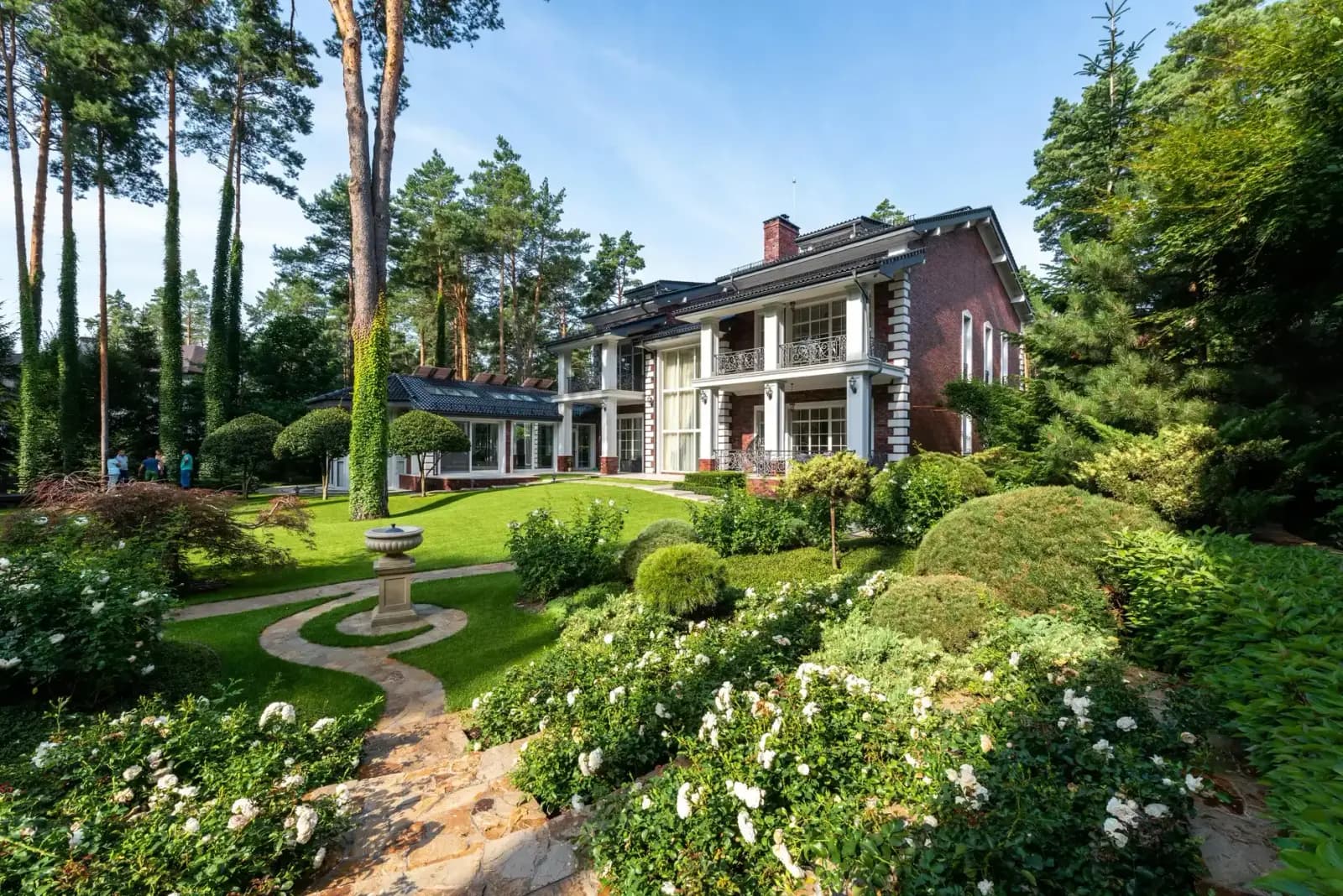
For Atlanta buyers who want mountain living without leaving Georgia, Big Canoe occupies a category of its own. At over 8,000 acres in the foothills of the North Georgia mountains, with more than 35 miles of trails, three lakes, 27 holes of golf, and a gated infrastructure built for full-time living, it is one of the largest and most comprehensively developed private mountain communities in the Eastern United States. According to the Big Canoe Property Owners Association, the community has more than 4,000 homesites and a year-round population that has grown substantially over the past decade.
Big Canoe is not a weekend cabin community. It is a full-service mountain enclave with its own internal road system, security gates, property owners' association, club facilities, and growing year-round residential base. It has attracted buyers from across the Atlanta metropolitan area, and increasingly from out of state, who are drawn by the combination of mountain scenery, privacy, recreational programming, and relative proximity to the city.
This guide covers the community's geography, homes, price ranges, club and POA structure, lakes, golf, trails, schools, commute realities, and the practical factors that should inform any serious buyer's evaluation.
8,000 Acres in the North Georgia Foothills
Big Canoe was developed beginning in the 1970s by Arvida Corporation, a Florida-based resort developer that also developed Boca West and other large-scale planned communities in the Southeast. The community's founding vision was a private mountain retreat accessible to Atlanta residents, with the natural terrain shaping the development rather than being flattened to accommodate it. That original vision has largely held. The community preserves a high percentage of its acreage as natural space, with homesites clustered in ways that maintain significant tree cover and mountain character.
The community straddles Pickens and Dawson counties, with the majority of the acreage in Pickens County. Elevations within the community range from approximately 1,800 feet at the lower areas near the entrance to over 3,200 feet at the higher ridges, providing meaningful temperature relief from Atlanta's summer heat, typically 10 to 15 degrees cooler at peak elevation.
The internal road network connects the community's various sections to the gates, club facilities, and recreational amenities. Unlike many gated communities that function like conventional suburbs behind a fence, Big Canoe's internal road system is a genuine network serving a community of mountain scale, with sections at different elevations, orientations, and characters. A home on the eastern ridge has a different experience than one near Lake Petit or in the lower valley areas.
Three Lakes: Petit, Disharoon, and Sconti
Big Canoe's three lakes are central to the community's identity and among its most desirable real estate assets. Lake Petit is the largest, at approximately 160 acres, with a sandy beach area, swimming area, fishing access, and non-motorized watercraft use. Motorized boats are not permitted on the lakes, a policy that preserves the quiet natural character and keeps the water quality high. Lake Petit is the community's social and recreational centerpiece during the warmer months.
Lake Disharoon and Lake Sconti are smaller and quieter, with more intimate character. Lakefront homesites on all three lakes carry significant premiums over comparable non-lakefront properties. Lake Petit lakefront homes typically command the largest premiums, in some cases $400,000 to $800,000 or more above what comparable homes without lake frontage sell for in the community. The supply of true lakefront property in Big Canoe is genuinely constrained, which has historically supported values on the best lake-adjacent lots.
The fishery in Big Canoe's lakes is managed by the POA with a focus on maintaining quality bass, bream, and trout populations. According to POA communications, regular stocking and management practices maintain healthy fish populations across all three lakes. Fishing is one of the most popular year-round recreational activities for full-time residents.
Golf, Club Amenities, and Member Life
Big Canoe offers 27 holes of golf organized across three nine-hole courses: Woodlands, Creekside, and Bear. The courses were designed to work with the mountain terrain rather than against it, featuring elevation changes, tree-lined fairways, and views that are unavailable at any flatland course. The layout rewards strategic play more than pure distance, a useful characteristic for a members' club where golfers of varying ability want to enjoy the game rather than be punished by it.
The golf and country club also operates a pool complex, tennis and pickleball courts, a fitness center, and dining facilities. The clubhouse dining has historically served as a genuine social hub for both full-time and weekend residents, particularly on weekends and holidays. Club membership is separate from POA dues and requires an additional annual investment. Buyers who plan to use the golf, pool, and club dining heavily should budget accordingly.
The community also has a marina facility on Lake Petit for kayak, canoe, and paddleboard storage and rental. Community events, fishing tournaments, tennis leagues, club dinners, holiday celebrations, run throughout the year and provide the social fabric that distinguishes Big Canoe from a collection of mountain cabins.
35+ Miles of Trails and Mountain Recreation
Big Canoe's trail network is the community's most underappreciated asset for many first-time visitors. Over 35 miles of marked and maintained trails cover terrain ranging from easy lakeside walks to moderately challenging ridge hikes with mountain views. The trail system connects most sections of the community, making it possible to walk or hike from many homesites to the lake, the club, or other amenities without using a vehicle.
Wildlife sightings in Big Canoe are a genuine part of daily life for full-time residents. White-tailed deer are common and visible year-round. Wild turkey populations are substantial. Black bears, characteristic of the Southern Appalachian foothills, are a regular presence, property owners are advised on proper food storage and waste management to minimize wildlife conflicts. Birding in the community is exceptional by regional standards, with species characteristic of the mountain/foothills transition zone.
Big Canoe's elevation provides meaningful summer climate relief compared to Atlanta. During peak summer heat when Atlanta's urban core is regularly above 90 degrees, the higher elevations in Big Canoe typically run in the upper 70s to low 80s. This temperature differential is one of the community's strongest lifestyle arguments for Atlanta residents who struggle with the city's summer heat.
Fall foliage in the North Georgia foothills typically peaks between mid-October and early November, depending on the season. Big Canoe's elevation and mixed hardwood forest, dominated by oak, hickory, maple, and sourwood, produces striking fall color that draws visitors from across the Atlanta region. For full-time residents, fall is consistently rated as the best season in the community.
Big Canoe Home Price Ranges (2025-2026)
- Entry-level cabins and older homes: $350,000 to $550,000. Typically older construction, smaller footprints, no lake access. Good starting points for buyers testing mountain living before committing to a larger purchase.
- Mid-range single-family homes: $600,000 to $1.2 million. Mountain views, updated kitchens and baths, comfortable sizes (2,500 to 4,000 sq ft). The most active segment of the market.
- Upper-tier custom homes: $1.2 million to $2.5 million. Custom construction or major renovations, premium views, high-end finishes. Some lake proximity but not necessarily direct frontage.
- Lakefront properties: $1.5 million to $3 million+. Lake Petit and Lake Disharoon frontage commands substantial premiums. Rare inventory that moves relatively quickly when priced correctly.
- Estate-scale properties: $2.5 million to $5 million+. Large lots, significant square footage, premium views, high-end custom finishes. Limited supply and a narrower buyer pool than the mid-range market.
- Property taxes: Pickens and Dawson county tax rates are generally lower than Fulton County, which benefits buyers comparing carrying costs across market areas.
POA Governance, Fees, and What They Cover
Big Canoe is governed by the Big Canoe Property Owners Association (POA), which every property owner joins automatically upon purchase. The POA is responsible for gate security and access management, internal road maintenance (Big Canoe has an extensive road network that represents a significant ongoing maintenance obligation), common area upkeep, and enforcement of community standards and covenants.
Annual POA assessments have typically ranged from approximately $3,000 to $5,000 per year depending on property type, though these figures are subject to change and buyers should request current fee schedules from the POA before closing. The assessments fund genuine infrastructure: maintaining 35+ miles of private roads, staffing multiple security gates 24 hours a day, managing common areas and trail systems, and operating the administrative functions of a community of Big Canoe's scale.
Club membership for golf, tennis, swimming, and dining is a separate purchase from POA membership. Membership tiers and pricing have varied over time, and buyers should obtain current membership options and costs directly from the Big Canoe Club. For buyers who plan to use the golf courses, pool, and club dining regularly, the combined POA plus club membership cost is a meaningful annual carrying cost that should be factored into any purchase analysis.
The POA also maintains architectural review standards for new construction and major renovations, designed to preserve the mountain character of the community. Any significant exterior changes require POA Architectural Review Committee approval, which is standard practice for gated communities of Big Canoe's type.
Primary Residence vs. Second Home: How the Market Has Evolved
Big Canoe's demographic composition has shifted meaningfully over the past decade. Historically, the community leaned heavily toward second homes and weekend retreats for Atlanta professionals and retirees maintaining a primary residence in-town. That balance has changed. The remote work transition of the early 2020s brought a significant wave of full-time residents to Big Canoe, Atlanta professionals who realized they could live in the mountains permanently rather than just on weekends.
The community's infrastructure has evolved alongside this demographic shift. Jasper, the Pickens County seat approximately 15 minutes from Big Canoe's main gate, has grown in retail, dining, and medical services. Piedmont Healthcare operates medical facilities in the area, and the broader Canton-Jasper corridor has developed retail and restaurant options that make everyday living considerably more convenient than it was for earlier generations of Big Canoe residents.
For buyers considering Big Canoe as a primary residence, the honest considerations are commute (see below), schools, and the psychological reality of mountain living in a community that is genuinely remote by Atlanta standards. For buyers considering it as a second home, the considerations shift to carrying costs, how often you will realistically use it, and whether the combination of POA fees, club membership, and property taxes is justified by your usage patterns.
Commute Reality and North Georgia Weather
The drive from Big Canoe to Buckhead takes 75 to 95 minutes under normal conditions via GA-400 and Highway 53. During the peak afternoon commute southbound on GA-400, it can approach or exceed two hours. The commute north from Atlanta to Big Canoe on Friday evenings is notoriously congested, with the GA-400 corridor backed up as far south as Roswell in the summer and fall months.
Big Canoe is not on MARTA, there is no commuter rail option, and the GA-400 Express Lanes provide limited benefit to drivers heading to the mountains since the congestion is typically south of where the express lane access points are located. A car is required for every trip outside the community, including routine grocery shopping (Jasper has a Publix and standard retail), medical appointments, and school runs to schools in town.
North Georgia mountain weather deserves specific attention from Atlanta buyers who are accustomed to the city's climate. Big Canoe receives more winter precipitation than Atlanta, including occasional snow accumulations and ice events that can make the approach roads treacherous. The community's internal roads are maintained by the POA, but Highway 53 and GA-400 can be problematic during significant winter weather events. Buyers who have never driven in light snow or icy mountain conditions should think carefully about this factor, particularly if they plan to live at Big Canoe year-round.
Broadband access has improved substantially in recent years with expanded fiber and fixed wireless options serving parts of the community. However, service quality and availability varies by specific location within Big Canoe's extensive footprint. Buyers who depend on reliable high-speed internet for remote work should verify actual available service at their specific property address before purchasing.
Frequently Asked Questions
Where is Big Canoe and how far is it from Atlanta?
Big Canoe is a gated mountain community located in the foothills of the North Georgia mountains, straddling Pickens and Dawson counties. It sits approximately 55 to 75 miles north of Atlanta, with the drive from Buckhead or Midtown typically ranging from 75 to 100 minutes depending on traffic and which entrance you use. The primary entry is via Highway 53 near Jasper in Pickens County. The drive north on GA-400 to the Cumming area and then west on Highway 53 is the most common route from Atlanta's northern suburbs.
What are home prices like in Big Canoe?
Big Canoe's real estate market spans a wide range. Entry-level mountain cabins and older homes typically start around $350,000 to $550,000. Mid-range single-family homes, particularly those with mountain views, lake access, or recent renovations, typically fall between $600,000 and $1.2 million. Higher-end custom homes and lakefront properties generally range from $1.2 million to $3 million or more. The community's most premium properties, large custom estates with direct lakefront on Lake Petit or Lake Disharoon, mountain views, and luxury finishes, have sold above $3 million. Property taxes in Pickens and Dawson counties are generally favorable compared to Fulton County, which is a meaningful factor for buyers evaluating carrying costs.
Is Big Canoe primarily a second home or primary residence community?
Big Canoe has historically attracted both second-home buyers and primary residents, with the mix shifting over time. For much of its history, the community leaned toward second homes and weekend retreats for Atlanta-area professionals. That mix has shifted meaningfully toward primary residence ownership over the past decade, accelerated significantly by the remote work shift of the early 2020s. Today, the community has a substantial and growing year-round population with full-time residents who work remotely, retirees, and semi-retirees who have made Big Canoe their primary home. The community's infrastructure, medical facilities in Jasper, schools in Pickens County, and everyday retail, has evolved to accommodate a larger full-time population.
What are the POA fees and club membership costs at Big Canoe?
Big Canoe is governed by the Big Canoe Property Owners Association (POA), which charges annual assessments covering road maintenance, security staffing, common area upkeep, and access to certain amenities. Annual POA fees have typically ranged from approximately $3,000 to $5,000 per year depending on property type, though buyers should verify current fee schedules directly with the Big Canoe POA before purchasing. Club membership for golf, swimming pools, tennis, and dining is separate from the POA assessment and has typically added $2,000 to $6,000 or more annually depending on membership level. Buyers should budget for both POA assessments and any club membership they intend to use as ongoing carrying costs.
How are the lakes at Big Canoe?
Big Canoe has three lakes: Lake Petit (the largest, at approximately 160 acres), Lake Disharoon, and Lake Sconti. Lake Petit is the centerpiece of water recreation in the community, with a sandy beach area, kayaking, fishing, and non-motorized watercraft use. Motorized boats are generally not permitted on the lakes, preserving their quiet, natural character. Lakefront lots on Lake Petit and Lake Disharoon command significant premiums over comparable non-lakefront homes in the community. Fishing in Big Canoe's lakes has historically produced quality bass, bream, and trout, and the community maintains the lakes under a fisheries management program.
What golf is available at Big Canoe?
Big Canoe offers 27 holes of golf across three nine-hole courses: Woodlands, Creekside, and Bear. The courses were designed to take advantage of the mountain terrain, with elevation changes, tree-lined fairways, and mountain views. The layout and conditioning are generally well-regarded for a private mountain community club rather than a destination-caliber resort course. Club membership is required to access the golf courses. The golf and country club also includes a pool complex, tennis and pickleball courts, a fitness center, and a dining facility that serves as a social hub for the community's full-time and weekend residents.
What schools serve Big Canoe residents?
Big Canoe straddles Pickens and Dawson counties, and school assignments vary based on which side of the county line a property sits. Pickens County School District serves the larger portion of the community, with properties zoning into Tate Elementary, Pickens Middle School, and Pickens High School. Dawson County School District serves the smaller Dawson County portion of the community. Both are smaller districts compared to Fulton or Cobb counties, with a more rural character. Buyers accustomed to the higher-resource suburban districts serving Atlanta's northern suburbs should research these districts carefully. Some Big Canoe residents enroll in private schools in Canton, Jasper, or make longer commutes to metro-area private schools.
What is the commute from Big Canoe to Atlanta like?
The commute is Big Canoe's most significant practical tradeoff for buyers who need regular access to Atlanta's employment centers. The drive to Buckhead typically runs 80 to 95 minutes under normal conditions and can approach two hours or more during peak commute hours on GA-400. This is generally not practical as a daily commute for most buyers. Big Canoe suits buyers who work remotely, travel by air frequently (the drive to the Airport is roughly 90 to 110 minutes), have reduced in-office requirements, or have transitioned into retirement or semi-retirement. Notably, the community's appeal for remote workers has strengthened considerably as broadband infrastructure in the North Georgia foothills has improved, though buyers should verify specific broadband availability at individual properties.
What trails and outdoor recreation does Big Canoe offer?
Big Canoe's trail network is extensive by any measure, with more than 35 miles of marked trails covering a wide range of terrain from easy lakeside walks to challenging ridge hikes with mountain views. The community's elevation, which ranges from approximately 1,800 to 3,200 feet above sea level, provides cooler temperatures than Atlanta during summer months, typically 10 to 15 degrees cooler at peak altitude. In addition to hiking, the community offers tennis, pickleball, fishing, kayaking, cycling on its internal roads, and organized recreational programming through the club. Wildlife is abundant, with regular sightings of white-tailed deer, wild turkey, black bear, and native birds characteristic of the Southern Appalachian foothills.
How does North Georgia mountain weather differ from Atlanta?
Big Canoe's mountain elevation means notably cooler summers, more dramatic fall foliage, and meaningfully more winter precipitation than Atlanta. Summer high temperatures in the community typically run 10 to 15 degrees cooler than Atlanta's urban core, making outdoor activities comfortable well into the afternoon during July and August. Fall foliage in the North Georgia foothills typically peaks in late October, a week or two before Atlanta's peak. Winter brings occasional ice storms and rare snow accumulations that can make mountain roads treacherous, Big Canoe's internal road network is maintained, but the approach roads from the highway can be problematic during severe weather. Buyers from Atlanta who are not accustomed to driving in occasional winter weather conditions should factor this into their evaluation.
Interested in Big Canoe or Atlanta Mountain Properties?
Big Canoe is a genuinely distinctive community with its own market dynamics. Our team can help you evaluate specific properties, understand current POA and club fee structures, and compare Big Canoe against other Atlanta-area options that might fit your goals.
Talk to a Luxury Market Specialist
Sources
- Big Canoe Property Owners Association (bigcanoepoa.org), Community governance, POA fee schedules, trail network, and community regulations.
- Pickens County Tax Assessor's Office, Property tax records and assessment data for Pickens County properties within Big Canoe.
- Dawson County Tax Assessor's Office, Property tax records for Dawson County portions of the community.
- Pickens County School District and Dawson County School District, School zone assignments and enrollment information.
- Georgia Department of Transportation, GA-400 traffic data and travel time estimates.
- National Weather Service (Peachtree City, GA), Climate data for North Georgia foothills elevation ranges.
Price ranges reflect market conditions as of early 2026. POA and club fees are subject to change; verify current schedules with the Big Canoe POA and Big Canoe Club before purchasing. This article is for informational purposes only.
Disclaimer: This article is for informational purposes only and does not constitute real estate, financial, or legal advice. Price ranges, POA fees, club membership costs, and school zone assignments are subject to change. Always verify current information with the Big Canoe POA, the Big Canoe Club, and a licensed real estate professional before making any purchase decisions. The Luxury Realtor Group is a licensed Georgia real estate brokerage.