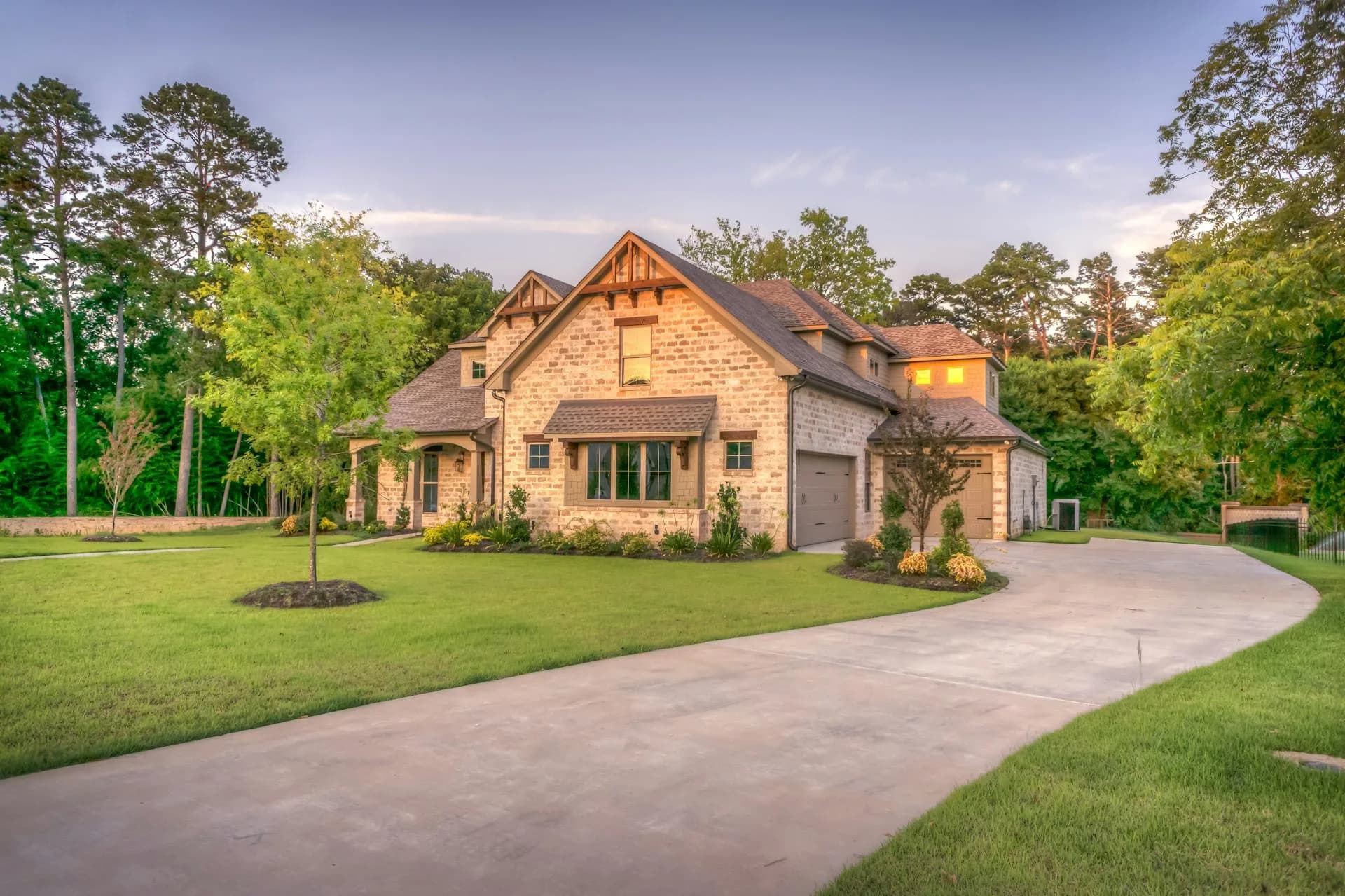
Most luxury homes around Atlanta compete on the same terms: square footage, finishes, location, and view. The rarest estates do not. They sell on something harder to replicate, whether that is controlled access and privacy, the land and facilities to keep horses, or frontage on water with the right to build a dock. These are the typologies at the very top of the metro market, and because each turns on features a conventional home does not have, each is bought, valued, and underwritten differently.
This guide walks through three of metro Atlanta's rarest estate typologies, gated compounds and communities, equestrian estates, and waterfront and lakefront trophies. For each, it covers where the inventory concentrates, what drives the price, and the practical considerations that matter most before you buy. Treat the figures here as approximate market ranges as of 2026 rather than promises, and confirm specifics for any individual property, because in thin markets the property-level details often matter more than the neighborhood average.
A note on how to read this: these are descriptions of property types and their objective features and costs, not of who owns or lives in them. The value of a rare estate comes from what it physically is and what its land and rights allow, and that is the lens this guide uses throughout.
Gated Estates and Compounds: Access as the Asset
The gated typology comes in two forms around Atlanta, and they are worth separating because they price and trade differently. The first is the private gated compound, a single estate set behind its own gate and walls on a large lot. These cluster in the most established Buckhead enclaves, particularly the streets in and around Tuxedo Park, where a premier address, mature grounds, and assured privacy combine into one of the city's highest price tiers. What a buyer pays for here is not just the house but the buffer from the street and the curated setting around it.
The second form is the guard-gated community, where many estates sit inside a manned perimeter with around-the-clock security. The best-known example in the northern suburbs is the Country Club of the South in Johns Creek, described as a roughly 900-acre development with a 24-hour guarded gatehouse, multiple manned entrances, and several hundred custom estates. The appeal is a consistent standard of access control and upkeep across an entire community rather than a single lot. For a broader look at this category, our guide to Atlanta gated communities covers how these enclaves are structured.
On price, the two forms separate clearly, and these are approximate ranges as of 2026. Inside the Country Club of the South, reported market data showed a median sale price in the high $1 millions in late 2025, with active listings commonly running from roughly $1 million into the $3 million to $4 million range. Private gated compounds in the Tuxedo Park area sit well above that, frequently in the high single-digit millions and up, because they layer acreage and a premier Buckhead address on top of the privacy itself. Treat these as illustrative figures from reported listing and sale data, not guarantees, since an individual estate can fall outside the range in either direction.
Equestrian Estates: Land and Facilities Drive the Value
Metro Atlanta's equestrian market centers on Milton in north Fulton County, which the city formally recognizes with an official Equestrian Community designation. Adjacent areas in north Fulton and neighboring Cherokee County also hold acreage suited to horses. What distinguishes this typology is that the house is often not the main event. Buyers are evaluating the land and the equestrian facilities first: pasture and paddocks, a barn or stable, frequently a riding arena, and the acreage to support them. Properties commonly range from hobby-farm parcels into larger estates with full facilities on substantial acreage.
Pricing tracks the land and the facilities more than the finishes, and these are approximate as of 2026. Equestrian properties in and around Milton commonly run from roughly the low seven figures into the multi-million range, with larger acreage and complete facilities pushing well past that. Two estates with similar houses can price very differently when one has a modern center-aisle barn and a regulation arena and the other has basic outbuildings. The specialized improvements, footing, fencing, water, drainage, and barn construction, carry real value, which is exactly why they deserve close inspection rather than a quick walkthrough.
The flip side of those facilities is that they create obligations a standard luxury home does not. Keeping horses introduces liability exposure, so owners typically need specialized coverage beyond a standard homeowners policy, often including equine or farm liability, and should confirm limits with a licensed insurance agent. Acreage means more to maintain, and barns, arenas, and fencing are ongoing costs. Local zoning and any agricultural or conservation designation can affect permitted use and taxation, and water and manure management may be regulated. The typology rewards buyers who budget for operating costs and confirm the rules that apply to the specific parcel.
Waterfront and Lakefront Trophies: The Water Is the Premium
Waterfront is not one market but several, and they behave differently. Lakefront on the major reservoirs is the most recognized trophy category, anchored by Lake Lanier north of the city and Lake Burton in the north Georgia mountains. River frontage along the Chattahoochee is a separate type, found in upscale communities such as The River Club in Suwanee, though Chattahoochee frontage spans a wide range of price points and not all of it is ultra-luxury. The defining feature across all of them is the water and the rights and infrastructure attached to it, especially dock access, which can make two otherwise similar homes diverge sharply in value.
On pricing, water depth, dock status, and location drive the numbers, so treat these as approximate as of 2026. On Lake Lanier, shared-slip and community-access homes can start in the mid hundreds of thousands, private-dock homes commonly run into the low millions, and luxury estates reach into the several-million-dollar range, with top sales reported around the mid-$4 million area. Lake Burton, one of Georgia's most exclusive lakefront markets, runs higher at the top end, where premium waterfront is commonly in the low millions and trophy listings have been asking into the high single-digit millions. These are reported ranges, not guarantees.
The most consequential due-diligence item on any waterfront purchase is the dock. Lake Lanier is a US Army Corps of Engineers reservoir, and private docks require a Corps Shoreline Use Permit. The number of permitted docks is capped under the shoreline management plan, and when that cap is reached, no new permits are issued. Only shoreline classified for limited development can qualify, protected shoreline can never have a private dock, and permits are generally not transferable at sale, so a new owner typically must reapply. The practical lesson is to verify dock status and permit eligibility in writing, because a home marketed as waterfront does not always come with a usable or permitted dock.
Waterfront Due Diligence: Confirm Before You Commit
- Dock permit status: On a Corps reservoir like Lake Lanier, confirm whether a permitted dock exists, whether the shoreline classification allows one, and that you understand the reapplication process at sale. A usable dock is not guaranteed by the word waterfront.
- Water depth and frontage: Deep water that supports a boat year-round and usable frontage materially affect value. Verify both rather than relying on listing language.
- Riparian rights and boundaries: Georgia generally follows a reasonable-use riparian doctrine, and the property line at the water can depend on whether the water is navigable. Have a Georgia real estate attorney review boundaries and easements.
- FEMA flood zone and insurance: Confirm the flood zone for the specific parcel and get a flood insurance quote up front. A high-risk designation can trigger a mandatory flood insurance requirement on a federally backed mortgage.
- River versus lake risk: Riverfront and creekfront respond to rainfall and runoff differently than lakefront on a managed reservoir. Ask about historical water levels and drainage for the property.
When Typologies Stack: The Woodbine Example
The very top of the market is often where these typologies overlap, and a single property carries features from more than one of them. A useful anchor example is Woodbine, at 881 West Conway Drive NW in Buckhead. According to WSB-TV and The Real Deal, the estate came to market in November 2025 listed at $25 million, reported at the time as one of the most expensive homes for sale in Atlanta. The property spans roughly 17 acres and includes three spring-fed private lakes along with extensive grounds.
What makes a property like this instructive is how it stacks value. It is gated and private, it sits on substantial acreage rare for an in-town Buckhead address, and it has its own water features. Each of those is a premium on its own, and together they push the price far above a conventional luxury home of similar size. Woodbine is an anchor example rather than a typical listing, useful precisely because it shows how privacy, land, and water compound at the highest end of the market. Most rare estates carry one of these features strongly; only a handful carry several at once.
How to Evaluate a Rare Typology as a Buyer
The common thread across all three typologies is that they trade in thin markets. There are only so many gated Buckhead compounds, equestrian estates with full facilities, or trophy lakefront homes with permitted deep-water docks available at any given time, and the buyer pool for each is correspondingly small. That changes how you should approach valuation. With few comparable sales, pricing tends to be more property-specific than neighborhood-driven, which means a careful read of the few comps that exist matters more than a broad market average.
Thin liquidity cuts both ways. It can mean longer marketing periods and more negotiable pricing on the buy side, but it also means the right property may not come along often, which rewards patience over settling for a near miss. The practical approach is to define which features actually matter to you, the level of privacy, the specific equestrian facilities, or the dock and water depth, and then underwrite the property on those terms rather than on headline price alone.
Because the value drivers are specialized, this is a category where local guidance earns its keep. An agent who understands the specific typology can help you read comparable sales correctly, flag the due-diligence items that matter, and avoid overpaying for features that look impressive but underperform on inspection. If you are weighing a gated, equestrian, or waterfront purchase, you can connect with an agent to talk through your priorities, and our Buckhead market overview is a useful starting point for the gated end of the spectrum.
Three Typologies at a Glance (Approximate, as of 2026)
- Gated communities. Guard-gated example: Country Club of the South, Johns Creek. Reported median sale price in the high $1 millions in late 2025; active listings commonly roughly $1 million to $3 to $4 million.
- Gated Buckhead compounds. Private estates behind their own gates, concentrated around Tuxedo Park. Frequently high single-digit millions and up, driven by acreage, privacy, and address.
- Equestrian estates. Centered on Milton in north Fulton, with adjacent north Fulton and Cherokee acreage. Commonly low seven figures into the multi-million range, with facilities and acreage driving price.
- Lake Lanier waterfront. Shared-slip and community access from the mid hundreds of thousands; private-dock homes into the low millions; luxury estates into the several-million range.
- Lake Burton waterfront. One of Georgia's most exclusive lakefront markets; premium waterfront commonly low millions, trophy listings asking into the high single-digit millions.
Frequently Asked Questions
What makes a gated estate or compound different from a typical luxury home?
A gated estate trades on controlled access and assured privacy rather than square footage alone. Around Atlanta, this typology shows up two ways. The first is the private gated compound, a single estate set behind its own gate and walls on a large lot, common on streets in the Tuxedo Park area of Buckhead. The second is the guard-gated community, where many estates sit inside a manned perimeter with around-the-clock security, as at the Country Club of the South in Johns Creek, which is described as a roughly 900-acre development with a 24-hour guarded gatehouse and multiple manned entrances. What buyers pay for is the access control, the buffer from the street, and the curated setting, which is why these properties tend to price at a premium to comparable ungated homes.
How much do gated estates in metro Atlanta typically cost?
It depends heavily on whether you mean a private Buckhead compound or a guard-gated community, and prices change over time, so treat any figure as approximate as of 2026. Inside the Country Club of the South, market data reported a median sale price in the high $1 millions in late 2025, with active listings commonly running from roughly $1 million into the $3 million to $4 million range. Private gated compounds in the Tuxedo Park area of Buckhead sit well above that, frequently in the high single-digit millions and up, because they combine acreage, privacy, and a premier address. These are illustrative ranges drawn from reported listing and sale data, not guarantees, and an individual property can fall outside them.
Where are equestrian estates concentrated near Atlanta?
The center of metro Atlanta's equestrian market is Milton in north Fulton County, which the city itself recognizes with an official Equestrian Community designation. Adjacent areas in north Fulton and neighboring Cherokee County also include acreage suited to horses. These estates are defined less by the house and more by the land and facilities: pasture and paddocks, a barn or stable, often a riding arena, and the acreage to support them. That is why an equestrian estate is evaluated differently from a standard luxury home. The improvements that matter most, like footing, fencing, water, and barn construction, are specialized, and a buyer who actually keeps horses should have those facilities assessed by someone who knows what to look for.
What do equestrian estates cost, and what drives the price?
Pricing varies widely with acreage and the quality of the equestrian facilities, so figures here are approximate as of 2026. Equestrian properties in and around Milton commonly run from roughly the low seven figures into the multi-million range, with larger acreage and full facilities pushing well past that. The price is driven by land area, the condition and scale of the barn and arena, fencing and footing, water and drainage, and proximity to trails or competition venues. Two estates with similar houses can price very differently if one has a modern center-aisle barn and a regulation arena and the other has basic outbuildings. Because the facilities carry real value and real maintenance cost, they deserve close scrutiny before you commit.
What should a buyer know about owning and insuring an equestrian property?
Equestrian estates carry obligations a standard luxury home does not. Keeping horses introduces liability exposure, so owners typically need specialized coverage beyond a standard homeowners policy, often including equine or farm liability, and should confirm coverage limits with a licensed insurance agent. Acreage means more land to maintain, and barns, arenas, and fencing are ongoing expenses. Local zoning and any agricultural or conservation designations can affect how the land may be used and taxed, and water and manure management may be regulated. None of this is a reason to avoid the typology, but it is a reason to budget for operating costs and to confirm the rules that apply to your specific parcel before buying.
What kinds of waterfront properties exist around Atlanta?
Waterfront breaks into a few distinct markets, and each behaves differently. Lakefront on the major reservoirs, primarily Lake Lanier north of the city and Lake Burton in the north Georgia mountains, is the most recognized trophy category. River frontage along the Chattahoochee is a separate type, found in communities such as The River Club in Suwanee, though Chattahoochee frontage spans a wide range of price points and not all of it is ultra-luxury. The defining feature of waterfront is the water itself and the rights and infrastructure attached to it, especially dock access. Because those rights are governed by rules that vary by body of water, two homes with similar houses can differ sharply in value based on what the shoreline allows.
How much does waterfront property cost on Lake Lanier and Lake Burton?
Prices vary with water depth, dock status, and location, so treat these as approximate as of 2026. On Lake Lanier, shared-slip and community-access homes can start in the mid hundreds of thousands, private-dock homes commonly run into the low millions, and luxury estates reach into the several-million-dollar range, with top sales reported around the mid-$4 million area. Lake Burton, one of Georgia's most exclusive lakefront markets, runs higher at the top end, where premium waterfront is commonly in the low millions and trophy listings have been asking into the high single-digit millions. These are reported ranges, not guarantees, and an individual property can sit above or below them depending on its dock, depth, and frontage.
Do waterfront homes come with the right to build a dock?
Not automatically, and this is one of the most important due-diligence items on any waterfront purchase. Lake Lanier is a US Army Corps of Engineers reservoir, and private docks require a Corps Shoreline Use Permit. The number of permitted docks is capped under the shoreline management plan, and when the cap is reached, no new permits are issued. Only shoreline classified for limited development can qualify, while protected shoreline can never have a private dock, and permits are generally not transferable at sale, so a new owner typically must reapply. The practical takeaway is to verify dock status and permit eligibility in writing before you buy, because a home marketed as waterfront does not necessarily come with a usable or permitted dock.
What are riparian rights and how do they affect a Georgia waterfront purchase?
Riparian rights are the rights of a property owner whose land borders a watercourse to make reasonable use of that water. Georgia generally follows a reasonable-use riparian doctrine, and for non-navigable waters, ownership often runs toward the center of the watercourse, while for navigable waters the bed is public and ownership typically runs to the low-water mark. The practical effect for a buyer is that what you can do at the water's edge, and where your property line actually sits, depends on the classification of the water and the rules that apply to it. Because these distinctions can be technical, a Georgia real estate attorney should review boundaries, easements, and any shoreline or riparian questions before closing.
How serious is flood risk on Atlanta waterfront and riverfront property?
It is a real consideration that should be priced in, not assumed away. FEMA designates flood zones from historical and topographic data, and a high-risk zone designation generally triggers a mandatory flood insurance requirement as a condition of a federally backed mortgage. Riverfront and creekfront property responds to rainfall and runoff differently than lakefront on a managed reservoir, so the risk profile is not uniform across waterfront. Before buying, confirm the FEMA flood zone for the specific parcel, get a flood insurance quote so the cost is known up front, and ask about historical water levels and drainage. Building these costs into your underwriting is part of buying waterfront responsibly.
Is the Woodbine estate a good example of a multi-typology trophy property?
Yes, it illustrates how the rarest estates can blend typologies. Woodbine, at 881 West Conway Drive NW in Buckhead, hit the market in November 2025 listed at $25 million, and was reported as one of the most expensive homes for sale in Atlanta at the time. According to WSB-TV and The Real Deal, the property spans roughly 17 acres and includes three spring-fed private lakes along with extensive grounds. A property like this is gated and private, has its own water features, and sits on substantial acreage, which is why it commands a price far above a conventional luxury home. It is an anchor example rather than a typical listing, useful for understanding how privacy, land, and water stack to create value at the very top of the market.
How liquid are these rare typologies, and what does that mean for a buyer?
By definition, rare typologies trade in thin markets. There are only so many gated Buckhead compounds, equestrian estates with full facilities, or trophy lakefront homes with permitted deep-water docks at any given time, and the pool of buyers for each is correspondingly small. That can mean longer marketing periods and pricing that is more property-specific than neighborhood-driven, which cuts both ways. For a buyer, thin liquidity argues for careful valuation, thorough due diligence on the specialized features that drive value, and patience to wait for the right property rather than overpaying for a near miss. Working with an agent who understands the specific typology helps you read comparable sales correctly when there are few of them.
Looking for a Gated, Equestrian, or Waterfront Estate?
These rare typologies trade in thin markets where property-level details drive value. Our team can help you read the comps, run the due diligence, and find the right property rather than the nearest one.
Talk to a Local Agent
Sources
- WSB-TV and The Real Deal, Reporting on the Woodbine estate at 881 West Conway Drive NW, Atlanta, including the $25 million list price, approximately 17 acres, three spring-fed private lakes, and the November 2025 listing.
- Country Club of the South market data, Reported late-2025 median sale price and active-listing ranges for the guard-gated Johns Creek community, including its roughly 900-acre development and 24-hour guarded gatehouse description.
- City of Milton, Georgia, Official Equestrian Community designation and equestrian-area information for the city of Milton in north Fulton County.
- Lake Lanier and Lake Burton market guides, Reported price ranges for shared-slip, private-dock, and luxury waterfront properties on Lake Lanier and Lake Burton as of 2025 to 2026.
- US Army Corps of Engineers, Mobile District, Lake Sidney Lanier Shoreline Management Plan and Shoreline Use Permit program, including dock caps, shoreline classification, and permit transferability.
- O.C.G.A. and FEMA / Georgia EPD, Georgia riparian-rights doctrine and floodplain references, and FEMA flood-zone and mandatory-flood-insurance framework for waterfront property.
Price ranges reflect reported market observations and are approximate as of 2026, not guarantees of value. Market conditions, permit rules, and regulations are subject to change. This article is for informational purposes only.
Disclaimer: This article is for informational purposes only and does not constitute legal, financial, tax, or insurance advice. Property values, permit rules, riparian rights, flood-zone designations, zoning, insurance terms, and tax treatment may change and depend on individual circumstances. Always verify dock-permit eligibility, flood-zone status, boundaries, and applicable regulations for a specific property, and consult a licensed insurance agent, a qualified tax professional, and a Georgia real estate attorney before buying. The Luxury Realtor Group is a real estate brokerage and does not provide legal, tax, or insurance advisory services. The Luxury Realtor Group is an Equal Housing Opportunity provider. This article describes property types and their objective features and costs and is not intended to indicate any preference, limitation, or discrimination based on race, color, religion, sex, handicap, familial status, national origin, or any other protected class.