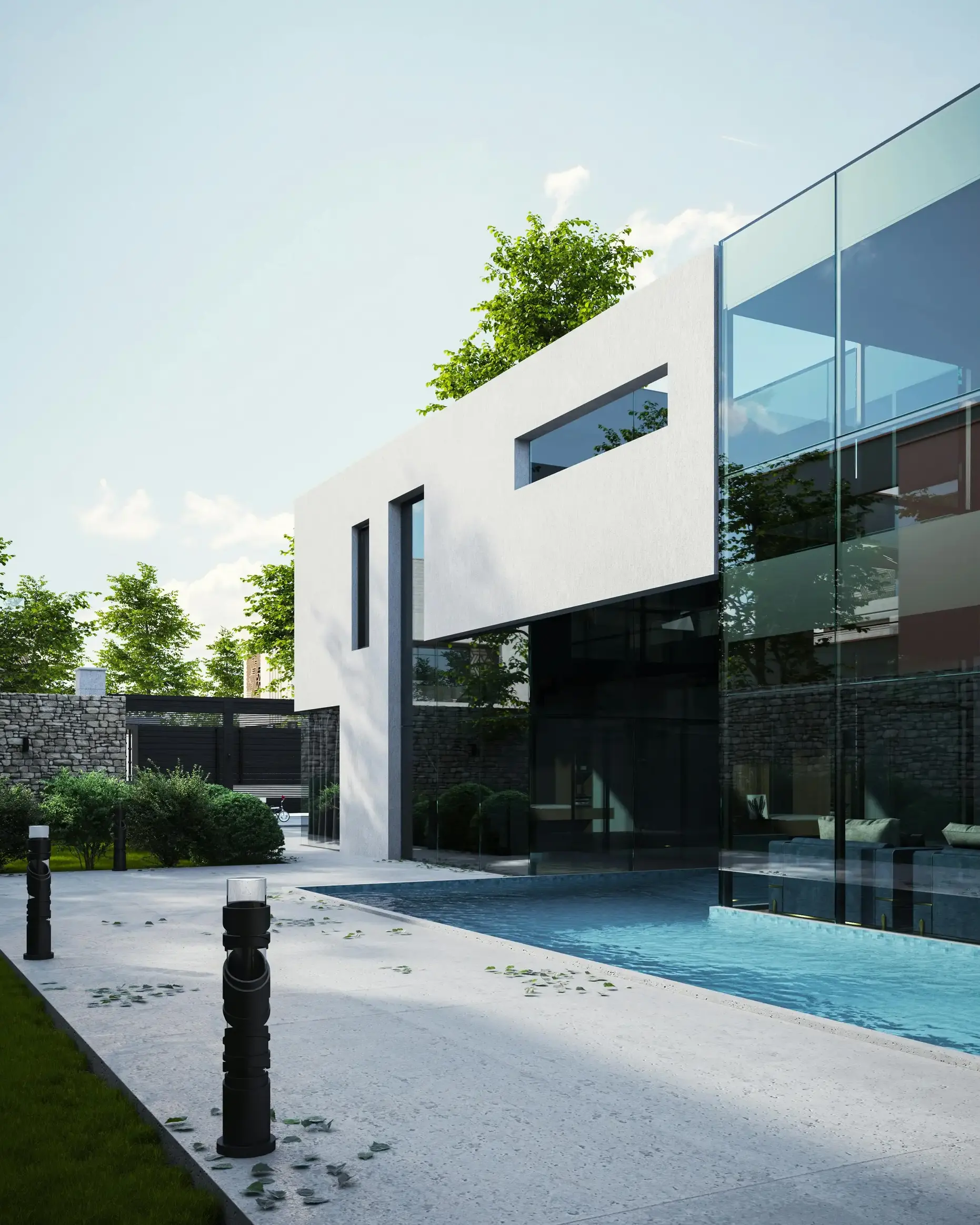
Water has a way of transforming outdoor spaces. The sound of a waterfall masks traffic noise. The sight of light playing across a fountain surface creates a focal point that draws the eye and calms the mind. A well-designed water feature turns a luxury home's outdoor area from a nice yard into an experience, something you want to sit near, entertain around, and come home to.
Atlanta's luxury market has embraced water features as a standard element of high-end landscape design. From formal tiered fountains in Buckhead front yards to natural stone waterfalls flowing into koi ponds in Sandy Springs backyards, water is showing up in thoughtful, integrated ways that add both aesthetic and functional value.
But water features also come with practical considerations that are specific to Georgia's climate: mosquito management, summer water temperature control, winterization, and ongoing maintenance. This guide covers the major types of water features used on Atlanta luxury properties, what they cost, how to maintain them, and what you should know before adding one to your home or evaluating a property that has one.
Fountain Types and Their Applications
Fountains are the most versatile water feature category, ranging from small courtyard bubblers to large estate-scale installations. The right fountain depends on your home's architecture, the available space, and the visual and auditory effect you want to create.
Tiered fountains are the classic choice for traditional Atlanta homes. A two or three-tier fountain in natural stone (limestone or cast stone) works beautifully in front entry courtyards, formal garden centers, or as a focal point in a circular driveway. These range from $3,000 to $15,000 installed, depending on size and material. They pair naturally with Georgian, Colonial, and Mediterranean architecture that is common in Buckhead, Druid Hills, and the established sections of Sandy Springs.
Wall fountains mount directly to a garden wall, retaining wall, or the exterior of the home. They are space-efficient and work well in smaller courtyards, side yards, or as part of an outdoor dining area where a freestanding fountain would take up too much room. Wall fountains range from $2,000 to $12,000 and can be crafted from stone, copper, or concrete to match the surrounding materials.
Disappearing fountains (also called bubbler fountains) feature water rising from a decorative element (a natural boulder, a stone urn, or a sculptural piece) and flowing down into a concealed basin filled with gravel. The water is recirculated by a pump hidden in the basin. These are popular on contemporary and transitional properties because they provide the visual and auditory benefits of water with minimal visual footprint and virtually no standing water. Costs range from $5,000 to $15,000.
Modern sheet-water features create a thin, even sheet of water flowing over a flat surface (often a dark stone or metal panel). These are striking on contemporary homes and commercial-influenced luxury designs. They require precision engineering to achieve a uniform water sheet and typically cost $10,000 to $30,000 depending on scale.
Waterfalls: Natural and Architectural
Waterfalls are the most dramatic water feature option, and they work particularly well on Atlanta properties because the region's rolling terrain and lush vegetation provide a natural context. A well-designed waterfall looks like it belongs in the Georgia piedmont landscape rather than something imported from a resort catalog.
Natural stone waterfalls use boulders and fieldstone to create a cascading water flow that mimics a natural stream. The best installations work with the existing grade of the property, using slopes and elevation changes to create a gravity-fed appearance (even though a pump is doing the actual work). Native stone like Georgia granite, Tennessee fieldstone, or Pennsylvania bluestone creates the most authentic look. These installations range from $10,000 to $40,000 depending on size, stone quality, and site conditions.
Pondless waterfalls are the most popular waterfall option in the Atlanta luxury market. Water flows over a constructed rock cascade and disappears into an underground reservoir rather than collecting in a visible pond. This eliminates the maintenance demands of a pond (no fish care, no algae management) while providing the visual and auditory benefits of falling water. The underground reservoir is filled with gravel and fitted with a pump that recirculates water to the top. Installation costs run $8,000 to $25,000.
Architectural waterfalls use clean lines, geometric forms, and manufactured materials (stacked stone veneer, concrete, stainless steel) to create a more modern effect. These pair well with contemporary luxury homes and pool environments. A common application is a sheer descent (a thin sheet of water falling from a raised wall into a pool or basin), which costs $5,000 to $15,000 to add to an existing pool or patio structure.
Koi Ponds: Living Water Features
Koi ponds add a living element to your landscape that no other water feature can match. Watching koi move through clear water is genuinely calming (there is research from the Journal of Environment and Behavior suggesting that watching fish reduces stress and lowers blood pressure). For homeowners who enjoy the hobby, koi keeping is deeply rewarding. But ponds also require more commitment and ongoing cost than any other water feature type.
Design considerations for Atlanta: Build the pond at least 3 feet deep (4 feet is better) to protect fish from both winter cold and summer heat. In Atlanta, summer water temperatures can exceed 85 degrees in shallow ponds, which stresses koi. Depth, shade, and aeration all help manage temperature. Include both sun and shade areas in the pond design. Use a quality biological filtration system, not just a mechanical filter, because warm water promotes bacterial growth that can harm fish. Plan for 1,000 gallons minimum for a starter pond; 3,000 to 5,000 gallons for a proper luxury installation.
Cost: A professionally installed koi pond with filtration, liner, stone edging, and a waterfall component typically costs $15,000 to $50,000 in the Atlanta market. Larger estate-scale ponds with extensive landscaping, bridges, and multiple waterfall elements can exceed $75,000. Ongoing costs include fish food, water treatments, filter media, electricity for the pump, and professional maintenance services ($200 to $500 per month if outsourced).
Wildlife interaction: Atlanta's wildlife will interact with your pond. Herons, raccoons, and the occasional hawk are all threats to koi. Most luxury installations include netting options, plant cover, and depth shelves that give fish places to hide. Motion-activated deterrents (sprinklers or lights) can discourage herons without harming them.
Mosquito Management in Georgia
This is the first question most Atlanta homeowners ask about water features, and the answer is more nuanced than a simple yes or no. Mosquitoes breed in still, stagnant water. Any water feature with active circulation (a running pump that keeps the water moving) will not support mosquito breeding. The larvae cannot develop in moving water.
However, there are edge cases to watch. The splash zones around waterfalls and fountains can create small puddles on flat surfaces where water pools but does not drain. Rock crevices in a waterfall can hold small amounts of still water. The top of a pond liner where it folds over the edge can create a hidden pocket of standing water. A basin that is not properly graded can have stagnant corners.
The solution is good design and regular maintenance. Ensure all water in the feature circulates. Grade surrounding surfaces so splash water drains back into the feature rather than pooling. Use BTI mosquito dunks (Bacillus thuringiensis israelensis) in pond environments; they are safe for fish, plants, and wildlife but kill mosquito larvae. Some koi pond owners also keep mosquitofish (Gambusia), which eat mosquito larvae aggressively.
According to the Georgia Department of Public Health, the most common mosquito breeding sites around homes are not decorative water features but rather bird baths, clogged gutters, plant saucers, old tires, and other containers that hold small amounts of standing water. A well-maintained water feature is typically not a mosquito risk.
Maintenance Requirements by Feature Type
Maintenance is the factor that most influences long-term satisfaction with a water feature. A feature that looks beautiful but requires more time and cost than you anticipated quickly becomes a source of frustration rather than enjoyment. Be honest about your maintenance tolerance before choosing a feature type.
Simple Fountains (Lowest Maintenance)
Weekly: remove debris and check water level. Monthly: clean pump intake, add algaecide or enzymatic cleaner. Seasonally: drain and clean basin, inspect pump. Annual cost: $200 to $500 in supplies. Winterize by draining when freezing temperatures are forecast.
Pondless Waterfalls (Low Maintenance)
Monthly: check pump operation, clear debris from basin grate, add water as needed (evaporation is significant in Atlanta summers). Quarterly: inspect pump for wear, clean intake. Annual cost: $300 to $600. One of the best maintenance-to-enjoyment ratios of any water feature.
Ornamental Ponds Without Fish (Moderate Maintenance)
Weekly: remove debris, check filtration, manage plant growth. Monthly: clean filters, test water quality, add treatments as needed. Seasonal: heavy cleaning in spring and fall. Annual cost: $500 to $1,500. Algae management is the primary ongoing challenge in Atlanta's warm climate.
Koi Ponds (Highest Maintenance)
Daily: feed fish, observe for health issues. Weekly: test water parameters (pH, ammonia, nitrite, nitrate), clean pre-filter. Bi-weekly: clean main filter media. Monthly: partial water change, plant maintenance. Annual cost: $2,000 to $6,000 (or $200 to $500 per month for professional service). Rewarding for enthusiasts but a real commitment.
See How Water Features Show to Atlanta Buyers
A quiet fountain often adds appeal, while a koi pond can read to buyers as a standing maintenance obligation. We can tell you which features tend to help a sale in your area.
Review a Water Feature Before I Installor call (770) 727-4052
Lighting: Extending the Experience to Night
Lighting transforms a water feature from a daytime amenity into an all-hours focal point. The interplay of light and water creates visual effects that are difficult to achieve with any other landscape element. For luxury homes where outdoor entertaining is a regular activity, lit water features set a mood that elevates the entire experience.
Underwater lighting: Submersible LED fixtures placed within fountains, ponds, or waterfall basins illuminate the water from within, creating a warm glow that is visible from a distance. Warm white (2700K to 3000K) is the most popular choice for traditional Atlanta homes. Color-changing RGB systems work for contemporary properties or pool environments but can look gimmicky on traditional homes. Budget $500 to $3,000 for underwater lighting depending on the number of fixtures and the system.
Uplighting on waterfalls: Fixtures positioned at the base of a waterfall or water wall that light the falling water from below. This creates a dramatic effect, especially on larger installations. The light catches individual droplets and streams, making the movement of the water more visible at night than during the day.
Landscape integration: The water feature lighting should be part of your overall landscape lighting plan, not a separate system. Path lights leading to the feature, accent lights on surrounding plantings, and downlights from overhead trees create a complete scene. A professional landscape lighting designer can create a plan that ties all elements together. Budget $3,000 to $10,000 for a complete lighting plan that includes the water feature and surrounding landscape.
The Sound Factor: Practical and Therapeutic
The acoustic benefits of water features are often as important as the visual ones, particularly in Atlanta's luxury neighborhoods where homes on Peachtree Road, near major intersections, or adjacent to commercial properties may face ambient noise from traffic, construction, or neighboring activities.
Water sounds work through a principle called auditory masking. The brain processes the consistent, natural sound of flowing water as background, and this background reduces the perceived volume of intermittent, jarring sounds like car horns, sirens, lawn equipment, and conversation. The effect is both psychological (the brain finds water sounds soothing) and physical (the broadband frequency spectrum of water noise genuinely masks other sounds).
Sound level by feature type: A small bubbler fountain produces a gentle, close-range sound suitable for courtyards and intimate seating areas. A 2 to 3 foot waterfall produces moderate sound that masks conversation-level noise within 10 to 15 feet. A 4 to 6 foot waterfall produces substantial sound that can mask traffic noise within 20 to 30 feet. Larger installations can be even more powerful. Work with your designer to calibrate the sound output to the noise you want to mask, keeping in mind that a feature that is too loud for its setting can be as annoying as the noise it was meant to cover.
Resale Impact and Buyer Perception
Water features have a positive but nuanced impact on luxury home resale values. According to the American Society of Landscape Architects, water features consistently rank in the top 5 most requested outdoor design elements for homes over $1 million. Buyers perceive them as luxury amenities that elevate the overall property.
The key factors that determine resale impact are quality and maintenance. A well-designed, professionally installed feature that integrates with the landscape adds perceived value of roughly 50% to 70% of its installation cost. A poorly maintained feature with algae-stained stone, a non-functioning pump, or visible deterioration actually detracts from value because buyers see it as an expense they will need to address.
If you are preparing to sell your luxury home and it includes a water feature, make sure it is fully operational, clean, and well-maintained before listing. The cost of a professional service visit ($200 to $500) is one of the highest-ROI pre-listing investments you can make for a home with water features.
If you are buying a home with an existing water feature, have your inspector evaluate the pump, filtration system, liner (if applicable), and overall condition. Deferred water feature maintenance can represent $2,000 to $10,000 in repair or replacement costs that should be factored into your offer analysis.
Adding Water to Your Atlanta Luxury Home
A water feature is one of the few landscape investments that engages multiple senses at once: the visual appeal of light and movement, the calming sound of flowing water, and the general sense of well-being that comes from being near water. For Atlanta luxury homeowners, the right water feature transforms outdoor living and adds a layer of quality that distinguishes a property.
The most successful installations start with honest conversations about maintenance tolerance, budget (both upfront and ongoing), and how the feature integrates with the property's overall design. A pondless waterfall may be a better choice than a koi pond for someone who loves the look of water but does not want the commitment of fish care. A simple bubbler fountain may be more appropriate than a multi-level waterfall for a smaller property.
Whether you are adding a water feature to an existing property or evaluating a home that has one, our team can help. We work with luxury landscape designers across metro Atlanta and can connect you with professionals who specialize in high-end water feature design and installation. Get in touch with us to discuss your property and your vision.
Frequently Asked Questions
How much does a water feature cost for a luxury home?
Costs vary widely based on type and complexity. A simple tiered fountain runs $2,000 to $8,000 installed. A wall fountain or disappearing fountain costs $5,000 to $15,000. A natural stone waterfall with a recirculating basin runs $10,000 to $40,000. A koi pond with proper filtration costs $15,000 to $50,000 or more depending on size and finish. A pondless waterfall (disappearing waterfall) is one of the most popular luxury options at $8,000 to $25,000. Large-scale custom installations with multiple elements, lighting, and automation can exceed $100,000. These estimates are for the Atlanta market and include installation, equipment, and materials.
Do water features attract mosquitoes in Atlanta?
Moving water does not attract mosquitoes. Mosquitoes breed in still, stagnant water. Any water feature with active circulation (a pump that keeps water flowing) will not support mosquito breeding. The key is ensuring that all water in the feature is moving. Areas of concern include the edges of ponds where water may pool behind rocks, overflow basins that do not drain properly, and features that are turned off for extended periods during warm weather. For added protection, mosquito dunks (BTI tablets) can be placed in pond areas without harming fish or plants. Regular feature maintenance and proper pump sizing eliminate mosquito issues in most cases.
How much maintenance do water features require in Atlanta?
Maintenance requirements depend on the type of feature. Simple fountains need weekly cleaning (removing debris, wiping down surfaces) and monthly water treatment to prevent algae. Budget $50 to $100 per month in supplies and 1 to 2 hours of weekly attention. Koi ponds require more intensive care: daily feeding, weekly water testing, filter cleaning every 2 to 4 weeks, seasonal plant maintenance, and periodic water changes. Many koi pond owners hire a professional service at $200 to $500 per month. Pondless waterfalls and disappearing features are the lowest maintenance option, needing only periodic pump checks and basin cleaning. All features need winterization in November and startup in March in the Atlanta climate.
Do water features add resale value to luxury homes?
Water features can add value, but the impact depends on quality and integration. A well-designed, professionally installed water feature that integrates with the overall landscape design is typically viewed positively by luxury buyers. According to the American Society of Landscape Architects, water features consistently rank among the top requested outdoor design elements for homes over $1 million. The resale impact is strongest when the feature is proportional to the property, well-maintained, and appears intentional rather than added as an afterthought. Poorly maintained or cheap-looking water features can actually detract from value. The general rule: a water feature that cost $15,000 to $30,000 to install may add $10,000 to $20,000 in perceived value if well-maintained.
What is a pondless waterfall?
A pondless waterfall (also called a disappearing waterfall) is a waterfall that flows into an underground reservoir rather than a visible pond. Water is pumped from the reservoir to the top of the waterfall, flows over rocks and boulders, and disappears back into the gravel-filled basin below. The advantages are: no standing water (a safety advantage, with no mosquito concerns), lower maintenance than a pond (no fish to feed, no algae management), smaller footprint, and lower cost than a full pond-and-waterfall combination. Pondless waterfalls are one of the most popular water features in the Atlanta luxury market because they provide the visual and auditory benefits of moving water with minimal maintenance commitment.
Can I have a koi pond in Atlanta's climate?
Yes. Atlanta's climate is well-suited to koi ponds. Winter temperatures rarely stay below freezing for extended periods, so koi typically survive outdoors year-round if the pond is at least 3 feet deep (which allows fish to stay below the ice line during the occasional hard freeze). Summer is the bigger concern: water temperatures above 85 degrees stress koi, and Atlanta can see extended periods of 90+ degree days. Shade (either from trees, pergola, or water plants), aeration, and proper pond depth all help manage summer temperatures. A quality filtration system is essential in Atlanta's climate because warm water promotes algae growth and bacterial issues that can harm fish.
What fountain types work best for Atlanta luxury homes?
The most popular fountain types in Atlanta's luxury market include: tiered fountains (classic, works well with Georgian and Colonial architecture), wall fountains (space-efficient, contemporary to traditional depending on design), disappearing fountains (water bubbles up over a decorative stone or urn and disappears into a gravel basin), and modern sheet-water features (water flowing over a flat surface, popular with contemporary homes). Material choices include natural stone (limestone, granite, slate), cast stone, copper, and concrete. For the best results, match the fountain style to your home's architecture and the overall landscape design. Oversized fountains on small properties look awkward; undersized ones on large estates look insignificant.
How do you light water features?
Water feature lighting transforms the experience from daytime only to a 24-hour amenity. The most effective techniques include: underwater LED lights (submersible fixtures that illuminate the water from within, creating a glowing effect), uplighting on waterfalls (fixtures positioned at the base that light the falling water), downlighting from trees or structures (creating a moonlight effect on the water surface), and path lighting along approaches (ensuring safe access and building anticipation). LED technology has made water feature lighting energy-efficient and low-maintenance. Color-changing LED systems are available but generally recommended only for contemporary designs. For traditional Atlanta homes, warm white (2700K to 3000K) creates the most natural and appealing effect.
What are the sound benefits of water features?
The sound of moving water is one of the primary reasons luxury homeowners install water features. Beyond aesthetic appeal, water sounds serve a practical function: they mask unwanted noise from traffic, neighbors, HVAC equipment, and other urban or suburban sounds. This effect is called auditory masking, and it is particularly valuable in Atlanta's luxury neighborhoods where homes on Peachtree Road, near I-285, or adjacent to commercial areas may have ambient noise levels that affect outdoor enjoyment. The volume and character of the sound depend on the feature type: a gentle bubbler creates a quiet, soothing background; a 4-foot waterfall produces a moderate, consistent sound that masks conversation-level noise; and a large multi-level waterfall can overpower most ambient sounds within 20 to 30 feet.
Should I turn off my water feature in winter in Atlanta?
It depends on the type. Simple fountains with small basins should be drained and turned off when temperatures are forecast to drop below freezing, because ice can damage the pump and crack the basin. Koi ponds should never be turned off completely in winter because the fish need the circulation for oxygen, but the waterfall component can be reduced or shut down to prevent ice buildup. Pondless waterfalls can generally run through Atlanta's mild winters because the underground reservoir is insulated from freezing. If temperatures drop into the teens (which happens a few times most Atlanta winters), even pondless features should be temporarily shut down. Spring restart typically happens in March and should include a full system check, pump inspection, and water treatment.
Interested in a luxury home with water features or adding one to your property?

Sources
- American Society of Landscape Architects (ASLA) - Residential landscape trends survey, water feature demand data, and design best practices.
- Georgia Department of Public Health - Mosquito breeding guidelines, standing water recommendations, and vector control information.
- Journal of Environment and Behavior - Research on the stress-reduction effects of watching fish and being near water features.
- Aquascape Inc. - Water feature installation cost data, maintenance guidelines, and product specifications for pond and waterfall systems.
- University of Georgia Extension Service - Landscape maintenance guidelines for Georgia, including water feature care in the Southeast climate.
- National Association of Realtors (NAR) - Outdoor feature impact on resale value and buyer preference data for luxury homes.
Cost estimates, maintenance requirements, and design specifications referenced in this article reflect conditions in the Atlanta metro area as of early 2026 and are subject to change. Actual costs depend on feature type, materials, site conditions, and contractor. This article does not constitute professional landscape design, construction, or financial advice. Consult qualified professionals for guidance specific to your property.
Disclaimer: This article is for informational purposes only and does not constitute professional landscape design, construction, pest control, or financial advice. Cost estimates are approximate and vary based on project scope, materials, and contractor. Resale value impacts are based on market data and are not guaranteed. The Luxury Realtor Group is a real estate brokerage and does not provide landscape design, construction, or pest control services. Consult with qualified professionals for guidance specific to your property.