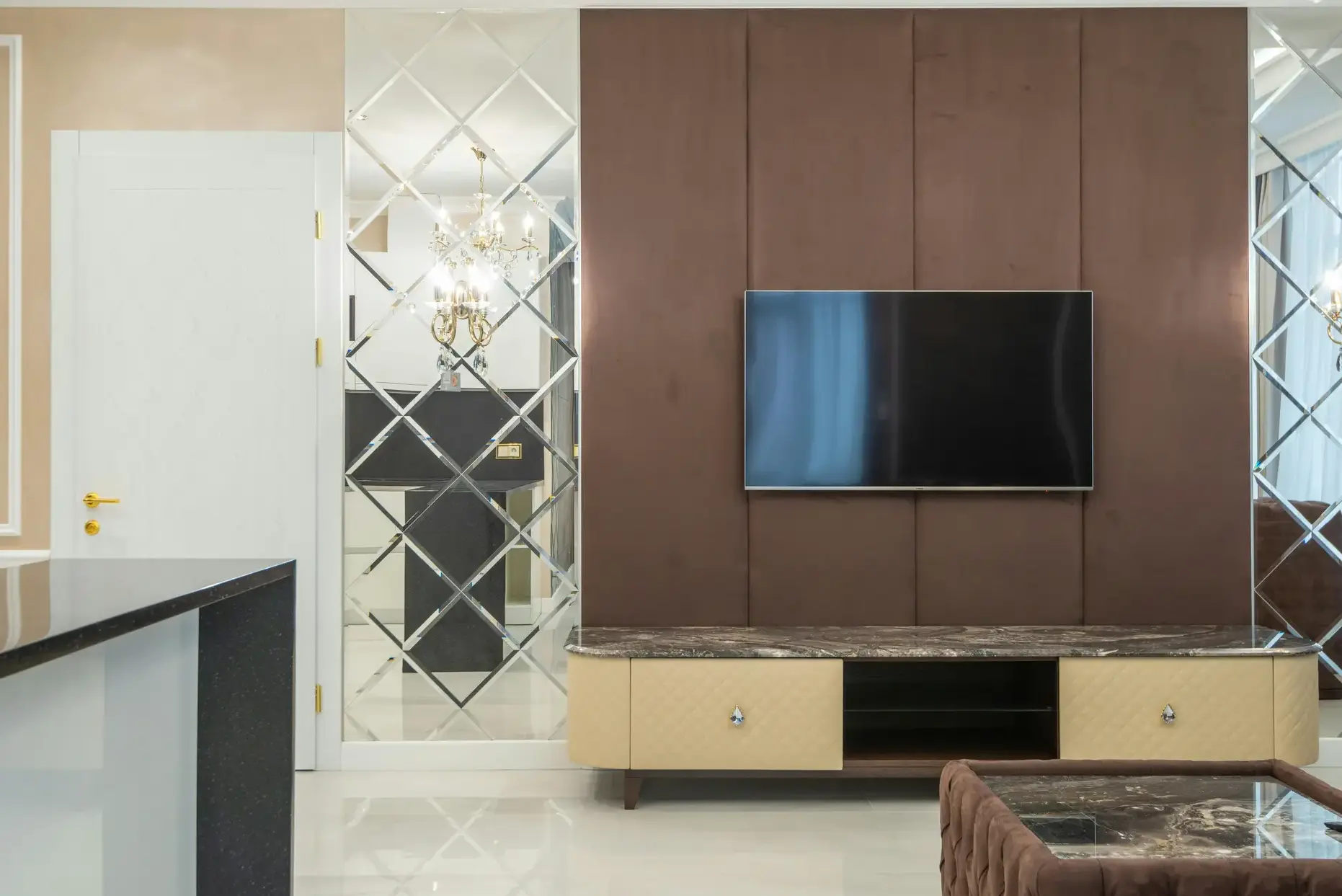
A dedicated home theater has moved from "nice to have" to "expected" in the upper tiers of Atlanta's luxury market. Buyers spending $1.5 million and above routinely include a theater or media room on their must-have list, and homes that deliver a well-executed cinema experience command premium attention during showings.
According to the National Association of Home Builders (NAHB), a dedicated home theater or media room ranks among the top desired features for luxury home buyers nationwide. In Atlanta, where finished basements are standard in homes above $1 million, the real question is not whether to include a theater, but how to design one that delivers a genuine cinematic experience rather than just a big TV in a dark room.
This guide covers the complete picture: room sizing and acoustics, display technology (projectors vs. LED walls vs. large-format TVs), immersive audio with Dolby Atmos, seating options, soundproofing, control systems, lighting design, budget tiers, and how a theater impacts your home's resale value in the Atlanta market.
Room Sizing, Shape, and Acoustics
The room itself is the foundation of every home theater decision. No amount of expensive equipment can overcome a poorly sized or acoustically challenged space. Start here before shopping for projectors or speakers.
Ideal dimensions. For a dedicated theater, aim for a room at least 20 feet long, 13 to 15 feet wide, and 9 to 10 feet tall at the ceiling. This provides enough throw distance for a 120-inch to 150-inch screen, allows for tiered seating (two rows minimum), and gives sufficient volume for proper bass response. In Atlanta luxury homes, finished basements frequently meet or exceed these dimensions. Bonus rooms over garages can also work but may have lower ceilings that limit overhead speaker placement for Atmos configurations.
Room shape matters. Rectangular rooms work best for home theaters because they produce more predictable acoustic behavior than square or irregularly shaped spaces. Avoid perfectly square rooms (like 15x15) because they create problematic standing waves where bass frequencies pile up at certain positions. A length-to-width ratio of approximately 1.4:1 to 1.6:1 is considered ideal by the Custom Electronic Design & Installation Association (CEDIA).
Acoustic treatment. Every home theater needs some level of acoustic treatment to control reflections, absorb excess reverberation, and deliver clean, accurate sound. This does not mean covering every wall with foam panels. A well-treated luxury theater uses a combination of absorptive panels at first reflection points (the spots on side walls where sound bounces from speakers to the listening position), bass traps in corners, and diffusion panels on the rear wall. Companies like Acoustic Innovations and CinemaTech build custom acoustic panels that look like fabric wall panels or decorative art, maintaining the room's aesthetic while solving acoustic problems.
Display Technology: Projectors, LED Walls, and Large-Format TVs
The display is the visual centerpiece of the theater, and the technology has evolved rapidly. Here is how the three main options compare in 2026.
4K/8K Laser Projectors
Laser projectors have replaced lamp-based models as the standard for high-end home theaters. They offer 20,000+ hours of consistent brightness (no lamp replacements), instant on/off, and excellent color accuracy. Sony's VPL-XW7000ES and JVC's DLA-NZ9 are reference-grade 4K laser projectors in the $15,000 to $30,000 range that deliver stunning image quality on screens up to 200 inches. For true 8K resolution, options are still limited and expensive ($50,000+), but 4K with high dynamic range (HDR) is the sweet spot for most luxury installations. Pair with an acoustically transparent screen (Stewart Filmscreen, Screen Innovations, or Seymour AV) so that front speakers can be placed behind the screen for optimal sound imaging.
Micro-LED and Direct-View LED Walls
Micro-LED walls (Samsung The Wall, Sony Crystal LED) represent the cutting edge of display technology. They offer perfect blacks, unlimited viewing angles, extremely high brightness, and no degradation over time. A 110-inch Samsung The Wall starts at approximately $50,000 installed, with larger configurations (150-inch and above) reaching $150,000 to $300,000+. For buyers with the budget, LED walls eliminate every compromise of projector-based systems: they work in any lighting condition, require no calibration, and deliver a stunning picture that impresses at first glance. This technology is increasingly appearing in Atlanta luxury homes above $3 million.
Large-Format TVs (85 to 98 inches)
For multi-purpose media rooms where the theater also functions as a family room, a high-end large-format TV may be the most practical choice. Samsung's 98-inch QN990D (8K) and LG's 97-inch G4 OLED deliver exceptional picture quality in rooms with ambient light. Prices range from $5,000 to $30,000 depending on size and technology. The limitation is screen size: 98 inches is the practical maximum for traditional TVs, which may not deliver the cinematic immersion of a 120-inch or larger projected image in a dedicated dark room.
Dolby Atmos and Immersive Audio
Audio quality separates a truly great home theater from one that merely looks impressive. In 2026, Dolby Atmos is the standard for immersive sound in luxury installations, and the difference it makes is immediately noticeable.
What Atmos adds. Traditional surround sound (5.1 or 7.1) places speakers at ear level around the room. Dolby Atmos adds height channels, with speakers mounted in or on the ceiling, creating a three-dimensional sound field where audio objects can move above, around, and through the listening position. Rain sounds come from overhead. A helicopter pans across the ceiling. Ambient music fills the room with a sense of height and space that flat surround sound cannot achieve.
Common configurations. The most popular Atmos layouts for luxury home theaters are 7.2.4 (seven ear-level speakers, two subwoofers, four ceiling speakers) and 9.2.6 (nine ear-level, two subs, six ceiling). The notation ".2." refers to dual subwoofers, which provide smoother, more even bass across all seating positions. For reference-level systems, 11.4.6 or even 13.4.8 configurations are possible in larger rooms. Speaker brands favored by Atlanta integrators include Bowers & Wilkins, JBL Synthesis, Focal, and Triad.
Subwoofers. Bass performance makes or breaks the visceral impact of a home theater. Dual subwoofers are the minimum recommendation for a dedicated theater, placed at opposing room positions to smooth out bass response. JL Audio Fathom, SVS, and REL are popular choices. For maximum impact, some luxury installations use four subwoofers or a distributed bass array (DBA) with subwoofers at all four corners of the room. A quality subwoofer pair runs $3,000 to $10,000, with premium options like JL Audio Gotham reaching $15,000 each.
Processing and amplification. The AV receiver or processor is the brain of the system. For Atmos configurations with 11 or more channels, a dedicated processor (like the Trinnov Altitude or Storm Audio ISP) paired with external amplification is the professional approach. For 7.2.4 systems, high-end AV receivers from Denon, Marantz, or Anthem can handle the processing and amplification in a single unit, typically in the $3,000 to $8,000 range. Integrators in Atlanta generally recommend separates (processor plus amplifier) for systems above $50,000 in total audio budget.
Theater Seating: Comfort, Configuration, and Tiering
Seating is where you spend the most time in a theater, and it is one of the features buyers notice first during a showing. The right seating transforms a room from "basement with a big screen" to "genuine cinema experience."
Theater recliners. Purpose-built theater recliners from brands like Fortress Seating, Salamander Designs, and CinemaTech are the standard for dedicated luxury theaters. Features include powered recline, adjustable headrests and lumbar, integrated cup holders, USB and wireless charging, LED pathway lighting, and optional bass transducers (tactile shakers) that let you feel explosions and low-frequency effects through the seat. Pricing ranges from $2,000 to $4,000 per seat for quality options, with fully custom leather configurations from Fortress running $5,000 to $8,000+ per seat.
Tiered risers. For theaters with two or more rows, a riser platform elevates the back row(s) so that every seat has an unobstructed view of the screen. A standard riser adds 12 to 16 inches of height per row, and the platform is typically built with structural-grade lumber, carpeted to match the room, and can incorporate acoustic insulation to reduce sound transmission to rooms below. Riser construction costs $2,000 to $5,000 per row depending on size and complexity.
Seating layout. Most luxury theaters seat 8 to 14 people in two or three rows. A common configuration is four seats in the front row and four on the riser behind. For larger rooms, a third row or a pair of chaise lounges at the very front (sometimes called "cuddle seats" or daybed-style seating) adds variety and a casual feel. The front row should be positioned at a distance equal to approximately 1.2 to 1.5 times the screen width for comfortable viewing, per the Society of Motion Picture and Television Engineers (SMPTE) recommended viewing angle guidelines.
Know What a Theater Room Returns at Resale
A dedicated theater can be a genuine selling feature or a room buyers plan to gut. We can tell you how theaters in your price range have been received by Atlanta buyers recently.
Assess My Theater Room Before I Buildor call (770) 727-4052
Soundproofing and Isolation
A luxury home theater that shakes the bedroom above it or bleeds sound into the living room is not a luxury amenity. It is a problem. Proper soundproofing is what separates a professional installation from a DIY project, and in Atlanta homes where the theater is often in a finished basement below living spaces, it is not optional.
Sound transmission is measured in STC (Sound Transmission Class) ratings. Standard drywall construction rates around STC 33 to 35, which means normal speech is audible through the wall. A properly soundproofed theater wall should achieve STC 55 to 65+, where loud theater sound is reduced to a faint murmur or is inaudible in adjacent rooms.
Wall construction. The gold standard is double-stud or staggered-stud walls with an air gap between the two frames, filled with acoustic insulation (Roxul/Rockwool Safe'n Sound is the industry standard). Each side gets two layers of 5/8" drywall with Green Glue Noiseproofing Compound between the layers. This combination can achieve STC 60+. For retrofit situations where rebuilding walls is impractical, adding a layer of mass-loaded vinyl (MLV) and a second layer of drywall with Green Glue can improve existing walls by 10 to 15 STC points.
Ceiling isolation. In basements, the ceiling is the primary path for sound to reach living spaces above. Resilient channel or sound isolation clips (like WhisperClips) decouple the drywall ceiling from the floor joists above, dramatically reducing structural sound transmission. Combined with insulation and double drywall, a properly isolated ceiling can achieve STC 55 to 60.
Doors and HVAC. The weakest links in any soundproofed room are the door and the HVAC ducts. A solid-core door with acoustic seals (magnetic or compression type) and an automatic door bottom seal is essential. HVAC ductwork should be lined with acoustic duct liner and routed indirectly to avoid creating a direct sound path between the theater and other rooms. Dedicated mini-split HVAC for the theater room is the ultimate solution, eliminating ductwork entirely.
Control Systems and Lighting Design
The control system is what ties everything together and determines whether the theater is a joy to use or a frustrating collection of remotes and apps. In a luxury installation, pressing "Watch Movie" should dim the lights, lower the screen (if motorized), power on the projector, switch the audio to Atmos processing, and set the volume to your preferred level. One button. No fumbling.
Crestron is the dominant choice for high-end Atlanta home theaters. Crestron systems offer complete control of every component in the theater and can integrate with whole-home systems (lighting, shades, security, HVAC). Programming is custom, which means the interface can be tailored exactly to your preferences. The downside is cost: a Crestron theater system typically runs $15,000 to $30,000 for hardware, installation, and programming.
Savant offers a more consumer-friendly approach with an interface designed around Apple aesthetics. It integrates seamlessly with Apple TV, supports Siri voice control, and has a clean, intuitive app. Savant is increasingly popular in Atlanta luxury homes and typically costs $10,000 to $25,000 for a theater installation.
Lighting design in a theater serves both functional and atmospheric purposes. LED strip lighting along stair risers and seat rows provides pathway visibility without affecting the screen. Fiber optic star ceilings (yes, like the Rolls-Royce headliner) are a popular accent in high-end Atlanta theaters, adding visual interest when the lights are up and a subtle ambiance during films. Wall sconces on dimmers provide general lighting for before and after the movie. All lighting should be on a dimming system (Lutron is the standard) and integrated with the control system so it responds automatically to theater modes.
Home Theater Budget Tiers for Atlanta Luxury Homes
- Quality dedicated theater ($50,000 to $100,000): 4K laser projector, 120-inch screen, 7.2.4 Dolby Atmos with quality speakers, basic acoustic treatment, 8-seat theater recliners on a riser, Control4 automation, LED pathway lighting, basic soundproofing. This is the entry point for a theater that performs like a real cinema.
- Premium theater ($100,000 to $200,000): Reference-grade 4K laser projector (JVC or Sony), 130-150-inch acoustically transparent screen, 9.2.6 Atmos with Bowers & Wilkins or JBL Synthesis speakers, full acoustic treatment, custom soundproofing (STC 55+), 10-12 premium recliners, Crestron or Savant control, star ceiling, custom millwork. This is the sweet spot for Atlanta luxury homes in the $2M to $5M range.
- Reference theater ($200,000 to $500,000+): Micro-LED wall or dual-laser cinema projector, 11.4.6+ Atmos with Trinnov processing, reference-grade speakers, full room-within-a-room soundproofing, custom-designed interior by a theater design firm, Crestron whole-home integration, premium seating with bass transducers, and professional acoustic calibration. This tier is for homeowners who want a theater that rivals or exceeds commercial cinema quality.
Resale Impact in the Atlanta Luxury Market
A well-designed home theater can be a meaningful differentiator when selling a luxury home in Atlanta. Per FMLS data and agent feedback, homes in the $1.5 million and above range with dedicated, professionally designed theaters tend to generate more showing activity and stronger initial offers than comparable homes without this feature.
The key word is "well-designed." A dated theater with a 10-year-old projector, worn-out seating, and outdated equipment can actually hurt resale value because buyers see it as an expensive space to update. If you are building a theater with resale in mind, invest in timeless design elements (quality acoustic panels, proper soundproofing, neutral color scheme) and components that age well. The control system and display can be updated at resale for a fraction of the total theater cost.
According to the NAHB, luxury buyers increasingly view a home theater as standard in homes above $2 million. In Buckhead, Sandy Springs, and Brookhaven, a finished basement without any dedicated entertainment space can feel like a missed opportunity to buyers who are comparing multiple homes in the same price range.
The Bottom Line
A luxury home theater is equal parts technology, acoustics, and design. The best theaters in Atlanta luxury homes are built on a foundation of proper room sizing, serious soundproofing, and professional-grade audio. The display and control system get the attention, but it is the invisible work, acoustic treatment, sound isolation, and careful speaker placement, that makes the real difference in the viewing experience.
Whether you are building new, retrofitting a basement, or evaluating a home theater in a property you are considering buying, the principles are the same: start with the room, invest in audio, control light and sound, and work with qualified integrators who specialize in residential theater installations. Atlanta has several excellent A/V firms with CEDIA-certified professionals who do this work daily.
If you are searching for a luxury home in Atlanta with a great theater, or if you want guidance on what theater features matter most for resale value, reach out to our team. We work with buyers and sellers across metro Atlanta's top luxury neighborhoods and can help you evaluate what you are getting for your investment.
Frequently Asked Questions
How much does a luxury home theater cost to build?
A luxury home theater in the Atlanta market typically costs $50,000 to $250,000 or more, depending on scope. A mid-range dedicated theater with a 4K projector, 7.2.4 Dolby Atmos audio, acoustic treatments, tiered seating for 8 to 10, and basic automation runs $50,000 to $100,000. A premium theater with an 8K laser projector or micro-LED wall, reference-grade audio, custom millwork, full soundproofing, and Crestron or Savant control can exceed $200,000. The room itself (size, shape, existing conditions) is the biggest cost variable outside of equipment selection.
What size room is best for a home theater?
The ideal dedicated home theater room is at least 20 feet long, 13 to 15 feet wide, and 9 to 10 feet in ceiling height. This accommodates a 120-inch to 150-inch screen with proper viewing distances, tiered seating for 8 to 12 people, and sufficient space behind the screen for front speakers. Smaller rooms (15x12 or so) can work well for 100-inch to 110-inch screens with fewer seats. Ceiling height matters for Dolby Atmos overhead speakers and for avoiding a cramped feel. Basements in Atlanta luxury homes often provide ideal dimensions, with the added benefit of natural sound isolation from the ground surrounding the walls.
Is a projector or TV better for a home theater?
For a dedicated theater room with light control, a projector with an acoustically transparent screen remains the gold standard for screen sizes above 100 inches. A high-end 4K laser projector (Sony, JVC, or Epson) paired with a Stewart Filmscreen or Screen Innovations screen delivers a true cinematic experience. For rooms with ambient light or dual-purpose media rooms, a large-format TV (85 to 98 inches from Samsung or LG) or a micro-LED wall provides superior brightness and contrast without requiring a dark room. Micro-LED walls from Samsung (The Wall) start at approximately $50,000 for a 110-inch configuration and can exceed $200,000 for larger sizes.
What is Dolby Atmos and do I need it?
Dolby Atmos is an immersive audio format that adds height channels to traditional surround sound, placing sound objects in a three-dimensional space around and above the listener. In a home theater, this is achieved by adding ceiling-mounted or upward-firing speakers to a standard 7.1 or 9.1 surround system. A common Atmos configuration is 7.2.4, meaning seven ear-level speakers, two subwoofers, and four ceiling speakers. Most major streaming services (Netflix, Disney+, Apple TV+) now offer Atmos content, and Blu-ray discs frequently include Atmos tracks. For a dedicated luxury home theater, Atmos is considered essential in 2026. It is the single biggest audio upgrade most homeowners notice.
How important is soundproofing for a home theater?
Soundproofing is critical for two reasons: keeping theater sound from disturbing the rest of the house, and keeping outside noise from entering the theater and degrading the experience. In Atlanta luxury homes, where the theater is often in a finished basement near living spaces, proper sound isolation is a must. Standard drywall transmits sound easily. A properly soundproofed theater uses techniques like double-stud or staggered-stud walls, Green Glue compound between drywall layers, insulation in all wall and ceiling cavities, solid-core doors with acoustic seals, and isolated HVAC ductwork. Expect to spend $5,000 to $20,000 on soundproofing for a typical home theater room, depending on the level of isolation required.
What are the best home theater control systems?
The three major control system brands for luxury home theaters are Crestron, Savant, and Control4. Crestron is the industry standard for high-end installations, offering complete automation of video, audio, lighting, shades, and HVAC from a single interface. Savant has gained market share with its Apple-like user interface and strong integration with Apple devices. Control4 (now part of Snap One) offers excellent capability at a lower price point. All three require professional installation and programming. Expect to spend $10,000 to $30,000 for a Crestron or Savant system in a dedicated theater, or $5,000 to $15,000 for Control4. The control system is what makes the difference between a home theater that everyone in the family uses and one that only the most tech-savvy person can operate.
Does a home theater add resale value?
A well-designed home theater can add meaningful value in the luxury segment, though the ROI depends on execution. According to the National Association of Home Builders, dedicated home theaters and media rooms consistently rank among the top desired features for luxury home buyers. In the Atlanta market, homes above $1.5 million with a properly designed theater (not just a TV on the wall in a basement) tend to sell faster and can command a premium. However, an outdated or poorly designed theater can actually detract from value. The key is quality of execution, integration with whole-home systems, and a design that feels current rather than dated.
What type of seating is best for a luxury home theater?
Theater-style recliners from brands like Fortress Seating, Salamander Designs, and CinemaTech are the standard for luxury installations. These offer powered recline, adjustable headrests, built-in cup holders, USB charging, and optional features like seat shakers (bass transducers), heated seats, and LED lighting. For a dedicated theater, tiered seating on a riser platform allows the second row to see over the first row without obstruction. Most luxury theaters seat 8 to 14 in two or three rows. Expect to spend $2,000 to $8,000 per seat for quality theater recliners, with premium custom options running higher.
Can I install a home theater in an existing room?
Yes, most luxury home theaters in Atlanta are retrofitted into existing spaces rather than built new. Finished basements are the most common location, followed by bonus rooms over garages and dedicated first-floor media rooms. The key requirements are adequate room dimensions (minimum 15x12 feet for a small theater), ability to control ambient light, access for running speaker wire and HDMI/fiber cabling, and sufficient electrical capacity. Structural modifications for soundproofing and riser platforms are common and manageable for experienced contractors. A qualified audio/video integrator can assess your space and recommend what is feasible within your budget.
How do I choose between a dedicated theater and a multi-purpose media room?
This depends on how you use your home and how much space you have. A dedicated theater is a single-purpose room optimized for the movie-watching experience: full light control, acoustic treatments, tiered seating, and a projector-based system. A multi-purpose media room serves as both a casual living or family room and a movie-watching space, typically with a large TV or short-throw projector, comfortable sectional seating, and ambient light tolerance. In Atlanta luxury homes with finished basements, many families do both: a dedicated theater for movie nights and a separate media room or family room for everyday TV watching and gaming. If you only have space for one, consider how often you actually watch movies in a dark room versus casually watching TV with the lights on.
Looking for an Atlanta luxury home with a great theater?
Sources
- National Association of Home Builders (NAHB) - What Home Buyers Really Want survey, luxury feature preference data.
- CEDIA (Custom Electronic Design & Installation Association) - Home theater design standards, room dimension recommendations, and installer certification data.
- Dolby Laboratories - Dolby Atmos speaker placement guidelines, content availability data, and immersive audio specifications.
- SMPTE (Society of Motion Picture and Television Engineers) - Recommended viewing angles and screen size calculations for home cinema.
- FMLS (First Multiple Listing Service) - Atlanta luxury home sales data, feature analysis, and market trends.
Product pricing, brand availability, and technology specifications referenced in this article reflect conditions as of early 2026 and are subject to change. Equipment costs vary by dealer, installation complexity, and specific configuration. This article does not constitute endorsement of any specific brand or product.
Disclaimer: This article is for informational purposes only and does not constitute financial, investment, or professional contracting advice. Home theater costs, timelines, and resale value impacts are estimates based on market data and professional experience and may vary based on individual circumstances. The Luxury Realtor Group is a real estate brokerage and does not provide audio/video installation or interior design services. Consult qualified professionals for specific project planning.