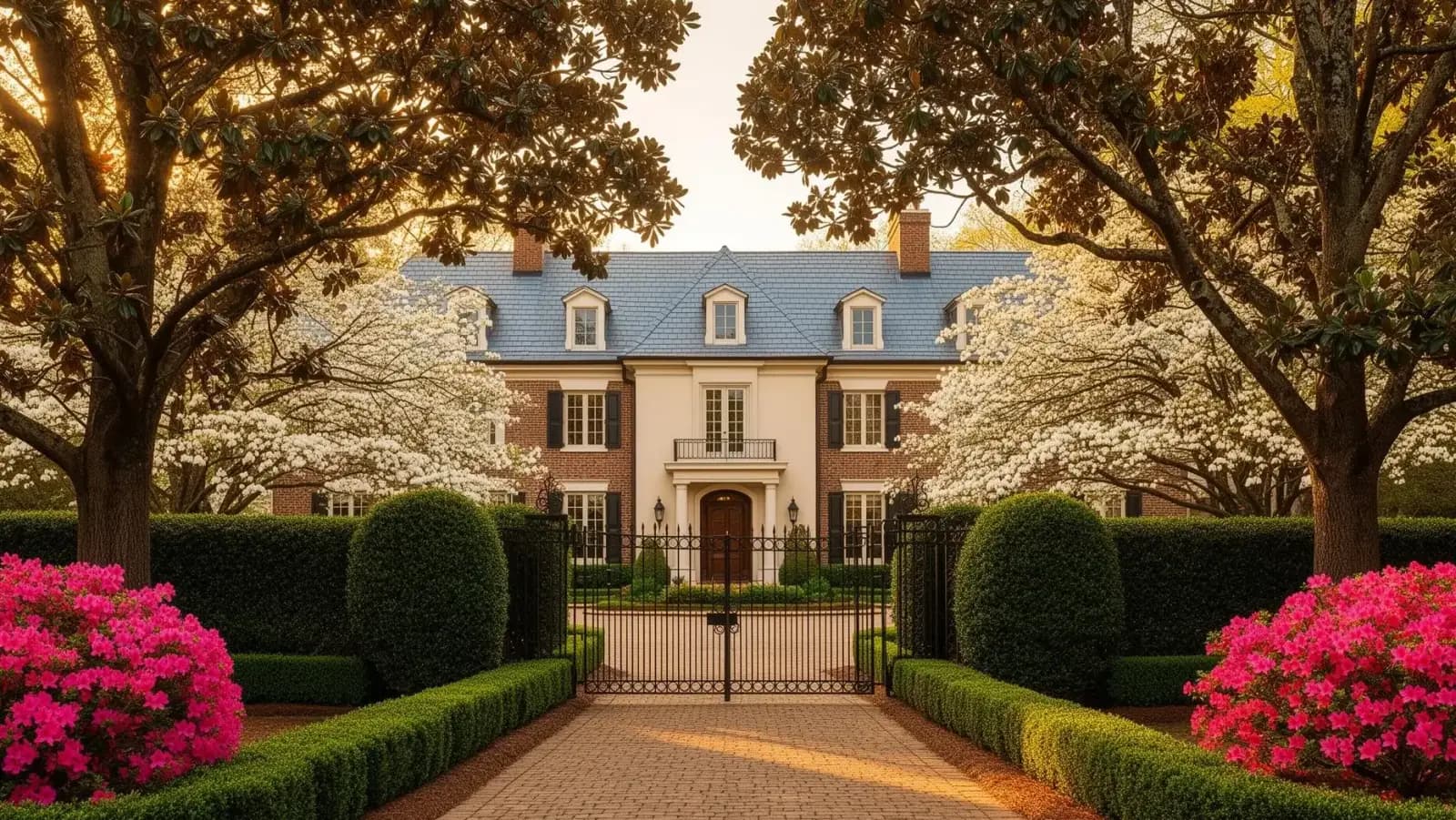
Your roof is the single most important protective element of your home. It shields everything underneath from Georgia's punishing summers, severe thunderstorms, and the occasional ice event that catches everyone off guard. For luxury homeowners in Atlanta, the roof is also a significant design element and a major financial decision that affects insurance premiums, energy costs, and resale value.
The roofing market for luxury homes has expanded considerably in recent years. Homeowners now choose from natural slate, copper, cedar shake, premium architectural shingles, clay and concrete tile, standing seam metal, and various flat roof membrane systems. Each option comes with trade-offs in cost, longevity, aesthetics, and performance against Georgia's specific weather challenges.
This guide breaks down each major roofing material, what it costs in the Atlanta market, how long it typically lasts in our climate, and what you should consider before making a decision. Whether you are building new, replacing an aging roof, or evaluating a potential purchase, this information will help you make a well-informed choice.
Natural Slate: The Gold Standard
Natural slate has been the premier roofing material for centuries, and it remains the top choice for the most distinguished luxury homes in Atlanta. Drive through Tuxedo Park, Peachtree Battle, or the historic sections of Druid Hills, and you will see slate roofs that have been performing for 80 to 100+ years.
Slate is quarried stone, typically from Vermont, Virginia, New York, or Pennsylvania in the United States. The material is naturally fire-resistant, impervious to rot and insect damage, and carries the highest impact resistance ratings available. According to the National Roofing Contractors Association (NRCA), properly installed natural slate can last 75 to 200 years depending on the quarry source and slate grade.
Cost in Atlanta: Expect $25 to $50 per square foot installed. A 3,500 square foot roof runs $87,500 to $175,000. Vermont unfading green or gray slate sits at the premium end. Imported slate from Spain or Brazil costs less ($15 to $25 per square foot) but may not match the longevity of domestic sources.
Georgia weather performance: Slate handles Atlanta's heat, rain, and hail exceptionally well. It does not degrade from UV exposure like asphalt, and it sheds water cleanly. The main vulnerability is impact from falling tree branches, which is a real consideration given Atlanta's tree canopy. A broken slate tile can be individually replaced without disturbing the surrounding roof, though finding a skilled slate roofer for repairs can take time.
Weight consideration: Slate is heavy. A slate roof weighs 800 to 1,500 pounds per roofing square (100 square feet), compared to 250 to 350 pounds for architectural shingles. Your roof structure must be engineered to handle this load. New construction can be designed for slate from the start. Retrofit installations on existing homes require a structural engineer's evaluation and may need reinforcement.
Copper: Premium Accent and Full Coverage
Copper roofing occupies a unique position in luxury construction. It is used both as full roof coverage on high-end estates and as accent material for dormers, turrets, bay window roofs, and entryway canopies. The material develops a distinctive green patina over 15 to 30 years that many homeowners find appealing.
Cost in Atlanta: Copper is the most expensive common roofing material at $30 to $60 per square foot installed. Full copper roof installations on luxury homes routinely exceed $200,000. Accent applications (dormers, turrets, porch roofs) are more common and typically run $5,000 to $30,000 depending on scope.
Longevity: Copper is extraordinarily durable. The Copper Development Association estimates properly installed copper roofing lasts 100+ years. Copper does not rust, rot, or burn. It is naturally antimicrobial, which means it resists moss and algae growth better than most other materials.
Georgia-specific considerations: Copper performs well in Atlanta's climate but requires experienced installers. Galvanic corrosion can occur where copper contacts dissimilar metals (aluminum gutters, steel fasteners), so proper installation details are critical. The patina process creates runoff that can stain light-colored masonry and concrete, which should be planned for during installation.
Cedar Shake: Warmth and Character
Cedar shake roofs offer a distinctive rustic elegance that works particularly well on Craftsman, Tudor, and cottage-style luxury homes. The natural wood grain creates a warm, organic appearance that synthetic materials struggle to replicate.
Cost in Atlanta: Cedar shake roofing runs $10 to $20 per square foot installed, or roughly $35,000 to $70,000 for a 3,500 square foot roof. Premium hand-split shakes from Western Red Cedar are at the higher end, while machine-cut shingles cost less.
Longevity and Georgia challenges: Cedar shake has a rated lifespan of 30 to 50 years, but Atlanta's climate is tough on wood roofing. High humidity promotes fungal growth and rot. Standing moisture accelerates deterioration. According to the Cedar Shake and Shingle Bureau, regular maintenance (cleaning, treatment with preservative every 3 to 5 years) is essential to achieve full lifespan in humid Southern climates.
Fire risk: Untreated cedar is a Class C fire-rated material, which is the lowest rating. Fire-retardant treated cedar achieves Class A or B ratings but adds to cost and must be re-treated periodically. Some Atlanta-area communities with HOA covenants restrict or prohibit wood roofing due to fire concerns. Check your neighborhood restrictions before committing.
Maintenance commitment: Cedar roofs require more ongoing maintenance than any other premium option. Annual inspections, moss removal, replacing split or curled shakes, and periodic preservative treatment are all part of ownership. Budget $1,500 to $3,000 annually for professional maintenance.
Premium Architectural Shingles: The Practical Luxury Choice
Architectural (also called dimensional or laminated) shingles are the most common roofing material on luxury homes in Atlanta, and for good reason. The top-tier products from GAF, CertainTeed, and Owens Corning offer attractive aesthetics, strong performance, and reasonable cost relative to natural materials.
Product tiers to know: Not all architectural shingles are equal. The luxury tier includes products like GAF Grand Sequoia, CertainTeed Grand Manor, and Owens Corning Berkshire. These are thicker, heavier, and designed to mimic the appearance of slate or wood shake. They carry manufacturer warranties of 50 years (limited lifetime) and typically cost $8 to $15 per square foot installed.
Cost in Atlanta: Standard architectural shingles run $5 to $8 per square foot installed. Premium designer shingles run $8 to $15 per square foot. A 3,500 square foot roof with premium shingles costs $28,000 to $52,500. That is substantially less than slate but still a meaningful investment.
Georgia performance: The main weakness of asphalt shingles in Atlanta is UV degradation. Georgia receives significant solar exposure from April through October, and the thermal cycling (hot days, cooler nights) causes expansion and contraction that gradually loosens granules. According to the Asphalt Roofing Manufacturers Association, shingles in the Southeast typically underperform their rated lifespan by 20% to 30% compared to northern climates. A 30-year rated shingle may need replacement at 20 to 25 years in Atlanta.
Hail performance: Premium architectural shingles can earn Class 3 or Class 4 impact ratings (tested per UL 2218), which qualifies for insurance discounts in Georgia. If you live in a hail-prone area of metro Atlanta (the northern suburbs from Roswell to Johns Creek see slightly more hail activity than intown areas, per NOAA Storm Events data), impact-rated shingles are worth the upcharge.
Clay and Concrete Tile: Mediterranean and Spanish Influence
Tile roofing is less common in Atlanta than in Florida, Arizona, or California, but it appears on Mediterranean, Spanish Colonial, and Italian-influenced luxury homes throughout the metro area. Both clay and concrete tile offer distinctive profiles that are difficult to achieve with other materials.
Cost in Atlanta: Clay tile runs $15 to $30 per square foot installed. Concrete tile is somewhat less at $10 to $20 per square foot. Installation costs are higher than shingles because tile requires experienced installers and often structural reinforcement (tile weighs 600 to 1,100 pounds per square).
Longevity: Clay tile is extremely durable, with lifespans of 75 to 100+ years in favorable conditions. Concrete tile typically lasts 40 to 75 years. Both materials are fire-resistant (Class A rated), resistant to rot and insect damage, and perform well against UV degradation.
Georgia considerations: Tile performs well in Atlanta's heat (the air gap beneath the tiles provides natural insulation), but Georgia's freeze-thaw cycles can be problematic for lower-quality tiles. Water absorbed into the tile body can freeze and cause cracking. High-fired clay tile and premium concrete formulations handle this well, but budget products may not. Hail is the bigger concern. While tiles are hard, direct impacts from large hailstones can crack individual tiles. Replacement is straightforward, but finding matching tiles for older installations can be difficult.
Flat Roof Systems: Modern Luxury Applications
Modern and contemporary luxury homes in Atlanta frequently incorporate flat or low-slope roof sections. These require different materials than pitched roofs. The three primary flat roof systems used on luxury homes are TPO (thermoplastic polyolefin), EPDM (ethylene propylene diene monomer rubber), and modified bitumen.
TPO is the most popular choice for luxury flat roofs. It is a white, reflective membrane that reduces cooling costs and carries a typical lifespan of 20 to 30 years. Cost runs $8 to $14 per square foot installed. TPO is lightweight, resistant to UV damage, and performs well in Atlanta's heat.
EPDM (rubber roofing) is a proven technology with a 40+ year track record. It costs $6 to $12 per square foot installed and lasts 25 to 30 years with proper maintenance. EPDM is available in black or white, with white versions offering better energy performance in Atlanta's climate.
Modified bitumen is the most traditional flat roof option, using layered asphalt membranes. It costs $5 to $10 per square foot and lasts 15 to 25 years. It is less common on new luxury construction but still used for certain applications.
Drainage is critical: Flat roofs in Atlanta must be designed with adequate drainage because the city receives approximately 50 inches of rainfall annually, according to NOAA's Peachtree City Weather Forecast Office. Ponding water is the number one cause of flat roof failure. Internal drains, scuppers, or tapered insulation systems must be properly designed and maintained.
Weighing a Roof Replacement Before You Sell?
The material you choose can change how a buyer and an appraiser read the house. We can look at your roof, your timeline, and what comparable homes nearby are carrying.
Walk My Roof Before I Listor call (770) 727-4052
Cost Comparison at a Glance
The following ranges reflect installed costs in the Atlanta metro area as of early 2026, based on estimates gathered from local roofing contractors and industry pricing data. Actual costs vary based on roof complexity, access, removal of existing material, and specific product selection.
Natural Slate
$25 to $50/sq ft installed. Lifespan: 75 to 200 years. Best for: Georgian, Colonial, and traditional estate homes. Weight: 800 to 1,500 lbs per square.
Copper
$30 to $60/sq ft installed. Lifespan: 100+ years. Best for: Accent roofing (dormers, turrets, entry canopies) or full coverage on high-end estates. Weight: 100 to 150 lbs per square.
Cedar Shake
$10 to $20/sq ft installed. Lifespan: 30 to 50 years (with maintenance). Best for: Craftsman, Tudor, cottage-style homes. Requires annual maintenance in Georgia's humid climate.
Premium Architectural Shingles
$8 to $15/sq ft installed. Lifespan: 20 to 30 years (effective in Atlanta). Best for: Most luxury home styles. Widest range of color and profile options.
Clay Tile
$15 to $30/sq ft installed. Lifespan: 75 to 100+ years. Best for: Mediterranean, Spanish Colonial, Italian-influenced architecture. Weight: 600 to 1,100 lbs per square.
Standing Seam Metal
$15 to $30/sq ft installed. Lifespan: 40 to 70 years. Best for: Contemporary, modern, and transitional luxury homes. Excellent energy efficiency and hail resistance.
Insurance Implications in Georgia
Your roof material and condition directly affect your homeowner's insurance premiums in Georgia. After a series of costly hailstorms in the metro Atlanta area between 2018 and 2024, several major insurers tightened their underwriting standards for roof coverage.
According to the Georgia Office of Insurance and Safety Fire Commissioner, insurers in Georgia are permitted to offer premium discounts for impact-resistant roofing materials. Class 4 rated materials (the highest impact rating under UL 2218 testing) may qualify for discounts of 15% to 30% on the wind and hail portion of your premium, depending on the carrier.
Roof age also matters. Many Georgia insurers now require roof inspections on homes with roofs older than 15 years before issuing or renewing a policy. Some carriers have moved to actual cash value (ACV) coverage rather than replacement cost value (RCV) for roofs over a certain age. This means depreciation reduces your claim payout, which can leave you significantly underinsured after a loss event.
Bottom line: When evaluating roofing materials, factor in the long-term insurance implications. A more expensive impact-resistant roof may save thousands in annual premiums over its lifespan. Ask your insurance agent for premium quotes with different roofing materials before making your final selection.
When to Replace: Signs and Timing
For luxury homeowners considering a sale, roof condition is one of the first things buyers and their inspectors evaluate. A roof nearing end of life can reduce your sale price or cause deals to fall through during due diligence. If you are thinking about selling your luxury home, evaluate your roof early in the planning process.
Signs it is time to replace: Missing, cracked, or curling shingles across more than 25% of the roof surface. Granule loss visible in gutters and on the ground (for asphalt shingles). Daylight visible through the roof decking from the attic. Sagging areas that suggest structural issues. Repeated leak repairs in the same areas. Moss or algae growth that resists treatment. Age within 80% of the material's expected lifespan.
Best timing in Atlanta: Late fall (October through November) and early spring (March through April) are the ideal seasons for roof replacement in Atlanta. Temperatures are moderate, rain is less frequent than summer, and roofing contractors are typically less backlogged than they are during the peak storm damage repair season (May through August). Planning ahead also gives you leverage to negotiate better pricing and scheduling.
A new roof typically recovers a large share of its cost at resale and is consistently rated among the top improvements for buyer appeal. For luxury homes where the roof is a prominent visual element, the impact on buyer appeal can be even greater.
Choosing the Right Roof for Your Atlanta Luxury Home
The right roofing material for your luxury home depends on a combination of factors: your home's architectural style, your budget, your planned ownership timeline, your neighborhood's aesthetic standards, and your tolerance for maintenance. There is no single best material. There is only the best material for your specific situation.
If you are buying a luxury home in Atlanta, ask your inspector to evaluate not just the current condition of the roof but the estimated remaining lifespan. Factor the cost of eventual replacement into your purchase analysis. A home priced at $2.5 million with a roof that needs replacing in 3 years effectively costs $2.55 to $2.65 million once you account for a new premium shingle roof, or significantly more if the home warrants slate or tile.
If you are building or renovating, invest the time to compare materials honestly. The cheapest option upfront is rarely the cheapest option over a 30 year ownership period when you factor in maintenance, replacement cycles, energy costs, and insurance implications.
Our team works with luxury buyers and sellers across metro Atlanta and can connect you with trusted roofing contractors who specialize in high-end residential work. Reach out to us if you have questions about a property's roof or need guidance on your options.
Frequently Asked Questions
What is the best roofing material for luxury homes in Atlanta?
The best material depends on your priorities. Slate offers unmatched longevity (75 to 150+ years) and a timeless appearance that complements Georgian and Colonial architecture common in Buckhead and Druid Hills. Architectural shingles provide strong performance at a lower price point and work well across many styles. Copper is typically used for accent roofing, dormers, and turrets rather than full coverage. Most luxury roofers in Atlanta recommend matching the material to your home's architectural style, your budget, and your planned ownership timeline.
How much does a slate roof cost in Atlanta?
A full slate roof installation in Atlanta typically runs $25 to $50 per square foot installed, depending on the type of slate (domestic vs. imported), the roof complexity (dormers, valleys, pitch), and the contractor. For a 3,000 square foot roof, that translates to roughly $75,000 to $150,000. Natural slate from Vermont or Virginia quarries tends to cost more than imported options from China, Brazil, or Spain, but domestic slate generally comes with longer warranties and more consistent quality. Always get at least three bids from contractors who specialize in slate installation.
How long do architectural shingles last in Georgia?
Premium architectural shingles from manufacturers like GAF, CertainTeed, and Owens Corning carry rated lifespans of 30 to 50 years, but actual performance in Georgia tends to be shorter due to heat and UV exposure. According to roofing industry data, most architectural shingles in the Southeast last 20 to 30 years before replacement is needed. The highest-grade options (like GAF Grand Sequoia or CertainTeed Grand Manor) may last longer, but regular maintenance and inspections are important to maximize lifespan.
Is a metal roof a good choice for an Atlanta luxury home?
Standing seam metal roofs are gaining popularity on contemporary and transitional luxury homes in Atlanta. They offer 40 to 70 year lifespans, excellent energy efficiency (they reflect solar heat), and strong hail resistance. The main drawback for traditional neighborhoods is aesthetics. A metal roof may look out of place on a Georgian Colonial in Tuxedo Park. However, for modern builds in Midtown, West Midtown, or contemporary estates, metal can be an excellent choice. Expect to pay $15 to $30 per square foot installed for premium standing seam systems.
Does roof material affect home insurance rates in Georgia?
Yes. Georgia insurers factor roof material, age, and condition heavily into premium calculations. According to the Georgia Office of Insurance and Safety Fire Commissioner, impact-resistant roofing materials (Class 3 or Class 4 rated) may qualify for premium discounts of 10% to 30% depending on the carrier. Slate, metal, and concrete tile typically earn the highest impact ratings. Conversely, older roofs (15+ years on shingles) often trigger higher premiums or coverage limitations. Some insurers in hail-prone areas of metro Atlanta now require roof inspections before issuing or renewing policies.
How does Georgia weather affect roof longevity?
Georgia's climate presents several challenges for roofing materials. Summer heat (regularly exceeding 95 degrees) accelerates UV degradation of asphalt shingles. High humidity promotes moss and algae growth, particularly on north-facing slopes. Severe thunderstorms bring hail and high winds, with metro Atlanta averaging 2 to 3 significant hail events per year according to NOAA Storm Events Database. Heavy spring rains test flashing and drainage systems. These combined factors mean roofs in Atlanta typically have shorter effective lifespans than identical materials installed in cooler, drier climates.
When should I replace vs. repair my luxury home's roof?
Replace rather than repair when: the roof is within 5 years of its expected lifespan end, more than 25% of the surface shows damage or deterioration, there is evidence of structural issues (sagging, rotting decking), or multiple leak repairs have been made in the past 2 years. For luxury homes, there is also a resale consideration. Buyers and their inspectors look closely at roof condition, and a roof nearing end-of-life can reduce your sale price by the estimated replacement cost or more. If you plan to sell within 3 to 5 years and the roof is aging, replacing it before listing often yields a positive return.
Can I install a slate roof on an existing home that has shingles?
Possibly, but it requires structural evaluation first. Natural slate weighs 800 to 1,500 pounds per square (100 square feet), compared to 250 to 350 pounds for architectural shingles. Most homes built with shingle roofs were not engineered to handle slate's weight. A structural engineer must evaluate the roof framing, bearing walls, and foundation before installation. Reinforcement may be needed, which adds to the project cost. Synthetic slate products (from manufacturers like DaVinci or Brava) weigh roughly the same as heavy shingles and can often be installed without structural modifications while providing a similar appearance.
What roof colors work best in Atlanta's climate?
Lighter roof colors reflect more solar energy and can reduce cooling costs by 10% to 20%, according to the Department of Energy's Cool Roofs program. This matters in Atlanta where air conditioning is the largest energy expense for most homes from May through September. However, many Atlanta luxury neighborhoods have architectural review boards that restrict colors to traditional tones (charcoal, dark gray, weathered wood, forest green, dark brown). The compromise is often a medium-toned roof with Energy Star rated reflective granules, which provides some thermal benefit while maintaining a traditional appearance.
How do I find a qualified luxury roofer in Atlanta?
Look for contractors who are manufacturer-certified (GAF Master Elite, CertainTeed SELECT ShingleMaster, or equivalent for your chosen material) and carry specific experience with luxury homes. Ask for references from homes over $1.5 million, verify their Georgia contractor license, confirm they carry at least $2 million in liability insurance, and check their rating with the Better Business Bureau. For specialty materials like slate or copper, seek contractors who belong to the Slate Roofing Contractors Association or have documented experience with at least 20 similar installations. Avoid any contractor who provides a quote without physically inspecting the roof.
Questions about your luxury home's roof or planning a purchase?
Sources
- National Roofing Contractors Association (NRCA) - Roofing material lifespan data, installation standards, and best practices for residential roofing systems.
- NOAA Storm Events Database - Historical hail and severe weather data for the Atlanta metropolitan area.
- Georgia Office of Insurance and Safety Fire Commissioner - Insurance regulations, impact-resistant roofing discounts, and underwriting guidelines for Georgia homeowners.
- Asphalt Roofing Manufacturers Association - Performance data for architectural shingles in different climate zones, including the Southeast.
- Cedar Shake and Shingle Bureau - Maintenance guidelines, lifespan data, and fire rating information for cedar roofing products.
- Copper Development Association - Longevity data, installation best practices, and performance specifications for copper roofing.
- National Association of Realtors - 2024 Remodeling Impact Report, roof replacement ROI data, and buyer preference surveys.
- U.S. Department of Energy - Cool Roofs program data, energy efficiency research, and solar reflectance guidelines for roofing materials.
Cost estimates, lifespan ranges, and insurance information referenced in this article reflect conditions in the Atlanta metro area as of early 2026 and are subject to change. Actual costs depend on roof size, complexity, material selection, and contractor. This article does not constitute professional roofing, insurance, or financial advice. Consult qualified professionals for guidance specific to your property.
Disclaimer: This article is for informational purposes only and does not constitute professional roofing, construction, insurance, or financial advice. Cost estimates are approximate and vary based on project specifics. Lifespan estimates reflect typical performance and are not guarantees. The Luxury Realtor Group is a real estate brokerage and does not provide roofing, construction, or insurance services. Consult with qualified roofing contractors, structural engineers, and insurance professionals for guidance specific to your property.