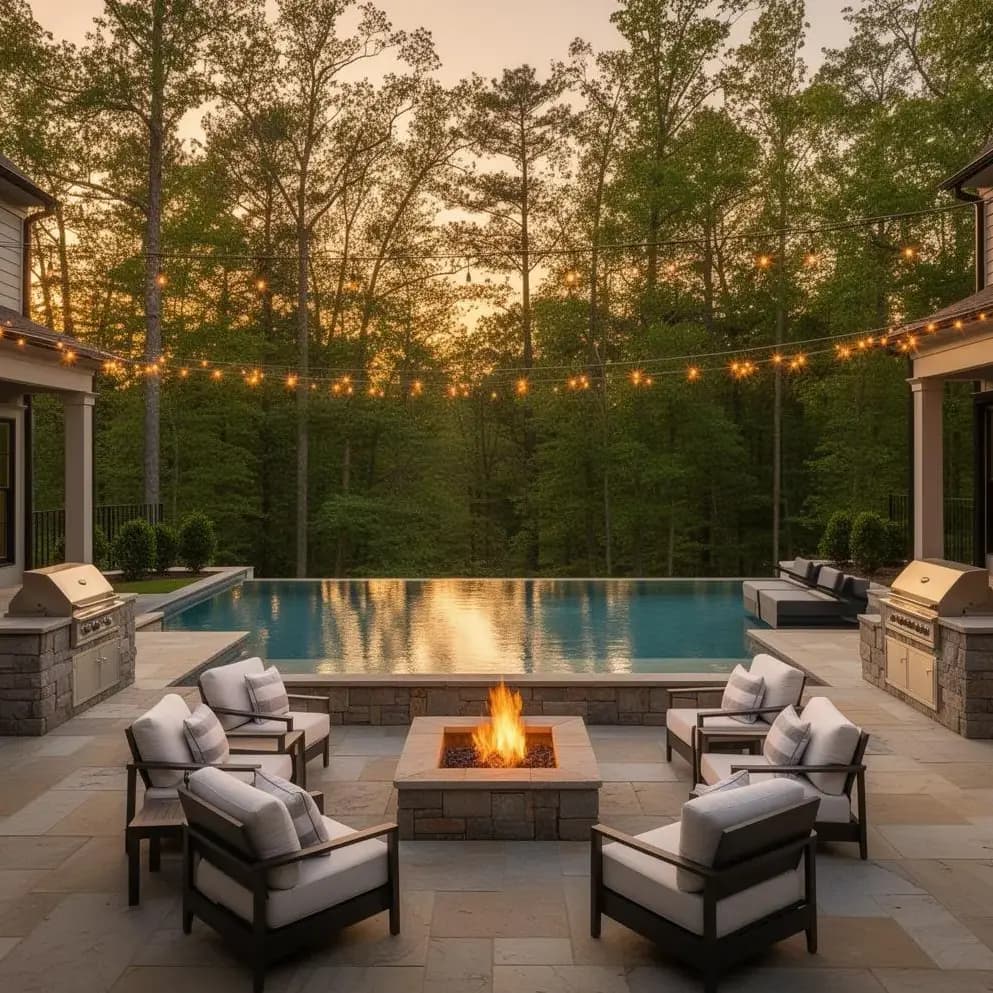
Outdoor kitchens have become one of the most requested features in Atlanta luxury homes, and the reasons are straightforward. Atlanta's climate supports outdoor cooking and entertaining 8 to 10 months of the year, the region's food culture makes serious cooking equipment more than a novelty, and a well-designed outdoor kitchen can meaningfully improve both your quality of life and your property's resale value.
But building an outdoor kitchen is not a weekend project. Between the material selection challenges posed by Georgia's heat, humidity, and rain, the permit requirements for gas, electrical, and structural work, and the wide range of appliance and layout options, there is a lot to consider before you start writing checks.
This guide covers everything from appliance selection and material choices to budget planning, ROI data, and contractor selection. Whether you are designing a new outdoor kitchen from scratch or upgrading an existing setup before listing your home, this is the reference you need to make smart decisions.
Layout and Design Principles
The best outdoor kitchens follow the same design principles as interior kitchens: a functional work triangle between the grill (cooking zone), prep area (countertop and sink), and storage/refrigeration. The layout should support the cook's workflow while allowing guests to socialize without getting in the way.
L-shaped layouts work well for most luxury outdoor kitchens. One arm of the L holds the grill, smoker, and cooking appliances, while the other holds the wet bar, refrigeration, and seating counter. This separates the hot cooking zone from the social zone and creates a natural flow for entertaining.
U-shaped and island layouts are ideal for larger spaces and more serious cooking setups. A U-shape can accommodate a full suite of appliances with ample prep space, while a freestanding island (with or without a grill) creates a focal point in the outdoor living area and works well adjacent to a pool or covered patio.
Straight (galley) layouts are the most space-efficient and work well when built against the back wall of a covered patio. They are less ideal for entertaining because the cook faces away from guests, but they maximize counter space in a compact footprint.
Regardless of layout, plan for at least 36 inches of countertop on each side of the grill for prep and plating. Include task lighting above the grill and prep areas. And position the kitchen downwind from the primary seating area when possible, so smoke drifts away from guests.
Appliances: What to Include
The grill is the centerpiece. For a luxury outdoor kitchen, a built-in gas grill from a professional-grade brand (Lynx, DCS, Alfresco, Hestan, or Viking) is the standard. Look for models with at least 36 inches of cooking surface, stainless steel burners rated at 25,000+ BTU each, a rotisserie kit, and infrared sear capability. A quality built-in grill runs $3,000 to $10,000 depending on size and brand.
Smokers are increasingly popular in Atlanta's barbecue-loving culture. Built-in pellet smokers or dedicated charcoal smokers allow you to do low-and-slow cooking without tying up your primary grill. Options range from $1,500 for a built-in pellet unit to $5,000+ for a commercial-style smoker.
Pizza ovens have become one of the hottest (literally) additions to luxury outdoor kitchens. Wood-fired pizza ovens reach 700 to 900 degrees and can cook a pizza in 90 seconds. They also roast vegetables, bake bread, and sear meats at temperatures a grill cannot match. Built-in models from brands like Alfa, Mugnaini, and Forno Bravo cost $3,000 to $12,000. Gas-fired options offer convenience with similar (though not identical) results.
Refrigeration and beverage service is the other essential category. At minimum, include an outdoor-rated undercounter refrigerator ($800 to $2,500) and an ice maker ($1,500 to $3,000). A beverage center with a glass-front refrigerator, ice maker, and bar sink creates a dedicated drink station that keeps traffic away from the cooking area. A kegerator for draft beer is a popular addition for serious entertainers.
Other commonly included appliances: a side burner or power burner for pots, pans, and deep frying ($500 to $2,000); a warming drawer to hold finished dishes at temperature ($1,000 to $2,500); and an outdoor sink with hot and cold water and a garbage disposal ($500 to $1,500 plus plumbing).
Adding an Outdoor Kitchen Before You List?
Covered versus uncovered, and how the space connects to the interior, matter more to Atlanta buyers than appliance count. Scope it accordingly.
Get a Value Read on the Planor call (770) 727-4052
Materials That Handle Georgia Weather
Georgia's climate is hard on outdoor materials. Summers bring sustained heat (90+ degree days from June through September), high humidity, and frequent afternoon thunderstorms that can dump an inch of rain in 30 minutes. Winters are mild but include occasional freezes that can damage water-absorbing materials. Choosing the right materials from the start prevents costly replacements down the road.
Countertops: Granite is the most popular choice for outdoor kitchens in Atlanta, and for good reason. It handles heat (you can set a hot pot directly on it), resists stains when properly sealed, and tolerates freeze-thaw cycles without cracking. Quartzite offers similar performance with a wider range of colors and patterns. Avoid marble (stains and etches too easily outdoors), engineered quartz (the resin binders can discolor in direct sunlight), and tile (grout lines trap moisture and promote mold growth). Budget $80 to $200 per square foot installed for granite or quartzite countertops.
Cabinetry: Wood cabinets, even with marine-grade finishes, will eventually degrade in Atlanta's humidity and rain. The best options for outdoor kitchens are marine-grade 316 stainless steel cabinets (the gold standard, $5,000 to $15,000 for a full set) or high-density polyethylene (HDPE) polymer cabinets ($3,000 to $8,000). Both materials are waterproof, UV-resistant, and will not rot, warp, or rust.
Structure and veneer: The base structure of an outdoor kitchen is typically concrete block or steel framing, finished with a veneer of natural stone, brick, stucco, or manufactured stone. Natural stone (like Atlanta's local Georgia fieldstone) provides an authentic look that complements the brick and stone homes common in Buckhead and Sandy Springs. Stucco is a more affordable option that can be tinted to match the home's exterior. Ensure all veneer installations include proper drainage and waterproofing behind the stone to prevent moisture buildup.
Covered vs. Open: Making the Right Choice for Atlanta
- Covered (recommended for Atlanta): Protects appliances and guests from rain and sun. Extends usability to 10+ months per year. Allows ceiling fans for cooling and permanent lighting fixtures. Adds $30,000 to $80,000 for a quality covered pavilion. Best ROI because it creates a true all-weather entertaining space.
- Pergola with retractable canopy: A middle ground that provides shade and some rain protection. Retractable canopy systems cost $8,000 to $20,000 depending on size. Less protection than a solid roof but more visually open. Works well when the kitchen is adjacent to a pool area where an open sky is desired.
- Open/uncovered: Lowest cost but most limited usability. Exposed to rain, which can interrupt entertaining and accelerate appliance wear. Viable in Atlanta only if you have a backup plan for rain and are comfortable covering appliances when not in use. Not recommended as the primary outdoor kitchen configuration for a luxury home.
Lighting and Ambiance
Lighting can make or break an outdoor kitchen. Without it, the space becomes unusable once the sun goes down. With the right lighting, it becomes the most inviting room in the house on a warm Georgia evening.
Layer three types of light. Task lighting goes directly above the grill, prep areas, and sink. Under-cabinet LED strips, pendant fixtures, and recessed downlights in a covered ceiling all work well. The cook needs to see what they are doing; aim for 30 to 50 foot-candles at the cooking surface.
Ambient lighting sets the overall mood. Recessed or surface-mounted fixtures in the ceiling of a covered structure, string lights between posts, or a chandelier over a dining table all create a warm, inviting atmosphere. Keep ambient lighting dimmable and warm (2700K to 3000K) for entertaining.
Accent lighting highlights architectural features, landscaping, and water features near the kitchen. Low-voltage LED uplights on trees, step lights on stairs, and underwater lights in an adjacent pool create depth and visual interest. Integrate all outdoor kitchen lighting with your home's smart lighting system (Lutron, Savant, or similar) so a single scene can set the entire outdoor environment for entertaining.
Budget Ranges and ROI Data
- Entry luxury ($25,000 to $50,000): Built-in grill, countertop, small refrigerator, and basic lighting. Open or under an existing patio cover. Good for homeowners who want a functional upgrade without a major build.
- Mid-range luxury ($50,000 to $120,000): Full appliance suite (grill, smoker, refrigerator, ice maker, sink), natural stone countertops, covered structure with lighting and fans, and bar seating. The sweet spot for most Atlanta luxury homes.
- High-end luxury ($120,000 to $200,000+): Custom pavilion, pizza oven, full wet bar, commercial-grade appliances, fireplace or fire feature, outdoor dining for 10+, smart lighting and audio integration, and premium materials throughout.
- ROI: Outdoor kitchens are among the stronger-returning outdoor projects at resale. In Atlanta's luxury market, the lifestyle value during ownership often matters more than the financial return at sale.
Choosing the Right Contractor
An outdoor kitchen involves multiple trades: masonry, plumbing, gas, electrical, and potentially structural engineering for a covered pavilion. The best approach is to hire a general contractor or design-build firm that specializes in outdoor living spaces and manages all subcontractors. This ensures coordinated scheduling, consistent quality, and a single point of accountability.
When evaluating contractors, ask to see completed outdoor kitchens that are 3 to 5 years old (not just new installations) to assess how materials and workmanship hold up over time in Atlanta's climate. Verify that they hold a valid Georgia contractor's license, carry general liability insurance and workers' compensation, and pull all required permits. Get references from at least three previous luxury outdoor kitchen clients and follow up with those calls.
A detailed written contract should specify every element: appliance brands and models, stone and countertop selections, structural specifications, electrical and gas line routing, drainage plans, lighting fixtures, and a clear payment schedule tied to construction milestones. Avoid paying more than 10% to 20% upfront, with the balance tied to completion of specific phases.
Frequently Asked Questions
How much does a luxury outdoor kitchen cost in Atlanta?
A high-end outdoor kitchen in the Atlanta market typically costs $50,000 to $200,000 or more, depending on size, materials, appliances, and whether a covered structure is included. A basic setup with a built-in grill, countertop, and small refrigerator might start around $25,000 to $40,000. A full luxury outdoor kitchen with professional-grade grill, smoker, pizza oven, wet bar, refrigeration, ice maker, warming drawer, and a covered pavilion with ceiling fans and lighting can easily exceed $150,000. These estimates include materials, appliances, gas and electrical connections, and labor.
What is the ROI on an outdoor kitchen for an Atlanta luxury home?
Outdoor kitchens and living spaces are among the stronger-returning outdoor projects at resale. In the Atlanta luxury market, where outdoor entertaining is possible 8 to 10 months of the year, the ROI may be higher than in cooler climates. In neighborhoods like Buckhead and Sandy Springs, a well-designed outdoor kitchen is increasingly expected in homes above $1.5 million. The key to maximizing ROI is designing a kitchen that complements the home's architecture and does not over-improve relative to the neighborhood. A $200,000 outdoor kitchen on a $1 million home is likely to over-improve; the same kitchen on a $3 million property is proportional.
Should I build a covered or uncovered outdoor kitchen?
In Atlanta, a covered outdoor kitchen is strongly recommended. The region receives approximately 50 inches of rain per year (per NOAA data), with frequent afternoon thunderstorms from May through September. A covered structure protects appliances, countertops, and guests from rain and also provides shade during Atlanta's hot, humid summers when temperatures regularly exceed 90 degrees. Options include an attached pavilion extending from the home, a freestanding covered structure, or a pergola with a retractable canopy. A solid roof (not just a pergola) provides the best protection and extends the usability of the space into rainy days and shoulder seasons.
What materials work best for outdoor kitchens in Georgia?
Georgia's climate demands materials that can handle heat, humidity, heavy rain, and occasional freezing temperatures. For countertops, granite and quartzite are the top choices for durability, heat resistance, and weather tolerance. Avoid marble (stains easily) and some porcelain tiles (can crack in freeze-thaw cycles). For cabinetry, marine-grade stainless steel or polymer cabinets outperform wood in outdoor applications. For flooring and structure, natural stone (flagstone, bluestone, travertine), concrete pavers, and brick all perform well in the Atlanta climate. For the structure itself, steel and aluminum framing with stone or brick veneer is the most durable option.
What appliances should I include in a luxury outdoor kitchen?
At minimum, a luxury outdoor kitchen should include a professional-grade built-in gas grill (36 to 42 inches), an outdoor-rated refrigerator, and a sink with hot and cold water. Beyond that, the most popular additions in the Atlanta market are: a built-in smoker or pellet grill, a wood-fired or gas pizza oven, a wet bar with ice maker, a warming drawer, a side burner or power burner for pots and pans, and a beverage center. Leading brands for outdoor appliances include Lynx, Viking, DCS, Alfresco, and Hestan. Budget $10,000 to $40,000 for appliances alone in a full luxury setup.
Do I need a permit for an outdoor kitchen in Atlanta?
In most cases, yes. If your outdoor kitchen includes a permanent structure (like a covered pavilion), gas lines, electrical work, or plumbing, you will likely need permits from your local jurisdiction. In Fulton County and the City of Atlanta, a building permit is required for any permanent structure, and separate permits are needed for gas, electrical, and plumbing work. Your contractor should handle the permitting process, but verify that permits are obtained before construction begins. Permit fees typically range from $200 to $500 depending on the scope of the project.
How do I protect an outdoor kitchen during winter in Atlanta?
Atlanta winters are mild (average January low around 34 degrees), but occasional freezes require preparation. Protect your outdoor kitchen by: disconnecting and draining water supply lines or using freeze-proof fixtures rated to 20 degrees or below. Cover the grill and other appliances with fitted weather covers. If you have a covered kitchen, ensure the ceiling fan is set to reverse mode to push warm air down. Clean and seal countertops before winter to prevent moisture absorption and potential freeze damage. Empty and unplug any outdoor refrigerators that will not be used. Most high-quality outdoor kitchen components are designed to handle Atlanta's climate with minimal winter maintenance.
How long does it take to build an outdoor kitchen?
A straightforward outdoor kitchen without a major structure typically takes 4 to 8 weeks from excavation to completion. Projects that include a covered pavilion, stone work, plumbing, gas, and electrical can take 8 to 14 weeks. Complex builds that integrate with pool construction, extensive hardscaping, or custom masonry may take 4 to 6 months. Weather delays are common in Atlanta during the spring rainy season (March through May). For the best results, start the design and permitting process in late fall or early winter to begin construction in January or February, targeting completion before summer entertaining season.
Can I add a fireplace or fire pit to my outdoor kitchen area?
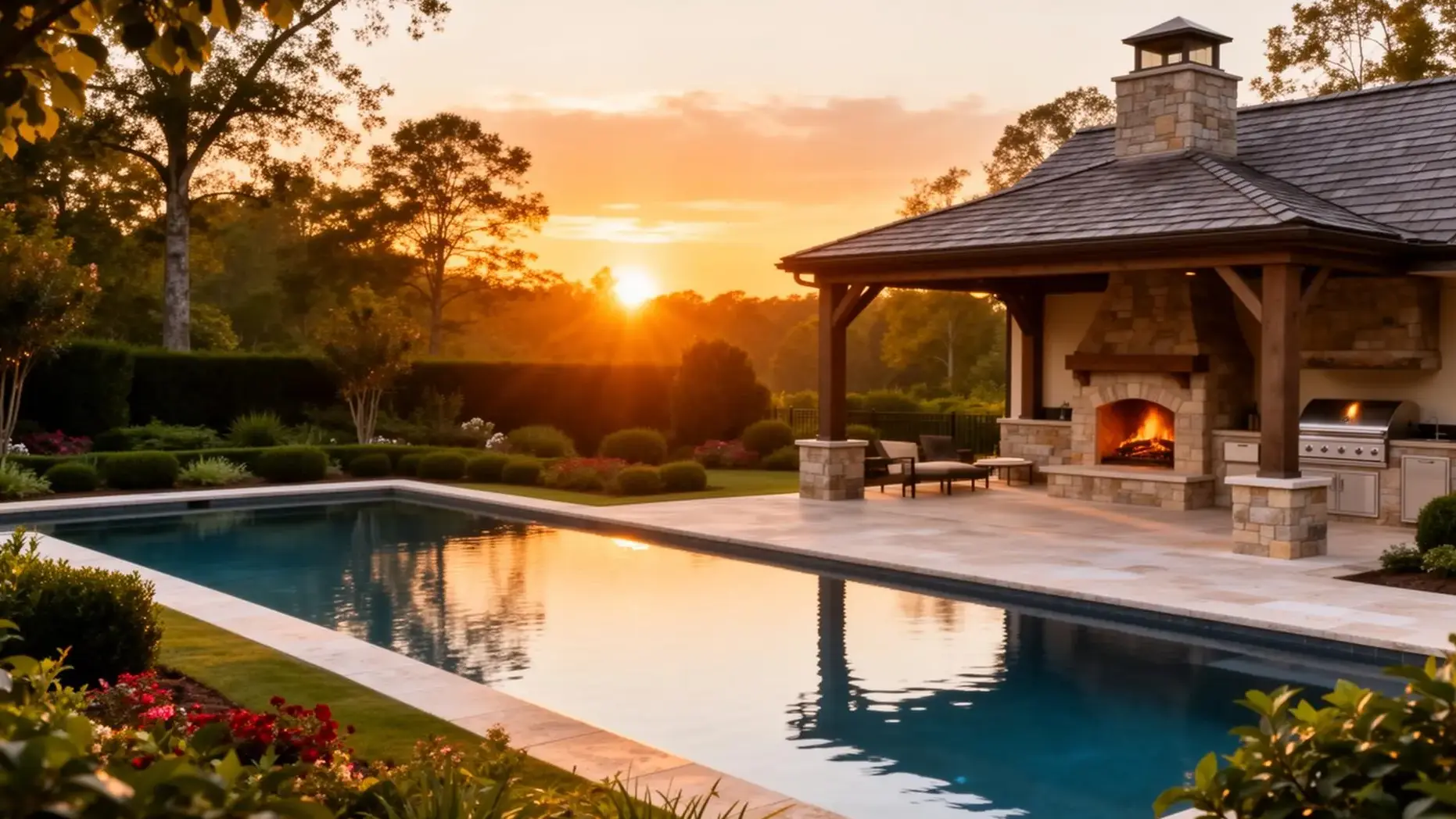
Yes, and it is one of the most popular additions in the Atlanta market. A fireplace or fire pit extends the usability of your outdoor kitchen area into the cooler months (October through March) and creates a natural gathering point for evening entertaining. Gas fire features are the most practical: they ignite instantly, produce no smoke or ash, and can be controlled with a switch or smart home integration. A built-in outdoor fireplace typically costs $8,000 to $25,000 depending on size and materials. A gas fire pit costs $3,000 to $10,000. Wood-burning options are available but check local burn regulations, as the City of Atlanta has restrictions on open burning within city limits.
What lighting should I use for an outdoor kitchen?
Effective outdoor kitchen lighting combines task lighting, ambient lighting, and accent lighting. Under-counter LED strips provide task lighting for food preparation. Recessed or pendant fixtures in the covered ceiling area provide ambient light. Low-voltage landscape lighting around the perimeter adds atmosphere. All outdoor kitchen lighting should be rated for wet or damp locations, dimmable, and integrated with your home's smart lighting system if possible. LED fixtures with warm color temperatures (2700K to 3000K) create the most inviting atmosphere for evening entertaining. Budget $3,000 to $8,000 for a professionally designed outdoor kitchen lighting plan.
Thinking about selling your Atlanta luxury home or adding outdoor living features?
Sources
- National Association of Realtors (NAR) - Remodeling Impact Report, outdoor feature ROI data, and luxury market amenity preferences.
- NOAA (National Oceanic and Atmospheric Administration) - Atlanta precipitation data, climate averages, and seasonal weather patterns.
- Hearth, Patio & Barbecue Association (HPBA) - Outdoor kitchen market data, appliance category trends, and industry standards.
- FMLS (First Multiple Listing Service) - Atlanta luxury home sales data, outdoor feature impact on listing prices and buyer preferences.
- Fulton County Department of Building Inspections - Permit requirements for outdoor structures, gas lines, and electrical work in residential settings.
- City of Atlanta Department of City Planning - Open burning regulations, building permit requirements, and zoning guidelines.
Cost estimates, ROI data, and material recommendations referenced in this article reflect conditions as of early 2026 and are subject to change. Local regulations vary by jurisdiction. This article does not constitute construction or financial advice.
Disclaimer: This article is for informational purposes only and does not constitute construction, design, or financial advice. Outdoor kitchen costs, material performance, and permit requirements vary by location, contractor, and project scope. The Luxury Realtor Group is a real estate brokerage and does not provide construction or design services. Consult with qualified professionals for your specific project.