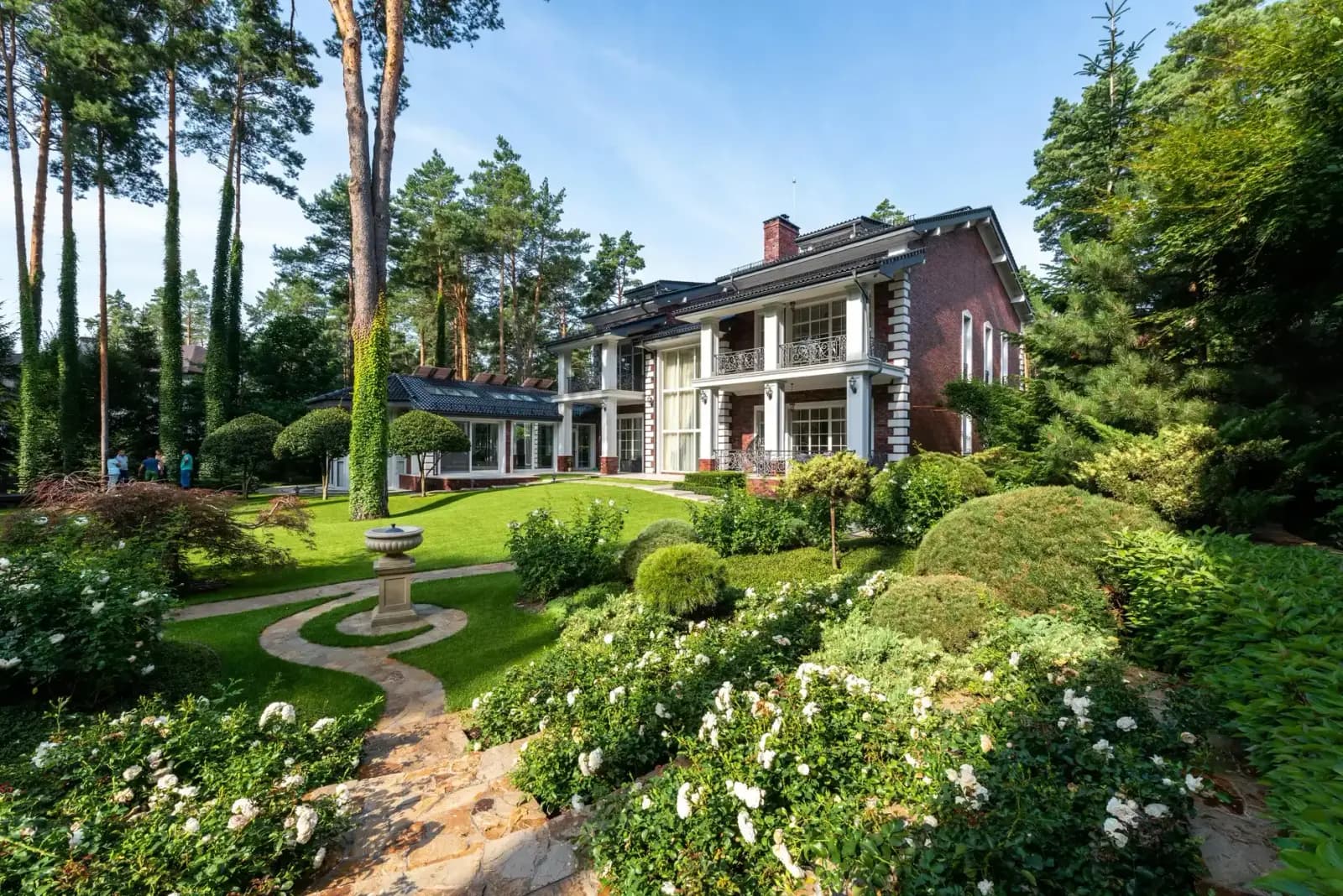
In Atlanta's luxury real estate market, what happens outside the front door matters almost as much as what happens inside. A professionally designed landscape can add meaningful perceived value to a property. For a $2 million home, even a modest percentage gain represents six figures of potential value sitting right there in the yard.
But luxury landscaping in Atlanta is not the same as luxury landscaping in Scottsdale or the Hamptons. Atlanta sits in USDA Hardiness Zone 7b/8a, on heavy Piedmont red clay, in a humid subtropical climate with 50 inches of annual rainfall. The plants that thrive here, the drainage challenges, the seasonal patterns, and the maintenance demands are all specific to this region. A landscape plan designed for a different climate will underperform and may cost more to maintain than it should.
This guide covers everything luxury homeowners in Atlanta need to know about landscaping: which plants work best, how to design hardscapes that last, what outdoor lighting does for property value, how to manage irrigation in a climate that swings between drought and deluge, and what kind of return you can expect on your landscaping investment.
Native Georgia Plants That Define Luxury Landscapes
The most impressive luxury landscapes in Atlanta work with the region's natural palette rather than against it. Native and well-adapted plants look better, cost less to maintain, need less water, and resist local pests and diseases more effectively than exotic imports. The Georgia Native Plant Society and the University of Georgia Cooperative Extension Service both recommend prioritizing species that evolved in the Piedmont region.
Canopy trees form the backbone of any luxury property in Atlanta. Southern magnolias (Magnolia grandiflora) provide year-round structure with their glossy evergreen leaves and fragrant white blooms. White oaks and willow oaks grow into massive shade trees that cool properties naturally and reduce energy costs. Tulip poplars, Georgia's state tree, grow fast and reach impressive heights. Mature specimens of any of these species can add $10,000 to $50,000 in appraised value to a property, per estimates from the International Society of Arboriculture.
Understory trees add layers and visual interest beneath the canopy. Dogwoods (Cornus florida) are Atlanta's signature understory tree, with spring blooms that define the city's character. Japanese maples, while not native, are perfectly adapted to Atlanta's climate and bring delicate texture and seasonal color. Crepe myrtles bloom from June through September, providing summer color that few other trees can match. Redbuds fill the early spring gap before dogwoods bloom.
Foundation and border plants tie the house to the landscape. Oakleaf hydrangeas are native, shade-tolerant, and provide four-season interest: spring blooms, summer foliage, fall color, and winter bark texture. Azaleas remain essential to Atlanta gardens, but native species (Rhododendron canescens, Rhododendron austrinum) outperform the overplanted non-native varieties in disease resistance and longevity. Camellias bloom in fall and winter when everything else is dormant, filling a critical gap in the seasonal calendar.
Hardscape Design for Atlanta Luxury Properties
Hardscaping includes patios, walkways, retaining walls, driveways, outdoor kitchens, fire features, and water features. In Atlanta's luxury market, hardscape is where much of the landscape budget goes, and it is where the biggest design mistakes happen.
Material selection matters more than most homeowners realize. Natural stone (flagstone, bluestone, Tennessee fieldstone) weathers beautifully and complements Atlanta's traditional architecture. It costs more upfront ($25 to $50 per square foot installed for patios) but lasts indefinitely with minimal maintenance. Brick pavers connect to Atlanta's architectural heritage and work particularly well with Georgian and Colonial-style homes common in Buckhead and Brookhaven. Poured concrete with exposed aggregate or stamped patterns offers a modern aesthetic at a lower price point ($12 to $25 per square foot), but it can crack on Atlanta's expansive clay soils if not properly prepared.
Grading and drainage are the most critical and most overlooked elements of hardscape design in Atlanta. The Piedmont red clay that underlies most Atlanta properties drains poorly. Without proper grading, water pools against foundations, erodes slopes, and ruins expensive plantings. Every hardscape project should include a grading plan that directs water away from structures and toward appropriate drainage points. French drains, channel drains, and dry creek beds are common solutions. Budget 10% to 15% of your hardscape investment for drainage, because fixing drainage problems after the fact costs two to three times as much.
Outdoor kitchens and entertaining spaces have become standard features in Atlanta luxury landscapes. The city's long warm season (April through October) makes outdoor entertaining practical for seven months of the year. A well-designed outdoor kitchen with built-in grill, refrigeration, countertop space, and covered seating area typically costs $40,000 to $150,000 and returns approximately 55% to 75% of the investment at resale, according to Remodeling Magazine's Cost vs. Value report.
Outdoor Lighting: The Most Undervalued Landscape Investment
Outdoor lighting is the single most transformative landscape element per dollar spent. A property that looks impressive during the day can look completely unremarkable at night without proper lighting, and buyers always drive by at different times of day. Professional landscape lighting extends the usable hours of outdoor spaces, improves security, and creates a sense of arrival that photographs and shows beautifully.
The most effective approach uses multiple layers. Uplighting on the home's facade highlights architectural details, columns, and stonework. Well-placed uplights on mature trees create dramatic silhouettes and canopy effects. Path lighting provides safety along walkways and driveways while adding warm ambient glow. Moonlighting, where fixtures are mounted high in tree canopies pointing down, creates a natural dappled light effect across lawns and garden areas. Accent lighting draws the eye to specimen plants, water features, or sculptural elements.
Modern LED landscape lighting uses a fraction of the energy of older halogen systems. Warm white LEDs (2700K to 3000K color temperature) produce light that complements foliage and stonework without the bluish cast of cooler fixtures. Most professional systems include smart controllers that allow dimming, scheduling, and zone control from a phone app. A full lighting package for a luxury property typically runs $15,000 to $50,000 installed, with annual energy costs under $200 for LED systems.
Smart Irrigation for Atlanta's Variable Climate
Atlanta receives roughly 50 inches of rain per year, but the distribution is uneven. Summer months bring intense thunderstorms followed by dry stretches that can stress even established landscapes. The 2007 and 2016 droughts brought outdoor watering restrictions that caught many homeowners unprepared. A smart irrigation system is not a luxury in Atlanta; it is a necessity for protecting a significant landscape investment.
Weather-based smart controllers (often called ET controllers) use local evapotranspiration data, temperature, rainfall, and sometimes soil moisture sensors to adjust watering schedules automatically. According to the EPA WaterSense program, these systems reduce outdoor water use by 30% to 50% compared to timer-based systems. For a luxury property that might spend $3,000 to $6,000 annually on irrigation water, that savings adds up.
Zone design matters as much as controller technology. Different plant types need different watering patterns. Turf areas need frequent, shallow irrigation. Mature trees need deep, infrequent soaking. Garden beds fall somewhere in between. Drip irrigation for beds and tree zones delivers water directly to root zones without waste from evaporation or overspray. Rotor heads handle large lawn areas efficiently. A well-zoned system ensures every plant gets the right amount of water without waste. Professional installation typically costs $8,000 to $25,000 for a luxury property depending on lot size and complexity.
Getting the Grounds Ready to Sell?
Mature trees, grading, and the curb approach shape a buyer's first impression before they reach the door. Small corrections often outperform big installs.
Get a Curb Appeal Reviewor call (770) 727-4052
The Irreplaceable Value of Mature Trees
Mature trees are the single highest-value natural asset on any luxury property. They cannot be faked, fast-tracked, or replicated. A 60-year-old white oak provides a canopy that would take decades and tens of thousands of dollars to replace. According to the Council of Tree and Landscape Appraisers, individual mature trees in residential settings can be valued at $10,000 to $100,000 depending on species, size, condition, and location on the property.
In Atlanta's luxury neighborhoods, the tree canopy is a defining feature. Tuxedo Park, Chastain Park, and Druid Hills are prized partly because of their mature hardwood canopies. Buyers in these areas pay premiums for properties with established trees because they understand that canopy takes generations to grow.
Protecting mature trees during construction and renovation requires planning and discipline. The Trees Atlanta organization and the City of Atlanta's tree ordinance both emphasize that most tree damage happens underground, to root systems that are invisible until the tree starts declining months or years later. Heavy equipment compacts soil and crushes roots. Grade changes as little as 4 to 6 inches over the root zone can kill an established tree. If you are planning construction near mature trees, invest in a certified arborist consultation ($300 to $800) before ground breaks. That small expense can protect an asset worth $50,000 or more.
Atlanta's Four-Season Color Calendar
- Spring (March through May): Dogwoods, azaleas, redbuds, and tulips create the signature Atlanta spring. Transition cool-season pansies to warm-season petunias and impatiens by mid-April. Mulch beds with 2 to 3 inches of pine straw or hardwood mulch.
- Summer (June through September): Crepe myrtles, hydrangeas, and daylilies carry the color. Plant heat-tolerant annuals like zinnias, lantana, and coleus. This is peak mowing season for Bermuda and Zoysia lawns. Monitor irrigation closely during dry spells.
- Fall (October through November): Maples, sweetgums, and hickories provide canopy color. Plant mums, ornamental cabbage, and asters. Overseed fescue lawns in September. Fall is the best time for new plantings and major landscape installations.
- Winter (December through February): Camellias, winter jasmine, and Lenten roses provide color when most gardens are dormant. Pansies and violas tolerate Atlanta's mild winters. Evergreen structure from hollies, magnolias, and boxwoods prevents the yard from looking bare.
Landscape Architects vs. Contractors: Who to Hire
For luxury properties, the design-build process typically starts with a landscape architect who creates the master plan, then a contractor who builds it. Here is how to think about each role and when you need one versus the other.
Landscape architects are licensed professionals with degrees in landscape architecture. In Georgia, they must pass the Landscape Architect Registration Examination (LARE) and register with the state. They specialize in site analysis, spatial design, grading and drainage planning, and creating detailed construction documents. For a complex luxury property with significant grade changes, drainage issues, outdoor living spaces, and mature tree preservation needs, a landscape architect's expertise prevents expensive mistakes. Design fees typically run 10% to 15% of the total project budget, or $5,000 to $25,000 for a complete master plan.
Landscape contractors handle installation and ongoing maintenance. The best contractors in Atlanta specialize in high-end residential work and maintain crews trained in precise installation techniques. Look for Georgia-licensed contractors with proven portfolios in the luxury segment. Ask for at least three references from recent projects of similar scope. A reputable contractor will carry general liability insurance ($1 million minimum) and workers' compensation coverage. For ongoing maintenance, expect to pay $800 to $2,000 per month for a luxury property depending on size and complexity.
The ideal approach for properties valued above $1.5 million: hire a landscape architect for the master plan, get competitive bids from two to three qualified contractors for installation, and then retain the best contractor for ongoing maintenance. This structure ensures design quality, competitive pricing, and consistent care over time.
Curb Appeal ROI: What the Data Shows
The financial case for luxury landscaping is strong, though it requires understanding which investments return the most and which are primarily lifestyle-driven.
Highest ROI Investments
According to a study published by Virginia Tech's Department of Horticulture, sophisticated landscape design increased perceived home value by 10.4% to 12.7%. The highest-return items include mature tree preservation (effectively free if trees are already on site), foundation plantings ($3,000 to $8,000 investment for substantial impact), professional lawn care ($3,000 to $6,000 annually), and outdoor lighting ($15,000 to $50,000 with strong buyer appeal). These investments consistently accelerate sale timelines and support higher sale prices in Atlanta's luxury market.
Moderate ROI Investments
Patios and outdoor living spaces typically return 55% to 75% of their cost at resale, per Remodeling Magazine's annual Cost vs. Value report. Smart irrigation systems pay back through water savings and plant health over time. Retaining walls and grading improvements solve functional problems and prevent future damage, making their ROI more about loss prevention than value addition. These are solid investments that combine lifestyle benefit with reasonable financial return.
Lifestyle-Driven Investments
Swimming pools, elaborate water features, and highly personalized garden designs (like Japanese gardens or rose collections) typically return 30% to 50% of their investment at resale. These features add lifestyle value and may attract specific buyers, but they should not be justified primarily on financial return. Build them because you want them, and consider the partial recoupment a bonus rather than the rationale.
What Luxury Landscape Maintenance Actually Costs in Atlanta
One of the biggest mistakes luxury homeowners make is investing heavily in landscape installation and then skimping on maintenance. A $150,000 landscape that is poorly maintained will look worse within two years than a $50,000 landscape that receives consistent professional care.
Here is what to budget for ongoing maintenance on a luxury Atlanta property with a half-acre to one-acre lot. Weekly lawn care and bed maintenance: $300 to $600 per visit, or $1,200 to $2,400 per month during the growing season (April through October). Winter maintenance runs less, typically $400 to $800 per month. Seasonal color rotations: $2,000 to $6,000 per year for four changes. Annual mulching: $1,500 to $4,000 depending on bed area. Irrigation maintenance and winterization: $500 to $1,500 per year. Tree pruning and arborist services: $1,000 to $5,000 per year depending on the number and size of trees. Pest and disease management: $1,000 to $3,000 per year.
Total annual maintenance for a well-designed luxury landscape in Atlanta: $12,000 to $30,000 per year. This is a meaningful expense, but it protects a much larger investment in the landscape itself and in the home's overall value. Think of it as maintenance on an asset that appreciates when cared for and depreciates rapidly when neglected.
The Bottom Line
Luxury landscaping in Atlanta is a serious investment that, when done correctly, returns real financial value while making your property more enjoyable to live in. The key principles: work with Atlanta's climate and soils rather than against them, prioritize mature tree preservation, invest in professional design before construction, install smart irrigation from the start, and budget for ongoing maintenance that protects your investment.
The buyers who pay top dollar for Atlanta luxury homes expect finished, mature landscapes that look like they have been there for years. If you are preparing to sell, landscape improvements offer some of the highest returns per dollar spent in the luxury market. If you are buying, understanding what good landscaping looks like (and what it costs to maintain) helps you evaluate properties more accurately and avoid surprises after closing.
Whether you are building a landscape from scratch or refreshing an established property, working with experienced professionals who understand Atlanta's specific conditions is essential. Reach out to our team if you would like referrals to landscape architects and contractors who specialize in Atlanta's luxury residential market.
Frequently Asked Questions
How much does luxury landscaping cost in Atlanta?
A full luxury landscape installation in Atlanta typically ranges from $50,000 to $250,000 or more depending on property size, scope of hardscape work, plant maturity, and design complexity. Smaller focused projects like a custom patio or outdoor kitchen addition may run $15,000 to $75,000. Annual maintenance for a professionally designed luxury landscape generally costs $8,000 to $24,000 per year depending on lawn size, garden beds, irrigation systems, and seasonal color rotations.
What native Georgia plants work best for luxury landscapes?
Several native Georgia plants thrive in Atlanta's Piedmont region and bring year-round interest to luxury properties. Southern magnolias and live oaks provide stately structure. Crepe myrtles offer summer blooms and beautiful bark. Native azaleas provide spring color without the maintenance issues of non-native varieties. For foundation plantings, consider oakleaf hydrangeas, Virginia sweetspire, and Clethra alnifolia. Native grasses like switchgrass and muhly grass add texture to borders. These plants are adapted to Atlanta's clay soils and humid subtropical climate, reducing water needs and long-term maintenance costs.
Does landscaping increase home value in Atlanta?
Well-designed landscaping can meaningfully increase a home's perceived value. A study by Virginia Tech found that sophisticated landscape plantings increased perceived home value by 10% to 12%. For a $2 million Atlanta luxury home, that could mean $200,000 or more in added value. The key word is 'perceived' because appraisals tend to be more conservative. However, excellent curb appeal directly affects buyer interest, days on market, and willingness to pay asking price. Homes with strong curb appeal typically sell faster and closer to list price.
Should I hire a landscape architect or a landscape contractor?
For luxury properties, a landscape architect is typically the better choice for the initial design phase. Licensed landscape architects have formal training in site planning, grading and drainage, plant science, and spatial design. They create detailed plans that landscape contractors then execute. For projects involving significant grading, retaining walls, drainage solutions, or complex outdoor living spaces, an architect's expertise helps avoid costly mistakes. Many luxury homeowners hire an architect for the master plan and then work with a reputable contractor for installation and ongoing maintenance.
How do I protect mature trees during home renovations?
Mature trees can add $10,000 to $50,000 or more in value to a luxury property, so protecting them during renovation is critical. Establish a tree protection zone (TPZ) equal to at least the drip line radius. Install temporary fencing around the TPZ before any construction begins. Never allow heavy equipment, material storage, or soil compaction within the TPZ. Avoid cutting roots within the drip line, as this can destabilize the tree or kill it over time. Hire a certified arborist to assess trees before construction and monitor them throughout the project. In Fulton County and many Atlanta municipalities, certain trees are protected by ordinance and require permits before removal.
What outdoor lighting design works best for luxury homes?
The most effective luxury outdoor lighting uses a layered approach. Start with architectural uplighting to highlight the home's facade, columns, and key features. Add path lighting along walkways and driveways for safety and ambiance. Use moonlighting (fixtures placed high in trees) to create natural-looking filtered light across lawns and garden areas. Accent lighting draws attention to specimen trees, water features, and sculptures. For entertaining areas, integrate dimmable landscape lighting with warm-tone LED fixtures (2700K to 3000K). A professionally designed system typically costs $15,000 to $50,000 for a luxury property and significantly enhances nighttime curb appeal and security.
How often should I rotate seasonal color in Atlanta?
Atlanta's climate supports four distinct seasonal color rotations. Spring (mid-March through May): plant pansies and violas transitioning to petunias and impatiens. Summer (June through September): install heat-tolerant annuals like zinnias, lantana, and coleus. Fall (October through November): swap to mums, ornamental cabbage, and asters. Winter (December through February): use pansies, violas, and ornamental kale, which tolerate Atlanta's mild winters. Most luxury properties rotate color four times per year, budgeting $2,000 to $6,000 annually depending on the size and number of planting beds.
What irrigation system is best for Atlanta luxury homes?
A smart irrigation system with weather-based controllers is the standard for luxury Atlanta properties. These systems use local weather data and soil moisture sensors to adjust watering schedules automatically, preventing overwatering during Atlanta's frequent summer rain and ensuring adequate moisture during dry spells. Drip irrigation is preferred for garden beds and tree root zones, while rotor heads work well for large lawn areas. A professionally designed system for a luxury property typically costs $8,000 to $25,000 to install. The water savings from smart controllers (typically 30% to 50% reduction versus timer-based systems) often pay back the investment within a few years.
How do I deal with Atlanta's clay soil for landscaping?
Atlanta sits on heavy red clay soil that presents real challenges for luxury landscaping. The clay compacts easily, drains poorly, and can suffocate plant roots. The solution is soil amendment, not replacement. Incorporate 3 to 4 inches of high-quality compost into the top 8 to 12 inches of soil in all planting areas. For lawns, aerate twice yearly (spring and fall) and topdress with compost. Raised beds and berms help with drainage in chronically wet areas. French drains may be necessary in low spots. Avoid tilling wet clay, which makes compaction worse. A good landscape contractor will address soil health as the foundation of any planting plan.
What is the best time of year to install landscaping in Atlanta?
Fall (October through November) is the ideal planting season in Atlanta. Cooler temperatures reduce transplant stress, and roots continue growing through Atlanta's mild winter, giving plants a head start before the summer heat. Spring (March through April) is the second-best window. Avoid planting during the hottest months (June through August) when heat stress and water demand are highest. Hardscape work like patios, retaining walls, and outdoor kitchens can be done year-round, though spring and fall offer the most comfortable working conditions. Major landscape installations typically take 4 to 12 weeks from groundbreaking to completion.
Ready to maximize your property's curb appeal?
Sources
- National Association of Realtors (NAR) - Research on landscaping impact on home value and buyer perceptions.
- Virginia Tech Department of Horticulture - Study on landscape design sophistication and perceived home value.
- International Society of Arboriculture (ISA) - Tree valuation methodologies and mature tree appraisal guidelines.
- EPA WaterSense Program - Smart irrigation controller water savings data and outdoor water use statistics.
- University of Georgia Cooperative Extension - Native plant recommendations for Piedmont region landscapes.
- Remodeling Magazine - Cost vs. Value Report for outdoor living space and landscape improvement ROI data.
- Trees Atlanta - Tree protection guidelines and Atlanta tree canopy data.
- Georgia Native Plant Society - Native species recommendations for residential landscapes.
Costs, ROI estimates, and plant recommendations referenced in this article reflect conditions in the Atlanta metro area as of early 2026 and may vary based on property size, site conditions, and market dynamics. This article is for informational purposes only and does not constitute professional landscaping advice.
Disclaimer: This article is for informational purposes only. Cost estimates, ROI figures, and plant recommendations are based on general Atlanta-area market conditions and may vary significantly based on individual property characteristics, contractor selection, and project scope. The Luxury Realtor Group is a real estate brokerage and does not provide landscaping, design, or horticultural services. Always consult with licensed landscape professionals before undertaking major landscape projects.