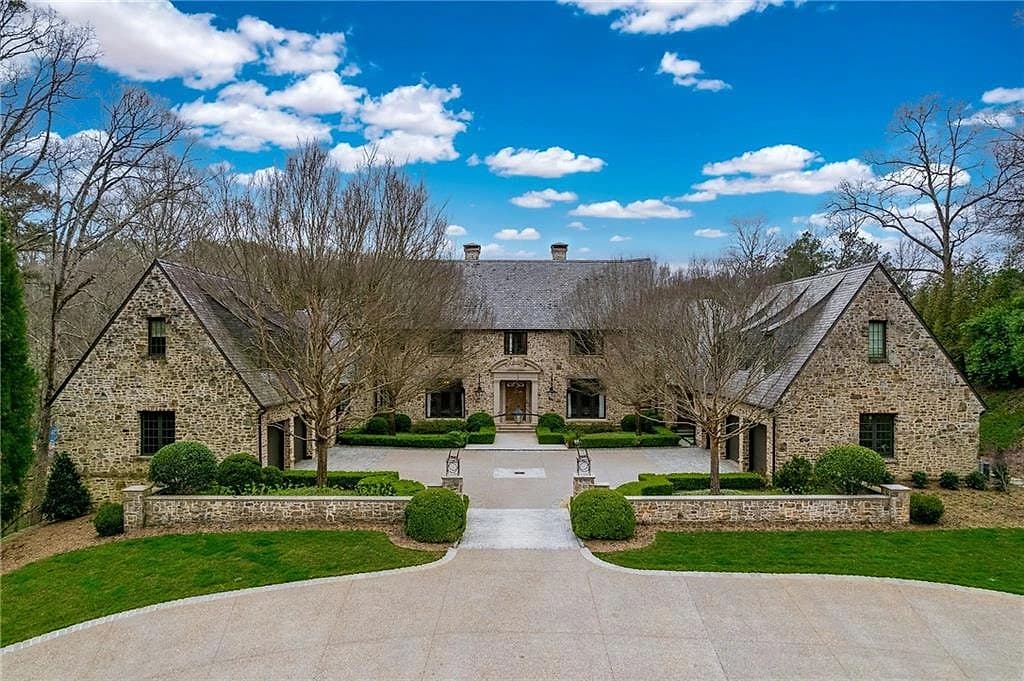
The foundation is the most important structural component of any home, and in Atlanta's luxury market, foundation issues are more common than many buyers expect. Georgia's Piedmont red clay soil creates specific challenges that affect homes across every price point and neighborhood. A $3 million estate in Buckhead is just as susceptible to clay soil movement as a $300,000 ranch in the suburbs.
For luxury home buyers, understanding foundation types, recognizing warning signs, and knowing how to evaluate structural integrity is essential. Foundation problems can cost anywhere from $5,000 for minor crack repair to $75,000 or more for major structural remediation. Missing these issues during due diligence can turn a dream purchase into a six-figure headache.
This guide covers the foundation types common in Atlanta luxury homes, the specific challenges created by Georgia's soil and climate, how to identify signs of foundation problems, what repairs cost, and what every buyer should prioritize during the inspection process.
Foundation Types in Atlanta Luxury Homes
Atlanta's rolling terrain and the Piedmont region's geological characteristics have shaped the foundation types used across the metro area. The dominant types in luxury homes are full basements, crawl spaces, and slab-on-grade, with basements being by far the most common and desirable in the luxury tier.
Full basements are the standard in Atlanta luxury homes, particularly in neighborhoods with sloped terrain. Buckhead, Sandy Springs, Brookhaven, and parts of East Cobb feature natural grade changes that allow walk-out or daylight basements, adding significant usable square footage. A finished basement in a luxury home typically adds 1,500 to 3,000 square feet of living space and can include media rooms, gyms, wine cellars, guest suites, and recreational areas. Luxury homes with finished basements typically sell at a premium over comparable homes without basements. Basement foundations consist of poured concrete or concrete block walls on a reinforced footing, typically 8 to 10 feet in height.
Crawl space foundations are found in older luxury homes and properties on lots with moderate slopes that do not justify a full basement. The crawl space, typically 18 inches to 4 feet in height, provides access to plumbing, HVAC ductwork, and electrical systems. Crawl spaces require proper encapsulation (a vapor barrier covering the floor and walls) and ventilation or dehumidification to prevent moisture problems. Unencapsulated crawl spaces in Atlanta's humid climate are a red flag that may indicate moisture damage, mold, and wood rot in floor joists and subfloor.
Slab-on-grade foundations are less common in Atlanta luxury homes but are found in some newer construction on flat lots and in certain parts of North Fulton and Gwinnett County. Slab foundations consist of a reinforced concrete pad poured directly on prepared soil. While they eliminate basement moisture concerns, they provide no additional living space, limit access to under-floor plumbing, and can be more susceptible to soil movement in expansive clay. In the luxury market, slab foundations are generally considered less desirable than basements.
Georgia's Red Clay: The Foundation Challenge
If you have ever dug a hole in an Atlanta backyard, you have seen it: the distinctive reddish-orange clay that defines the Georgia Piedmont. This soil type, technically classified as residual clay derived from the weathering of underlying metamorphic and igneous rock, is the primary cause of foundation issues in metro Atlanta homes.
The problem with red clay is its expansive nature. According to the U.S. Geological Survey (USGS), Piedmont clay soils have a moderate to high shrink-swell potential. When these soils absorb water, they expand and push against foundation walls and footings. When they dry out, they contract and pull away, leaving gaps and voids. This cycle repeats with every wet-dry pattern, and over years and decades, the cumulative effect can cause significant foundation movement.
Atlanta receives an average of 50 to 55 inches of rainfall per year, according to NOAA, but the distribution is uneven. Summer drought periods can last weeks, causing clay to shrink significantly. When fall and winter rains return, the rapid rehydration causes expansion that puts pressure on foundations. The most damaging scenarios occur during extreme swings: a prolonged drought followed by heavy sustained rain, which can cause sudden differential settlement.
This is not a theoretical concern. Our team sees foundation-related issues in approximately 20% to 30% of luxury home inspections in the Atlanta market. Most are minor (hairline settling cracks that have been stable for years), but a meaningful percentage require professional evaluation and, in some cases, structural repair.
Warning Signs of Foundation Problems
- Stair-step cracking in exterior brick: Diagonal cracks following mortar joints indicate differential settling. Wider than 1/4 inch warrants structural evaluation.
- Horizontal cracks in basement walls: Indicate lateral pressure from expanding soil. Can be early-stage bowing that requires reinforcement.
- Doors and windows that stick: When frames shift due to foundation movement, doors and windows no longer fit properly. Check every door and window during a showing.
- Gaps between walls and ceilings or floors: Separation indicates structural movement. Check corners and where additions meet the original structure.
- Sloping or uneven floors: A slope greater than 1 inch over 20 feet may indicate foundation settling. Place a ball on the floor to test visually.
- Water intrusion in basement: Standing water, white mineral deposits (efflorescence), or musty odor indicate moisture penetration through foundation walls.
- Chimney separation: A chimney that leans away from the house or shows gaps where it meets the exterior wall indicates settling at the chimney footing.
Found Foundation Issues on a Home You Want?
Some foundation findings are negotiable line items and some are reasons to walk away. Knowing the difference is what saves the deal or saves you from it.
Get a Read on the Findingsor call (770) 727-4052
Foundation Repair Methods and Costs in Atlanta
Foundation repair has become a specialized industry, and the methods used depend on the type and severity of the issue. Here are the most common repair approaches used in Atlanta luxury homes:
Epoxy Crack Injection ($500 to $2,500 per crack)
Used for non-structural cracks in poured concrete walls. Epoxy is injected under pressure to fill the crack from inside to outside, creating a bond that is often stronger than the original concrete. This method is appropriate for cracks caused by concrete curing shrinkage or minor settling. It is not appropriate for active structural cracks or cracks caused by ongoing foundation movement.
Carbon Fiber Reinforcement ($3,000 to $8,000 per wall)
Used to stabilize bowing basement or crawl space walls. Carbon fiber straps are bonded to the interior surface of the wall with industrial epoxy, preventing further inward movement. This method works best for walls with less than 2 inches of inward deflection. It is less invasive than wall anchors and does not require exterior excavation. The repair is concealed behind finished walls and does not reduce usable basement space.
Helical and Push Piers ($1,200 to $2,500 per pier)
Used to stabilize and potentially lift a settling foundation. Piers are driven through the unstable soil layer down to load-bearing strata (typically bedrock or stable dense soil). The home's weight is transferred from the failing soil to the piers. A typical luxury home may require 8 to 20 piers, with total project costs ranging from $10,000 to $50,000+. Helical piers are screwed into the ground and work well in lighter soils. Push piers are hydraulically driven and are preferred for heavier structures on Atlanta's clay soils.
Exterior Waterproofing ($5,000 to $20,000+)
Involves excavating around the foundation perimeter, applying waterproof membrane to exterior walls, and installing a drainage system (French drain) at the footing level to redirect groundwater. This is the most effective solution for persistent basement moisture but is also the most disruptive and expensive. It may require temporary removal of landscaping, decking, or hardscape along the foundation perimeter.
Drainage: The Best Foundation Protection
Ask any structural engineer in Atlanta what the most effective foundation protection strategy is, and they will tell you the same thing: manage the water. Proper drainage prevents the majority of foundation problems before they start, and correcting drainage deficiencies can halt active problems from getting worse.
The essential drainage checklist for any Atlanta luxury home includes gutters and downspouts that are clean, functional, and discharge water at least 6 feet from the foundation (underground downspout extensions are preferred in luxury homes for aesthetics). Grading around the perimeter should slope away from the house at a minimum of 6 inches over the first 10 feet. Surface drainage should prevent standing water within 20 feet of the home. If the property has a basement, a perimeter French drain system at the footing level with a sump pump is strongly recommended.
When evaluating a luxury property, walk the perimeter after a heavy rain (or schedule a showing during or after rain). Check for standing water near the foundation, oversaturated areas, downspouts that dump water against the foundation wall, and any areas where grading directs water toward rather than away from the home. These observations can reveal drainage issues that are invisible during dry weather.
The cost of proactive drainage improvement is modest compared to foundation repair. A professional grading correction runs $2,000 to $5,000. Gutter replacement and downspout extension costs $3,000 to $8,000 for a luxury home. A French drain installation along one side of a home costs $3,000 to $8,000. These investments are a fraction of the $20,000 to $75,000 that structural repairs can cost once foundation damage has occurred.
Tree Root Damage and Foundation Risk
Atlanta's luxury neighborhoods are defined by their mature tree canopy. Old-growth oaks, hickories, and poplars create the shaded, park-like settings that make neighborhoods like Tuxedo Park, Chastain Park, and Peachtree Heights so desirable. But large trees close to a home can create foundation issues through two mechanisms.
First, aggressive root systems can physically damage foundations, footings, and underground plumbing. Water oaks, silver maples, and willows are particularly problematic due to their fast growth and surface-oriented root systems. Second, and more commonly in clay soils, large trees draw significant moisture from the ground during the growing season, causing clay to shrink unevenly beneath the foundation. This differential drying creates what structural engineers call "differential settlement," where one side of the foundation settles more than the other.
The general guidance is to maintain a clearance of at least 10 to 15 feet between a home's foundation and any tree with a trunk diameter greater than 12 inches. For large, mature trees (over 24-inch trunk diameter), a clearance of 20 feet or more is preferred. When evaluating a luxury property, note any large trees within this zone and factor in the potential need for root barriers, professional pruning, or in some cases, tree removal. A certified arborist can assess the risk and recommend mitigation strategies. Arborist assessments typically cost $200 to $500 in the Atlanta market.
Frequently Asked Questions
What foundation types are most common in Atlanta luxury homes?
Atlanta luxury homes typically feature one of three foundation types: full basement (the most common in luxury homes, particularly in Buckhead and Sandy Springs where terrain allows walk-out basements), crawl space (common in older homes and areas with moderate slopes), and slab-on-grade (less common in luxury homes but found in some newer construction and flat-lot properties). The Atlanta market strongly favors basements in the luxury tier because they add usable square footage and storage. Luxury homes with finished basements typically sell for more than comparable homes without basements, all else being equal.
Why does Georgia's red clay cause foundation problems?
Georgia's Piedmont red clay is a type of expansive soil that swells when wet and shrinks when dry. This cycle of expansion and contraction creates movement in the soil beneath a foundation, which can cause settling, cracking, and structural shifting over time. The problem is particularly acute during drought-to-rain cycles, which are common in Atlanta's climate. A prolonged dry spell causes clay to shrink and pull away from the foundation, creating gaps. When heavy rain returns, the clay expands rapidly and pushes against the foundation walls. This repetitive cycle, occurring over years and decades, is the primary mechanism behind most foundation issues in Atlanta homes. Per the U.S. Geological Survey, the Piedmont region's clay soils are classified as moderate to high in shrink-swell potential.
What are the signs of foundation problems in a luxury home?
Common signs of foundation issues include: stair-step cracking in exterior brick (diagonal cracks that follow mortar joints), horizontal cracks in basement or crawl space walls (which may indicate lateral pressure from soil), doors and windows that stick or will not close properly, visible gaps between walls and ceilings or walls and floors, uneven or sloping floors (use a marble test: place a marble on the floor and see if it rolls), cracks in interior drywall (particularly around door frames and window frames), water intrusion in the basement (standing water, efflorescence on walls, or musty smell), and a chimney that leans or separates from the house. Any of these warrant evaluation by a licensed structural engineer, not just a home inspector.
How much does foundation repair cost in Atlanta?
Foundation repair costs vary enormously based on the scope and method. Minor crack repair with epoxy injection typically runs $500 to $2,500 per crack. Carbon fiber reinforcement for bowing basement walls costs $3,000 to $8,000 per wall. Helical or push pier installation to stabilize a settling foundation runs $1,200 to $2,500 per pier, and a typical luxury home may need 8 to 20 piers, putting the total at $10,000 to $50,000 or more. French drain installation or exterior waterproofing to address hydrostatic pressure against basement walls costs $5,000 to $20,000 depending on scope. The most expensive scenario, a combination of pier installation and wall reinforcement on a large luxury home, can exceed $75,000. Always get multiple estimates from licensed structural repair firms, and have an independent structural engineer review any proposed repair plan.
Should I hire a structural engineer or a foundation repair company for an evaluation?
Always start with an independent licensed structural engineer. A structural engineer has no financial interest in recommending repairs and will provide an objective assessment of the foundation's condition, the cause of any issues, and the appropriate repair methods. A typical structural engineering evaluation costs $500 to $1,500 in the Atlanta market and produces a written report that can be shared with potential buyers, lenders, and insurance companies. Foundation repair companies, while often technically competent, have an inherent conflict of interest because they profit from recommending and performing repairs. Use the structural engineer's report to get targeted bids from repair contractors rather than relying on a repair company's free evaluation, which may recommend more work than necessary.
Do foundation issues always mean the home should be avoided?
Not necessarily. Many foundation issues in Atlanta homes are repairable and, once properly addressed, do not recur. The key factors in the decision are the type and severity of the issue, the cost of repair relative to the home's value, whether the cause has been addressed (not just the symptom), and whether the repair can be warrantied. Minor settling cracks in a 30-year-old home may be cosmetic and require only monitoring. Bowing basement walls from hydrostatic pressure require structural reinforcement but are repairable. Active settling that continues despite previous repairs is a more serious concern. A structural engineer can distinguish between stable, resolved issues and active, ongoing problems. Buying a home with documented, warrantied foundation repairs can actually be advantageous because the issue has been professionally addressed and the buyer knows exactly what was done.
How does drainage affect foundation health in Atlanta?
Drainage is the single most important factor in foundation health for Atlanta homes. Georgia's annual rainfall averages 50 to 55 inches per year (per NOAA data), and managing that water is critical. Poor drainage causes water to accumulate against foundation walls, increasing hydrostatic pressure and accelerating clay soil movement. The essential drainage elements for protecting a foundation include properly functioning gutters and downspouts that direct water at least 6 feet from the foundation, grading that slopes away from the house on all sides (minimum 6 inches of drop over 10 feet), a French drain or perimeter drain system around the foundation footing (if water intrusion is present), a sump pump in basements with below-grade space, and surface drainage that prevents standing water in the yard near the home. Many foundation problems in Atlanta can be prevented or halted simply by correcting drainage deficiencies.
Can tree roots damage a luxury home's foundation?
Yes. Large trees planted too close to a foundation can cause two types of damage. First, roots can physically grow into and displace foundation walls, footings, and underground plumbing. This is more common with aggressive species like water oaks, silver maples, and willows. Second, and more commonly in Atlanta's clay soils, large trees draw significant moisture from the surrounding soil, causing differential settling as the clay shrinks unevenly beneath the foundation. The general rule of thumb is that a tree's root zone extends roughly 1 to 1.5 times the radius of its canopy. A mature oak with a 40-foot canopy spread can have roots extending 20 to 30 feet from the trunk. When evaluating a luxury property, note any large trees within 20 feet of the foundation and have a certified arborist assess the risk if trees are close to the structure.
What should I prioritize during a foundation inspection before buying?
For luxury home buyers in Atlanta, the foundation inspection priority list should include: hire an independent structural engineer (not the seller's repair company), inspect the exterior for stair-step brick cracking, horizontal wall cracks, and mortar deterioration, check the interior for drywall cracks around doors and windows, operate every door and window to check for sticking or misalignment, use a level to check floor slopes in the basement and main level, examine the basement or crawl space for water stains, efflorescence, mold, and active moisture, review the grading and drainage around the entire perimeter, check for large trees with roots potentially affecting the foundation, and request documentation of any previous foundation repairs including warranty information. A thorough foundation evaluation adds 1 to 2 hours and $500 to $1,500 to the inspection process, but it can save you from a five- or six-figure surprise after closing.
Are foundation issues covered by homeowner's insurance in Georgia?
Generally, no. Standard homeowner's insurance policies in Georgia do not cover foundation problems caused by settling, soil movement, poor drainage, or deferred maintenance. These are considered maintenance issues rather than sudden, accidental events. However, foundation damage caused by a covered peril (such as a burst pipe flooding the basement and undermining the foundation, or a fallen tree root damaging the footing) may be partially covered under the dwelling coverage portion of the policy. Earthquake coverage, available as a separate endorsement, covers foundation damage from seismic events, but earthquakes are extremely rare in Georgia. The practical takeaway is that foundation maintenance and repair are the homeowner's financial responsibility, which makes pre-purchase foundation evaluation critical for luxury buyers.
Need expert guidance evaluating a luxury home in Atlanta?
Sources
- U.S. Geological Survey (USGS) - Piedmont region soil composition data, shrink-swell potential maps, and geological survey reports.
- National Oceanic and Atmospheric Administration (NOAA) - Atlanta metro rainfall data, climate patterns, and drought monitoring.
- American Society of Civil Engineers (ASCE) - Foundation engineering standards, soil mechanics research, and structural assessment guidelines.
- FMLS (First Multiple Listing Service) - Atlanta luxury home listing data, basement impact on value, and property condition disclosures.
- International Association of Certified Home Inspectors (InterNACHI) - Foundation inspection standards, common defect identification, and reporting guidelines.
- Insurance Information Institute - Homeowner insurance coverage guidelines for foundation damage in Georgia.
Foundation repair costs, soil conditions, and structural engineering guidance referenced in this article reflect the Atlanta market as of early 2026 and are subject to change. Individual property conditions vary significantly. This article does not constitute structural engineering, inspection, or financial advice.
Disclaimer: This article is for informational purposes only and does not constitute structural engineering, home inspection, or financial advice. Foundation conditions, repair methods, and costs vary by property and should be evaluated by licensed structural engineers and qualified contractors. The Luxury Realtor Group is a real estate brokerage and does not provide engineering, inspection, or construction services. Always consult licensed professionals for property-specific structural assessments.