
The Atlanta luxury real estate market enters summer 2026 in a position that defies the single-narrative framing most real estate headlines prefer. It is not a seller's market. It is not a buyer's market. It is a tiered market where outcomes diverge sharply based on price point, neighborhood, and property condition. Understanding which tier you are in, and what the data says about that specific segment, is the difference between making a well-timed decision and reacting to noise.
This analysis draws on data from the Atlanta REALTORS Association (ARA) monthly market reports, National Association of Realtors research, and Federal Reserve Economic Data (FRED) to give buyers and sellers in Atlanta's luxury segment a grounded view of what summer 2026 is likely to bring.
The short version: inventory is gradually improving, mortgage rates remain elevated but stable, and demand from in-migration and corporate relocation continues to underpin pricing at the top of the market. But there are meaningful differences between the $1M tier, the $2M-$5M range, and the ultra-luxury $5M+ segment. Read on for the tier-by-tier breakdown.
Inventory: Slowly Improving, Still Below Normal
The inventory drought that defined Atlanta luxury real estate from 2021 through most of 2024 has not fully resolved, but the trend is moving in buyers' favor. According to ARA monthly data, active listings in the $1M+ segment have risen from the lows of 2022-2023, with months-of-supply now ranging from approximately 3 to 4 months in the most sought-after Buckhead sub-markets to 5 to 7 months in secondary luxury locations like East Cobb and Dunwoody.
For context, a balanced market is typically defined as 5 to 6 months of supply. The fact that core Buckhead and Sandy Springs are still running below that threshold means sellers in those areas retain pricing power. But the days of receiving 10 offers above asking price on a $1.5M home ended roughly 18 months ago. Today, well-priced homes move in 2 to 5 weeks; overpriced homes sit.
One factor constraining supply is the so-called "lock-in effect" documented by FRED and NAR research: homeowners who refinanced at 3% rates in 2020-2021 are reluctant to sell and take on a new mortgage at current rates, even when their life circumstances might otherwise prompt a move. This effect is somewhat muted at the luxury level (where cash purchases are more common and portfolio loans offer flexibility), but it still reduces the pool of existing homeowners willing to list, especially in the $1M-$2M range where the rate differential is most consequential.
New construction is partially filling the gap. Builders in Sandy Springs, Milton, and East Cobb have been active with luxury spec construction, and a number of significant custom home projects in Buckhead are coming to market in 2026. These new construction options give buyers alternatives to the existing home inventory and put some pricing discipline on older resale product that has not been updated.
The Mortgage Rate Environment and Its Effect on Luxury
Jumbo mortgage rates have hovered in the 6.5% to 7.5% range for much of 2025 and into 2026, per FRED data on 30-year fixed mortgage rates. While these rates feel elevated compared to the 2020-2021 environment, they are broadly consistent with historical norms when viewed over a 30-year window. The key question for luxury buyers is not whether rates are high in absolute terms, it is whether the rate environment is affecting decision-making.
The evidence suggests a clear bifurcation. At the $1M-$2M price range, where many buyers are using jumbo financing, higher rates have meaningfully affected purchasing power and reduced the buyer pool compared to 2021. A buyer who could afford a $1.6M home at 3% may now qualify for closer to $1.2M at 7%, which has real consequences for competition and pricing in that tier.
At $2M and above, the rate sensitivity decreases substantially. According to NAR research, all-cash transactions represent a growing share of luxury sales, and buyers in the $3M+ range frequently use private banking relationships, securities-backed lines of credit, or portfolio loans from institutions like JPMorgan Private Bank, Wells Fargo Private Bank, and First Republic successors. These products often carry rates or terms not available through conventional jumbo channels and are less directly tied to Federal Reserve movements.
Looking forward, the Fed's 2026 posture suggests a stable-to-gradually-easing rate environment, but timing and magnitude remain uncertain. Buyers waiting for significantly lower rates before acting may be waiting longer than expected. Sellers hoping that lower rates will bring a new wave of buyers should not count on that catalyst arriving in time for summer 2026.
Price-Tier-by-Tier Outlook for Summer 2026
The most important thing to understand about Atlanta luxury real estate in summer 2026 is that price tier matters more than broad market trends. Here is what the data suggests for each segment.
Under $1M: Competitive, Rate-Sensitive
Homes priced between $700K and $1M in Atlanta's best neighborhoods remain highly competitive. This tier attracts the largest buyer pool, move-up buyers from the $400K-$600K segment, relocating professionals, and buyers priced out of the $1.2M+ range. Supply in this tier is thinnest relative to demand. Well-maintained homes here often go under contract within 1-2 weeks. Buyers should expect to be competitive with offers and should have pre-approval (or cash verification) ready before beginning their search in earnest.
$1M to $2M: More Balanced, Condition-Dependent
This is the most dynamic tier of Atlanta luxury real estate heading into summer 2026. Inventory has improved meaningfully from the lows of 2022-2023, giving buyers real choices. But demand remains solid, supported by corporate relocation buyers, dual-income professional households, and buyers moving up from the $700K-$900K range. The critical variable in this tier is condition and presentation. Homes that show beautifully, updated kitchens, fresh paint, landscaped yards, well-staged interiors, are moving at or close to asking price. Homes that need work or that were listed at aspirational prices are accumulating days on market and taking price reductions. Per ARA data, median days-on-market in this tier runs approximately 20 to 45 days in prime locations.
$2M to $5M: Selective Buyers, Patient Process
Buyers in the $2M-$5M range are among the most deliberate in the market. They have options, they are not urgency-driven, and they will wait for the right property. This creates a longer average selling timeline, 45 to 90 days on market is common, and some exceptional homes in this range are priced so uniquely that they may take 4 to 6 months to find the right buyer. Sellers here need to resist the temptation to chase the market upward with aspirational pricing. The buyers who can afford a $3M Atlanta home have almost certainly seen comparable properties in other markets and know what value looks like. Accurate, defensible pricing from day one is essential.
$5M and Above: Its Own Market
The $5M+ segment in Atlanta functions almost independently of broader market conditions. There are perhaps 30 to 60 homes active in this tier at any given time across the entire metro, and the buyer pool is comparably limited. According to NAR luxury market data, ultra-luxury transactions are often relationship-driven, buyers and sellers who are connected through private networks, agents, and wealth management relationships rather than public listing searches. Summer 2026 shows continued interest from out-of-state buyers, particularly from the Northeast and California, attracted by Atlanta's price-per-square-foot advantage relative to comparable luxury in coastal markets. A $7M home in Tuxedo Park would cost $20M or more in comparable Westchester County or Marin County locations.
Neighborhood-Level Dynamics: Buckhead, Sandy Springs, Brookhaven
Broad metro-level statistics obscure meaningful neighborhood variation. Here is how Atlanta's three most prominent luxury sub-markets are positioned entering summer 2026.
Buckhead: The Benchmark
Buckhead remains Atlanta's luxury standard. Tuxedo Park, West Paces Ferry, Chastain Park, and Peachtree Battle command the highest price per square foot in the metro for detached single-family luxury. The Buckhead luxury market entering summer 2026 is tight at the top, sub-markets like Tuxedo Park rarely have more than 4 to 6 active listings at any price above $3M, and when exceptional properties come to market, they can attract multiple showings in the first weekend. The $1M-$2M segment in Buckhead is more active, with homes in Garden Hills, Brookwood Hills, and Peachtree Hills turning over more regularly.
One dynamic worth watching in Buckhead: new construction activity has increased in 2025-2026, with infill builders replacing dated ranch-style homes from the 1960s and 1970s with 5,000-8,000 square foot contemporaries. This new product competes directly with renovated older homes and tends to attract buyers who prioritize floor plans and finishes over lot maturity. Sellers of older, less-updated homes in Buckhead face real competition from this pipeline.
Sandy Springs: Growing Stature, Strong Fundamentals
Sandy Springs has continued its evolution from a Buckhead alternative to a legitimate destination market in its own right. The combination of top public schools (Riverwood International Charter, North Springs Charter), lower Fulton County property taxes versus the City of Atlanta, and access to major employers along the Ga. 400 corridor has made Sandy Springs a first-choice destination for relocating families rather than a fallback. Luxury homes in the Heards Ferry and Jett Ferry corridors regularly sell in the $1.5M-$3.5M range, and the area has seen meaningful appreciation over the past three years.
Summer 2026 should bring continued strong buyer activity in Sandy Springs, particularly from corporate relocation buyers assigned to companies along the Perimeter and in Technology Square. Inventory has improved slightly from 2024 levels, but strong neighborhoods like Heards Forest and Brooke Farm still see properties move within 30 days of listing when priced correctly.
Brookhaven: Value Relative to Buckhead, Design-Forward Buyer Base
Brookhaven has attracted a distinct buyer profile over the past decade: design-conscious buyers who want proximity to dining and retail (Dresden Drive, Town Brookhaven), good schools in the DeKalb County public system, and a more walkable community character than most Buckhead sub-markets offer. The tradeoff is that Brookhaven luxury homes tend to be priced at a slight discount to comparable square footage in Sandy Springs or Buckhead, which is precisely why buyers looking for relative value gravitating toward the $1M-$2M luxury tier frequently start here.
Entering summer 2026, Brookhaven is seeing continued demand from buyers in the $800K-$1.8M range. The area benefits from steady in-migration from buyers relocating from higher-cost metros who find Brookhaven's combination of character and convenience compelling. New restaurants and retail on Dresden Drive continue to improve lifestyle amenities, which supports property values in adjacent neighborhoods.
Buyer and Seller Behavior: What Is Changing in 2026
Several behavioral shifts are shaping how transactions unfold in Atlanta luxury real estate this summer.
Buyers are doing more pre-market research. The combination of readily available listing data, neighborhood-level market reports, and social media content means that luxury buyers entering the Atlanta market in 2026 are generally well-informed before their first showing. They have studied price trends, read school ratings, toured neighborhoods virtually, and often have a clear sense of what they want before engaging an agent. This means agents and sellers who work with outdated pricing assumptions face a more sophisticated negotiating counterpart than in previous cycles.
Sellers are pricing more carefully. The inventory shifts of 2024-2025 taught sellers a lesson that the 2021-2022 market temporarily obscured: overpricing stings. A luxury home that sits for 60-90 days accumulates a stigma that is difficult to overcome, particularly in an era when buyers can see the price history on any major listing platform. Per Realtor.com research, homes that undergo a price reduction in the first 30 days sell for less, on average, than homes that were priced correctly from the start. Well-counseled sellers in summer 2026 are taking that data seriously.
Negotiating terms are back. In the frenzied 2021-2022 market, buyers routinely waived inspection contingencies, appraisal gaps, and due diligence periods. That dynamic has normalized. Today, buyers in the $1M-$3M range are generally negotiating standard contingencies, and sellers are accepting them. Sellers who refuse standard contract terms without strong justification (such as multiple competing offers) may find their pool of willing buyers narrowing.
The role of presentation has increased. In a market with more inventory and more discerning buyers, how a home looks on day one of listing is more consequential than ever. Professional photography, twilight shots, video tours, staging, and immaculate pre-listing preparation are not optional for luxury listings, they are the baseline. Sellers who skip these steps are leaving money on the table and extending their time on market.
What to Watch for the Rest of Summer 2026
Several factors could meaningfully shift the Atlanta luxury market's trajectory between now and Labor Day. None of these are predictions, but they are the variables worth monitoring.
Federal Reserve signaling on rate cuts. Even a modest downward move in the Fed funds rate, or clear signals that cuts are coming, tends to stimulate buyer activity before the cuts actually arrive. If the Fed signals in June or July that rate reductions are likely in the fall, expect an acceleration of buyer decision-making among rate-sensitive buyers in the $1M-$2M tier.
Corporate relocation volume. Atlanta's luxury market is significantly influenced by executive relocation activity. Companies including Delta Air Lines, Home Depot, UPS, Cox Enterprises, and a growing roster of financial services firms headquartered in Buckhead and Midtown generate a steady flow of high-income relocating buyers. If corporate hiring activity picks up in Q3 2026, expect that to show up in luxury buyer demand by late summer and early fall.
Stock market performance. A meaningful portion of luxury buyers in the $2M+ range have wealth tied to investment portfolios. When equity markets are performing well, buyers feel wealthier and are more willing to make large discretionary purchases. A sustained market rally through summer could lift confidence in the upper tiers.
New construction delivery timelines. If a wave of luxury spec homes delivers in Q3 2026, it will add inventory in specific price points and neighborhoods, giving buyers more choices and creating additional pricing pressure on older resale product. Sellers of 1990s-era homes competing with new construction should have a clear answer for why their home offers better value than a new build in a similar location.
World Cup preparation activity. Atlanta is a FIFA 2026 World Cup host city, and while the games themselves do not directly impact luxury residential real estate, the infrastructure investments, hotel development, and international attention on Atlanta have continued to elevate the city's profile. Some high-net-worth buyers from international markets have expressed interest in Atlanta for the first time as a result of this visibility. This effect is modest but real at the top of the market.
Summer 2026 Atlanta Luxury Market at a Glance
- Inventory: Improving from historic lows but still below pre-pandemic norms in prime Buckhead and Sandy Springs sub-markets.
- Mortgage rates: Jumbo rates in the 6.5-7.5% range; cash and portfolio loan buyers less affected at the $2M+ level.
- Under $1M: Still competitive with limited supply. Buyers should be ready to move quickly.
- $1M-$2M: More balanced. Condition and pricing are decisive. Overpriced homes are sitting.
- $2M-$5M: Selective, patient buyers. Sellers need disciplined pricing strategy from day one.
- $5M+: Its own market. Relationship-driven, timeline-independent, increasingly influenced by out-of-state wealth migration.
- Best neighborhoods: Buckhead (Tuxedo Park, West Paces Ferry), Sandy Springs (Heards Ferry corridor), Brookhaven (relative value play).
Frequently Asked Questions
Is summer 2026 a good time to buy a luxury home in Atlanta?
Summer 2026 presents a more balanced opportunity than buyers faced in 2021 or 2022. Inventory is improving across most price tiers, which gives buyers more options and slightly more negotiating room. Mortgage rates remain elevated compared to the historic lows of 2020-2021, but the luxury segment is less rate-sensitive than the entry-level market because a meaningful share of transactions involve cash or portfolio loans. If you find the right property, summer is historically a strong period to close, sellers listing in the spring are often motivated to transact before fall school schedules. Work with a buyer's agent who tracks days-on-market by price tier and neighborhood so you know when to negotiate and when to move fast.
Will Atlanta luxury home prices drop in summer 2026?
A broad price correction for Atlanta luxury homes is not supported by current market fundamentals. Demand from in-migration, corporate relocations, and wealth concentration in Atlanta continues to underpin pricing. What is more likely than a general decline is differentiation: well-priced, well-presented homes in high-demand neighborhoods like Buckhead and Sandy Springs will hold value, while overpriced or condition-impaired properties will sit and accumulate price reductions. The $1M-$2M segment has historically been more volatile than either the entry-level or ultra-luxury tiers, and that price range may see modest softening if inventory improves significantly. No outcome is guaranteed, and buyers and sellers should consult current data and local advisors before making decisions.
How much inventory exists in Atlanta's luxury market heading into summer 2026?
Inventory has been gradually increasing from the historic lows of 2021-2022 but remains below pre-pandemic norms in the most sought-after neighborhoods. The Atlanta REALTORS Association tracks active listings by price tier, and as of early 2026, the $1M+ segment showed months-of-supply ranging from roughly 3 to 6 months depending on location and specific price tier, still favoring sellers in prime neighborhoods but closer to balanced conditions in secondary locations. The $5M+ ultra-luxury tier typically carries 8 to 14 months of supply, reflecting a smaller buyer pool. Check current ARA data for the most up-to-date figures.
How do mortgage rates affect Atlanta luxury real estate in 2026?
The impact of mortgage rates on the luxury segment is real but more muted than in the broader market. According to the National Association of Realtors, all-cash purchases represent a higher share of luxury transactions, often 30-40% or more depending on price tier. Buyers in the $2M+ range frequently use portfolio loans, private banking relationships, or securities-backed lending rather than conventional jumbo mortgages, which gives them more flexibility when rates are elevated. That said, higher rates do affect affordability calculations and can slow market velocity even at the top of the market. Buyers who are financing should work with jumbo lenders who specialize in the luxury segment and explore adjustable-rate options if they anticipate a shorter hold period.
Which Atlanta neighborhoods are strongest for luxury real estate in summer 2026?
Buckhead remains the gold standard for Atlanta luxury real estate, with Tuxedo Park, West Paces Ferry, and Chastain Park commanding the highest prices per square foot. Sandy Springs has grown significantly in appeal, particularly for buyers who want lower Fulton County property taxes and strong school options. Brookhaven continues to attract buyers who want walkable access to restaurants and retail without sacrificing home size. For buyers with more flexibility, Garden Hills, Peachtree Hills, and North Buckhead offer luxury product at relative value compared to the most premium Buckhead addresses. Emerging areas like Morningside-Lenox Park and Virginia Highland are attracting design-forward buyers who prioritize architectural character and walkability over square footage.
What is happening to days on market for luxury homes in Atlanta?
Days on market (DOM) for luxury homes in Atlanta varies significantly by price tier and neighborhood condition. Well-priced homes in the $1M-$2M range in prime neighborhoods can still go under contract in 2-4 weeks. The $2M-$5M range typically takes longer, 30 to 90 days is common. Ultra-luxury ($5M+) homes frequently take 6-18 months to sell, which is normal for a small buyer pool at any point in the cycle. Properties that are overpriced relative to their condition and the current inventory level will sit regardless of tier. Working with an agent who monitors DOM trends weekly gives you a significant pricing and negotiation advantage.
Should I sell my luxury home in summer 2026 or wait until fall?
Summer is generally the second-strongest selling season for luxury homes in Atlanta, after spring. Buyers who did not find what they wanted in the spring market are actively searching, and families motivated by school calendars want to close by July or August. If your home is well-prepared and priced correctly, listing in May or June puts you in front of a motivated buyer pool. The risk of waiting until fall is that September and October can bring increased competition from new listings, and the holiday slowdown begins in November. That said, every home and situation is unique, the right time to sell is when your property is truly ready to show at its best.
What is the outlook for the $5M+ ultra-luxury segment in Atlanta?
The $5M+ segment in Atlanta operates on its own timeline. Buyers at this level are rarely driven by rate movements or urgency. They may search for 12-24 months before finding the right property. Supply is extremely limited, Tuxedo Park, West Paces Ferry, and a handful of other enclaves account for the majority of $5M+ transactions. In 2025, Atlanta saw a handful of transactions above $10M, and that tier is slowly maturing as wealth accumulates in the region. The spring and early summer of 2026 showed continued interest from out-of-state buyers, particularly from the Northeast and California, who find Atlanta's price-to-quality ratio compelling even at the top of the market.
How does Atlanta's luxury market compare to other Sun Belt cities in 2026?
Atlanta continues to offer strong value relative to other Sun Belt luxury markets. A $2M home in Atlanta typically delivers significantly more square footage, land, and architectural quality than equivalent price points in Miami, Nashville, or Austin. Atlanta's corporate base, airport connectivity, and established cultural and culinary scene make it increasingly competitive for buyers who previously defaulted to other high-profile markets. The Atlanta REALTORS Association data shows continued in-migration from higher-cost markets, particularly from the Northeast and West Coast, which supports luxury demand even as those markets experience their own softening.
What price tier offers the best value in Atlanta luxury real estate right now?
The $1.5M-$2.5M range may offer the best combination of quality, inventory, and relative value heading into summer 2026. This tier has seen the most inventory improvement, giving buyers meaningful selection while still delivering genuine luxury, homes with 4,000-7,000 square feet, updated kitchens and baths, pools, and strong school access. Below $1.5M, competition remains intense. Above $3M, you are paying a premium for location and land that makes sense for buyers with specific requirements but may not represent pure value. No outcome is guaranteed, and buyers should always conduct thorough due diligence.
Buying or Selling in Atlanta This Summer?
Whether you are entering the market as a buyer or positioning a luxury home for sale, summer 2026 rewards preparation and local expertise. Connect with us for a current market analysis specific to your neighborhood and price point.
Schedule a Market Consultation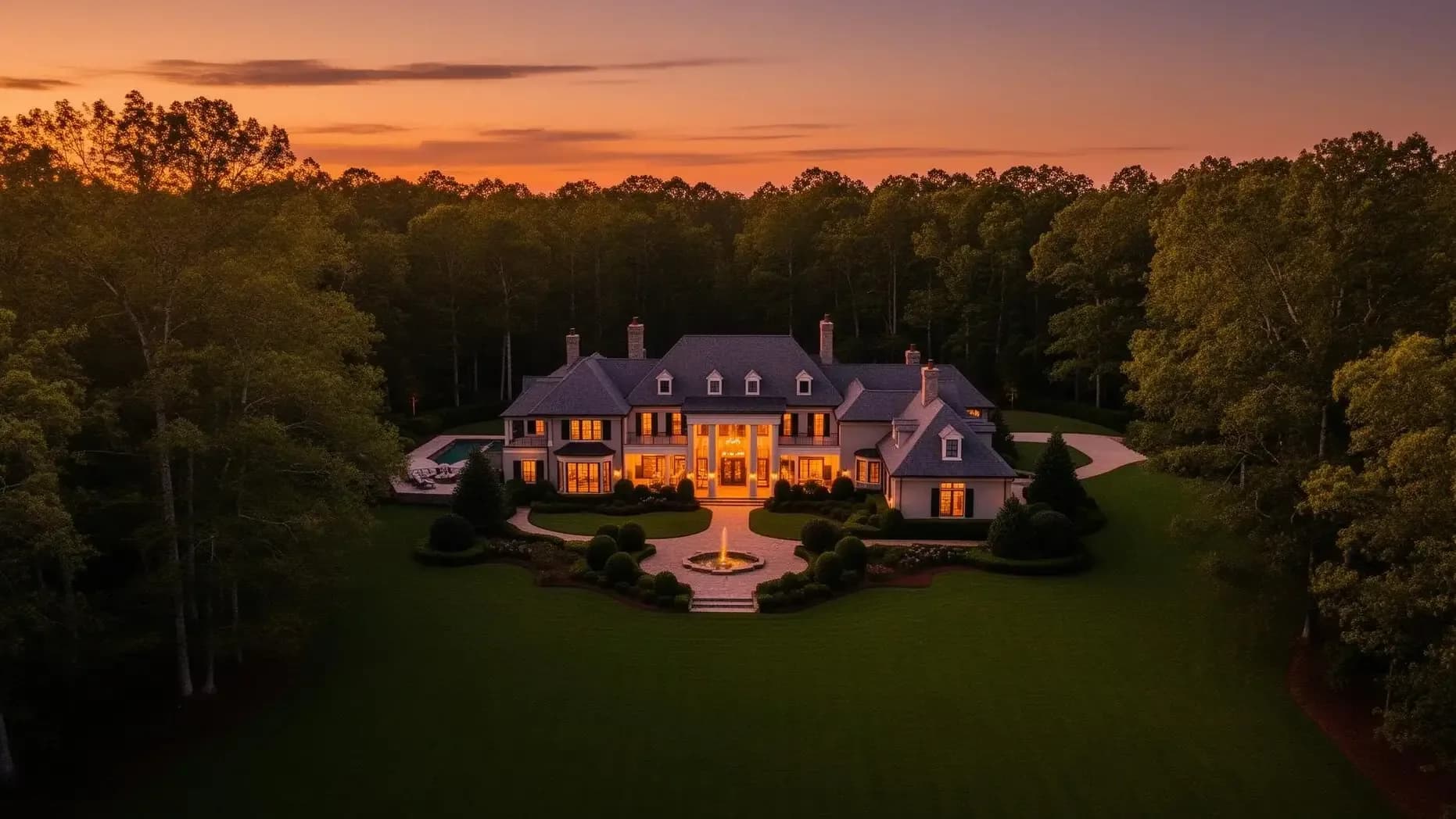

Sources
- Atlanta REALTORS Association (ARA) - Monthly Market Reports, 2025-2026. Active listing counts, months-of-supply, and median days-on-market by price tier.
- National Association of Realtors (NAR) - Luxury market research, cash transaction share data, and in-migration statistics.
- Federal Reserve Economic Data (FRED) - 30-year fixed mortgage rate series (MORTGAGE30US), housing supply data.
- Realtor.com Research - Days-on-market and price reduction analysis for the Atlanta metro.
- FIFA / Atlanta - World Cup 2026 host city information and infrastructure investment context.
Market data reflects conditions as of early May 2026. Real estate markets are dynamic; consult current data and a licensed local professional before making buying or selling decisions.
Disclaimer: This article is for informational purposes only and does not constitute financial, investment, or real estate advice. Past market performance does not guarantee future results. All statistics are approximate and subject to revision as new data becomes available. Consult a licensed real estate professional and appropriate financial advisors before making real estate decisions.